Editor’s note: This article is adapted from a version published Nov. 14, 2025 by the Minnesota Women’s Press
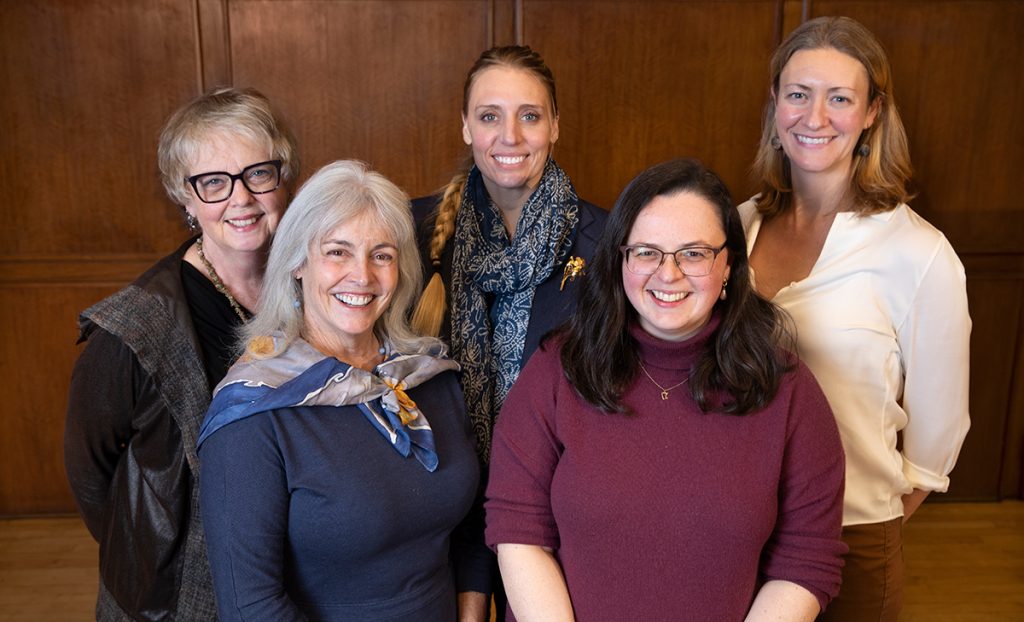
At a November 13 forum hosted by Minnesota Women’s Press, five experts shared their unique experiences involving Minnesota’s water access, environmental review process, and concerns around hyper-scale data centers that are planned in a dozen cities so far.
More than 100 people were registered for the in-person and livestreamed discussion from around the state, with watch parties scheduled in Apple Valley and Duluth.
(Some of the livestream was intermittent due to wi-fi connection difficulties, but will be available in stories here, as well as shared audio and video clips, thanks to underwriting support from CURE MN. This recording from the First Unitarian Society of Minneapolis venue has much of the conversation.)
Risks, Reviews, and Responsibilities
- Carrie Jennings is Research and Policy Director at Freshwater and a geologist by training. She explained groundwater distribution and risks, emphasizing the need for robust governance. She suggested legislation to require water- and energy-efficient designs and proactive city zoning. Jennings explained groundwater distribution, its connection to surface water, and the geologic mapping required to understand water-bearing layers. She described how groundwater availability varies across Minnesota, the risks of extracting water faster than it is recharged, and the importance of smart and robust groundwater science, good legislation, and stakeholder engagement for effective governance.
- Carly Griffith is the Water Program Director at the Minnesota Center for Environmental Advocacy (MCEA). She detailed MCEA’s concerns about inadequate environmental reviews and nondisclosure agreements. She explained the Minnesota Environmental Policy Act (MEPA) and the Alternative Urban Area-wide Review (AUAR) process. Griffith expressed concern that data center developers have been shielding environmental impacts from public scrutiny, partly by understating the massive projects they are creating and the lack of transparency for reviews precipitated by the use of non-disclosure agreements (NDAs). She outlined MCEA’s litigation efforts in five cities so far to challenge inadequate AUARs and ensure meaningful public input. She encourages a regional approach to water sustainability to avoid perverse incentives for cities to compete for water resources.
- Anabel Sanford is the Renewable Energy Business Lead at Emmons and Olivier Resources (EOR), which focuses on water resources and environmental engineering. She discussed the complexities of data center development, including energy and water use, and that developers might prioritize low building and operating costs, but can work creatively with designers to reduce impact on the community’s costs for water and electricity. Sanford explained that the competitive nature of data center and industrial development begins when developers identify markets with low-cost power and tax incentives. She described the interconnection queue process for connecting to the grid and the challenges grid operators and utilities face in balancing grid demand.
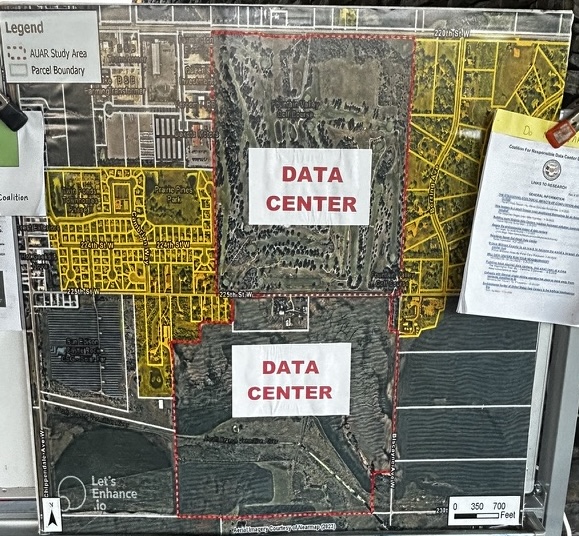
- Cathy Johnson is chair of the Coalition for Responsible Data Center Development. She shared grassroots efforts against the way a data center has been proposed in Farmington, where a Tract-developed center has requested more water access than the entire city uses. She shared her frustrations with local governance, the importance of grassroots efforts and legislative advocacy to protect communities from predatory developers. Johnson encouraged citizens to educate themselves, contact legislators, and support decisions made alongside informed residents who have to deal with the noise, size, water depletion, and electricity rate hikes if the center is not designed with environmental and energy-informed reviews and design. She said she believes local governing units are often misled by developers’ promises of property taxes and jobs.
- Sarah Mooradian is the Government Relations and Policy Director at CURE MN, focusing on energy, environment, water, and rural democracy. She stressed the options for community involvement, even in an industry with developers who seem to be deflecting public input by asking city officials to sign non-disclosure agreements. Mooradian highlighted the importance of transparency, enforceable sustainability goals, and community benefits in data center projects. She introduced the potential for renewable energy and closed-loop cooling systems in data centers. As an advocate who regularly connects with policy-makers, she encourages citizens to stay informed, engage with legislators, and support policies that prioritize community needs over corporate interests.
Suggested Solutions
Sanford indicated data centers can consume less water or less power, and there are opportunities to reuse their waste heat and wastewater, especially given that Minnesota has access to innovative designers, as well as ideas from countries with higher environmental sustainability standards.
Speakers emphasized that state intervention is needed at the legislative level to incentivize energy-efficient designs, and that cities could create zoning districts and develop proactive ordinances to manage high-volume water users.
A concept introduced by several speakers involved the importance of involving Indigenous perspectives on water as a spiritual resource, and a generational legacy, to influence the value of sustainable design. Sanford mentioned the organization Owámniyomni Okhódayapi and their approach to stewarding water for future generations.
Jennings noted that the Institute on the Environment and city managers could collaborate to develop tools for data center requests. She said the complexity of water reuse regulations involve multiple state agencies.
She also indicated that many companies are building data centers as a new frontier, and not all of them will be sustained. What happens when these large centers are no longer in operation but still sitting in communities?
Action Steps
An audience member asked the speakers to offer simple message for community advocates to convey the importance of water conservation.
- Jennings suggested asking cities how much water they have and how much they will give away.
- Griffith emphasized the importance of determining who gets to decide on key impacts like water, energy, and materials.
- Sanford expressed the need for humanizing conversations and involving community expertise in design solutions.
- Johnson asked people to support the Coalition’s legal fund, which is attempting to set a precedent in Minnesota so that public input is required early in the process of data center development.
- Mooradian encouraged people to contact legislators to express concerns about data center development and the need for stronger regulations, well before they begin to convene in mid-February 2026 to prioritize issues and policies.
One audience member is from Indivisible Twin Cities, which is planning a data center-related phone and email campaign to state representatives. The topic will be presented at its next Action Hour — where participants learn about an issue — on Tuesday, November 25, from 6:30 to 7:30pm. Participants engaged from around the state. The group will be contacting state representatives with two demands: the end of NDAs between data center developers and elected officials, and full environmental impact statements that provide complete, correct data on water and energy consumption, for every data center proposal. Says Margaret Sullivan, “We want legislators to know, as they gear up for next session, that Minnesotans want pro-people, pro-environment handling of data centers at the tops of their agendas and priorities.” Sign up for the information sharing session.
Resources
- Johnson steered audience toward the toolkit created by the Coalition.
- The Joyce Foundation offers updates on data center developments across the Midwest.
- An audience member shared information about the Piedmont Environmental Council, which is a robust resource developed after unsustainable transformation by data center development began in the state of Virginia.
- A 9-minute documentary about the impact of proposed data centers in Farmington, and the labor industry, created by an independent documentarian, is here.
- A YouTube series from Business Insider about data centers
- Hermantown update from MPR (November 5)
- TV story on Hermantown community organizing
- MCEA lawsuit in Hermantown, which includes this paragraph:
The Hermantown AUAR doesn’t meet these legal requirements. It doesn’t even describe the proposal as a data center, calling it a “light industrial” development. The study fails to describe basic components of the proposed data center, estimating power and water usage based on a generic light industrial development, not a large data center. And while this environmental study is supposed to analyze ways to mitigate these impacts, the AUAR fails to provide any commitments to reduce the impact of water use, power use, or air, light, and noise pollution on the surrounding community.
- Minnesota Interfaith Power & Light, part of a series about why electric costs are going up: “When a Data Center Comes to Town”
Targeted Cities for Data Center Development So Far
According to a news article by Chloe Kucera, many supporters attended a Faribault City Council meeting to hear two local women who spoke out against the data center proposed there for a potential 500,000-square-foot data center building on land purchased by Archer Datacenter in 2024. The MCEA is appealing a city environmental review there that “vastly underreported the facility’s impact on climate change and Minnesota’s electricity grid” and is calling for an in-depth Environmental Impact Statement. One of the speakers at the city meeting, Vicki Olson, said, “My suggestion is that you make them use their wastewater and recycle it, or that they make their own power grid with their own windmills and their own solar panels and use their own electricity.”
Minnesota cities with potential hyperscale data centers that we are aware of thus far:
- Rosemount: Meta is building the first hyperscale data center in Minnesota here.
- Hermantown: A large data center project is in the planning stages, with Mortenson as the developer.
- Apple Valley: Oppidan is proposing a technology park, with several buildings planned for data center storage.
- Cannon Falls: A hyperscale data center has been proposed for this location.
- Faribault: Archer Datacenter purchased land for a proposed hyperscale facility.
- Farmington: A large data center project is on hold due to lawsuits and opposition from residents.
- Pine Island: Ryan Companies has proposed a tech/industrial campus that could include a data center, with discussions of a possible Google facility on the site.
- Eagan: Oppidan has proposed a data center project.
- Becker: Amazon has proposed a data center that has faced regulatory hurdles related to its backup power plans.