Editor’s note: This article is adapted from a version published Dec. 30, 2025 by the Minnesota Women’s Press
Recently I worked as a sustainability specialist for a township, centered on energy resiliency. It enabled me to see up close how much collaboration, planning, creativity, and time it takes to push projects forward. This work was a culmination of my new degree in energy and sustainability policy at Penn State. This field matters deeply, because communities face increasingly complex climate pressures. The strategies we develop now will determine how well people can adapt and thrive.
As someone who now lives in Minneapolis, I have been learning about the development of new data centers across Minnesota. I have learned that labor leaders appreciate the possibility of hundreds of short-term construction jobs. Regional developers, especially in rural areas with limited revenue, see opportunities in the form of land property taxes. But in many communities, larger questions are being asked about what these facilities deliver after construction wraps up and operations begin.
The Tax and Subsidies Questions
Good Jobs First is a D.C.-based nonprofit that tracks state and local economic development subsidies. In 2025, it published two reports about data center deals, noting that “Most states subsidize data centers by offering their owners sales and use tax exemptions on purchases of hardware and software, which can last for as long as 40 years.”
The state comptroller office is estimating that the subsidies will be the equivalent of $1.7 billion in lost income. In 2023, Virginia’s “Annual Economic Development Incentives Evaluation” showed data center subsidy costs of $81 million in 2022 — which have since been revised to a three-year estimate of $1.7 billion.
“We recommend that states cancel data center tax exemption programs immediately,” the report author notes. “Cloud computing is a profitable, rapidly growing industry that does not need any public financial support. … Short of immediate cancellation, states should amend enabling legislation to cap how much in taxes any facility and any company can avoid each year.”
The Process
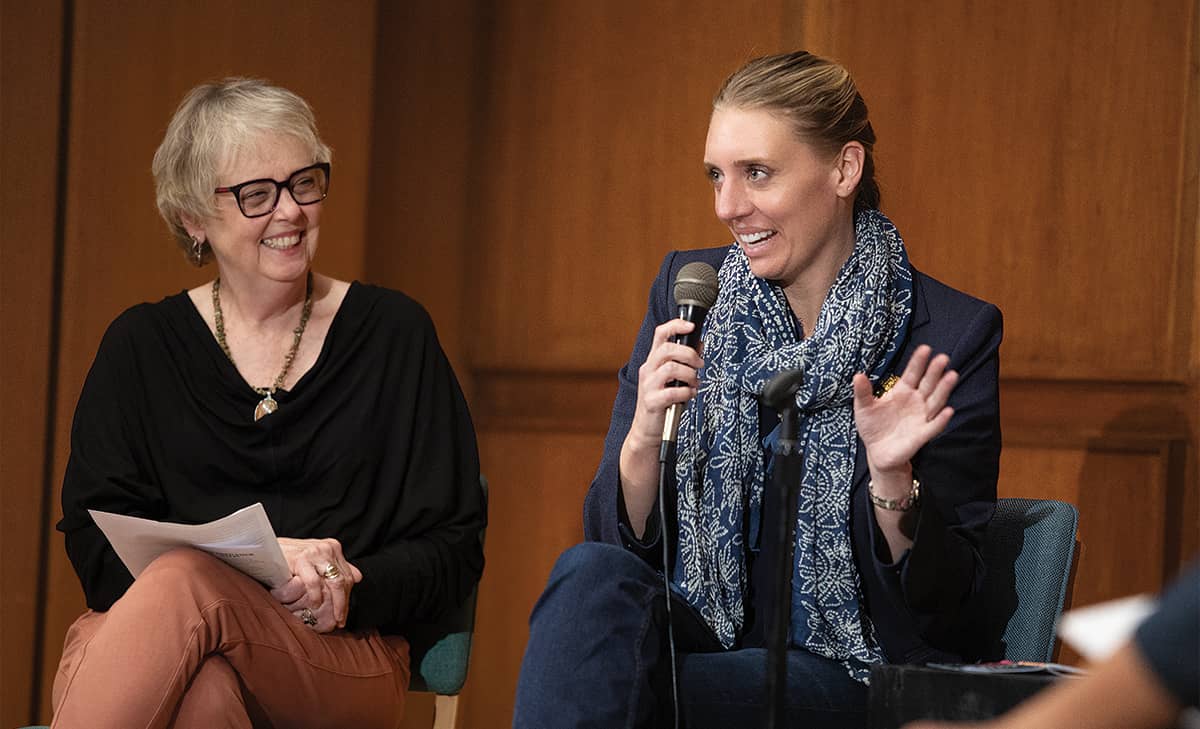
I attended the Minnesota Women’s Press forum in November. I was interested in the perspective of Anabel Sanford, of Emmons & Oliver Resources (EOR), who explained the process that a hyperscale project might take. It doesn’t start with checking environmental issues; it starts by asking questions about how much the energy access might cost in one location compared to another. Sanford said it is competitive to find a place with a low-cost connection to the energy grid.
She indicated that every development — whether a data center, small community solar garden, or giant residential development — needs to be plugged into an interconnection queue. Grid operators and utilities do studies, Sanford said, to make sure that “if you’re going to plug in over there, it doesn’t blow up the grid over here and knock everybody out of power. There are incredible minds balancing our grid. This idea of just plugging in is not that simple.”
There is a waiting list for feasibility studies, she added. “If you’re on the developer side, you get frustrated, asking ‘Where am I in line?’” On the other hand, the utility side needs to know not only that a new connection won’t knock out power — but “how much will the connection cost? It might need another substation, and who pays for that?”
Finding the right land space, with an owner able to sell for development, is another big step in the process. “By the time they get to the community, they might already have a good idea of what the design is going to be, but they don’t want to spend all their money on having a full design that has to be redesigned for every constraint that follows. So they’ve got this rough idea. It’s called a 30 percent design. Then they start the conversations. They go to the economic development group, which is there to bring in business, property tax revenue, jobs, and infrastructure.”
After developers feel like they’ve got preliminary factors settled, then they are ready to negotiate with the community about what they might be able to do together as a good neighbor. Or they might indicate that they are looking at three places, and ask, “Can we strike a deal?” After a deal is struck, the developer moves forward to pay engineers and designers to meet standards.
As Sanford explained, regulations are complex for such large-impact centers. The state department of health might have protective standards for wells and drinking water. The Board of Water and Soil resources will need to approve the groundwater comprehensive water plans. The Department of Natural Resources is looking at the water use appropriation permits. The Department of Agriculture is looking at chemicals being used. Local watershed districts and cities require steps to be taken and ordinances to follow.
Sanford added that maybe not all staff involved understand the questions that need to be asked. Even people working to follow regulations don’t always know the process, or who is in charge at what point, since hyperscale data centers are new in Minnesota.
In the end, the rapid growth of data centers brings both possibilities and real uncertainties. Community members are asking good questions:
- Are benefits substantial enough to justify tax incentives being given to large corporations?
- Is the state ensuring that Minnesotans benefit from these projects beyond temporary construction jobs?
- How can the state push for design choices that align with Minnesota’s environmental values?