Abstract: This is a book review of Living Downtown, a book about the history of rooming houses and residential hotels in the United States. In the review, I describe the contents and themes of the book, relating back to my own time living in a rooming house in the Twin Cities in Minnesota. I discuss the implications of urban policy which banned rooming houses, their role in the future for urban housing and demographics, as well as the contents of the book as it relates to both. I write about my general agreement with the arguments the book makes, and extend some of its points to the current day, beyond its publication date in the 1990s. Points of discussion include linking my personal experiences in a rooming house to historic criticisms of them, the future of rooming houses in post COVID-19 downtown office conversions, as well as the relations between diverse urban demographics and diverse housing types in cities.
In a past life, I lived in an old way, in an old city — in a dwelling that was nominally classified as a “rooming house”, nestled a transitory realm between middle-class residences, scattered shops, speckles of urban blight, and de-industrializing parcels of Saint Paul, Minnesota.
The arrangement presented many advantages for a young, mobile worker. The house was comfortable, yet affordable, and the provision of a healthy amount of furnishings and kitchen appliances greatly reduced the burden and costs of moving halfway across a continent for an underpaid government fellowship. However, I also wonder in retrospect of the extent to which comfort in the confines of a “rooming mindset” might restrict elements of one’s mental development. In particular, I think especially about my capacity at the time for commitment to place and people, as well as self-emplaced restraints on one’s own ultimate obligation to build their own home and household in due course.
(Note: in the 1950s, a Finnish consul in Duluth made this argument even more strenuously, reasoning that the comfort of cooperative Finnish boardinghouses in northern Minnesota during the early 20th century eliminated the “incentive for the men to get married”, ultimately resulting in quiet deaths alone in old age among boardinghouse residents without any “known survivors”.)
Indeed, even as I was happy for the most part as a rooming house resident, the above thoughts would not have been out of place among critics a century ago who saw crime, disease, vagrancy and worse stemming from any form of housing deviating from a nuclear family in a single-family detached house (chapter 7). In 1906, one critic found that they “rendered people selfish and self-centered and emphasized ‘the individual life at the expense of the family and the home’” (p. 211). Charting the rise and fall of rooming houses as a form of living in the United States, Living Downtown details just what exactly these bygone types of housing were, and why they attracted such ire. Beyond merely recounting trivia about a type of building format, Living Downtown tracks this history of American life in rooming houses with a subdued aplomb, weaving through a tension between the rooming house and the residential hotel – on one hand its practicalities for its residents (and maybe cities writ large), against the shortcomings of this form of living, both real and perceived – the resolution of this tension eventually translating into policies nationwide more or less condemning most rooming houses to history.
Contrary to stereotypes about who frequents rooming houses (or used to when they were more commonplace), much of Living Downtown – perhaps even its main thrust – is devoted to detailing the diversity of demographics who once called residential hotels and rooming houses ‘home’, across income, age, and identities, each with their own reasons. Indeed, one of the first anecdotes that Groth raises is not an young itinerant traveller, or someone intractably down on their luck, but instead a middle-income elderly woman:
Dorothy Johnson, a sprightly sixty-five-year-old widow, lives in a single room in a Minneapolis hotel. Like a great number of middle-income people who rent one or two rooms in a decent hotel on a good street, she cooks simple meals on a hot plate in her room and enjoys daily room service, a moderately priced dining room, and several cheap coffee shops close by. “I’ve sold my car because everything is within walking distance,” Dorothy says. “My friends in the hotel and I can look forward to an outing arranged by the staff, or on the spur of the moment we can go shopping, take in a movie, or see a play—all without driving.” (p. 3-4)
The book proceeds in a linear fashion, across both wealth and time. After an introductory chapter, chapters two through five detail rooms for rent from opulent residential hotels (chapter two) to flophouses at the edge of society (chapter five), with accompanying maps, photographs, floor plans, and isometric views of sample buildings.
If the first half of the book detailed how rooming houses once existed in much of the United States, the second half chronicles the timeline of their demise – from the dynamics of owners and managers (chapter six), criticisms of rooming houses ranging from health and welfare, morality, and social reaction (chapter seven), and the implementation of those criticisms through regulating rooming houses out of existence in much of the US (chapters eight and nine). Finally, the ninth and final chapter also asks what is to be done about the consequences of the loss of rooming houses and residential hotels in American cities – not only as housing of last resort for the poor and indigent, but also the other demographics who once made frequent use of rooms for rent, such as newly arrived workers, young and old people alike, immigrants, other minorities in society – who must now compete with everyone else in a housing market with arguably fewer options of housing style than a century ago.
Although much of the book describes settings in San Francisco (the author, the late Paul Groth, was a professor at UC Berkeley), I think the book also provides enough material for another case study in a US city – Minneapolis, the home of Dorothy Johson. Like many American cities, Minneapolis once was home to a number of rooming houses, concentrated in an area downtown known as the Gateway District. The Minnesota Historical Society describes the district as transitioning over the first half of the 20th century “from a mixed-income community of immigrant families to one of predominantly young and single transient men”, eventually becoming “a de facto low-income retirement community for pensioners and the chronically unemployed”. The location and buildings of the Gateway District at the margins of society also afforded it some qualities as a perverse form of refuge for people outside of the mainstream – “Establishments like the Persian Palms, Dugout Bar, and Herb’s were refuges for the Twin Cities’ LGBTQ community.”
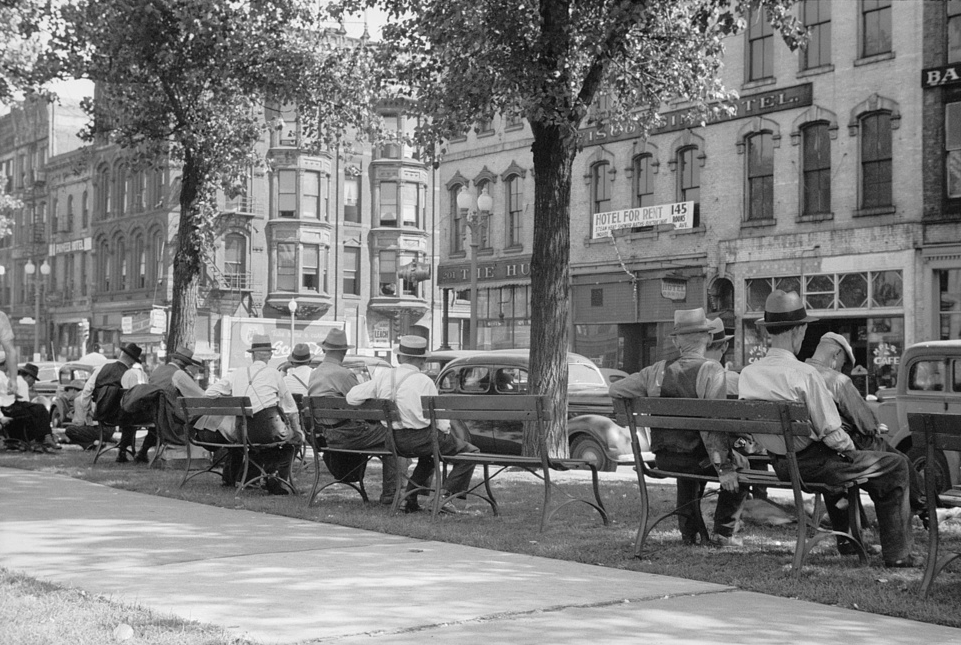
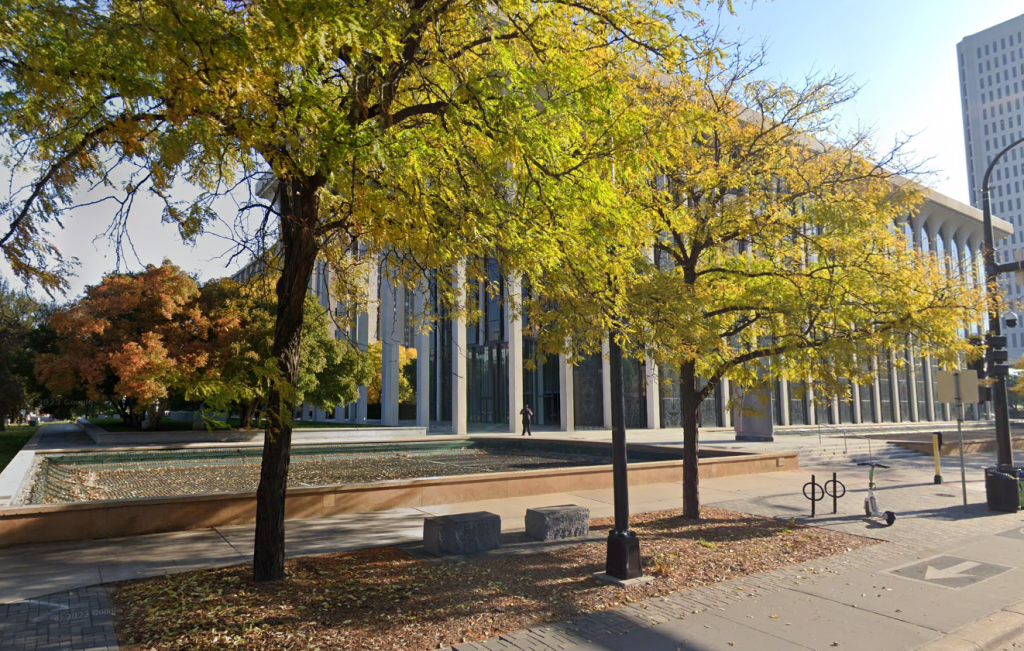
Nevertheless, the Gateway District was also a common place for vice and crime, and beginning in the 1950s, the entire district was torn down and replaced with a combination of highways, parking lots, and modernist office buildings. Permits for rooming houses were frozen throughout all of Minneapolis by the 1980s. Ironically, decades after the demolition of the Gateway District, local governments in Minneapolis have begun to revisit the concept of rooming houses (now under the more technical name of “Single Room Occupancy”, or SRO), to address issues of homelessness and housing insecurity in the city.
As this book was published in 1994, Living Downtown does not detail another great event in American downtowns which has happened since then, comparable in scale to the cars and the urban renewal and the slum clearance which rid American cities, like Minneapolis, of most rooming houses and residential hotels. The COVID-19 pandemic and its aftermath has brought upon a “commercial real estate mess”, in large part from behavioural shifts away from working in downtown offices, beginning en masse during the pandemic – and subsequently, reductions in downtown foot traffic, declining property valuations, challenges with financing, and so on.
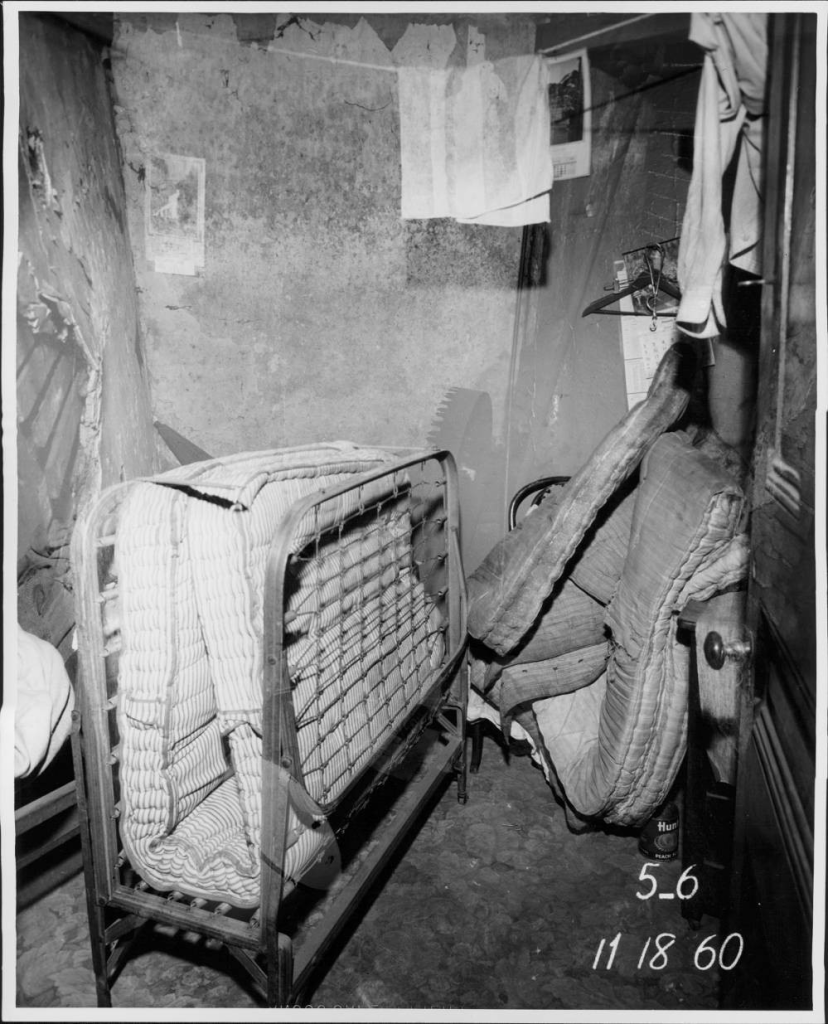
Perhaps ironically, just as many of these empty office buildings were built at mid-century to rid downtown Minneapolis of seedy rooming houses (archival photographs admittedly do show a decrepit state in many of these buildings), redemption of these buildings may take the form of conversion (back into) rooming houses. A feasibility study on conversions such as these for Denver, Minneapolis, and Seattle shows at least one reason why these under-utilized office buildings might be better suited for conversion to something resembling residential hotels than conventional apartments – the deep floor plates of office buildings create spaces which, if allocated only for conventional apartments, would result in wasted space or windowless bedrooms. One might even be able to think about how new technologies, like portable induction cooktops, could make rooming house life more amenable than in the days where radiant heat was available only via coal, oil, or gas.

If it can be helped, I would like to think that my rooming house era is over — vis-à-vis a notion of “it’s not cute anymore” at this age, as a good friend would phrase tendencies like it. Yet I believe it would still behoove the great, yet stagnant cities of the north to support the recreation of more diverse forms of housing. Living Downtown excels at using history to show how popular conceptions of “home” can, and have shifted over time. Far from merely being nests for shifty vagrants, rooming houses used to be commonplace and socially acceptable places for urban workers or young couples to start life from (chapter 4).
Even closer to the margins of society, everyone needs a place to live, and for much of the 19th and 20th centuries, including at the apogee of many American cities in the early 20th century, rooming houses and residential hotels fulfilled a niche in a diverse mixture of housing type, in an ever-diverse nation. In today’s context, more housing options could make the prospect of moving less daunting for someone seeking refuge from climate catastrophe, social oppression, or political repression. For Liberal Currents, Samantha Hancox-Li, quoting Rebecca Tiffany, described a “feminis[t] YIMBY” vision that I am partial to – a city where “[e]very trans eighteen-year-old who is stuck living with unsupportive family [is] able to afford an apartment in a vibrant urban space with transit on a minimum wage job.” Today, there is good reason to think that rooming houses may be able to fill a niche in a feminist-YIMBY city. In addition to their inherent smaller footprint, in a residential hotel or rooming house, there is no need to assemble IKEA furniture, purchase a full kitchen set, or even lug a mattress up flights of stairs – at least for now.
The book can be read in full at http://ark.cdlib.org/ark:/13030/ft6j49p0wf/; courtesy of the UC Press E-Books Collection.