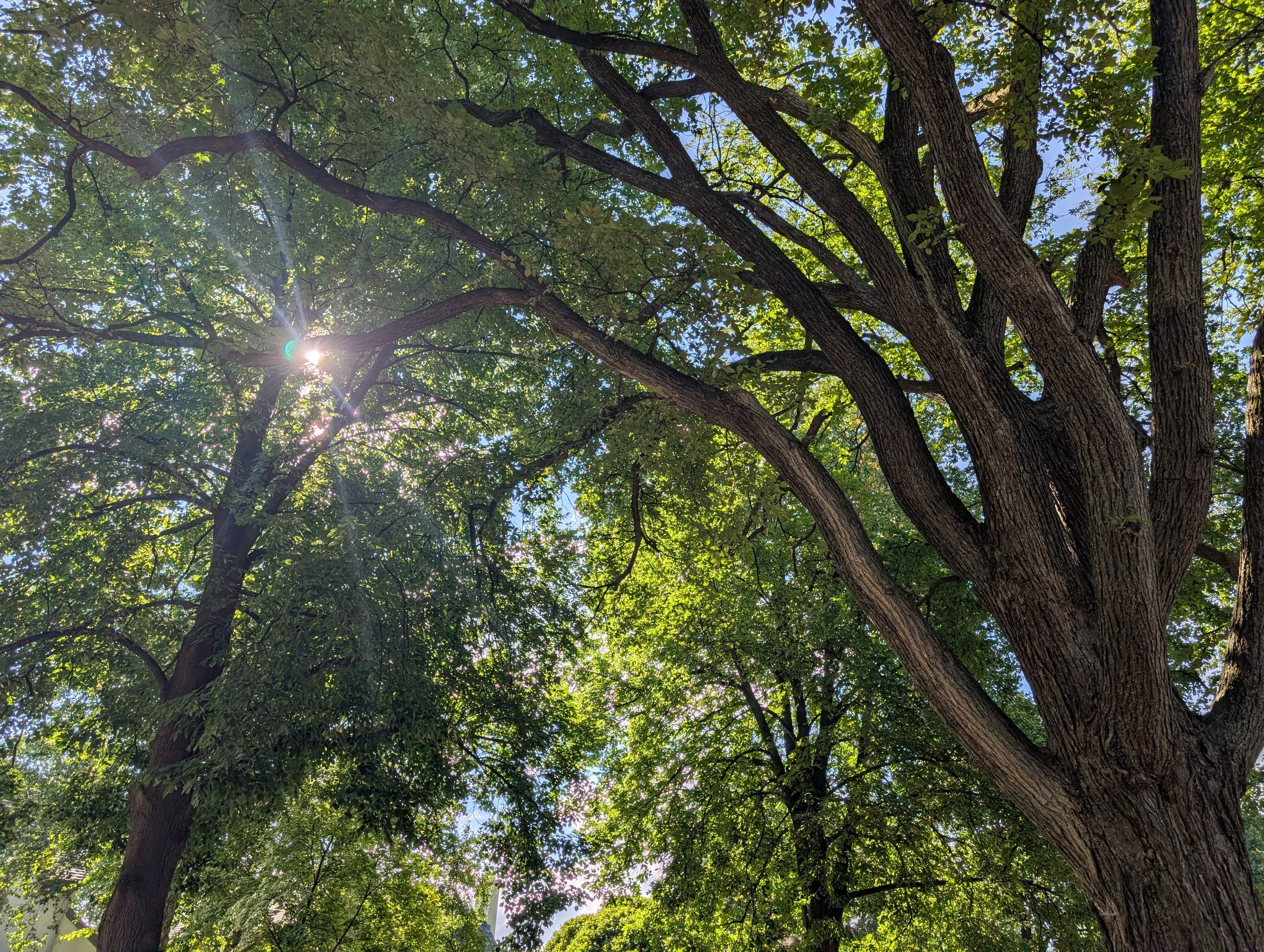
In the Twin Cities, the shade residents experience today reflects decisions made generations ago. As Minneapolis and surrounding communities invest in rebuilding their urban forests, are those investments reaching the neighborhoods that need them most?
Urban greenery is a type of municipal infrastructure shaped by capital and policy. Look at a modern map of canopy cover across the metro, and you will see the ghostly outlines of 1930s Home Owners’ Loan Corporation (HOLC) redlining maps and racial housing covenants. In affluent, historically protected enclaves like Linden Hills in Minneapolis or Summit Hill in St. Paul, mature oak and maple canopies routinely cover 35 to over 45 percent of the landscape.
Travel a few miles to Near North, Hawthorne, or across the river into Frogtown, and that overhead cover shrinks dramatically—in some census tracts dropping below 15 percent. Decades of intentional disinvestment, commercial zoning, and highway construction like Interstate 94 and Interstate 35W stripped these communities of natural cover and replaced root networks with asphalt and concrete.
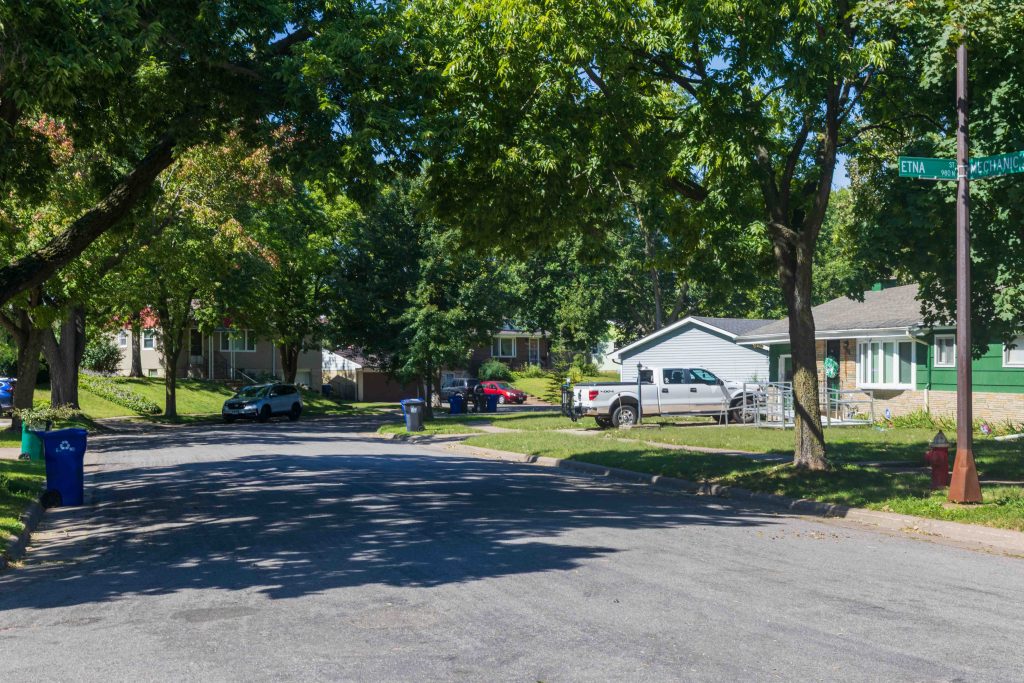
This disparity is not merely aesthetic; it is a measurable public health crisis. During peak summer heat waves, the Twin Cities’ urban heat island effect can push surface temperatures in canopy-deficient blocks 10 to 15 degrees Fahrenheit higher than in tree-dense neighborhoods just ten minutes away. In areas already contending with the exhaust of arterial thoroughfares and industrial corridors, relentless heat amplifies pediatric asthma rates, cardiovascular emergencies, and crippling seasonal air-conditioning bills for working-class tenants.
Trees also perform work that cities would otherwise have to address through other infrastructure investments. Their canopies shade sidewalks, streets, and buildings, while their leaves and branches intercept rainfall and help reduce stormwater runoff. They can also lower energy demand by shading homes during hot weather. These benefits extend beyond individual property lines, making the distribution of urban trees a question of shared public investment rather than simply private landscaping preferences.
To their credit, regional leaders recognize the disparity. Tools like the Metropolitan Council’s Growing Shade platform and American Forests’ Tree Equity Score have brought data-driven clarity to environmental justice tracts. The Minneapolis Park and Recreation Board (MPRB) and non-profit partners like Tree Trust have directed tree giveaways and boulevard plantings toward designated Green Zones.
Yet planting saplings only solves half the equation. The more stubborn challenge lies in survival and private land ownership.
First, a public boulevard tree cannot cool a neighborhood alone. Much of an urban forest’s potential canopy sits in residential yards. In neighborhoods with substantial renter populations, the people who would benefit from additional shade often have little authority over whether trees are planted or maintained. That authority belongs, in part, to property owners.
When the emerald ash borer swept through the metro, homeowners with disposable income treated or safely removed their ash trees; in disinvested neighborhoods, mature trees were often clear-cut and never replaced.
Second, saplings require sustained labor. A young tree needs roughly 15 to 25 gallons of water per week for its first three years. Relying on resident volunteers or strained municipal watering trucks during increasingly frequent summer droughts means newly planted equity trees face high mortality rates before they ever cast meaningful shade.
The financial burden of tree loss has already fallen unevenly across Minneapolis. When emerald ash borer infestations led to the condemnation of thousands of trees, North Minneapolis homeowners disproportionately paid for removal through assessments added to their property taxes. According to Park Board data reported by MPR News in 2023, approximately $2.8 million in tree-removal costs had been assessed to North Minneapolis properties over the preceding decade. More affluent homeowners, meanwhile, were more likely to pay contractors directly. The result was not simply the disappearance of mature trees, but a financial obligation for residents in neighborhoods already contending with historic disinvestment.
If the Twin Cities want true tree equity, regional forestry cannot just be a distribution campaign—it must be an ongoing municipal maintenance commitment. That means dedicating public funds not only to drop off saplings, but to pay for establishment-period watering, subsidize private-lot tree planting for lower-income homeowners and tenants, and enforce stronger canopy preservation ordinances on commercial redevelopments.
Trees are climate resilience infrastructure. Until our budgets fund shade maintenance with the same urgency as asphalt repair, the shade gap will remain one of the Twin Cities’ most visible divides