Every day, The Overhead Wire collects national and international news about cities and sends the links to their email list. At the end of the week they post some of the most popular stories to Greater Greater Washington, a group blog similar to Streets.mn that focuses on urban issues in the D.C. region.
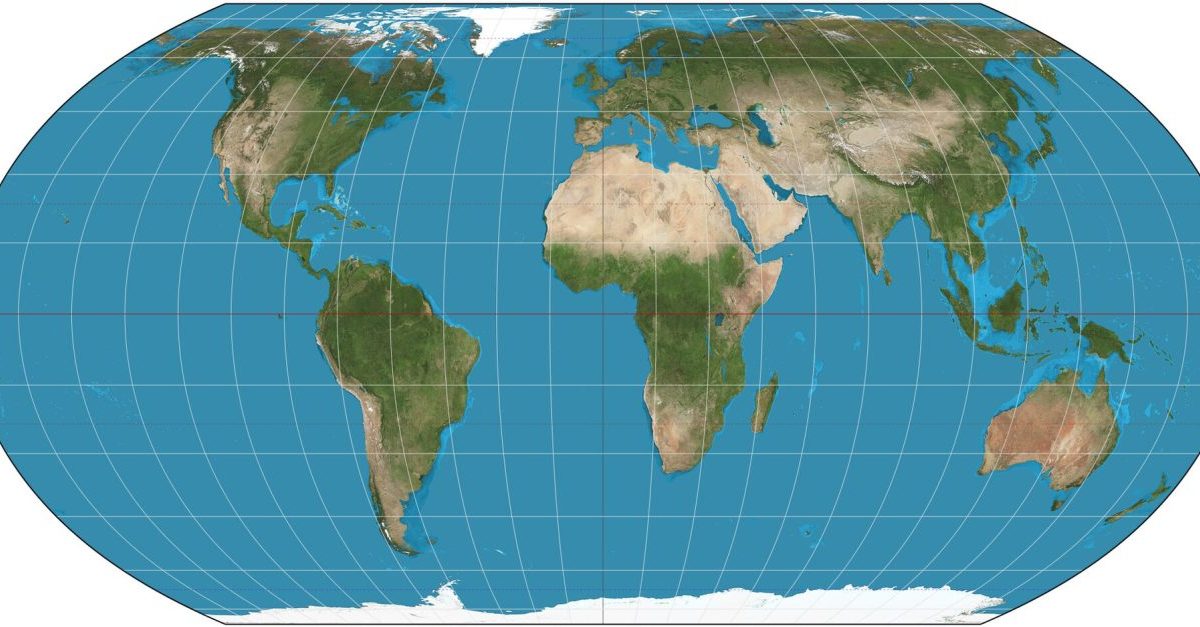
Bigger than you think: The African Union is calling for the use of the Equal Earth map in place of the Mercator map in order to show the continent’s true size. Africa’s size compared to more northern countries has long been misrepresented as smaller due to the way the projection displays them. Members suggest using the Equal Earth map developed in 2017 by cartographer Tom Patterson which displays countries closer to their actual size than other map projections. (Ayana Archie | NPR)
The future of cooling is the past: Many areas with already hot climates are looking to implement local designs and ancient technologies to cool them down. Colonialism and the importation of European design brought structures to countries that weren’t suited for the climate, but now many designers are using tried and true methods to control temperatures. (Yasmin Alrabiei | Atmos)
Rainbow crosswalks: The Florida Department of Transportation has stripped the colors from the rainbow crosswalk in front of Orlando’s Pulse Night Club twice. Pulse was the scene of a nightclub shooting in 2016 where 49 people were killed. The state said the repainting was purely procedural, though it follows critical remarks from U.S. Secretary of Transportation Sean Duffy and Gov. Ron DeSantis as well as a recent ban of rainbow lights on bridges. The site is now being guarded by local police. (Natalia Jaramillo | Orlando Sentinel)
Supersized delivery robots: A company called Robomart is increasing the size of its autonomous delivery vehicle to carry up to 500 pounds of goods for delivery around Los Angeles. The company wants to launch its own app where customers can browse and order food and have it delivered by a vehicle that is restricted to just 25 miles per hour. (Andrew Hawkins | The Verge)
Mobile robot factories: After seeing the devastation of the Los Angeles fires at the start of the year, Sasha Jokic wanted to help. His company Cosmic uses robots to prefabricate homes that are then assembled on site. But different to other prefabrication companies, the robot factory is also on site in the neighborhood to deliver the parts. Now structural paneling can be completed ten times faster and 80 times cheaper than traditional building processes. (Kennedy Zak | Los Angeles Business Journal)
This week on the Talking Headways podcast, we’re joined once again by professor Karel Martens. We learn about how transportation engineering is good at measuring only one problem and ignoring others and a new tool to determine the success of transportation systems.
Quote of the Week
“Nowadays, I see young people walking through the park, taking pictures of themselves with the buildings and the trees. And there’s this community that has grown out of that, which is really interesting and nice to see. It’s our country, so we feel like we have to try and put in the effort as citizens to make it better.”
— Joseph Schwarkopf discussing in Vogue Magazine the growing pride of the city of Quito, Ecuador.