Every day, The Overhead Wire collects national and international news about cities and sends the links to their email list. At the end of the week they post some of the most popular stories to Greater Greater Washington, a group blog similar to Streets.mn that focuses on urban issues in the D.C. region.
How much should a trash can cost? There are two schools of thought on trash cans. First is that you put them everywhere to make sure people deposit trash such as at Disney Land. The second is to reduce trash cans so that people don’t dump trash at cans and have to pack it with them such as in Tokyo. Many cities have chosen to go the route with more trash cans given the lack of Tokyo norms, but the cost of a specially designed can for what they want is often above $1,000 per receptacle. (Mark Dent | The Hustle)
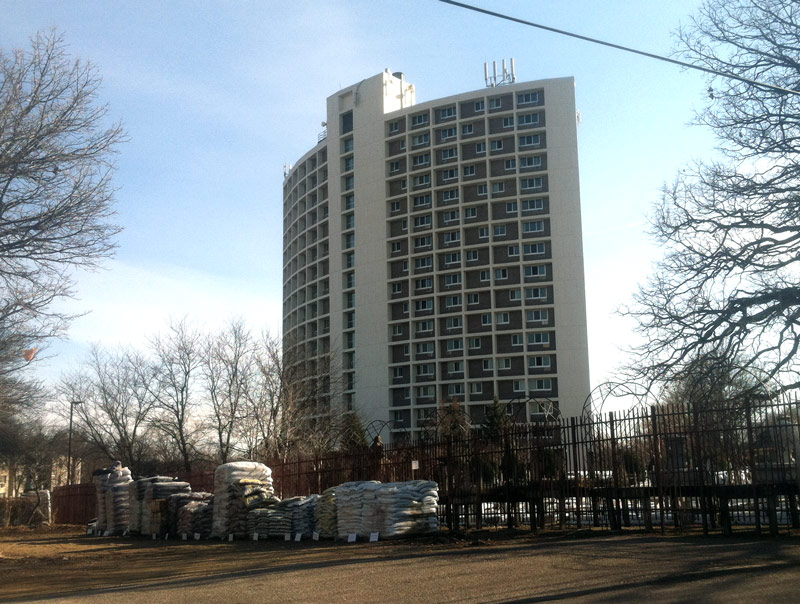
Long term benefits of Hope VI: New research from Opportunity Insights finds that federal Hope VI public housing programs built in mixed income neighborhoods have had long term impacts on the children that lived there. Parents’ earnings weren’t affected at the time, but when the children grew up more went to college, less were incarcerated, and they earned 3% more than they might have otherwise for every year that they lived there. Hope VI is seen as one of the greatest successes of applied New Urbanist principles. (Christy DeSmith | The Harvard Gazette)
Denver mayor just above a failing grade: The Denver Streets Partnership recently released it’s Transportation Safety and Access Report Card which gave mayor Mike Johnston a score of D. The rise in traffic fatalities in the city and the rejection of bike infrastructure by rich NIMBYs influenced the score. After releasing his own scorecard on homelessness and crime which left out traffic deaths, the mayor admitted that it was also absent from 2026 goals. (Bennito Kelty | Westword)
Where’s my package?: Amazon’s logistics networks create a web over cities that allow the company to deliver packages at lightning speed beating competition around the country. But that domination also impacts streets, workers, and stifles competition. Benjamin Fong used Amazon labels on packages to track the movement of packages to New York through the companies notoriously secretive warehouse and logistics system. Understanding this system could be the key to finding pinch points and organizing the labor force. (Benjamin Fong | Urban Omnibus)
Energy Star lives: The appliance energy efficiency program known as Energy Star will receive $33m from recently passed legislation. The Environmental Protection Agency under Lee Zeldin tried to kill the program after requests from right leaning think tanks to zero out the program showed up in Trump’s budget requests. But the unpopularity of killing the program likely saved it. 90% of consumers recognize the logo and it has saved consumers $500B in energy costs since 1992. (Jeff Brady | NPR)
This week on the Talking Headways podcast, we’re joined by Danny Pearlstein of the Riders Alliance to Talk About the One Year Anniversary of Congestion Pricing in New York City.
Quote of the Week
“I don’t like necessarily the outcome that I win and inclusionary zoning is gone forever. Although I do think that, as it’s been implemented, it is not equitable, and it is a violation of the Constitution.”
—Cambridge MA developer Patrick Barrett in WBUR on the possibility that his lawsuit against the city could get rid of inclusionary statewide and beyond.