Editor’s note: A version of this story appeared as an opinion column in the Duluth News Tribune on April 16, 2026.
“The sculpture is already complete within the marble block, before I start my work. It is already there. I just have to chisel away the superfluous material.” The 16th century Italian sculptor and painter Michelangelo said that.
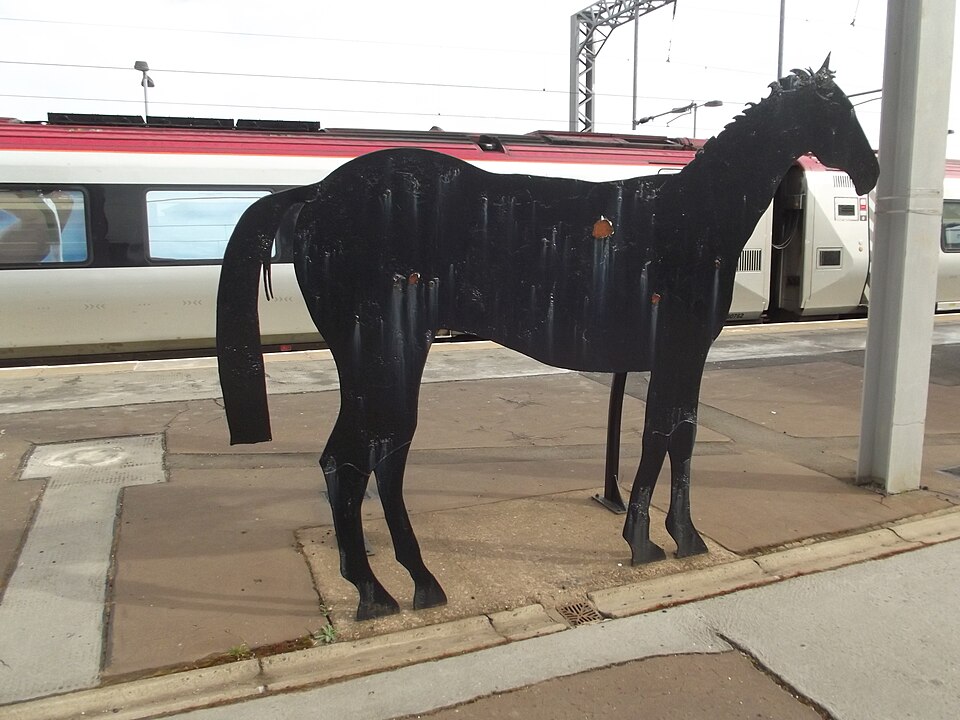
First, some background information on sculptures. In the 1980s, in the United Kingdom, the West Midlands Arts Authority — in collaboration with British Rail and the local authorities of the cities of Birmingham, Sandwell, Dudley and Wolverhampton — wanted to create artworks celebrating the historic 12-mile railroad track between Wolverhampton and Birmingham. To achieve this, they commissioned artist Kevin Atherton to design 12 life-sized silhouetted horse sculptures, each with a different pose. Each horse sculpture weighs a quarter of a ton, crafted from half-inch steel plate at Corley Welding in the town of Digbeth.
In 1987, these horse sculptures were placed at irregular intervals along the route, some on station platforms and others alongside the track. Today, these horse sculptures are popular with the traveling public. Each year, thousands of tourists ride the line just to see these symbolic 12 sculptures. This cultural tourism increases incomes for both the passenger railroad and nearby businesses such as hotels and restaurants.
“When you slow down enough to sculpt,” biblical scholar and author Karen Jobe said, “you discover all kinds of things you never noticed before.”
I believe community leaders should install similar steel sculptures along the route of the North Shore Scenic Railroad to increase tourism in Minnesota. Therefore, the Lake Superior Railroad Museum, the St. Louis and Lake Counties Regional Railroad Authority and the Duluth Art Institute should create a similar series of life-sized sculptures along the track of the North Shore Scenic Railroad.
Starting trackside by Duluth’s Union Depot, there could be standing sculptures of Civil War financier Jay Cooke and his unnamed collie dog. In Canal Park, there could be sculptures of sailors and dockworkers. For the grounds of East High School, there could be sculptures of students, teachers, and staff. Near the Glensheen Historic Estate, there could be sculptures of Chester Congdon and his family. And by Lester River, there could be sculptures of men and women fishing for smelt.
Other notable places should have sculptures of runners and wheelchair athletes at the starting line for Grandma’s Marathon. There could be sculptures of railroad workers and tourists at the Two Harbors Lake County Historical Society that’s located in the railroad depot museum. Also, local businesses could buy sculptures to advertise their businesses, such as sculptures of loggers for Tom’s Logging Camp.
In conclusion, these proposed sculptures would tell Northeastern Minnesota’s stories of both influential and ordinary people. Moreover, they could help contribute to our local economy, while promoting cultural tourism.