For two sweltering days in May, I traveled to the nation’s capital to visit friends. The District of Columbia was built on a swamp, with much of the National Mall originally below sea level. The combination of southern latitude, humidity, and climate change created heat indices reaching near 100ºF while I was visiting.
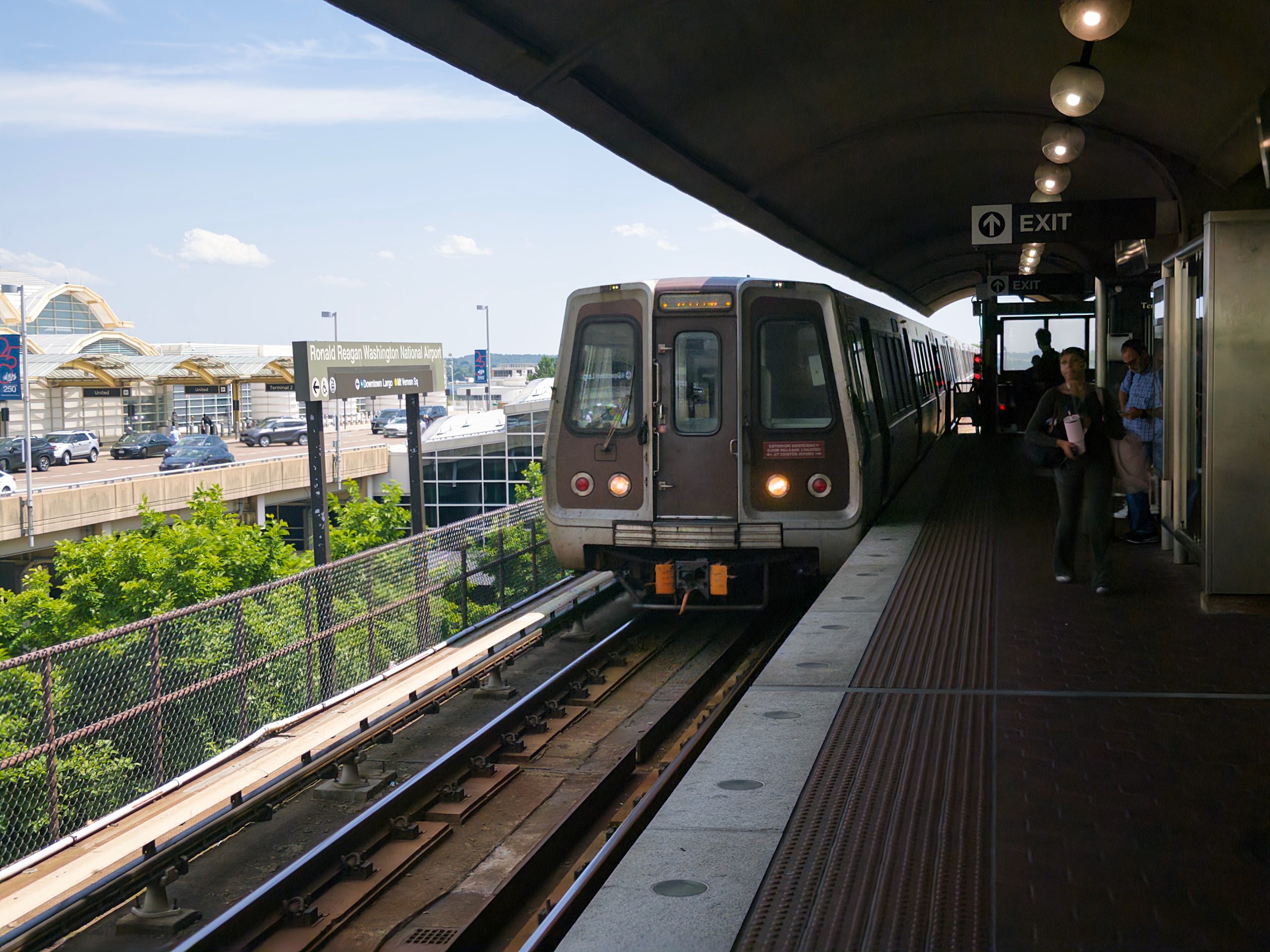
There are two major airports serving DC: Dulles (IAD) and Reagan National (DCA). Dulles employs the famous (or infamous) mobile lounges, which can be described as jetways that trolley out to a plane on the runway instead of the plane coming to the terminal. Reagan National, known as simply ‘National’ to locals, is the only airport connected to the DC Metro. This Metro service is convenient, with direct access to a station from the airport terminals and frequent headways to Virginia and all of the DC region by transfers. If you plan to travel to DC with minimal car use — less ride hail, no rental car — then DCA is the better choice for your flight to DC.
Navigating the DC Metro
Like the New York City subway, the DC Metro — officially known as Washington Metropolitan Area Transit Authority (WMATA) — is one of the best in the United States. Because of the swamp nature, stations are built into the bedrock with escalators descending hundreds of feet to cavernous stations with iconic concrete domes. The system first started service in 1976 for the nation’s 200th anniversary during the Ford administration, and after 50 years, the stations are showing their age, but less so with continued investment.
Riders do not need to download a specific app to navigate the DC Metro. There is a ‘Smart Trip’ card that you can add to your mobile phone wallet or fill at a station kiosk, but that is not necessary. I would recommend using your mobile phone’s default payment card with tap-to-pay (Apple Pay or Google Pay), which works exactly the same and doesn’t have to be ‘refilled’. The DC Metro does charge based on a combination of entrance and exit, so as long as you use your same (default) card for both taps, it works very easy. The fare is similar to Minnesota’s Metro Transit, with my receipts around $2.75 per ride. The cost of a Lyft at non-peak hours from DCA to Capitol Hill is around $19 before tip.
You can also use a transit-designated card for Apple Pay or Google Pay. Card readers that are designated as transit (Express Mode) are allowed by many mobile phones to make smaller purchases without biometric authentication. This allows a rider to simply tap like they would with a transit pass physical card. However, there is an exploit available that makes any card reader appear to be a transit reader while also bypassing the mobile phone’s defenses for the cap on purchases, allowing scammers to drain a mobile phone’s default card with tens of thousands of dollars in fraudulent purchases. It remains to be seen whether this cybersecurity research is duplicated by scammers in the wild, but I played it safe by avoiding designating a transit pass.
Ease of Navigation
The DC Metro is relatively easy to navigate as a first timer, especially if you have a working understanding of the geography of the nation’s capital. The map of the metro includes the National Mall in green with the main landmarks on there to orient visitors. There is ample signage inside Metro stations and your success navigating the metro should be similar to your past success navigating Minneapolis, St. Paul, or other cities with transit.
The street signs are far less easy to navigate. There are not large and clear street signs everywhere in DC, and I often found myself walking in the opposite direction for several blocks before realizing I was pointed in the wrong direction. It would be helpful to have northways flags on street posts and larger street signs that are easier to read at a distance.
Some visitors may wonder whether it is easier and cheaper to pay for a single fare or go in on a weekly pass. The easy answer is there are no discounts on fares for greater ridership. There are discounts for seniors or people with disabilities, but not a weekly or monthly all-you-can-ride pass. Weekday fares range from $2.25 to $6.75 based on time of day and distance. This is different from New York City’s MTA, which caps fares at the equivalent of 12 rides in a 7 day period, with additional rides being free.
Improving the DC Metro
The DC Metro is safer than Minneapolis & St. Paul, but I did see some criminal activity on the metro. There are ample safety cameras, so criminals will often wear ski masks or cheap surgical face masks and then walk through crowds looking down for purses or bags for crimes of opportunity. They ride the metro one or two stops and then go out for more searching. There are transit police trying their best, and the National Guard doing nothing. If you have ridden public transit before, and are street smart with bags with interior pockets, you should be just fine.
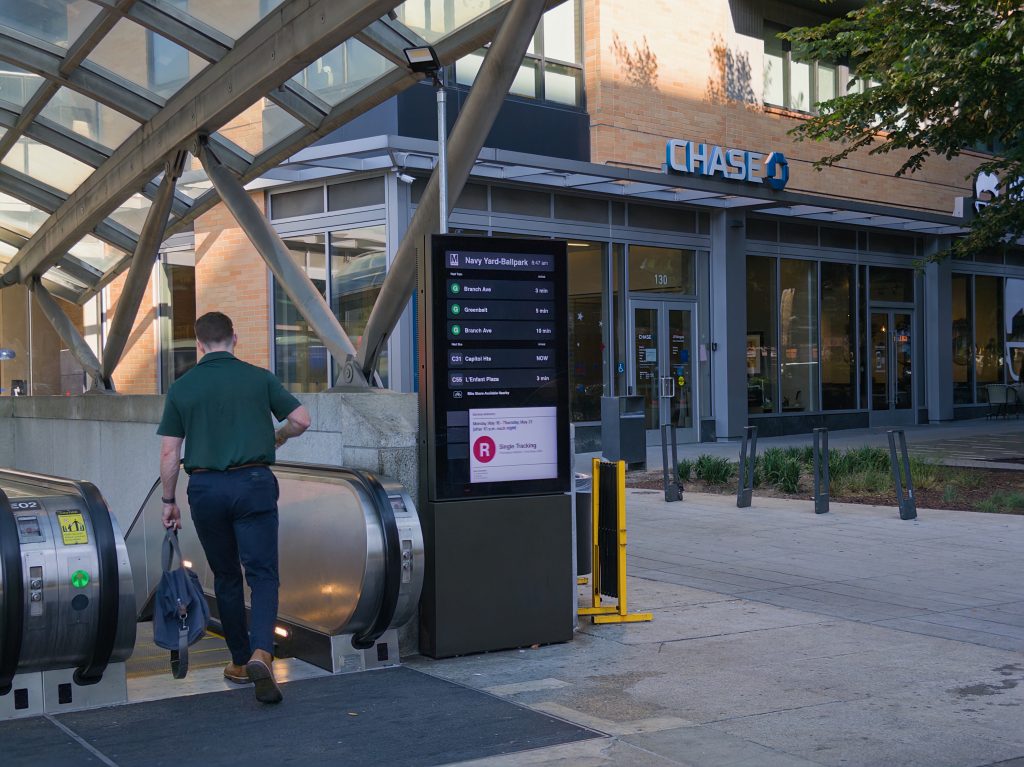
Metro cars were crowded at peak rush hour times and on certain lines that serve areas with more traffic. With the generous stations, most trains have around five cars. Some cars are updated with new upholstery, but even the old upholstery is padded and adequate. What I would like to see is more ample lighting in metro stations. The gray concrete has low reflectivity, and a combination of painting the ceiling and adding much more powerful LED lighting could be a really morale-boosting combination.
DC Metro trains run generally from around 5:30 am in the morning to 11:59 pm at night. If you need late-night service from a concert or sporting event, you will need to find alternative transportation like ride hail or taxi.
The DC Metro system is fully accessible for mobility needs like wheelchairs and scooters (or bringing a bike without using an escalator). Riders enter from a street-level elevator, pay their fare, then descend another elevator to the metro platform. There are usually WMATA employees at a booth to assist riders.
Biking in DC
Washington, especially closer to the National Mall, has many dedicated bikeways that are physically separated from car traffic with different levels of protection. The newest bikeways are curb-height, with boulevards on either side of the bikeway, separating from both parked cars and the pedestrian sidewalk. Other street-level bikeways have plastic flexposts and some distance, but not curb protection.
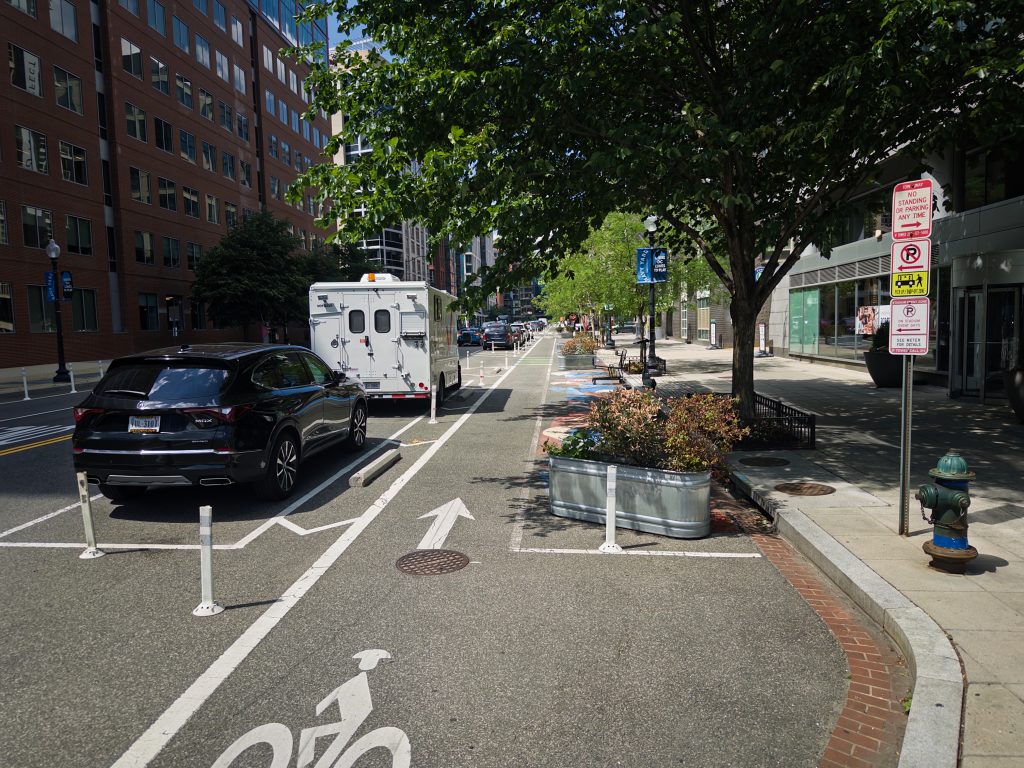
Bike infrastructure is continuous along certain intersecting routes. For example, Pennsylvania Avenue features a mid-roadway, two-way bikeway from Capitol Hill to the White House. Some intersections have green paint for marking routes at intersections, but most do not.
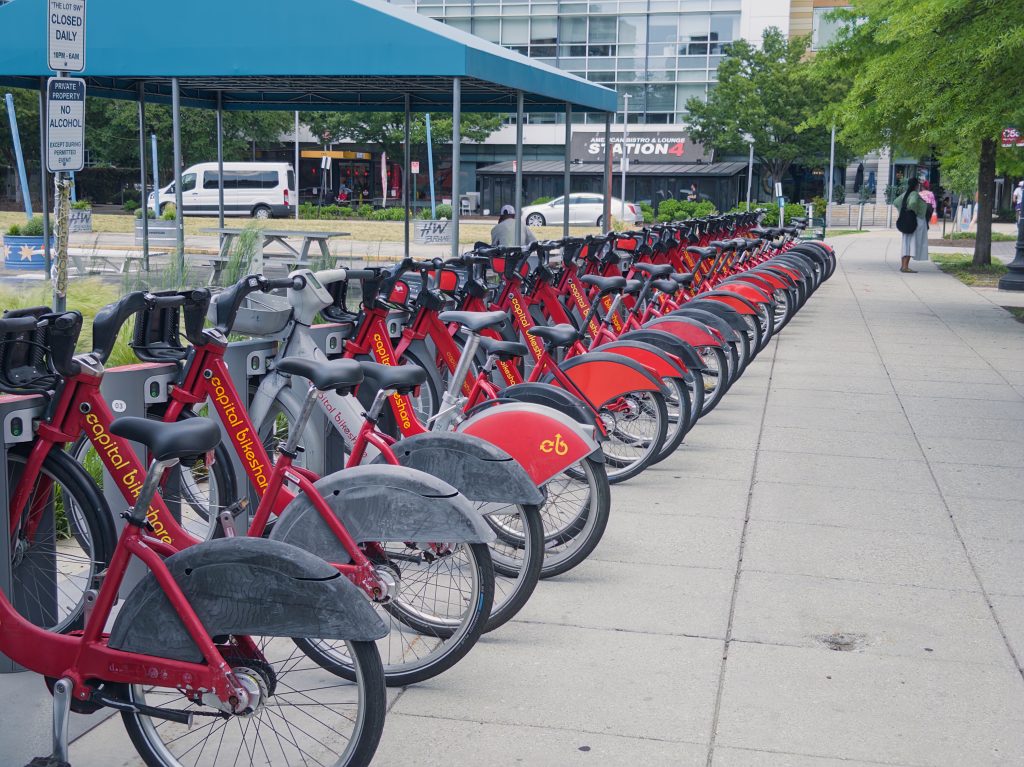
The best part of DC biking is that you don’t have to lock a bike because there are many affordable options for renting a bike. There is the Capital Bikeshare DC that is municipally owned, Lime, Veo, and there may be others when you travel. Capital Bikeshare has fewer electric-assist bikes, while Lime and Veo have a variety of electric-powered bikes and scooters.
Best Tips for DC
If you are planning to travel to DC or another city with world-class public transit, here are some good tips for enjoying your best stay.
- Fly into Reagan National (DCA) airport. The easy access to the Metro will be very helpful.
- Familiarize yourself with tap-to-pay on your phone or set up for a friend or family member who is less familiar. This is the most convenient and safest way to pay for fares and everything around DC.
- Have a backpack with interior pockets for your Real ID or passport. You will need the same level of identification as TSA at an airport to visit a Congressional office or the Capitol. Some museums may also want an ID for bag check.
- Dress for the weather and bring water. The heat index with humidity can be life-threatening, so always wear comfortable shoes for long walks, shorts and tee shirts during warm months. Keep a rain jacket or small umbrella in your bag for unexpected rain showers. A favorite water bottle is also a good idea, but you may need to empty it at certain checkpoints.