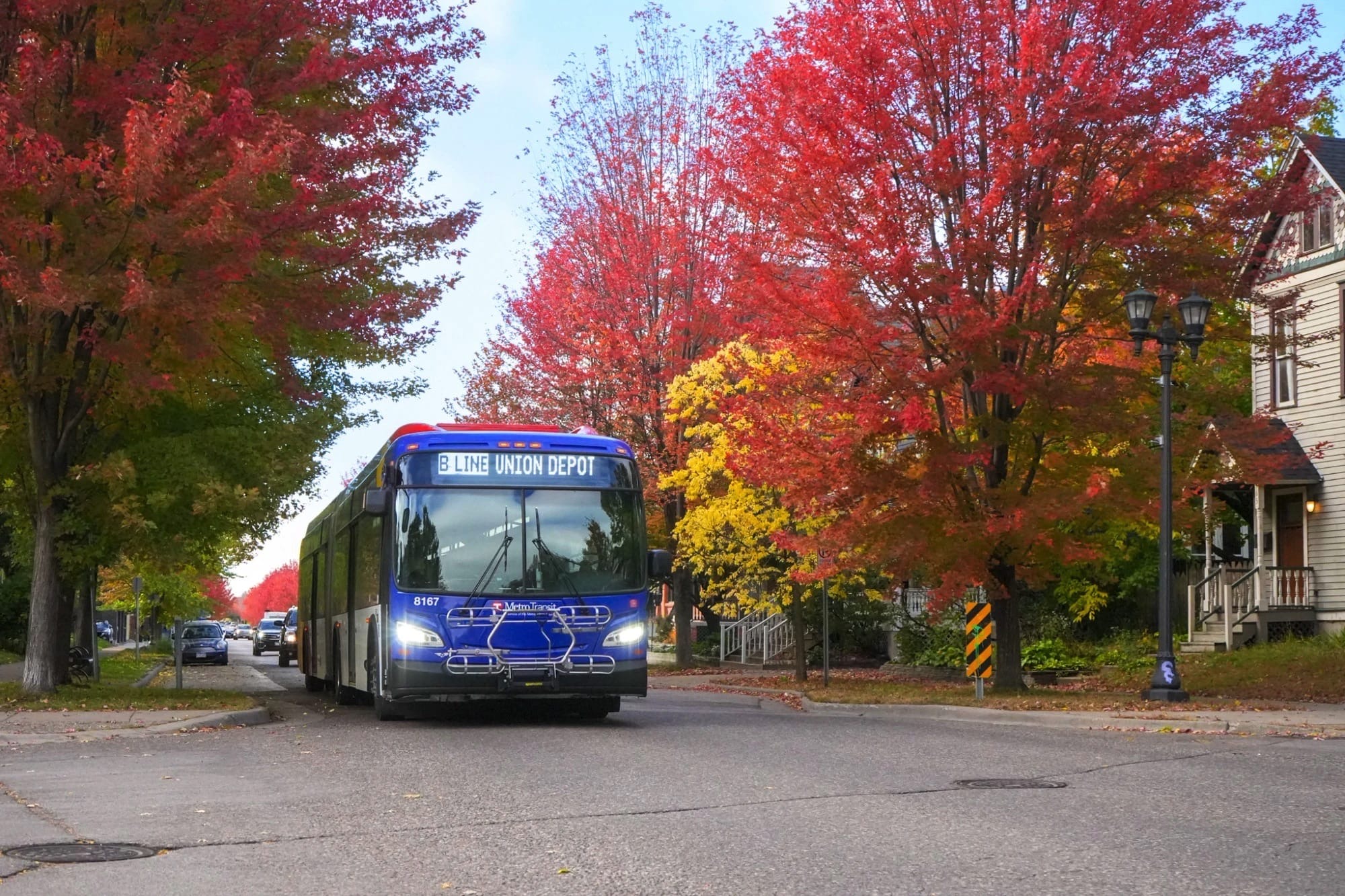
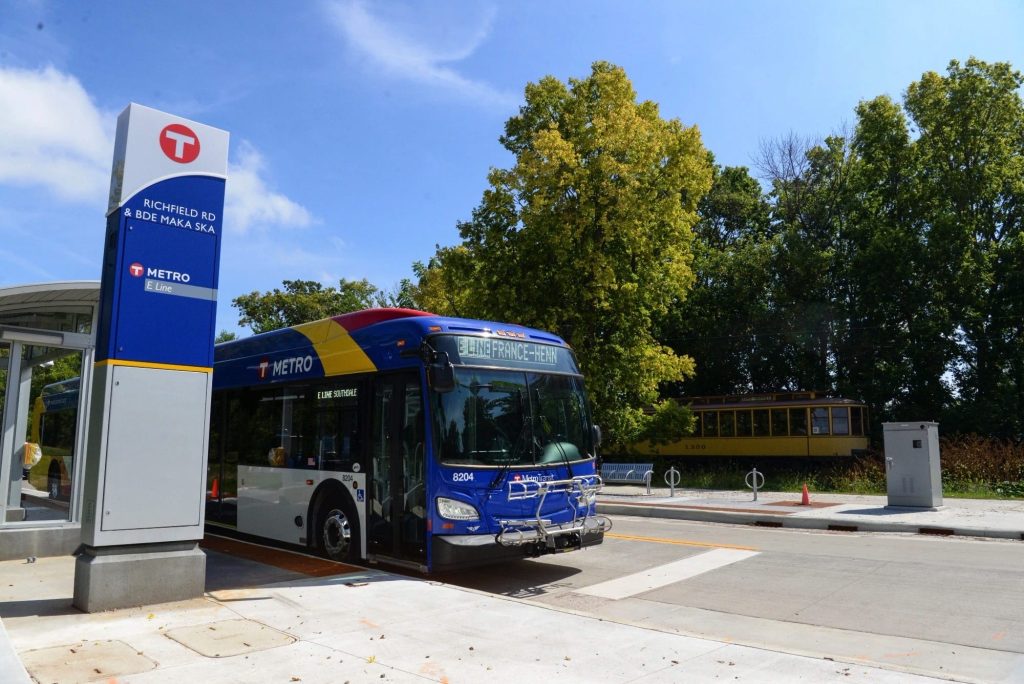
Metro Transit is expanding its network of bus rapid transit lines. There are currently eight lines in operation and four new lines in design phases. The two newest lines are the B Line and the E Line, connecting the Uptown district of Minneapolis to St. Paul and Downtown Minneapolis, respectively.
There are four bus rapid transit lines in development. The F Line replaces Route 10 in Northeast Minneapolis and northeast suburbs, with construction scheduled for 2028. Replacing Routes 62 and 68, the G Line would run from Little Canada, past the Minnesota State Capitol, down through West St. Paul. A phased opening is planned for 2028. From North Loop in Minneapolis to St. Paul along Maryland Ave, the H Line will replace Route 3 buses and is planning final design work right now. Some neighbors in St. Paul’s Warrendale neighborhood along Maryland would like a route change.
Meanwhile, the Bronze Line has followed a longer evolution from a proposed light rail line (the Purple Line) in 2014, but now is bus rapid transit with service beginning in 2032. The newest route design links the Maplewood Mall to the H Line along Maryland, then south to Union Depot in Downtown St. Paul.
Most bus rapid transit lines have alphabetical letter names, starting with the A Line on Snelling Avenue and Ford Parkway in St. Paul, opening in 2016. There are also color lines, such as Gold, Orange, Red, and the upcoming Bronze Line. These bus rapid transit lines were initially scoped for a higher level of service with light rail, but are currently running as bus rapid transit on these routes.
Connecting Uptown to the East Bank
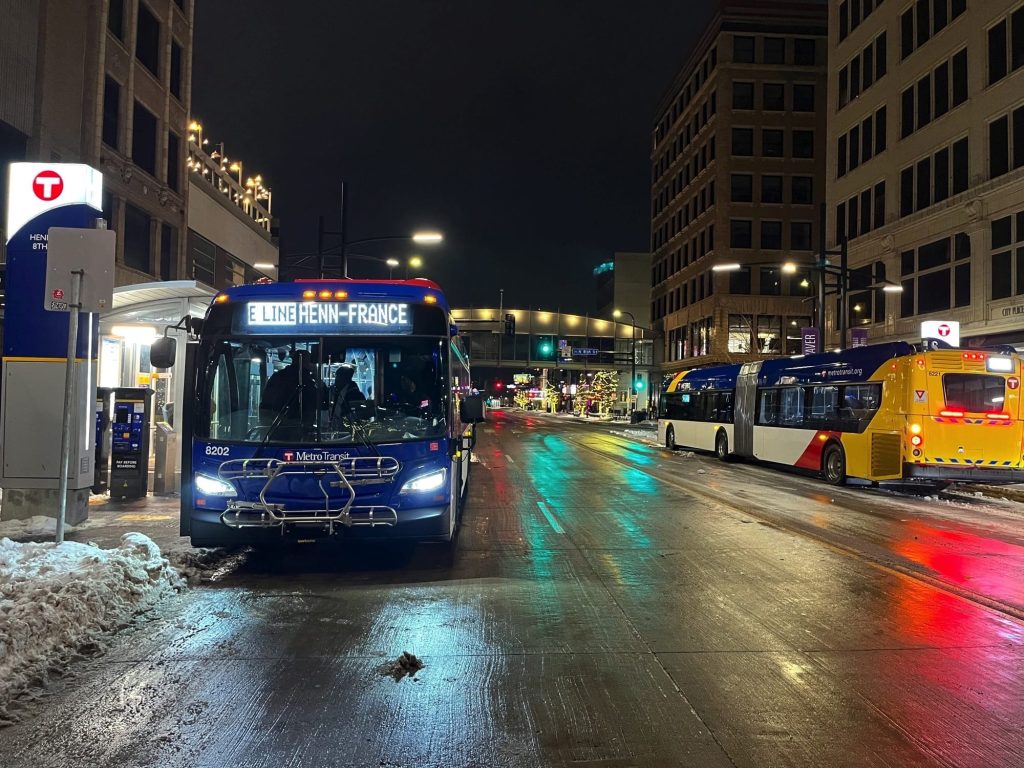
Susan Jacobsen is a senior in Marcy-Holmes on the East Bank. The E Line runs from Uptown through Downtown to the East Bank. She is thinking of selling her car and switching to the bus, including the E Line, but she has mobility issues and cannot climb stairs.
“To get where I need to go I have to go to two transfer spots,” Jacobsen explained via email. Lake Street at Hennepin Avenue and Hiawatha Avenue are both more risky for pedestrians. Susan mentioned that the elevator at Hiawatha was recently out of commission. “I am too old to ride a bike and it feels like my needs are not a priority for the City or the Met Council.”
When I visited the Blue Line station at Hiawatha Avenue and Lake Street, both north and south elevator cars were operational. However, both north and south escalator moving stairways were out of commission. There was a maintenance barrier surrounding the south stairway entries.
We asked Metro Transit spokesperson Drew Kerr about maintenance needs and budgets. He shared that Metro Transit invested $172 million in cleaning and repair work in 2025, which is outlined in the latest Cleaning & Repair Standards Report. “The primary expense here is staffing in our public facilities, bus, and rail maintenance areas, which have expanded to keep up with the needs of our growing system,” Kerr said.
“Elevator downtime is primarily attributed to aging equipment and misuse. To maintain safety and operational reliability, we conduct monthly inspections and respond to needs as they arise,” Kerr said. He shared that for the Hiawatha and Lake Street light rail station, Metro Transit has spent $550,000 maintaining elevators so far in 2026, including routine cleaning and maintenance, as well as bigger repair projects.
For Lyle James, also a retiree in Marcy-Holmes, the E Line, “works nicely.” He lives near a bus stop that has several local bus routes transferring, and is only two blocks from an E Line enhanced stop. “Overall the Metro Transit system works really well for me,” he said via email.
There are four bus rapid transit lines in development and planning. Three replace current local bus routes, and have alphabetical names. The F Line replaces Route 10 from Downtown Minneapolis to Northtown Mall in Blaine. The G Line replaces Routes 62 and 68 in St. Paul along Rice and Robert streets. The H Line replaces Route 3 with some modifications, from Downtown Minneapolis along Como to St. Paul and beyond.
Cutting Down on Commute Times
“I’m most excited for the F and H Lines,” said Araceli Jules Casasola via a Bluesky account that was deleted by the time this story went to print, who lives in South Minneapolis. “The B and E Lines have cut my travel times to Downtown and daily errands in half, so I’m really glad NE and Como are getting some love in the next three years.”
The H Line is further along in development. Because I live near one of the stops in Downtown Minneapolis, I have been receiving postcards and emails with updates. Project planners sought public feedback through May 4, 2026. As a Downtown Minneapolis resident for the past 12 years, I am excited to see the realization of a long-range vision by many Downtown residents and policy leaders to have a bus rapid transit line run on Washington Avenue from North Loop through to the University of Minnesota. If you live along the current Route 3 bus or would like updates, you can subscribe for H Line updates. The H Line is expected to enter service by the end of 2029.
Metro Transit’s proposed 2027-2032 Capital Improvement Plan was recently presented to the Met Council. The proposal includes over $4.4 billion in planned investments. Most of this new capital investment is for the METRO system of light rail and bus rapid transit, including the Blue Line extension and upcoming bus rapid transit routes with improved stations. Kerr shared that the funding mix includes federal and local investments, but that the recently passed metro area sales tax funds around 5% of the capital plan.
By contrast, 18% of transit operating expenses in the 2027-2032 plan are funded by the metro area sales tax, compared to 49% from the federal formula.
Answering Common Questions about Bus Rapid Transit
How is BRT faster than a conventional bus route?
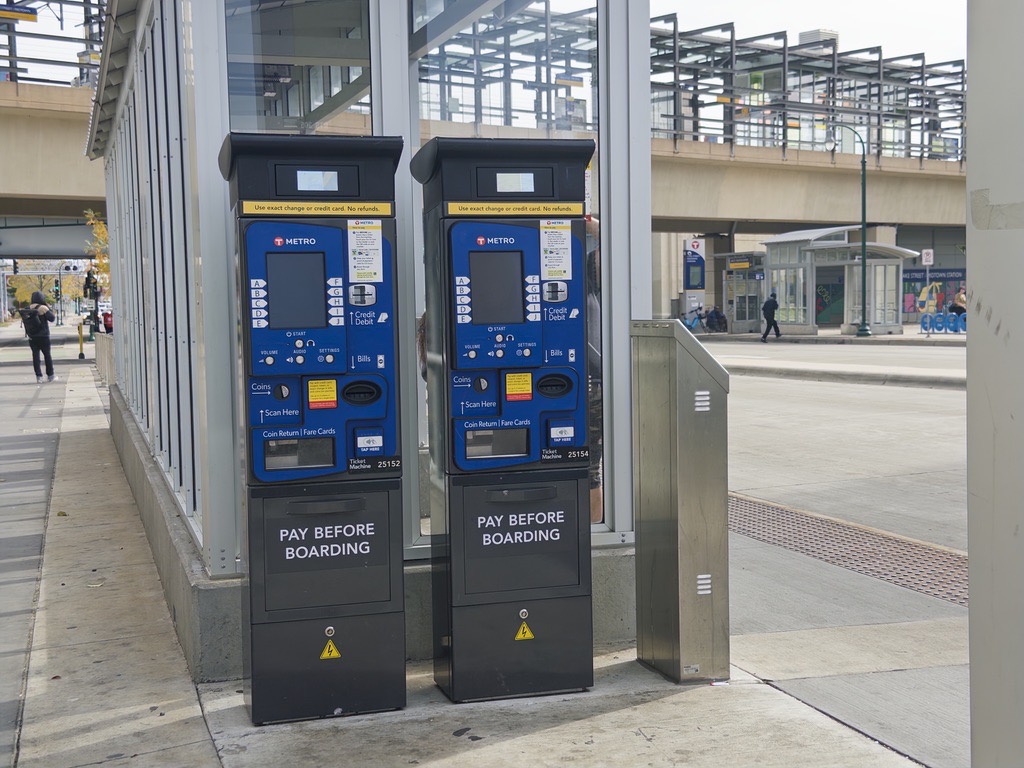
Metro Transit METRO bus rapid transit lines like the Orange Line use a combination of innovations to provide faster, more reliable service to riders. Starting at the station, riders pay before they board the same way they do on METRO light rail using the same equipment. Starting in the next year, you will be able to tap-to-pay with any payment card (credit or debit) to pay your fare without using any app or kiosk. The original Go To Card system was implemented in 2004, and is being replaced in a $37.7 million project with vendor Cubic. While riding, the bus lines are often in new, red paint dedicated transit lanes that you may have seen on Hennepin Ave and Lake St. Finally, there are new transit signal priority installations at many intersections along service routes, allowing buses similar benefits to emergency vehicles. These improvements have sped up travel times for riders significantly.
How frequent is the service? Can I really not look up the schedule?
METRO bus rapid transit routes typically run every 15 minutes during off-peak hours and every 10 minutes from 6:00 am to 9:00 am and 3:00 pm to 6:30 pm. Metro Transit pays for transit.app “The Transit App” that is available on the Apple App Store and Google Play. Riders do not need to sign up or register in any way. Just by being in the Twin Cities, riders automatically have all the paid features. This is a convenient way to check when buses are coming to a station near you in case it is raining or a blizzard outside. On a good weather day, you do not have any great need to check the schedules unless you are planning a specific transfer. However, during inclement weather, it can be helpful to check times and also use the heat lamps in stations.