
Editor’s note: This article first appeared on December 9, 2024, in the Minnesota Reformer and is reprinted under Creative Commons license CC BY-NC-ND 4.0.
More than two out of five Minnesotans who received an e-bike tax rebate from the state government are tax filers with more than $100,000 in income, according to data from the Minnesota Department of Revenue, obtained by the Minnesota Reformer through a public records request. About half had more than $80,000 in income.
Meanwhile, just under 37% of the roughly 1,500 Minnesotans who received an e-bike tax rebate are low income.
The rebate, passed by the Minnesota Legislature as part of the 2023 transportation package, grants e-bike purchasers a discount of between 50% and 75% of the value of an e-bike, up to $1,500.
The Legislature, which appropriated $2 million this year and in 2025 for the rebates, also mandated that 40% of the rebate certificates available be set aside for people earning less than $41,000 annually, or $78,000 adjusted gross income if filing jointly. The Department of Revenue met the mandate and then — as the statute allows — opened up the rebate on a first-come-first-served basis.
The high-income tilt of the rebate has prompted calls for reform, including from the rebate’s bill author, state Sen. Omar Fateh (DFL-Minneapolis).
A Messy Process
The rebate rollout was also a mess.
Applications initially opened on June 5, 2024, with 75 people — 11 of them from rural parts of the state, another 18 of them earning less than $41,000 last year — completing an application before the website crashed.
After fixes, the application reopened about a month later, with over 14,000 people applying in a 20-minute window. The Department of Revenue awarded 1,170 of them a rebate, including the 75 who applied in June, while placing an additional 3,829 people on a waitlist. In October, Revenue granted 349 of those waitlisted applicants a rebate.
Cycling advocates such as the Bicycle Alliance of Minnesota are calling for more money for the program when it rolls out again next summer, as well as changes to better serve low-income people.
“It’s estimated that 1% of the state’s population was online at the same time trying to get those rebates. When you’re doing a first-come, first-served online in the middle of a workday, it’s not going to be equitable,” said Michael Wojcik, executive director of BikeMN.
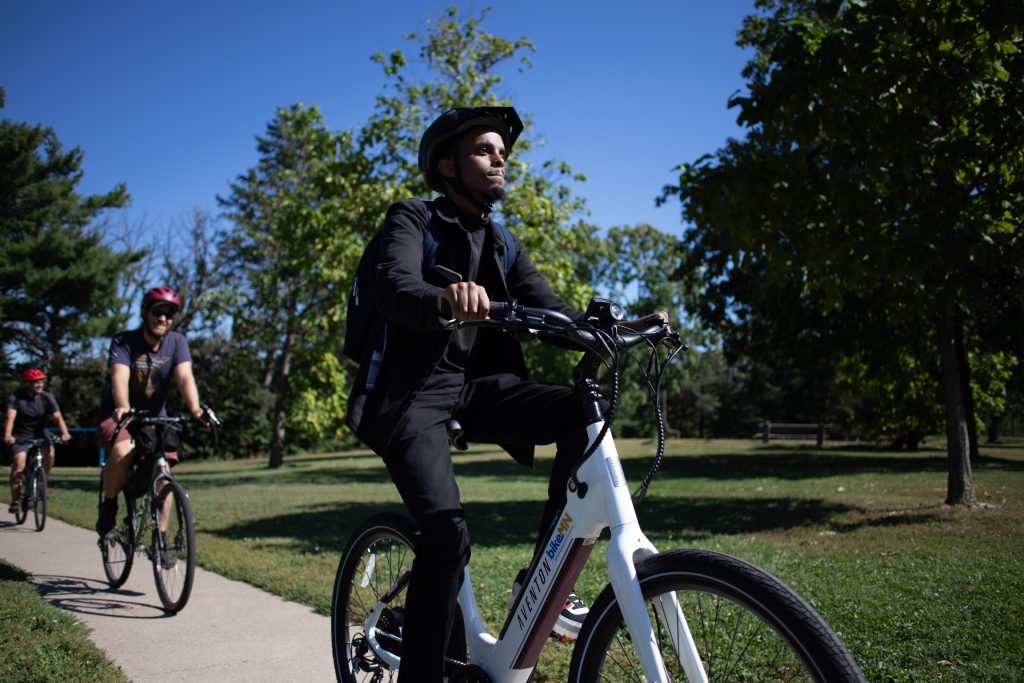
Fateh, who recently declared his campaign for Minneapolis mayor, rode an e-bike for the first time during a group ride in Minneapolis in late September. He said he wants to ensure the program has more funding and serves low-income people. The changes, he acknowledged, would be contingent on the November election results and the state’s annual economic forecast.
Neither bodes well for e-bike rebate champions. The 67-67 evenly divided Minnesota House gives Republicans virtual veto power over programs they don’t like, e-bike rebates among them. And, the state’s budget forecast shows a rapid decline in surplus, quickly becoming a deficit in the billions in future budget years.
E-bikes have grown in popularity in recent years: Lots of new, affordable models with more powerful batteries that can go longer distances have come on the market.
Ash Tifa, a Minneapolis resident and e-bike rebate recipient who recently lost her job, uses her e-bike as an alternative to buying a car, which would be expensive to purchase and maintain.
“The ability to have cargo space so we can more easily do grocery runs, and just lowering the reliance on having to borrow cars, it’s a no brainer. It makes our life so much more accessible,” Tifa said, adding she does not believe the e-bike rebate program should be first come, first served.
The City of Edina and the state of Colorado have also deployed similar rebate programs. In each case, program administrators have had to suspend their programs at times because of their popularity and attendant lack of funding. Colorado has since allocated more money to its rebate; e-bike purchasers can also receive a discount the moment they buy one. Meanwhile, cities have retooled their zoning codes and considered secure storage options to accommodate the influx of e-bikes.
Minnesota Revenue anticipates reopening rebate applications next year, which its website specifies as “early next summer.” Revenue also advises those with rebates to use them soon, as they can expire.
About the Minnesota Reformer: The Minnesota Reformer is a part of States Newsroom, a network of news bureaus supported by grants and a coalition of donors as a 501c(3) public charity. The Minnesota Reformer maintains editorial independence. Contact Editor-in-Chief Patrick Coolican for questions. Follow Minnesota Reformer on Facebook and on X.