
As I reported for Streets.mn in December 2024, my St. Paul neighborhood just west of Cretin Avenue and south of Marshall Avenue — both busy urban arteries on the city’s western edge — experiences enough roaring vehicle noise that I was moved to research its health effects, as well as some potential solutions in the form of automated noise enforcement (ANE).
My story elicited many comments, some from as far away as Massachusetts, Missouri and Oregon, which expressed similar frustrations and reflected several core themes. I’ve highlighted those below and provided more information toward the end of this synopsis for steps that residents can take.
Lack of Awareness of the Health Effects or ANE
- “Wow! I had no idea noise pollution was so detrimental to our health!”
- “We just don’t think about how environmental noise affects our whole state of being!”
- “I don’t think I am overly sensitive to noise, but frankly I hadn’t thought a lot about it until I read your article.”
- “I was surprised to hear about how much [noise] affects our health and well-being.”
- “I never knew of an enforcement tool like ANE, but it reminds me of the service used in Chicago to detect gunshots, which they recently dismantled.”
- “I had given up hope for control of loud vehicles. ANE could be a help.”
Concurring Opinions and Anecdotes
- “I can’t fully describe the inhuman, intentional loudness of several modified four-wheelers driving around, both revving and music.”
- “Yes, noise can be so stressful.“
- “Automotive noise is a significant problem in our neighborhood,” which is Shadow Falls in St. Paul.
- “My next-door neighbor [in Highland Park, St. Paul] has an ongoing feud with the people on her other side. Noisy cars, warming up for a good 10 to 15 minutes in the driveway right outside her bedroom window and then roaring off down the street anywhere from 3 to 5 a.m. I’d love to see them have to move or quiet down their cars.”
- “Agree 100 percent regarding the damage done by noise pollution, and the fact that the people doing it face no consequences. Also, we should absolutely be using available technology to enforce public policy goals.”
- “A seemingly small issue, but once it gets off the rails, social disorder and very real declines in quality of life quickly follow.”
- “You identified the issue and the health consequences and even addressed the solution.”
- “In my [St. Paul Hamline-Midway] neighborhood 25 to 35% of the noisy cars had their catalytic converter stolen.”
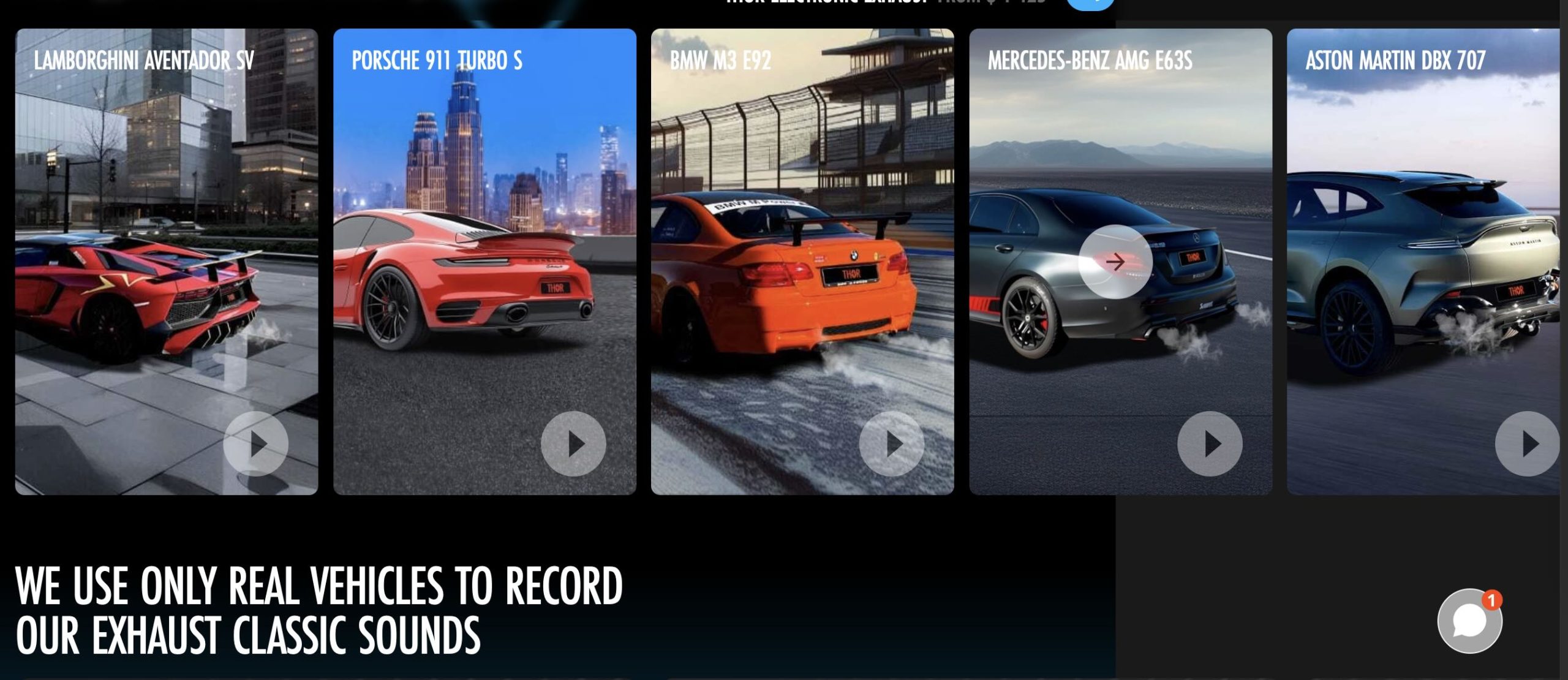
- “I’ve learned that even exhaust-less cars can now be made noisy. Multiple companies [Thor, KUFATEC, Borla] offer electronic simulated exhaust systems that blare recorded exhaust sounds, allowing any car or truck — regardless of power source — to sound like an unmuffled monster.”
Geographic and Temporal Distribution
- “I forget that you live near those drag racing hotspots,” including a street (Cretin Avenue) that feeds into Interstate 94 to the north and the University of St. Thomas and the Highland Bridge development to the south.
- “It would be interesting to see where the ‘hot spots’ are. I’m sure that there is a difference between the inner-city areas and the suburbs.”
- “Here in Lake Elmo, cars are pretty quiet.”
- “My neighborhood in Shoreview does get some noisy vehicles but not to the extent that you do.”
- “I believe Cretin and Summit is one of the noisiest intersections in St. Paul. It’s four lanes, and most cars are speeding way beyond the 25 mph speed limit. Plus, they are racing to move from two lanes to a single lane in each direction.”
- “In Hamline-Midway, noisy vehicles are certainly a problem.”
- “I guarantee that noise on West River Road in Minneapolis is worse than yours.”
- “I was at a conference in Philadelphia and out at night in the main downtown area. I can’t fully describe the inhuman, intentional loudness of several modified four-wheelers driving around — both revving and music.”
- “We are cursed with muffler-less speedsters on our Kirkwood thoroughfares, too,” in Saint Louis, Missouri.
- “Don’t go to New York City. The noise is overwhelming. I’m afraid that with many drivers the noise is the goal. They want their presence known.”
- “We are definitely aware of increased street noise from loud cars,” in Portland, Oregon.
- “The only embellishment has to do with the time of day. To me the imposition of road noise is way worse if it wakes me up compared with daytime noise. Do any of the [ANE systems] have a different db threshold for night and day?”
Advocacy and Government Action
- “Keep at this, because I do believe one person can make a difference!”
- “I hope that the issues you raised will get the attention of someone in city government. My expectations are lower with each passing month.”
- “I will contact city officials.” (See the resources at the end of this article.)
- “Seems like an uphill climb to get something done on this issue, but one has to start somewhere.”
- “I’m forwarding your email to my City Councilmember in Minneapolis.”
Multiple readers additionally cited snow blowers and lawn mowers as other sources of aggravating noise, and urged intervention. A few individuals also implicated sirens, college football games (I live near the growing University of St. Thomas) and pothole-related vehicle noise.
Searching for Solutions
Lisa Hiebert, a spokeswoman for the St. Paul Department of Public Works, said in a recent call that ANE currently is not an option in St. Paul due to lack of political will, money and legislative authority.
She suggested that citizens could build a case for ANE by collecting local noise data (using phone-based apps, maybe in multiple districts); inquiring with officials in Minneapolis and inner-ring suburbs about their vehicle noise experience, especially since new legislation, which she termed “a big lift,” would require a joint effort; learning from cities outside Minnesota that use ANE; piggybacking an ANE component onto the planned pilot of automated speed enforcement (ASE) in Minneapolis (see more on this below); and asking the League of Minnesota Cities about pursuing new legislation. She said it would be premature for a St. Paul official to speak with a noise camera company.
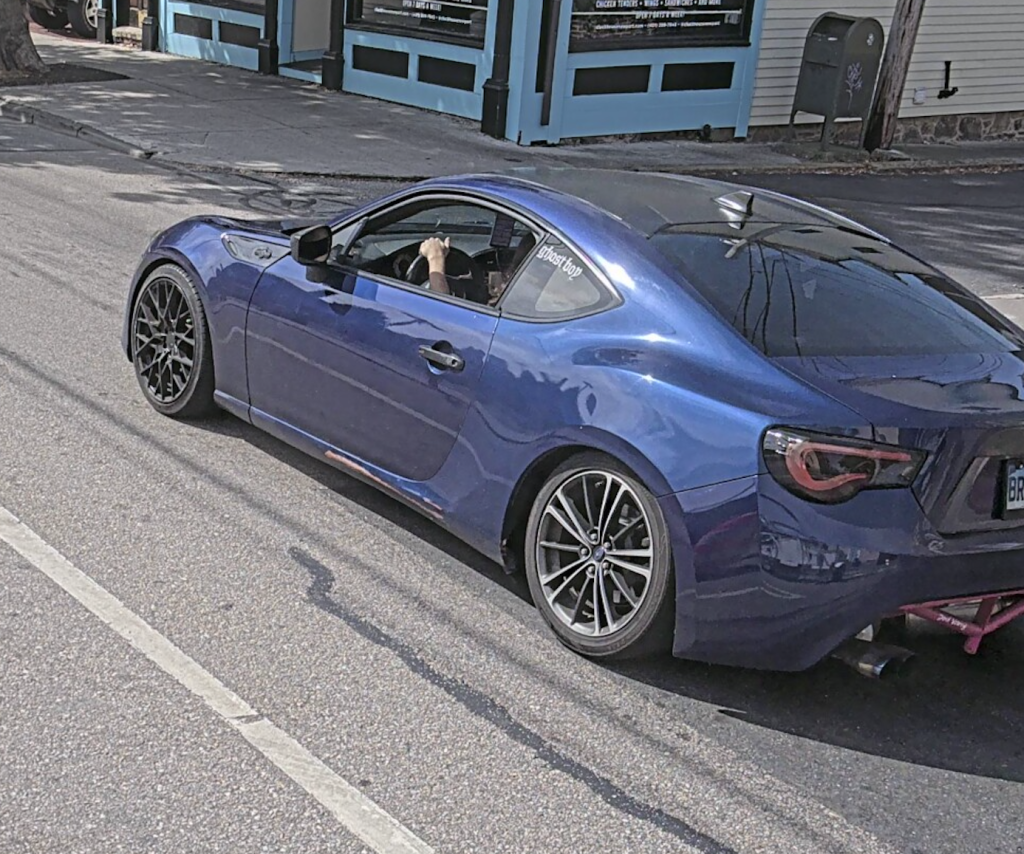
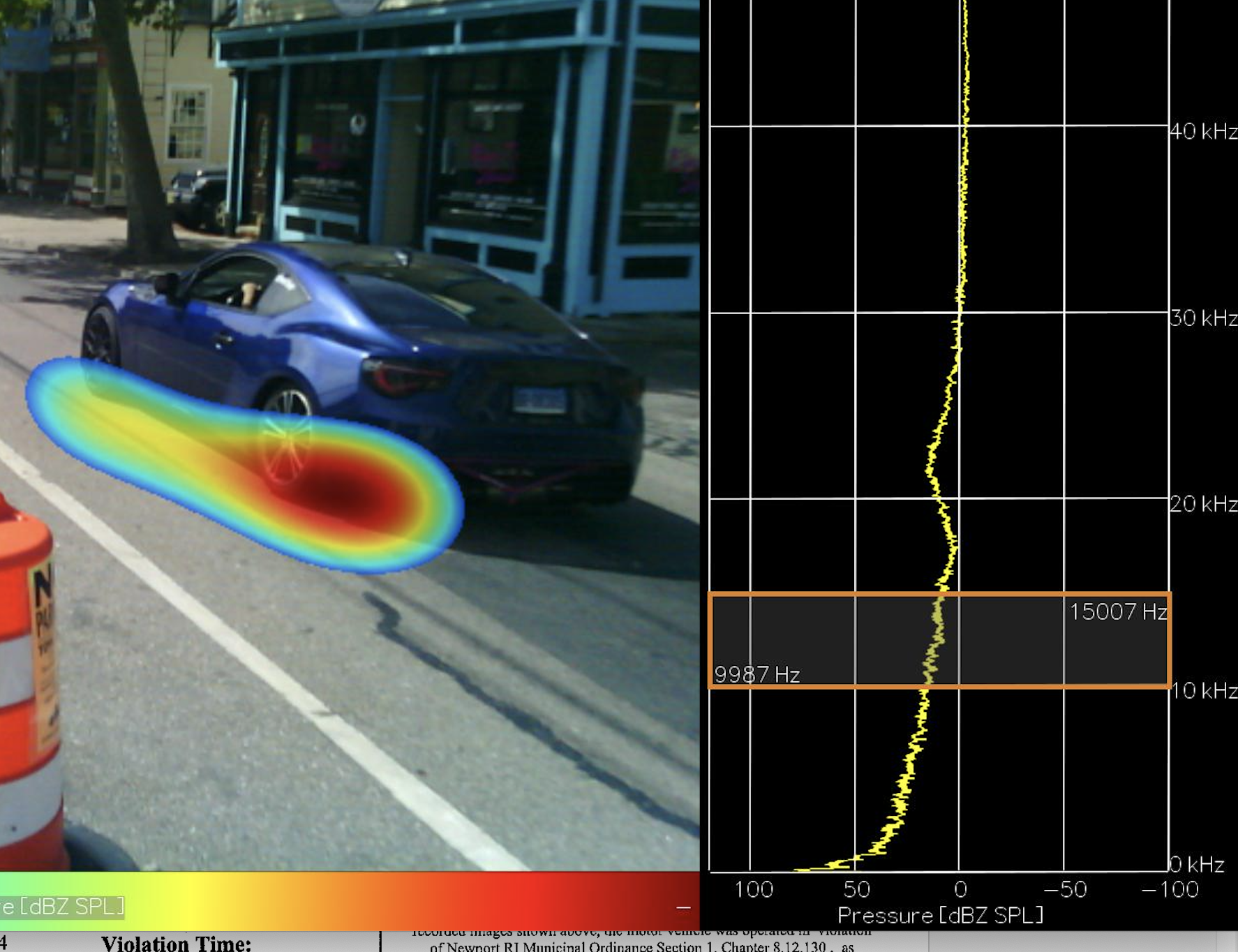
As for noise camera companies, Bart Vaes, an official with Sorama (Einthoven, Netherlands), said recently that they’re open to discussing a pilot project (cost negotiable) with a city official in St. Paul. Police Captain Michael Naylor of Newport, Rhode Island provided data illustrating their Sorama system in action in 2024 (see figure and audio file below).
Reuben Peckham, of SoundVue (Southampton, U.K.), said that their ANE technology has advanced beyond the no-cost pilot stage and invited a discussion with a city official about implementation in St. Paul.
Ethan Fawley, Vision Zero program coordinator for Minneapolis Public Works, instigated the successful campaign for new state legislation in 2024 to allow ASE pilots in Minnesota. He said that ANE could not be added to the upcoming ASE pilots given the differing aims and technologies of noise vs. speed monitoring.
Lauren Dickerson, noise program coordinator for the Minnesota Pollution Control Agency (MPCA), said that current state vehicle noise limits do not address impulsive — i.e., transient — noise, as produced by individual vehicles. However, cities can establish such limits, using decibel thresholds, as needed for ANE. The MPCA will revisit its noise rules in two to three years, she said, and will reassess their website’s assertion that only sustained noise poses health hazards (which recent research contradicts).
Minnesota State Rep. Samantha Sencer-Mura (DFL-Minneapolis) worked with Ethan Fawley and others to pass the 2024 Transportation bill, authorizing ASE pilots in Minnesota, with the Minneapolis pilot expected to launch this summer. In a recent call she emphasized the importance of partnering with other municipalities (as she did with Mendota Heights for ASE) to build broad support for the necessary statewide legislation, and of working with the Legislature’s legal team to craft appropriate language. She also pointed out the conflicting perspectives of different stakeholders — which often segregate by party affiliation and rural-urban location — and suggested strategies for finding common ground.
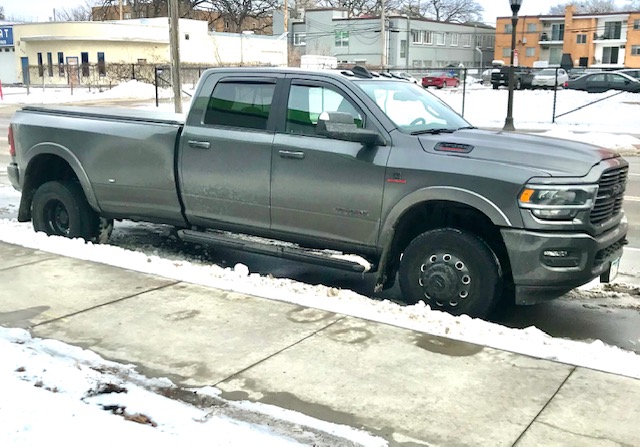
At the St. Paul Joint District Council Transportation Committee meeting last December, several attendees voiced support for addressing noisy vehicles. One was skeptical (I’ve addressed his concerns in my earlier article), and others pointed out other bothersome noise sources such as noisy trucks.
Citizens who are concerned about noisy vehicles or other bothersome noise sources can help build political will for government action in multiple ways, including:
- Contact your district council (St. Paul) or neighborhood organization (Minneapolis), City Council members and mayors to express concerns about noisy vehicles and noise generally, and to advocate for ANE.
- Contact your state senators and representatives to request legislation permitting ANE in Minnesota, analogous to the 2024 legislation permitting ASE pilots in Minneapolis, Mendota Heights, and highway work zones.
- Contact the MPCA to request limits on impulsive noise and revised website language about it.
- Get educated and connected, e.g., via the No More Noise Toronto website; an issue-based Facebook group; and General Noise Ltd. in the UK.
- Network with friends, family and neighbors to raise awareness and build solidarity for noise prevention.
Let’s work together today for a quieter tomorrow!