
I recently had an amazing opportunity to explore China with my family. I feel Americans see the country through a very filtered lens (and vice versa), so I documented my experience to share with you. What I saw in our 31 days of travel was eye-opening and inspiring. We traveled from Guilin (a city in south-central China) to Beijing via seven trains and almost as many buses — not a single domestic flight or rental car (though we did use a few DiDi’s (China’s version of Uber).
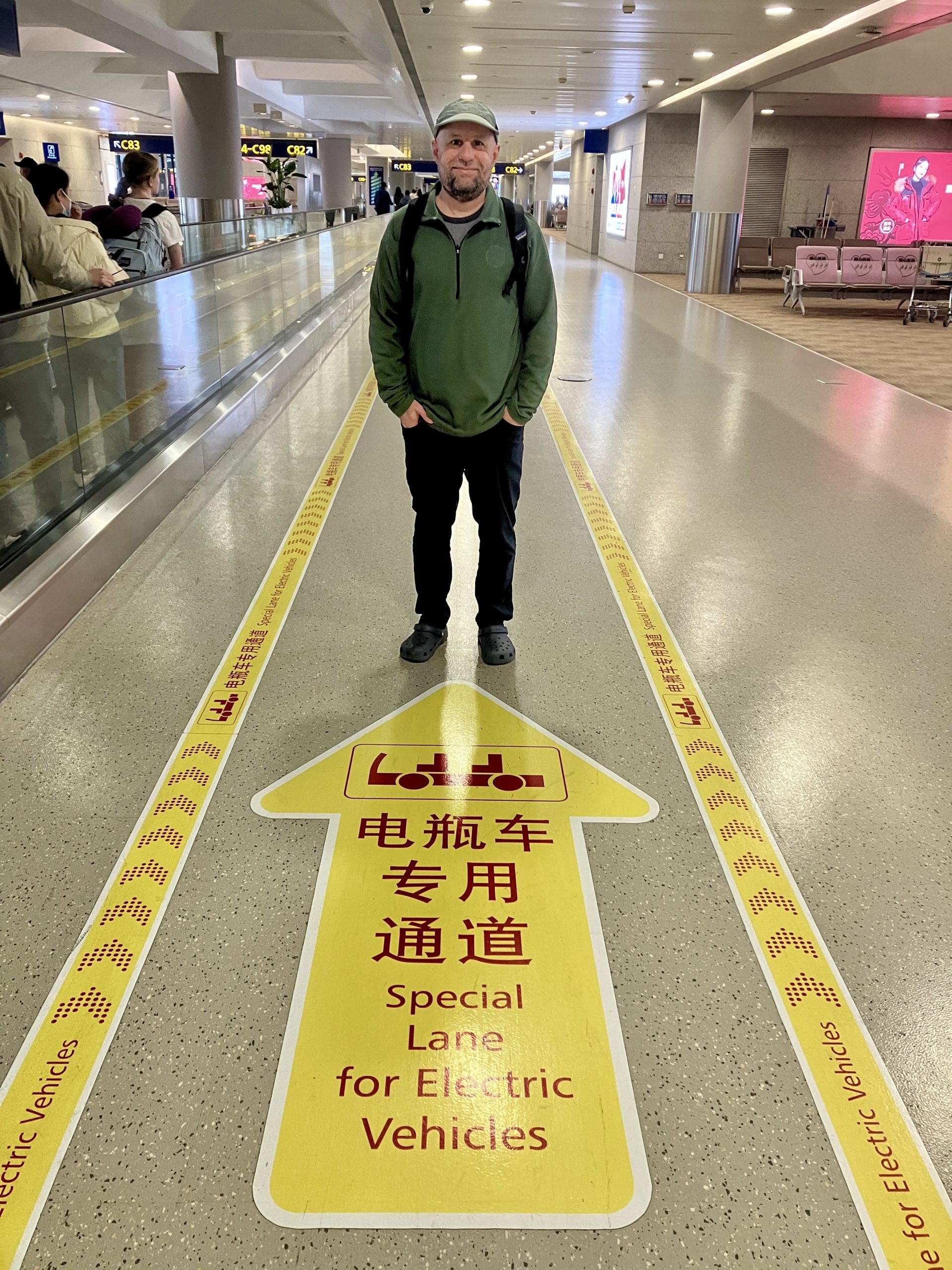
The first thing I noticed was how electric vehicles (EVs) dominate the streets of every Chinese city we visited. The airports even have EV lanes in the terminals. EVs are now less expensive than internal combustion engine vehicles in China. Anecdotally from my casual observations, EVs are dominating the market and the streets of Chinese cities.
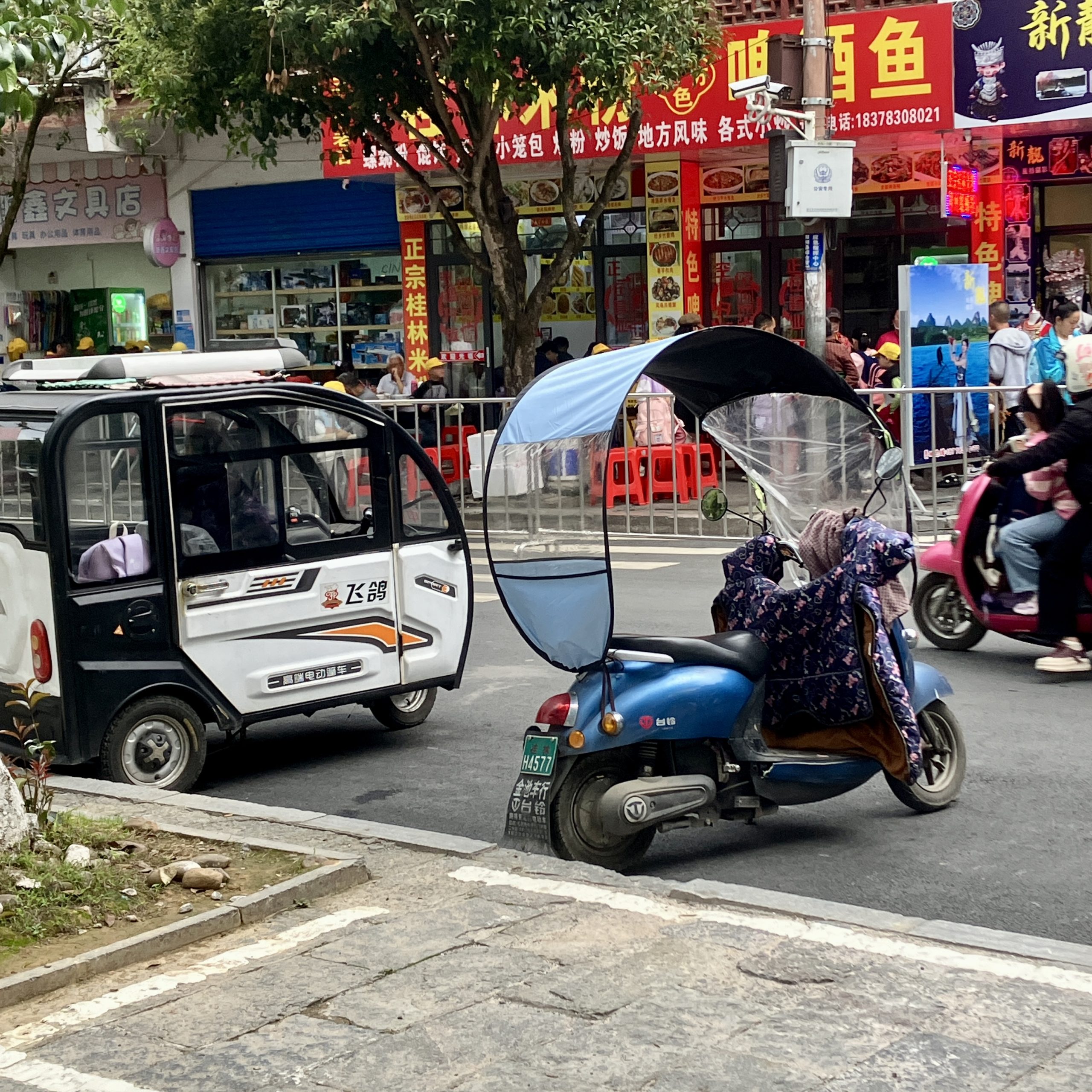
Electric mopeds, scooters and small three-wheeled vehicles are prolific. They take up less space on narrow streets, are quiet, zero-emission and are easy to charge by plugging into standard electrical outlets. Many scooters were cleverly outfitted for rain and cold with awnings and quilts.
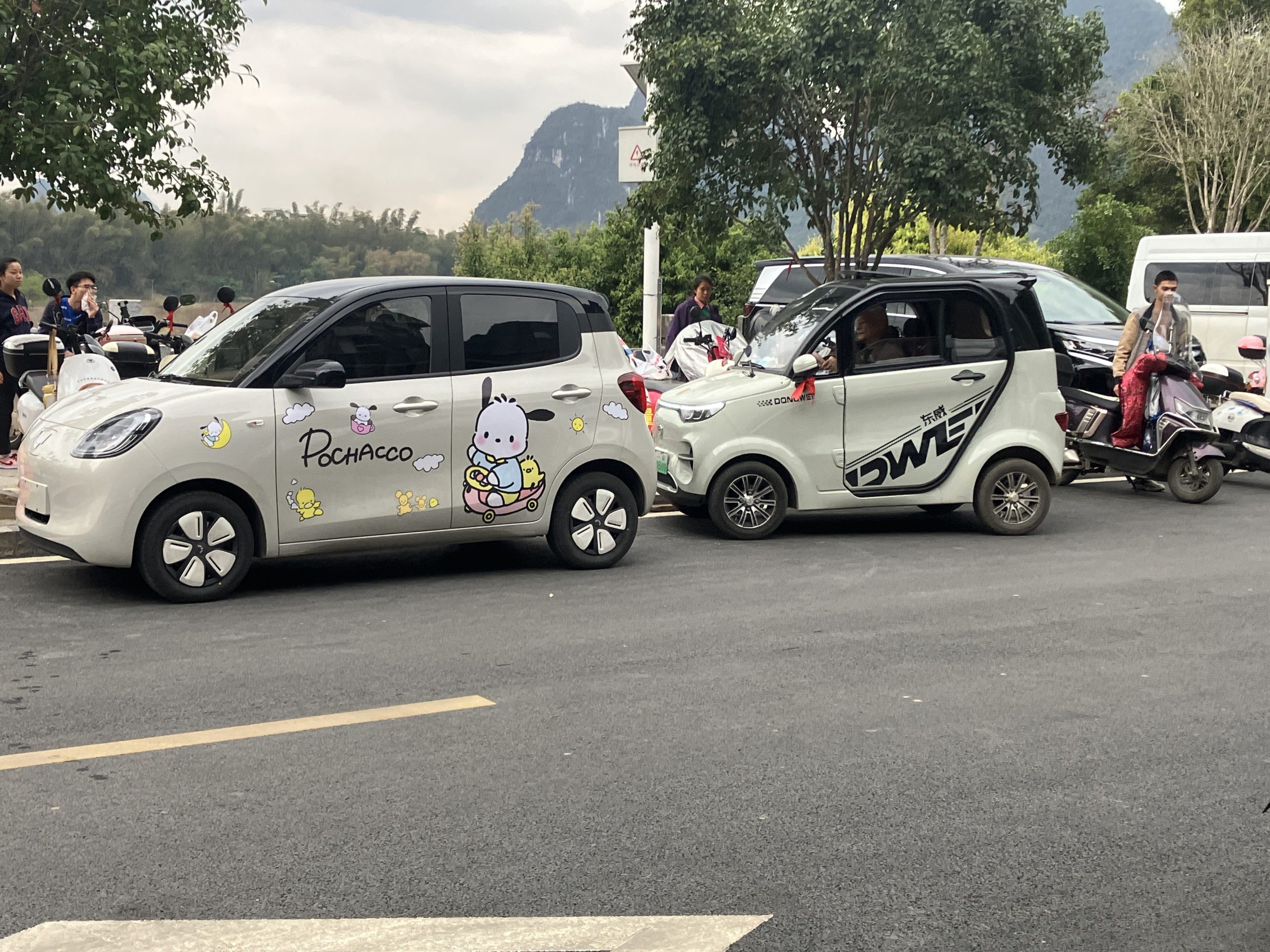
Many electric cars are much smaller than American standards. But as wealth grows, so does the size of desired vehicles. Many of the new vehicles are larger sedans and midsize SUVs. They fortunately have not reached mega-truck status (yet).
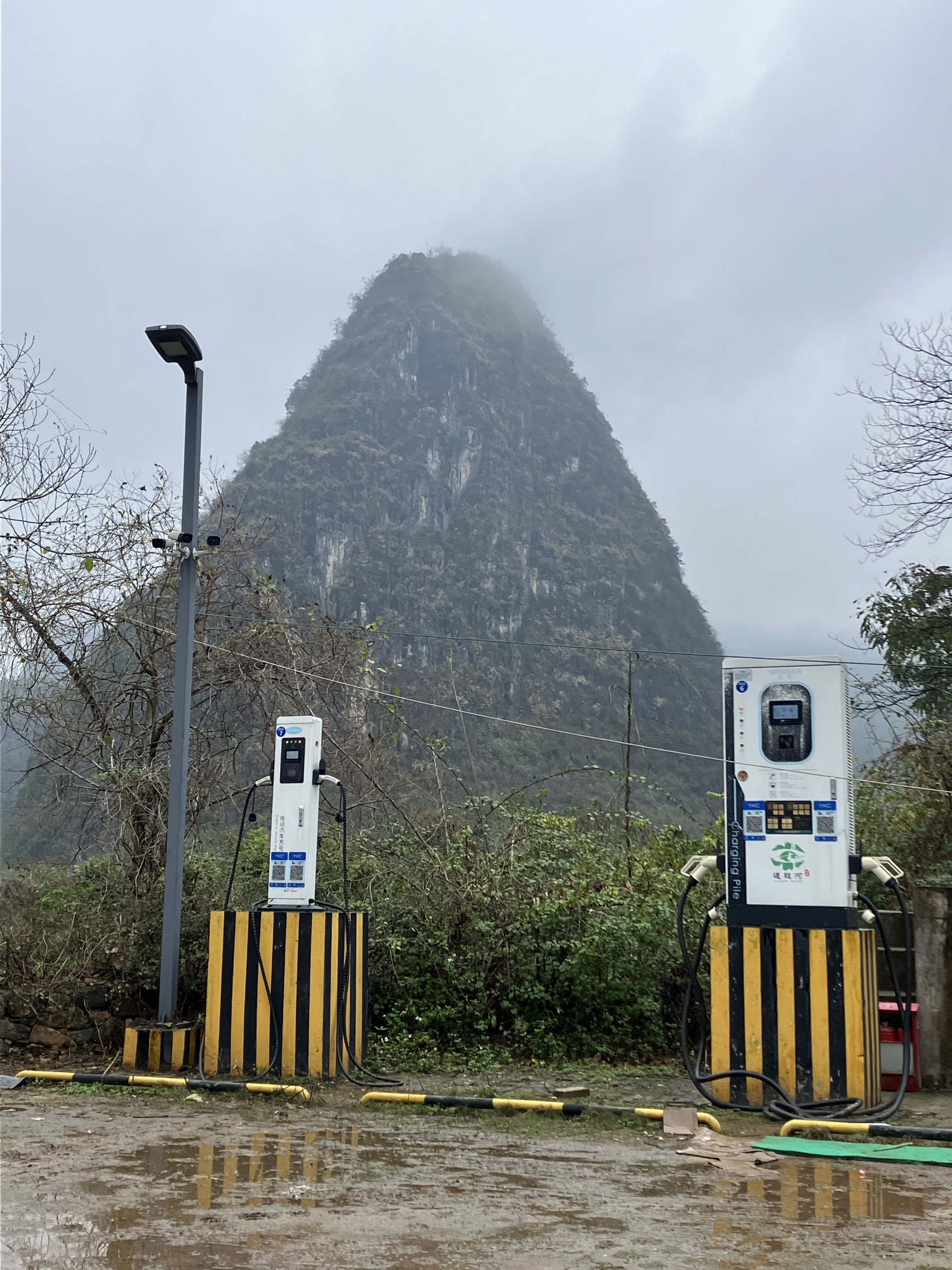
Public charging infrastructure is abundant and convenient — even in remote areas and very small towns. This is outside the ancient city of Yangshuo, known for iconic karst limestone mountains.
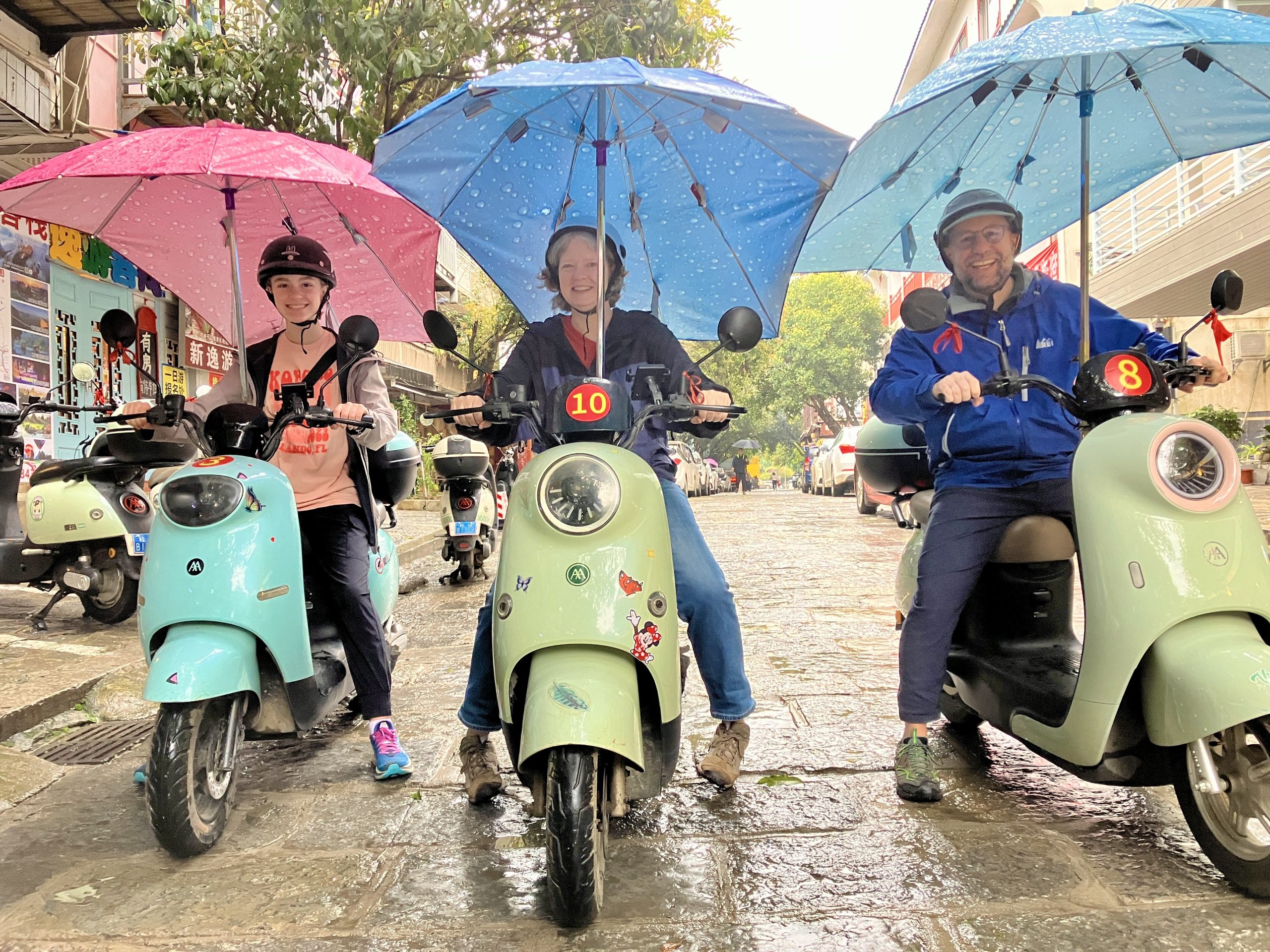
The best thing about electric scooters is that they’re fun to ride (even in the rain). We rented these for $4 a day.
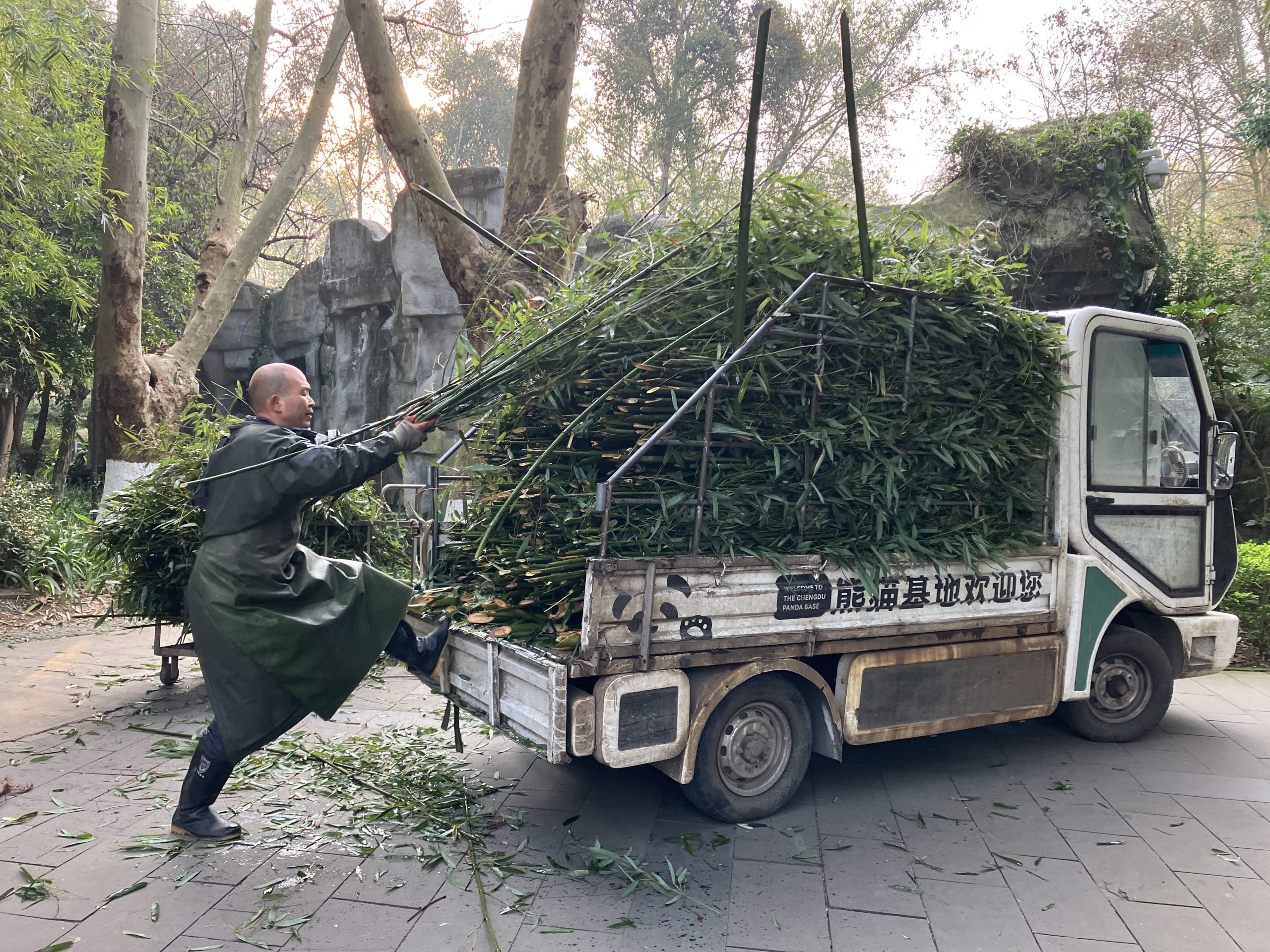
Even bamboo meals are delivered by electric vehicles at the Chengdu Research Base of Giant Pandas.

Lunchtime. Yum.
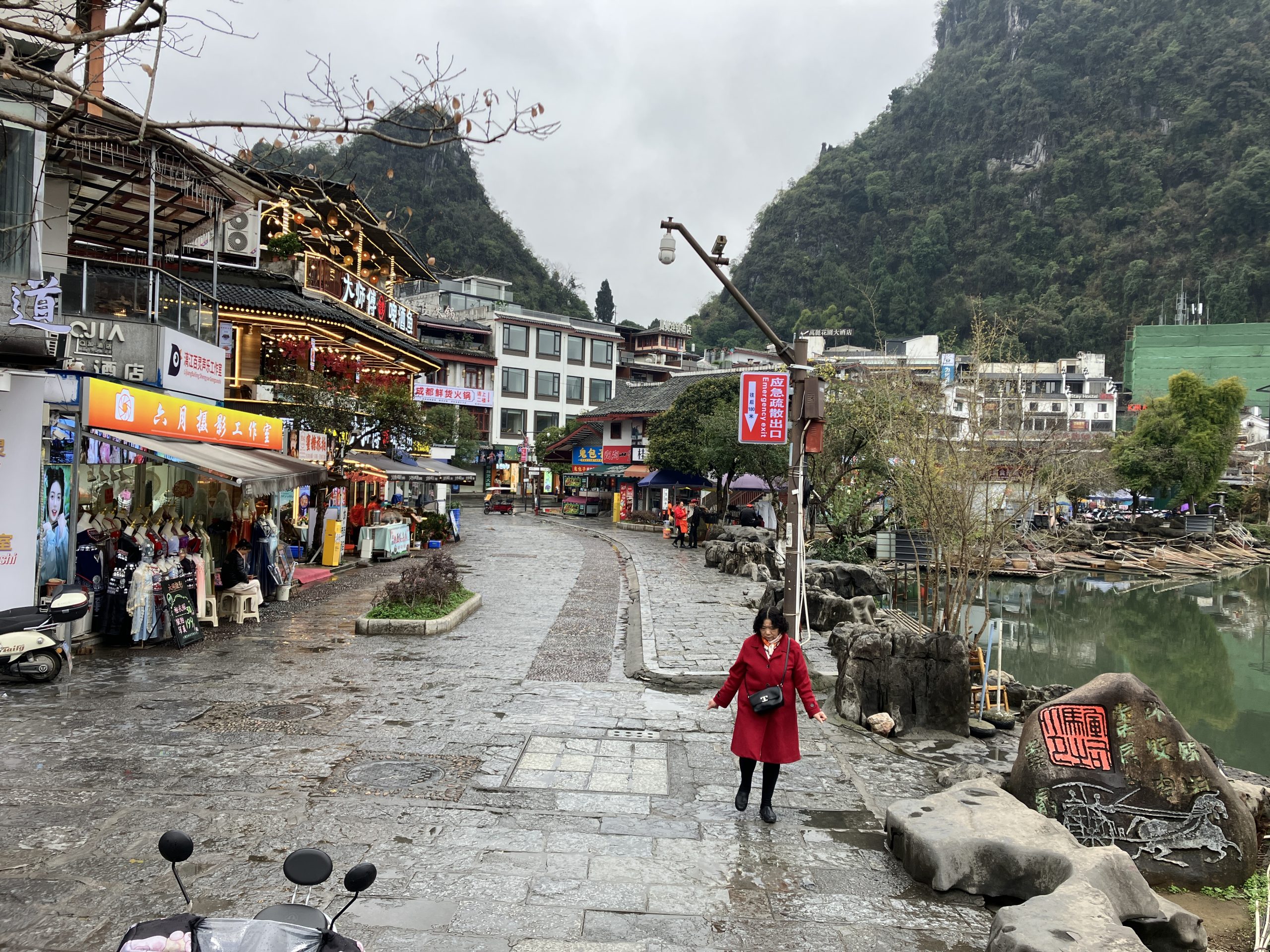
Some streets are open to vehicle traffic for deliveries to stores and restaurants during the day …
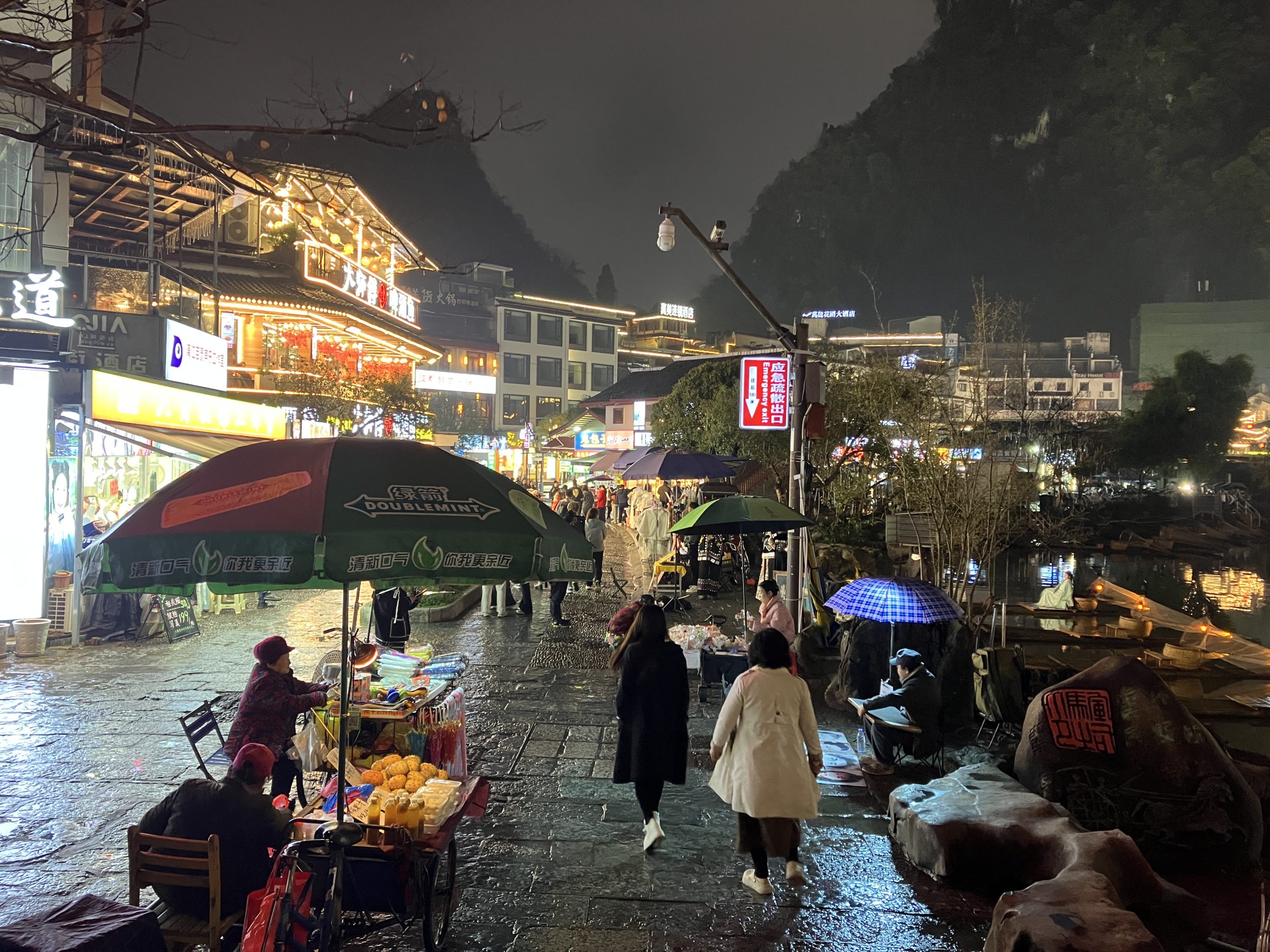
… and at night are transformed into vibrant pedestrian walkways filled with street vendors and people.
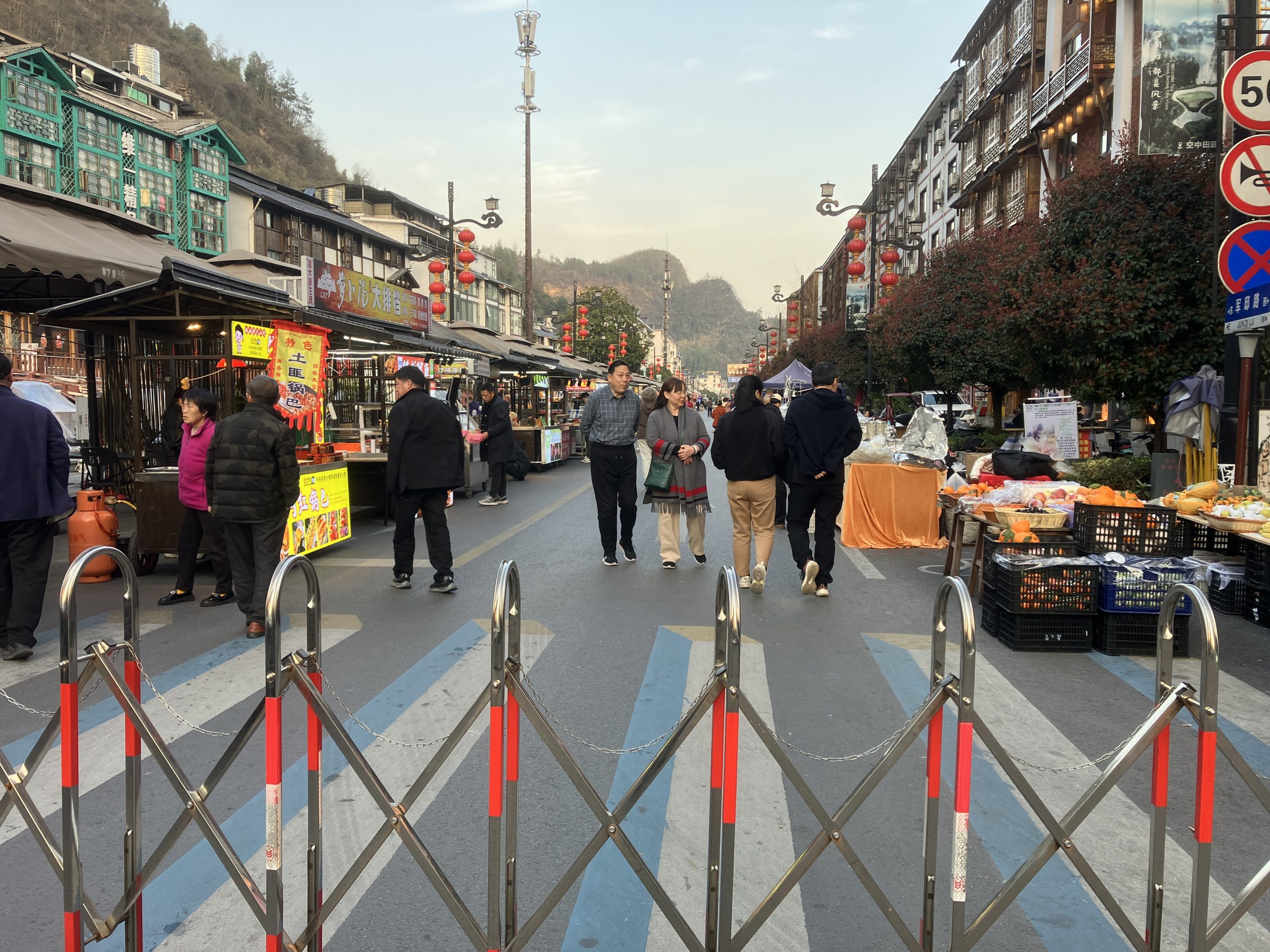
This street bustles with traffic from morning to evening, but every night the gates close and its four vehicle lanes become a promenade lined with street food, produce vendors and entertainment.
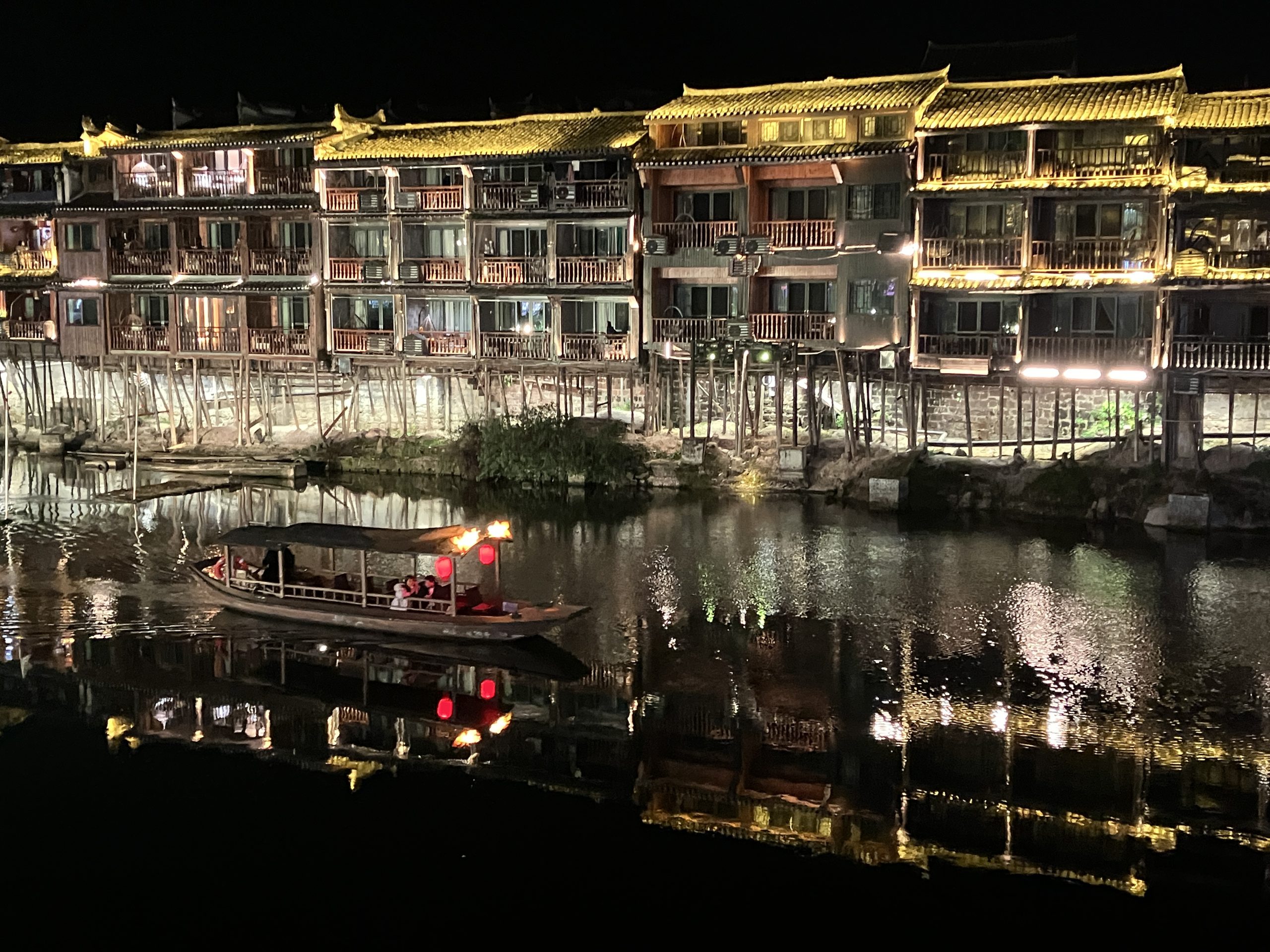
A big part of what supports active streets is densely developed neighborhoods. The ancient city of Fenghuang maximizes space for buildings by extending homes and businesses over the Tuojiang River with wooden stilts.
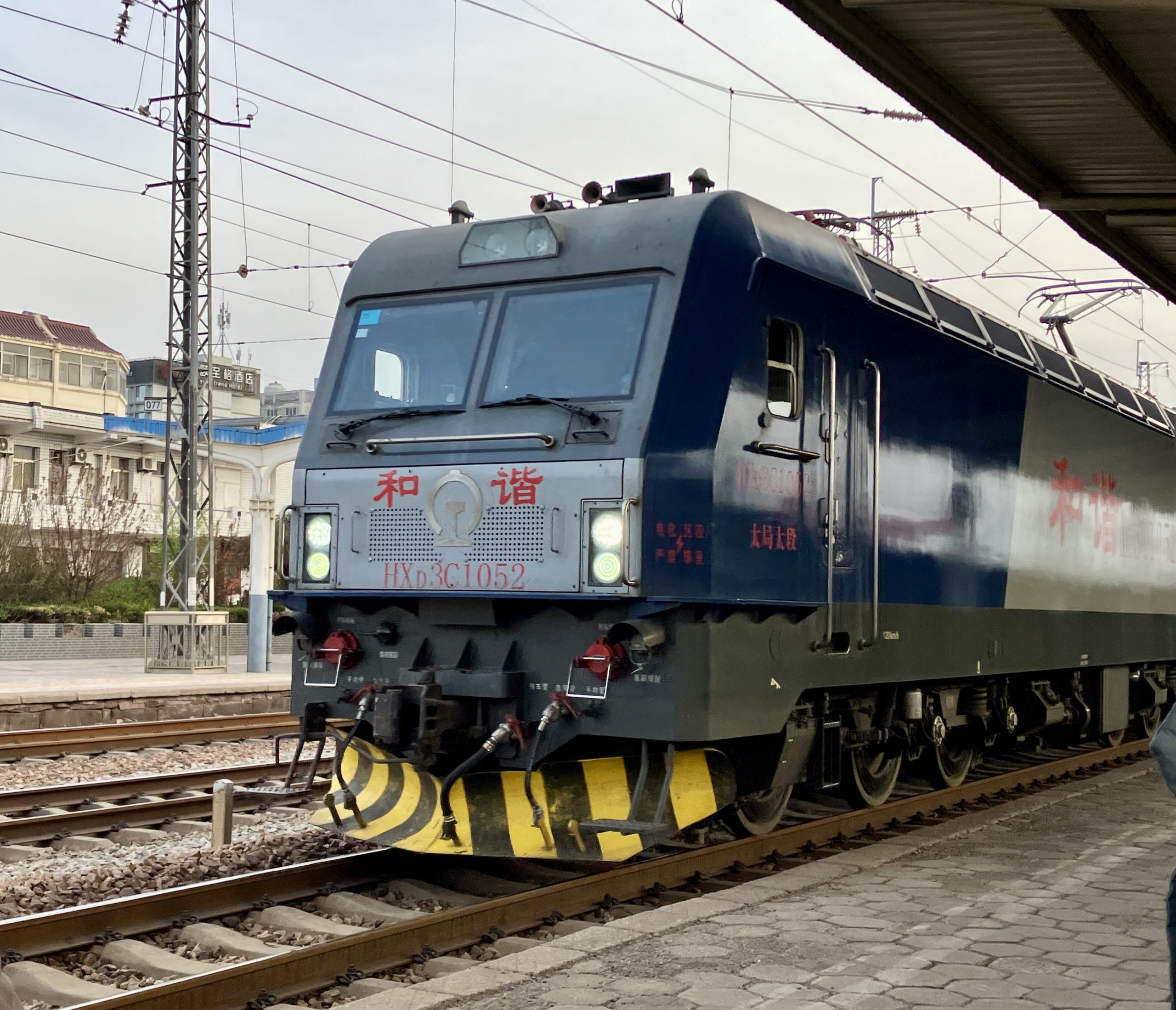
Travelling between cities is largely done by train — and most of them electric. The network is extensive and booking is simple; we booked every ticket through trip.com.
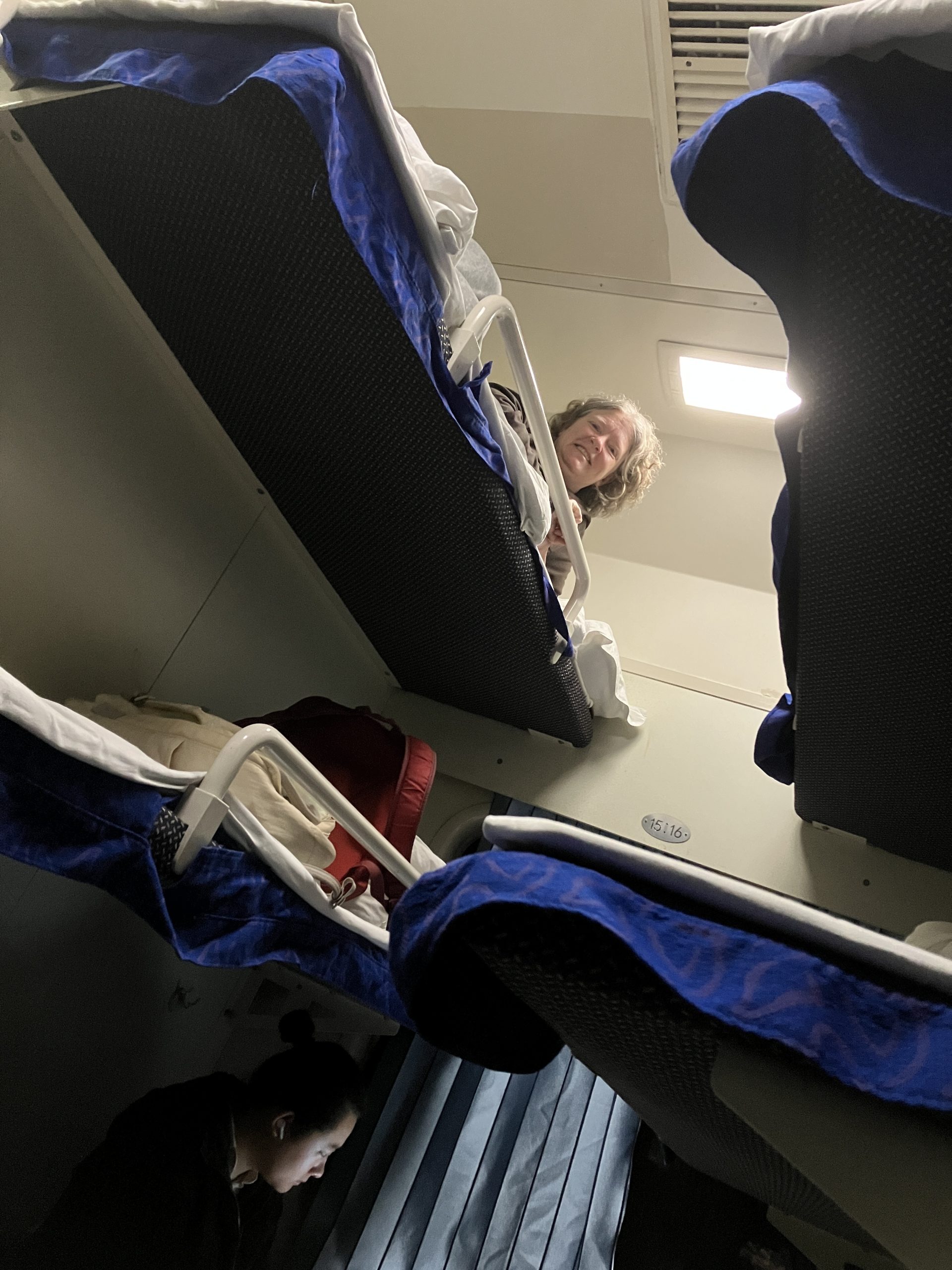
Passenger rail service often includes different arrangements of sleeper options. This is a six bunk “hard sleeper” carriage. A “soft sleeper” reservation gets you a room of two or four bunks in a private room.
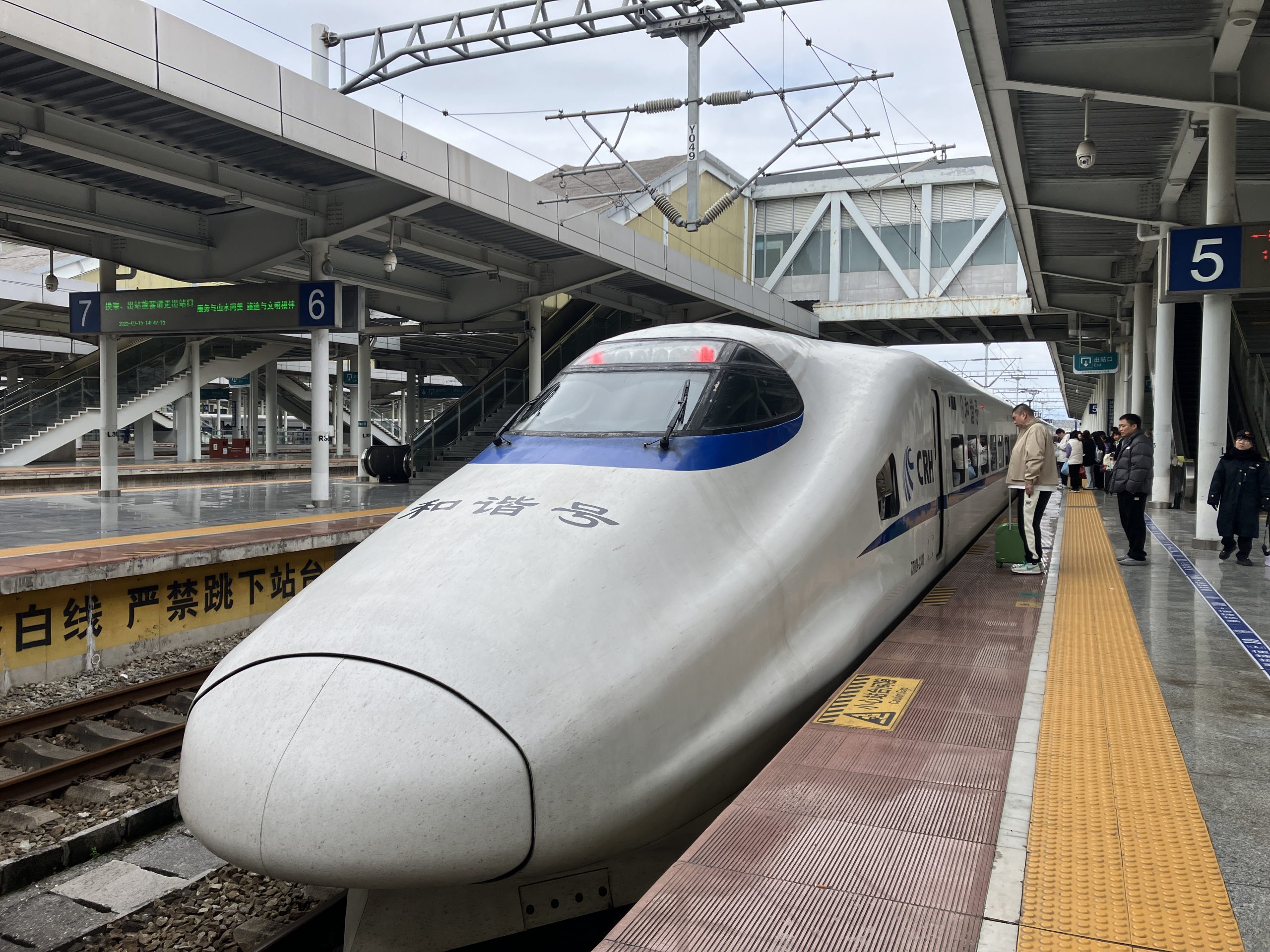
China’s high-speed rail network is incredible. Most trains are shiny new, and all were on time to the minute. They are clean electric, not dirty diesel powered.
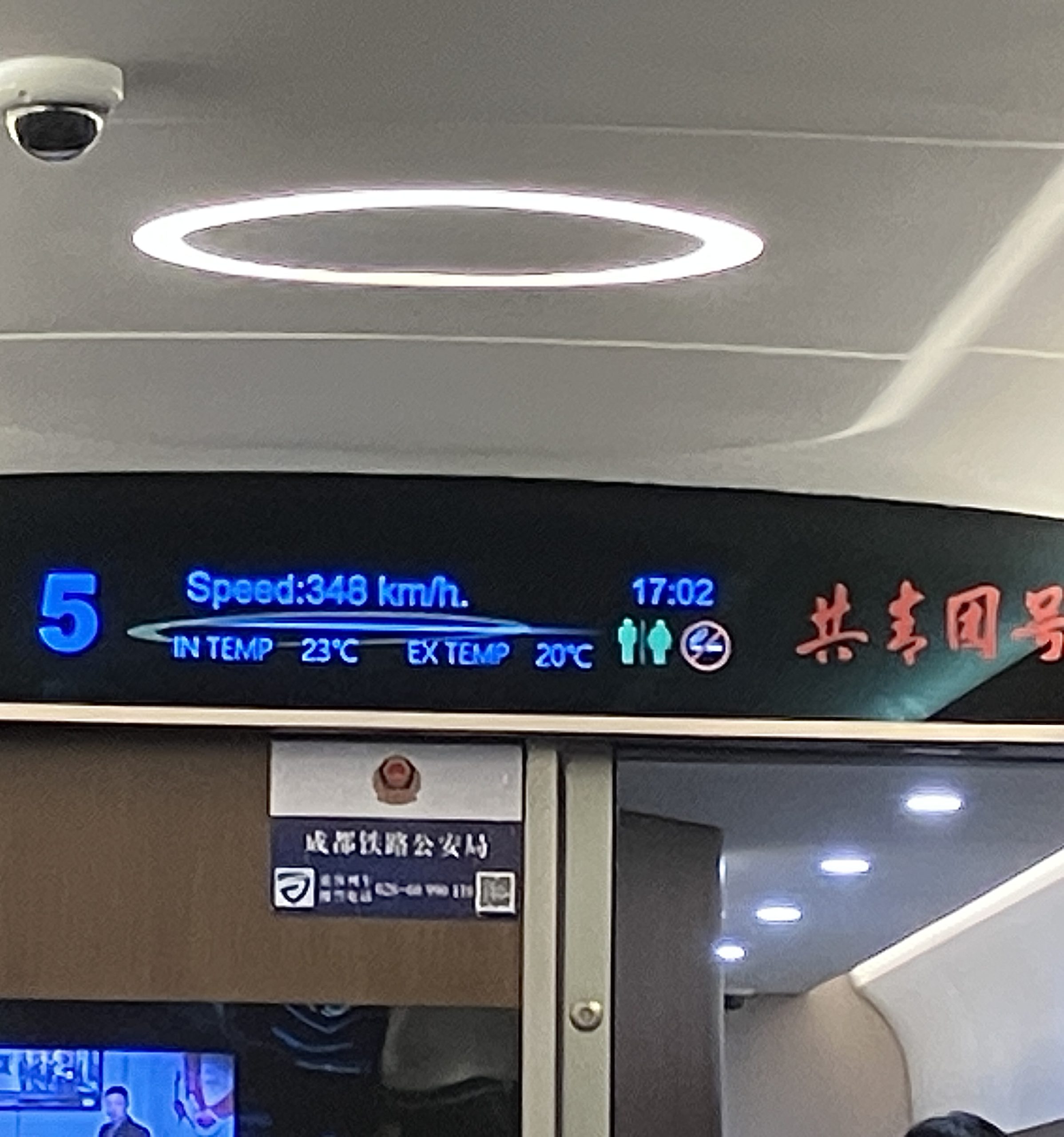
And they are fast. This one clocked in at 216 MPH. Amenities include everything you experience on an airline.
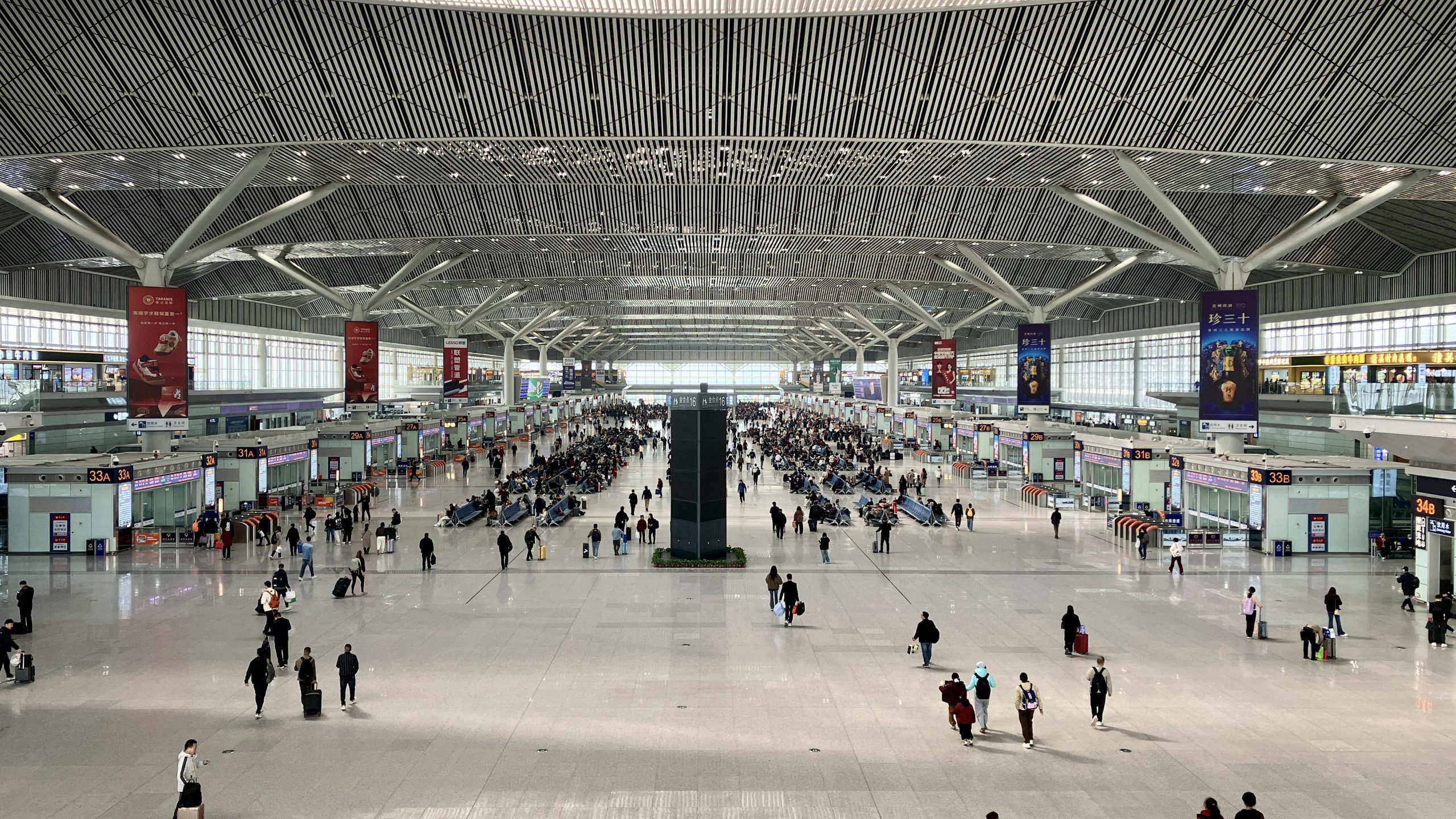
Train stations range in size, but many are larger than major American airports. This one in Xi’an (the city near the famed Terracotta Army archaeological site) is one million square feet larger than MSP, with 18 platforms serving 34 train lines.
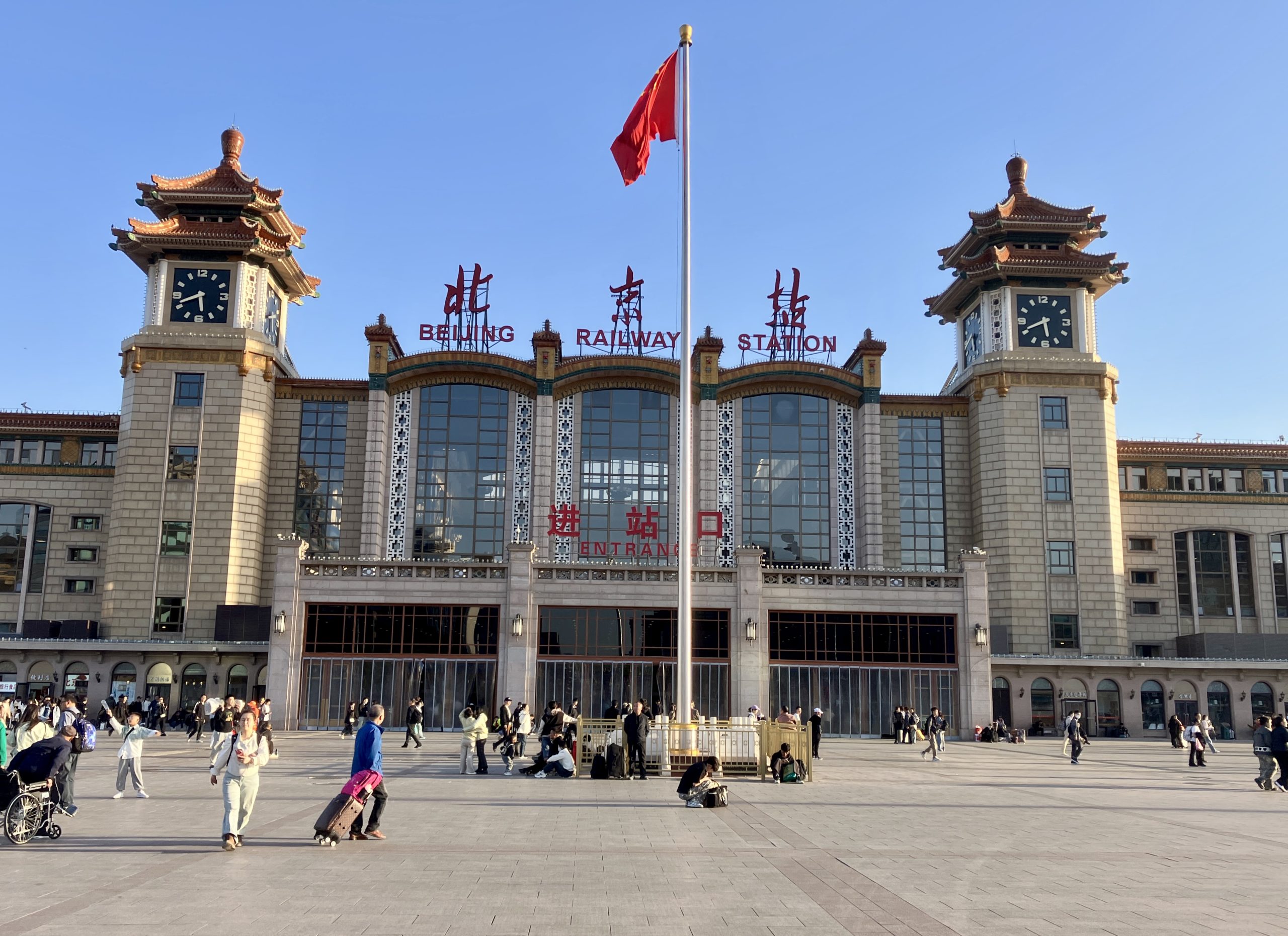
Beijing Railway Station boasts grand, historic architecture and is one of four large-scale integrated transport hubs in the country’s third-largest city.
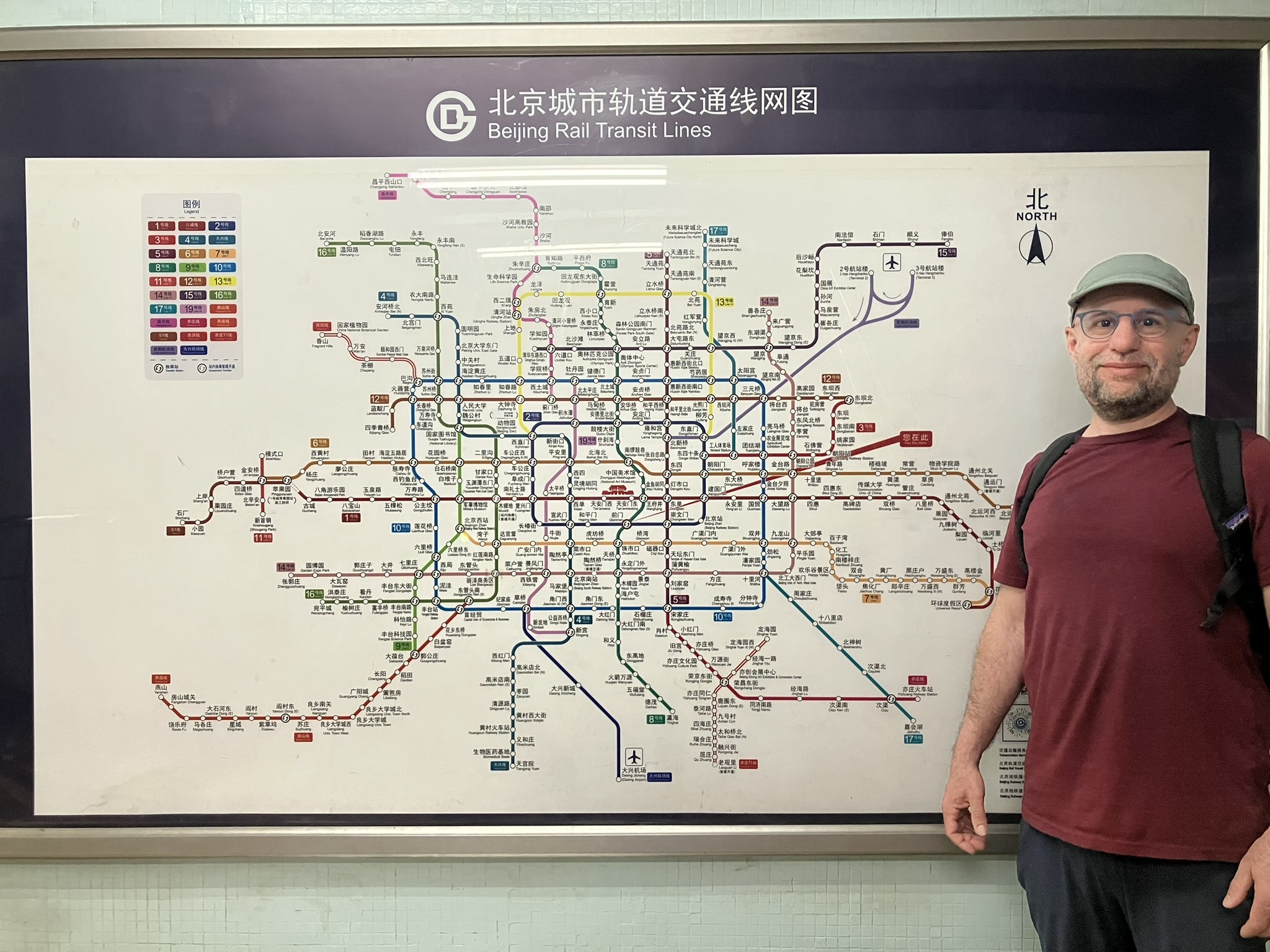
Beijing’s metro map is mindboggling. The subway system expanded by three lines for the 2008 Summer Olympics and another line before hosting the 2022 Winter Olympics. Like all metro trains we experienced, trains were always on time, clean, busy, safe and efficient.
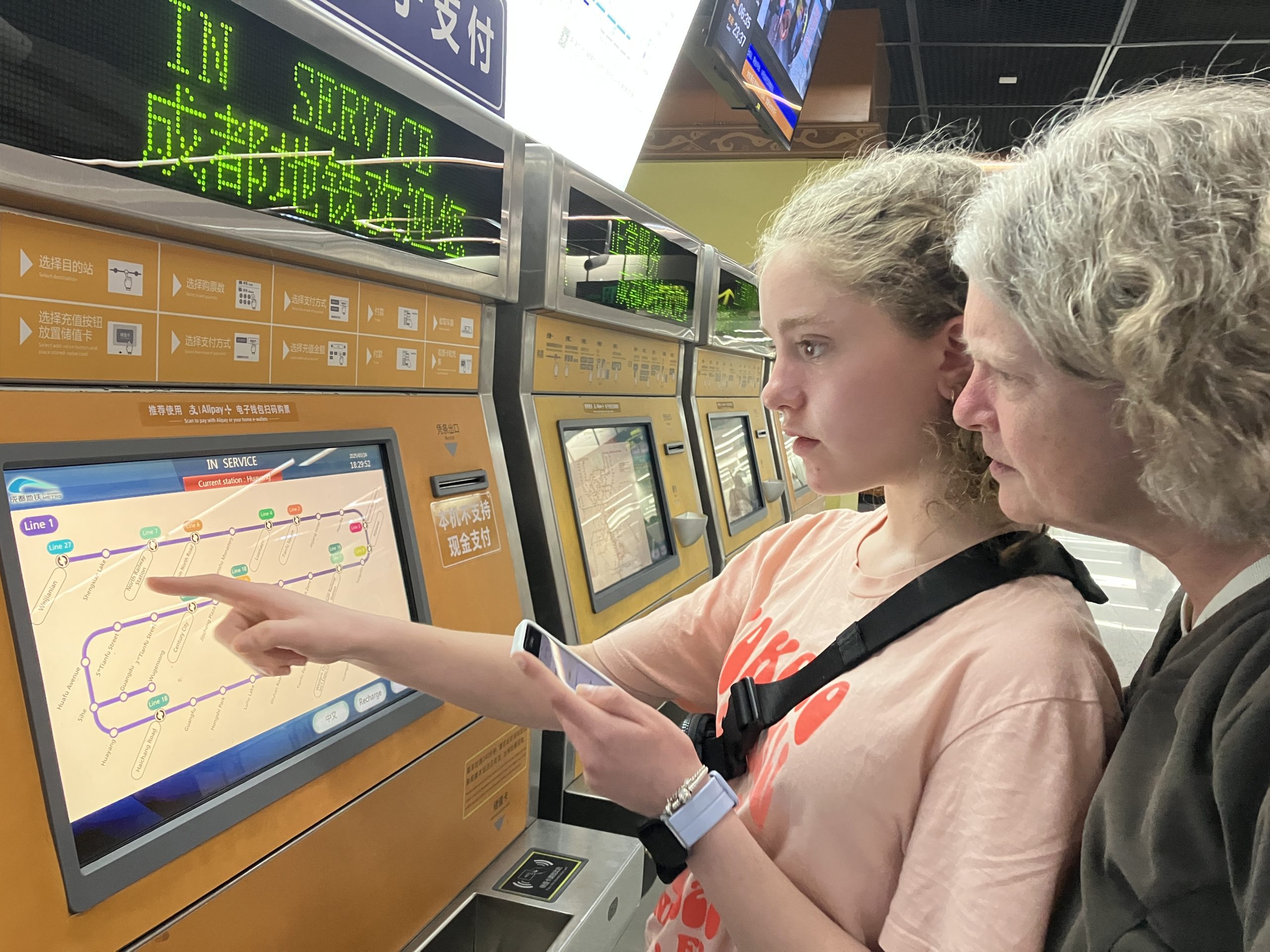
Train tickets are inexpensive and machines are intuitive, as my daughter illustrates.
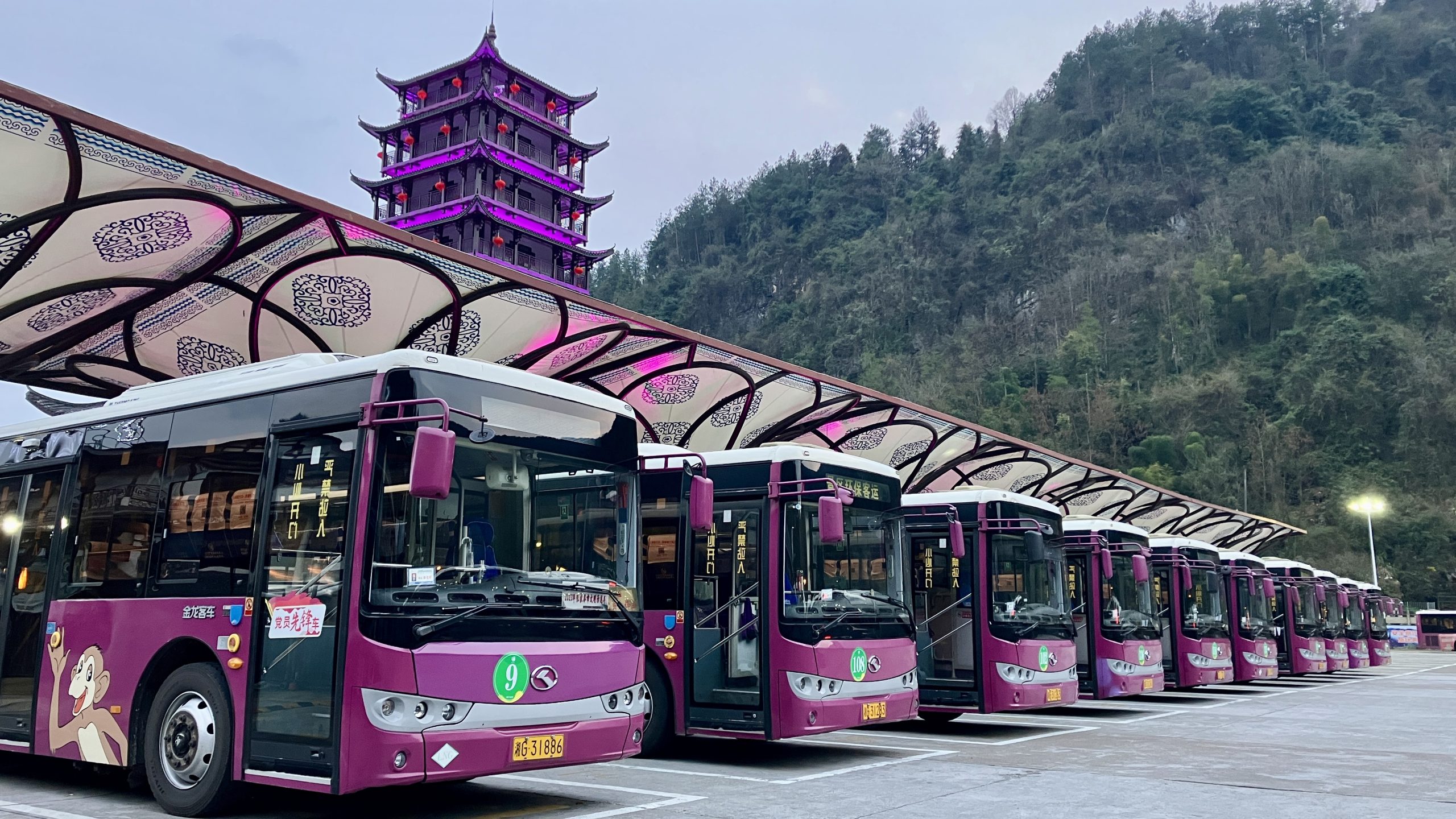
Bus service is unparalleled. This fleet serves visitors heading into Zhangjiajie National Forest Park, renowned for its dramatic, towering quartz-sandstone pillars which inspired the setting for the movie Avatar.
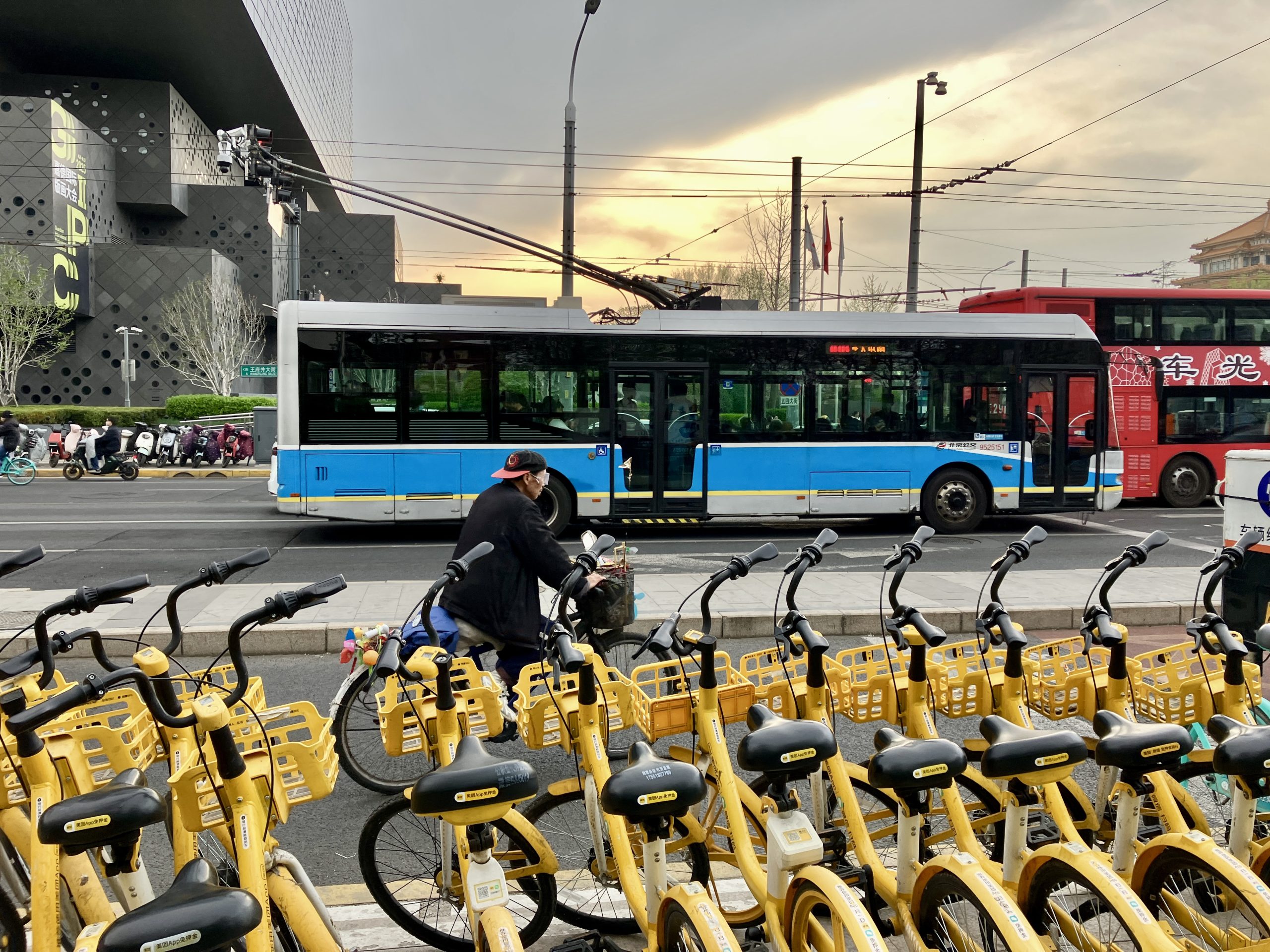
Many buses are zero-emission battery electric. This bus outside of Beijing’s modern art museum is propelled by dual overhead wires, like the trollybuses in Seattle, San Francisco, Boston and Philadelphia. Larger bus stops were well stocked with fleets of bike share (about $1 an hour). Note the large, median-protected bike lane.
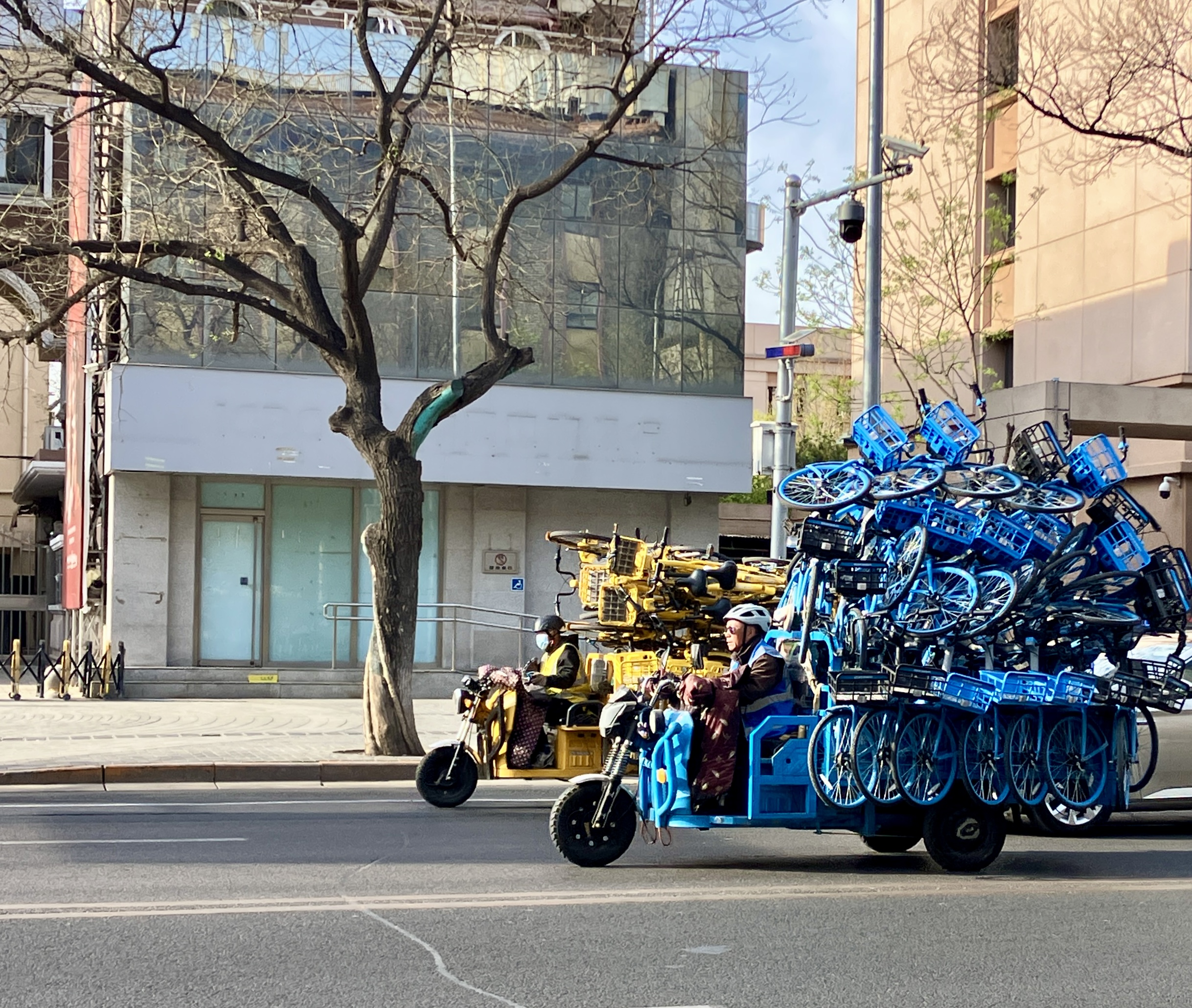
Bike share fleets are constantly being reshuffled for efficiency. How these vehicles are loaded and unloaded is beyond me.
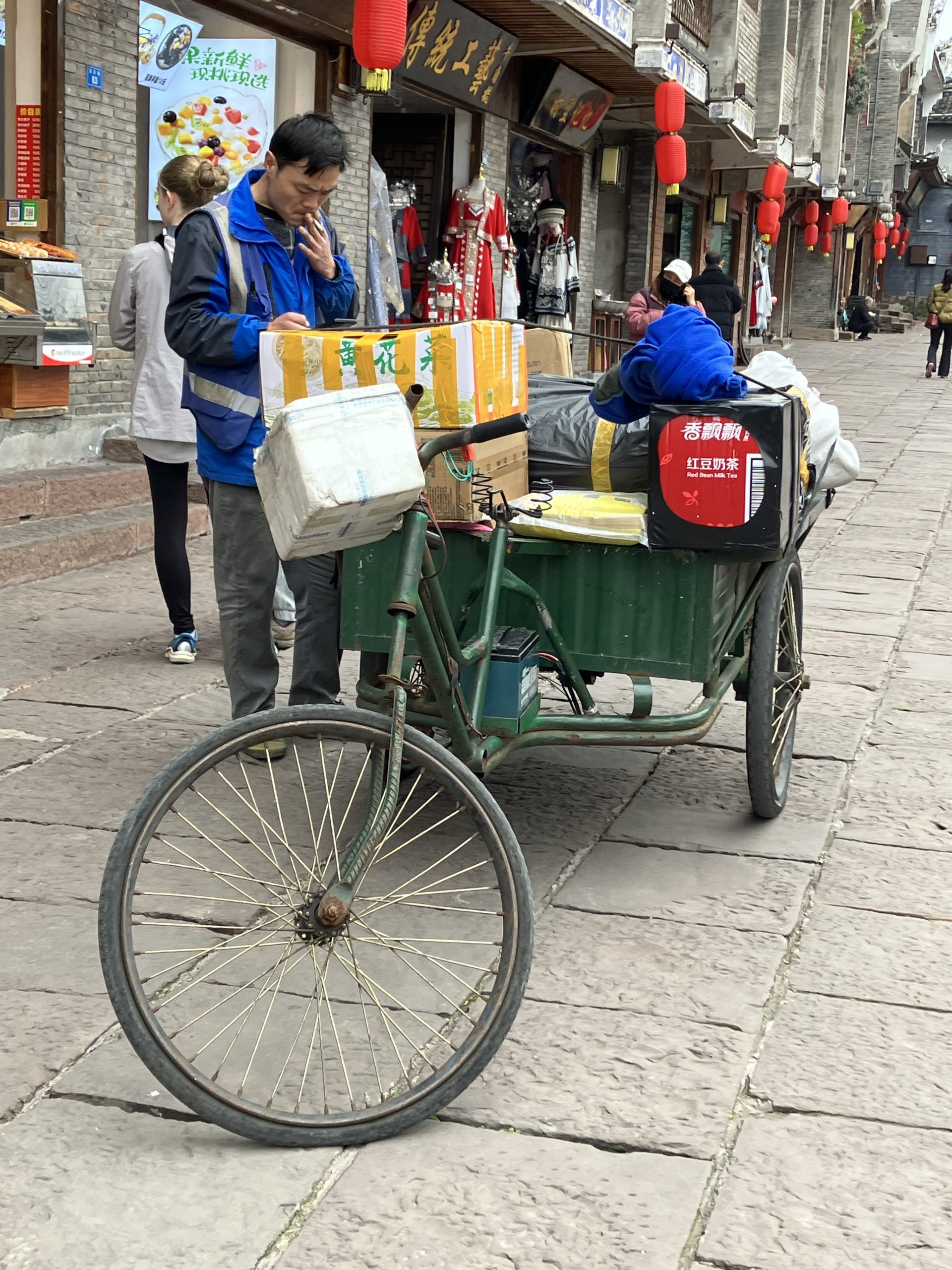
Bicycles serve as transportation for people and goods, and work well for local deliveries in densely populated neighborhoods and narrow streets.
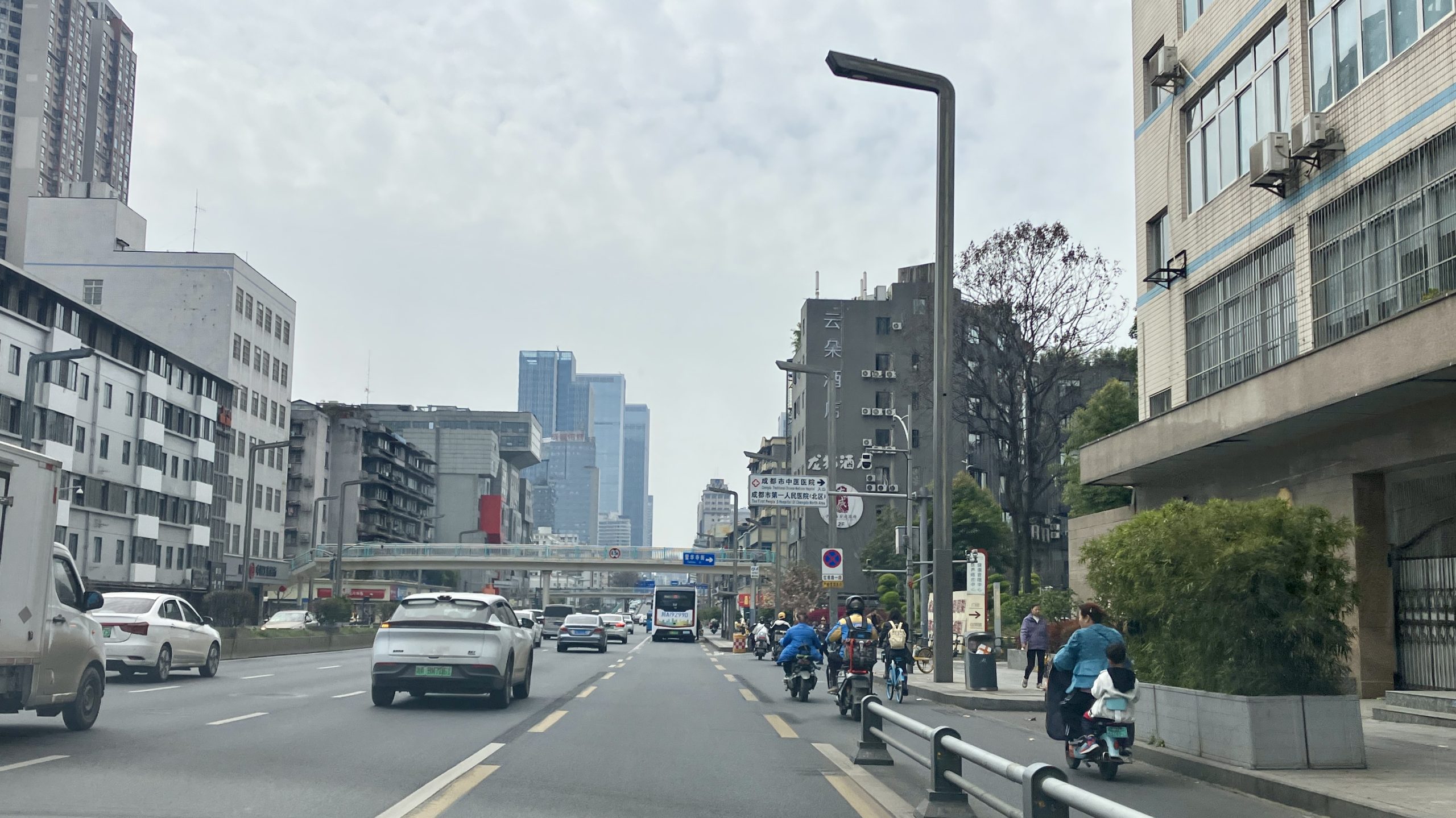
A typical streetscape. This is Chengdu. Every transportation mode has its space or lane — many of which are separated by physical barriers and buffers. But even more amazing to me is the noise, or lack thereof. No constant roar of vehicles, since so many of them are quiet EVs. A reminder that cities aren’t loud — cars are.
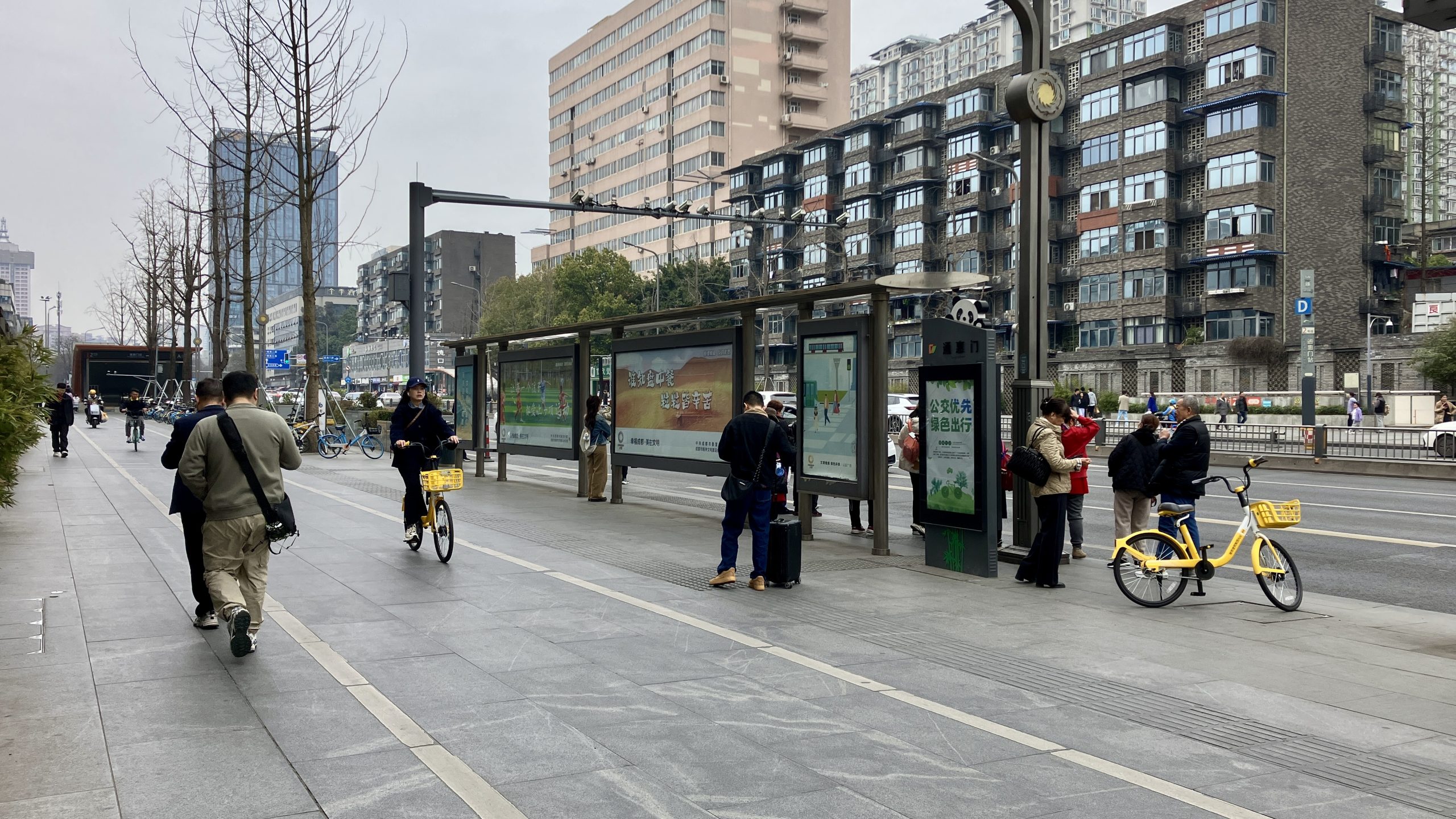
Cities incorporate extensive traffic calming infrastructure and enforcement. There are traffic cameras literally everywhere and fines for violations are steep. Minneapolis is just beginning its traffic safety camera pilot program.
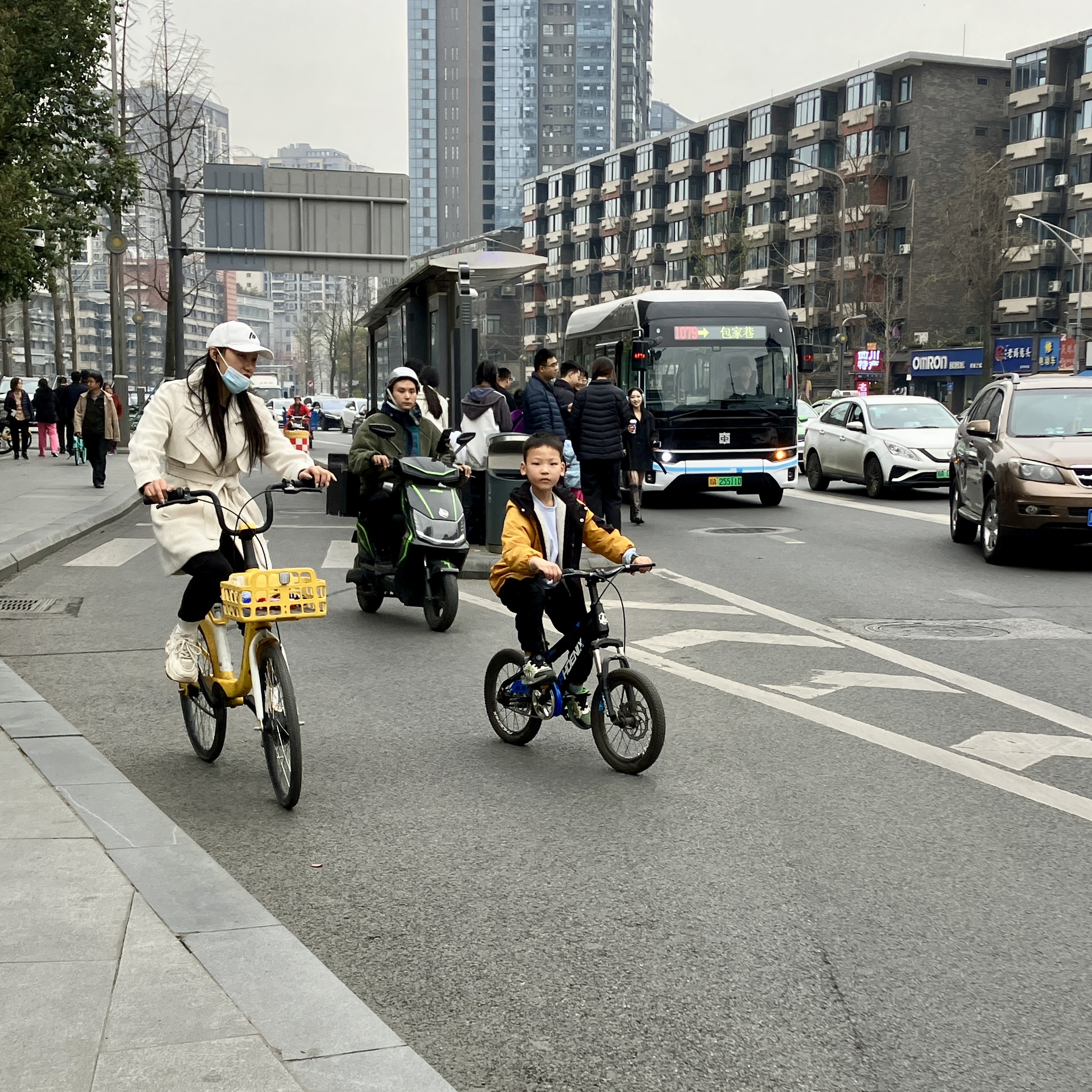
Floating (not literally) bus stops provide safer, continuous bicycle and scooter lanes.
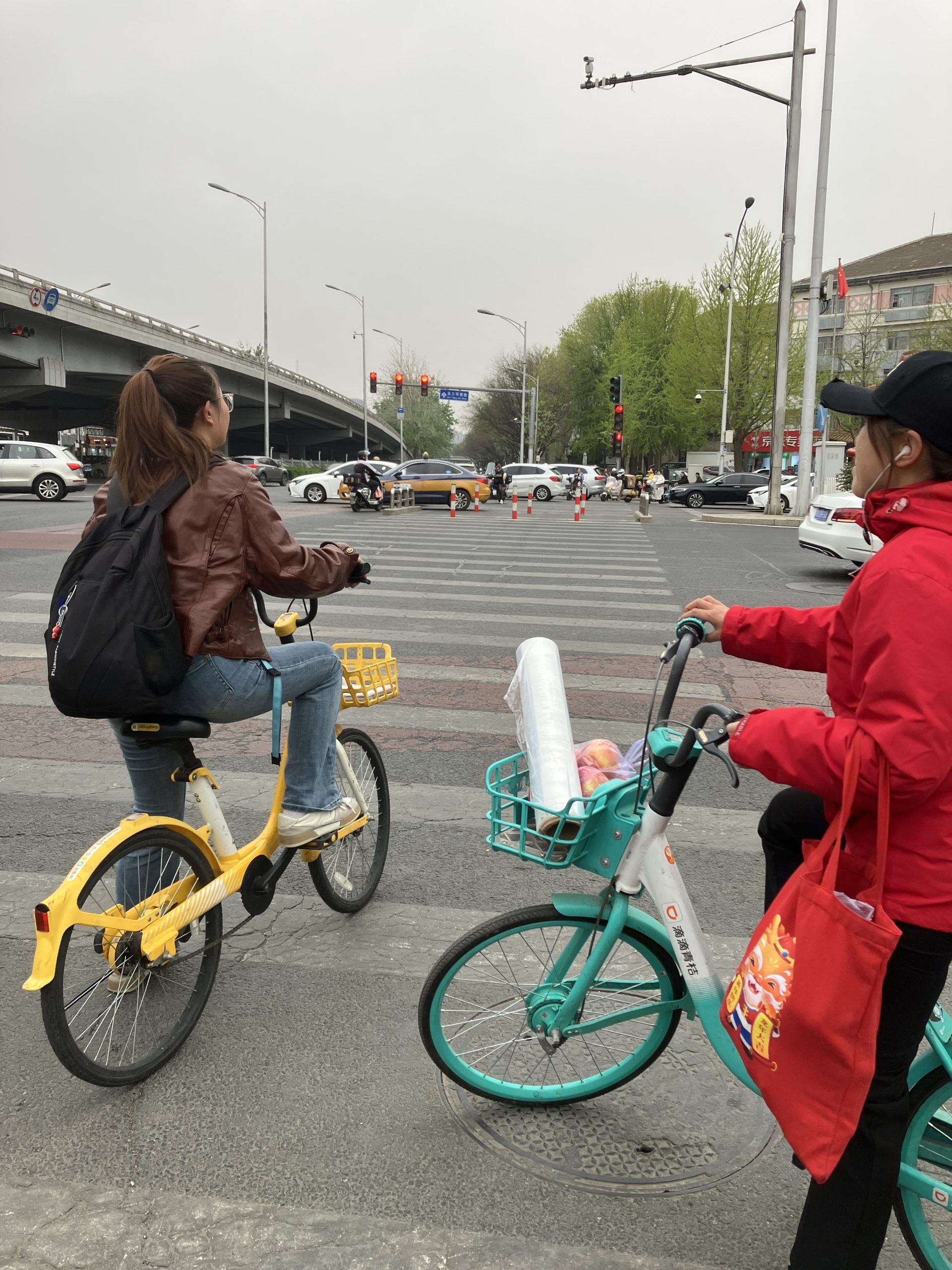
Some wider arterial streets provide huge pedestrian refuges — a bit larger and more protected than the tiny concrete islands found on streets in Minnesota cities.
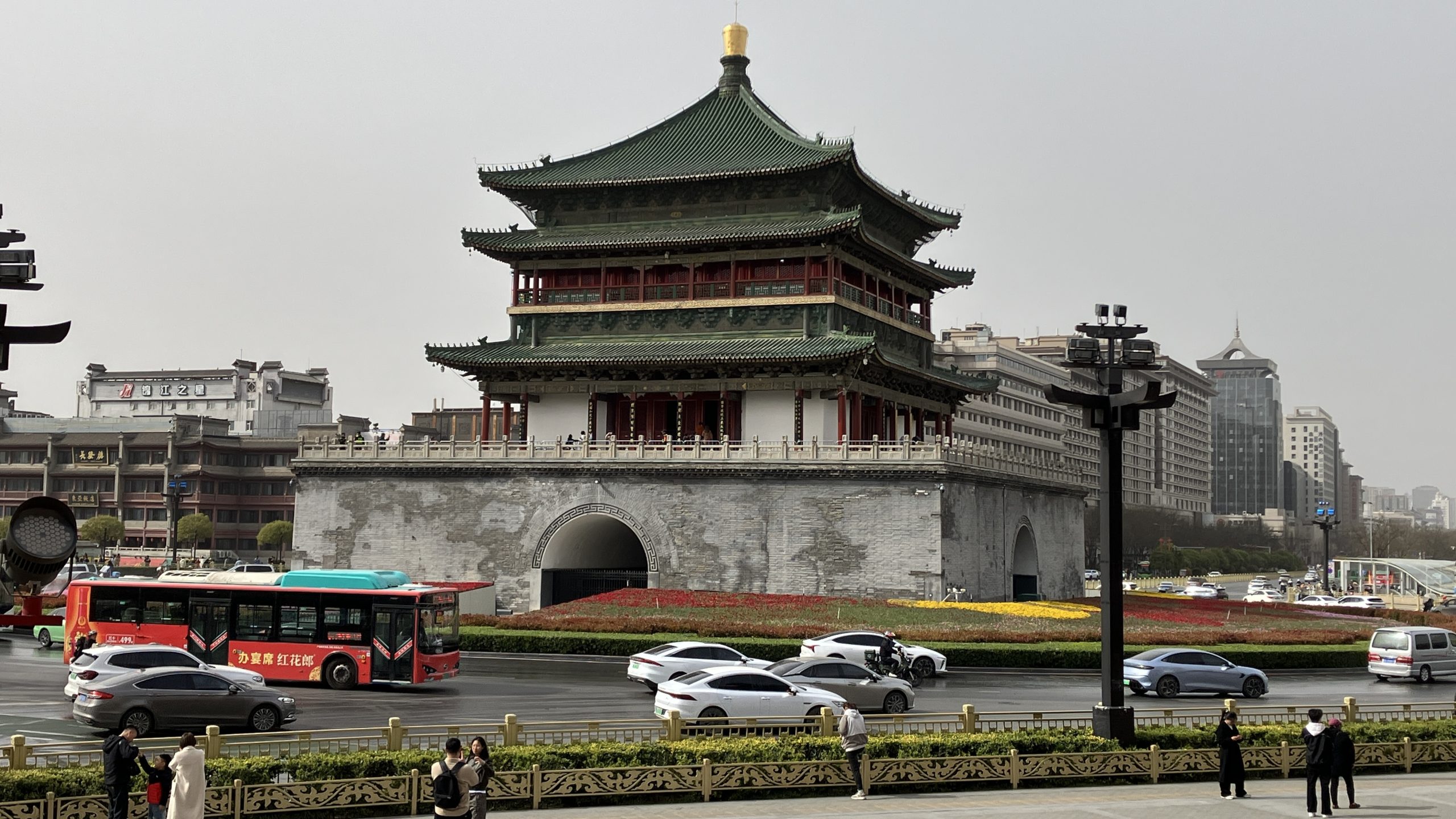
I like roundabouts because you only need to look one way before crossing, but not everyone shares my opinion. Here’s a big one in Xi’an that encircles the famed 641 year old Bell Tower.
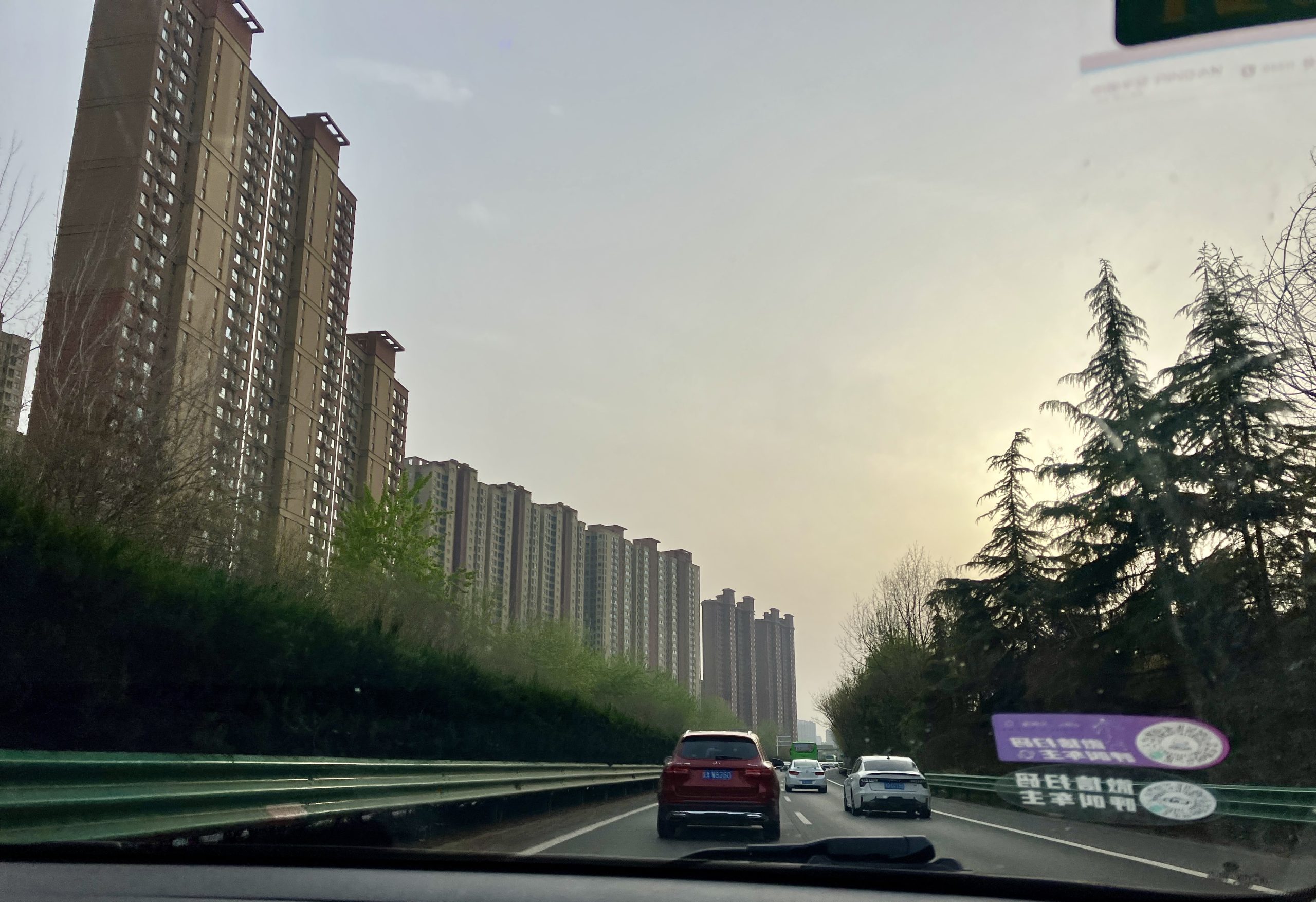
Cities in China are big: the largest is Chongqing with a population of 31.9 million. For reference, the Twin Cities is about 3.7 million and the largest, densest city in the United States is of course New York City, with a population of 8.2 million. China has very few single-family homes and suburbs seem to be non-existent. Our land use patterns in the US is opposite. This view from a beltline or ring road in Xi’an is a good example: Forested or very sparsely developed land use transitions immediately to dense housing. Most cities in Minnesota and the United States have grown through sprawl, not density — which is not good for the environment or climate.
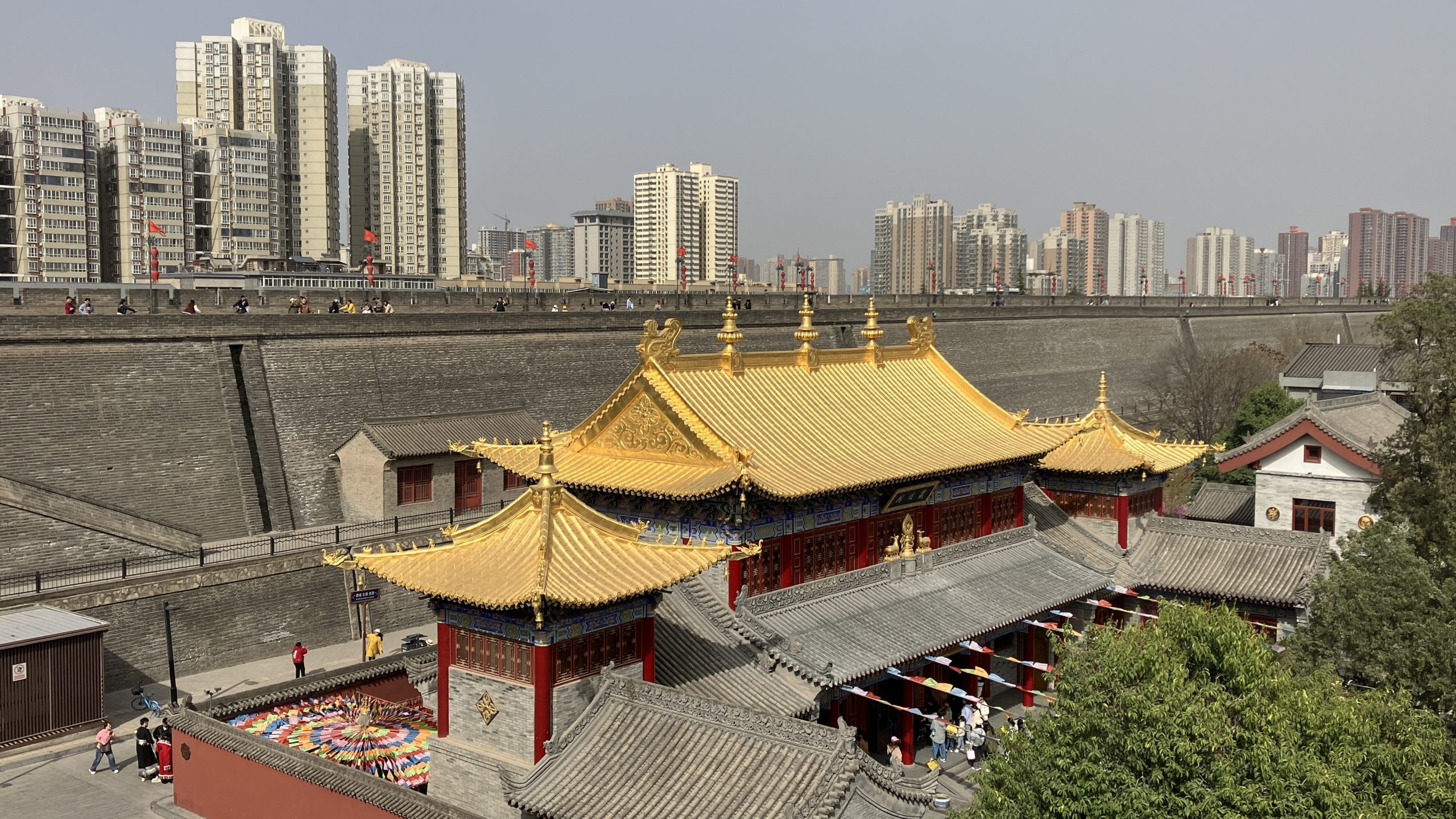
A great, ancient stone wall divides the old from the new in the heart of Xi’an. The wall is wide enough to bike on, so we did. I recorded it on Strava: 8.9 miles. Like most cityscapes in China, skyscrapers stretch as far as the eye can see.
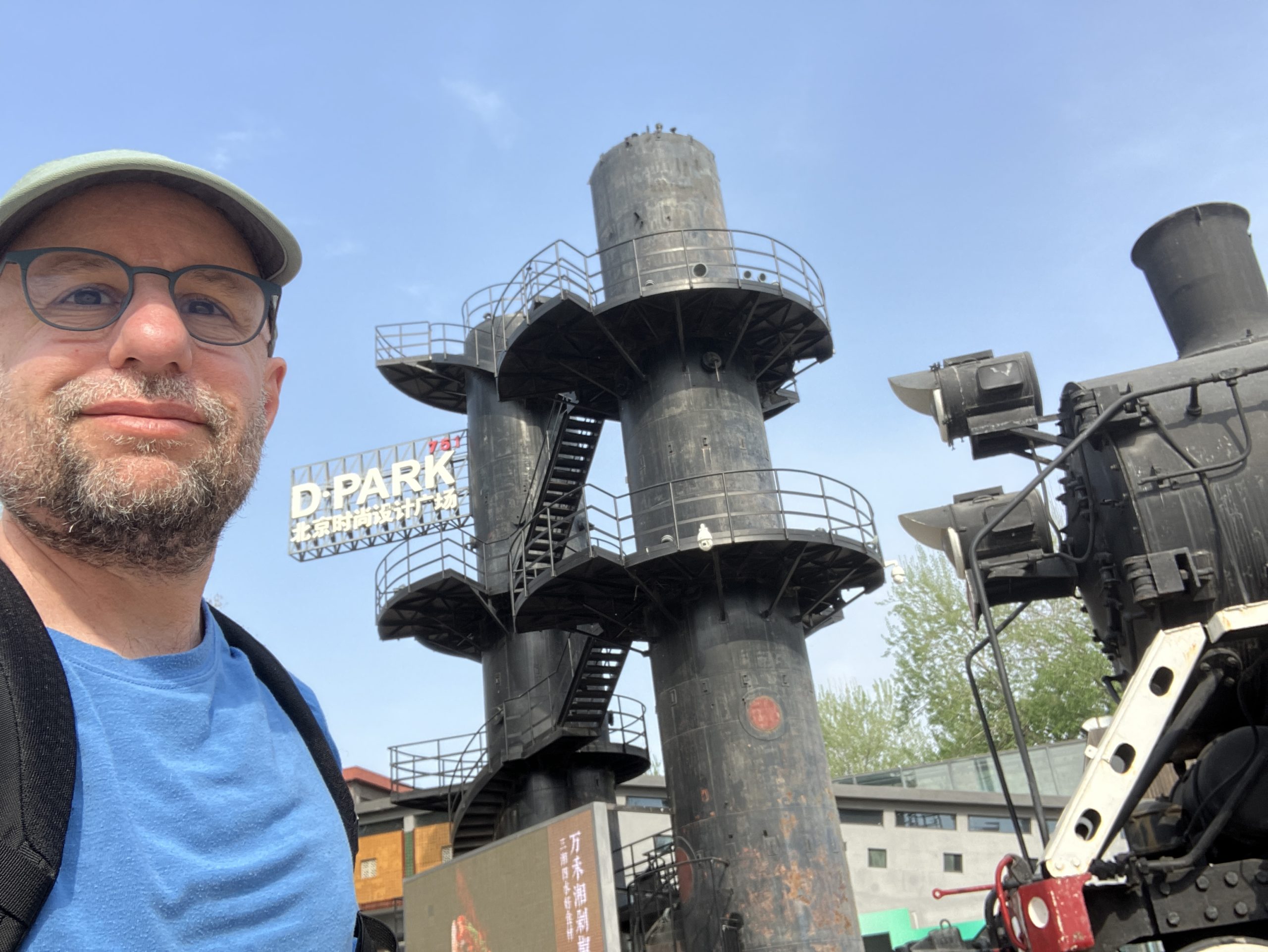
D-Park in Beijing is an example of industrial reuse. It felt similar to the arts district of Northeast Minneapolis in many ways. Old factories are now hip artists’ spaces and galleries. The area is named for “Déyǔ” or “German” in Chinese because communist East Germany helped develop the industry there in the 1950s.
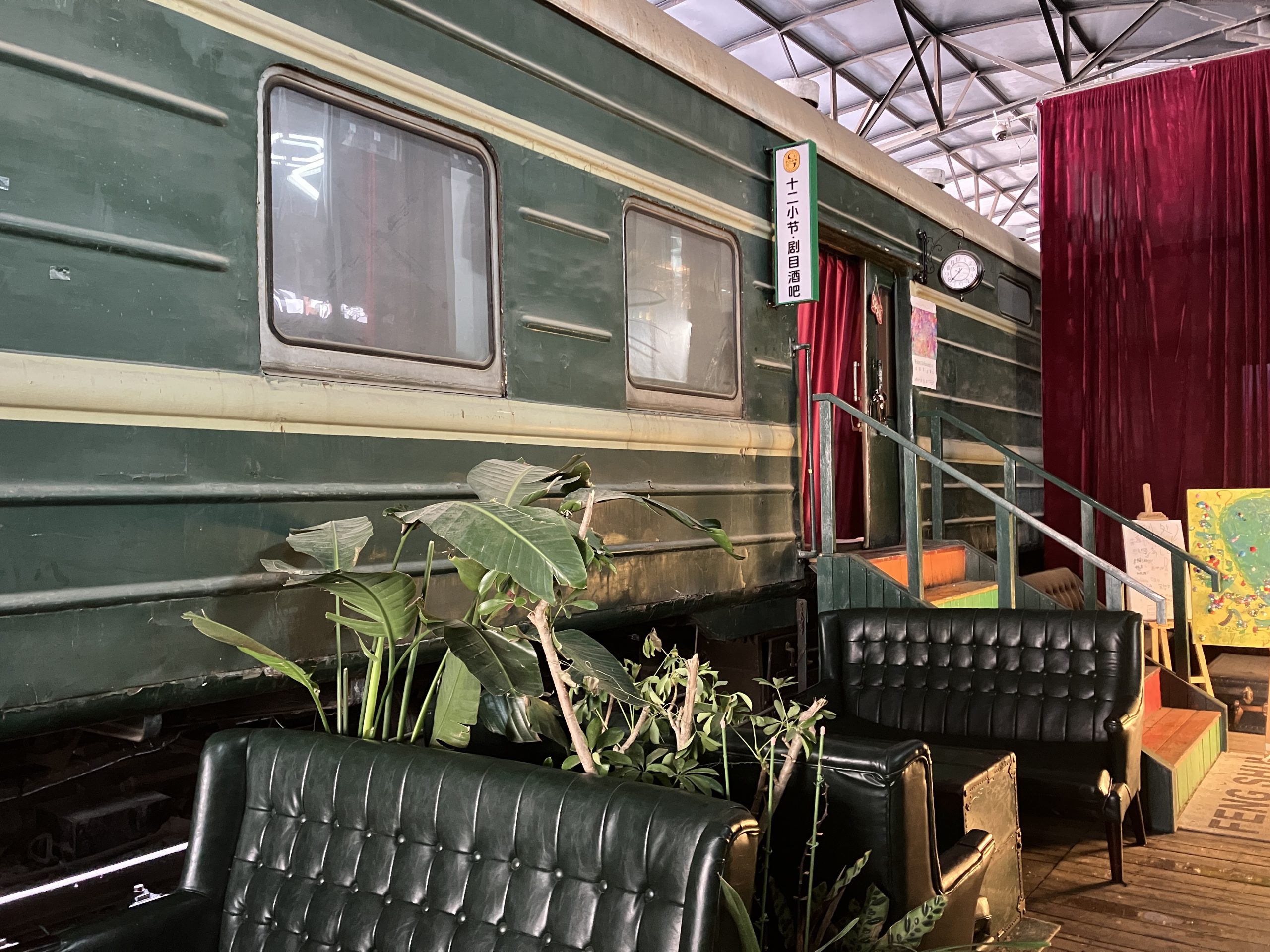
D-Park was revitalized in the 1980s and this old railcar was repurposed into a bar.
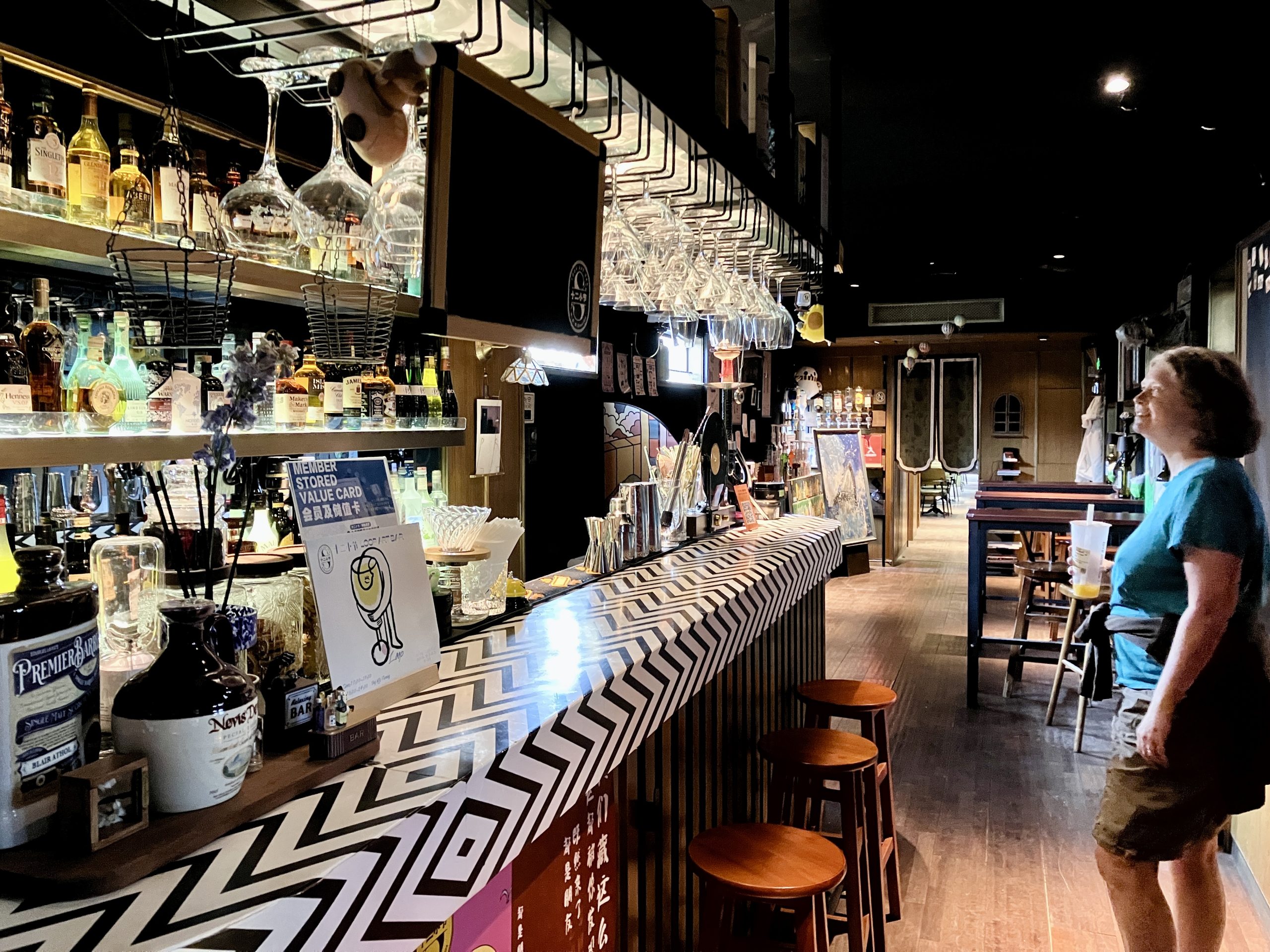
Cheers!
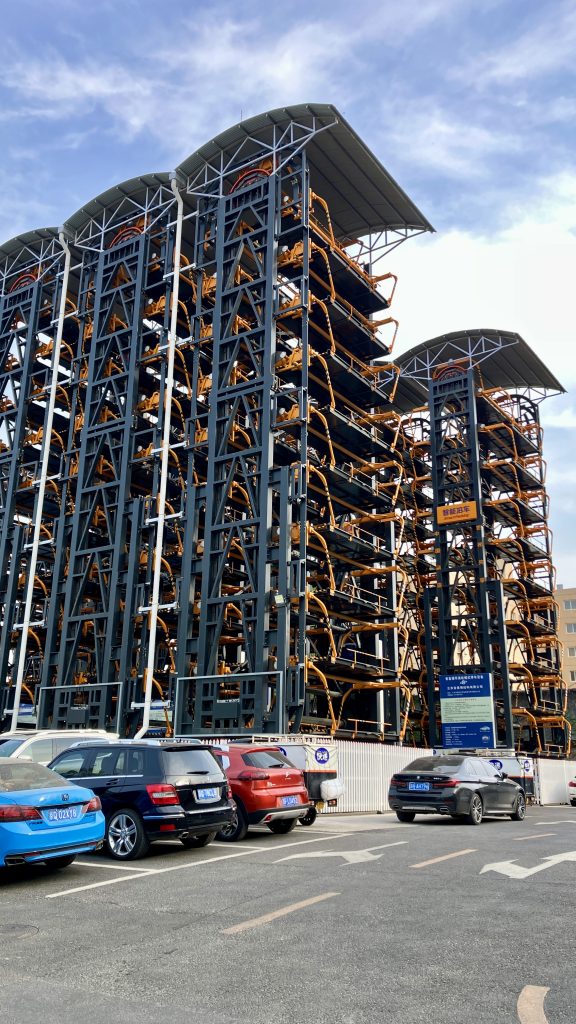
Another German contribution — a towering vertical elevator car park. It was empty when we saw it. Presumably it fills on weekends when the area transforms into a thriving party and nightlife scene.
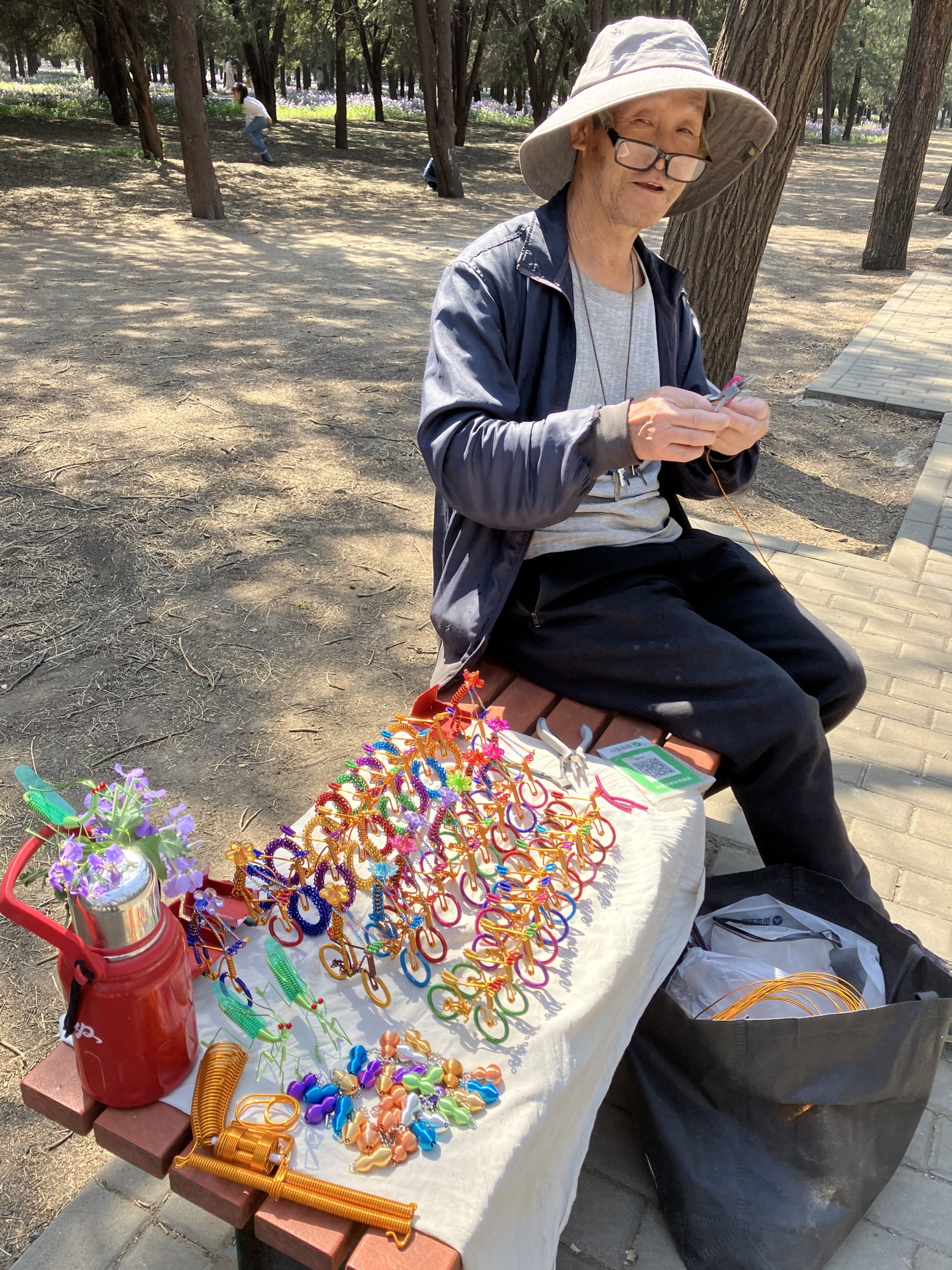
I’m not big on souvenirs, but I came home with a $1 handmade wire bicycle, in red and yellow — the colors of the Chinese flag. The little bike and its craftsman are a reminder of the value of seeing, experiencing and learning about other places, spaces and cultures. We can do better. We must do better. Travel inspires my work at the Sierra Club North Star Chapter and collaboration with amazing partners in the mobility movement.
Editor’s Note: All photos courtesy of Joshua Houdek.