In a television appearance in March 2025, Governor Tim Walz said the following about our incumbent president: “I think we have to assume the very worst in everything this administration does, and we need to prepare for it.”
In a glib sense, one’s mind can easily run amuck when considering what “the worst” might entail:
- Invading Canada?
- Weakening public health protections, and letting the bird flu rip through?
- Increasingly egregious persecution (paywall article) of immigrants and political dissidents, moving ever farther down the “first they came for” list?
But this is a blog about urbanism, not infectious disease control or civil-military relations. Nevertheless, it is not difficult to find uncertainties and destructive tendencies in the Trump Administration as it concerns cities and transportation (at least the public and active kinds). Despite strong demand for traveling by train in the United States, uncertainty over future funding has already led to cuts (paywall article) by Amtrak, as well as concerns over the politicization of leadership roles in the United States’ primary passenger rail operator (and the only one in Minnesota).
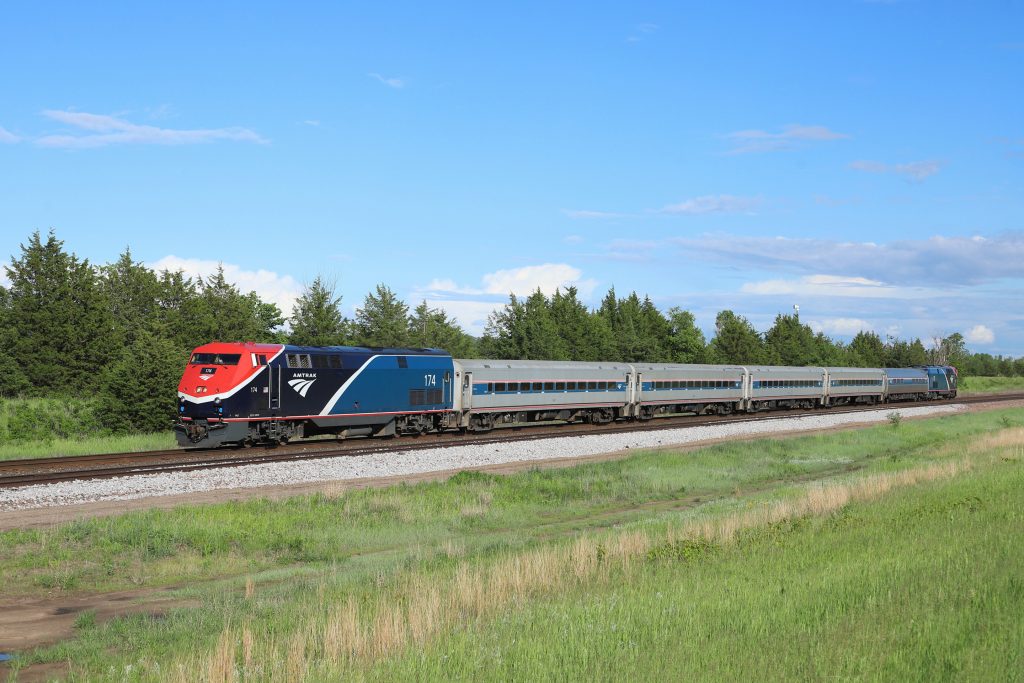

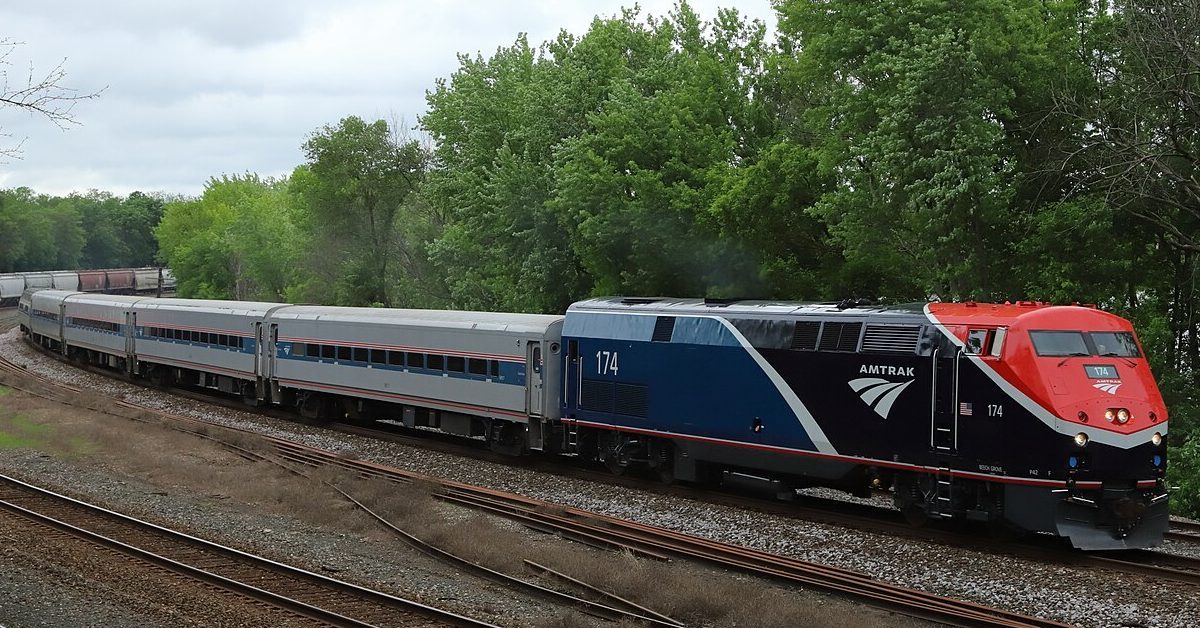
The recent debacle over corrosion issues on railcars for the St. Paul-to-Chicago Borealis, which temporarily disrupted service this past spring, underscores just how brittle the state of passenger rail infrastructure is in the U.S., even before adding in the unpredictability of the current social-political era. The recalled train cars are all at least 35 years old, and capacity existed only for one daily run in either direction. This is a far cry from the seven daily trains that departed or arrived from St. Paul Union Depot for Chicago in 1971, which in turn pales in comparison to the 33 daily trains that plyed the same route in 1956.
If the federal government, for an indeterminate amount of time, cannot be trusted to reliably support essential, popular transportation infrastructure like the Borealis — never mind supporting the restoration of other pieces of infrastructure like the oft longed-for Northern Lights Express (paywall article), then a natural question arises: To what extent should Minnesota prepare to pursue such projects on its own? We can find inspiration in passenger rail operations both near and far to our dear home.
Considering the Amtrak Cascades
In Oregon and Washington states, the regional passenger rail line, the Cascades, is funded entirely on a local basis divided among ticket sales, the Washington State Department of Transportation and the Oregon Department of Transportation. Budgeting, management, outreach, advertising, ownership of locomotives and more are also handled on a local basis. Only the operation of the trains themselves and ownership of some passenger cars are contracted out or leased from Amtrak.
(Minnesota Mentioned: The Cascades runs on track laid in part by the Great Northern Railroad, of St. Paul fame.)
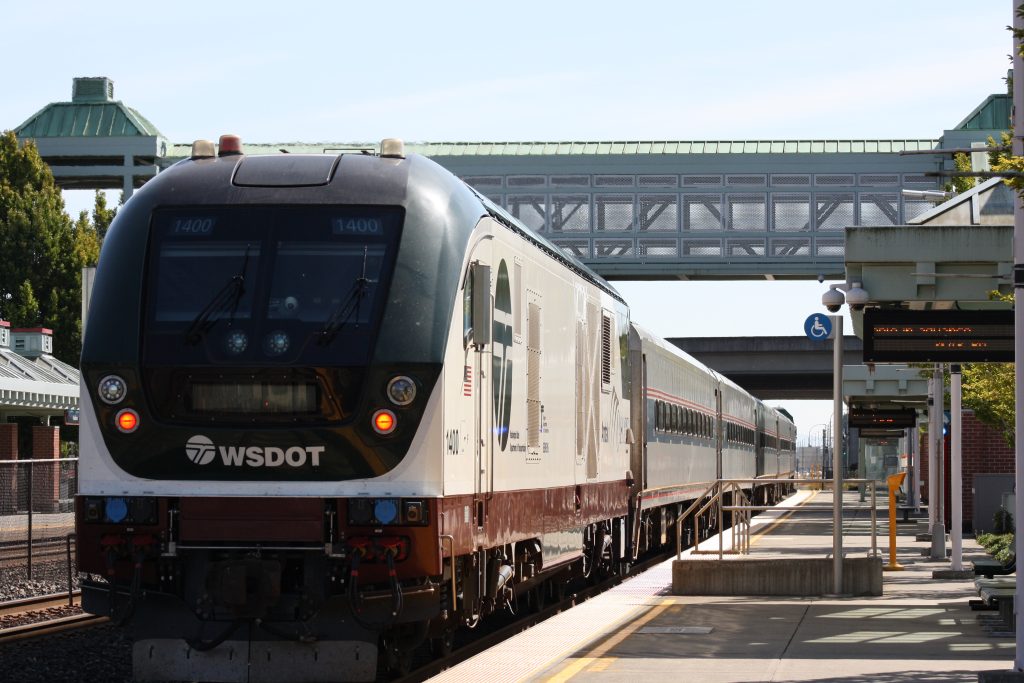
The Cascades runs from Vancouver, Canada, to Eugene, Oregon. But particularly in its legs north of Seattle and south of Portland, passenger rail service is yet to recover from mid-century standards, never mind the timetables enjoyed by cities of comparable distance and stature in Europe and Asia. Still, the Cascades serves as a backbone for intercity public transportation in the Cascadia region, setting an all-time record for ridership in 2024.
Organizationally, the Borealis is not all that different from the Cascades. Its operational costs are split among the states of its service (Minnesota, Wisconsin and Illinois), with service provided by Amtrak. But there are two aspects I find intriguing about the Cascades: its scale, as well as its visual identity.
The Cascades operates on a much larger scale than the Borealis. In 2023, Oregon contributed $15.8 million to Cascades service, while Washington state contributed $78 million. The total estimated operating costs for what has become the Borealis were estimated to be around $12.5 million in 2015 dollars (the year when the feasibility study for it was published), or about $16 million in 2023 dollars, adjusted for inflation. Furthermore, the Borealis for at least the next two years is in part supported by a grant from the Federal Railroad Administration, while the Cascades is now free from reliance on federal funding. Compared with the once-a-day train supported by the Borealis, up to six trains daily in each direction are supported on the Cascades’ busiest portion, between Seattle and Portland.
(A note regarding the Empire Builder: In comparing the two regional corridors, I see the Empire Builder as analogous to the Coast Starlight, which follows the same route as the Cascades from Seattle to Eugene, before continuing south to Los Angeles. Furthermore, continual issues with delays on the eastbound Empire Builder at time of writing limit its utility as a reliable method of travel.)
The Cascades also has a distinct visual identity, separate from other Amtrak routes. Ticketing is done on a distinct website, a food and beverage program allows local businesses to stock their products in the cafe car and the locomotives owned by the states are also branded in local colors. Come next year, new train sets for the Cascades are also planned to enter service, replete in local earth-tone colors. By comparison, ticketing for the Borealis is done on the standard Amtrak website, and the trains used for the service also are in the standard blue-stainless steel finish.
The Question of Cost
Following in the footsteps of the Cascades, I wonder what space there is for the Minnesota Department of Transportation (MnDOT), along with the state DOTs in Wisconsin and Illinois:
- Increase their capacity to fund expanded passenger rail operations such as the Borealis.
- Procure capital equipment, such as locomotives and train cars, to support additional rail operations on a more self-sufficient basis.
- Develop a local brand identity for regional rail services — from advertising and websites, paint schemes and potentially even the interior of train cars themselves.
The skeptic might counter that, regardless of one’s intentions and aspirations, questions of cost abound. From a tax-base perspective, Minnesota alone is smaller than the Cascadian states of Oregon and Washington put together.
I am hardly an accountant, but one space I see for a measure of fiscal responsibility is for MnDOT to shift funding away from continuing to expand its roads. Highway expansion has consistently been demonstrated to not improve congestion, and yet MnDOT has continued to add additional lanes to roads in the state.
A recent article in Streets.mn points out some of the implications of Minnesota’s contemporary auto-centric transportation model:
Despite our state’s climate goals, we’re expanding road infrastructure faster than our population or economy is growing, and our state already has the fourth-most lane miles of any state in the U.S. At the same time, we’re experiencing rising traffic fatalities and facing an $18 billion maintenance backlog with no funding solution in sight. The way we invest today is not working.
The current atmosphere of the Trump Administration stochastically canceling or delaying federal funding for all sorts of activities, including infrastructure, makes fiscal responsibility that much more important in the current era. Certainly even more miles of road is not the best place in which to invest Minnesota’s limited resources.
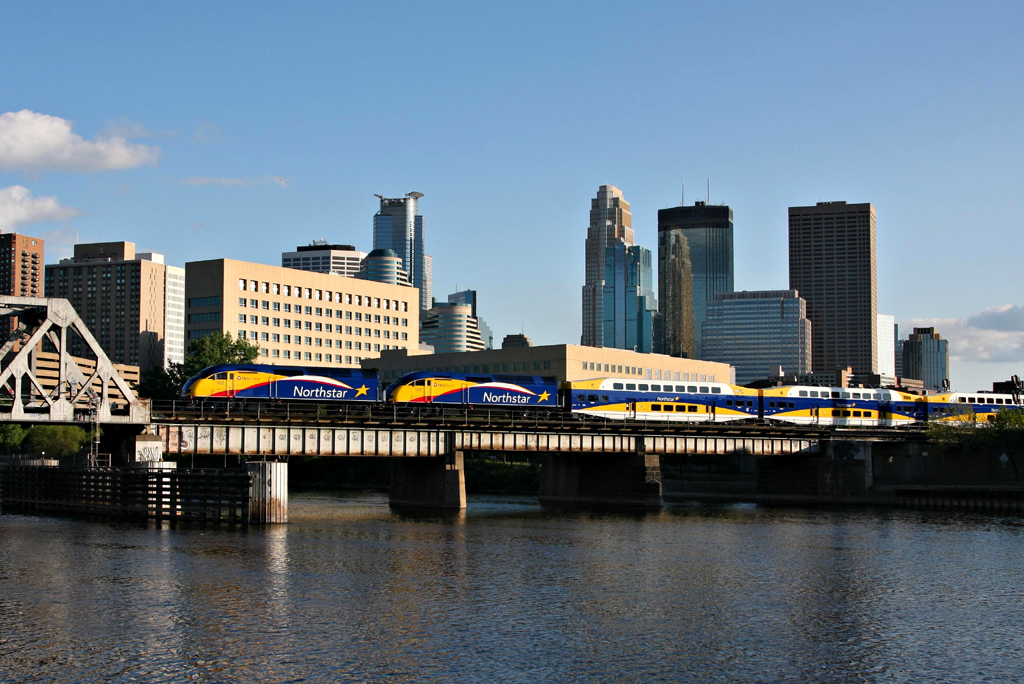
Turning rain into rainbows, it is possible that initially, this hypothetically transit-oriented MnDOT would not even need to purchase new rolling stock for expanded passenger rail service. Another recent article in Streets.mn suggested that the equipment from the now-deceased Northstar commuter line could be reallocated toward the Northern Lights Express train to Duluth, or along part or all of the path of the Borealis.
.jpg)
My suggestion about branding is likely the least costly of my aspirations, but potentially just as crucial as the other two. Already, President Trump is falsely taking credit for projects funded by the Infrastructure Investment and Jobs Act, a bill signed into law by President Joe Biden. The state of Minnesota should proudly take credit for investing in public transportation where it can. Furthermore, I suspect a unique local identity could help improve public support for passenger rail, in establishing it as a discrete, appealing method of moving around.
Of late, I have been fond of the increasing prominence of the eight-point star featured on our flag — from slide decks to tourist campaigns. Perhaps someone more artistically astute than me can create some mockups of what a truly “Minnesotan” train set might look like, regaled in shades of blues and white, along with a tasteful eight-point star?
Final Thoughts
Although the second Trump Administration seems less actively hostile to passenger rail than it is to biking and walking, the best-case scenario for at least the next four years seems to be some form of stagnation, rather than investments in future improvements — as seen in their recent kibosh of a federal grant for high-speed rail in Texas. “The worst” could include anything more destructive than that, including the potential for a sudden and chaotic privatization of Amtrak.
The recently-passed “Big Beautiful Bill” cut 94 percent of the funding once allocated to the Neighborhood Access and Equity Grant, which funded projects to remove urban highways, build transitways, emplace sidewalks and trails, and generally support human-scaled transportation infrastructure in the U.S. — again affirming the administration’s hostility to people who choose to (or have to) move around outside the confines of a car. (Thankfully, the one project in Minnesota supported through this grant, a study for highway removal along Highway 55, has already had all of its funding obligated, and thus was spared a “big, beautiful” axe.)
Even if the worst does not come to fruition, four years is too long to wait. From fires to floods, the impacts of climate change are here to stay — and, if anything, intensify over the coming years. Transportation is the single largest source of greenhouse gas emissions in the United States; any meaningful reductions in greenhouse gas emissions will in large part derive from reductions in flying and driving, in favor of more sustainable options such as public transportation.
If the federal government fails to address this existential issue, how could — or should — Minnesota take matters into its own hands?