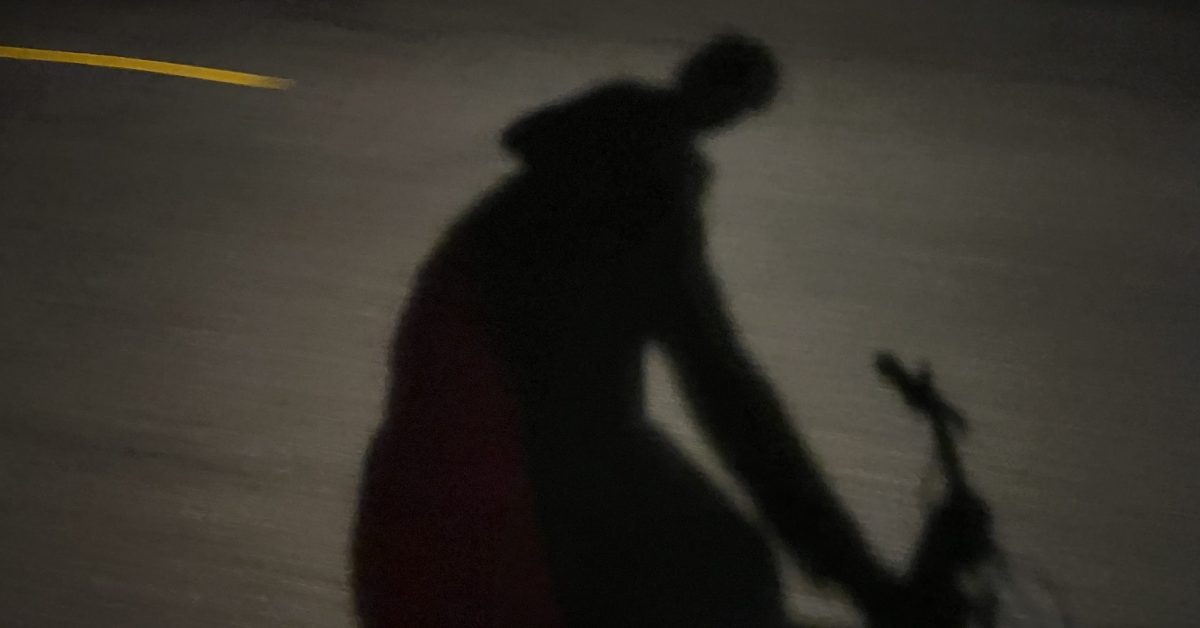
Introduction: Spring 2023
Through a series of lemony snickets, this past spring I found myself without a bicycle. It made me sad, as I love riding my bicycles, and at the time I was unsure if I would ever see them or my home again. After spending several days in an Extended Stay, I found a small studio apartment that would become my home for the next year. That apartment had a cute little bicycle corral. My slot was inhabited with only the cold January memory of leaving my bikes in a garage as I walked through a darkened door into the unknown. One of those bikes left behind sports a bright rainbow chain, which an old friend had lovingly pieced together as a prophetic tongue-in-cheek gift to me. He knew something I then knew only in part, though walking through the darkened door has allowed me to know it fully. I am now blessed to be fully known as queer.
Still, I was awful sad about the whole “no bike” thing. To console myself, I spent most of the spring thrift shopping for maxiskirts at Goodwill Easter Seals. The girls at the Goodwill are indeed full of goodwill. One day, a clerk asked me if I wanted a reusable bag, then proceeded to wink while stuffing the polka dot pencil skirt into a cloth purse that’s just masc. enough to pass. Another day while looking for blazers for a conference I told a lady I was looking for a blazer that was “cute femme” not “get murdered in Arizona femme.” She said she understood because she was going to a wedding and wanted to look “cute slutty” not “too slutty.” Goldilocks and the apparent bear found just-right slutty and just-right cute. It was a queer and very joyful moment.
Feeling that joy taught me it may be time to let go of the resentment of this “no bike” thing, as developing queer joy is more important than holding on to closeted pain.
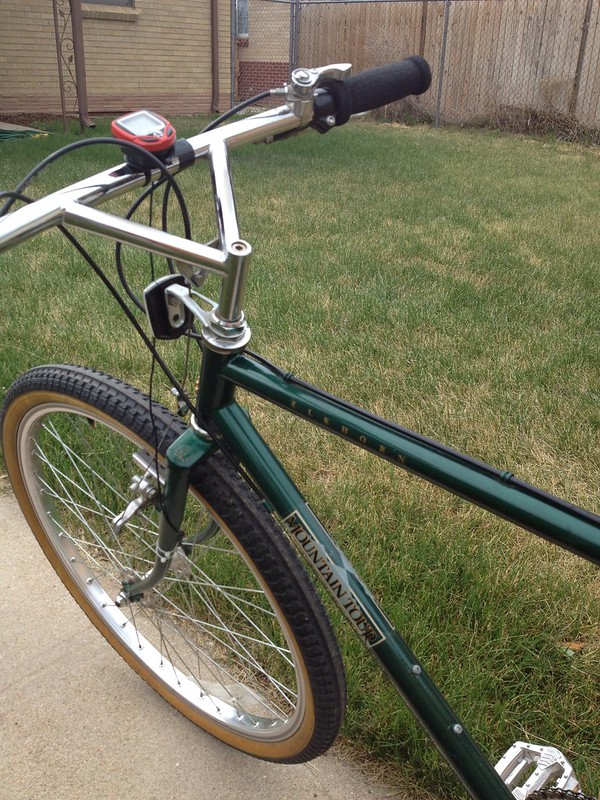
I closed my eyes and wished upon a star like Jiminy Cricket. Opening my eyes, I saw a green Raleigh Elkhorn hiding behind a rack of purses. It is exactly my size and now lives in the bike rack at my apartment where resentments once did. I call her the “manic pixie,” which is both an inside joke about the Manic Pixie Dream Girl film trope and the name of a jazz record I’m finally releasing full of songs about gender theory. A Manic Pixie Dream Girl is a beautiful character who arrives just at the right time like sexy Jiminy Cricket to guide the narrator through a spiritual realization. True to form, I spent most of this past spring riding my bike through the cool midnight of St. Paul wearing flowing maxiskirts. A manic pixie realization, indeed.
I have never wanted to ride a bike like a boy rides a bike: as a sport, as a competitive framework, as a machine for speed.
Riding a bike in a dress feels like home. Psychologists and gender theorists call this feeling “gender euphoria,” that glorious joy you get when you are finally feeling fully and honestly yourself in your expressed gender. The moment I got on a bike in a dress was that feeling for me. I realized I have never wanted to ride a bike like a boy rides a bike. The bicycle as a sport, the bicycle as a competitive framework, the bicycle as a machine for speed, the bicycle as a method for whiskey consumption: These are all things which I have struggled with throughout my 40,000-plus miles of bicycle riding.
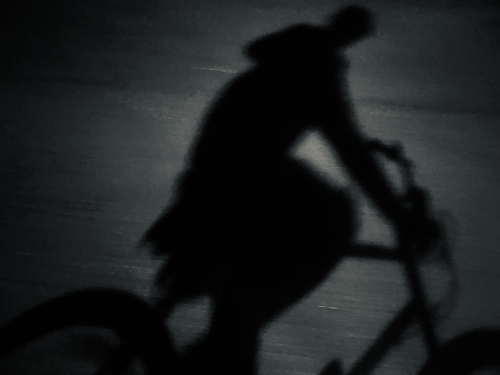
It was this feminine feeling — the wind in my dress as I danced through the night sky — in which I had always felt most at home. When I ride my bike, my soul is inextricably feminine.
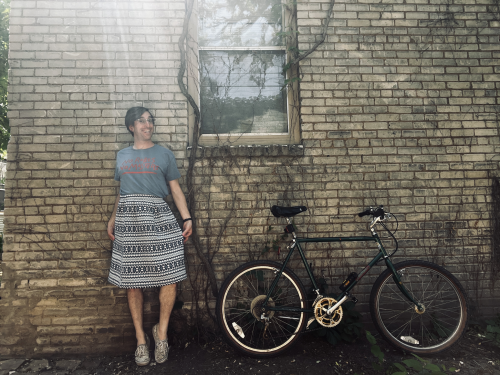
I use soul here intentionally, as coming out for me was a spiritual experience. Where I once was blind to the essential parts of myself that I held in shame, I now see these qualities as what U.S. Supreme Court Justice Antonin Scalia, a conservative icon of the court, described as “enduring.” To Scalia, freedom to express the spiritual is an “enduring” principle inextricable from our constitutional republic. Being queer is part of my soul. As such, it is my natural and spiritual right codified by the Constitution. Freedom of religion was understood by the Founding Fathers and the colonists alike to be essential to liberty.
If you have issue with my religious liberty, I don’t know what to tell you. If you cannot accept my soul, perhaps that speaks to an imbalance within yours. The First Amendment to the Constitution guarantees that my queer soul may endure. My queer soul endures with pride.
But this is not a post about constitutional law, it is a post about bicycles! (Whew, right?) What follows are several of the lessons I have learned as I raced around St. Paul on the “manic pixie” letting the wind flow in my skirt like a hymn played on the saxophone. My hope is this clever melody helps you in some way. Don’t get angry if it doesn’t. I’m just a pretty girl on a bike. I’m here to develop the plot.
Feminine Motion
The idea of being feminine in the bicycle world as a sport is often associated with the idea of being an object which a male may win with athletic prowess. A woman is the prize won at the end of a race. A fuck trophy, if you will. The women who are not fuck trophies in the sport of bicycling — professional female cyclists — have less opportunity, less money and less prestige systemically. To be femme and participating in a “man’s” sport, or sports in general, remains non-normative. While every major sports team in Minnesota has a female general counsel, every single one of those executives espouses the belief that women can succeed in the business of sports by being better at being male than the men.
There are occasional non-chauvinist moments in sports, such as the WNBA finding a feminine voice of empowerment. But we still live in a country where a major political party invested $21 million into a hate speech campaign consisting almost entirely of football advertisement buys, specifically using gender as a cudgel to facilitate hatred actively. If we can learn one thing objectively about our culture from this, it is that sports and chauvinism are inextricably intertwined, regardless of sex. This is embodied by the reality that the woman who made this campaign is the daughter of the world-famous sportscaster Pat Summerall. A white woman reinforcing the value of her privilege by celebrating the violence of “their” men.
It is no accident that the rise in transgender violence was fostered in the hyper-violent warmongering of American football, where sexism is held in high esteem as a way to reinforce power. Causing harm is the purpose of the game, reinforcing damage is built into the process of that sport, and sexism is a feature where only the most beautiful women are given as prizes to the most violent men. If America’s most popular sport is to be our guide, reinforcing gender roles and facilitating violence is the express purpose of sports in our cultural zeitgeist. Sports in this country pretend that competition is fair when those providing it as entertainment are actively engaged in anti-competitive business practices, reinforcing as normative oppression and inequity. Boys will be boys, and girls will be lucky to know the right boys, or perhaps have Pat Summerall as a father.
This brutal cultural reinforcement of the gender binary lives in the sport of cycling as well.
The archetypal feminine virtue in professional cycling was the podium girl: a beautiful woman who moves very little and functions only to reward the male athletes. It is staggering to think that the practice of the podium girl was present at the Tour de France until 2020, a staggering 67 years after the publication of Betty Friedan’s seminal feminist manifesto, “The Feminine Mystique.” It is not hard to infer that to many who view cycling as a sport, a female is merely a prize to be won.
The idea of an unmoving female as a prize has some backing in evolutionary biology. In experiments where people analyze body movements and assign female or male characteristics to those movements, non-movement is generally considered attractively feminine. Movement is considered attractively masculine. The theory here is that a female is attractive as a mate when they are compliant and willing to be a “fecund” recipient of the male seed.
The archetypal feminine virtue in professional cycling was the podium girl: a beautiful woman who functions only to reward the male athlete.
Perhaps we give anthropologists too much credit to define gender when all evolutionary theory can describe is sex. Movements are assigned a biological significance in reproduction simply because that is literally all the evolution can describe. I tire of middle-aged men in cargo shorts arguing that society is predicated on reproduction simply because evolutionary reproduction is what they happen to study. For me, there is more to life and more to motion than if you are getting laid tonight and if you somehow convinced someone to mate with you despite your cargo shorts. (Though to be fair, I can understand why those who wear such unimaginative shorts may have such imaginative and unrealized reproductive aspirations.)
To me, feminine motion is intrinsic within the history of dance. Modern dance celebrates the autonomy of the female. Even in ballet, an art steeped in the patriarchy, the female takes a dominant, athletic and powerful role, as “ballet is woman.” Even as the architecture of the patriarchy attempts to subjugate the power of the female dancer as one to be watched, the simple truth remains that in dance a woman is power in motion. The female here is not a prize won but a powerful, autonomous animal within the architecture of the cultural patriarchy. She is Mingus’ danger: alive and without fear. The beauty of dance is motion for beauty itself. So femme that it simultaneously makes those afraid of femme lustful and puts them en garde.
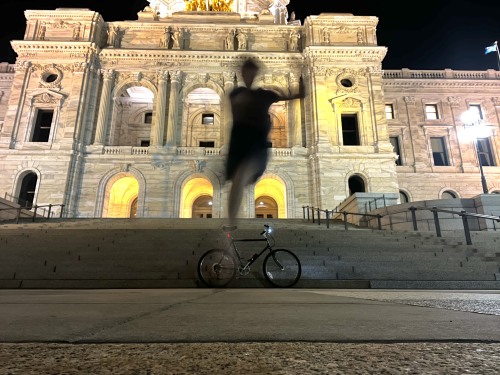
I feel this autonomy and power when I ride my bike in a skirt. I am not pouring my body into a Lycra suit to pantomime labor by racing the clock. I am not riding with a pack in competition to achieve an arbitrary win. With the wind blowing in my flowing skirt, I am motion. I hold the spirit and power of that motion as an autonomous individual. That power is not the female as an object, but rather a small piece of the female as the divine. A holy dancer spinning the wheels of time into the fabric of existence: femme as creation personified.
Feminine Freedom
To move as feminine is also to be free from those who hold power over you.
It was the celebration of the nymphs that freed young girls from their patriarchal trappings of Idia that they may join the public realm. Here, too, riding a bike as femme provides freedom from power-over structures. As femme on a bicycle, I may be seen as a sensual provider of nature. But I hold just enough speed that I cannot be captured. It is my feet on the pedals, my dress the breath of nature and a public space wherein I cannot be captured. To bike femme is to dance the song of nature free from those who may seek to subjugate the sound.
When I found the manic pixie, it was waiting behind a rack at Goodwill. I was separating myself from a second failed marriage at the time, unsure if I would ever see the bikes I built by hand, the garden I tilled from bluegrass into prairie or the piano I left untuned in the living room. I had a lot to let go of at the time, as I had for years attempted to live up to a world where I could execute the expectation that I would be masc. because that was what was expected of me. It didn’t matter that the title never really fit, it didn’t matter that I was sadder each passing year, and it didn’t matter that there was a deep discrepancy between how I saw myself and how I was perceived.
I was expected to be what I was observed to be, even though my brain itself still developed longing to be the gender it knew itself to be while my body raced with hormones in the opposite direction.
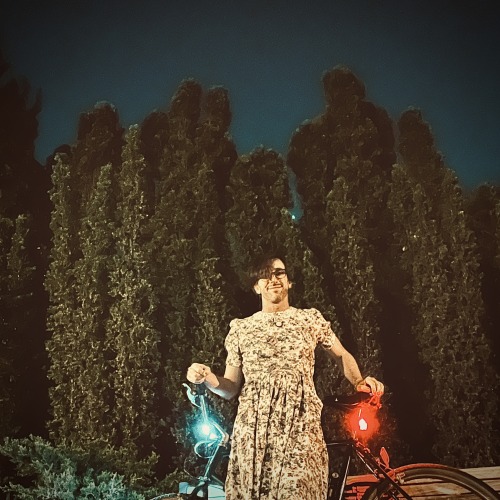
That summer, I rode the manic pixie in my dresses up and down Summit Avenue every night under the stars. There is a moment to coming out specifically as trans which is somewhat terrifying in its familiar comfort. To date, my observed gender was a null hypothesis: a presumption that required great evidence to be disproved. Under those stars and on that bike, the gender which I had been assigned melted from me.
Earlier that spring, I had spent a few days in Phoenix, visiting art museums. I wandered through Yayoi Kusama’s Firefly Infinity Room, symbolic of her ongoing hallucinations and the deconstruction of ego that occurs when a soul returns back to the infinite. I felt free in that room, disintegrated into the stars. The next day I climbed a mountain at daybreak, and another set of climbers took my picture as a kindness. I looked so tired, an exhausted frame of an old man desperately trying to hold onto the earth while his soul was being called back to the stars.
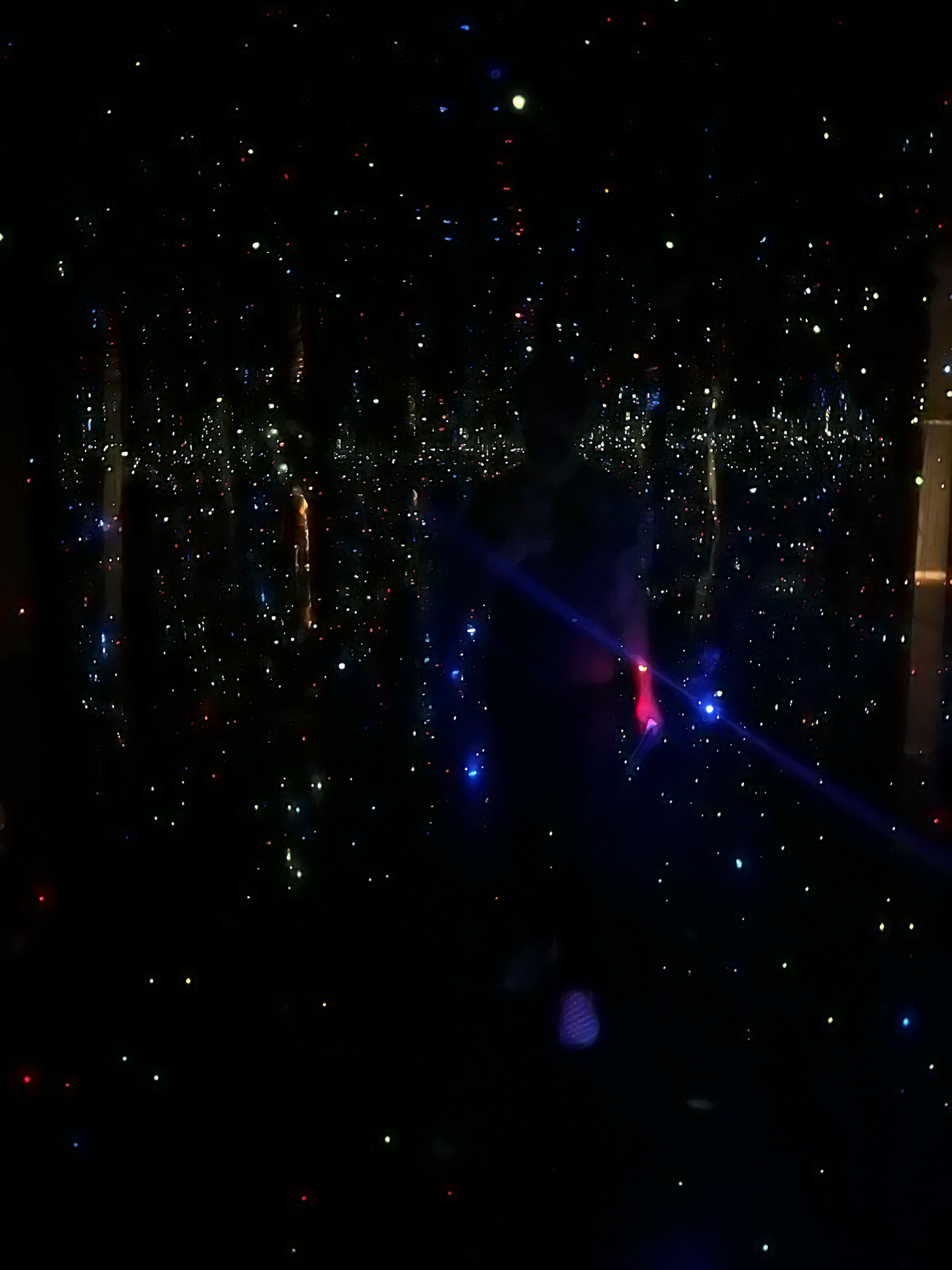
I’m not entirely sure how it happened, but those nights in the cool evenings beneath the bright stars held me like a promise as my given gender melted from me. I wore long dresses while I rode, like a ghost.
A bicycle is a beautiful contraption in the way that it connects to your body, moves at a speed which offers wind and requires only the strength of your body to operate. At the time, my body was realizing it lacked the ability to contain my soul as my soul was designed. This is a scary thing, realizing that you were observed to be one thing by a structured society, but naked before God you are an entirely different thing. Obliterated by fireflies. Moving into and through freedom. One with the cycles of time, breathing in the wind.
I slowly came out to friends and family. I came out at work. That bicycle was my connection to a feeling of freedom which I always knew. Coming out as a trans woman was not a new thing, but rather a realization that this sense of movement was quietly there the whole time, waiting for my despondent attempt at the masculine gender to rot from me. I am grateful for that rotten attempt, as the boy I tried to be built bicycles and rode them obsessively to find what was missing. I rode those contraptions until the stars sang a beacon home: the song of fireflies obliterating me into the freedom of my soul’s intent.
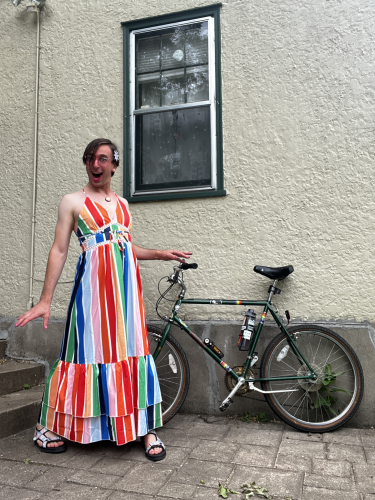
The Feminine Soul: Trinity Sunday 2025
It’s been several years now since I put this essay aside. I was busy, as my attempted gender went through full systems failure while I was working and attending grad school simultaneously. I had by that time returned to my garden. In the spring of 2024, I began hormone replacement therapy. I had just started a new job and was nervous about what might happen to my mind while studying for my licensure test. I took a picture of myself the first day. My eyes were sunken holes in my face holding barely any light.
My eyes have since come back alive. Gender dysphoria feels like there has been a long drone of a sound, like a droll interstate thundering in the background. Then one day, you realize the sound is there. It’s loud. Transition is what it feels like when the sound becomes silence. For the first time, there is the sweet kiss of silence. Actual quiet up to this point previously only imagined.
My mother says the little girl she used to know has returned, no longer bashing their body against an attempt at expectations in frustration and anger. That summer of 2024, I rode bikes with a friend while the screaming dissonance in my brain finally began to quiet. There was a meteor shower halfway through the summer, and watching shooting stars felt like saying goodbye to a friend who visits intermittently after they have moved away. In the year since, my behaviors have changed, my mind is calmer, and I feel like my mind can finally speak to the body that holds it. I still ride my bike in skirts, though on occasion I wear pants, which make me look like a weird aunty who has strong opinions about Modest Mouse on a vintage Raleigh.
Every night I tell myself: I am the cosmos, I am the wind. But that won’t bring you back again. Part of coming out is saying goodbye, and part of saying goodbye is accepting that no one ever really leaves. We just return to a song which keeps playing, a harp that thrills at the touch of the master.
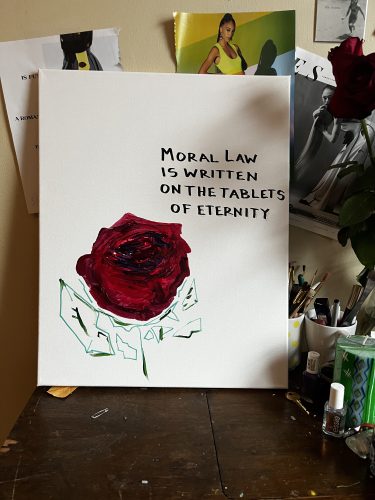
The scary part of the transgender experience is how close you come to death before you become alive. Studies have consistently found that a core reason why people transition is to prevent suicide. I didn’t realize this until I rode my bike over the Mississippi River after I had begun to transition. It took a while for me to put into words the feeling of lightness I felt while pedals zipped across any of the bridges connecting two cities that I routinely crossed. This was a continuous feeling that took time to figure out. I went from always thinking about killing myself when riding a bicycle across a bridge to never thinking about killing myself when riding a bicycle across a bridge.
This is one of those things that I genuinely don’t think cis people get when it comes to gender-affirming care: the raw magic of having suicidal ideation removed almost entirely from the mind’s eye. The idea that we are preventing this care from being offered to children out of some idiotic belief that parents can be moral caretakers of children while letting them live in hell in constant suicidal ideation blows my mind given what I have experienced with gender-affirming care and the removal of suicidal ideation from my life.
For the first time, I didn’t think about driving the machine off the edge of the bridge and into the waters below. Instead, I felt how my body was at home in the hope of today. Then, I was riding a bike to escape. I now ride a bike because this life is precious, and riding bikes feels like a wonderful way to spend a precious life.
It’s so funny to me that so many spiritual people think transgender girls are insults to God. It feels so much like the way people hate me for riding a bike. I find myself asking myself as the pedals spin, “But, do they even know how peaceful this is? How centering it is to let go of the poison? To breathe with the movement of the world instead of burning the memories of carbonated life brazenly, as if me burning the carbonated lives of those past gives me power over the ephemeral quality of my own temporary existence? Why are you so angry at someone enjoying their life by riding a bike when death is inevitable?”
I was riding a bike then to escape. I now ride a bike because this life is precious, and riding bikes feels like a wonderful way to spend a precious life.
As a trans woman, I came so close to meeting my maker from years of desperate dysphoria. Instead, I found God intended for me to discover my femme instead of being born into it. There is a distinctly holy gift in that: The path laid out for me was to see how beloved and valuable feminine is. It felt like a Big Tent revival moment to come out: a distinct knowledge of the holy saying to step forward into this journey.
I finish this essay today next to a sleeping orange cat as the cool Saturday evening stretches into the first Sunday after Pentecost: Trinity Sunday. My bicycles are corralled in the garage, the garden sips the cool rain, and the coming of my holy gift of being anointed with fire as transgender has passed. Today marks the day of Trinity: a time when Christian people celebrate the triune faces of God. These are the Father, the Son and that pesky, indescribable Holy Spirit.
In Christian theology, the gender of the Holy Spirit is far from clear. The grammatical gender of the word for “spirit” is feminine in Hebrew (רוּחַ, rūaḥ), neuter in Greek (πνεῦμα, pneûma) and masculine in Latin (spiritus). The Holy Spirit as the bringer of wisdom was thought of as specifically feminine by both Theophilus of Antioch and Irenaeus.
Even the gender of God the Father and the Son are not specifically male, as the male pronouns were used not to say that God has a penis, but that God is a distinctly autonomous being in the way that men at the time were empowered to be distinctly autonomous, as opposed to women whose autonomy was predicated on a social role. There is so much to this idea of my femme gender that feels genuinely spiritual.
During the years when I attempted to be a distinctly autonomous being like the attempted masculine interpretation of God, I was miserable. It felt like driving a car on the interstate in traffic: empowered only to be mechanically alone in burning engines separating my body from the motion my body experiences.
Being femme feels holy in how it connects to the world around it. It comes as no surprise to me that the idea of a Holy Spirit is disambiguated and femme. It feels to me like riding a bike — a slow journey participating in community based on an underlying wisdom that the work we do to ride this contraption brings us through, to and closer to our community. The heavens themselves declare the glory of the holy. To me it comes as no surprise that the stars themselves declared me the gift of being free and in motion as a transgender woman on a bicycle that summer. Coming out is spiritual, like going home in chariots of fire like Elijah.

The flames are smaller now, and the roar of the process has begun to subside. Being femme today means I have the same garage full of bicycles that I made when I thought I was a boy. I’ve lost an inch of height, but more than made up for that in the joy of truly wanting to live life. I am so grateful for these silly two-wheeled contraptions: two rubber wheels that let me put one hand in the cool summer breeze while my other passes her fingers through the evening stars like sifting sand on the beach. I still love riding my bicycles, the motion they provide, the home they contain, the soul they knew before I did.
Riding a bike for me was a vector to a spiritual experience, a final realization that God is Change and God is Love. I hope that transgender people remain free and beloved by God as they have since time immemorial; I hope that Pride reminds us now and always of the humble reality that a binary in gender or sexuality or anything is a false prophet promising cheap computational distinction at the expense of exponentially valuable diversity; I hope those silly two-wheeled machines bring that same realization to others: knowledge that love and change exist simultaneously in the nebulous eyes of God and the spirit we swim in.
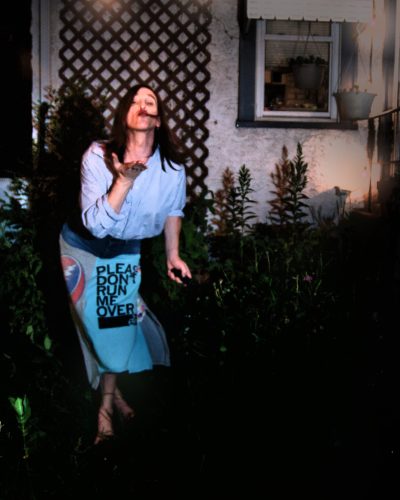
I hope that riding a bike gives you that same peace. It did and does for me. I hope that riding a bike empowers the motion of your heart like dance and the liberation of your heart into freedom. Freedom is invariably a spiritual experience, something you know when you know, an enduring and wise blessing.
May pride for that freedom fill you. May pride in the life you were meant to lead liberate you. Perhaps you may find this on a simple contraption like a bike. That humble contraption carried me to freedom. I hope it does the same for you.
Ain’t it grand to be free? Happy Pride.
Photos by Danny Choma, except where otherwise noted.