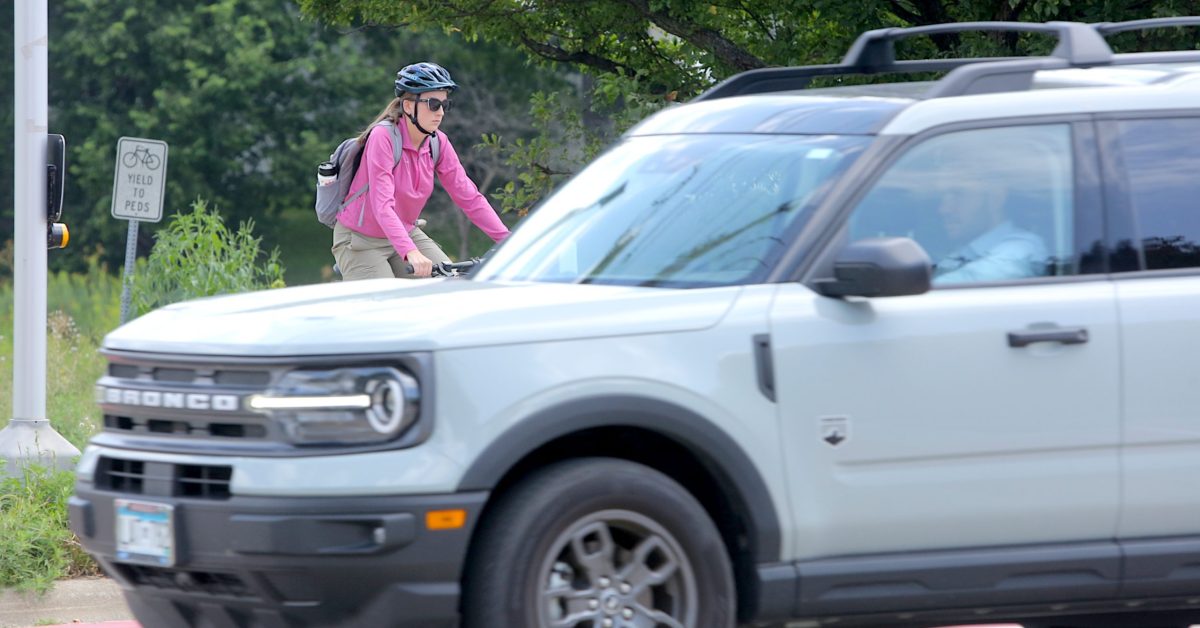
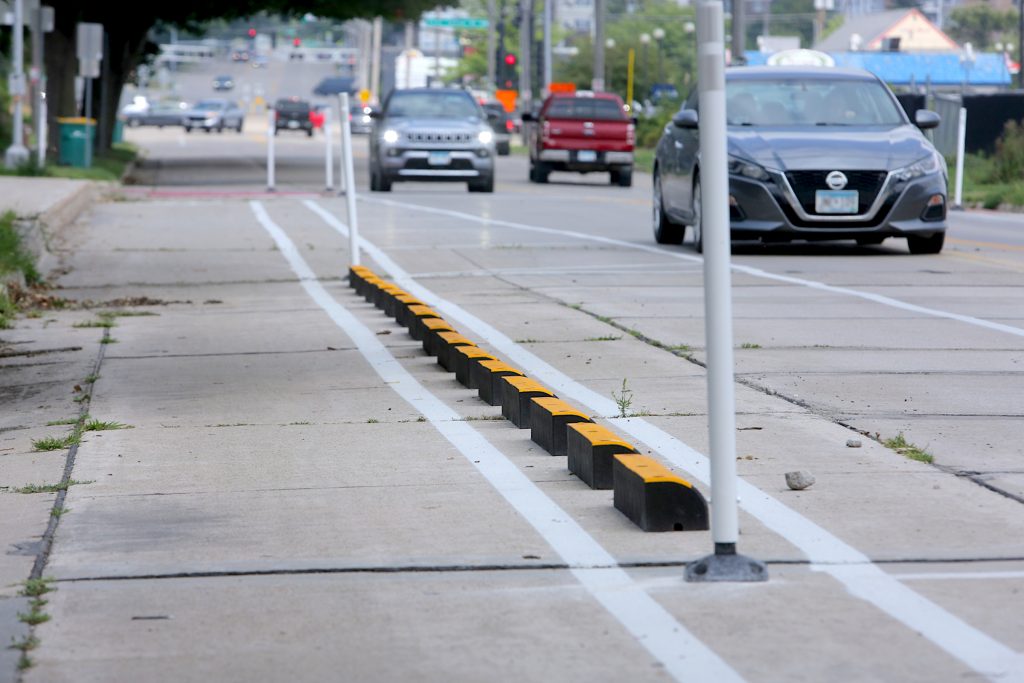
A four-block long bike infrastructure demonstration near downtown Rochester installed this summer does more than create four blocks of protected bike lanes. It also makes an already existing and heavily used bike route safer.
The City of Rochester partnered with the Minnesota Department of Transportation (MnDOT) to set up a four-block demonstration corridor west of downtown along 11th Avenue West. The project created protected bike lanes and added protection to a key bike and pedestrian crossing at 11th Street.
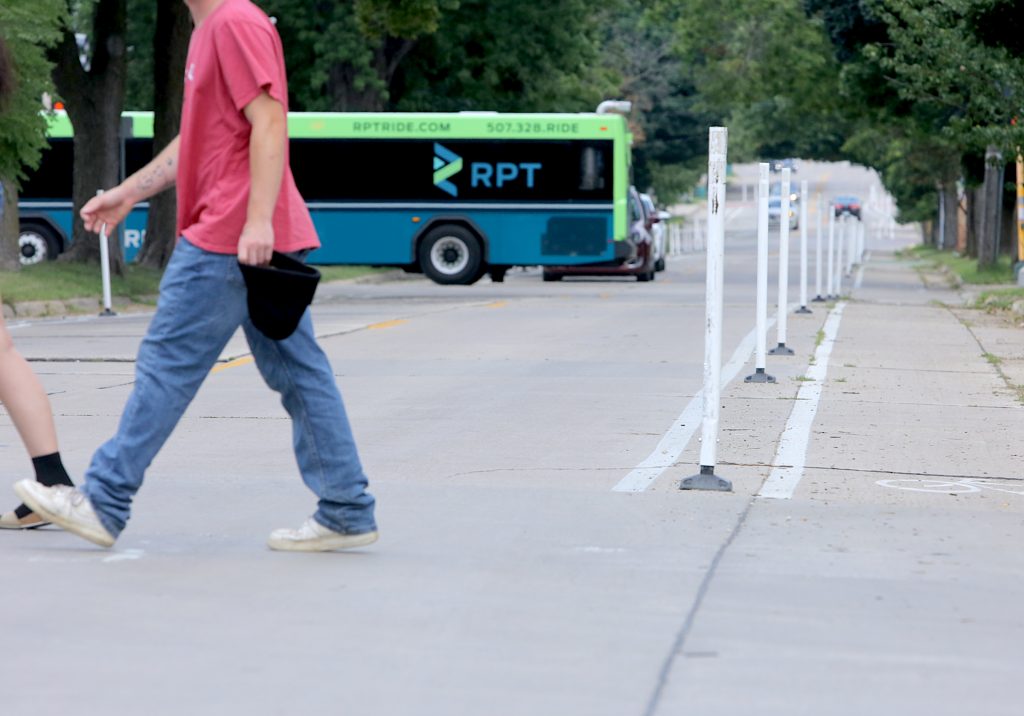
The temporary project features protected bike lanes north and south along 11th Avenue and removes a passing lane that used to cross a key bike route to and from downtown. The north end of the project is at Kutzky Park, where a well-connected trail crosses 11th Avenue, a north-south thoroughfare west of downtown. The project ends to the south at First Street Southwest near St. Mary’s neighborhood near one of Mayo Clinic’s main hospital campuses.
City officials say the project will remain up through summer 2026. However, the lane and curb delineators will be removed in the winter season to clear the road for snowplows. Staff say they plan to install the delineators again in spring 2026.
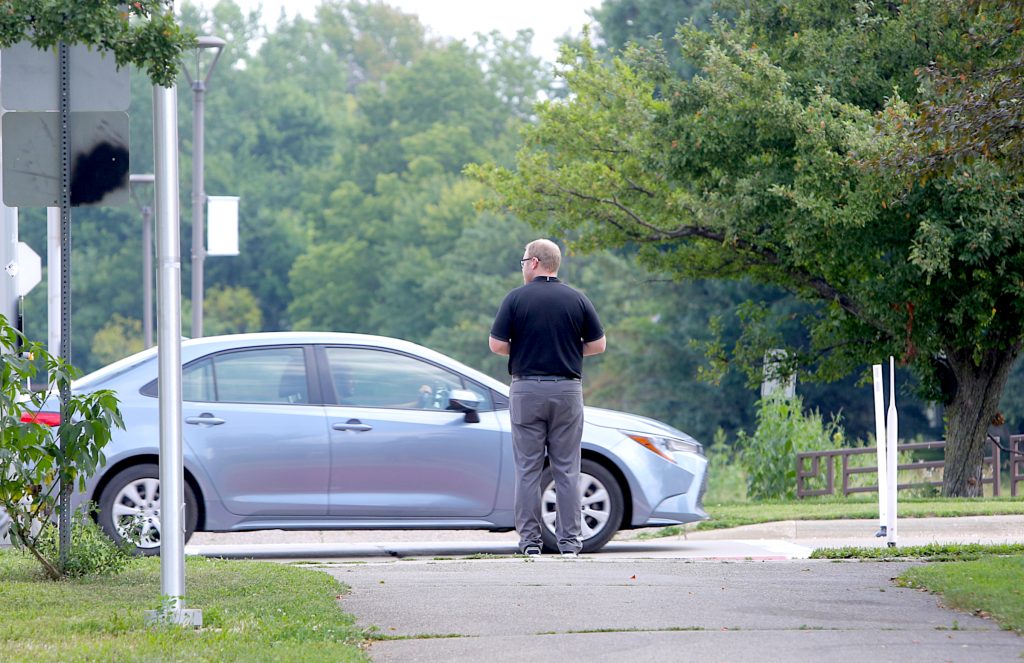
Although it might seem to fall short of connecting two areas or routes, it does help accommodate the already heavy bike traffic that crosses 11th Avenue at Kutzky Park. Even if there isn’t yet heavy bike traffic north and south on 11th Avenue along the demonstration project, the crossing helps one of the busiest bike corridors into downtown Rochester.
The intersection is a key component of the project as it protects existing traffic while deterring unsafe driver behavior where bikes and pedestrians cross.
Better Connectivity
The Kutzky Park trail is a lynchpin route for biking around Rochester. It’s a tree-lined trail along Cascade Creek that connects to Cascade Lake and the Douglas State Trail on the west end of Rochester. The trail further feeds into downtown and connects various bike trails and routes in the city’s center and Lowertown neighborhood. It’s great for recreational riding and is also heavily used by commuters.
Before the demonstration project, Kutzky trail users had to cross two lanes of northbound traffic. That lead to dangerous crossing scenarios in which one car could stop but another decides to aggressively pass the stopped car in the other lane.
Not only has the passing lane been eliminated but the crossing includes red paint for better visibility for drivers at the intersection and protected curb extensions at the trail crossing.
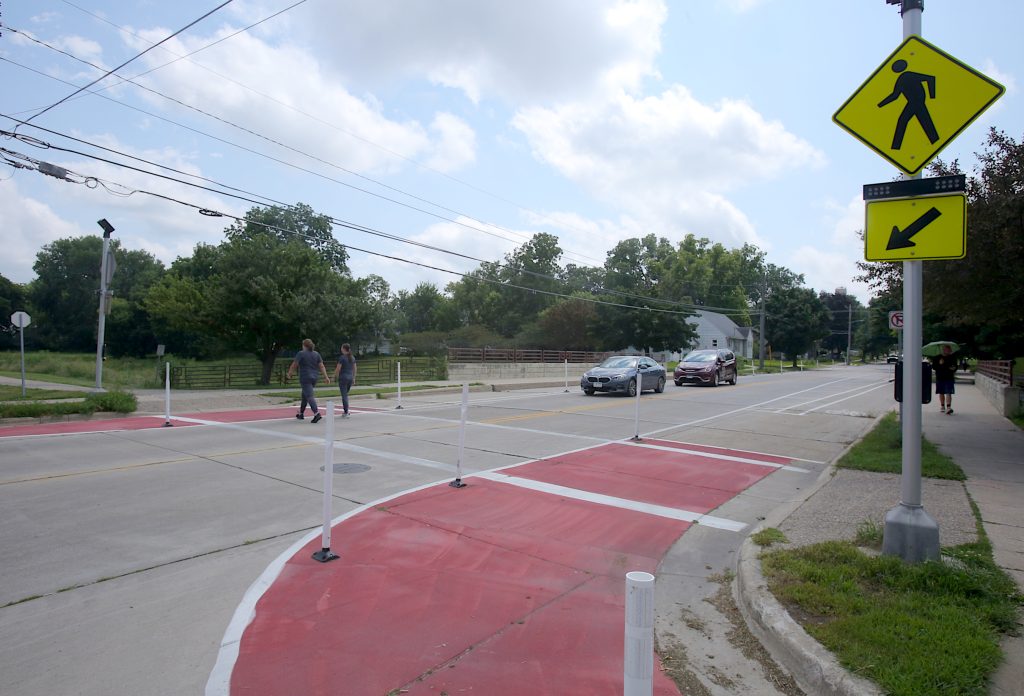
Anecdotally, the times I’ve used it so far, the redesign encourages drivers to stop up to maybe half the time, which is more than they did before but still only halfway to where it should be.
As for connectivity, the north end of the route is at Kutzky Park, which makes sense. City leaders identified the street in 2022 as a potential active transportation corridor.
Here, most traffic is either coming from that trail or heading to it. On the south end, it stops a block south of Second Street Southwest, a business-lined main road to St. Mary’s Hospital. Most bikers use First Street, where the demonstration project now ends, or Center Street to navigate the St. Mary’s Neighborhood. With a bus rapid transit route coming online for testing in 2026, Second Street is going to become an even less desirable (read: safe) route for bikers.
Although the demonstration project doesn’t solve a glaring connectivity gap, it does show what a better design at an intersection can do to improve the safety of routes that already exist and see heavy use.
What Comes Next?
The City of Rochester and MnDOT are collecting feedback about the project via an online survey that will remain open as long as the project is in place.
City staff say so far feedback has been positive with people expressing appreciation for slowing car traffic on 11th Avenue. The feedback will help city and state officials decide which, if any, of the infrastructure will remain in place.
However, city staff haven’t specified any other areas for similar demonstration purposes.
“We will continue to look at other areas where a similar, temporary, installation might be appropriate,” said Rachel Fautsch, communications and engagement manager with the city of Rochester.