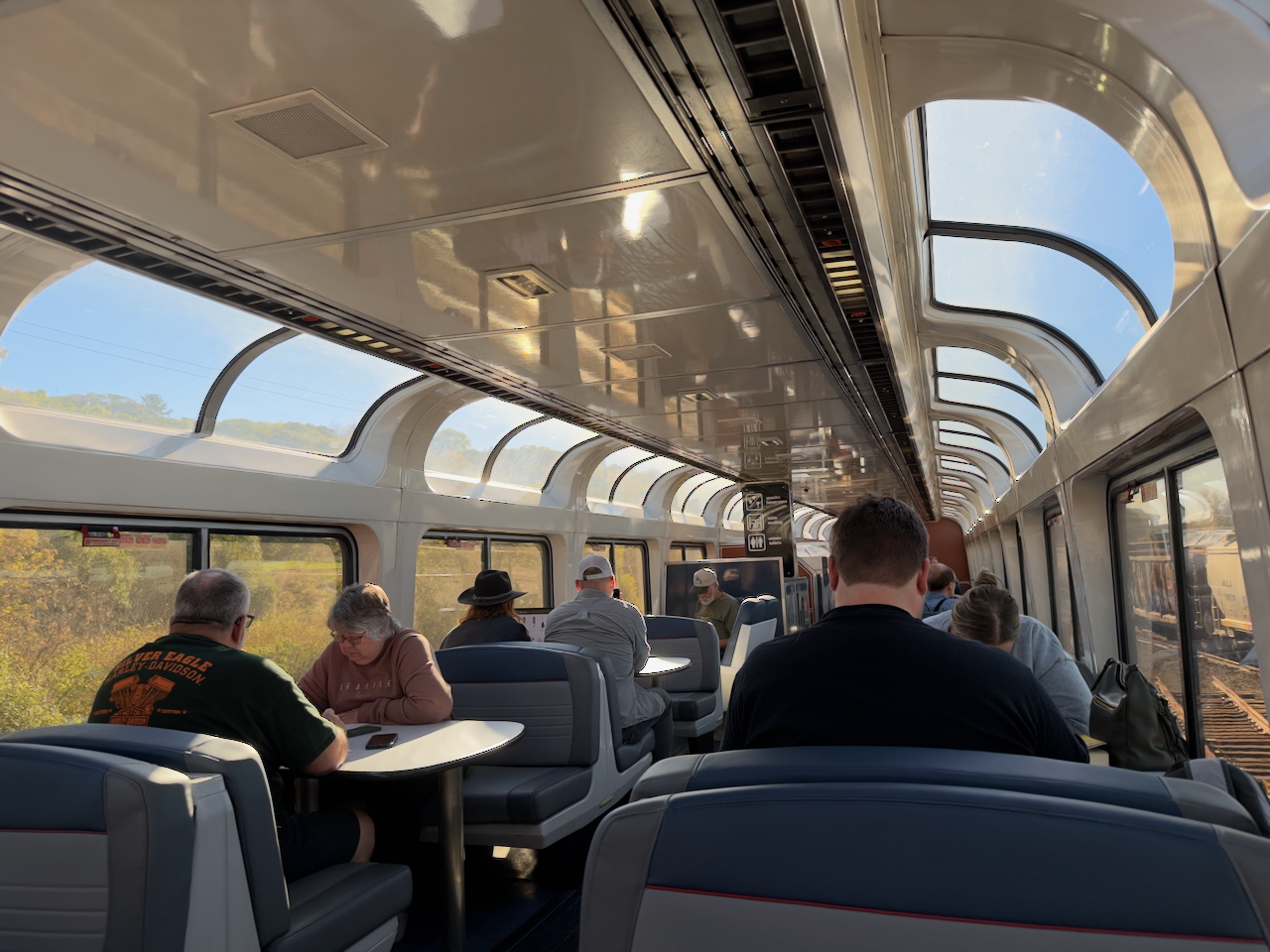
Ever since the start of a second daily Amtrak train from Union Depot, St. Paul, to Union Station, Chicago, with the Borealis, I have been itching to take the train to visit my three cousins who live in the city of Chicago. This article is a diary of how this trip went and some of the observations along the way. Overall, I enjoyed traveling on the Empire Builder, but I do not know that I would recommend the Borealis unless you are choosing between train and intercity bus (I chose to forgo a planned return on the Borealis in the end).
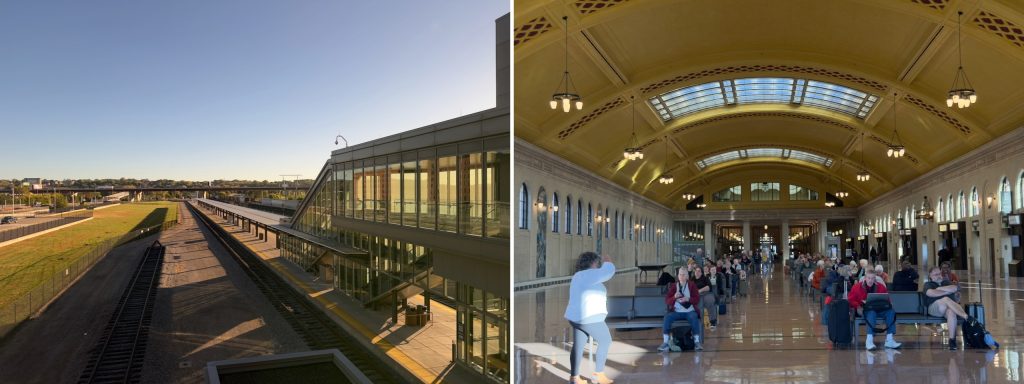
There are two daily trains to Chicago. The Empire Builder runs from Seattle to Chicago with a stop in St. Paul daily and the Borealis runs between Chicago and St. Paul. It’s important to double-check which train you are taking because your experience may depart from your expectations.
My Empire Builder was scheduled to depart on Monday, October 13, 2025 at 8:50 a.m., but actually departed 52 minutes late at 9:42 a.m.. Because the Empire Builder starts on the West Coast, there is more opportunity for delays to add up over those thousands of miles of track. Meanwhile, the Borealis that day was scheduled to depart its originating station of Union Depot, St. Paul on-time at 11:49 a.m., arriving four minutes late at 7:25 p.m.. Thankfully, we made up much of that morning delay by the time my Empire Builder made it to Chicago, and I was able to keep my evening plans. Regardless of which train you take, you can bet on a trip of at least 7 hours and 32 minutes, absent any delays.
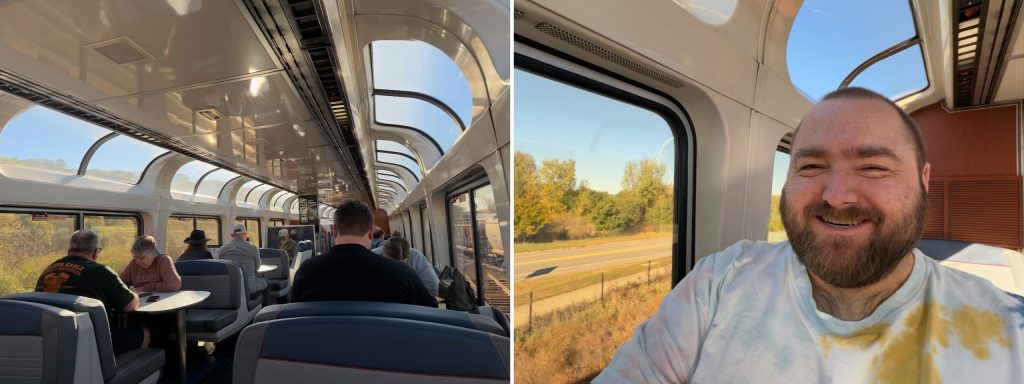
Comparing Amtrak’s Routes Between Saint Paul and Chicago
Another consideration when spending over seven hours on a train is that the Empire Builder is a “premium” experience (in Amtrak’s marketing language). There are sleeper car options, an observation car with café below, and a full dining car with a full meal with entrée, drinks, and dessert ($25). By contrast, a typical Borealis train has just coach cars and one business class with café with no observation car or dining car. According to the Amtrak conductor I talked with, we took on 140 passengers at St. Paul for the Empire Builder on my trip, and that day there were 160 passengers leaving St. Paul on the Borealis second train. He said there was definitely demand for a third daily train (a duplicate of the Borealis), but funding of course is an issue. Amtrak receives about a 6% federal subsidy on operations — as a note 6% is not a fixed number and that number can change based on federal budgets and budget bills.
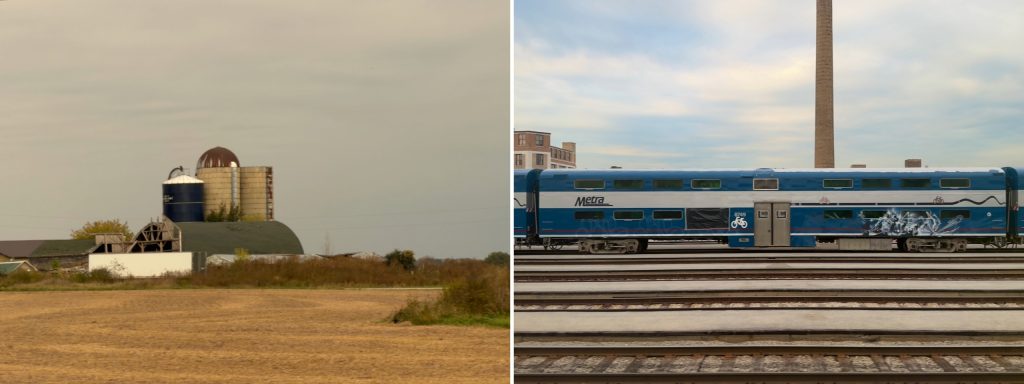
Comparing Prices
When looking at pricing on October 17 for two weeks from now on November 3 (skipping Halloween), the Empire Builder is $77 leaving at 8:50 a.m. and the Borealis is $41. Comparing to a direct bus from St. Paul, Greyhound ($55 to Chicago), Megabus ($35 to Milwaukee, same as Amtrak) are competitive with Borealis on price, but my experience on Amtrak coach class was far better than any intercity bus I have ever been on, and there is the café for hot snacks.
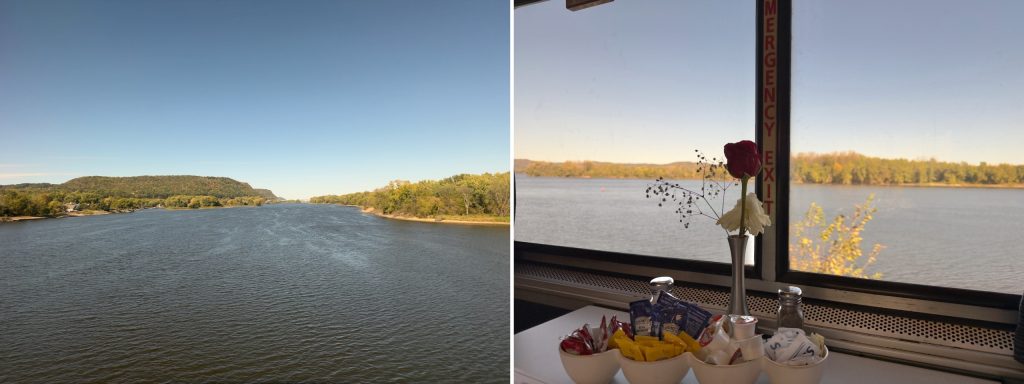
Experiencing the Empire Builder
In the dining car, as with everywhere on Amtrak, the railroad advocates for “community seating.” For lunch, I dined with YouTuber Through My Lens. He was finishing up a multi-day trip across the western United States on the Empire Builder. Check out his upcoming review of Amtrak’s service for a cross-country trip, which should be posted in a few months. Josh said that Amtrak is great content for YouTube nerds, and recently he posted a video about the trip from Chicago to San Francisco on the California Zephyr.
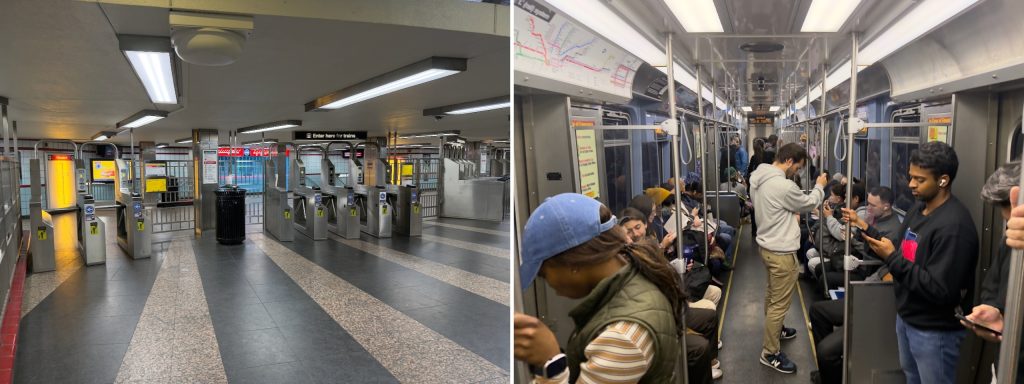
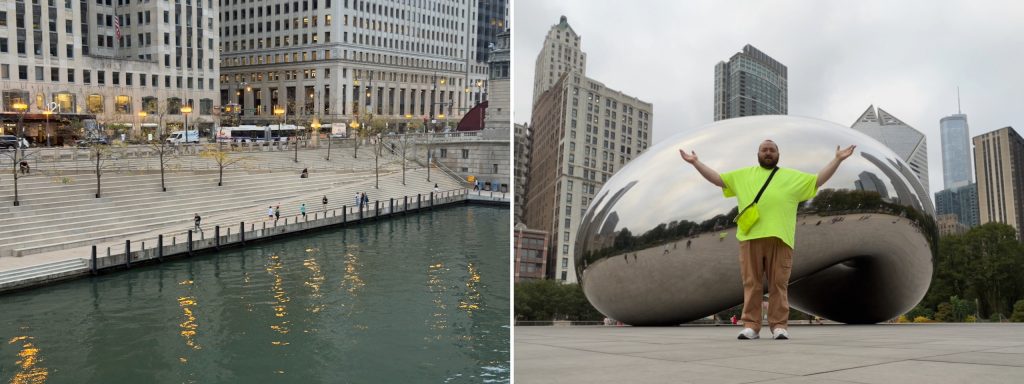
Visiting Chicago
Chicago is at the perfect mid-point between a more suburban Minneapolis and an over-stimulating New York City. From the award-winning Chicago Riverwalk to Millennium Park on Michigan Avenue with the world-famous Cloud Gate sculpture. I enjoyed staying in River North, where there are an abundance of restaurants on every block. From the architecture and map, it was clear this now gentrified neighborhood was spared luckily from interstate construction and urban renewal.
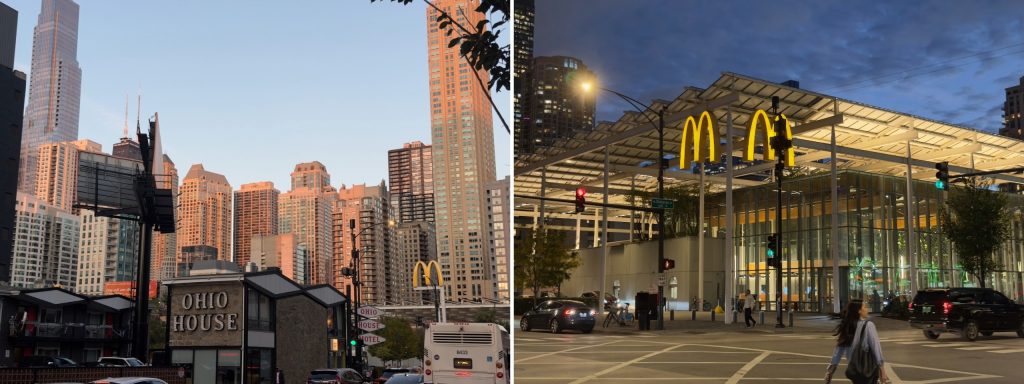
If you want to see first-hand the power of zoning and land use policies like a proposed land value tax, visit the intersection of North Clark Street and West Ohio Street in River North. There is a drive-through McDonald’s and a motel or affordable housing that is only a few stories tall. In the near distance, towers of thirty stories or more form a wall to reflect the setting sun. To be sure, it was the nicest McDonald’s I have ever been to, with generous booth seating, luxurious lighting, and natural light. But that McDonald’s is improbably valued at only $1.2 million.
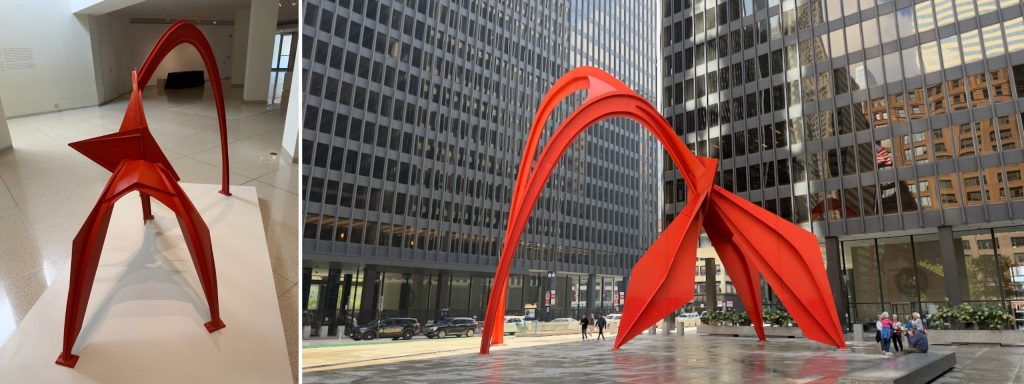
One rewarding experience that I didn’t plan on was to visit both the full-size and miniature versions of Flamingo by Alexander Calder. The full-size, 53-foot-tall version I visited first at the Federal Plaza in front of the Kluczynski Federal Building when visiting the Post Office. The miniature version is at the Art Institute of Chicago, which I just happened upon on the way to the museum restaurant. This is similar artwork to Molecule by Mark Di Suvero that is in Gold Medal Park.
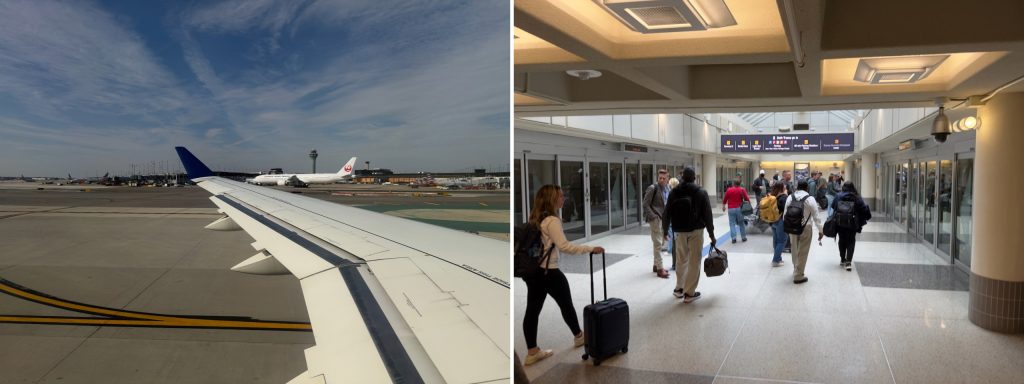
As Friday approached, I thought long about whether I really wanted to take another eight-hour train trip back. Knowing that the Borealis would not have the observation or dining car, that sounded like an unpleasant experience that would leave me with a late-night Green Line trip home. So I purchased a one-way airfare from Chicago O’Hare to Minneapolis-St. Paul on Delta with the Main Cabin fare ($305) and forwent my Amtrak Borealis ticket ($95). Instead of around 7 hours and 31 on the rails (assuming no delays), it was 57 minutes in the air, cruising at 33,000 feet at over 500 miles per hour, and arriving four minutes early.
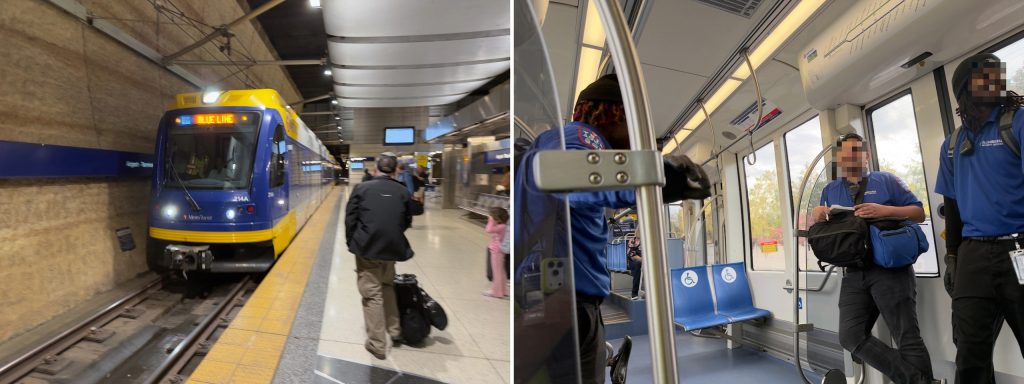
Arriving at Minneapolis-St. Paul airport, I paid for my Metro Transit non-rush-hour fare ($2) and things went smoothly. I live in Downtown Minneapolis and took the Blue Line to U.S. Bank Stadium near Trader Joe’s grocery store. Metro Transit TRIP agents boarded the train at around Minnehaha and checked every passenger’s fare, including mine. There were no violations in my light rail train car that I am aware of. Later on in the trip, there was a low level of cannabis smoke from likely a vape pen, but not too unpleasant, and much better than my experiences from several years ago. I have voluntarily chosen to de-identify the photo of the Metro Transit TRIP agents because the original photo was easily identifiable and there were no issues with administrative enforcement in my interaction.
Where do you want to travel to? What methods of travel do you look for when planning your trips to visit destinations or family? Let me know or share this diary with your comments on social media. Enjoy the ride, wherever your travels may take you!