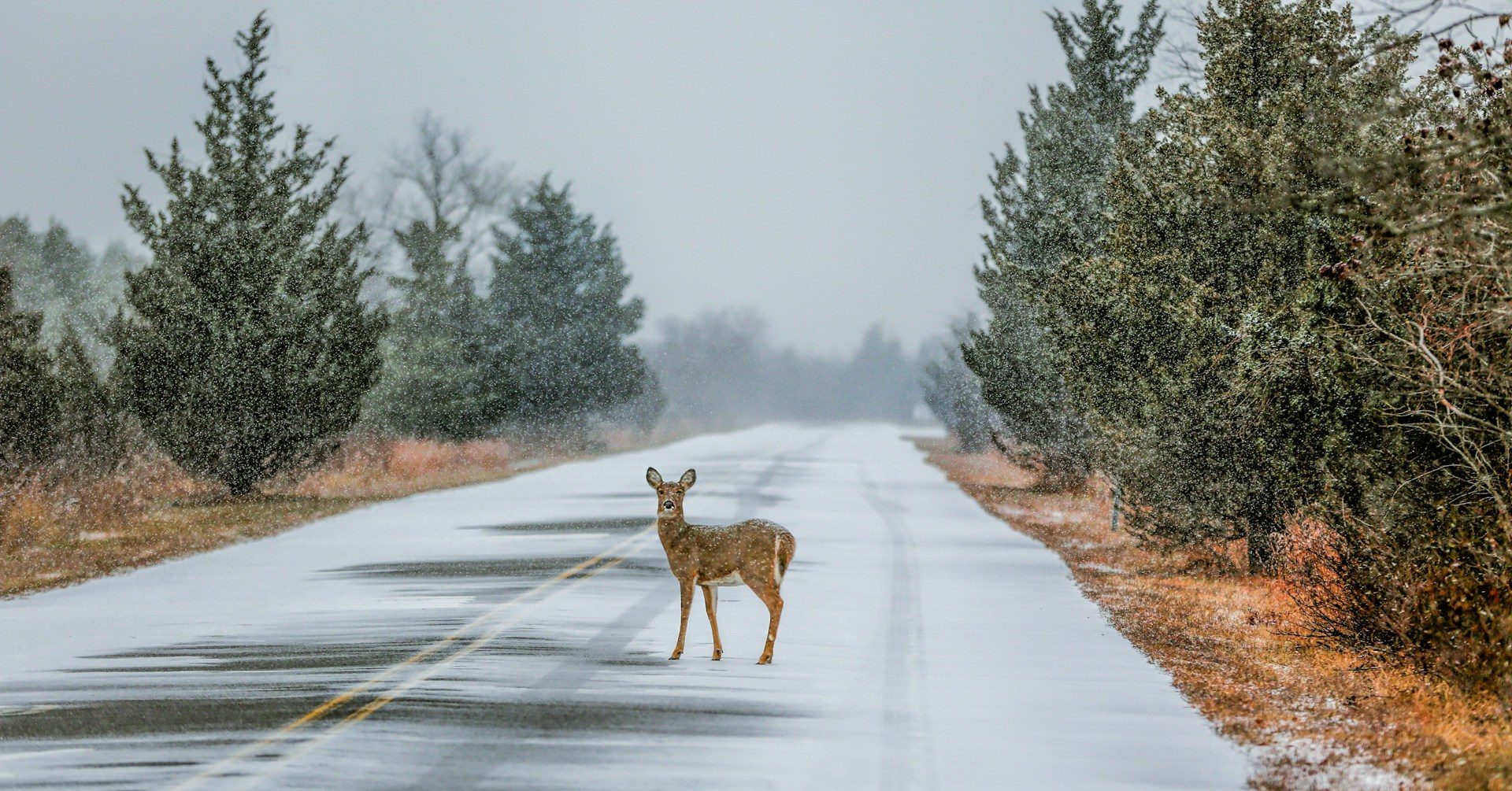
On an unassuming highway in southern Minnesota just outside of Claremont, a road underpass lies quietly in the December snow. The underpass was installed as part of the U.S. Highway 14 expansion project completed in 2021. In this project, a 12.5-mile stretch of highway was converted from two lanes to four. The location for the underpass was picked because the area was identified as a deer migration corridor — an effort to stop crashes between deer and passing vehicles. Over 2 million motorist-wildlife crashes occur in the United States each year, according to recent data released from insurance provider State Farm.
“We had some data that was collected well ahead of the highway project that suggested that there was some north, south, you know, summer vs. winter kind of herd movements in this area. Kind of short distance migration of the herd,” Minnesota Department of Transportation (MnDOT) wildlife ecologist Christopher Smith said. “We had reason to suspect that a widening of the road, increased speed of the road, would create some challenges for deer movement, and motorists as well.”
MnDOT project staff worked closely with engineers to determine where bridges and culverts were already being planned, so they could be modified to serve multiple purposes, including wildlife crossings. They sought out areas where culverts were both needed and where they could get the largest structure possible to fit large animals such as deer.
“The specific location wasn’t necessarily picked from a deer perspective, as far as where it is most likely that deer were going to cross, but it was more of, you know, where can we get the biggest structure in?” Smith said. “We had many limitations on this road. There’s not very much vertical elevation to the road relative to the surrounding landscape. So, if we wanted to put in a large structure elsewhere, it would have resulted in raising the entire road.”
But has the deer underpass helped reduce deer-vehicle collisions? According to Smith, the Department of Public Safety (MnDPS) maintains data that MnDOT will periodically query. However, they have yet to do this for this portion of Route 14. “It’s a pretty new stretch of highway with not that many years of traffic on it.”
According to a study done by the University of Minnesota’s Center for Transportation Studies in 2024, a large number of deer crashes go unreported. Researchers observed the aftermath of deer-vehicle collisions in an area for more than 18 months (including two fall seasons, when deer movement is at its highest). In comparing observations of collision sites with MnDPS records, they found an average of 10% of deer crashes were ever reported across the state. In roads with higher discrepancies of reported crashes vs. actual crashes, there was a high correlation found between areas with high deer densities and wide roads with high crash risks.
When the 12.5 mile stretch of highway between Dodge Center and Owatonna was expanded from two lanes to four, MnDOT worked closely with the Department of Natural Resources (DNR) to identify deer-movement corridors in the area. Deer were found to migrate seasonally between their summer habitat and winter habitat, located just north and south of the highway, respectively. Although the agencies had worked together on wildlife projects before, this was the first time that MnDOT proposed a structure designed primarily with deer in mind. But where exactly was the new underpass to be installed? During the design process, information provided by the DNR was used to pinpoint where deer were crossing, along with where the highway would need culverts for seasonal drainage during the spring runoff and after storms. This information, along with the need for the structure to be a certain size, determined the location of the underpass.
If you were to seek out the underpass, you would be forgiven if you missed it. The structure itself is an upsized box culvert, approximately 10 feet tall, 9 feet wide, and 200 feet long. The underpass is located between Claremont and Dodge Center, just south of railroad tracks. The thick brush keeps it hidden from sight, but if you drive slowly enough, you can still catch a glimpse.
Prior to its construction, U.S. Highway 14 existed as a two-lane highway between Owatonna and Dodge Center. This led to a large amount of safety concerns with passing zones, as head-on collisions were common. As early as 2003, MnDOT had completed studies to determine the needs for improvement on the corridor between New Ulm and Mankato to decrease the risk of accidents. In 2012, MnDOT completed a safety audit measuring this stretch of highway, which identified serious safety concerns. For example, there were three times as many head-on crashes as the statewide average, with a large number of vehicles crossing the center line. These issues continued despite the signing and additional lighting installed between 2008 and 2009 to increase visibility. MnDOT also found many diagonal or skewed intersections that made sight lines difficult at highway crossings, along with lower-than-average seat belt usage. One of the alternatives proposed by the report for consideration included a four-lane divided highway, a project which wrapped up construction in 2021.
While this is the first crossing in Minnesota specifically designed for deer, there is plenty of precedent. Many western U.S. states (Colorado, for example) have installed underpasses and overpasses to allow wildlife to cross highways. Similarly, early American highway design occasionally created drainage culverts which were used by wildlife, though they weren’t installed for that purpose. Early examples of underpasses built for wildlife crossings include Utah and Florida. Research suggests that deer tend to prefer open crossings rather than culvert underpasses, but the cost for an overpass tends to be significantly higher than for an underpass. Regardless, the savings from collision reduction measures can be immense.
This is not the first time MnDOT officials have modified infrastructure to prevent deer-wildlife collisions. In the past, wildlife passage benches on bridges were created to provide a walkway for traveling wildlife. “Those have been very successful,” Smith said. “We often see deer use these benches even before a bridge is finished. So we usually put these in if a bridge is going to be removed and replaced.”
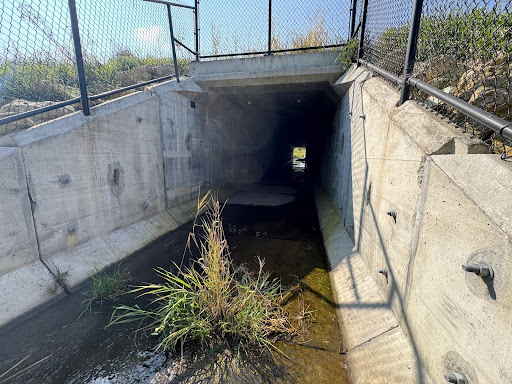
Additionally, several miles of deer fence were installed to help funnel deer to an existing river bridge.
“That has been pretty successful based on the deer sign, the evidence of deer use,” says Smith. “You can see all the deer tracks underneath the bridge. It’s hard to attribute a certain number of less deer collisions, but there’s certainly a lot of deer crossing underneath the road, and those are deer that at least some percentage of likely would have tried to cross at the road elevation. We’re preventing some deer-vehicle interactions, for sure.”
Despite there being more drivers in the Metro area, deer collisions occur more often in greater Minnesota.
Ron Moen, one of the project leads on a recent study on deer-vehicle collisions, notes that there are many deer present in Minnesota. “You have a high density, so they’re spread across the landscape. On top of that, they’re a larger animal, so they move quite a bit. So they’re going to cross roads, and, because they cross roads, they have the potential for having a deer vehicle accident.”
In the study, there was a high correlation found between speed, road width, and deer-vehicle collision risk. These were both problems associated with the Route 14 highway expansion project.
As for the deer themselves, their movement surrounding the underpass is being monitored, but it takes time for them to be aware of the underpass and to make regular use of it. However, according to Smith, there is evidence that other animals have been using the structure.
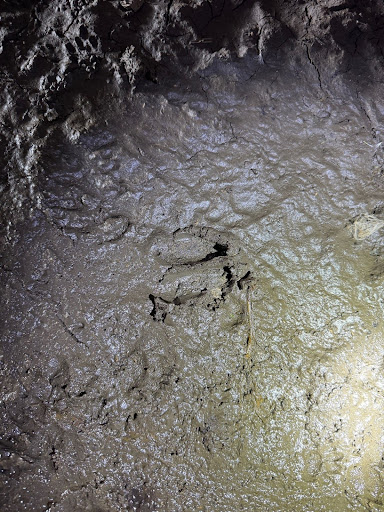
“Pretty much from the get go, we saw a lot of small mammal use: raccoons, possums, things of that nature,” he said. “It appears to be busier than ever.” He also notes that use has been increasing over time, which is expected. “I think it’s a matter of time before deer figure this structure out.”
What is the future of wildlife crossing projects in Minnesota? According to the MnDOT 2025-2034 capital highway investment plan, there are no deer underpass or wildlife overpass projects identified as moving forward during this time period. It is not known when or where we will see similar projects built around the state. However, bridge replacement projects throughout the state continue to incorporate passage benches to help deer and other wildlife cross. Since 2011, approximately 200 have been built.
According to Moen, “research on deer vehicle collisions indicate that there are two peaks in the year, and the largest peak happens in the fall, and that’s associated with the rut when the male deer are moving more. There’s also the secondary peak that occurs in the early summer.” During that time, the yearlings will be on their own, after a new batch of fawns are born, along with an increase in roadside vegetation growth. However, MnDPS advises that deer can be a safety hazard year-round.
To avoid deer-vehicle collisions, remember to drive at safe speeds and remain buckled. Be cautious during evening hours, use high beams as often as possible in the darkness and watch for the reflection of deer eyes. Drive slow in areas where there are known deer populations. If a deer is struck and does not move on or poses a potential public safety risk, report the incident to a Minnesota DNR officer or local law enforcement.
The future of wildlife underpasses in Minnesota is in flux, but there are many other projects going on to help with both wildlife and commuter safety. In the meantime, if you’re driving through Highway 14, just know that you might be passing over a deer underpass designed to make your commute a little safer.
This publication was made possible in part by the people of Minnesota through a grant funded by an appropriation to the Minnesota Historical Society from the Minnesota Arts and Cultural Heritage Fund. Any views, findings, opinions, conclusions, or recommendations expressed in this publication are those of the authors and do not necessarily represent those of the State of Minnesota, the Minnesota Historical Society, or the Minnesota Historic Resources Advisory Committee.