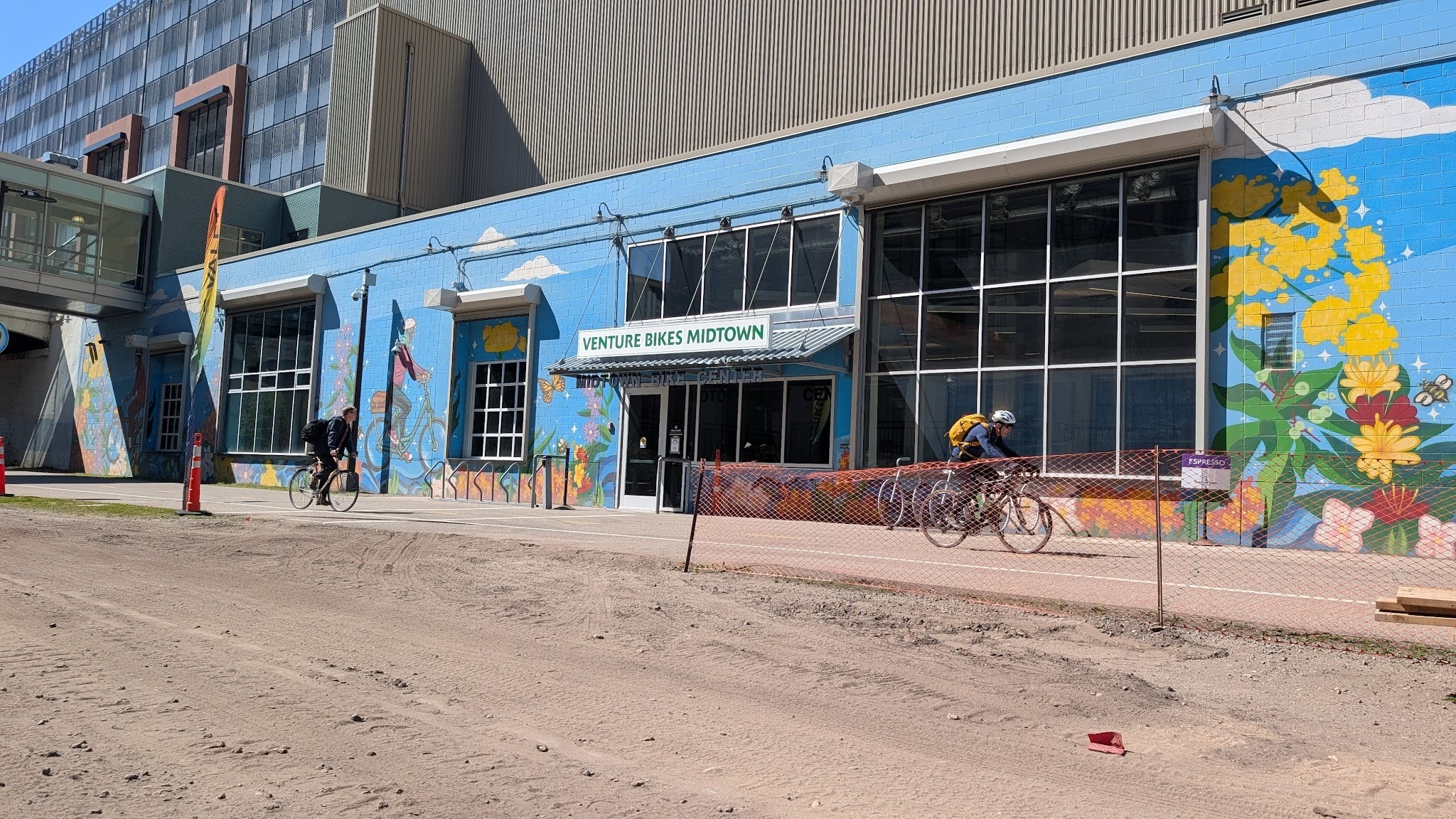
The Midtown Greenway moves more than a million people a year. On a good summer day it carries up to 5,000 cyclists and pedestrians through the heart of south Minneapolis, grade-separated from traffic, plowed in winter, lit at night (mostly), open around the clock. The City of Minneapolis calls it its busiest bike trail. The Rails-to-Trails Conservancy put it in its Hall of Fame in 2015. Bike traffic on the corridor grew 261 percent between 2003 and 2011 alone. Property values within 500 feet of the trail have increased by $1.8 billion since it opened.
Those numbers are impressive and useful for marketing, but those numbers are just what you reach for when you can’t describe what a place actually feels like to use. The Greenway works because of the infrastructure underneath those figures — and nowhere is that more visible than at the building at 10th Avenue, where the trail wiggles just a little and the walls hold the memory of every commuter who has ever locked up a wet bike and walked in for a coffee or tune up.
That building is the Midtown Bike Center. Right now, it’s home to Venture Bikes. For twelve years before that, it was Freewheel. And before any of it, it was a railroad trench that Minneapolis mandated in 1910 to keep Milwaukee Road trains from crossing at grade through the dense neighborhoods of the south side.
That’s a 120-year arc from freight to trail. It didn’t happen by accident.
The Trench
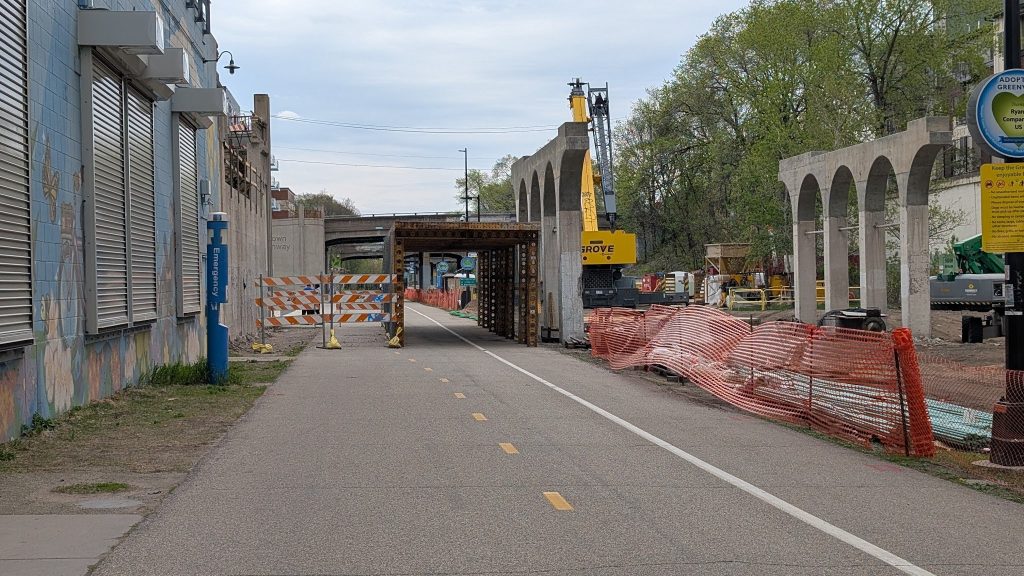
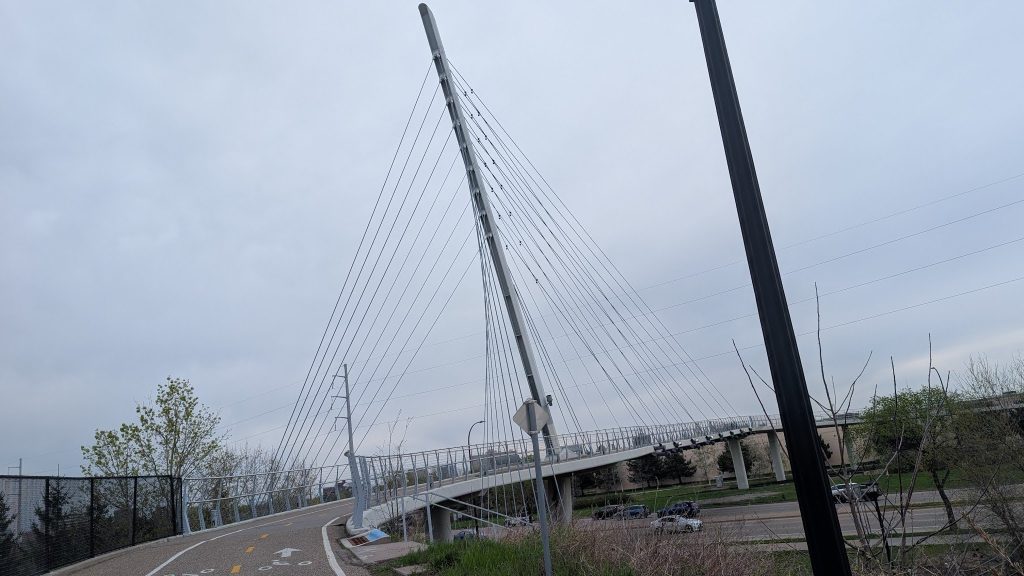
The Milwaukee Road rail line was built through south Minneapolis between 1879 and 1881. The city eventually forced it underground. The Hennepin County Regional Railroad Authority bought the corridor in 1993. Phase One opened in August 2000. The Martin Olav Sabo Bridge eliminated the dangerous Hiawatha crossing in 2007.
The Greenway is a negotiation with existing infrastructure, with a history of division, with the neighborhoods the tracks cut through for a century. It didn’t emerge from a blank slate. Neither did the Bike Center.
The Midtown Bike Center opened in May 2008, funded by the City of Minneapolis, Hennepin County, a federal grant, Allina Health, and Ryan Companies, with the Midtown Greenway Coalition advocating throughout. The concept was ambitious at the time: a full-service bike shop and café directly on the trail, at grade, ride-up accessible, with showers and lockers for people who needed to go somewhere useful after they got off the bike. Freewheel Bike ran the space for twelve years. Then the 2020 uprising. Then plywood. Then an “Allina Employee Entrance Only” sign that said more than it intended to about what institutional instinct does to civic space when one tenant leaves.
Riders sped along the trail. The building waited eagerly to let them back inside.
Who Came Back
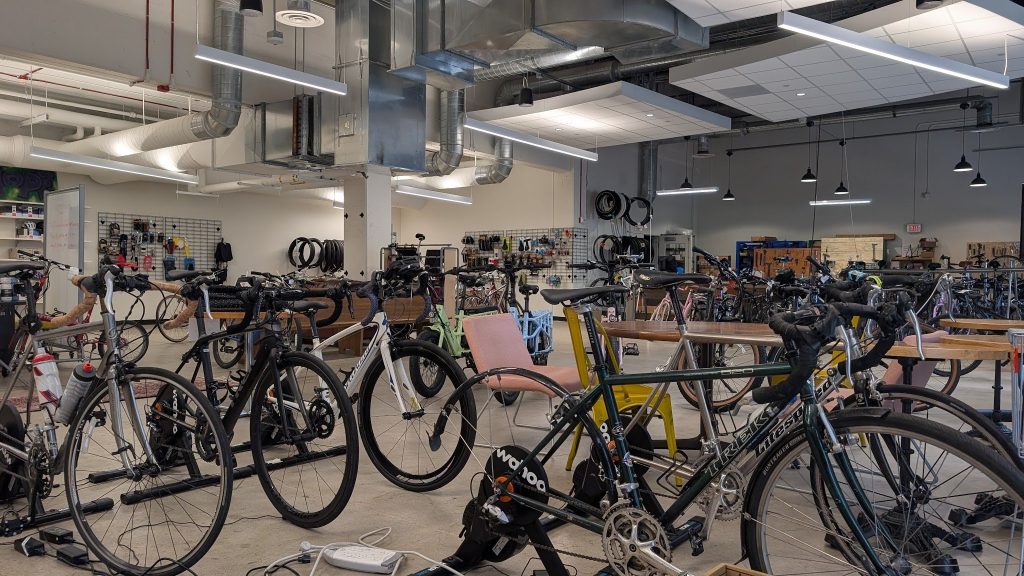
Allina Health celebrated the grand re-opening of the entire bike center during National Bike Month that same year. Venture Bikes Midtown opened in September 2023, headed by Kennis Littleton in partnership with Anthony Taylor and Chris Huff-Hanson.
Now the sole owner, Taylor has spent the better part of 25 years building the case — in organizational, concrete terms — that outdoor spaces belong to everyone. He co-founded the Major Taylor Bicycling Club of Minnesota in 1999 and founded Melanin in Motion in 2017, a pay-what-you-can program rooted in the Cultural Wellness Center that connects Black, Indigenous, and communities of color to cycling, snowboarding, skiing, and paddling. His guiding question, the one he has returned to publicly for years, is a simple one: who’s not out here? He has described the prevailing narrative plainly: “Outdoors is white people shit. Biking, that’s what white people do.” Dismantling that assumption is not incidental to his work. It’s part of the whole project.
The Bike Center’s original funders were institutional — a county, a city, a hospital system, a development company. But it took neighbors like the Midtown Greenway Alliance to orient it towards the community back in 2008. And considering the changes since then, it took a community cycling organization to meet the new moment post-2020, and to bring it back with twice-seasonal bike giveaways for adults who need transportation, community slow rolls on the Greenway at night, and an explicit commitment to affordable repairs over premium retail.
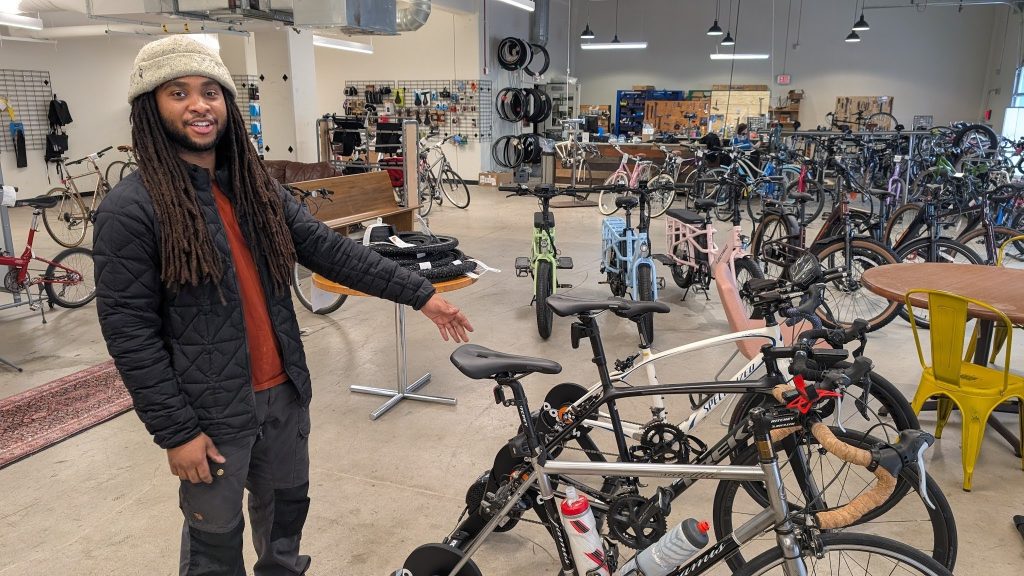
As a frequent flyer myself, I’ve gotten to know Taylor’s son, Aten-Wa Theba, who acts as the shop’s general manager these days. He grew up on bikes because his father moved through Minneapolis on bikes — for transportation, for meditation, as a relationship with the city itself. Aten-Wa became a nationally ranked competitive boardercross racer and serves both on the Parks and Trails Council of Minnesota board and as head coach for cycling and snowboarding with Melanin in Motion. He brought up the concept of Gestalt when we talked — the idea that something can accumulate a significance greater than its original function.
“[The Midtown Bike Center] has given me the opportunity to explore more freely, to experiment with myself and with the things I like and the people I like,” he said. “To really create a more full image of who I am.”
That is exactly the right frame for this trail, and for this building.
What the Bike Center Actually Does
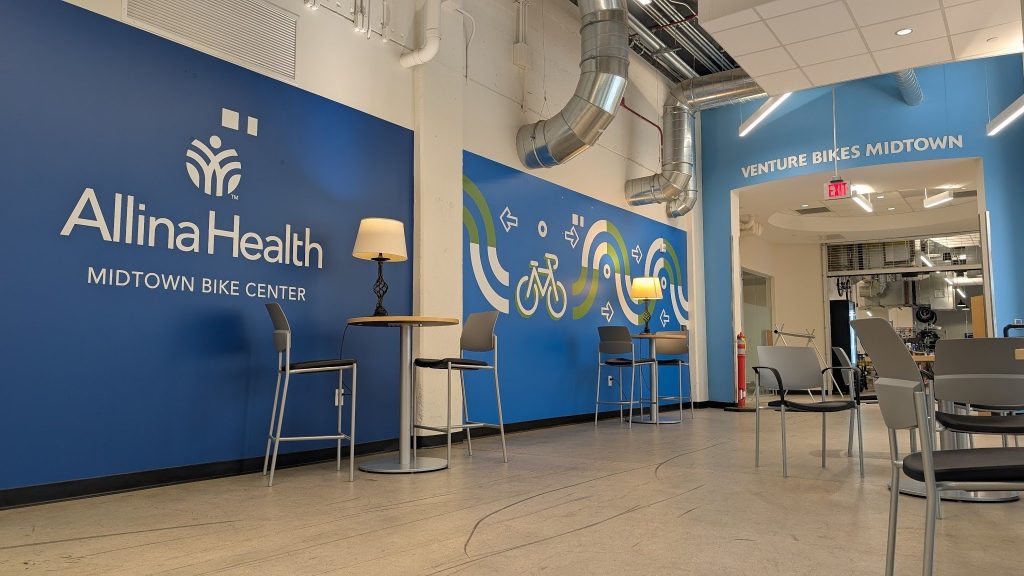
A trail without supporting infrastructure is a trail for confident cyclists. For people who already own a working bike, can fix a flat, and have figured out how to arrive somewhere looking like they didn’t just ride across the city. That’s a real group of people. It is not a transit system for bike normies like myself.
“The hurdles are not biking. The hurdles are security and safety and cleanliness.” The showers and lockers aren’t amenities layered on top of the real product. They are the real product — the thing that turns a recreational trail into something that functions as actual transportation infrastructure for people with real jobs and real dress codes. “My job is not to sell bikes,” he said. “My job is not to fix bikes. My job is to take care of people.” The morning we talked, someone had come in just wanting to know if her bike was okay. He walked her through it. Another glided in with a proper space bike of carbon and air, click-clacking on his clips to the back for an Allen wrench, all with no more than a nod and wave.
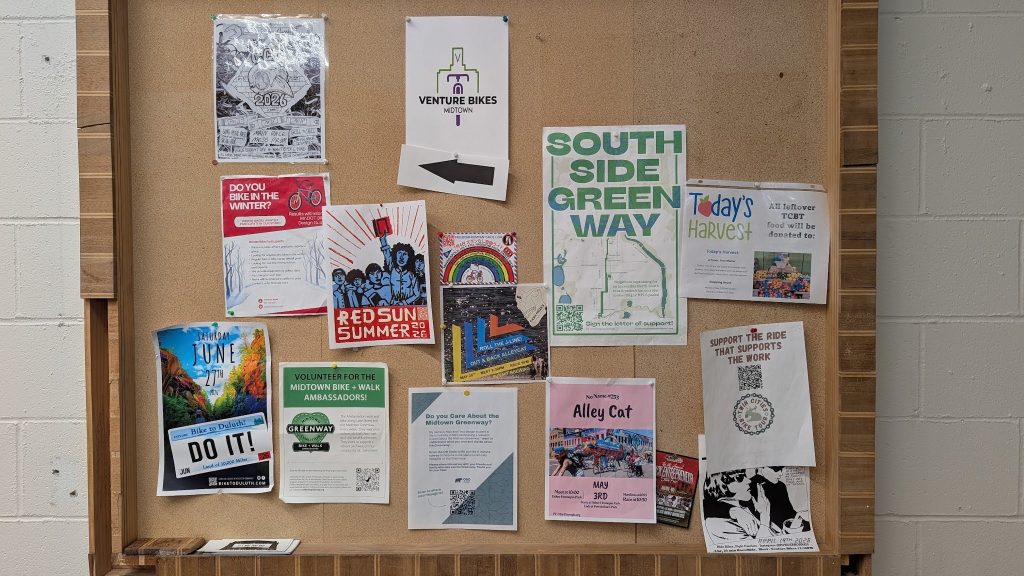
Right now, Minneapolis is in the middle of a $323 million construction season that includes the 10th Avenue bridge directly above the Bike Center, under full reconstruction since March. There’s a detour. The building is still open. And the Metropolitan Council is actively studying a Greenway extension across the Mississippi into St. Paul — which would transform what’s currently a south Minneapolis corridor into a revolutionary trail.
When that extension gets built, the Bike Center will matter even more. Because the trail will carry more people, and more of those people will need what this building has always offered: somewhere to stop, fix what’s broken, and keep going.
“Given the opportunity and the infrastructure and the amenities,” Aten-Wa said, “people would choose the bicycle over driving.” He’s watching it happen every day. So is everyone who rides in on the Greenway, locks up, and gets to work.
The ride isn’t over. It’s just picking up speed.
The Midtown Bike Center can be found on the Midtown Greenway, conveniently accessible near the 10th avenue bridge. Storage lockers and amenities are accessible to Allina Health employees 24 hours a day. Venture Bikes is open Tuesday through Saturday, with hours during the 10th Avenue bridge reconstruction available online.