
The Great Minnesota Get-Together is an event that can be arduous to get to. Traffic comes to a standstill and finding parking is difficult, yet people tough through it all to get to the fairgrounds during the 12 days that the statewide festival takes across parts of St. Paul and Falcon Heights.
Once you actually make it inside, you get to indulge in delicious food and fun attractions, all without the stress of cars zipping around.
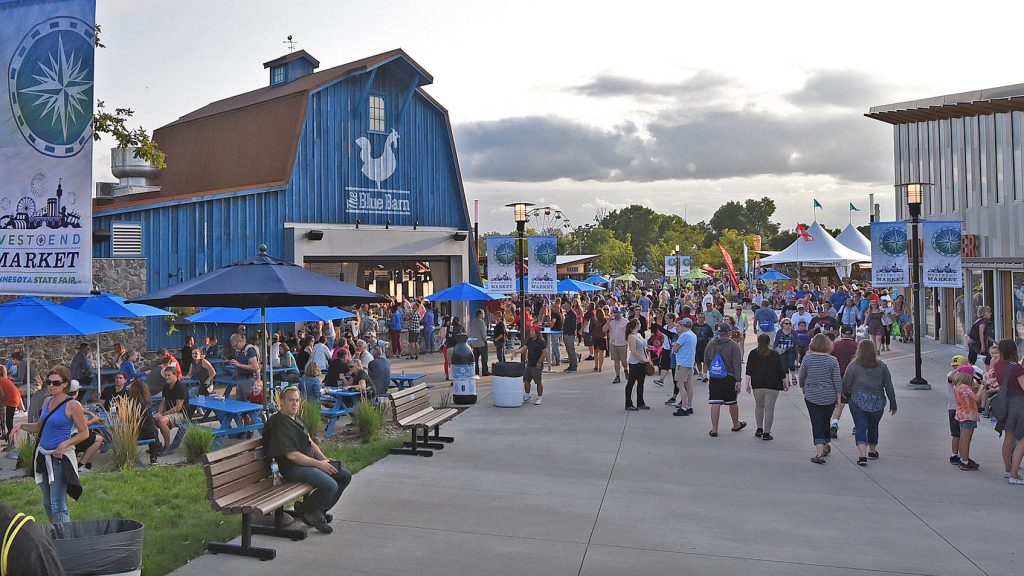
It’s easy to forget that once you’re at the Minnesota State Fair, you’re standing in one of the few car-free places in the Twin Cities — so long as you ignore the auto manufacturers trying to sell you a car while you’re there. To many, it makes the crowds and congestion totally worth it. For those who want to go to the fair, but don’t want to be caught up in congestion, other ways of getting there exist besides driving a personal automobile. I asked friends and reached out to people on X and Discord about how they got to the fair without their car this year.
One fairgoer, Sarah, who took the light rail to a connecting bus at the University of Minnesota, recalled how she would get to the Minnesota State Fair growing up. “I didn’t really realize you could drive to the fair until I was an adult,” she said. “We always did park and ride so to me that was just part of the fair experience.” Like many transit riders, Sarah doesn’t have a license and gets around everywhere by way of transit and cycling. One year, she had a friend drive her directly to the fair who then had to pay to park on someone’s lawn, which is common to see along houses in the adjacent neighborhoods.
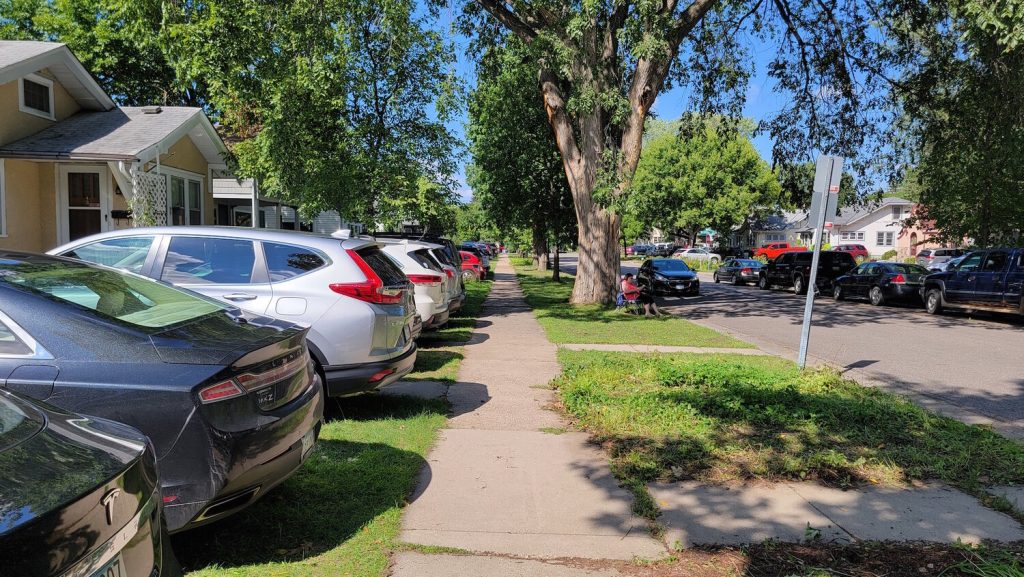
Jordan, a fair-goer who lives in St. Paul’s Como Park neighborhood, directly east of the fairgrounds, is one of many homeowners in the area who will have cars parked on his lawn during the fair. When he wants to go to the fair, he can walk just down the street. He says that it makes going to and from the fair less exhausting and frantic, “we can go in and come home to nap, then go back in on the days we actually want to go.”
For two days, Connor Carroll took to the local bikeways of South Minneapolis to get to the fair for his gig with the McNasty Brass Band at the International Bazaar stage, bringing with him his baritone saxophone. “For years I thought it was impossible to bike to gigs with it,” Carroll recalls, “but one of my McNasty bandmates suggested a special ripstop netting, made by a music store in Wales for transporting musical instruments by bike via a standard rear rack. It has allowed me to bike to almost any gig!”
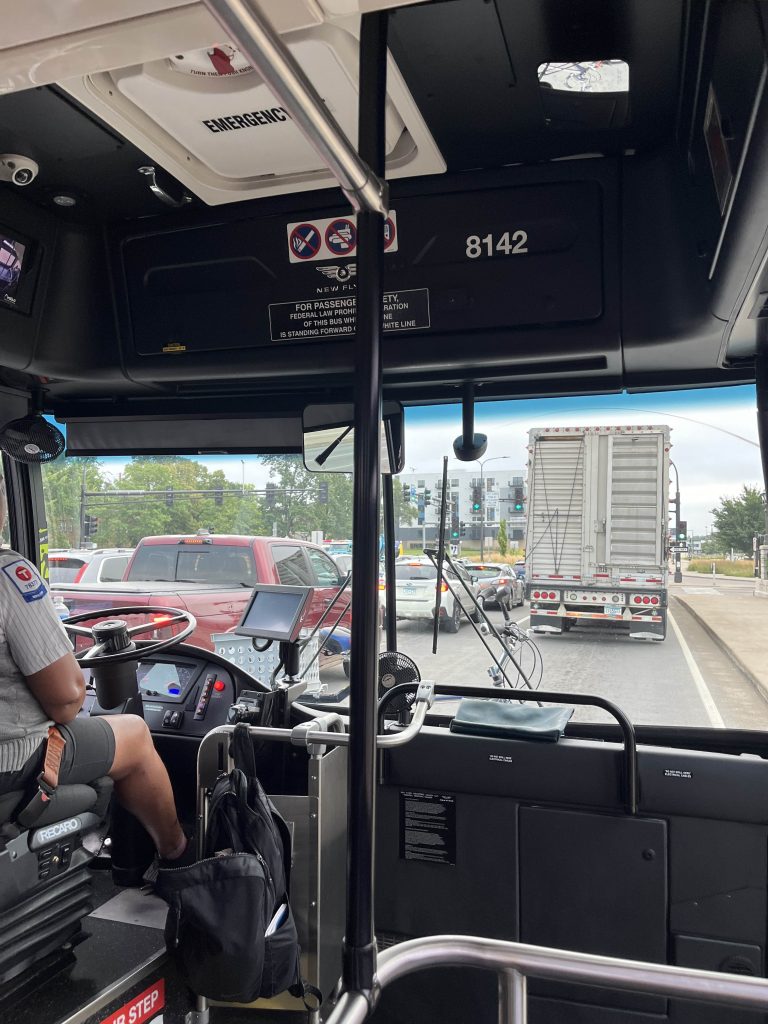
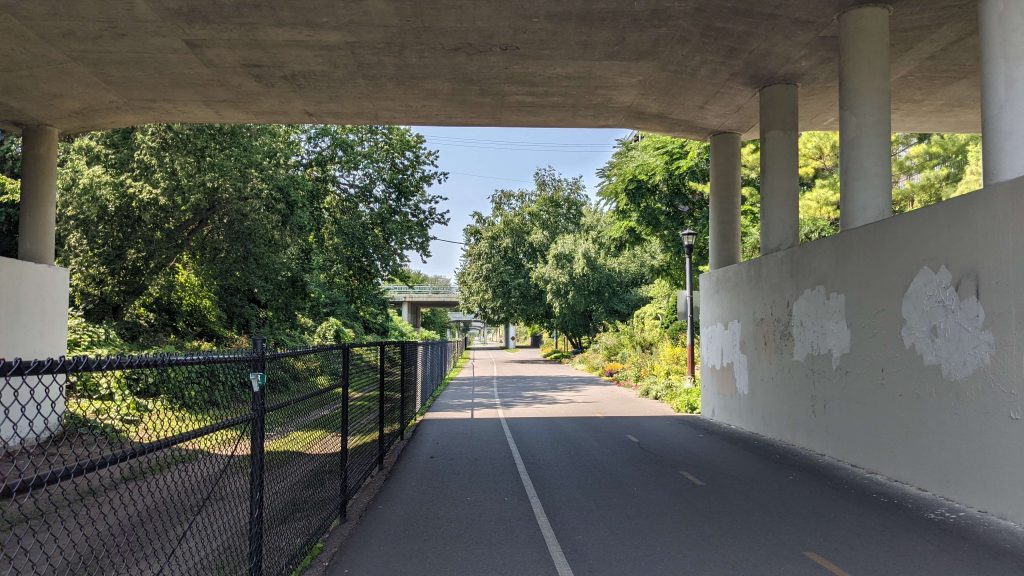
It took him 45 minutes to bike to the fair from Minneapolis’ Kingfield neighborhood, with portions of the journey being done on protected bikeways, such as Blaisdell Avenue, the Midtown Greenway and the University of Minnesota Transitway. Due to the humidity and risk of rain on the second day his band played, he took the 46 bus and connected to the A Line at the 46th Street Station, which left within 30 seconds due to increased frequency during the fair. His bus journey also took only about 45 minutes.
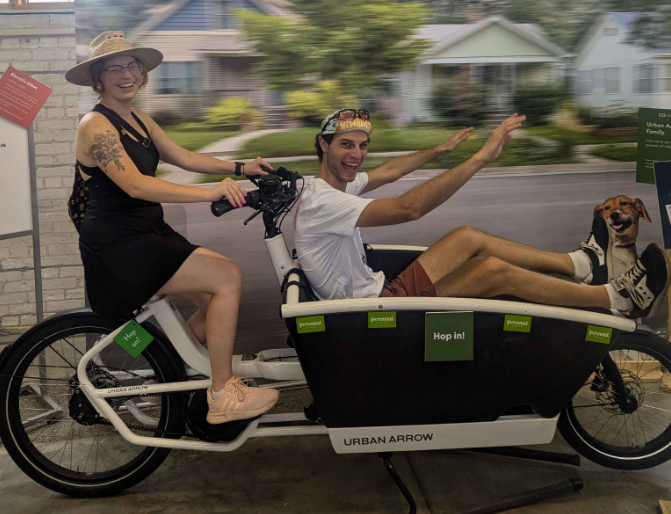
Streets.mn contributor Laura Groenjes Mitchell, her wife and their two kids biked to the fair using e-cargo bikes. “My family traveled to the fair via Park & Ride last year, and it was so stressful and long,” she recalls. “It took an hour and a half door to door, a long time to travel with young kids!”
She was able to utilize protected bikeways for much of her journey this year, such as the Midtown Greenway along with Pelham Boulevard and Como Avenue, both part of the Saint Paul Grand Round. After getting to the fair, staff handed Laura a ticket to put on her bike at the bike corral; she chose to lock up her bike as an extra precaution but felt as though it was well supervised, with plenty of people leaving their bikes unlocked in the corral. She found the experience of biking home after being in a crowd very relaxing and liked not having to wait for a bus. “Our kids loved it, too.”
Stina Neel, a Streets.mn podcast contributor, chose to ride her e-bike to the fair, and she remarked that it was helpful to have the electric assist for the ride home since “10 hours of walking and standing is pretty hardcore.” She said that riding with a group to the fair helped her feel more protected from the buses, as well as the cars that were trespassing, while biking on the U of M Transitway. Stina also really liked the ticket system for the bike corral, which was filled to the brim. “They could totally stand to expand it,” Stina says. She biked to the fair from Uptown and was able to stay hydrated and refueled with snacks thanks to the fair allowing outside food and water.
If there’s one big urbanism lesson to take from all of this, it’s the desire for car-free spaces, as well as being able to take alternate modes of transportation to these spaces. The Minnesota State Fair is consistently packed, and those who had the option to not drive undoubtedly found it a less stressful way to get around.
As of this writing, the Minnesota Valley Transit Authority (MVTA) reports 127,220 riders over the 12 days of the State Fair, with no current up-to-date numbers for SouthWest Transit and Metro Transit. Their numbers in 2023 were 77,326 and 241,000, respectively, for express buses. While there are no exact numbers for how many passengers were fairgoers on fixed-bus service, the A Line and Route 3 often fill buses to capacity during the fair, with the A Line getting 60-foot articulated buses as opposed to the route’s usual 40-foot buses.
Next Year . . .
If you’re considering taking transit or riding your bike to the Minnesota State Fair in 2025, bookmark this article published last year on Streets.mn and review the multimodal options on the State Fair’s website, which will give you all the information you need for your specific mode of travel.