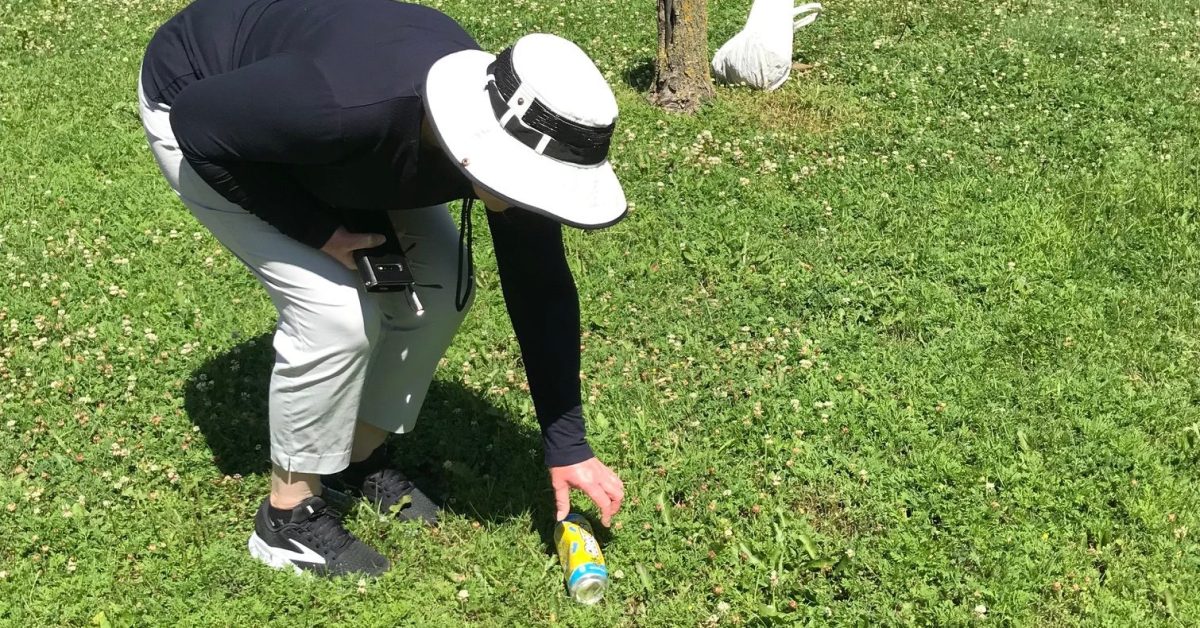
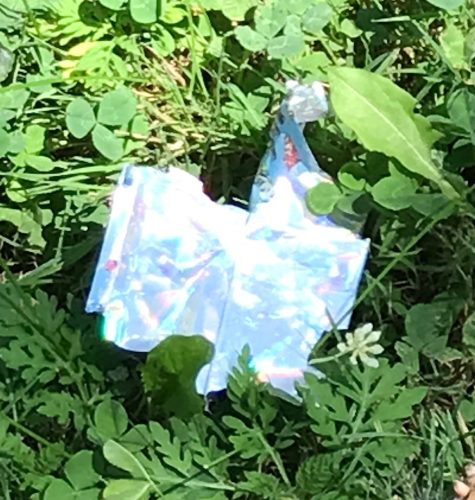
During a recent run along St. Paul’s Mississippi River Boulevard by the Lake Street Bridge, as I savored the blue sky, fresh breeze, chirping birds and lush green foliage, my eye caught a bright flash in the undergrowth. Running toward its source and peering into the shadows, I identified the culprit: a shiny silver snack wrapper, reflecting sunlight. Bend — reach, grab — stow, and I was back on my way in seconds, having once again practiced plogging!
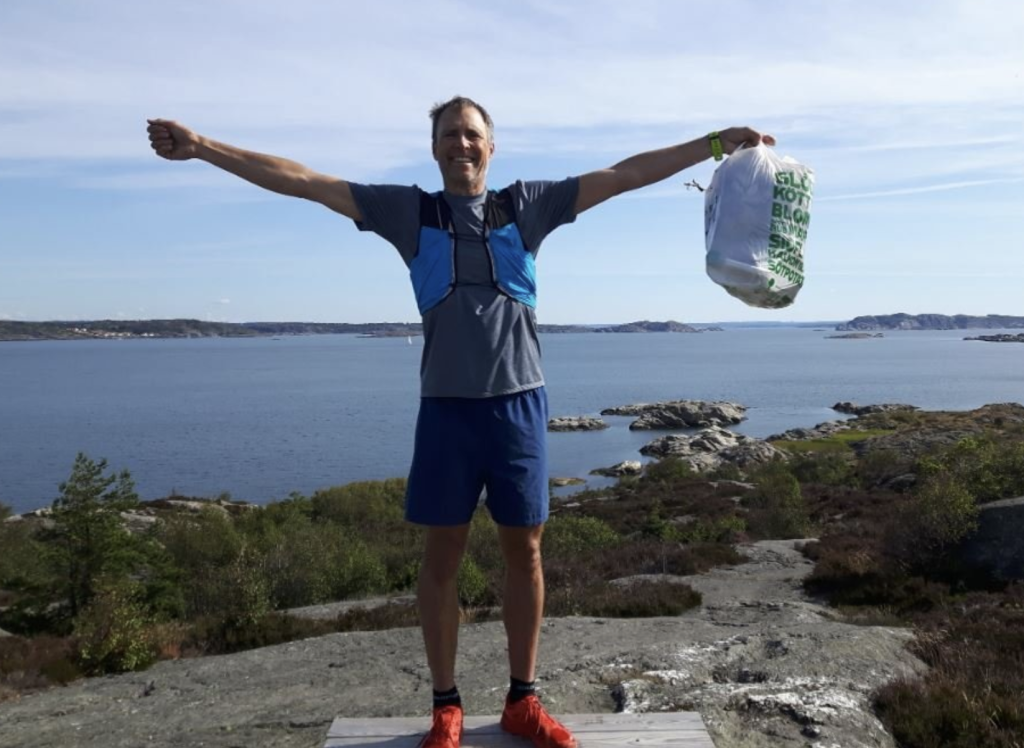
“Plogging” is a recently popularized activity that involves picking up litter while jogging. The term is a portmanteau of the Swedish verbs plocka upp (pick up) and jogga (jog). The related terms “plalking” and “pliking” refer, respectively, to picking up litter while walking or biking/hiking. “Plogging” was coined around 2016 by Swedish athlete Erik Ahlström (pictured below), who popularized the activity, helped make it a competitive sport and is widely regarded as its inventor. Doubtless, however, people have been doing it informally for ages, without calling it anything.
I was delighted to discover the terms plogging and plalking, since I had been doing the activities for years. Now that I know they are a recognized “thing,” I can feel in solidarity with other ploggers and plalkers around the world, can boast of being a plogger and plalker, and can invite others to join me in an established, recognized practice.
Why bother to retrieve litter? Many reasons exist, beyond the associated health benefits to the participant of bending, squatting and stretching. Litter impairs social cohesion and emotional, public and environmental health in multiple ways.
Specifically, as a form of incivility, litter contributes to a perception of neighborhood or property decline and lack of accountability, which harms social cohesion. It instills fear of crime — which harms emotional health and prompts reduced outdoor activity — which, in turn, harms public health. It poses direct human health threats (e.g., from broken glass, toxic chemicals and contaminated needles). It threatens wildlife, plants and the water system with toxins, particulates, indigestible materials and potential entrapment. It also facilitates further incivilities (“litter begets litter”), including escalation to more serious crimes (e.g., break-ins).
According to one observer, “Litter is a blight on the landscape, the seascape and the urban street-scene. Unlike serial killing, paedophile assaults, banker fraud and other headline-grabbing crimes, it is ubiquitous. It affects everyone — not just the rich, not just parents, not just the poor.” Given litter’s multiple associated harms, combating it has abundant potential benefits, including improved esthetics; neighborhood “pride of place” and walkability; human and animal health; air, water, and soil quality; and decreased crime.
Plogging and plalking are readily available ways to combat litter that visibly improve the world, however slightly. They give me a sense of satisfaction and empowerment, which helps reduce the angst, despair, and helplessness I sometimes feel from today’s enormous social and climatologic threats. Additionally, the process itself provides a needed distraction from worldly woes, perhaps qualifying as a form of mindfulness therapy or meditation. It also sometimes elicits “Thanks!” from passersby, contributing to a sense of community and hope. In this regard, perhaps one can actually save the world, one litter bit at a time!
My story: I began plogging almost incidentally. During my daily on-foot commutes, I would occasionally pick up a litter item and carry it with me until I encountered a trash bin.
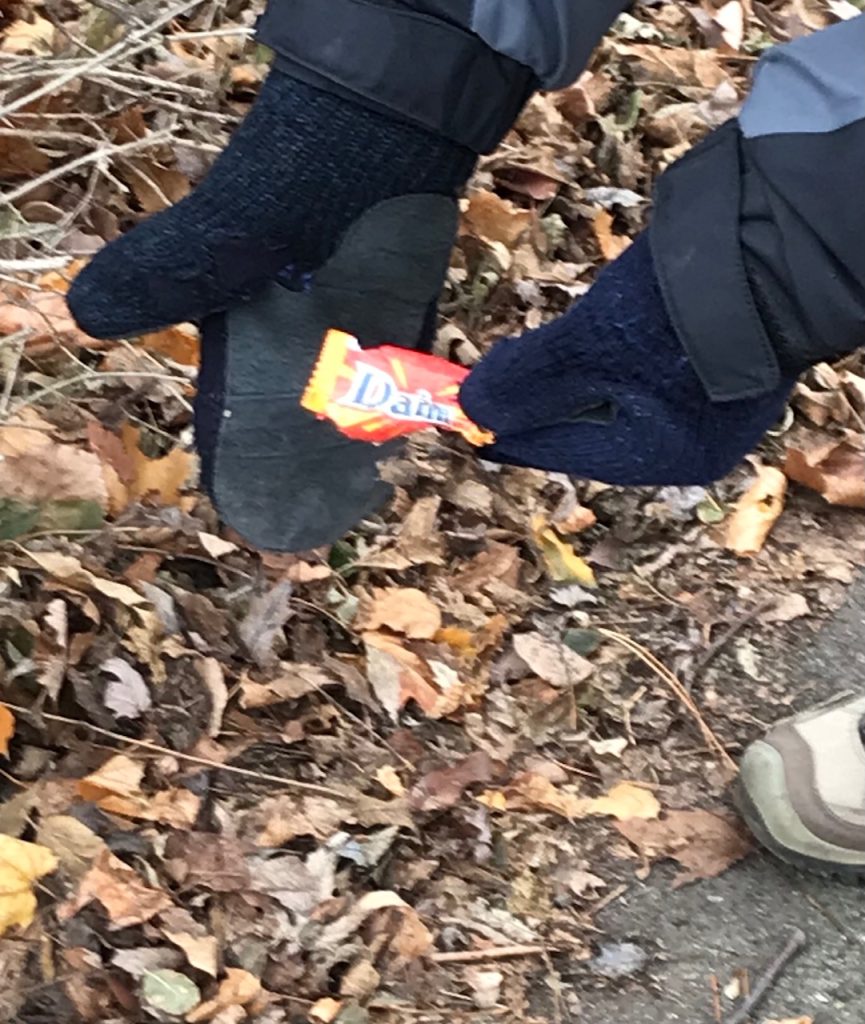
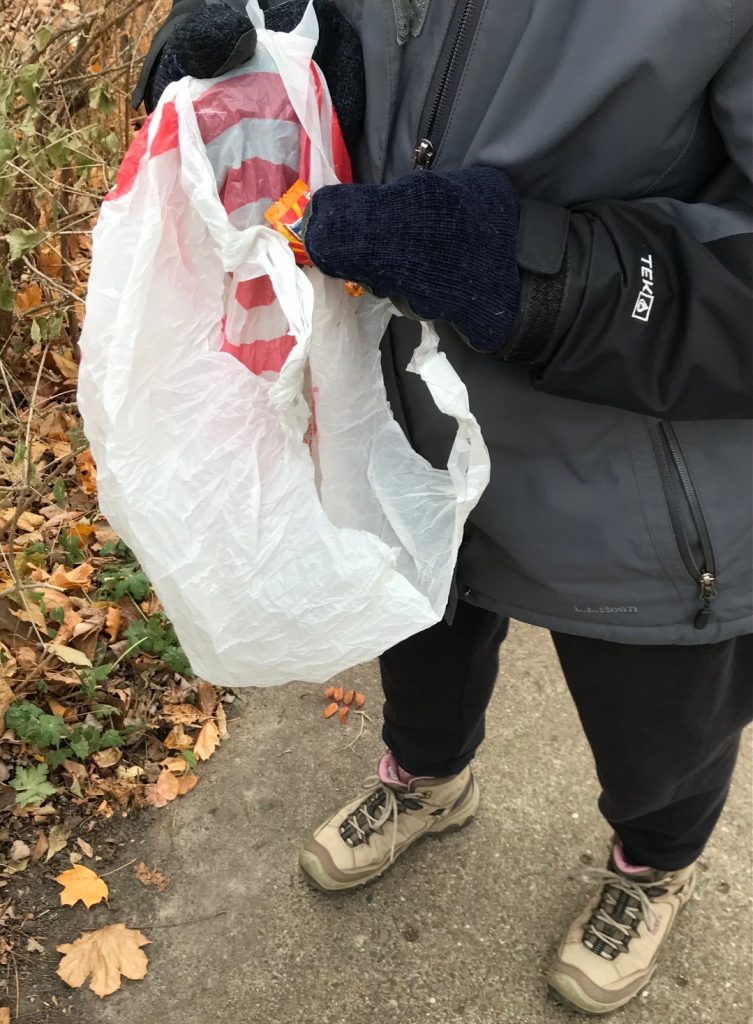
This evolved into a more deliberate search for litter, which proved to be abundant. The volume of retrieved items quickly exceeded the carrying capacity of my hands (especially if also holding hand weights) and pockets, prompting the use of bags (see image above). I have now taken to carrying a small plastic shopping bag wherever I go, anticipating that I may encounter litter. I have even inspired others to adopt the practice when we walk together. If my bag is full or beginning to split, it is especially gratifying when I find that the next litter item to be retrieved is, fortuitously, an empty plastic bag that can be put into service.
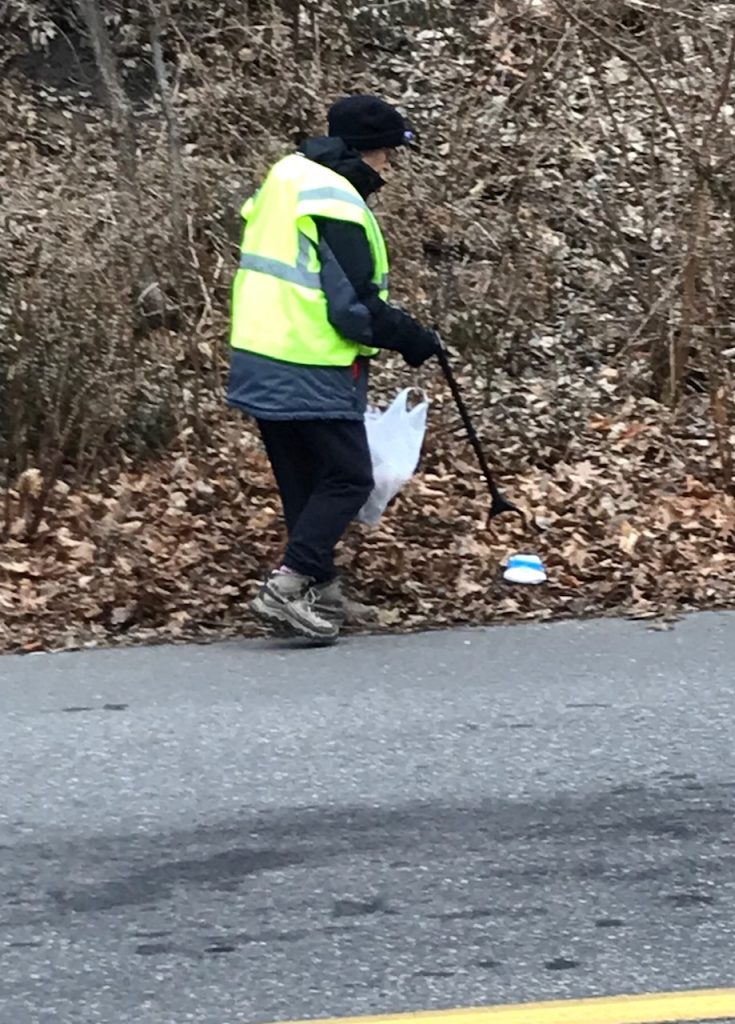
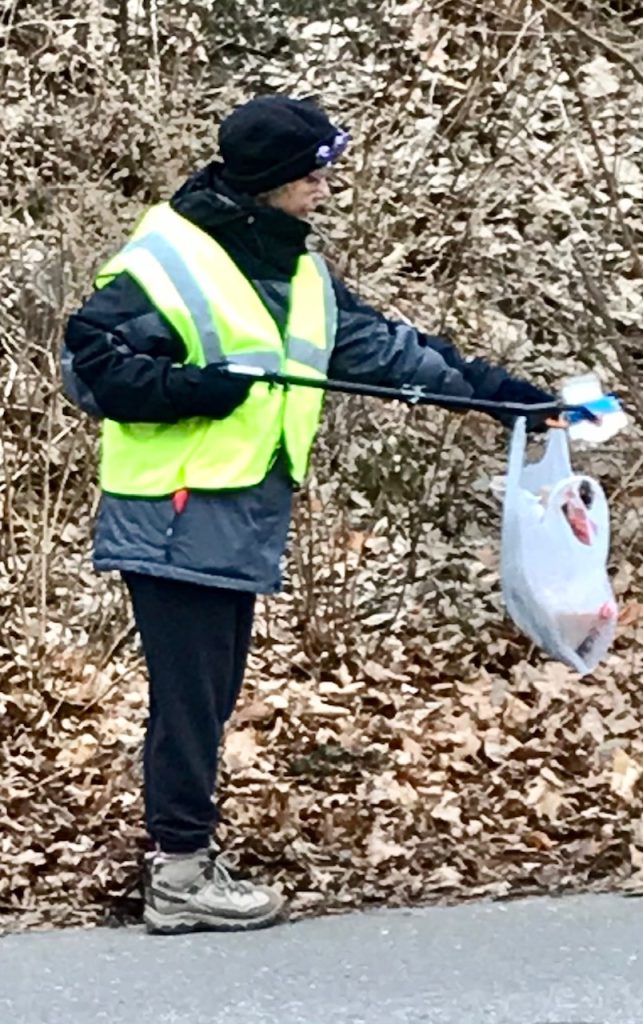
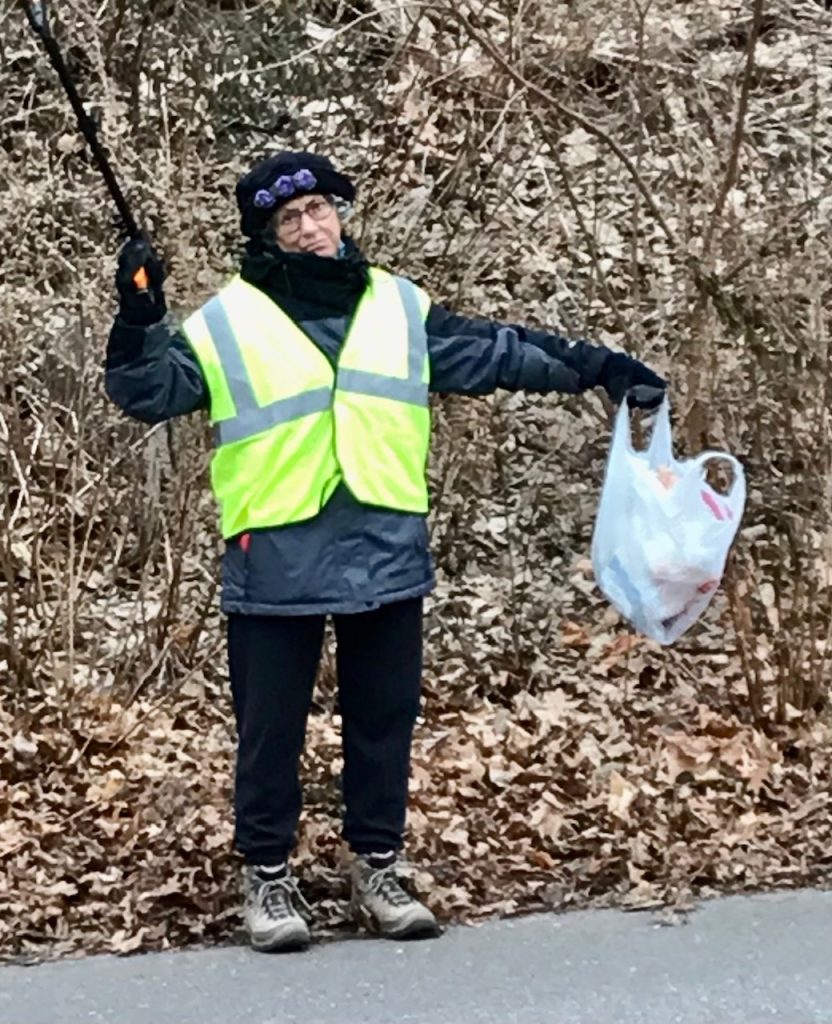
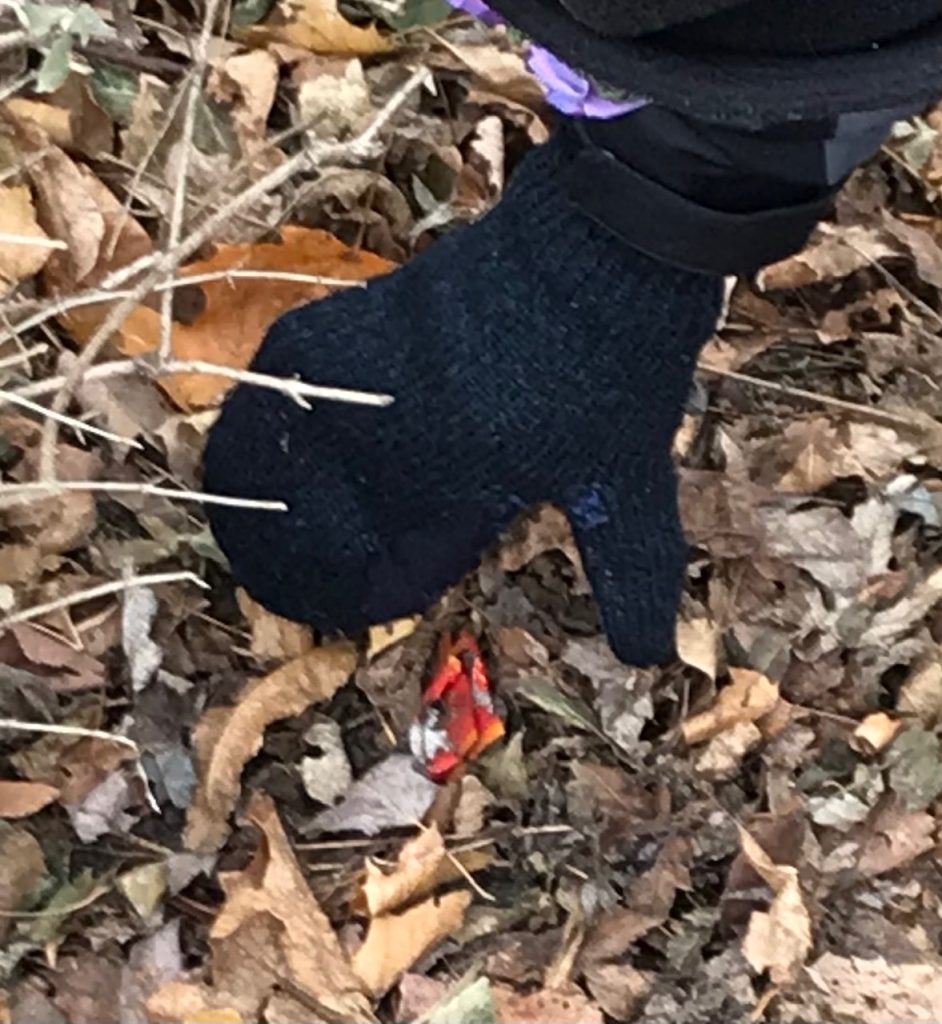
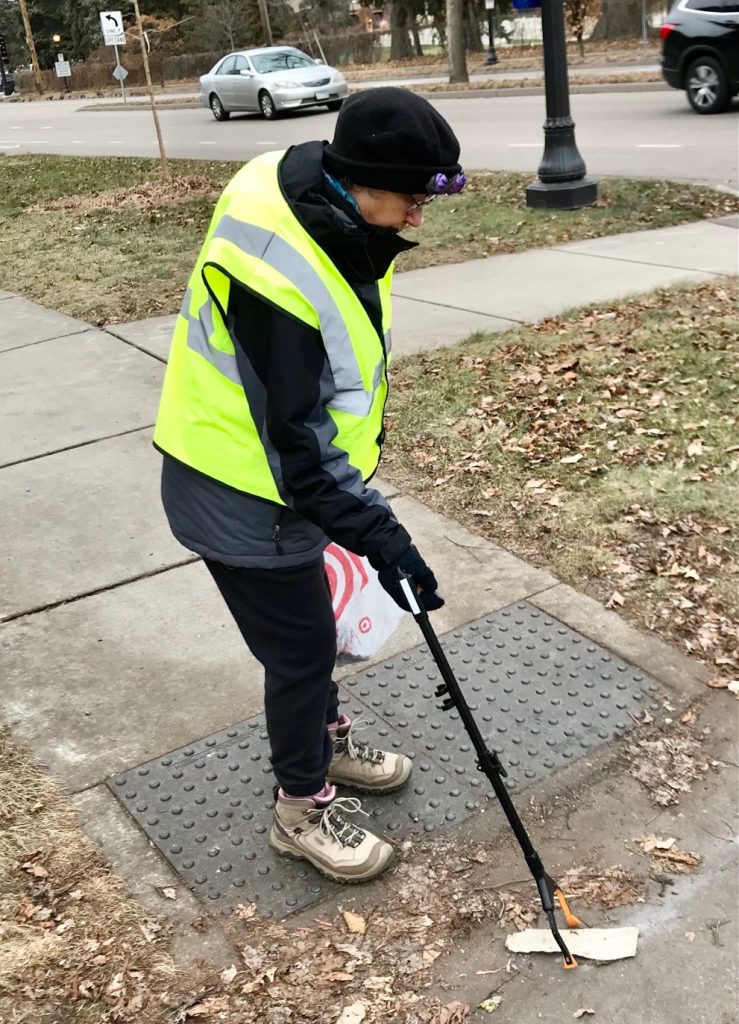
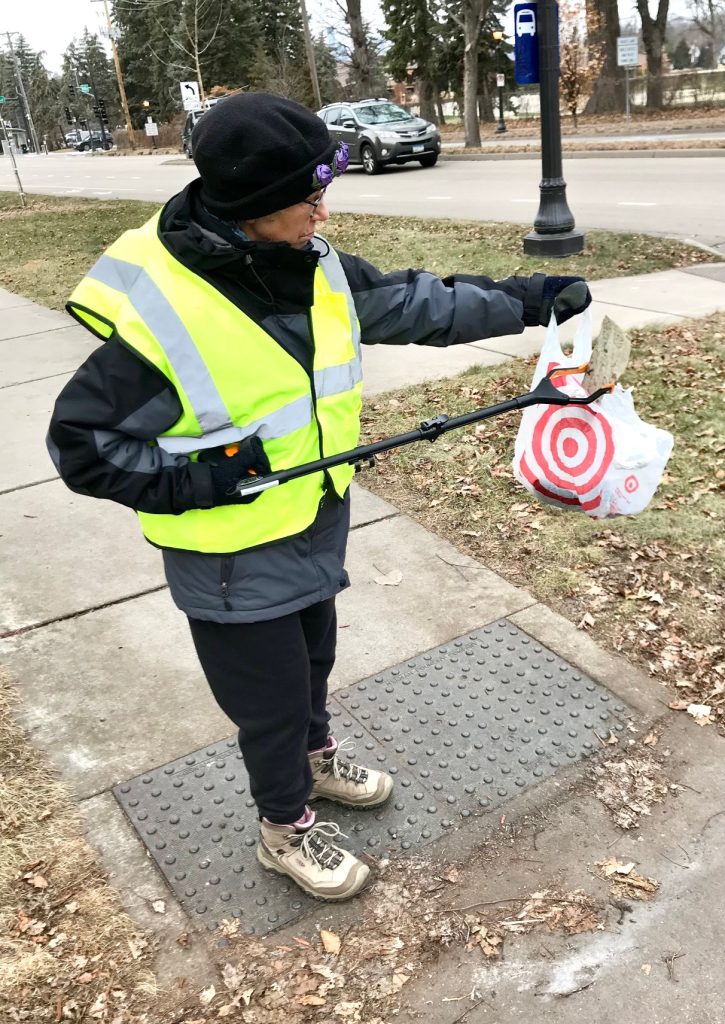
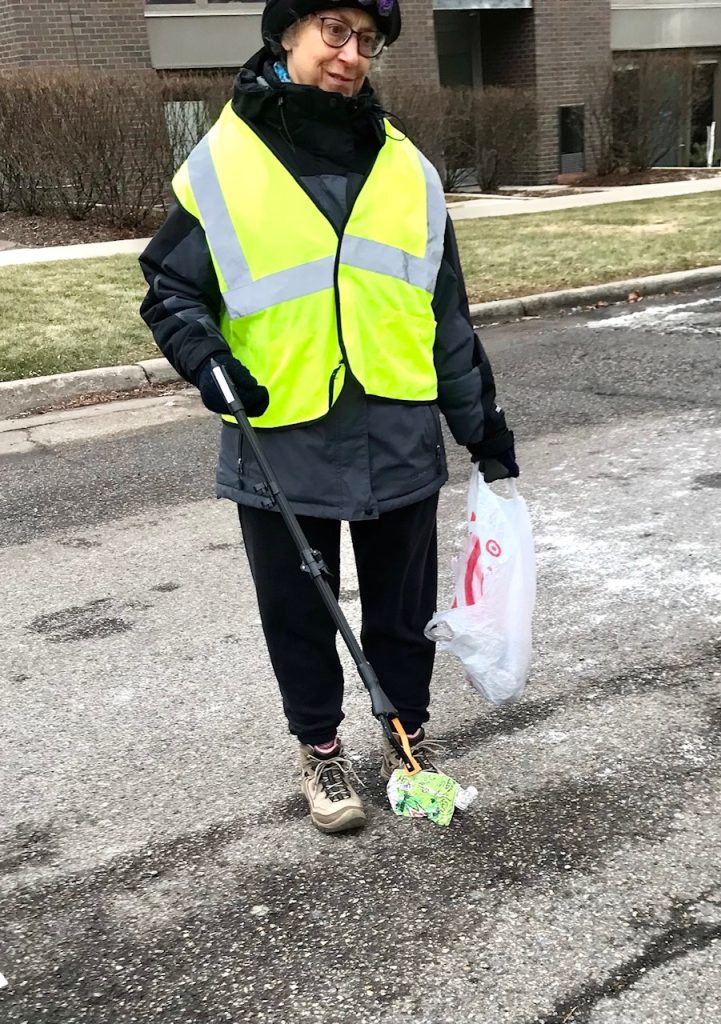
Not long after starting my solo plogging practice, I began joining litter clean-up events organized by the Union Park District Council’s Transportation Committee, on which I serve. The organizers equip volunteers with collection bags, grabber tools, and gloves. After experiencing a grabber in action (see image above), I acquired one for personal use. I find the grabber especially helpful in litter-dense areas, when the focus is primarily on litter pickup rather than covering distance. The grabber spares my back and knees, making it easier to go after tidbits that I otherwise might not bother with.
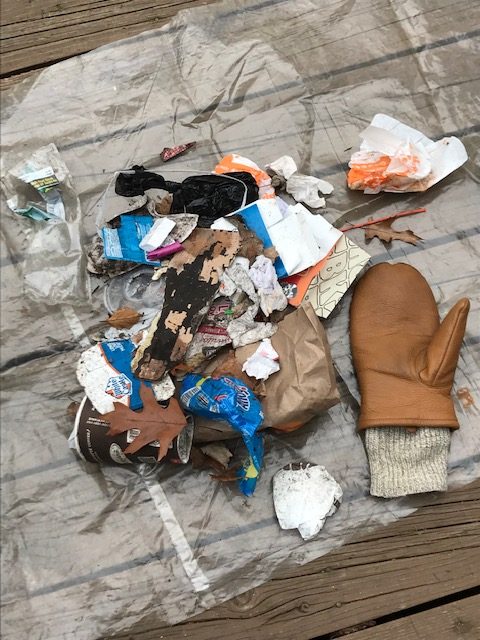
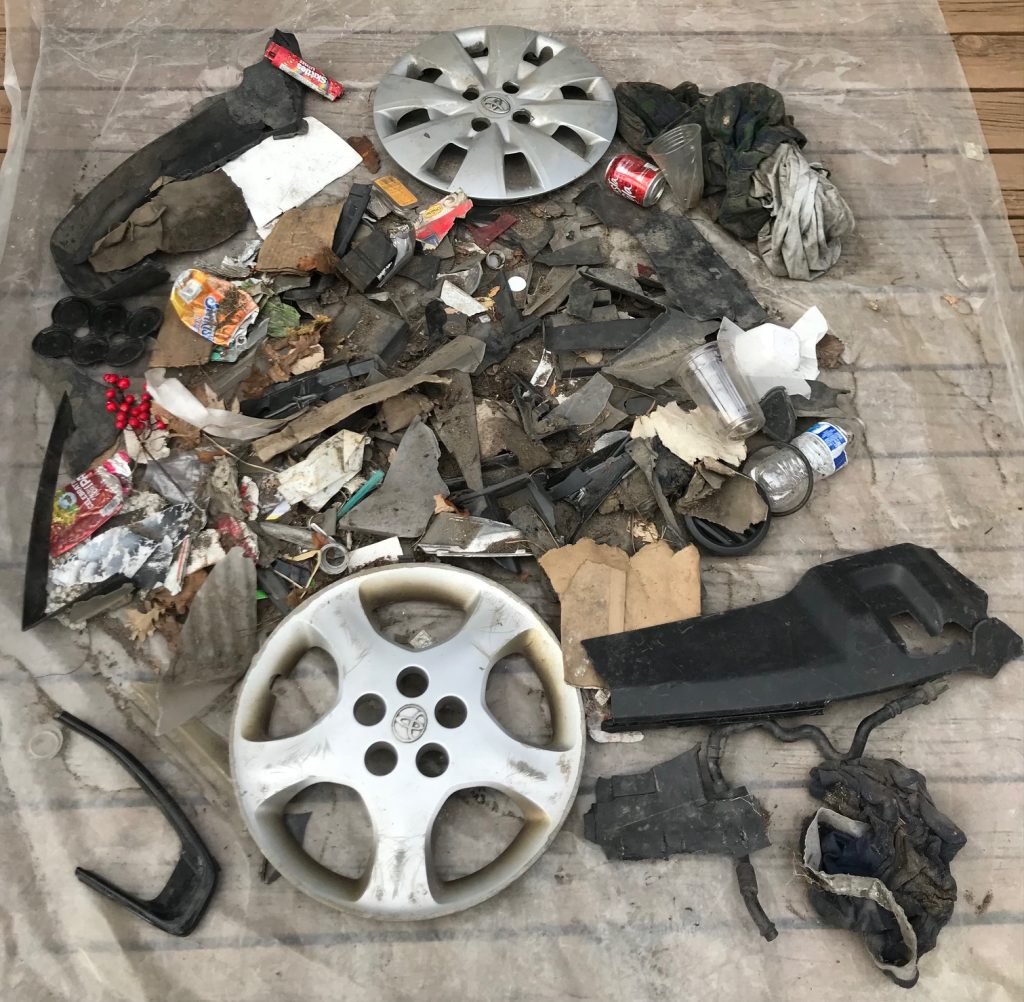
I now see plogging and plalking as spanning a spectrum of activities. At one extreme are runs or walks during which one incidentally picks up an occasional bit of litter (e.g., my old running commutes), usually without using a grabber. At the other extreme are dedicated litter retrieval efforts, often involving a grabber, during which one incidentally covers some distance on foot (e.g., litter cleanup events).
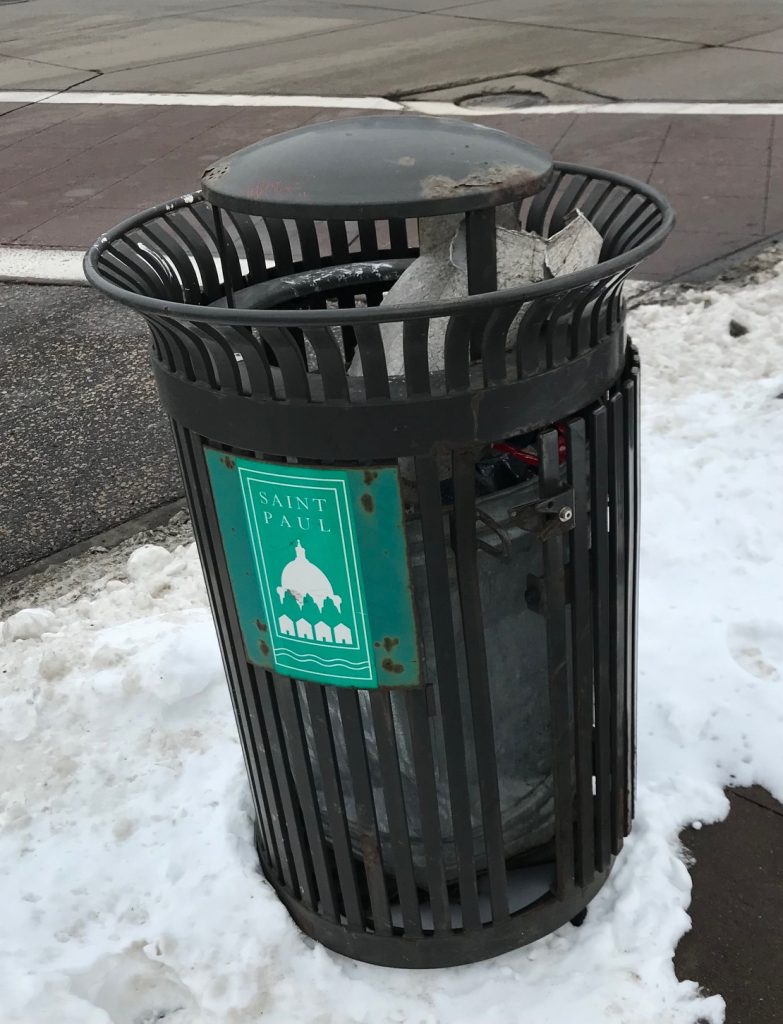
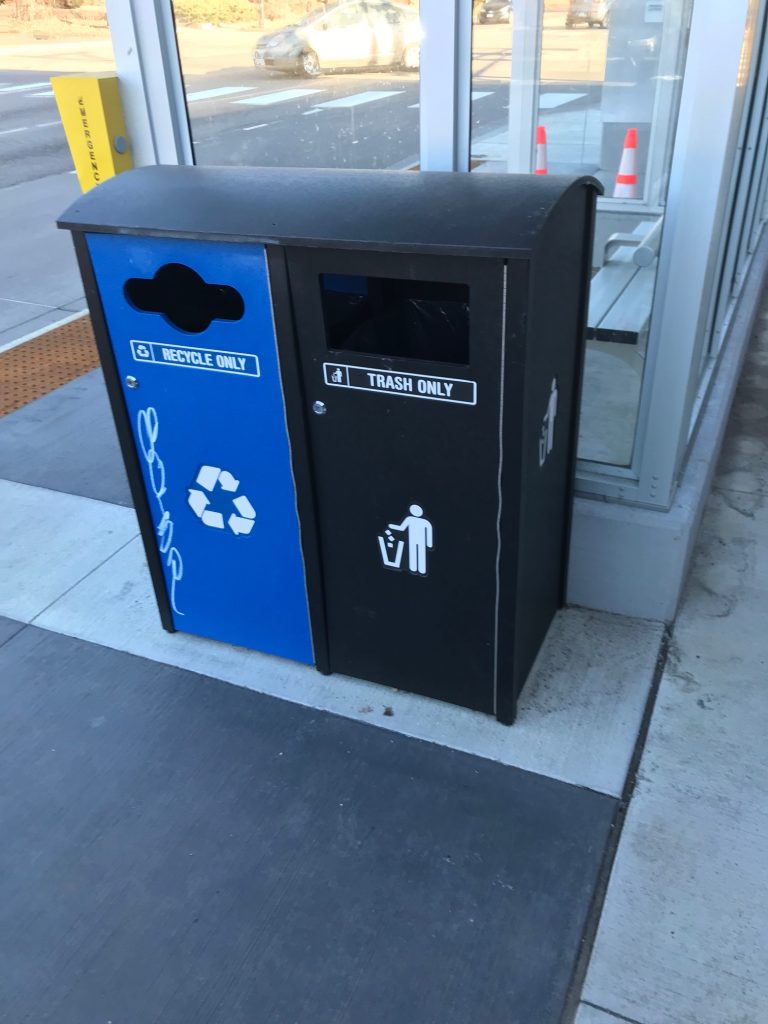
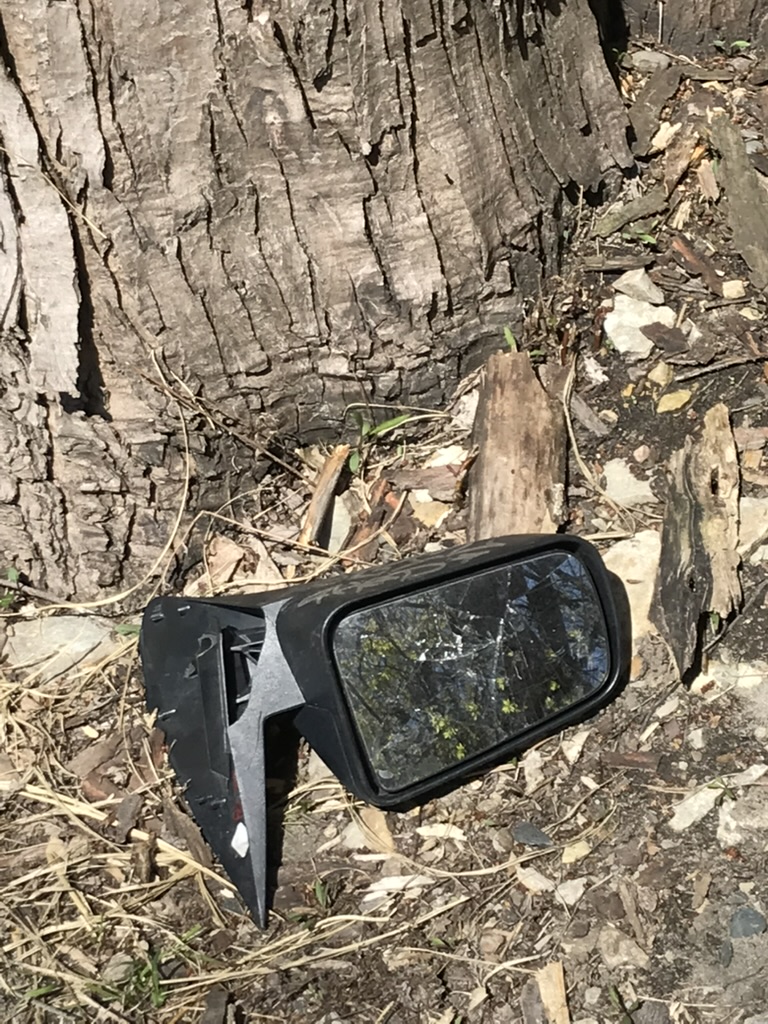
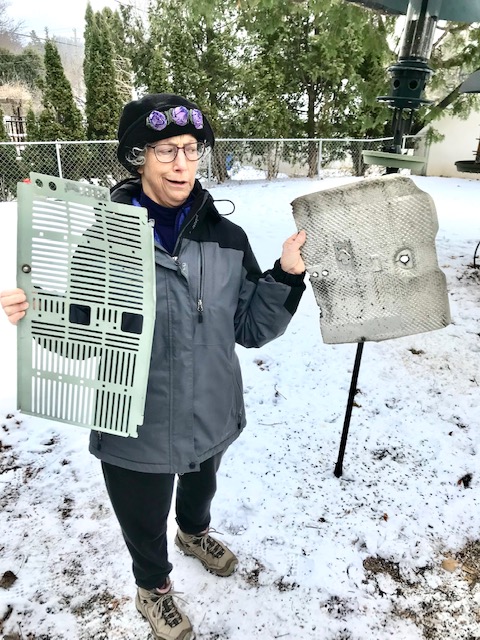
The range of items I have encountered when plogging/plalking is remarkable. I have variously retrieved aluminum foil, appliance parts, bags, bottles, bus transfers, candy, cans, cartons, charging cables, clothing, condoms, construction debris, cups, bagged dog waste, fast food-related items, furniture, menstrual products, receipts, straws, tobacco product waste, vaping materials, vehicle debris, and wrappers.
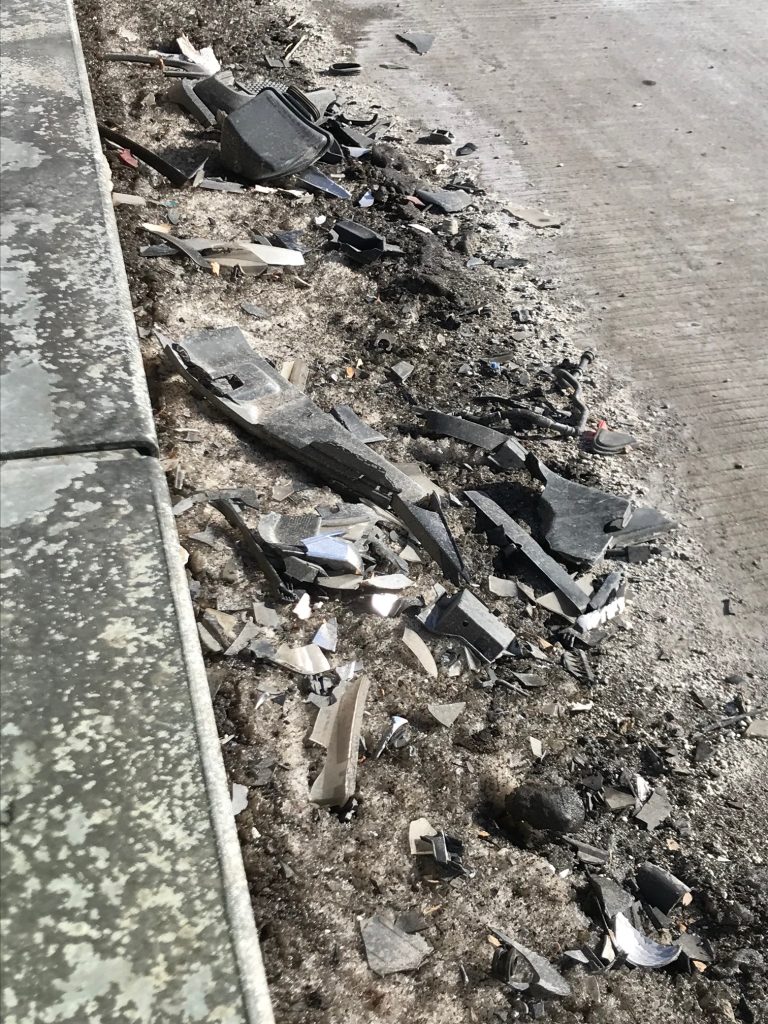
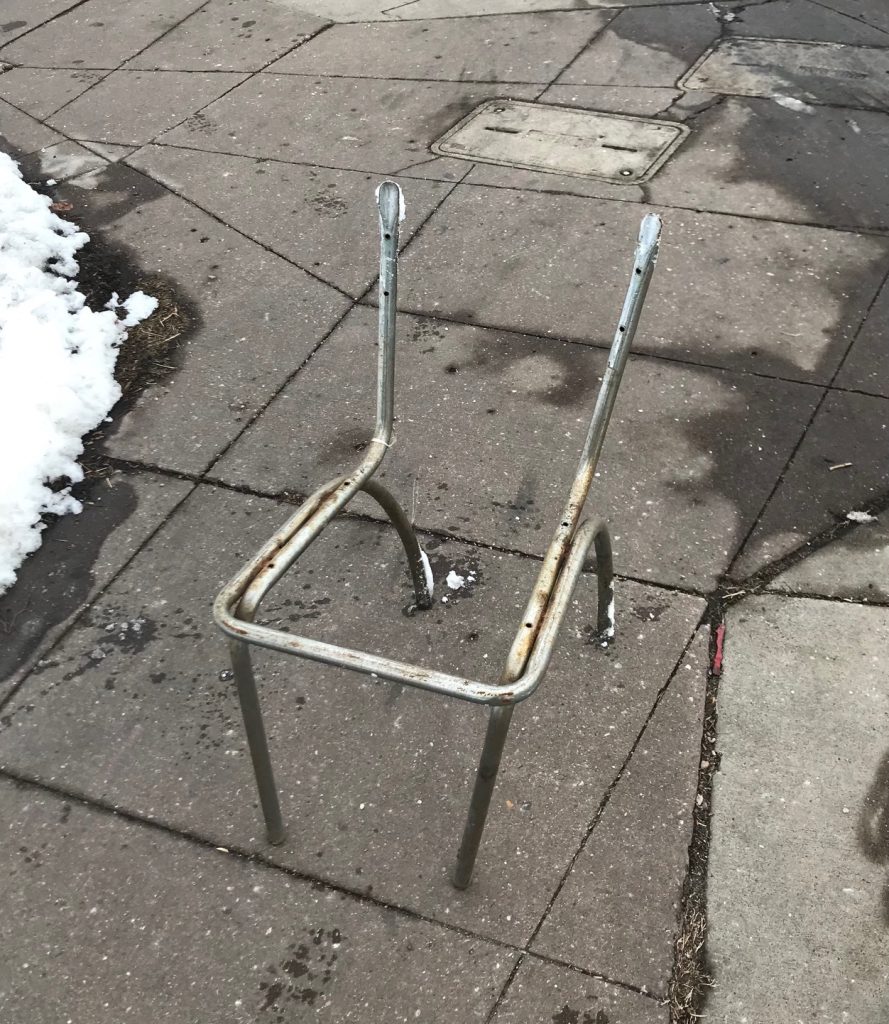
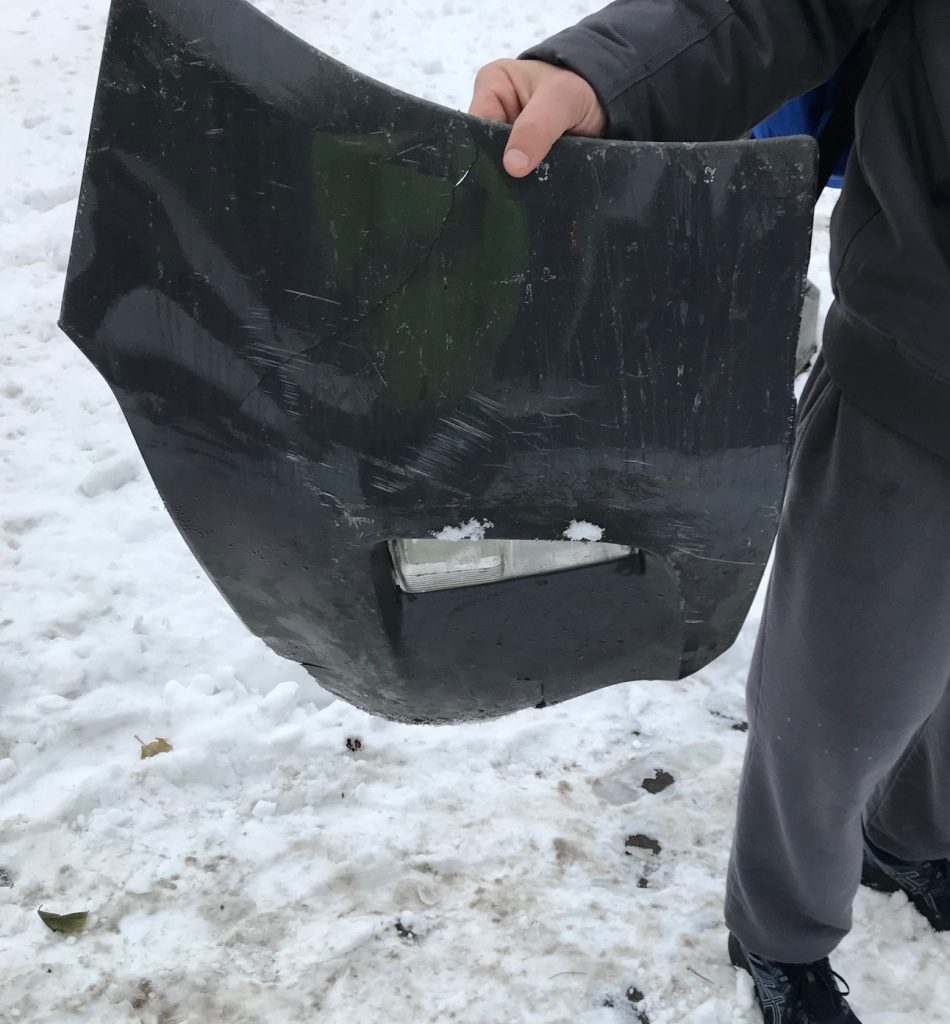
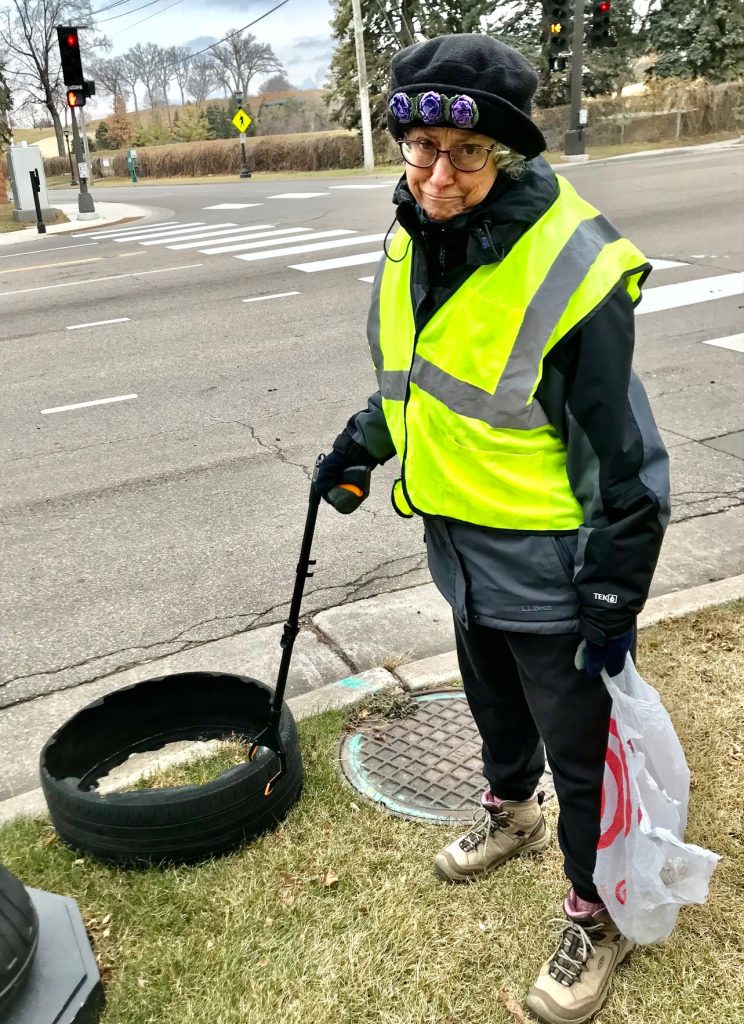
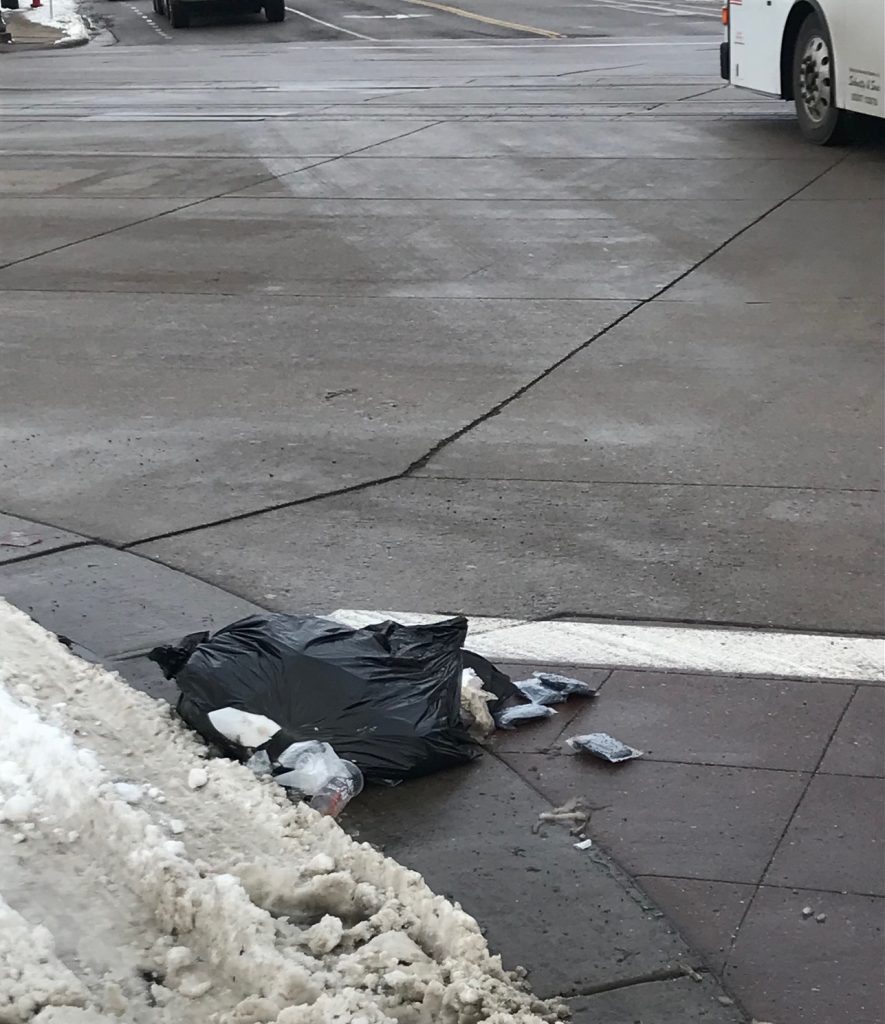
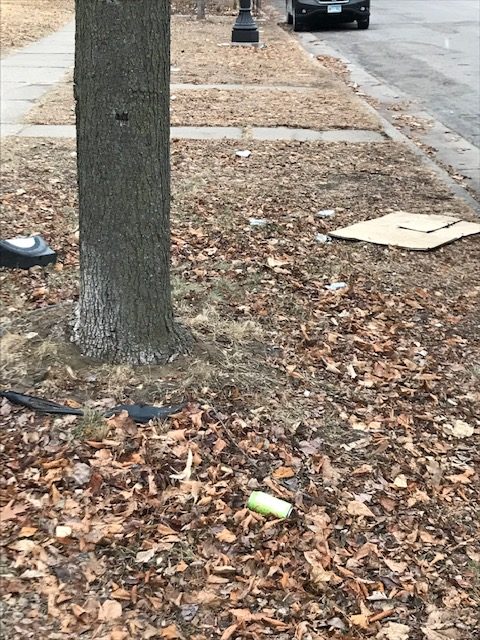
“Location, location, location” turns out to apply to littering as well as real estate. I have found littering to be worse around rental properties (apartment buildings, duplexes, houses), near the local university campus (especially on game days and with other events) and along busy streets (e.g., Marshall and Cretin Avenues: see images above and below). Some litter’s distribution suggests it was tossed from a moving vehicle (e.g., when the same brand of beverage can or fast-food container appears repeatedly along an extended stretch of street, or litter appears on the no-sidewalk side of a street, especially up a slope, as in the “Grab..Stow…Ta-dah!” three-panel image above).
My plogging/plalking has raised several interesting issues. First, given my limited time and carrying capacity, I must be selective in what I retrieve. I now tend to prioritize items that are especially conspicuous (e.g., large, bright, shiny, or exposed) or recyclable, and to disregard those that will disintegrate quickly (e.g., facial tissue) and/or are off-putting (e.g., cigarette butts, injection paraphernalia, unbagged dog waste). Another consideration is difficulty of retrieval (e.g., based on distance, terrain, traffic, or physical barriers). More than once, in my eagerness to “get it all,” I have unwisely risked — or actually incurred — bodily harm from handling broken glass, scrambling on a slippery slope, climbing over barriers, leaning too far over a sharp-edged metal railing, or venturing into a busy street (e.g., see “Mid-street can retrieval” image below).
Second, there is the opportunity to develop unwholesome attitudes, e.g., smugness about being an exceptionally good citizen or contempt toward litterers, whom I reflexively profile based on the litter’s characteristics or location. Some of my subjective inferences are supported by systematic evidence showing that litterers tend to be young, lower socioeconomic class, and male.
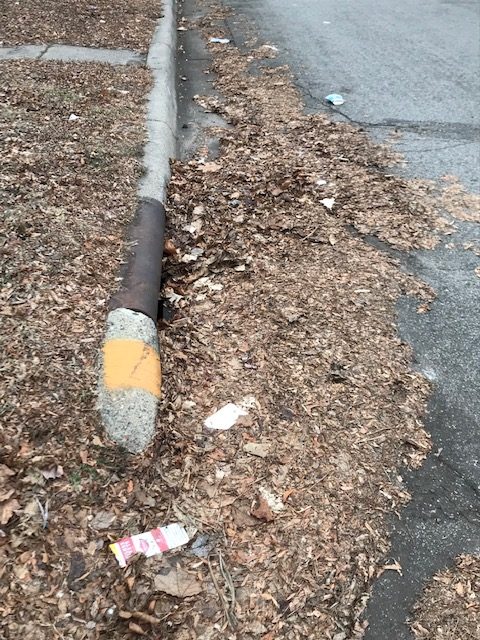
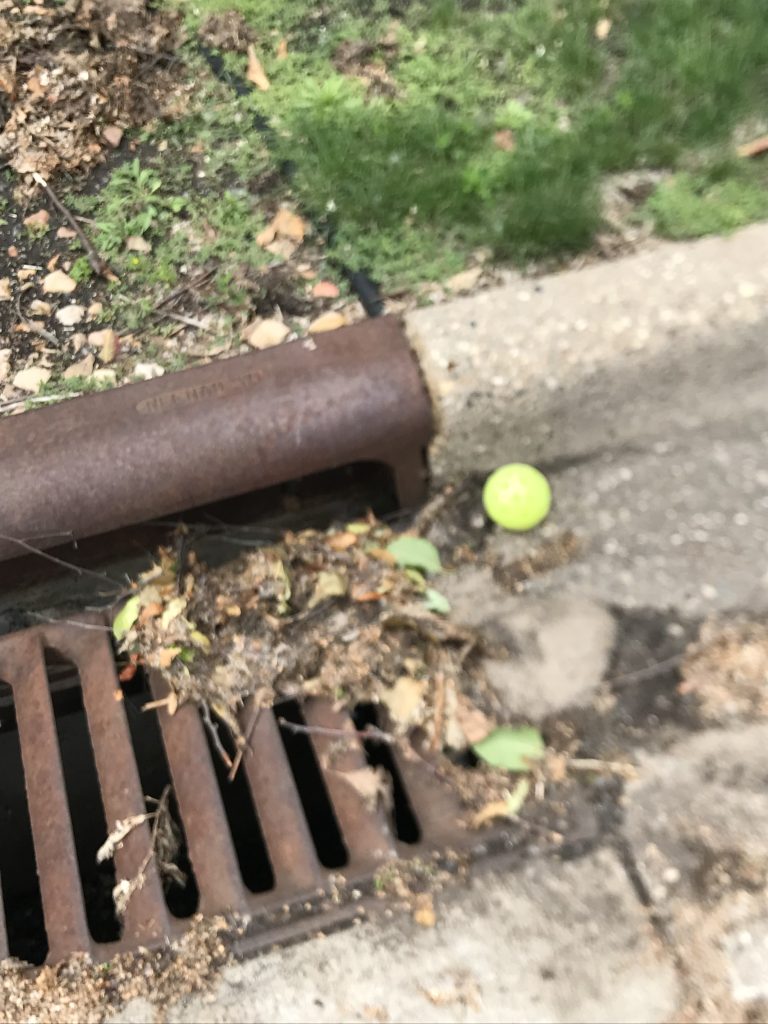
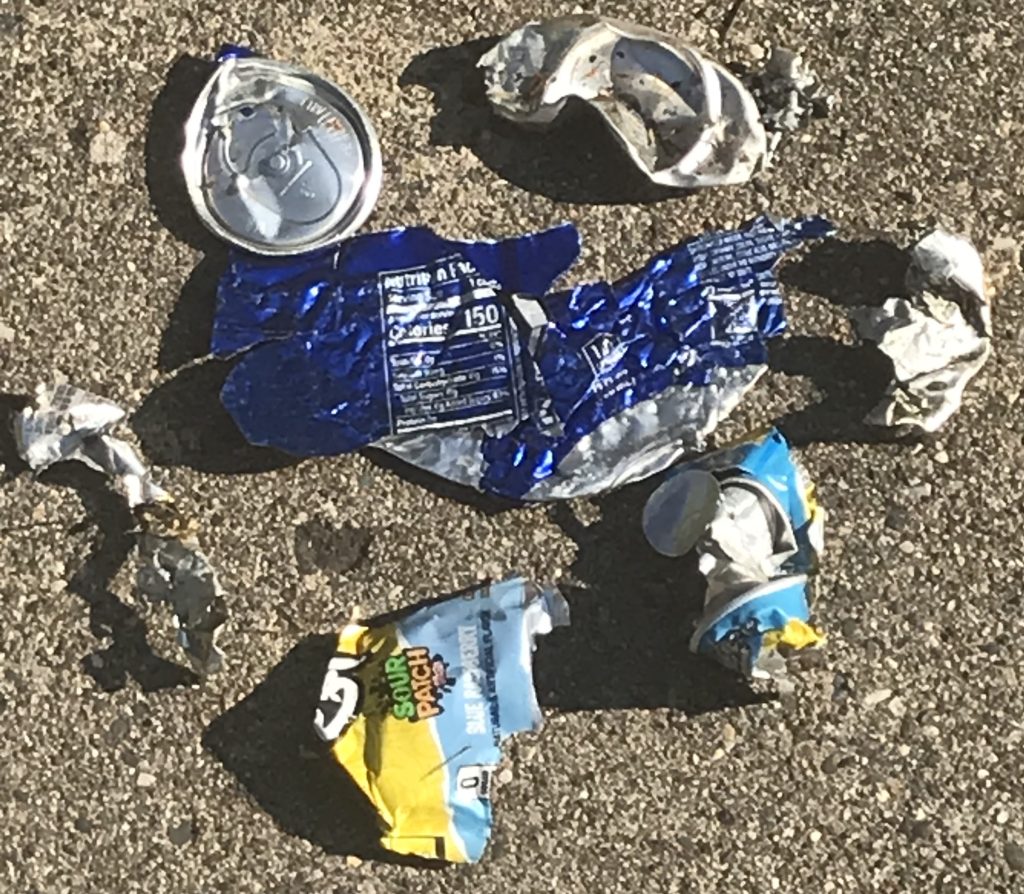
Third, there is the mysterious fate of litter that does not get picked up by ploggers or plalkers. Since few people plog or plalk, and the city government does minimal street or boulevard cleaning, yet litter presumably is deposited continuously—why are we not drowning in it? Is plogging/plalking superfluous? Presumably most litter blows away, washes away (e.g., down storm drains to the river: see photos below), gets pulverized by vehicles or lawnmowers (see aluminum can photo below) into microparticles that blow and wash away, gets swept up during occasional municipal street cleanings, or is consumed by wildlife. If so, then litter’s failure to accumulate massively where we can see it does not mean that it can be safely ignored. For example, washed-away municipal litter plausibly accounts for a substantial fraction of the approximately 280,000 tons of plastic the U.S. dumps into the ocean each year.
I have found plogging and plalking to be rewarding, prosocial activities that enhance my quality of life and, I believe, make my neighborhood more livable for all. If more people were to plog and plalk, who knows what could happen? Why not give it a try? It is cheap, easy, low-risk and gratifying!
All photos by James Johnson except where noted.