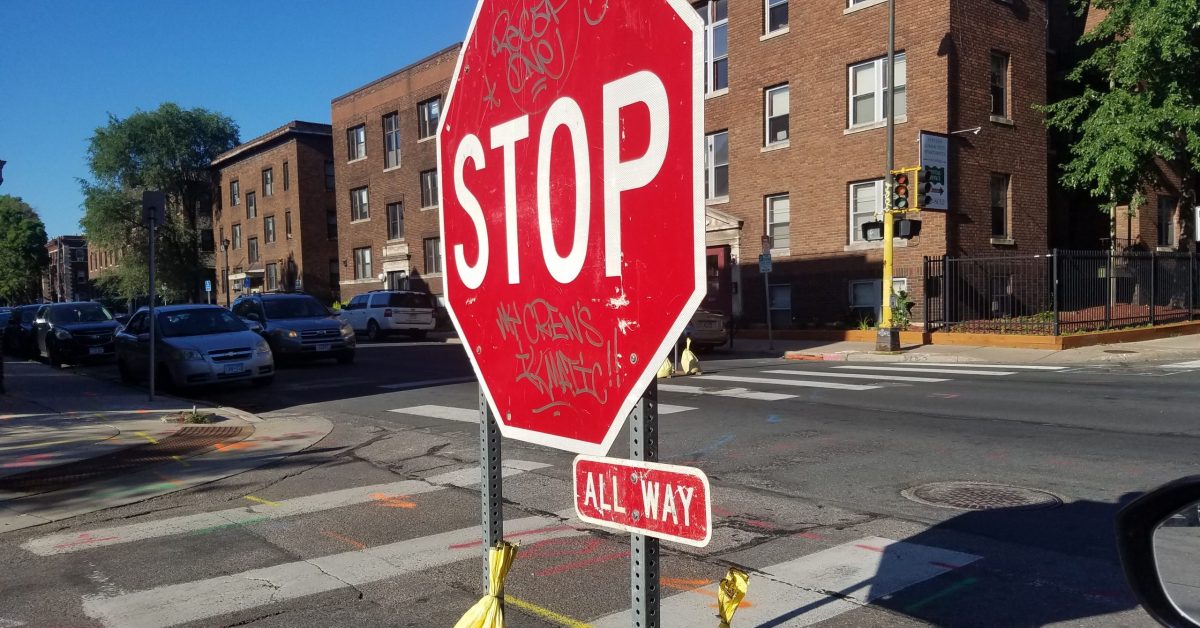
Near my Stevens Square home in South Minneapolis, the dangerous signal-controlled intersection at Third Avenue and 18th Street was recently changed to a four-way, stop sign-controlled intersection. This temporary change (while traffic signals are being fixed and replaced) spurred a question I’ve had for a long time: Are stop signs the answer to quick, effective, safe street improvements in residential areas?
Third Avenue near Downtown Minneapolis is located in the most densely populated neighborhood in the state and has intersections that alternate between being full throughways (no stop sign or signal for traffic moving along Third) and signal-controlled. The result of this design is to often encourage vehicles to go at least 30 mph, if not faster. So the effect of the newly installed stop signs at Third and 18th was immediate and significant. Cars no longer sped across a neighborhood street (Third Avenue is listed on the city’s high-injury network). Instead they came to either a complete or rolling stop at the intersection.
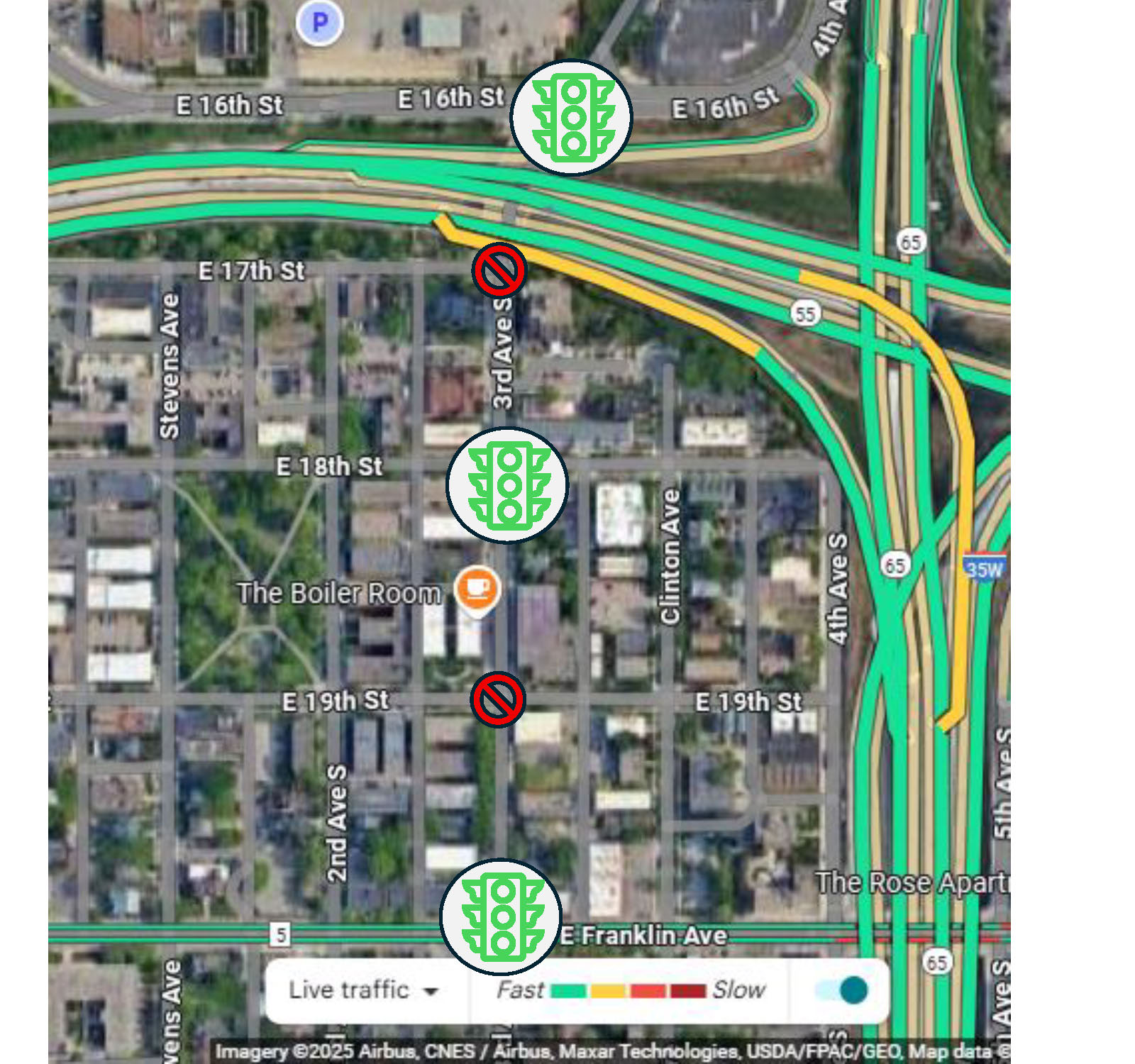
The temporary stop signs have meant that it takes less time and feels easier for pedestrians to cross Third Avenue and walk to the park. And because city workers situated these large-size stop signs in the middle of the road, they’ve had a dual effect of requiring vehicles to navigate around them slightly at the intersection, ensuring compliance.
As a walker and biker, I thought this was fantastic. For a regular driver using the intersection almost daily, it means slowing down through the neighborhood, but I have not observed any long backups.
I think stop signs are an underused and cost-effective tool that can address a variety of street safety needs in neighborhoods:
- They are inexpensive.
- They are straightforward and easy to understand.
- Thanks to passage of the Safety Stop law in Minnesota in 2023, they no longer significantly impede cyclists.
Slow Going for Stop Signs
Despite those benefits, stop signs are hard to get installed, in my limited experience. It seemed easy to put up these stop signs in Stevens Square, but I know that is only because they were temporary and associated with a larger, more expensive signal project. When you want to either add a stop sign or downgrade an intersection from signals to stop signs, the work is harder and the process opaque.
The city’s laudable and effective Vision Zero plan is the most likely tool for adding stop signs in Minneapolis. The plan has already led to implementation of many great safety improvements throughout the city and outlines 23 potential tools to improve safety, from “turn wedges” (those flattened bollards you see in the road median at intersections) to Rapid Flashing Beacons (like what has been installed at 25th and 27th streets on Lyndale Avenue South). Many of these tools are expensive — and none of them are stop signs.
The one time I tried to get a stop sign added somewhere, I failed. Early in my time on the Minneapolis Park & Recreation Board (MPRB), where I served from 2018 to 2021, a community request came in from one of the downtown neighborhood groups to have a stop sign added along West River Parkway at 11th Avenue by Gold Medal Park. The neighborhood’s council member at the time, Steve Fletcher (DFL-Ward 3), backed the request. MPRB staff members said they couldn’t install just one stop sign, but would be happy to begin a system-wide stop sign and signalization plan. They would draft a resolution for the board to appropriate $50,000; then we could hire a consultant and next year pass a plan that may include adding a stop sign at 11th Avenue.
The study never made it into the budget.
The High Cost of Safety
Working in transportation and local government, I sometimes feel like the expensive solutions are easier to get implemented than the cheap ones.
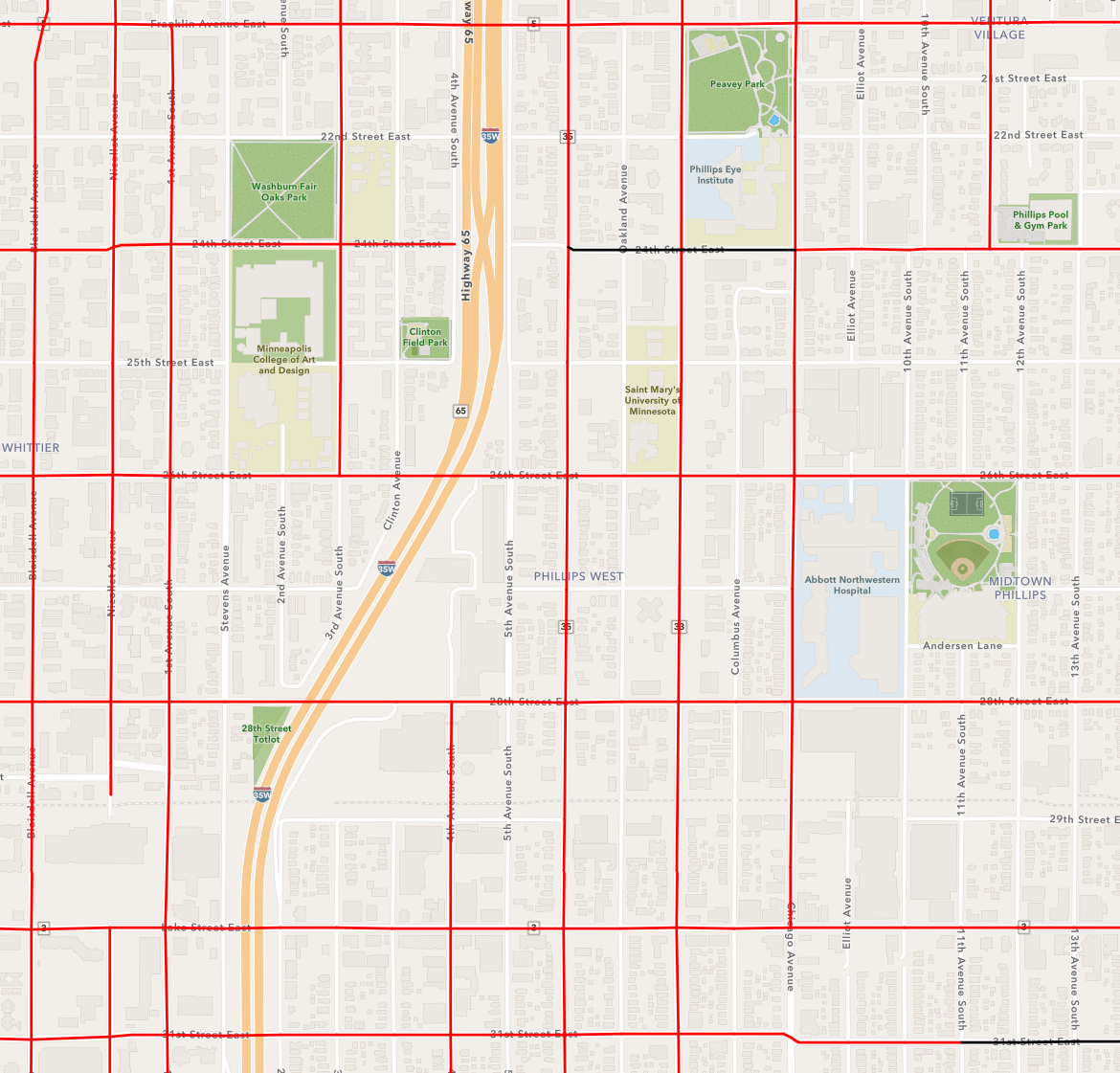
High-injury streets in Minneapolis are, generally, signal-controlled. Just take a look at the map below. The city is working on many different “low-cost” solutions to unsafe roads, including those outlined in the Vision Zero plan — like using bollards to make bumpouts or adding roundabouts with all-direction yield signs. These solutions are good, but they all begin with the assumption that it is impossible to ever remove signals or just install stop signs.
A 30-by-30-inch high-visibility stop sign is $124 from U-Line, and a set of four collapsible bollards comes to about $160 (without installation costs). By comparison, the cost of a traffic signal system for one intersection is somewhere from $250,000 to $300,000. Stop signs are the cheapest, simplest, most universally recognizable and easiest to install intersection treatment out there.
Four-way stop intersections feel safe. A 2024 study by the Center for Transportation Studies at the University of Minnesota shows that yielding rates for walkers improve when some signage is involved. But I haven’t found recent research beyond that on four-way/all-way stops and their safety benefits. Generally, research in the U.S. focuses on the safety benefits of roundabouts compared to both stop-controlled and signal-controlled intersections. I would like to see analysis that breaks out differences in crash rate results for stop-sign controlled versus signal-controlled intersections.
The future of climate-conscious street improvements is currently bleak, and there are many roadblocks to major street-design change:
- One is community resistance and distrust of “new” designs that feel confusing.
- Another is money. These projects can be expensive.
- And a third reason is politics. As money for large reconstruction projects like the Bryant Avenue bikeway in South Minneapolis dries up due to federal lawsuits and the mismanagement of the U.S. Department of Transportation by former reality TV guy Sean Duffy, cheap improvements are going to be important tools.
While stop signs don’t work everywhere, and research shows that roundabouts provide a bigger safety benefit at many intersections, I think the stop sign’s cheapness and simplicity make it an overlooked option for Minneapolis and many other communities.
Let’s start with turning all those two-way stops that weave through Minneapolis neighborhoods into four-way stops. Then we can look at the high-injury network roadways that have little hope of a near-term reconstruction, decommission the signals and drop in some big, beautiful stop signs.