Editor’s note: This is part three of an ongoing series about femme/trans/women (FTW) who are leaders — either quietly or overtly — in transportation issues and advocacy throughout Minnesota.
I have another batch of aunties for you! In this third installment of our “Aunties of Active Mobility” series, you’re going to learn about two metro-based powerhouses and some incredible community-building they’re both formulating.
First, meet Cristina, a music-teacher-turned-bike mechanic whose “come as you are” attitude is shaping accessible bike maintenance. Second up is Laura (who also goes by Pacha), a maker, educator and founder of Bici Xicas who splits her time among St. Cloud, Cass Lake and Minneapolis.
I met them both when they attended a League Cycling Instructor seminar at the Bicycle Alliance of Minnesota (where I work as deputy and education director) in 2021. I am overjoyed to be sharing insights into their inspiring impact on the Twin Cities active mobility scene.
Cristina Montoya (they/them)
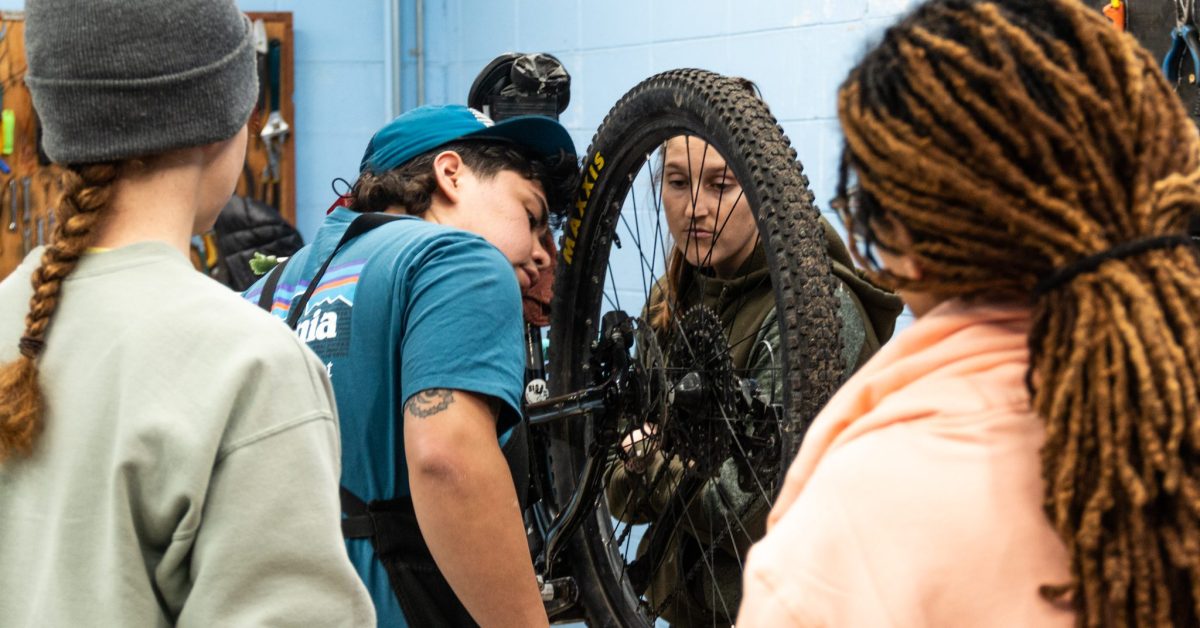
Cristina Montoya (they/them) is a self-described wrencher (bike mechanic), educator and advocate who most recently was a worker-owner at the Hub Bicycle Co-op, which closed a year ago. “I’m a really huge fan of educating and knowledge sharing in general,” they said. “I want to get on my bike. I want other people to get on their bikes and feel really good about it.”
In college, Cristina studied music performance and taught music lessons to school-aged kiddos. “I was teaching music, and I thought, ‘Wow, I really like this. I should find ways to do more of this.’” With a lot of teachers in their family, Cristina has a knack for creating spaces where students of all levels feel welcome.
While teaching at the Hub and in now other bike spaces, they bring that attention to the room with them. “Sometimes it can feel like a sterile environment. You see a bench full of [bike] tools and it can be intimidating, especially as an AFAB [assigned female at birth] person. I want it to feel more like a home, more comfortable.” In the bike world that intimidation factor can be a barrier for participation. “I can see AFAB people get scared. They are the first people to say, ‘I can’t do this.’ And I want to show them that working on a bike, riding, it’s accessible if you have the right environment.”
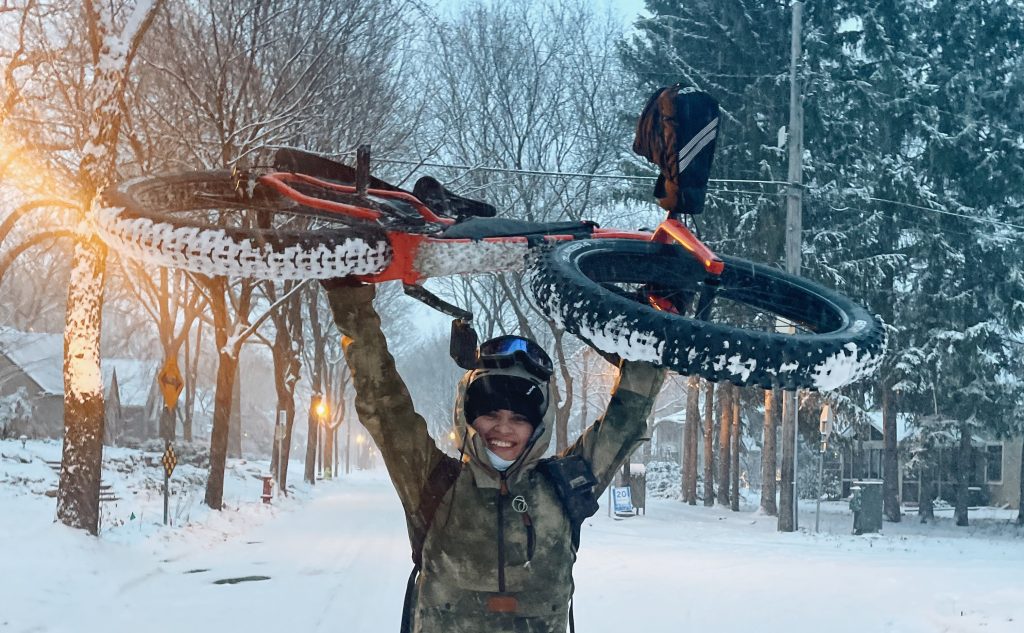
Cristina told me they started riding bikes more intentionally as a young adult. “I rode as a kid, but not really as a means to get around.” By the time they were in college, “I was working and going to school and sort of ‘paying the price of my soul’ — meaning I was working super hard and stressed. Getting on my bike was a release, a way to help my mental health.”
It didn’t always feel empowering, though, given the reality check of perceived dangers along the way. “I remember when my mom found out that I was getting up at 4 a.m. to go on these early-morning bike rides and she made me ride with my uncle so I would stay safe. It sort of awakened me to my vulnerability. I appeared femme, Mexican American and riding early in the morning when it’s dark. I realized that this is happening, you know, this affects the way we approach micro mobility.”
Moving to Minneapolis helped them continue to gain their confidence and reclaim some of their power riding bikes and wrenching. “I saw all of these regular people out riding and doing things on their bikes. When I started at the Hub there were older folks bringing in their older clunkers, people out riding in their hijabs on their cruisers, people riding in all types of weather. It was like, these are my people.”
“We need to consider gender when we bring people into the bike shop and meet them where they are at, instead of focusing on what they can’t do.”
Christina Montoya
The connection with a cycling community through teaching and being a worker/owner coupled with their personal experience has helped Cristina come to understand the importance of the community bike shop. “We need to consider gender when we bring people into the bike shop and meet them where they are at, instead of focusing on what they can’t do. We already have a society telling us that as AFAB people we aren’t strong enough, aren’t capable of using tools or just ‘aren’t right’ for wrenching. Bike shops need to provide the programming that can combat that mindset.”
Cristina told me about one of their “active mobility aunties”, someone who mentored them as they learned to teach bike maintenance. “Elena at Angry Catfish is involved at the Grease Pit and teaches these classes. They taught me a lot about what it means to teach people about bikes and wrenching.”
To them, an auntie is more than just your parents’ siblings. “Aunties are creating our own families because of what we see in each other and how we support and uplift our differences. I’m not going to shame someone who wants to race and go fast, and aunties aren’t gonna shame me for riding with my ‘granny’ handlebars because they are more comfortable for me!”
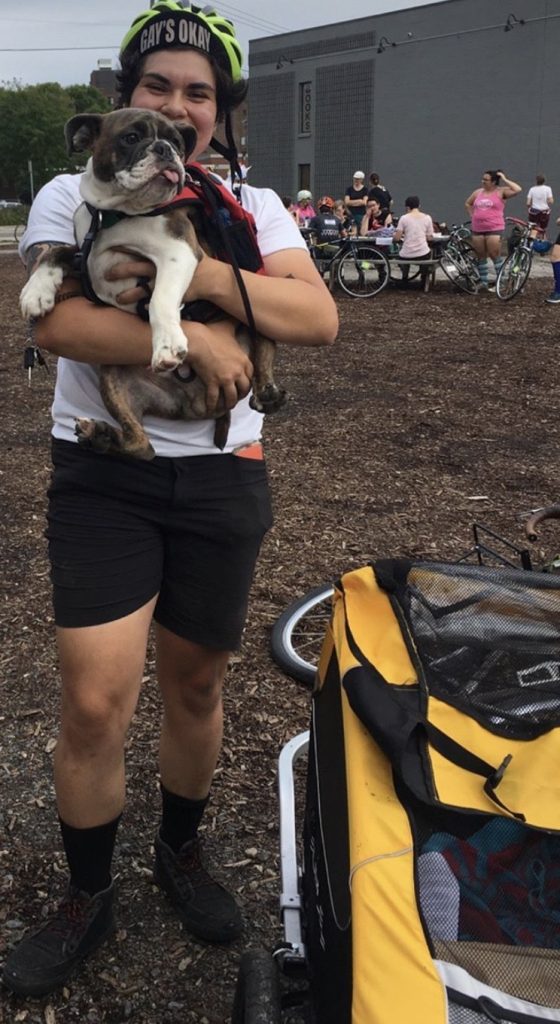
In their spare time, Cristina loves to read about ways to be a better advocate for themself and others. “As a GNC [gender non-conforming] person, as a Mexican American, I like to read books that inspire and inform me to be a better advocate, to stand up for my own rights and the rights of my community. I want to keep getting involved.” Their current read is “Defectors” by Paola Ramos (subtitled “The Rise of the Latino Far Right and What it Means for America”).
Laura (Pacha) Galaviz (she/her)
Laura, who also goes by Pacha, has a lot going on. Every time I talk with her I hear about another part of her business, advocacy and education work. Pacha operates Bici Xicas, which centers FTW (femme, trans, women) and nonbinary folks of color, offering them biking classes and repairs by appointment. She also offers classes at schools, does individual instruction, and gets involved at community events in the Twin Cities, St. Cloud and Cass Lake.
Pacha grew up biking. “My family didn’t have a car; we biked everywhere as a family. Everywhere! We biked along the greenway to the river where we would fish and swim.” She moved around a lot as a kid and found biking in the city to be exciting. Driving, not so much. “I got older and started driving, and it was bad,” she says with a laugh. “I was getting tickets!” The hassle of driving was a motivator to get back on the bike, and so was the time she saved. “I realized I could get places faster than on the bus. It looked so easy to just lock up your bike and go. That’s when my biking journey really began!”
“I was always riding by myself. I wondered, where are the women and Latinas at? I looked everywhere, I swear.”
Laura (Pacha) Galaviz
But something was still missing: “I was always riding by myself. I wondered, where are the women and Latinas at? I looked everywhere, I swear. There was one group of Latinos on bikes over on Lake Street, like six of us. We’d bike around, go to events, show up on our bikes and have a good time. But I wanted more femme spaces.”
Pacha brings up a theme I am noticing in many of my auntie stories: the desire to build community and well being through transportation. We might love walking somewhere or taking transit, but building a culture and community around that passion is motivation to keep doing the hard work. Advocating for better, safer ways to get around can be tiring, and having our collaborators who sweat in the sun next to us makes things feel easier. Especially so if we have a shared touchpoint — like gender experience.
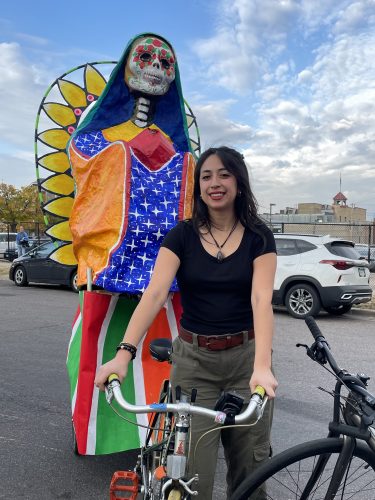
In Pacha’s case, that’s how Bici Xicas was born. “I really wanted to start working on bikes, but I was told I couldn’t do my thing in an existing bike shop, so I started in my garage.” She wasn’t a mechanic, but she trusted herself and learned along the way, growing an organic community outside of mostly male and white bike-shop culture. As the group grew, they started to emphasize confidence and empowerment through bike riding. A sense of celebration remained important to Bici Xicas, too. As Pacha puts it; “Biking in the street? That’s badass!”
No amount of badassery, however, can stop the street from being unsafe. Infrastructure still fails people who walk, bike and roll — especially femmes. The 2024 MeToo Study from Stop Street Harassment found that in the last decade, public harassment has increased for women while staying the same for men. “Bikes can be a safer option while streets remain unsafe,” Pacha told me. “That’s why it’s important for me to focus on teaching bike safety and building confidence for femme riders.”
Pacha is inspired to bridge gaps between Latino communities and the broader cycling movement through her work with Bici Xicas, which she hopes to turn into a nonprofit under her new brand, Viva, which “focuses heavily on biking, repair clinics, visibility and teaching learn-to-ride classes.” She’s been working with bilingual community groups and after-school programs to engage youth in the process of learning to love bicycling while also maintaining the machine. “I want to make it cool for them,” she says, “sort of combat the stigma that it’s ‘dorky’ and teach maintenance skills and confidence, especially to girls and brown kids.”

In her spare time, Pacha works with Bike Alebrijes MN. She describes herself as “an artist first. I love getting my hands dirty, making these art bikes and then riding them around.” She’s also an avid baker. “I recently made an orange cake and a date cake. I’d love to open a bike and pastry shop someday!”
Photo at top by Cristina Montoya.