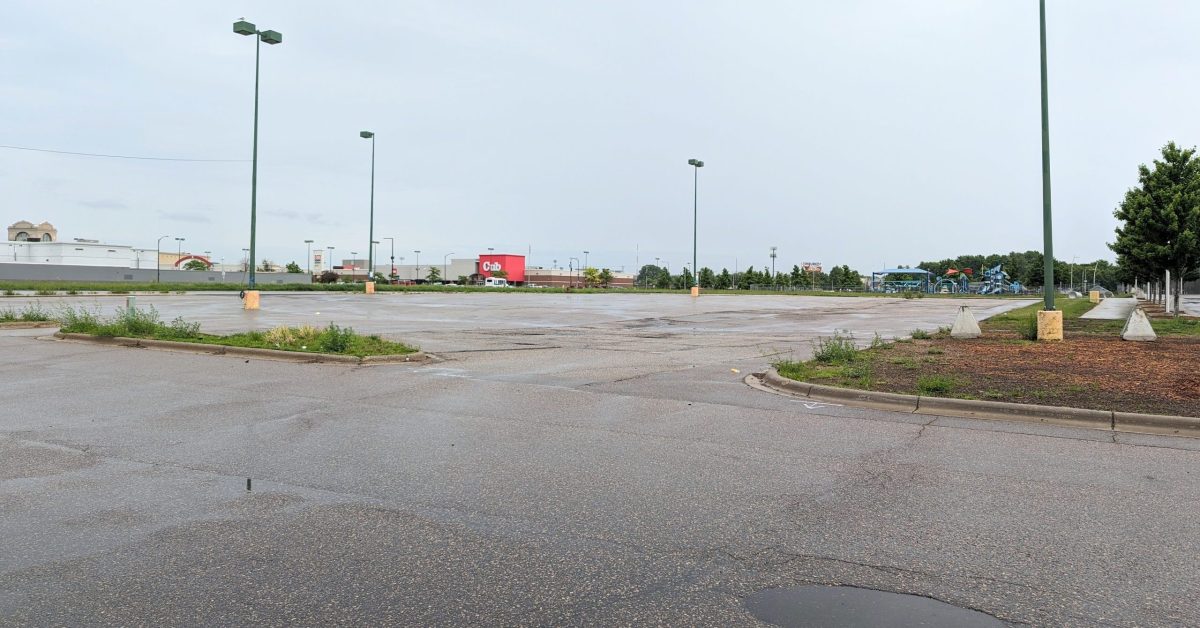
The Hamline-Midway neighborhood in St. Paul — the crucial stretch between University Avenue and Interstate 94 from Snelling Avenue to Lexington Parkway — sits at the intersection of two major transit lines and should be thriving. Instead, it’s littered with empty big-box shells, struggling strip malls, and businesses that seem to exist in spite of their locations rather than because of them. The problem isn’t just vacancy or disinvestment. It’s that developers and property owners have stubbornly clung to suburban design patterns that are fundamentally incompatible with urban transit-oriented success.
Austin Wu’s 2024 analysis of the Midway’s challenges correctly identified the need for more housing and residents to support local businesses. But there’s a deeper design problem that Wu touches on but deserves more attention: The area’s commercial spaces were built for suburban customers arriving by car, not urban residents arriving on foot or by transit. Until developers entirely abandon this flawed model, the Midway will continue to underperform despite sitting on some of the Twin Cities’ most valuable transit-accessible land.
The Suburban Design Trap
Walk through the Midway’s struggling commercial areas and you’ll see the same pattern repeated: large buildings set back from the street behind vast parking lots, with entrances oriented away from sidewalks and transit stops. These design choices made sense fifty years ago when the area was drawing a suburban audience, but they’re now actively working against the dense, walkable development that transit-oriented districts require.
The former Herberger’s building east of Pascal Street, south of University, exemplifies this problem. Despite sitting in an urban core, the massive structure (part of the larger Kraus-Anderson Midway Marketplace development) was built in 1994 as a suburban department store reminiscent of the old Midway shopping centers of yesteryear. When Herberger’s closed, the building’s suburban DNA made it nearly impossible to adaptively reuse for smaller, street-facing retail that could serve transit riders and nearby residents.
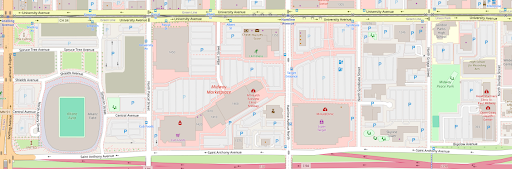
Similarly, the long-vacant Borders building on the same plat languishes partly because its big-box format — designed for suburban book browsers with cars and time — doesn’t match the needs of an urban commercial district. The building’s deep floor plates, minimal street frontage, and car-oriented design create barriers to the kind of smaller-scale, street-engaged businesses that make urban commercial strips successful. Thankfully, M Health Fairview has found a use for it, but it’s certainly not optimal for patients who travel by transit.
Learning from Success Stories
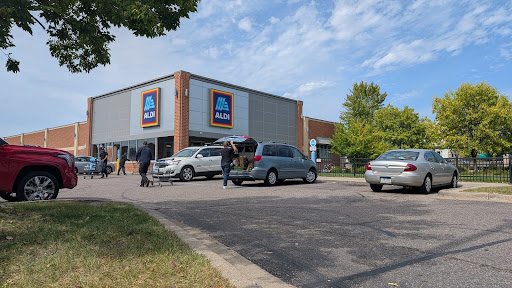
The contrast becomes clear when you look at the Midway’s commercial and retail success stories. The Aldi at Lexington and University works precisely because it abandons suburban retail orthodoxy. Instead of hiding behind a parking lot, the store places its entrance close to the sidewalk and transit stop. Its compact format serves the grocery needs of nearby residents and apartment dwellers who can easily walk over with a cart or take the Green Line home with their bags.
Even more telling is Fresh Thyme, located at the Prospect Park station. This grocery store explicitly courted an urban audience, with bike parking, a smaller footprint than typical suburban supermarkets, and positioning that (almost enthusiastically, I might add) acknowledges customers might arrive without cars. The store thrives because it was designed for its actual customers, not for a suburban ideal that doesn’t match the neighborhood’s reality.
These examples point toward what the Midway needs: retail designed for people who live nearby and use transit, not for suburban shoppers making weekly car trips.
The Highland Bridge Model
The development approach that could save the Midway already exists just a few miles south at Highland Bridge. There, the former Ford plant site is being developed with retail spaces integrated into the ground floors of apartment buildings, creating street-level commercial activity supported by residents who live literally upstairs. Stores face sidewalks, not parking lots. Parking exists but is tucked behind buildings or underground rather than dominating the streetscape.
This model works because it acknowledges a basic truth: Successful urban retail depends on people who can easily walk to it regularly, not people who drive to it occasionally. Highland Bridge’s retail will serve everyday needs — coffee, groceries, services — for people who live within a few blocks. The Midway’s struggling commercial areas, by contrast, were designed around the suburban assumption that customers would drive from miles away for special shopping trips. Those days have left us, and we should cut bait on the idea that we will win those businesses back.
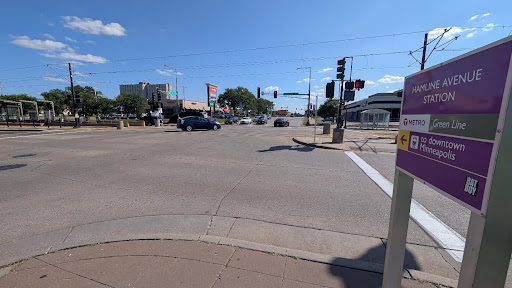
The persistence of suburban design patterns in the Midway isn’t just an aesthetic problem — it’s an economic drag on the entire area. Wu correctly notes that the neighborhood needs more residents to support local businesses, but adding residents won’t solve the retail problem if those businesses remain designed for suburban customers rather than urban neighbors.
Consider the large surface parking lots that dominate successful suburban shopping centers but become urban dead zones. In the Midway, these parking deserts separate potential customers from businesses and create an unwalkable environment that discourages the casual foot traffic urban retail depends on. Even worse, they represent enormously valuable land that could house the very residents Wu identifies as crucial to the area’s revival.
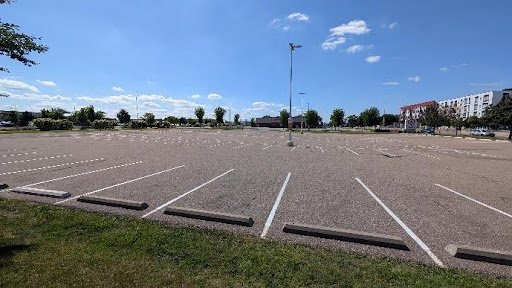
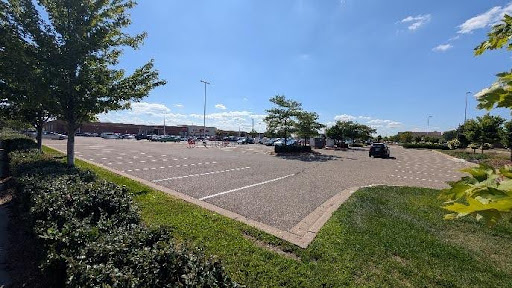
The owners of large commercial properties in the Midway seem trapped in suburban thinking, unable to envision their sites as anything other than car-dependent retail destinations. This explains why so many former big-box stores sit empty rather than being subdivided for smaller tenants who could actually serve the growing number of nearby residents. The stuttering progress at the United Village development at University and Snelling, where initial plans for office towers and retail have been repeatedly scaled back and delayed, shows how difficult it is to break free from suburban development patterns even on prime transit-accessible land, thanks to developers and city planning challenges alike.
A Path Forward
The solution isn’t to abandon retail in the Midway, but to completely rethink how it’s designed and oriented. This means:
- Prioritizing street frontage over parking frontage. New retail should face sidewalks and transit stops, with parking tucked behind or underneath buildings rather than dominating the streetscape.
- Building for daily needs, not special trips. The Midway needs more businesses like Aldi that serve the everyday needs of nearby residents, and fewer big-box stores trying to draw customers from across the metro area.
- Integrating retail with housing. Like Highland Bridge, successful Midway development should put commercial spaces at the ground level of apartment buildings, creating built-in customers and street-level activity.
- Subdividing large spaces. Those empty big-box buildings need to be broken up into smaller spaces that can house multiple businesses, creating the kind of diverse commercial mix that makes urban districts successful.
The Midway’s location between two downtowns and along major transit lines makes it one of the Twin Cities’ most promising development opportunities. But realizing that promise requires abandoning the suburban design patterns that have held the area back and embracing urban development approaches that actually match the neighborhood’s transit-rich, increasingly dense character.
As Wu argues, the Midway needs more residents and more investment. But it also needs developers and property owners willing to throw out their old suburban playbook and build for the urban neighborhood the Midway is becoming, not the suburban commercial strip it used to be. Until that happens, even the best-intentioned development will struggle against the area’s self-defeating design.
Photos by Cole Hanson, except where noted.