Editor’s Note: This is the first of two posts which chronicle Wolfie Browender’s October 4, 2024 ride. A version of this post from appeared previously in the blog Saint Paul By Bike at SaintPaulByBike.com, which follows his quest to bike every block of every street in Saint Paul. Photos courtesy of Wolfie Browender unless otherwise noted.
Macalester-Groveland, North End, East Side
October 4, 2024 – 20.3 Miles
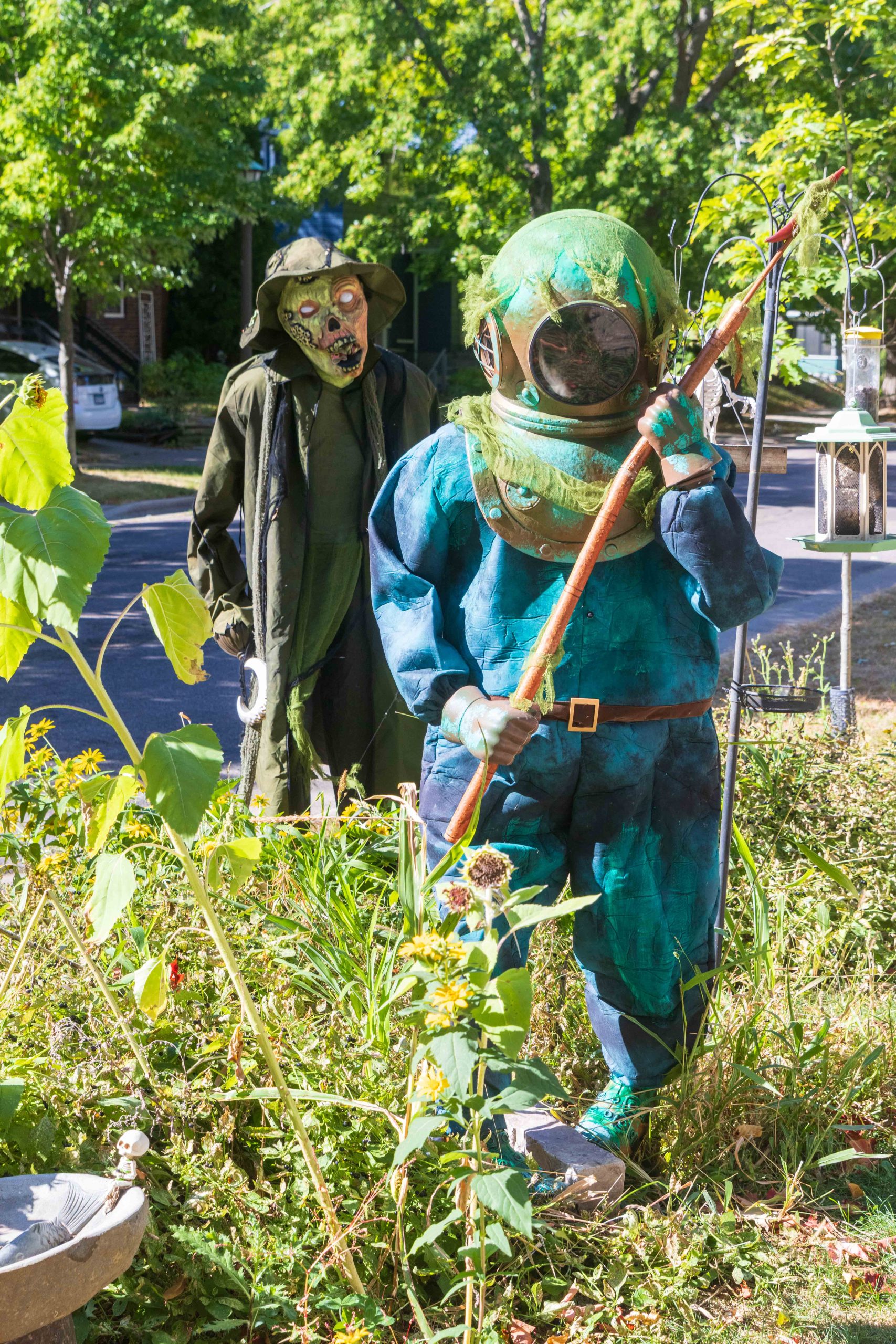
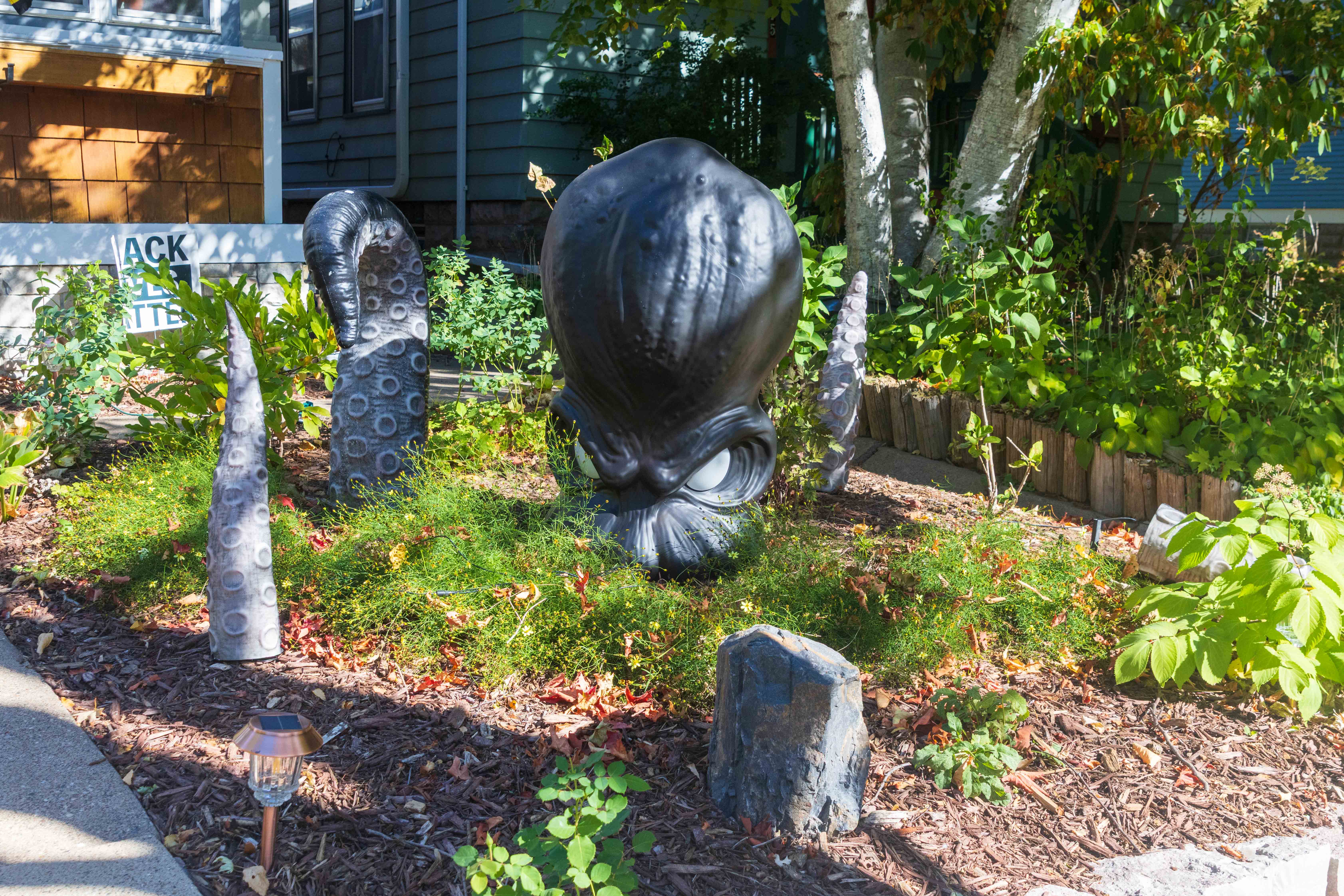
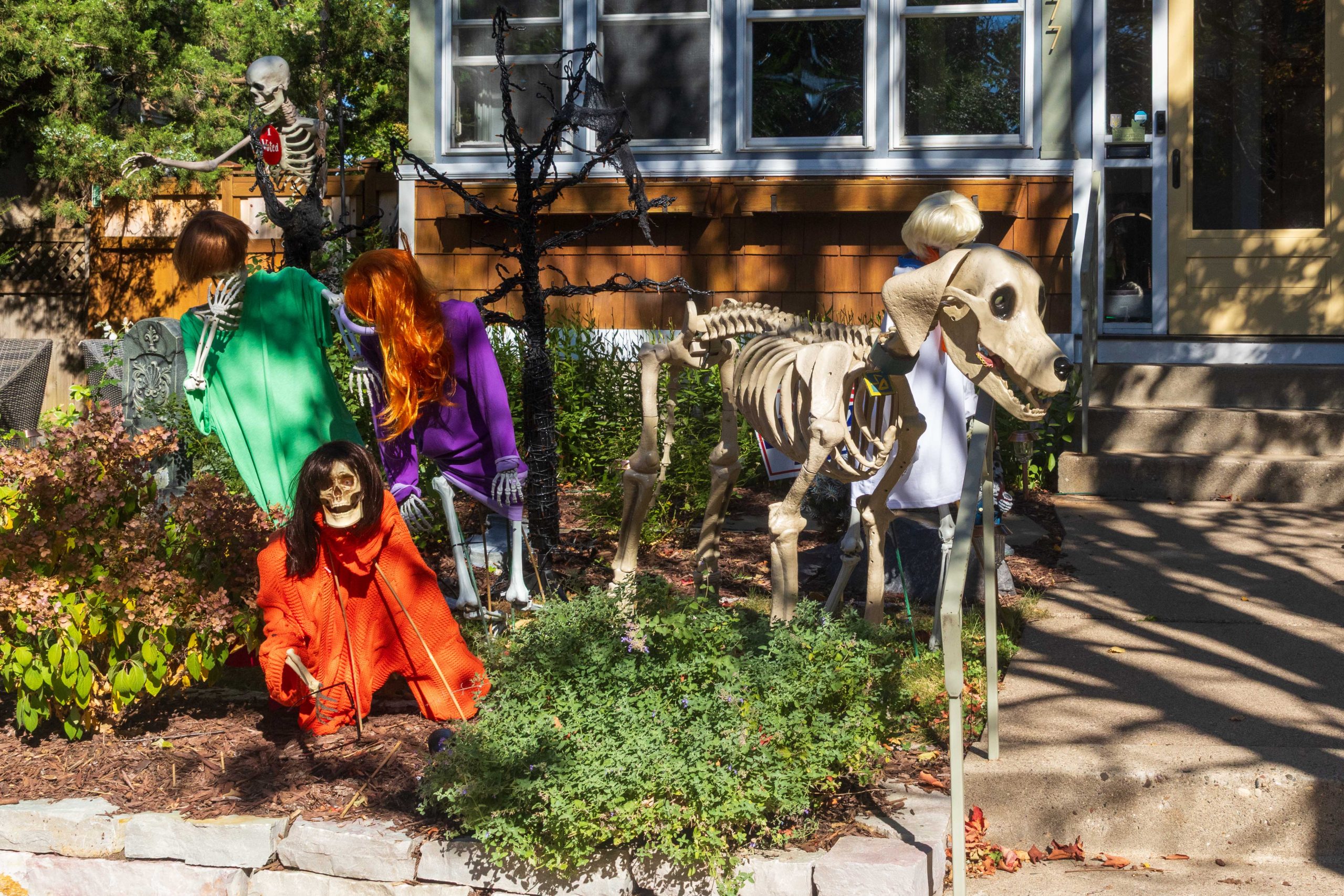
Spotted in Macalester-Groveland, a fake snake and an unorthodox Halloween showcase.
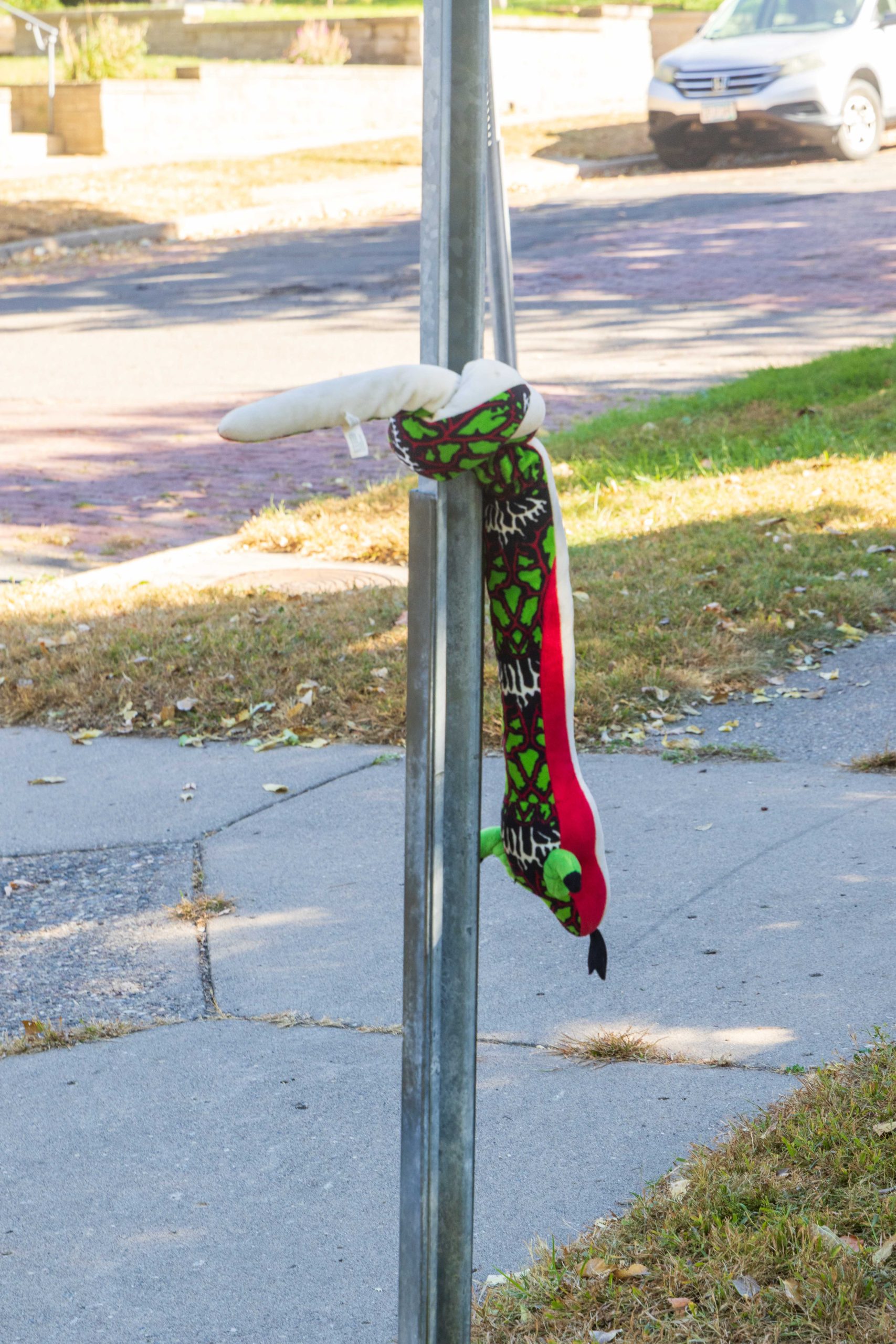
Halloween Bling at 1777 Lincoln Avenue.
Frogtown
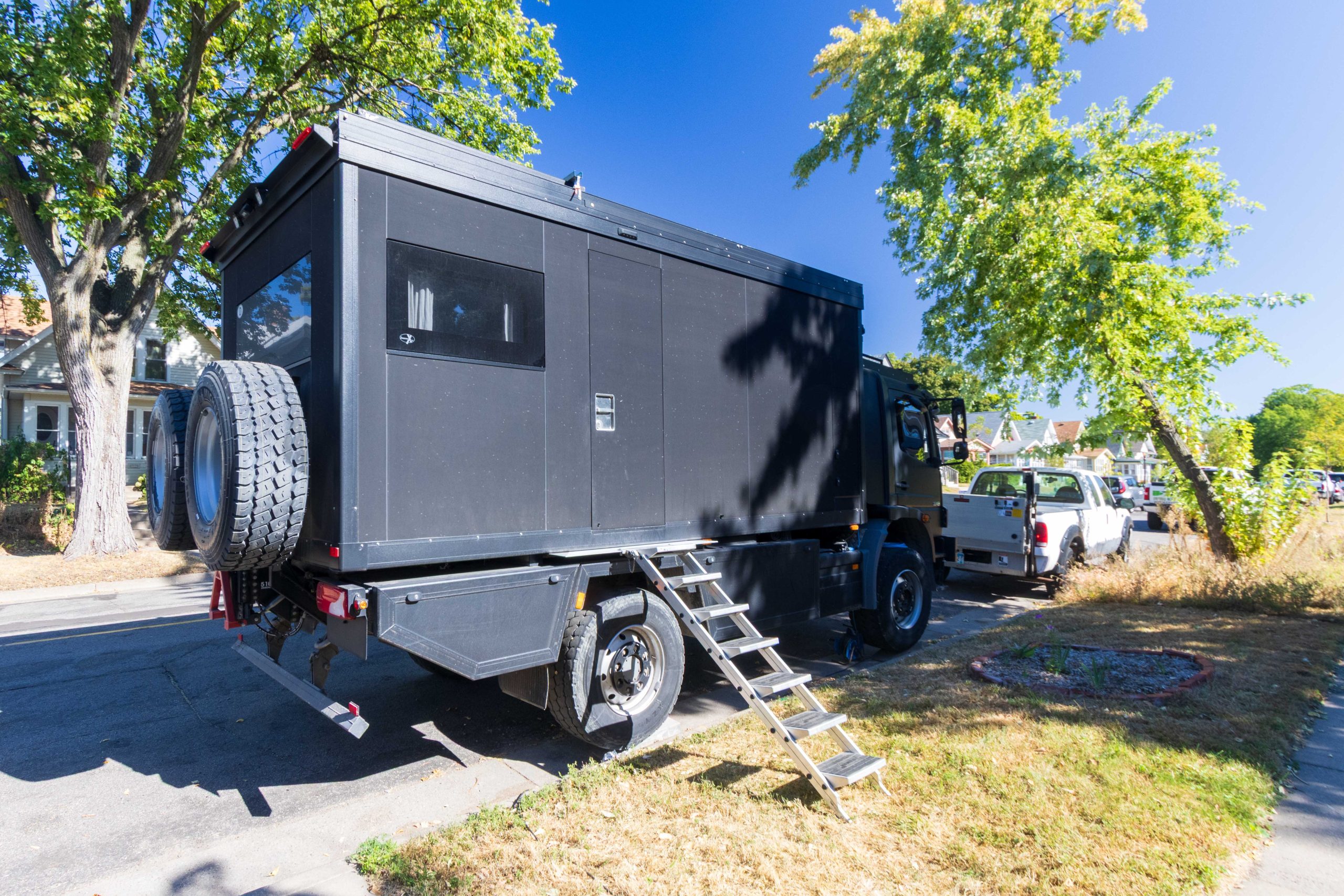
Speeding north on Pascal Street, I caught a glimpse of an unusual and formidable vehicle as I crossed Thomas Avenue.
North End
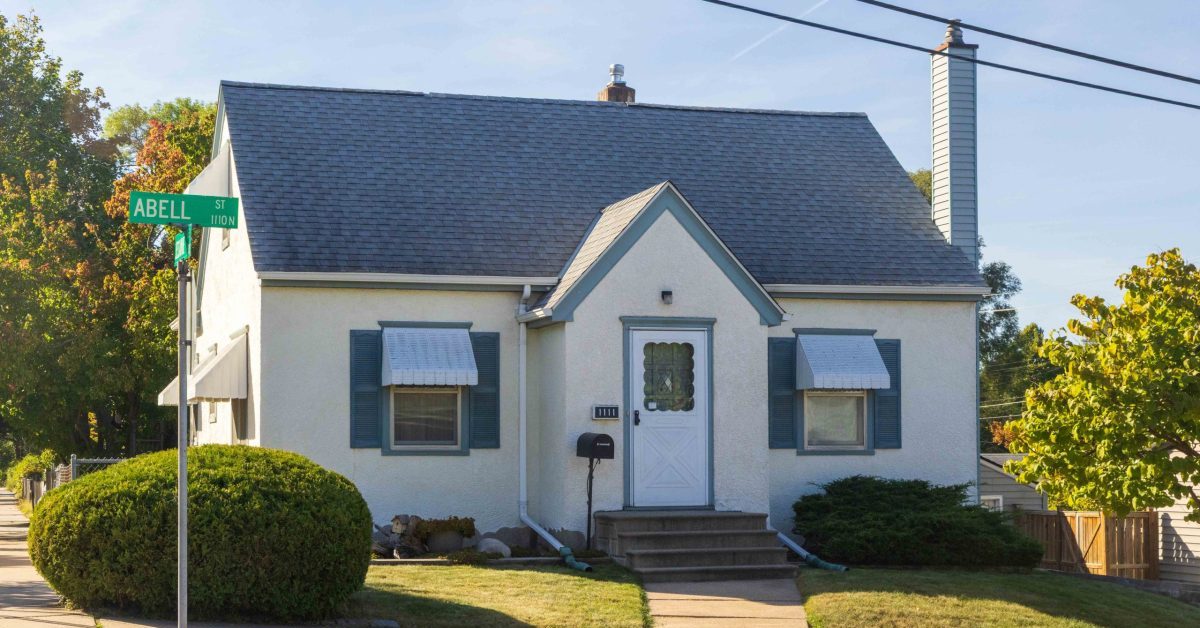
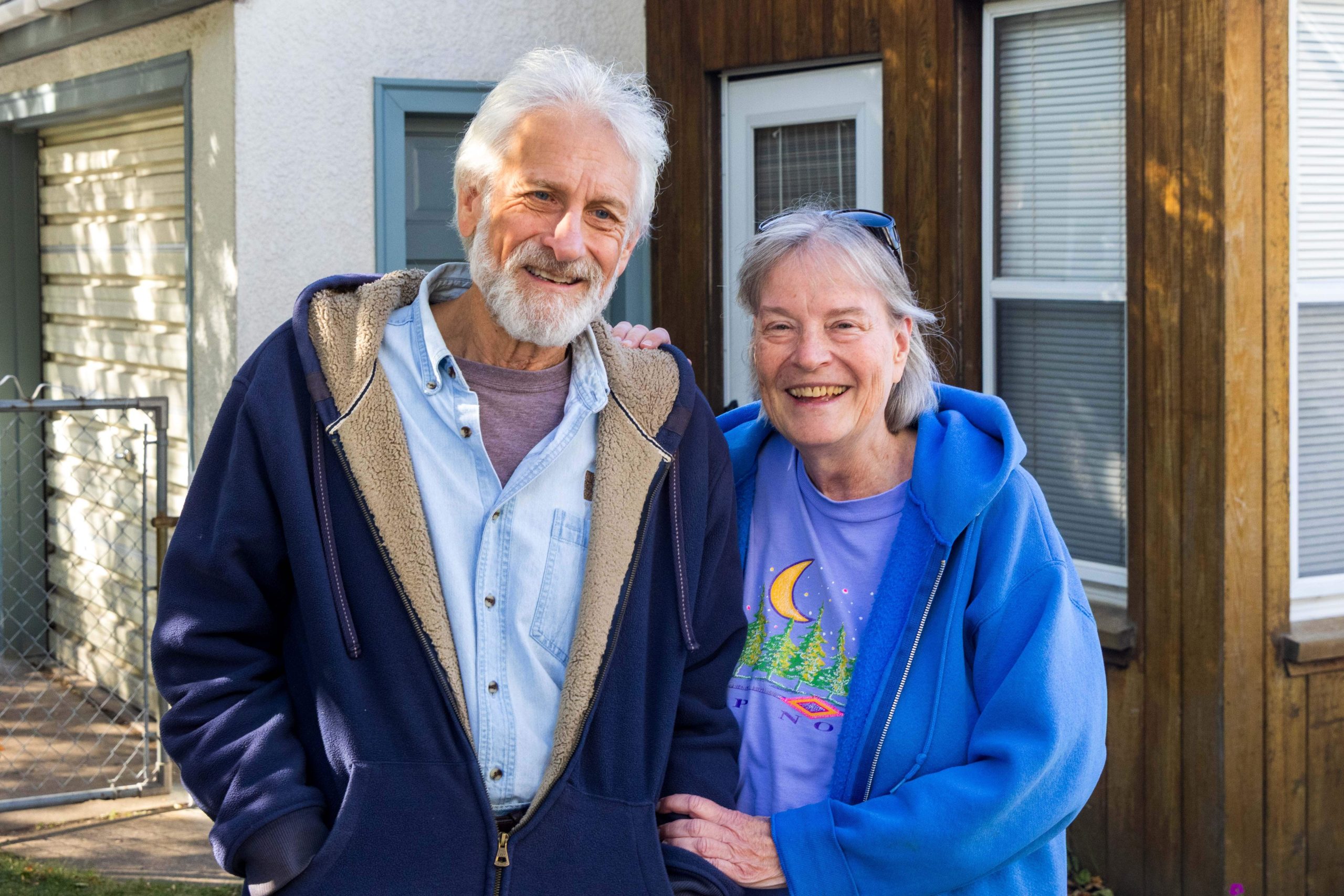
Linda and John Jungwirth have called the charming white house with a picturesque yard at the corner of Abell Street and Jessamine Avenue East home since 1977. John could be considered a relative newcomer to the North End, having grown up in Highland Park and attending Cretin High School. Linda, on the other hand, is more familiar with the North End than most.
According to Linda, her maternal great-great-grandparents, Michael and Theresa Schneider, came to the North End in 1910. Her maternal great-grandparents, Sebastian and Maria, actually arrived a year earlier, in 1909. “Both sides of my family lived in the North End back to my great-great-grandparents on my mother’s side, and great-grandparents on my father’s side.
One set of great-great-grandparents, Michael & Theresa, and their daughter, Maria, and her husband, Sebastian, “came a year apart because they did not want to be on the same boat in case it sunk.”
Her mother’s family, while considered German, came from what was at the time Austria-Hungary. Her paternal side is Polish and Prussian. “ Both my grandpa and my grandma (Anna and Joe) lived in the same area of Austria-Hungary, but she came here when she was four. He didn’t come until he was 15. And then they met in St. Paul when they were probably late teens.”
Most on both sides of Linda’s families were enticed by others like them already living in the North End. “ A lot of Austrians all settled around here. St. Bernard’s Church—you could go to German masses there. And the same on my dad’s side, they were more to the western edge of the North End, by Western Avenue, and along there into Frogtown. It was a lot of Polish because of St. Adelbert’s Church.”
That’s the same reason newer immigrants, like Southeast Asians and Karen, settled in Saint Paul.
A collection of Linda’s relatives, starting with her maternal great-great-grandparents, Michael and Theresa, settled not just in the North End, but on one particular street, Geranium Avenue. They purchased the small house at 63 West.
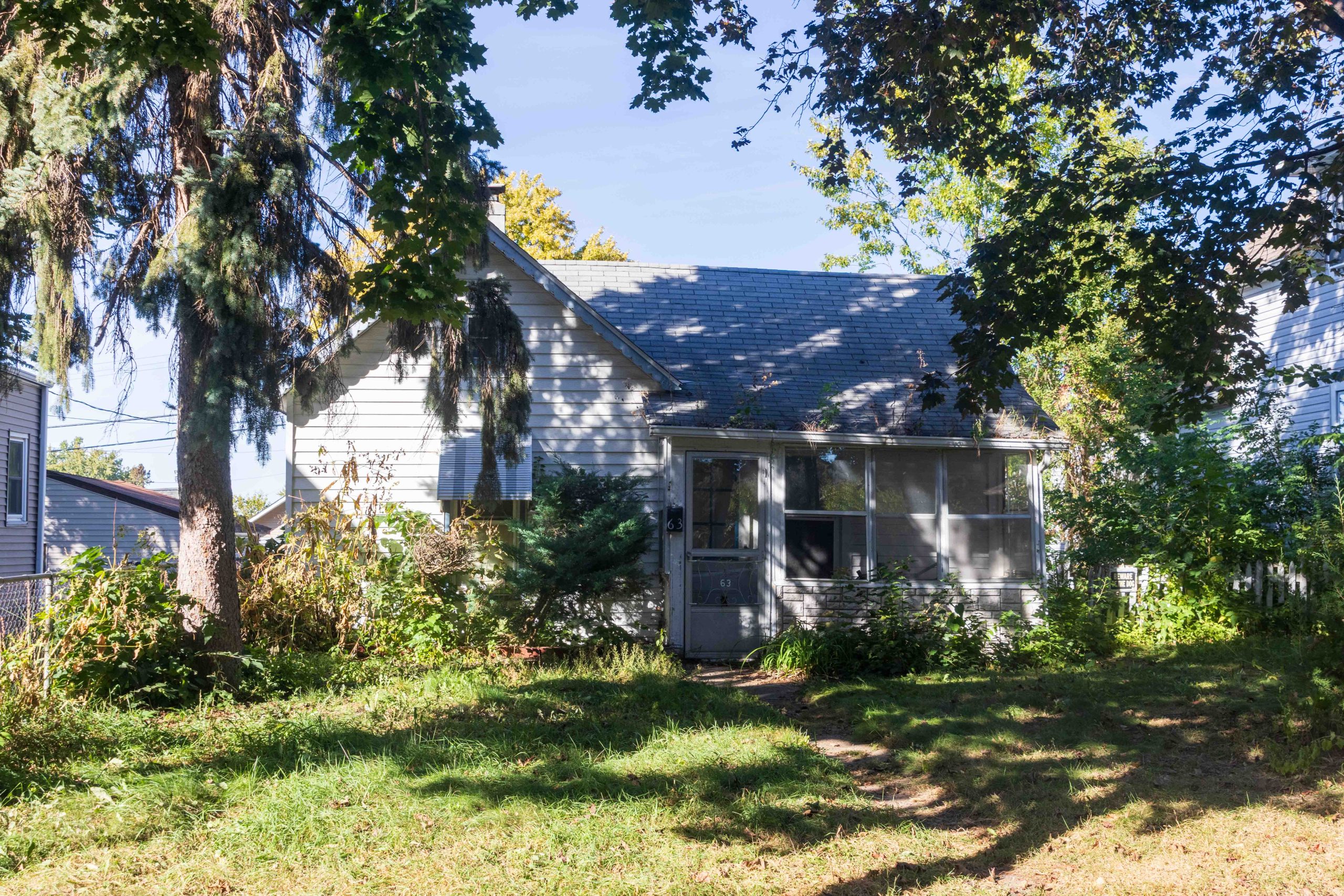
Michael and Theresa Schneider’s daughter and son-in-law Maria and Sebastian (Linda’s great grandparents), were outliers who lived on the West Side Flats. After Maria’s death in 1920 from the Spanish Flu, Sebastian returned to Europe and Linda’s grandmother, Anna, moved in with Michael and Theresa at 63 Geranium West.
Anna inherited that house after Theresa’s death. It became known as “The Little House” within the family and was the beginning of 63 Geranium West becoming the starter home for newly married family members.
“When my grandma and grandpa (Anna and Joe) got married, they bought a house on Geranium (74 East) two blocks east (of 63 West.)”
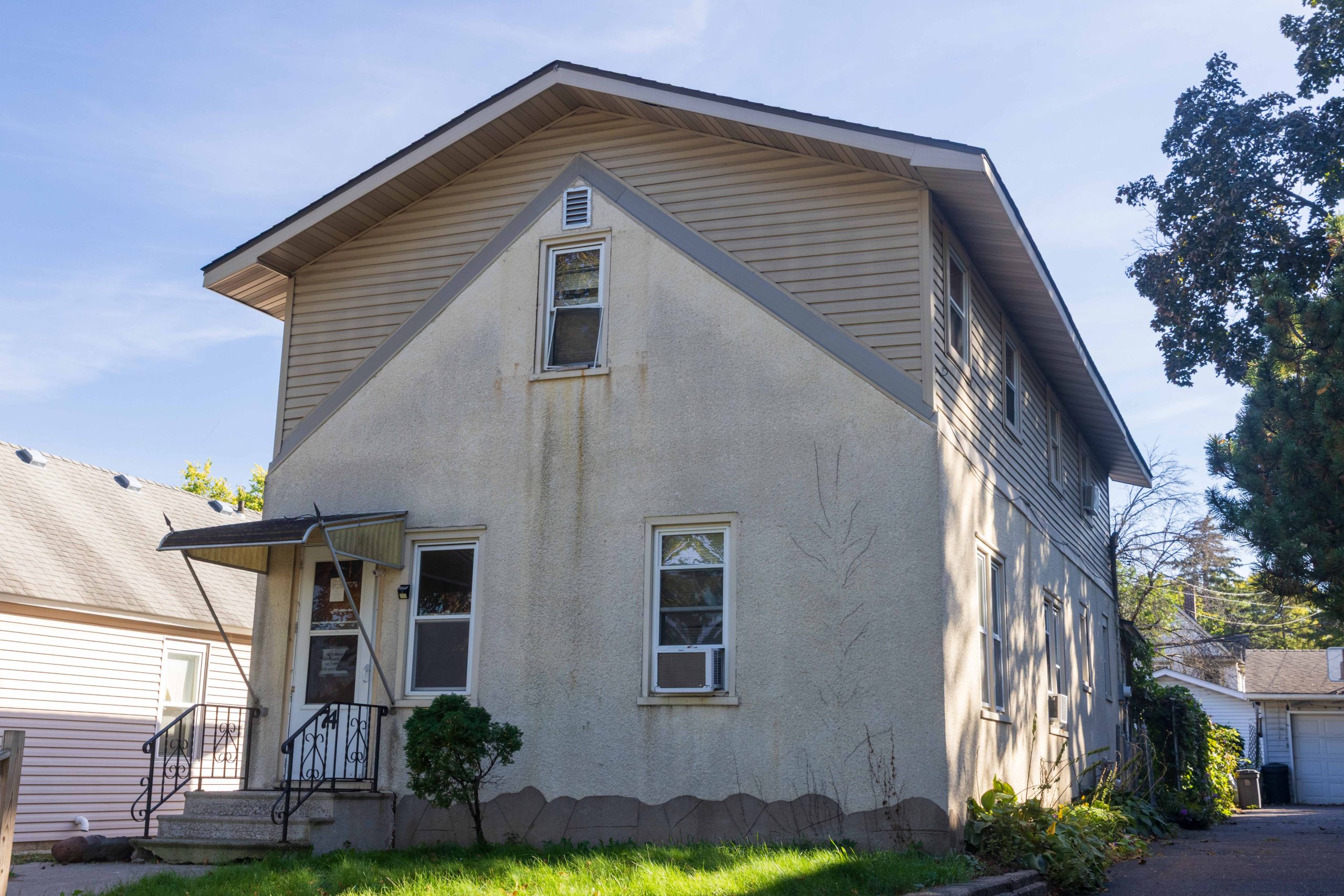
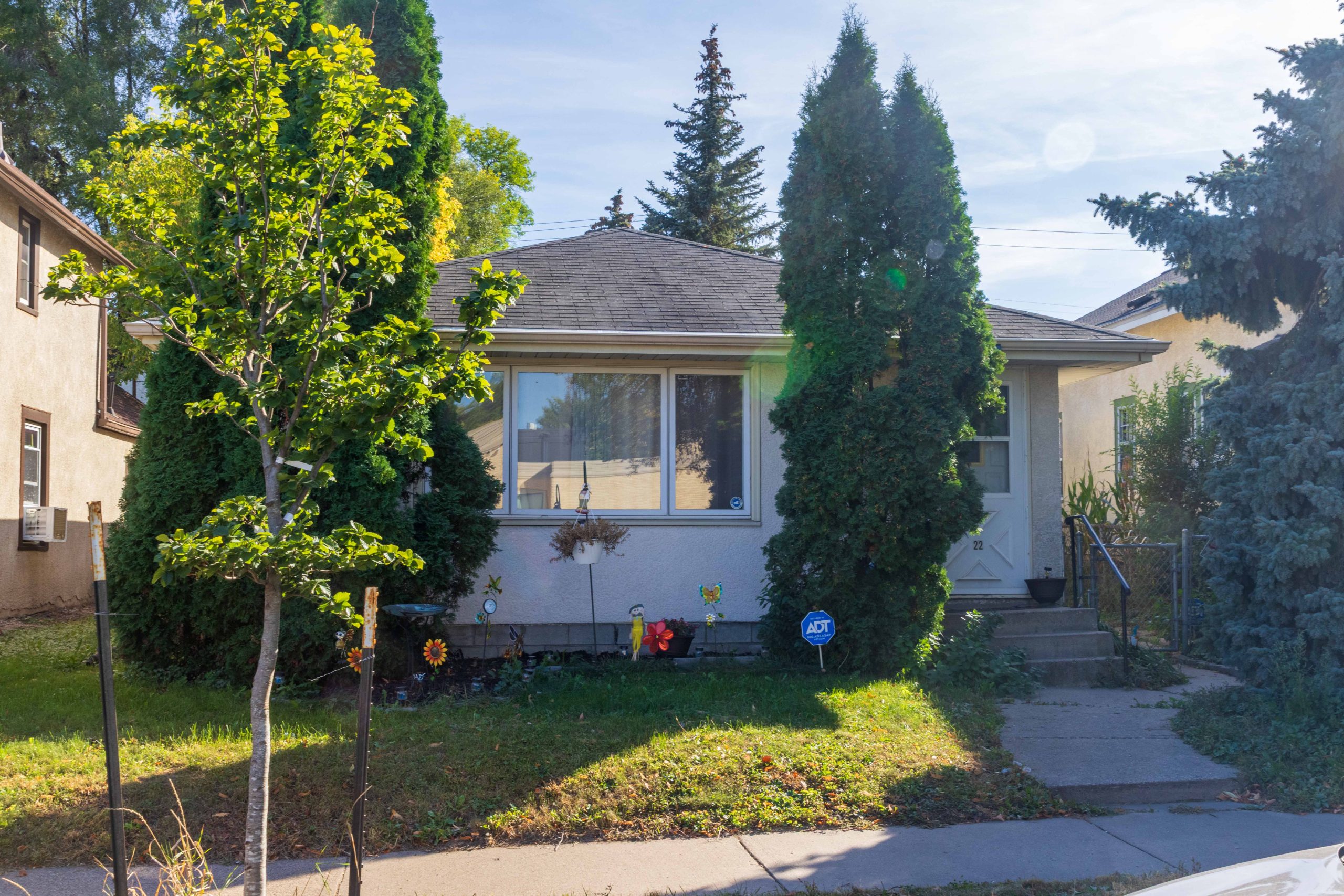
Linda’s mother, Liz, called Geranium Avenue home her entire life! “ My mom never left Geranium. Never left the street. She was raised at 74 (East). Got married, went to 63 (West), and then 22 (East).”
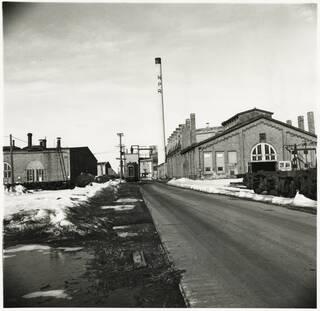
Good, steady jobs at the nearby railroads were another lure of the North End, including Linda’s relatives. “You had the Jackson Street shops. A lot of them could walk to that. At the Dale Street shops, a lot of the guys, like (her paternal) grandpa, they were at that. Some of the neighbors right here over on Geranium were also at Dale Street Shops. My dad, my (maternal) grandpa and my mom’s one brother worked at the Como Northern Pacific Shops.”
Linda and John
Linda and John’s rather awkward initial meeting in 1969 occurred riding a train to Duluth filled with people on the way to the Catholic School State Hockey Tournament. Linda and some friends had a motive beyond watching hockey. “We went because we knew we would probably be among the only girls on that train,” she said, laughing.
In 1974, five years after their first meeting, they got reacquainted, uncomfortably, at a bowling alley, John explained.
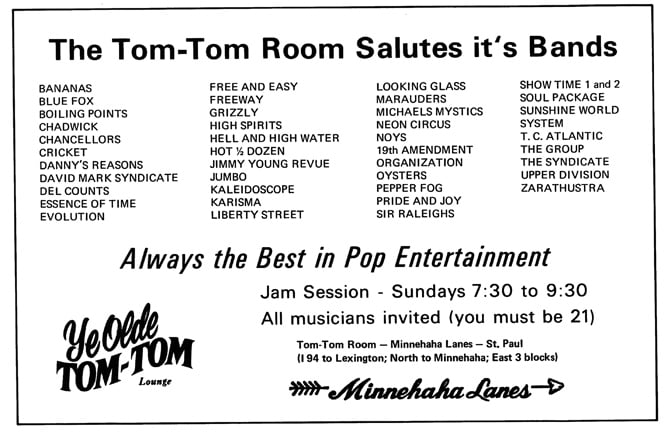
“ We used to hang out the Tom-Tom Room at Minnehaha Bowling Lanes because they always had good bands. One of the guys that worked with me was a couple years younger than Linda and he went to St. Bernard’s.” He continued, “They were friends and I kind of walked in and gave her (Linda) the standard line, ‘I think I know you.’”
“ My friend’s going, ‘Don’t give her that line. She’s my friend.’ And I say, ‘No, no, I know you!’”
About the same time, a friend of Linda’s walked up to the table. She was among the group that rode the train to Duluth in 1969. John picked up the story there. “Linda points to me and says, ‘Do you know this guy?’ She (Linda’s friend) says, ‘Oh yeah, John from the train from the hockey tournament.’ I didn’t know her friend would remember me. So that’s kind of how we met again.”
Several months later Linda and John began dating. They were married in January 1977 and bought the house at 1111 Abell Street later that year.
An example of the tightknit nature of the North End came in 1975 when Linda attended her five year class reunion of St. Bernard’s school. She and a couple of her former teachers were talking and one asked her where her boyfriend, John, went to high school. “I said, ‘Cretin,’ and they just go, ‘How did you meet him?’ And I said, ‘I did leave the neighborhood once in a while!’”
“ St. Bernard’s,” explained Linda, “at that time, for dances and things like that, they were closed. You couldn’t bring a boyfriend from another school.” Consequently, “ a lot of kids who went to St. Bernard’s ended up marrying people from St. Bernard’s.”
Neighborhood Involvement
Linda and John’s budding neighborhood activism began in the mid-to-late-eighties by attending regularly scheduled police-community meetings. They were an offshoot of the community policing model that became popular at that time.
A few years later, neighbors observed an increase in unkempt properties and other “nuisance crimes,” including loud parties and some suspected drug dealing around the area. “ We all got to be friends with the beat cops,” said Linda, “and they would call us, They would look after us. And then when we organized a block club, we had credibility. We learned the process. We made contacts at City Hall and in the different departments down at the city—code enforcement, safety and inspections.” They named the block club, which covered roughly 14 square blocks in the North End, the Tri-Area Block Club.
In the ‘90s, seriously troublesome properties within the North End, and around Saint Paul, grew significantly. The City obtained money to buy and tear down 40 blighted properties across Saint Paul. Tri-Area Block Club members mistakenly thought the money would cover 40 properties in EACH of the City’s nearly 20 districts. They submitted reports citing the top nine or 10 nuisance properties in the North End. Exhaustive, meticulous documentation, block club members learned, was the foundation for successfully getting the City to take action against deleterious owners and renters.
“ When we would contact the City about a problem property, we would CC (carbon copy) everybody. And I kept those copies in a file. So when it came to this, we put those houses on the list, and I had copies and packets for each house with all the correspondence over the years to show it’s been a problem for a long time,” said Linda. As a result, the homes on the Tri-Area Block Club’s list were all demolished.
Since the early 1980s, immigrants from Southeast Asia, Central and South America and elsewhere had settled in Saint Paul, many gradually relocating to the North End. As problem properties in the area surged. The Tri-Area Block Club reasoned they’d have a better chance of getting City officials to deal with “quality of life issues” if they added support from these newer residents. “When it’s English as a second language and they’re new,” stated Linda, “they’re uncomfortable. And I said, ‘I don’t care if it’s one sentence that says ‘tear it down’ or ‘it’s a problem’ I said, ‘Write it in your language. Write it however you’re comfortable.’ And they did. We got tons.”
Once again, thorough documentation by members of the block club proved critical. “ We made sure we had proof and information to back it up so that nobody can say we’re just picking on them. Although some of the landlords thought so.”
She added, “ We’d find out from our code enforcement here that Minneapolis was having the same problem with those same ones (landlords).”
So how did Linda become the long-tenured chairwoman of the Tri-Area Block Club? Mostly because nobody else wanted to. “One person said she’d do it, but she didn’t want to do all of it. So I said, ‘Well, for one year I’ll co-chair’. She moved away in that year and no one would ever take it over.”
“The most important thing is treasure those core people because they are the ones who will be there when you need them. They stick to it. They’re always involved.”
Linda Jungswirth
Although Linda led the block club for years, she repeatedly talked about the abundant involvement of many stalwart members. “ The beauty of it was the people here, they would all show up and I would be there and I would be presenting. The first thing I’d do is (say) I’m here and so are other members and they’d all stand up and wave. But they didn’t want to talk. They would write letters, they would make phone calls.”
There is more to the story of the Tri-Area Block Club and how it improved the North End in multiple ways in part two of the October 4, 2024 ride.