Editor’s Note: A version of this story originally appeared in Saint Paul By Bike on December 7, 2025 and is reprinted with permission. All photos unless otherwise noted courtesy Wolfie Browender.
Macalester-Groveland, Little Bohemia (West End,) Downtown, Lowertown, Crocus Hill
May 13, 2025 — 17 miles
Macalester-Groveland
Little Bohemia (part of the West End)
Downtown
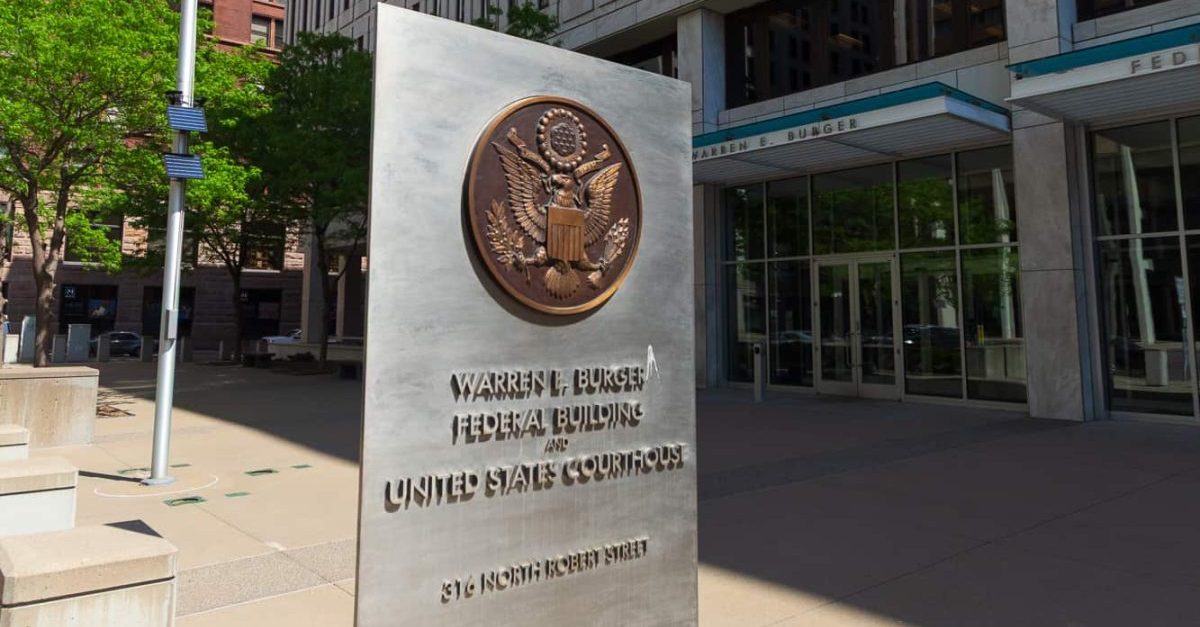
Continuing toward Downtown, I skirted Irvine Park to avoid the sinkhole in West Seventh Street, proceeded back to West Seventh east of said sinkhole. At Kellogg Boulevard I turned right and pedaled eight blocks to Robert Street where I hooked a left. My destination: the main entrance of the Warren E. Burger Federal Building and U.S. Courthouse, which is on Robert Street bracketed by Kellogg and 4th Street East.
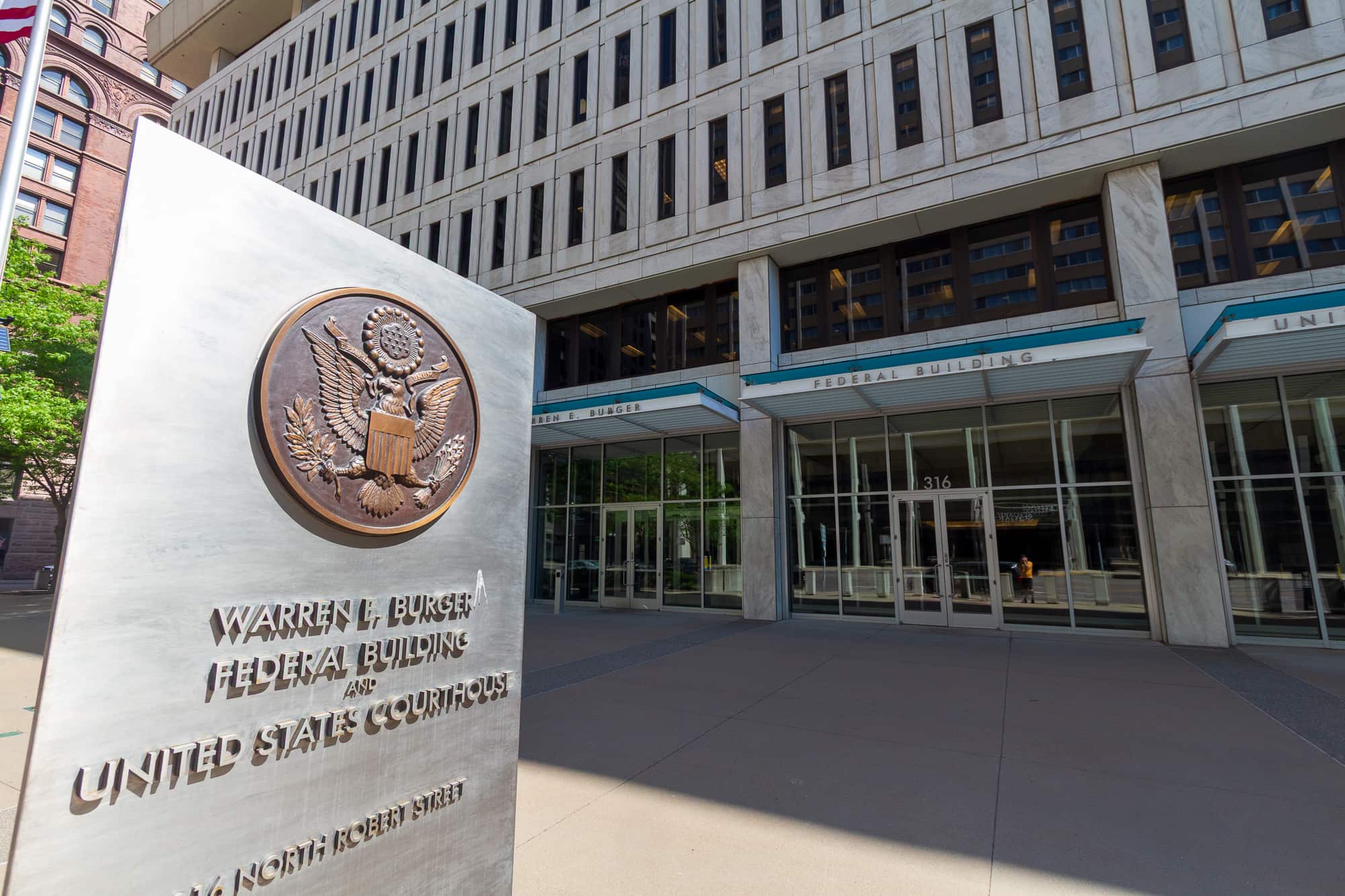
Built in 1966, the Burger Federal Building replaced the “Old Federal Courthouse,” the Richardsonian Romanesque delight across from Rice Park now known as Landmark Center.
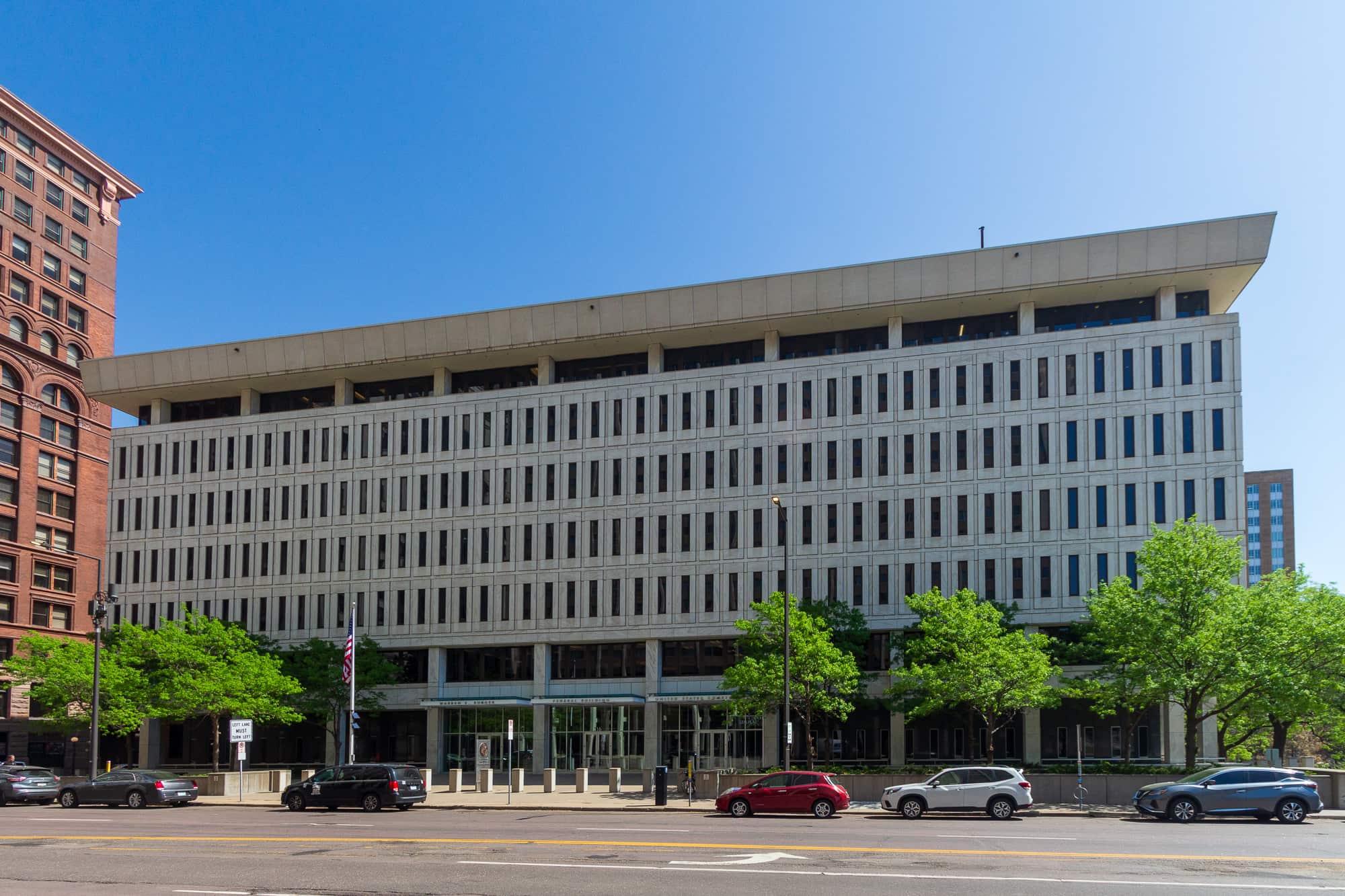
Tight security means not just visitors, but judges and other employees seeking access to any part of the Federal Building beyond the front doors must walk through a metal detector and have all belongings inspected, much like at the airport.
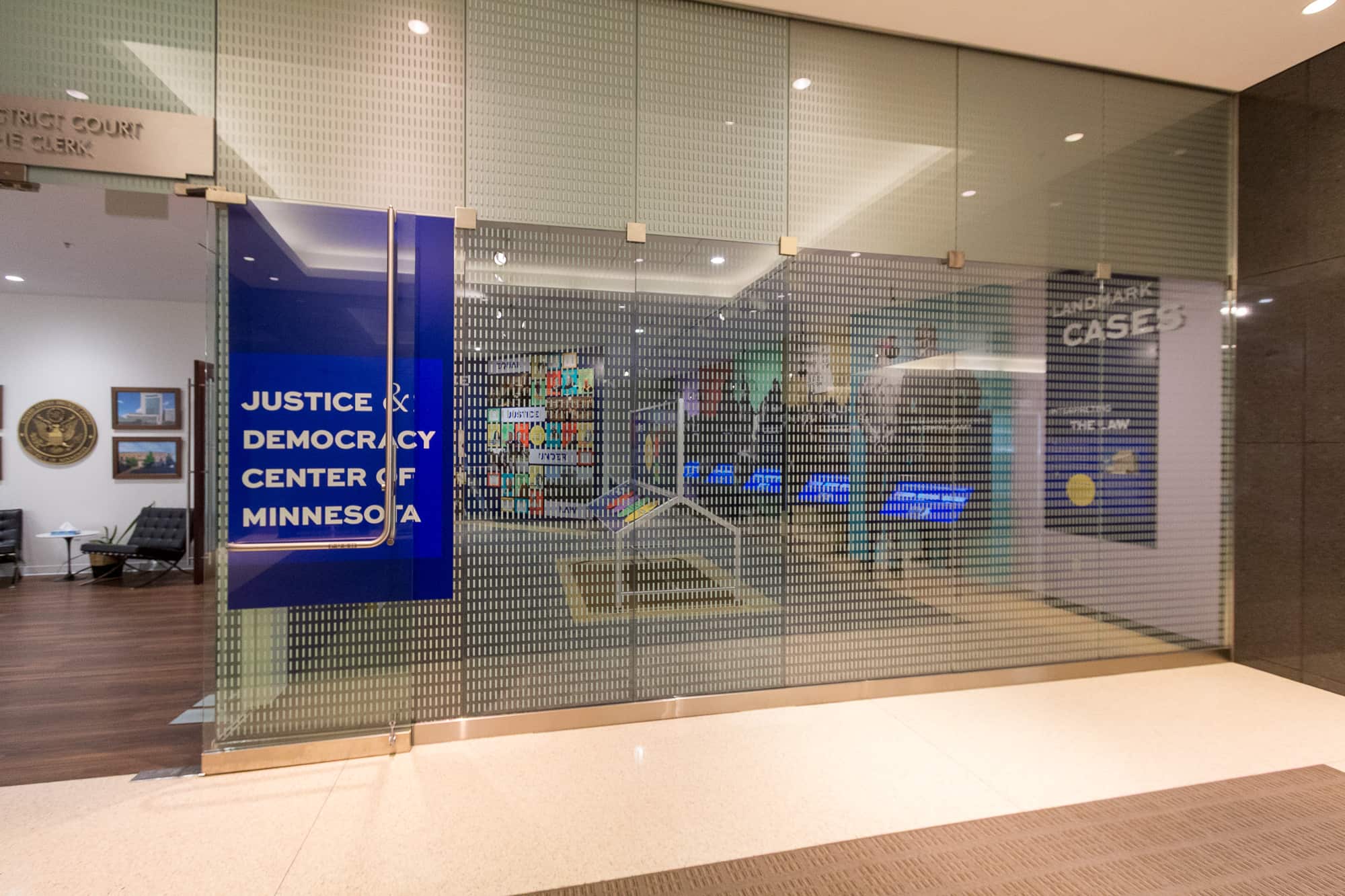
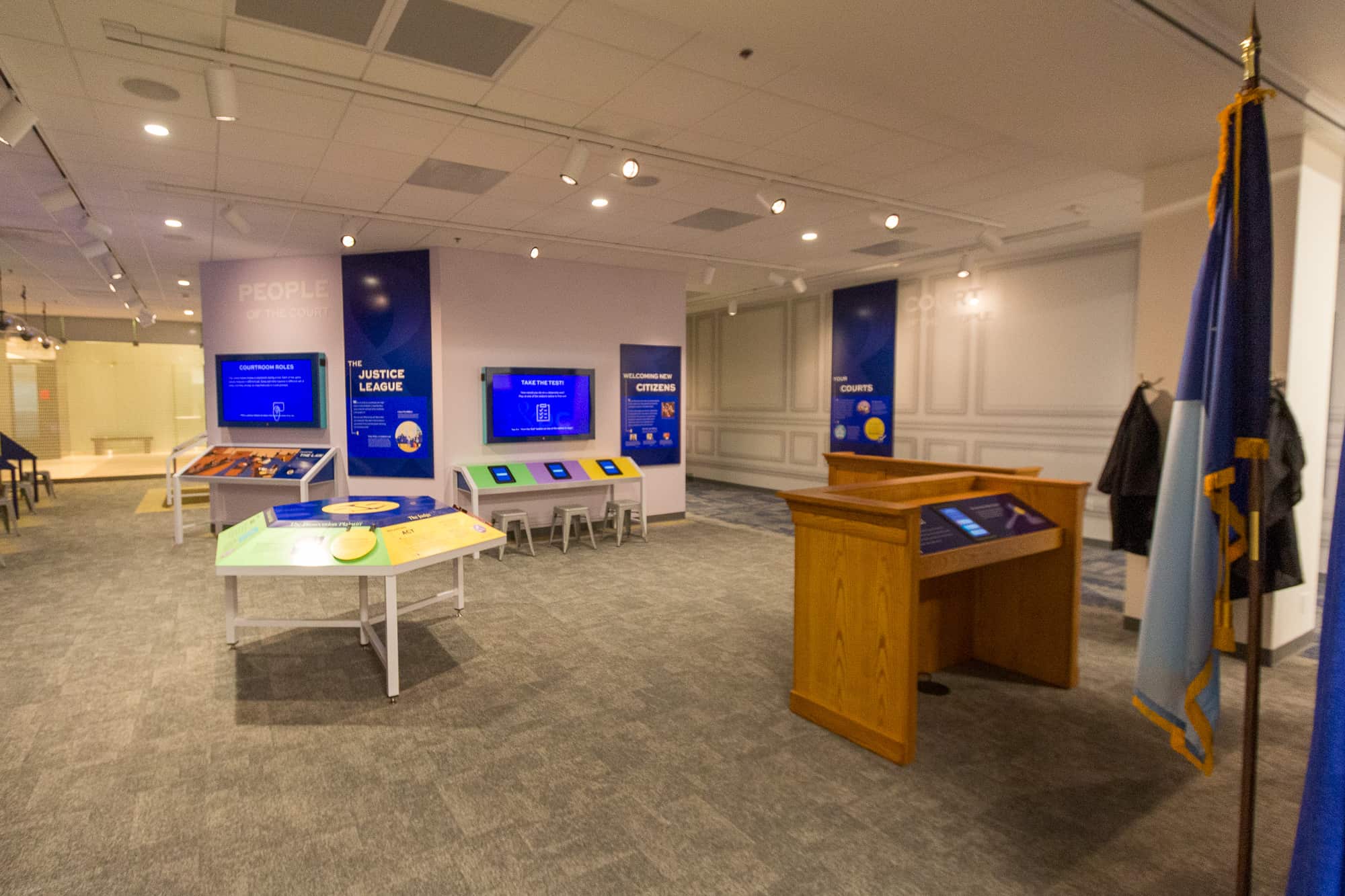
My sojourn to the courthouse was to experience the Justice & Democracy Center of Minnesota (J&DC) which opened in October 2024. Rebeccah Parks, public information officer for the Eighth U.S. District Court, led me through the especially timely, meaningful exhibits of the Justice & Democracy Center and detailed how it came to be.

Rebeccah explained the official mission of the Center. “The Justice & Democracy Center of Minnesota exists to promote the public understanding of the rule of law and the importance of an independent judiciary in American democracy through free, accessible, and equitable programming.”
In other words, the goal is to improve the lagging understanding and knowledge of civics, and especially the court system.
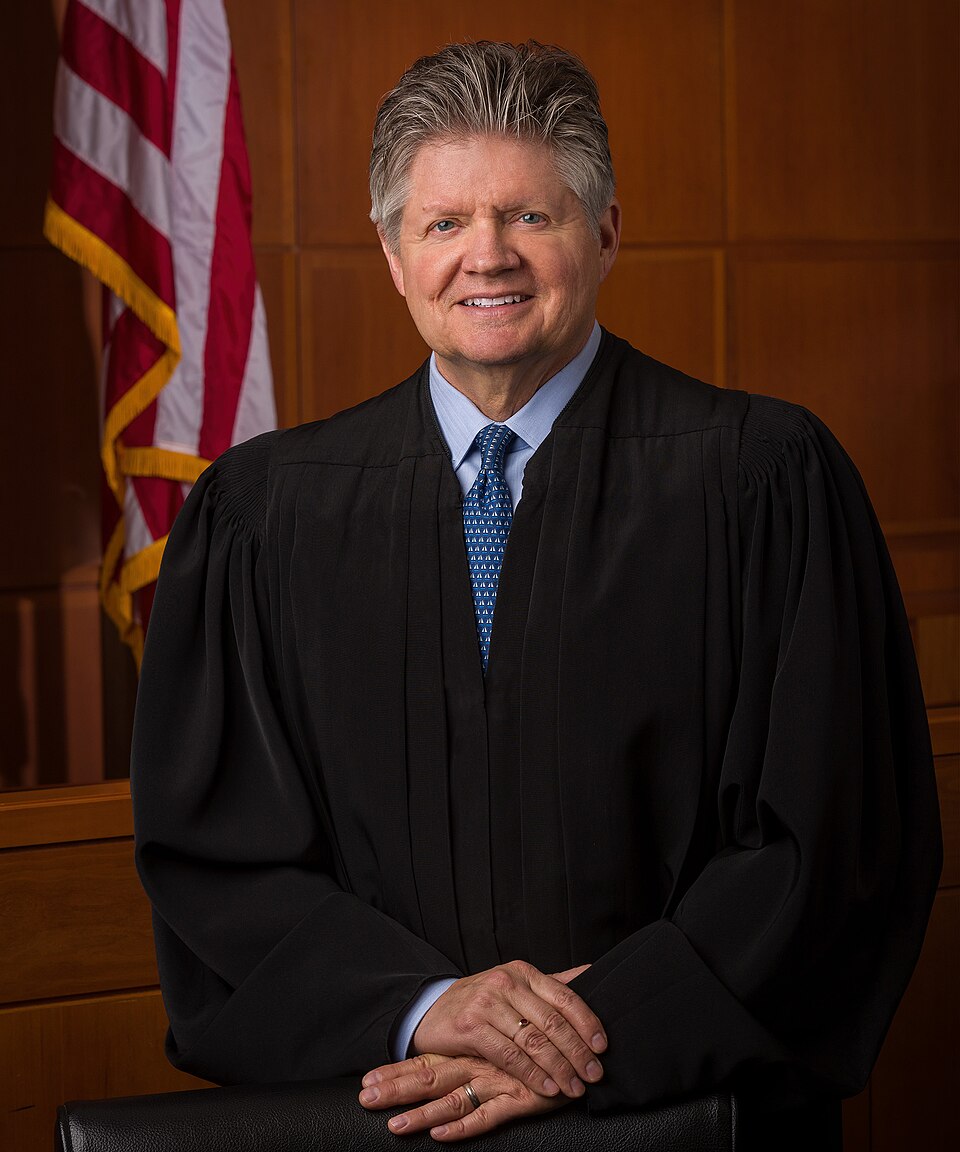
“ This was a dream of Judge John Tunheim, who was our chief judge, for a number of years,” She added. “ Judge Tunheim has always been really civically minded and good with kids and just sort of thought it’s important for the court to be out on the front of this.”
Rebeccah said the Eighth District Court requested funding for renovating and converting office space into the J&DC but for years was turned down. “Then finally, chief Justice John Roberts at the Supreme Court, his 2019 year end report said, ‘The judiciary has to step up. We have to do our part for civics education and helping the general public understand what we do.’ So, lo and behold, our next request to the space and Facilities Committee was approved.” In all, it took nearly 10 years from conception to opening the J&DC.
“One of the hallmarks of our judicial system is that it is open to the public. Anything on that kiosk out there, you can come in, go sit in the courtroom and watch. Do I promise it’s gonna be exciting? No, but you can watch it. So we want people to come into the courthouse…”
— Rebeccah Parks, public information officer for the Eighth U.S. District Court
Upon its debut, the Justice & Democracy Center in Saint Paul became one of only three comparable Court of Appeals-hosted democracy centers in the United States. The Eighth Circuit Court of Appeals at the Thomas F. Eagleton U.S. Courthouse in St. Louis has had a similar center for about 15 years. The Thurgood Marshall Courthouse in New York City, run by the Second Circuit Court of Appeals, offers the Justice for All Courts and the Community Initiative.
Since the October 2024 debut of Saint Paul’s J&DC, others have opened in Indianapolis and in Washington D.C..
“ Civics education nationwide has been declining for a number of decades, not necessarily from anything nefarious, but STEM [science, technology, engineering, math] has really been the focus.” Rebeccah noted that too many people don’t understand how government institutions, especially the courts, work. “ Yes, our judges have to sentence people. And yes, our judges decide disputes in civil cases, but ultimately the courts are here to protect your constitutional rights, to protect you from government overreach, from unlawful search and seizure, from having your constitutional rights violated.”
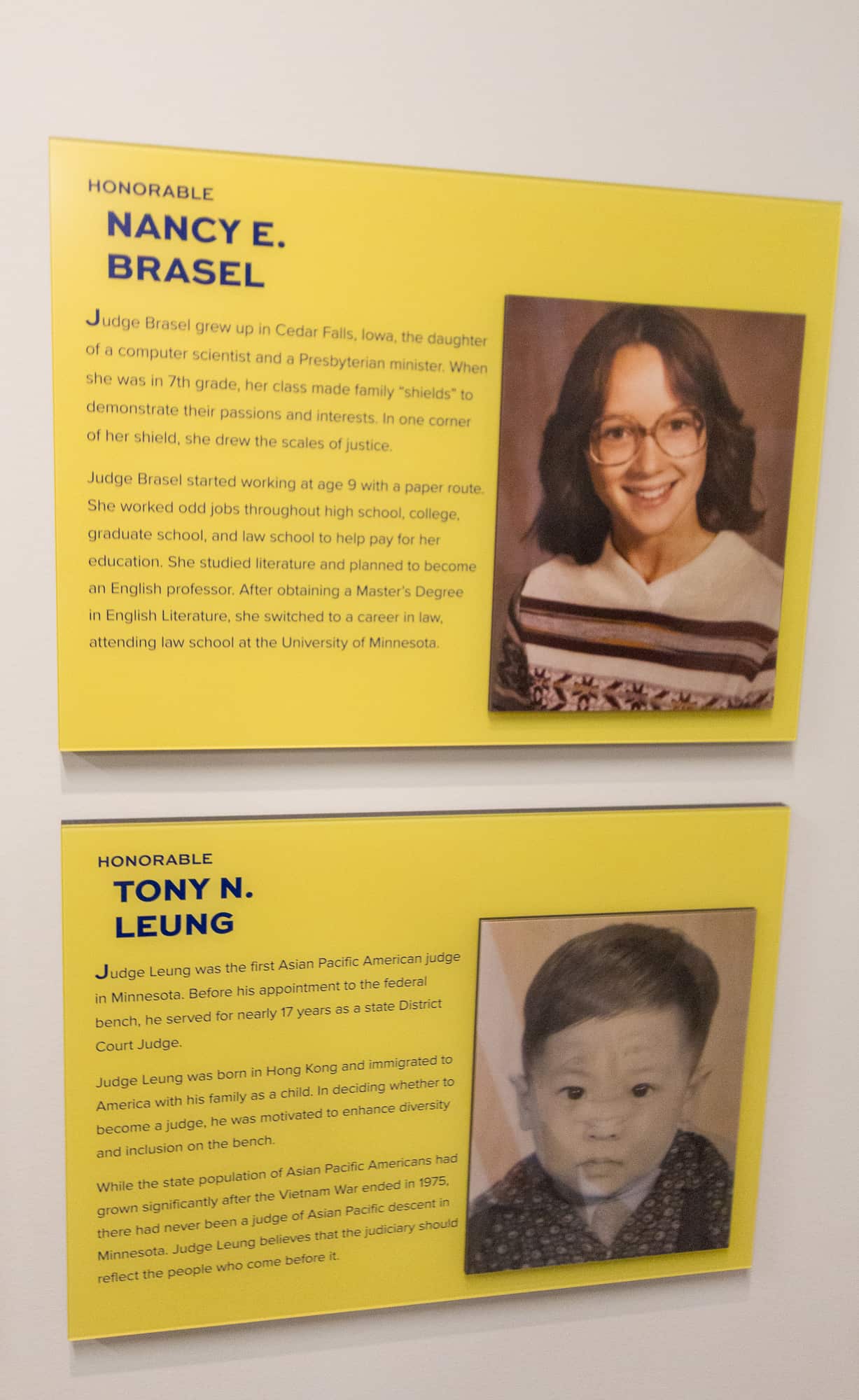

All the exhibits within the J&DC are privately funded. The Minnesota Chapter of the Federal Bar Association — a group of attorneys who practice in federal court — raises all the money through its foundation.
Exhibit topics were selected by what’s called a committee of the court, which is made up of judges, court staff and, at various times, focus groups of social studies teachers.
The first draft of the exhibits’ printed information and audio scripts was created by Split Rock Studios, a suburban Minneapolis exhibit designer and builder. Written at an 8th grade level, law clerks and judges did the final review of all the content for accuracy.
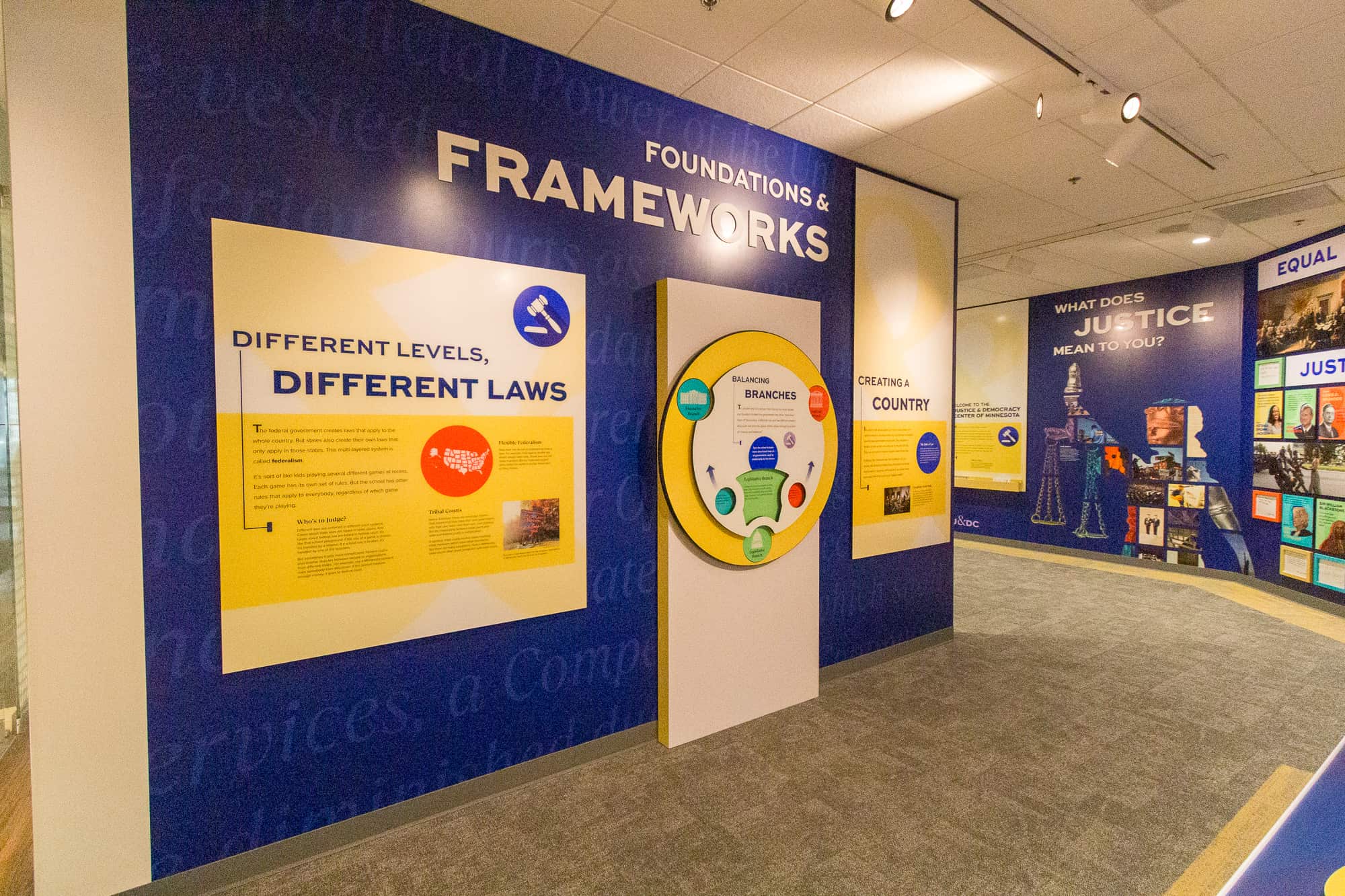
Visitors to the J&DC will find four permanent exhibits and a fifth that occasionally changes.
The first, the Foundations and Framework, exhibit examines how laws are written and enforced and how the courts settle disputes regarding those laws.
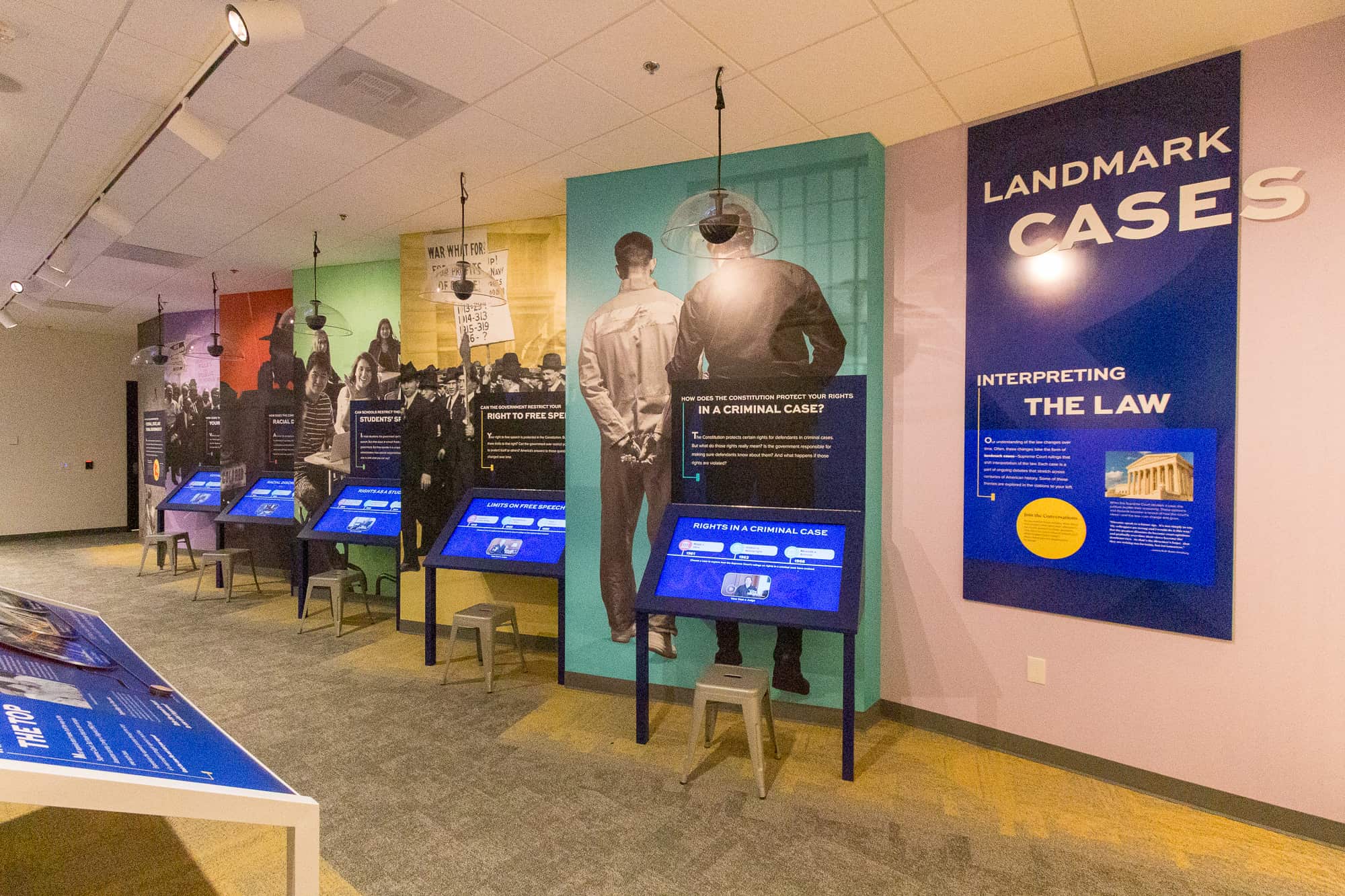
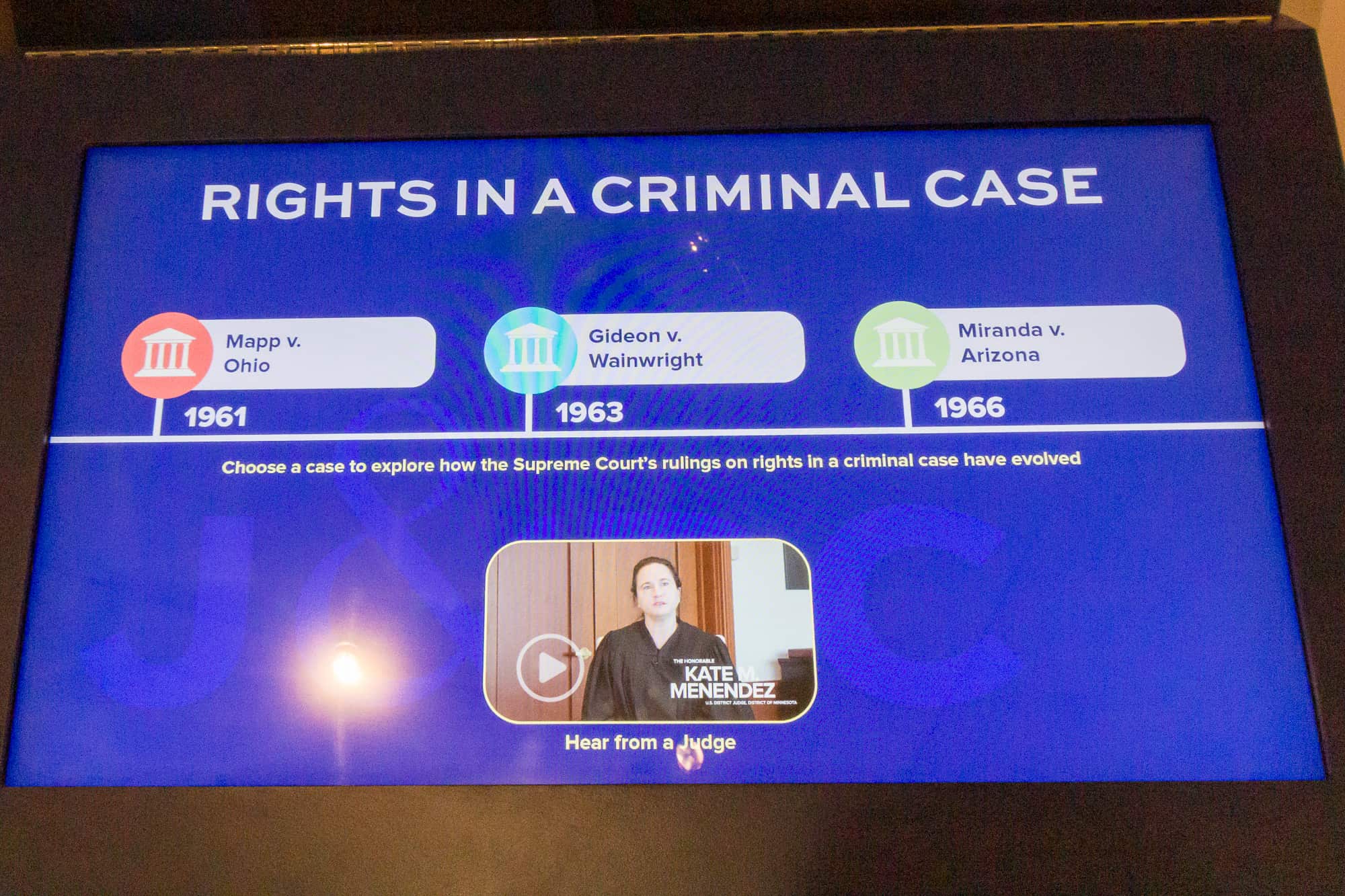
Landmark Cases explores how consequential Supreme Court decisions affected American history. Rebeccah noted the participatory aspects of the exhibits. “So the fun, interactive part is you can pick one of the cases, get a quick background of it, view the arguments, and then you vote.” After voting, the display shows you how the Supreme Court actually ruled and why.
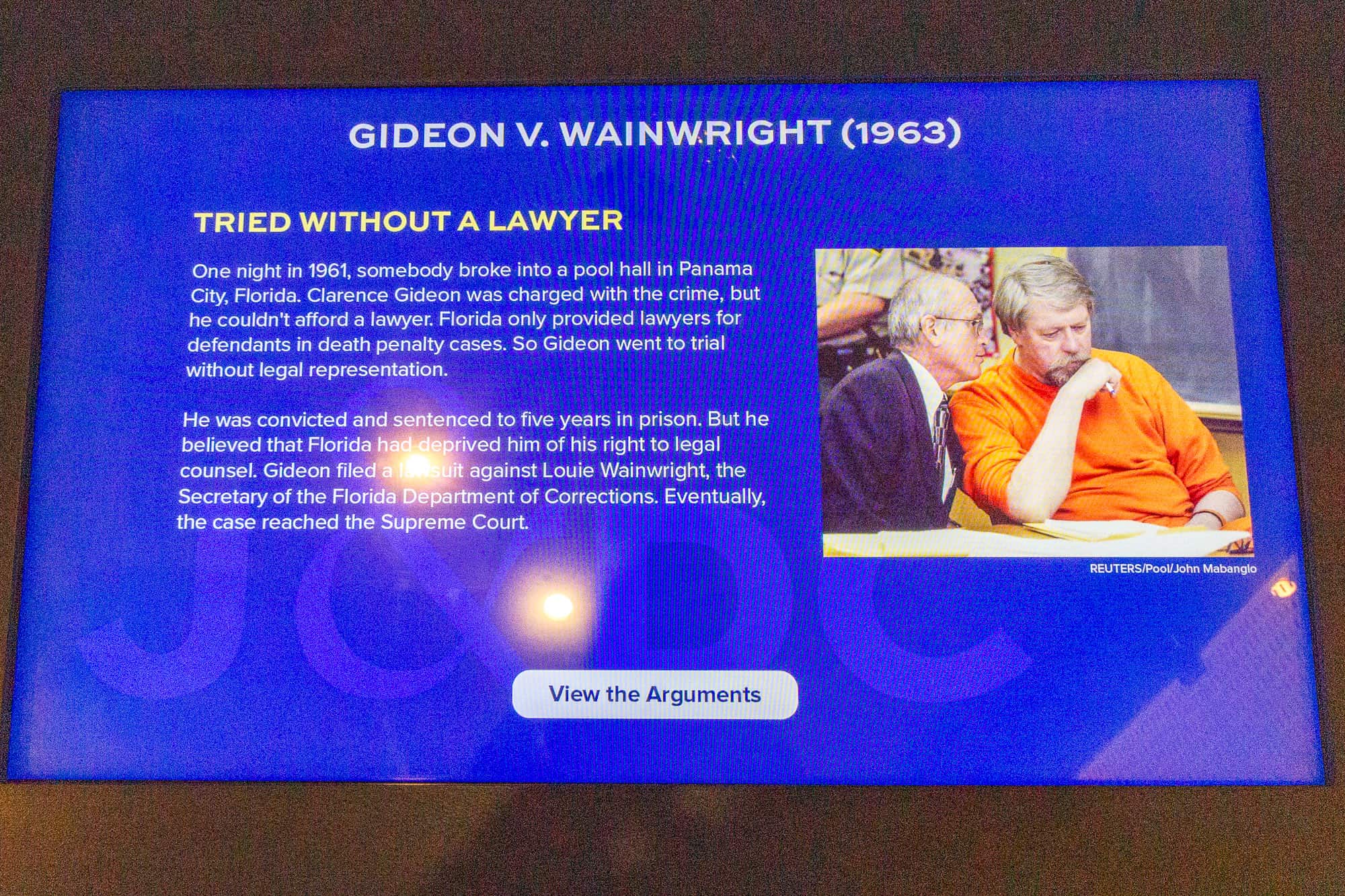
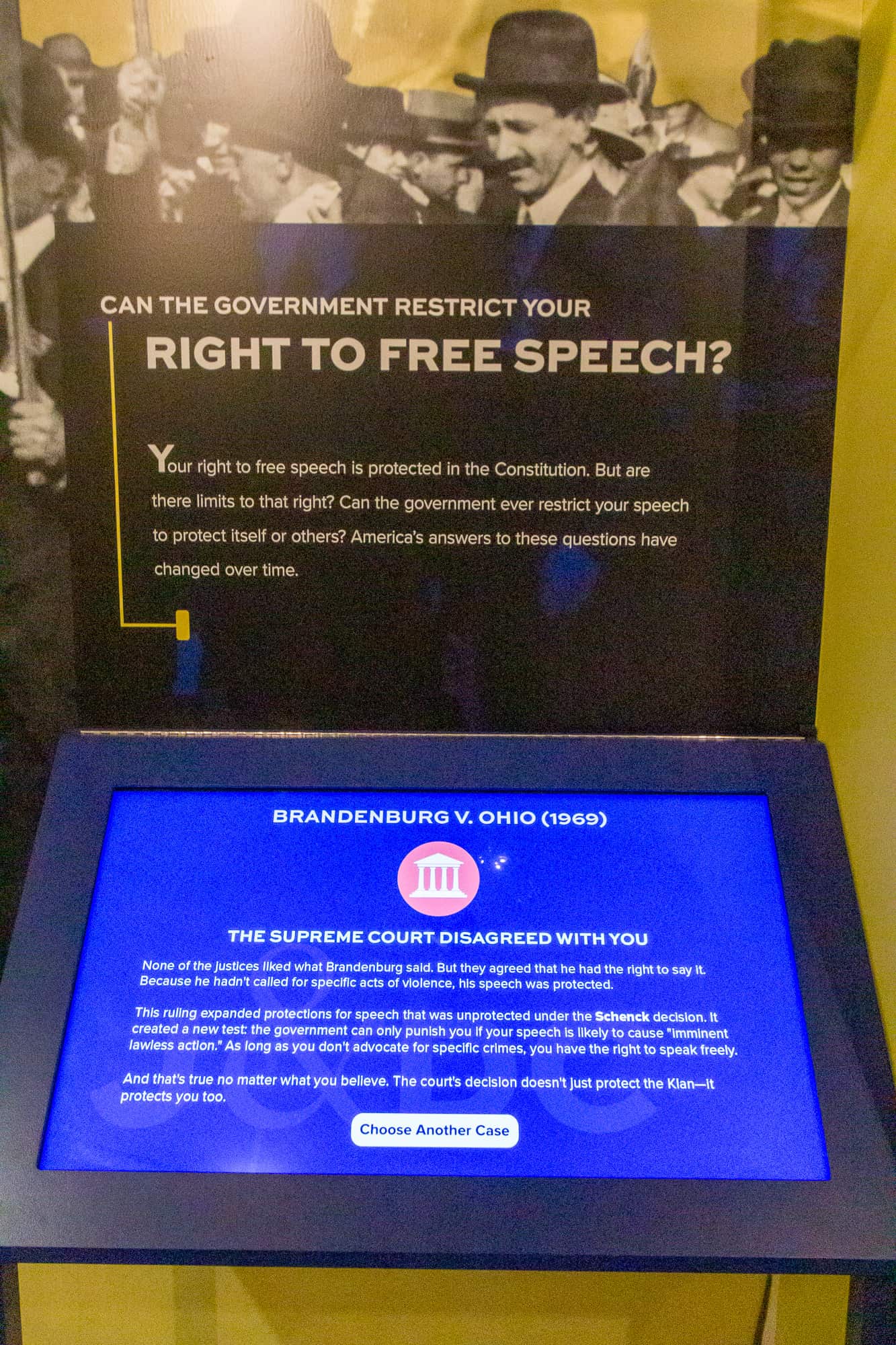
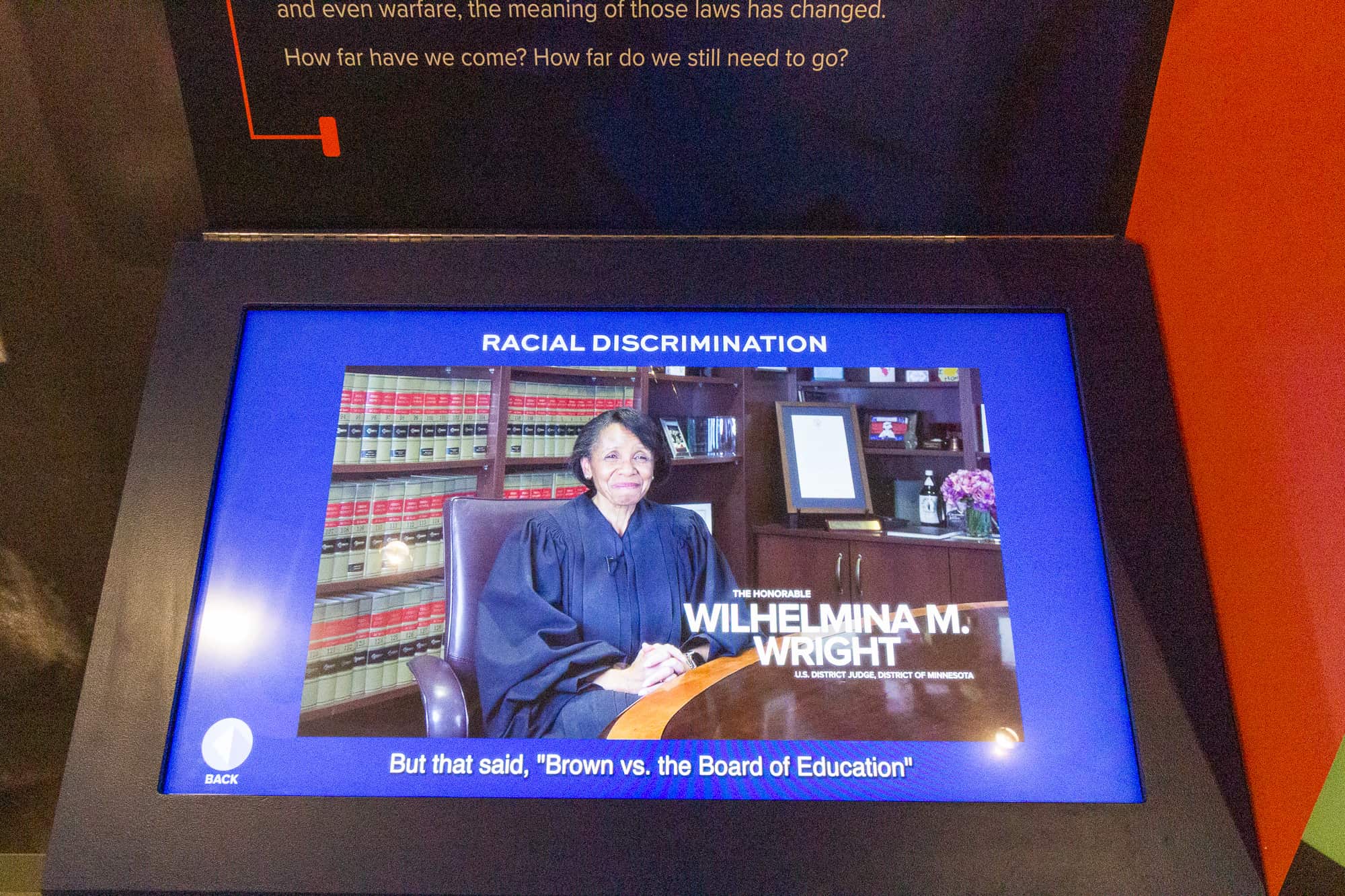
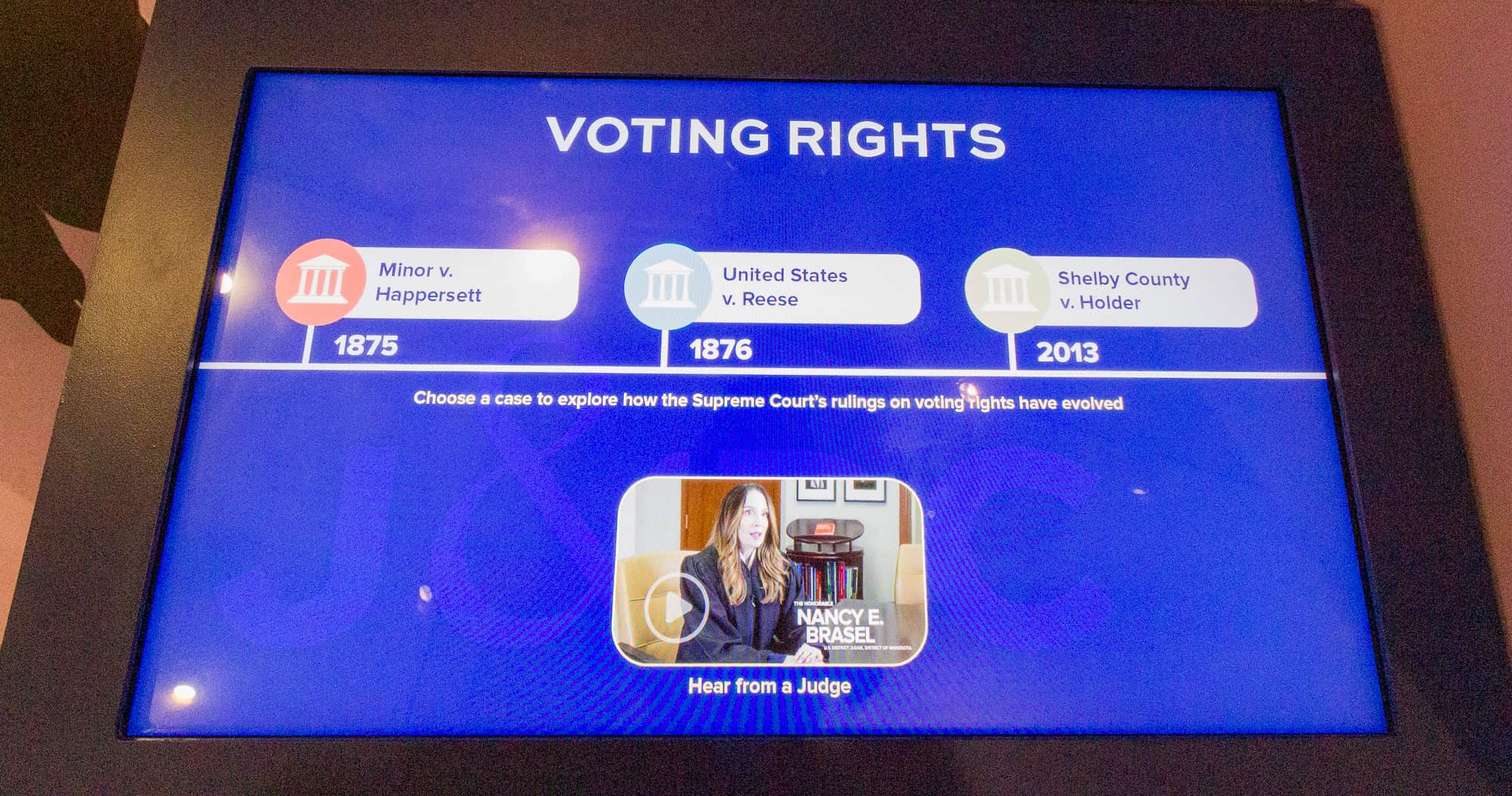
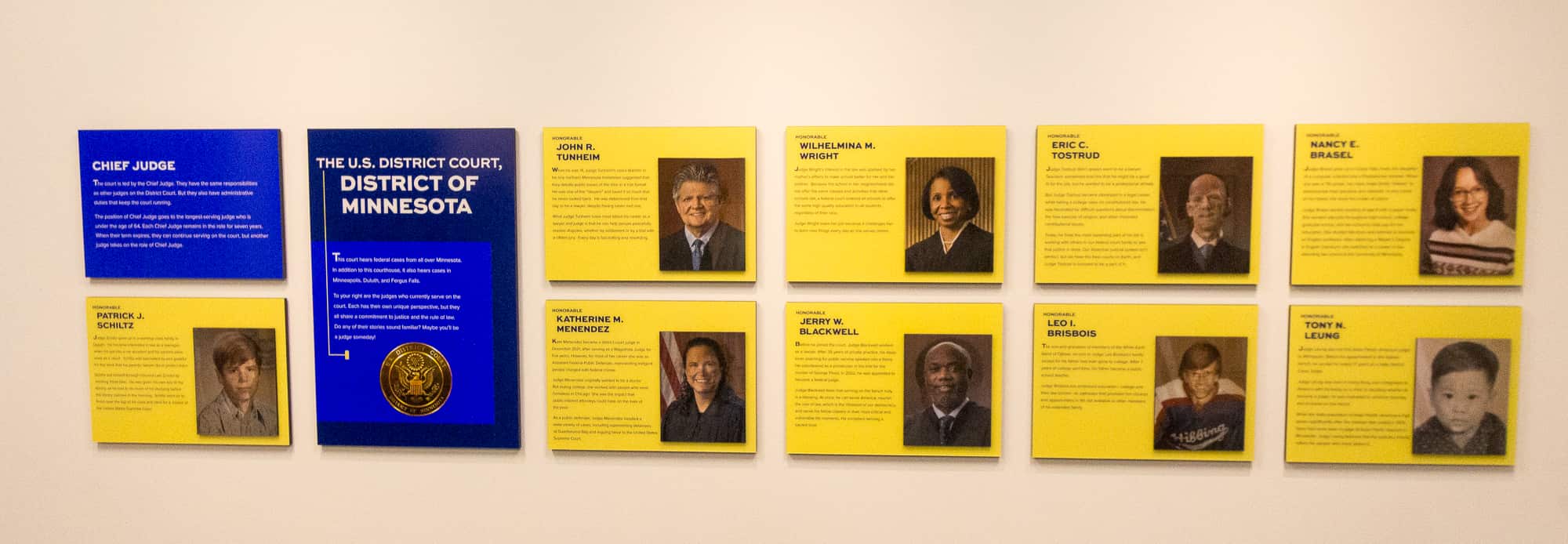
Another exhibit, People of the Court, encourages visitors to learn about the many jobs in the judiciary, Rebecca said. “It’ll tell you what a law clerk does, what an interpreter does, what a defense counsel does, what a probation officer does. The general public, they’re not aware of all the great career opportunities that you could even possibly have within the judicial system.” And there’s more. “We’ll have them meet with the US Marshals, get to meet the bomb dog. That is the most fun part.
“ They’re also observing a court proceeding, if there’s one going on that’s appropriate for them. They’re meeting with a judge.”
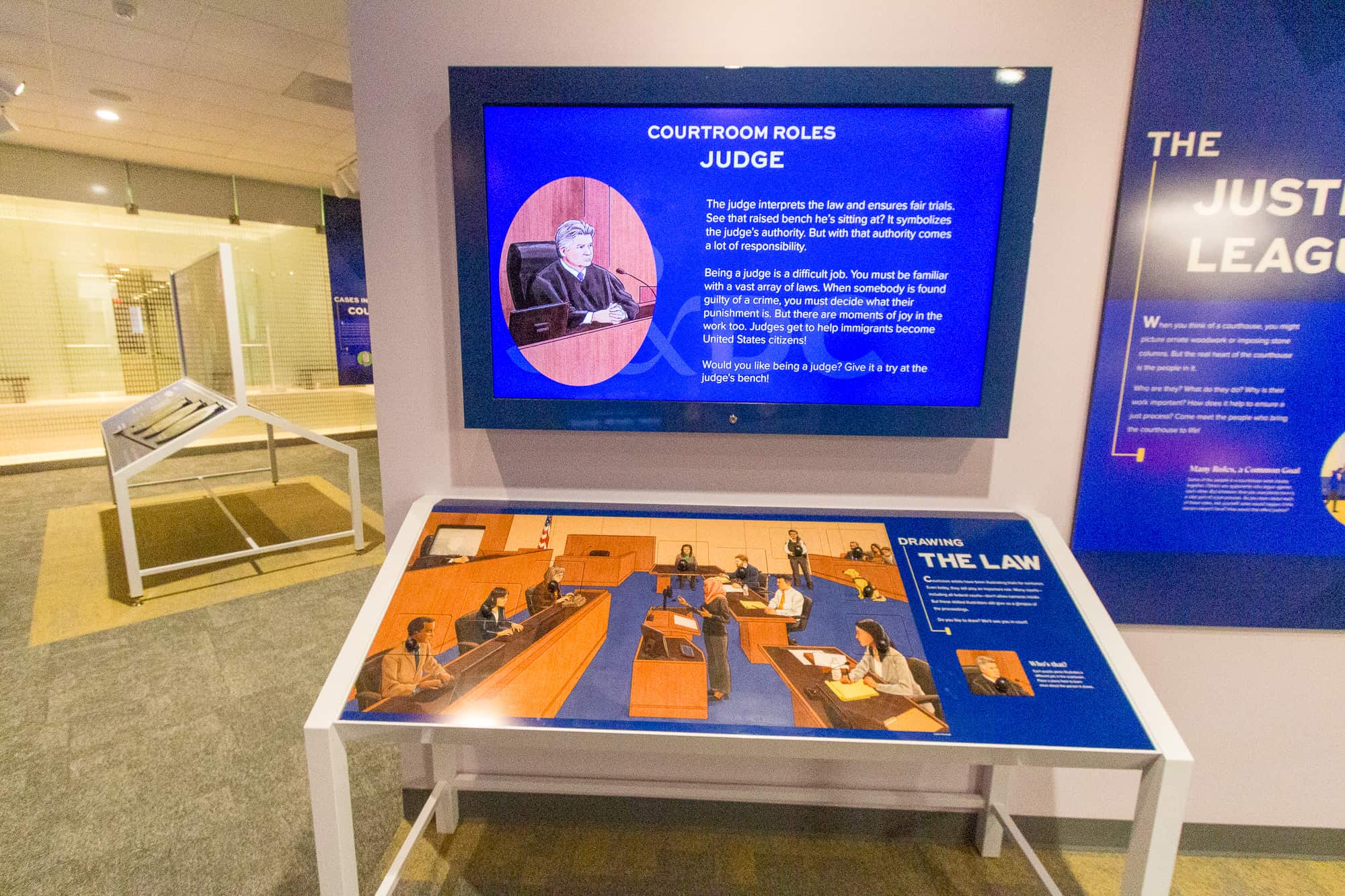
Court of the People is the fourth permanent exhibit. It focuses on how engagement from ordinary citizens is necessary for justice, and it’s a societal responsibility to secure justice. Voting and serving on a jury are two examples.
“ We have a lot of rights as citizens and a few responsibilities, and jury service is one of our responsibilities,” explained Rebeccah. “If it was you or your loved one on trial for something, you would want, you know, diligent, thoughtful, conscientious peers to sit and listen to all of the evidence in your case and to help decide the fate. So if you get called, you should do the same for your fellow Minnesotans.”
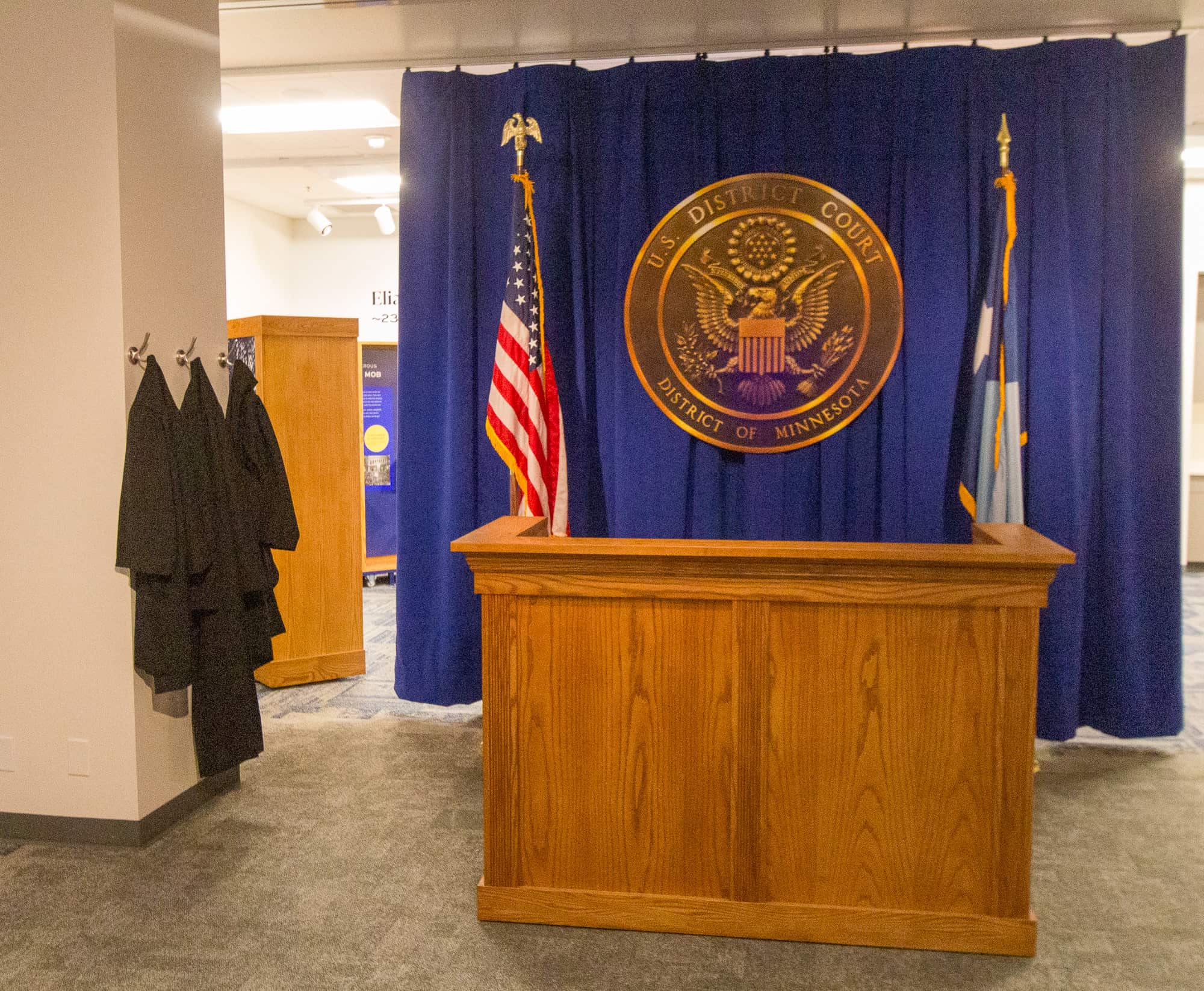
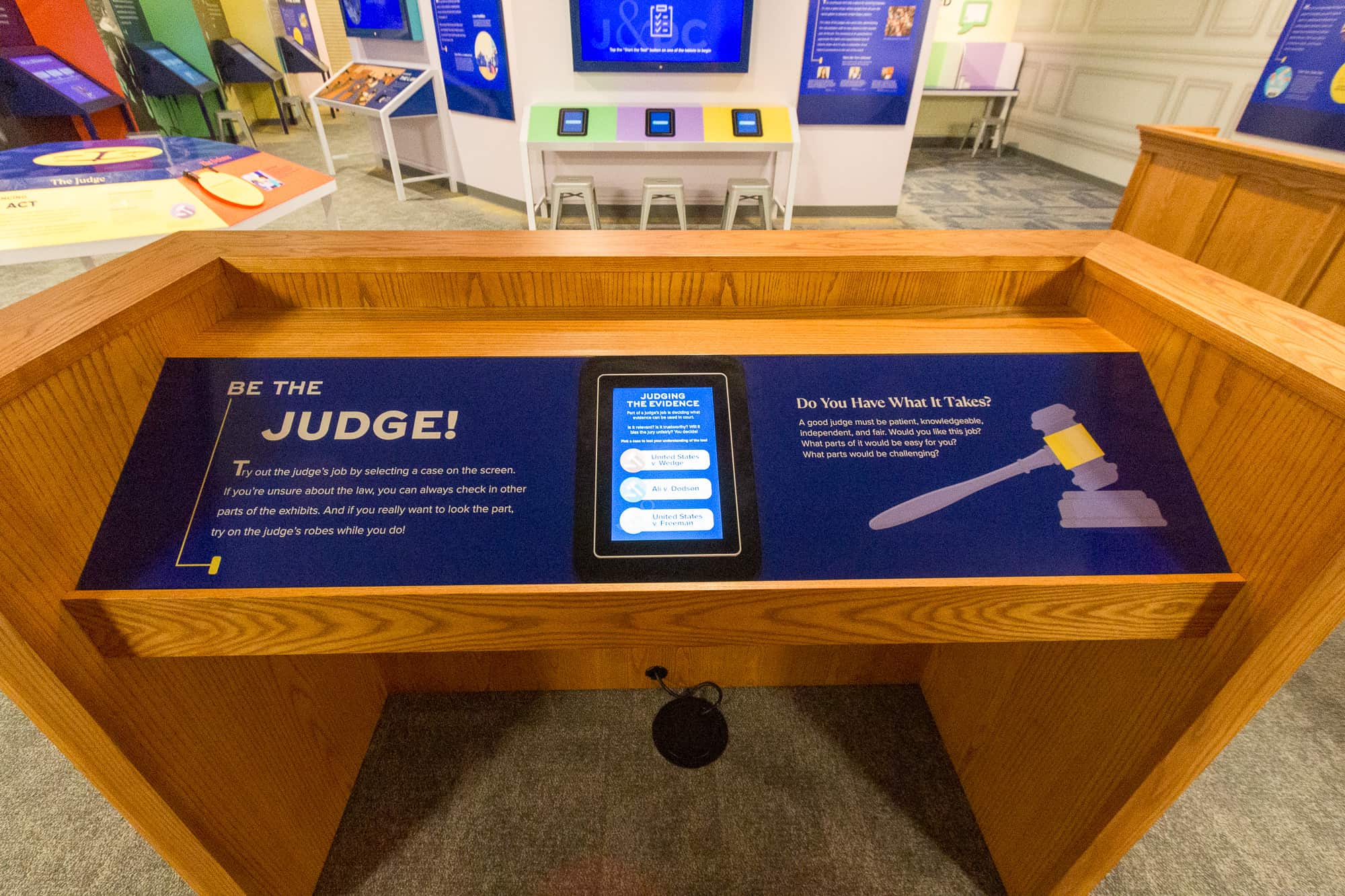
Understanding duties of judges is also a part of Court of the People. Visitors, especially children, can experience several interactive activities, Rebeccah said. “We’ve got robes for kids to throw on. We encourage, you know, photos, videos, all of that. Then they stand at the judge bench and take a picture, which is always fun.”
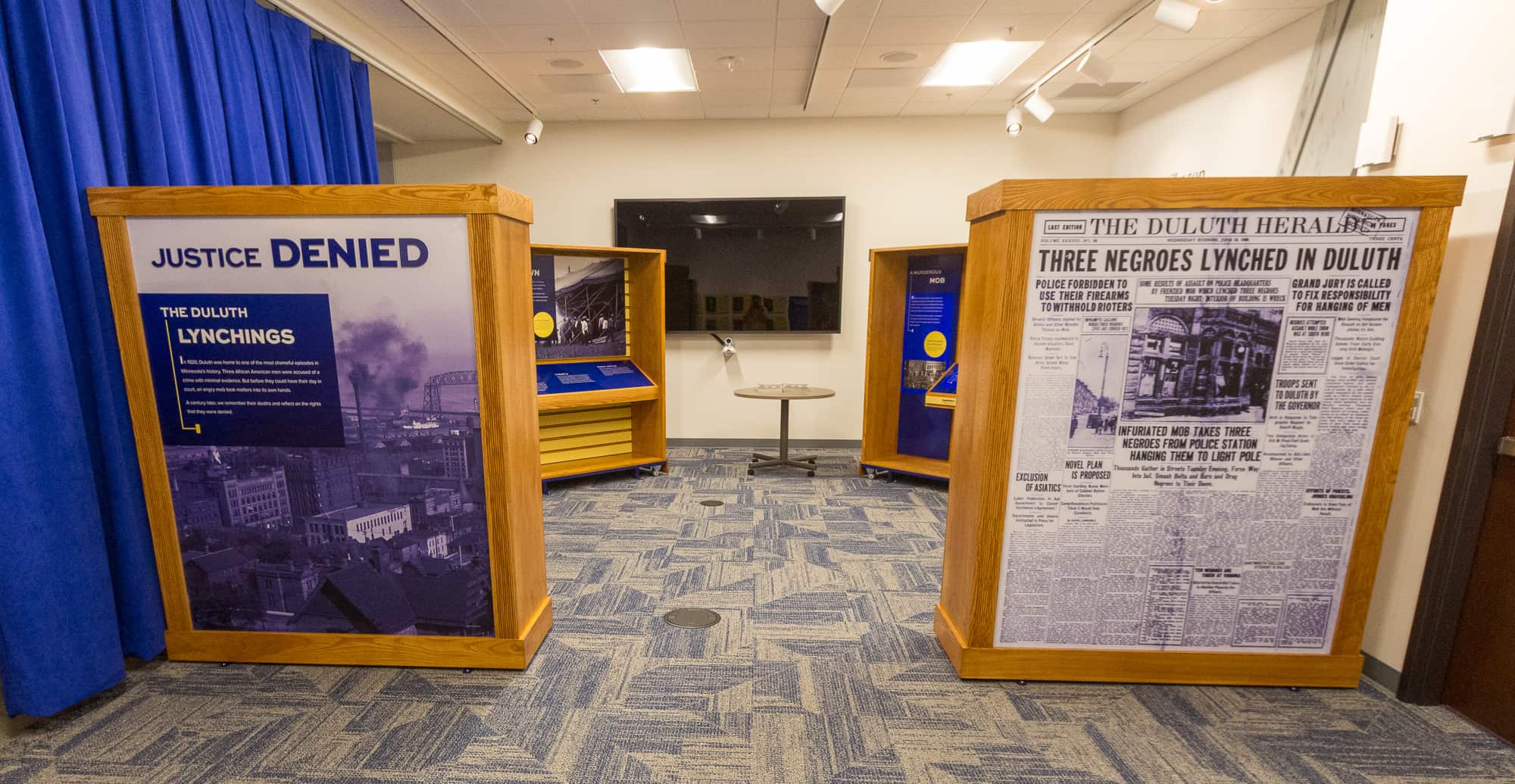
Finally, Justice Denied, the rotating exhibit, without a doubt documents one of the most shocking and disgraceful incidents in Minnesota history. The displays recount how justice was subverted by vigilantes who horrifically lynched three Black men in Duluth in June of 1910.

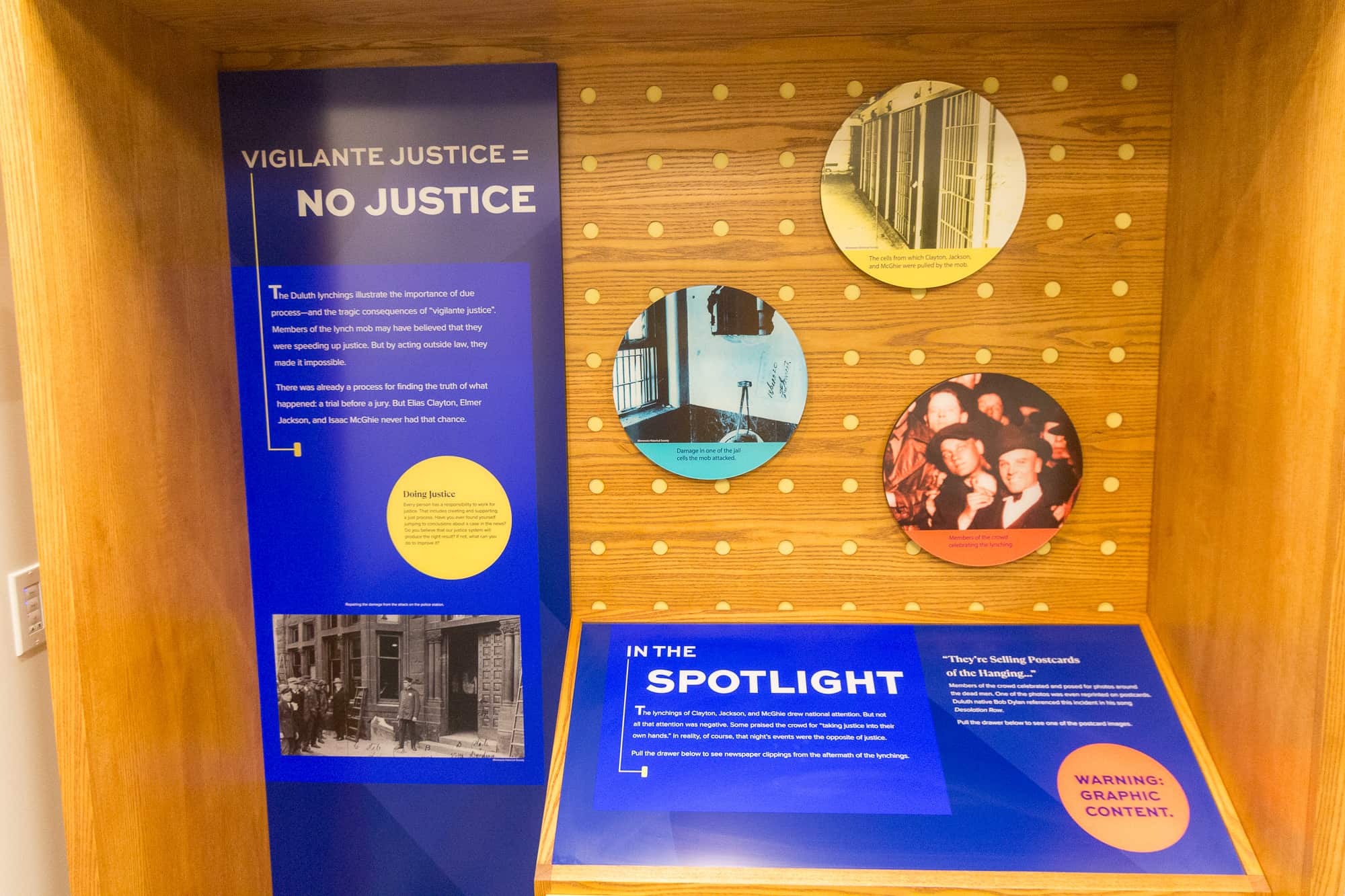
Since the opening of the J&DC in October of 2024, employees of the Clerk’s Office of the District Court noticed that a modification or two would improve the experience. “ We are also realizing that it is not just students and young people who need civics education,” Rebeccah said. “The general public needs to be both, inspired and reminded of all of it. So we’re gonna get into more adult ed type stuff.”
The J&DC is free for all who visit. For school groups, the Center goes a step farther. “We’ll reimburse them for the busing. And if they need to pay a sub teacher to cover for them while they bring their kids here, they can be reimbursed fully for that.” Prepared lesson plans for both the middle and high school students, are available on the J&DC website.
The Justice & Democracy Center of Minnesota will expand to the Diana E. Murphy United States Courthouse in Minneapolis, likely in 2026. The intent is for exhibits to debut in Saint Paul and move to the Minneapolis center.
I walked out of the Warren E. Burger Federal Building slash U.S. Courthouse impressed with the breadth and quality of J&DC exhibits. With that in mind, I plan to return to the Justice & Democracy Center to revitalize my understanding of the judiciary and the two other branches of government.
Ramp it up
Regular readers know that over the past few years, I’ve endeavored to ride through —actually up and down — parking ramps. Admittedly, that’s a bit odd, but hear me out. Many, if not most of the ramps I’ve biked offer excellent and distinctive views — of the skyline and nearby buildings — especially from the upper levels.
A short block-plus away, the Jackson Street Parking Ramp became my next stopping point.
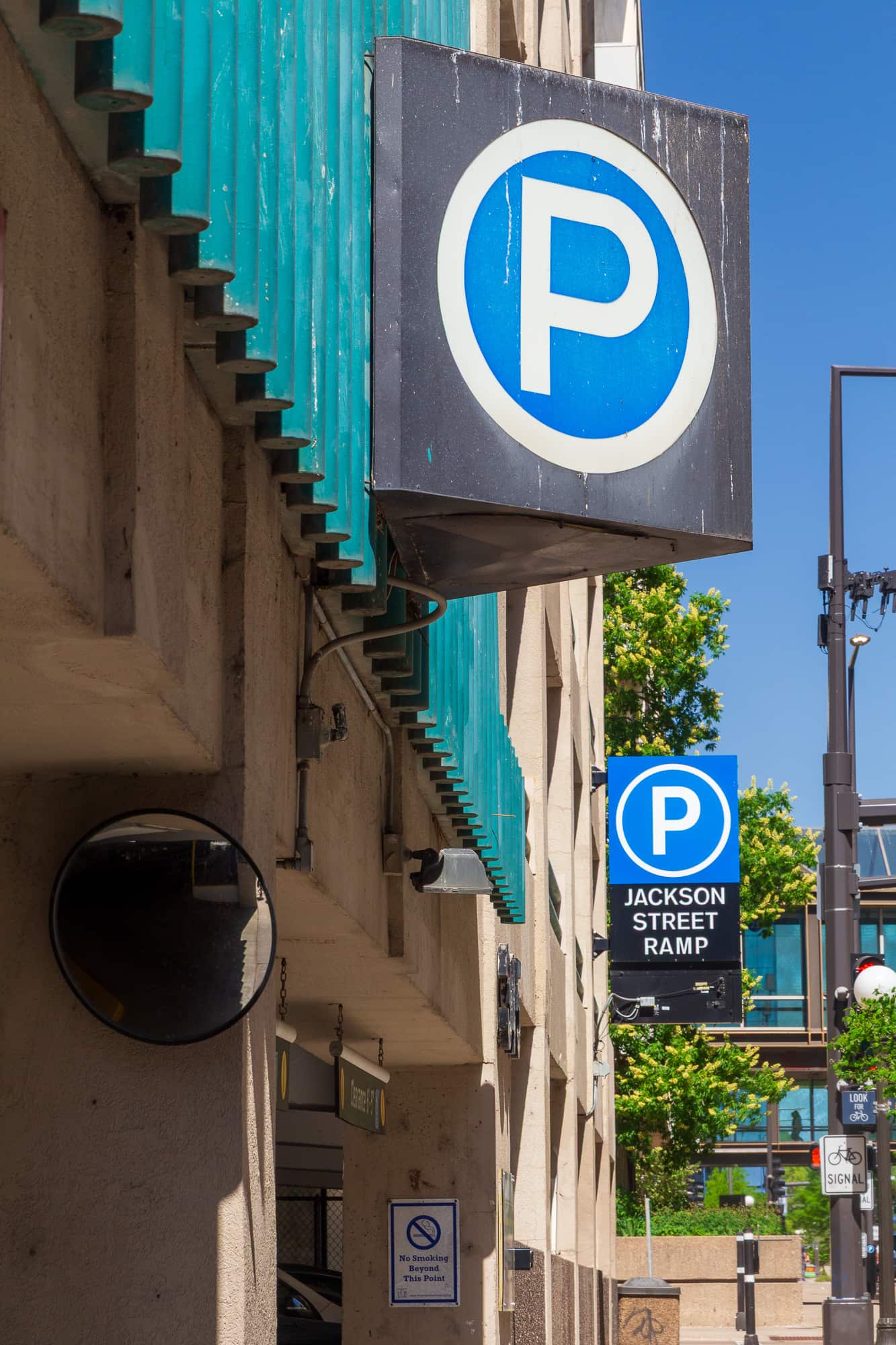
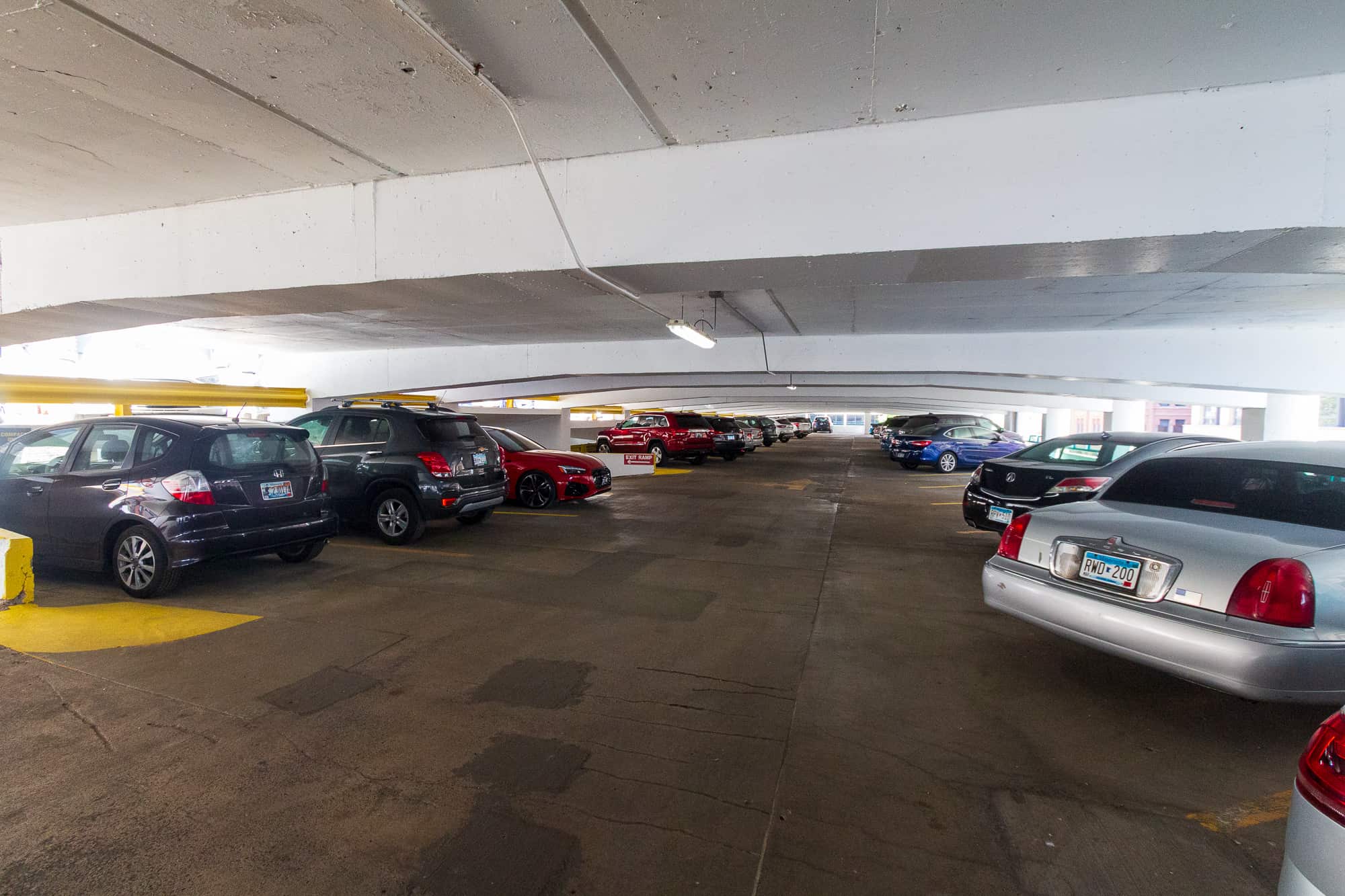
Surprisingly, the Jackson Street Ramp was practically full, which is about opposite of other Downtown ramps I’ve visited since the Covid-19 pandemic. That’s because residents and visitors of the Pioneer Endicott Building have designated parking within the ramp.
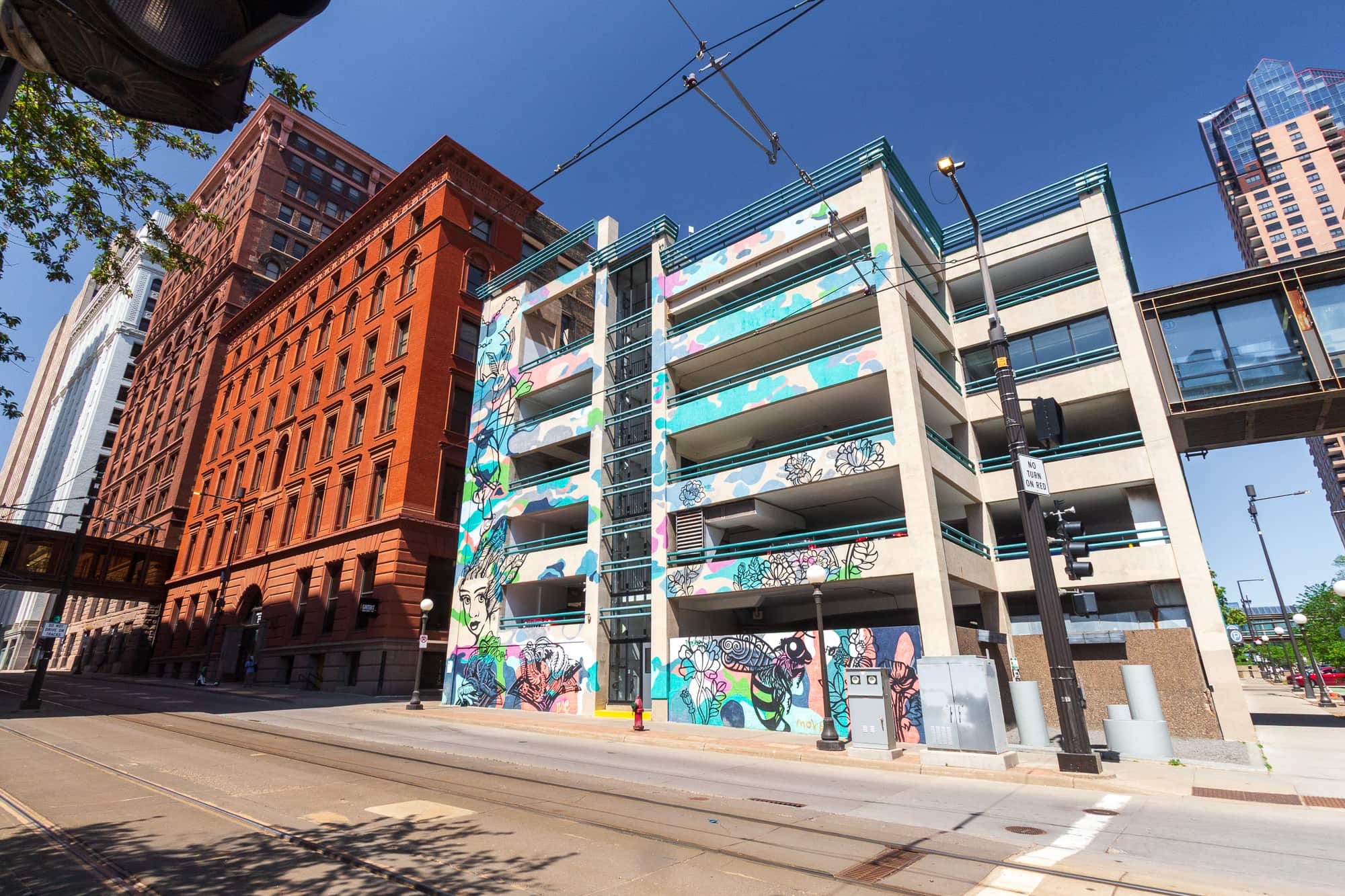
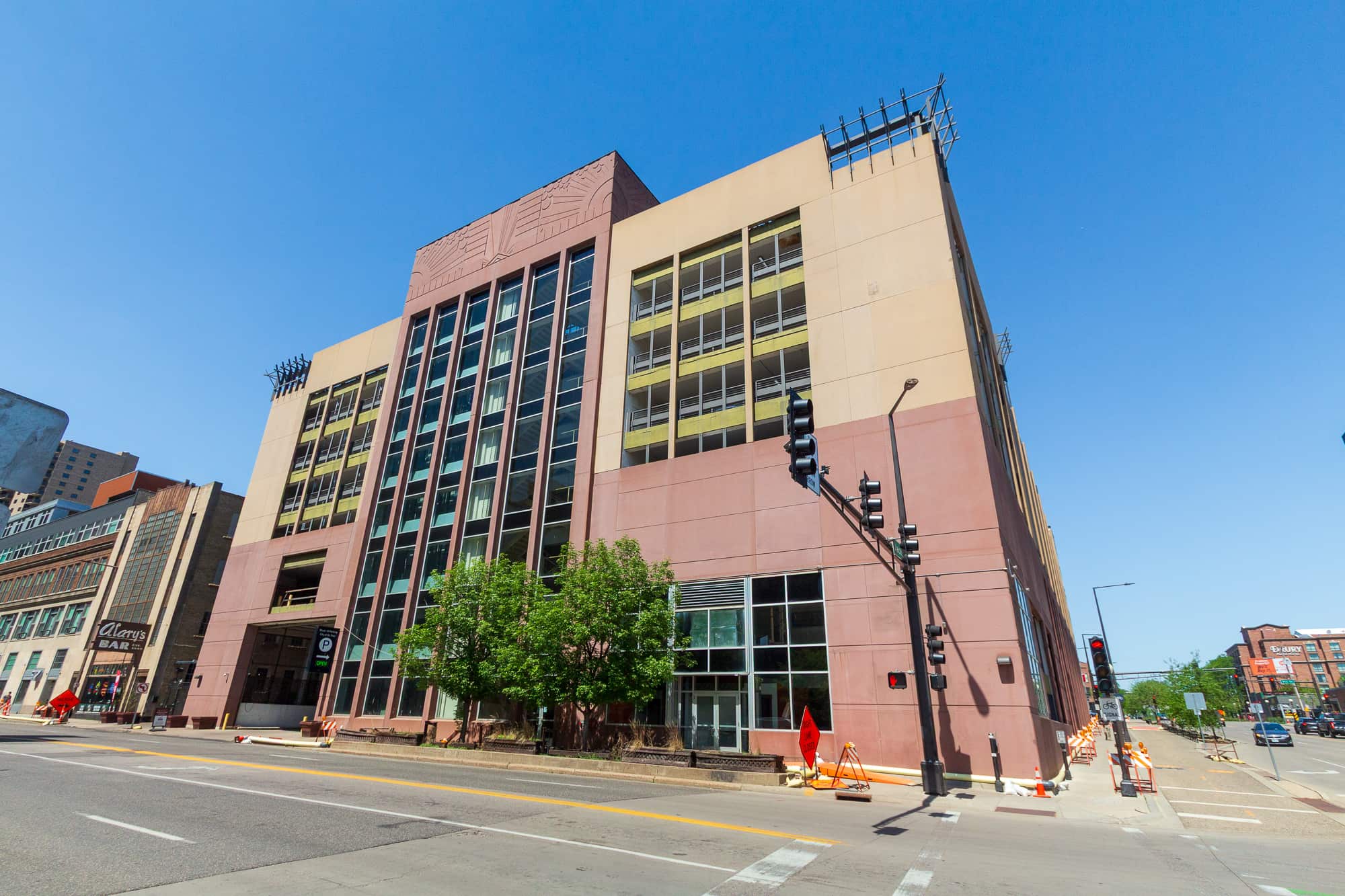
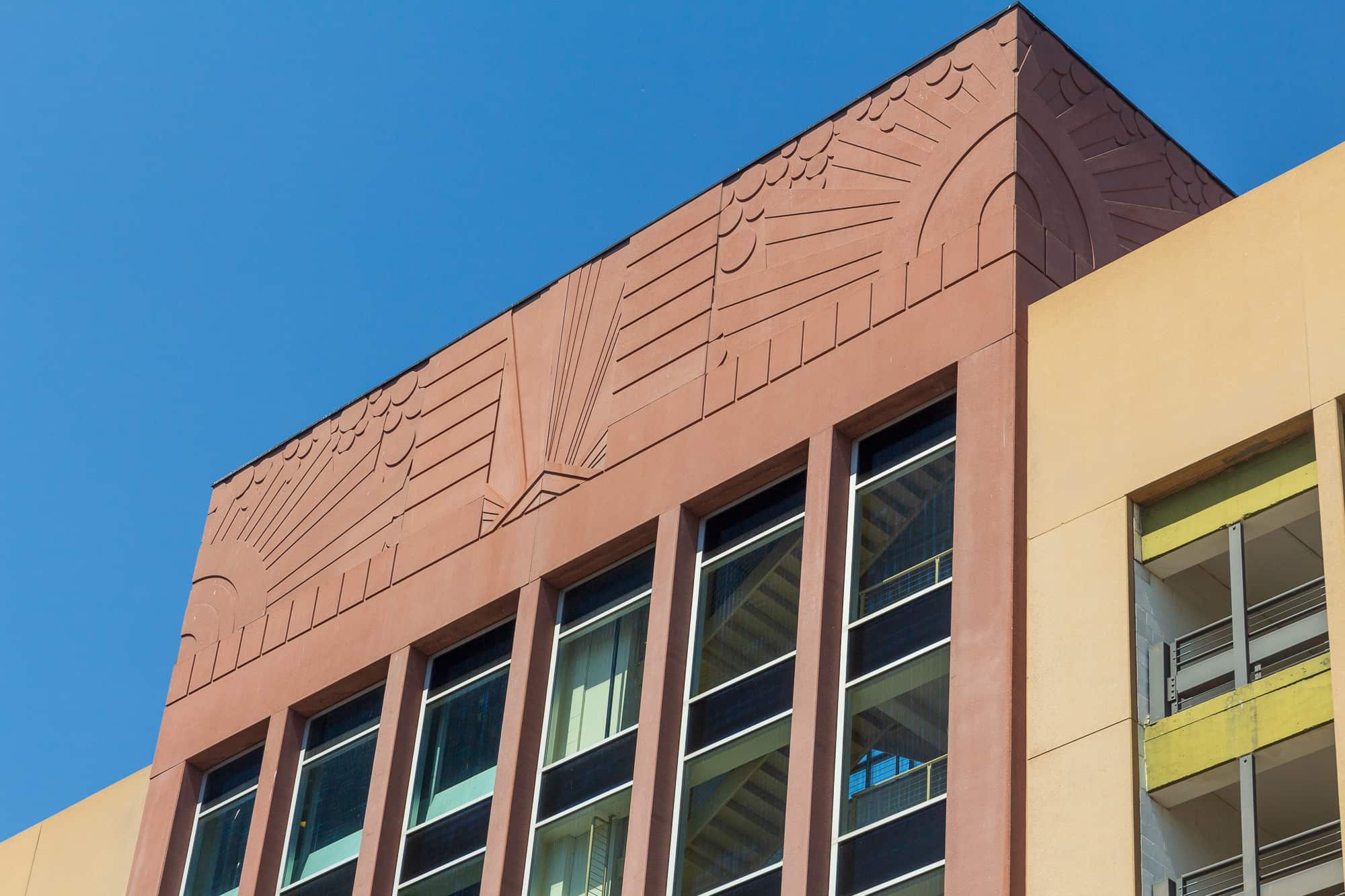
Three blocks north on Jackson Street and East 7th Street is the second ramp stop on this ride. Oddly named Block 19 Parking, it’s a mystery as to why the ramp was bestowed with that name. There doesn’t appear to be numbering of any blocks Downtown or in Lowertown, and I could find no other reference to “block 19.”
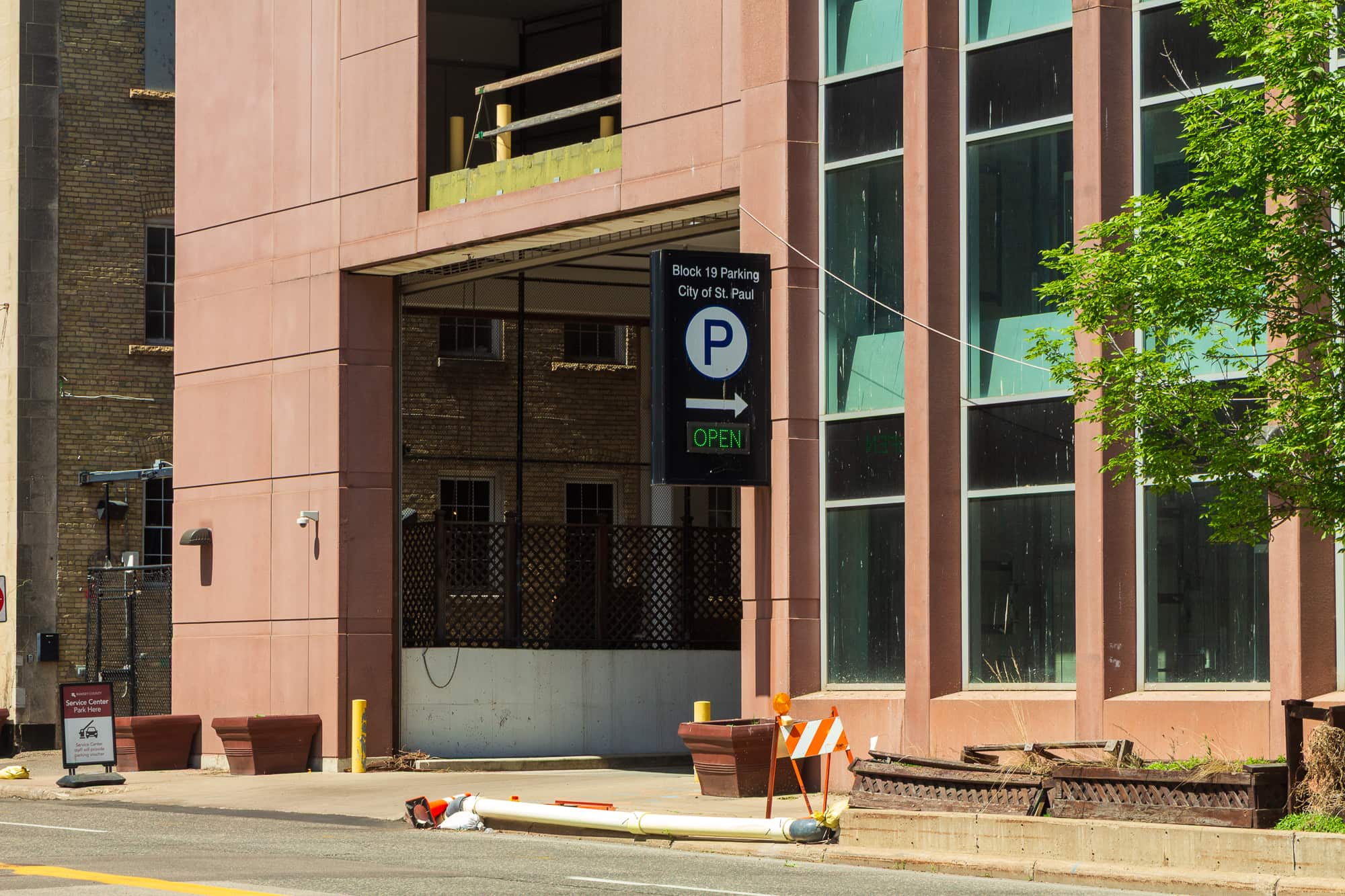
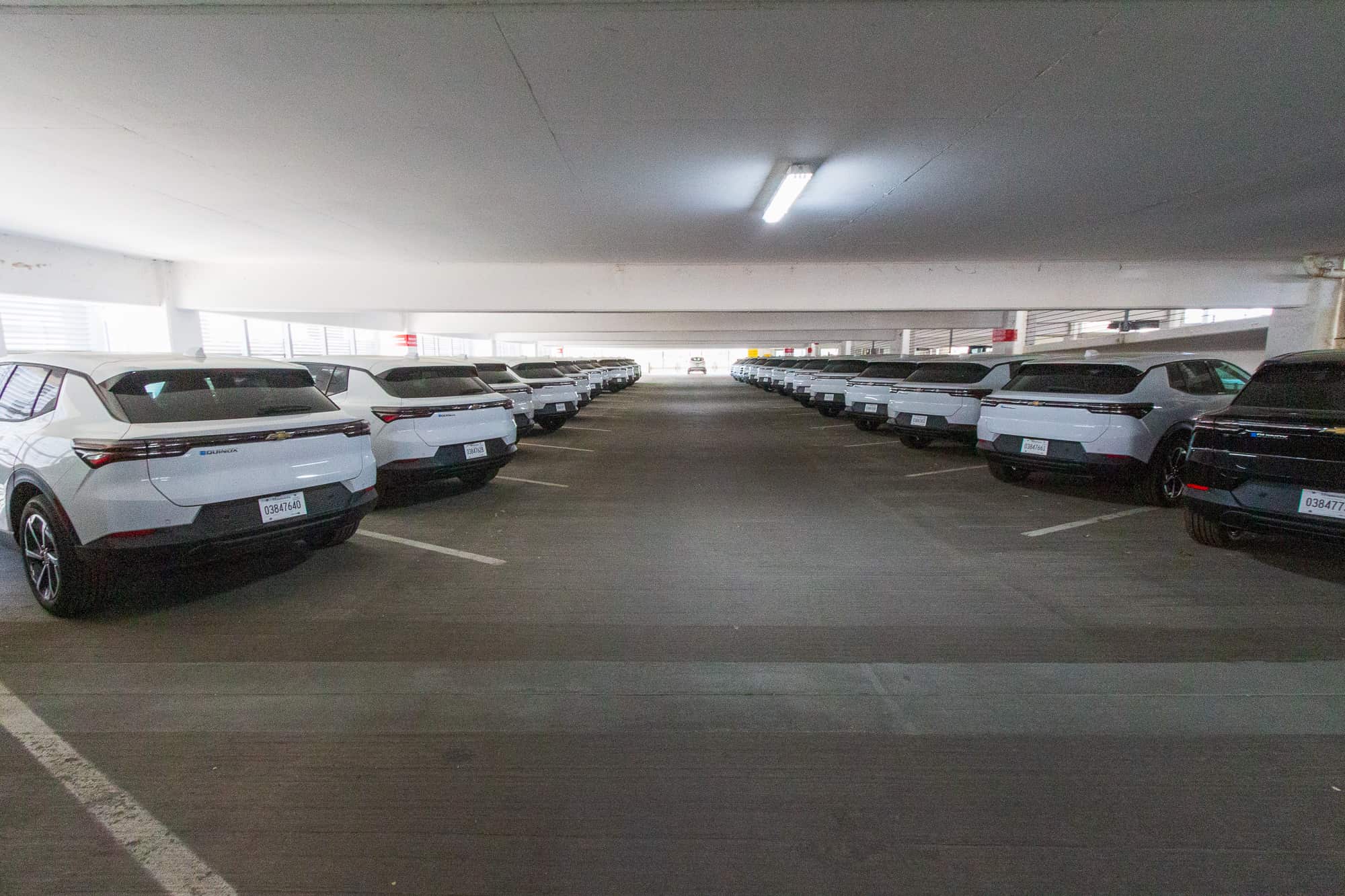
Few vehicles were parked within the 1,000 space ramp, aside from one level. What appeared to be state-owned Chevrolet Equinoxes lined it like soldiers in formation.
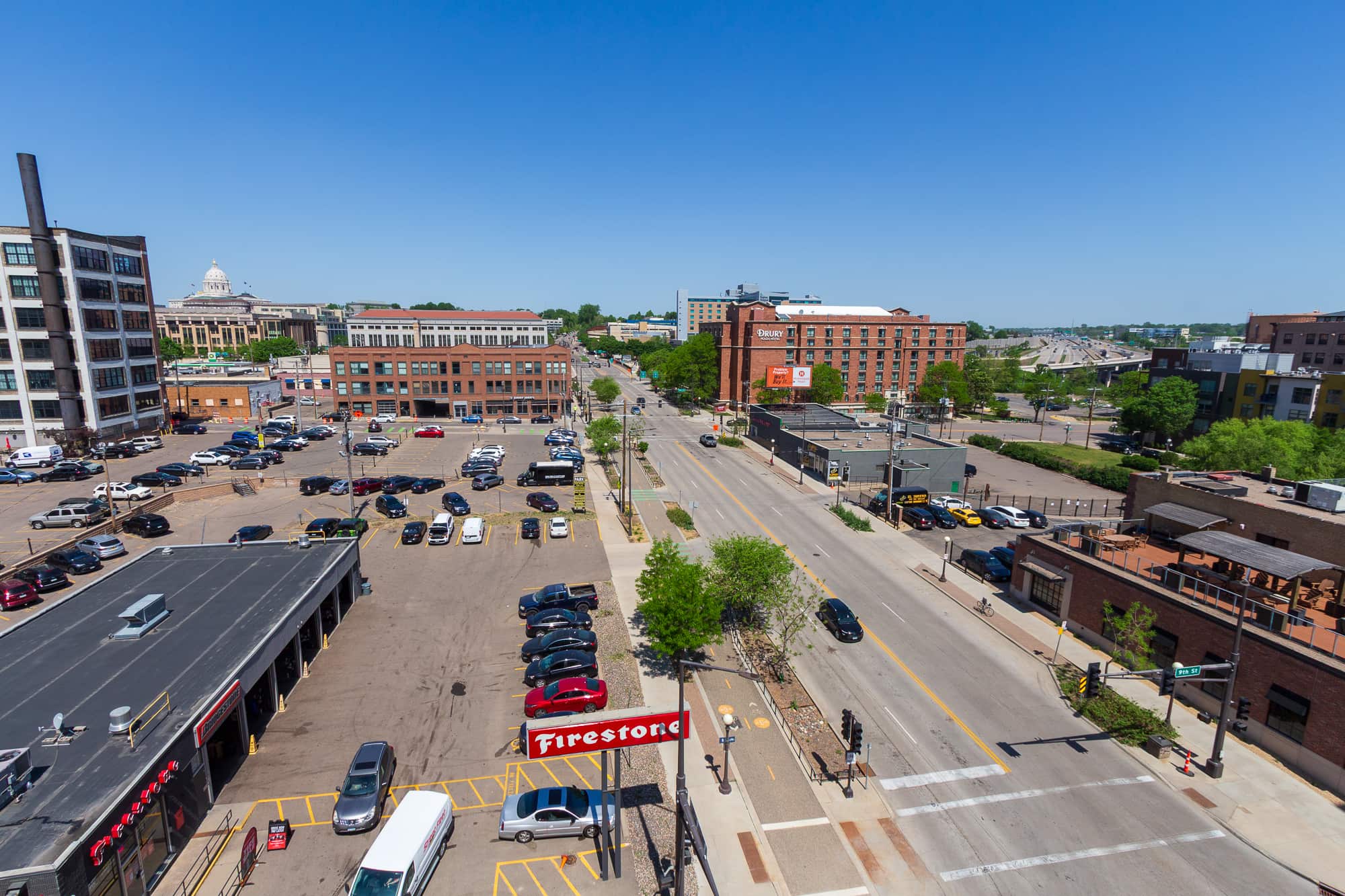
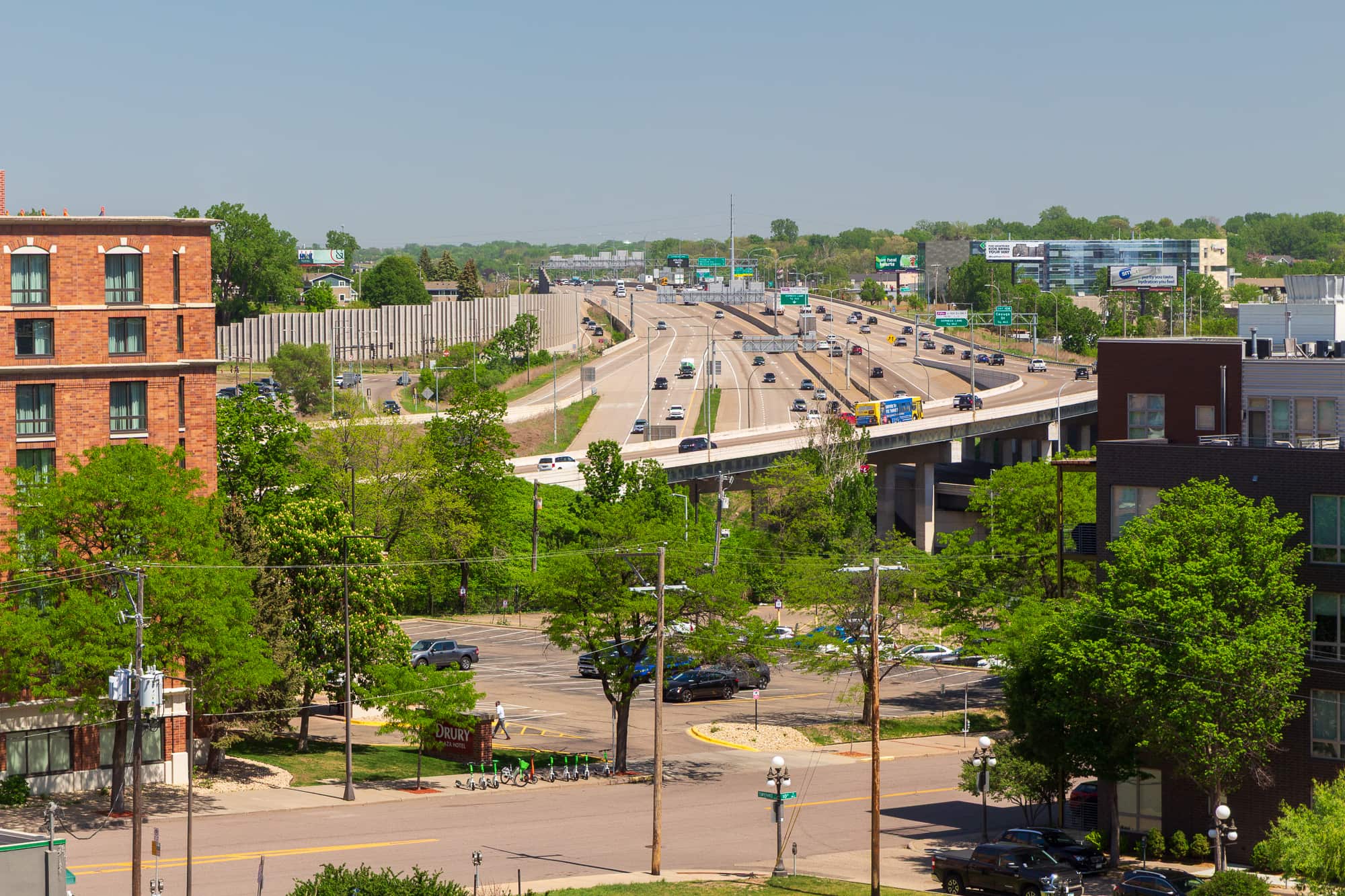
The eighth (top) level provided enjoyably different vistas of the north end of Downtown.
Little Bohemia (part of the West End)
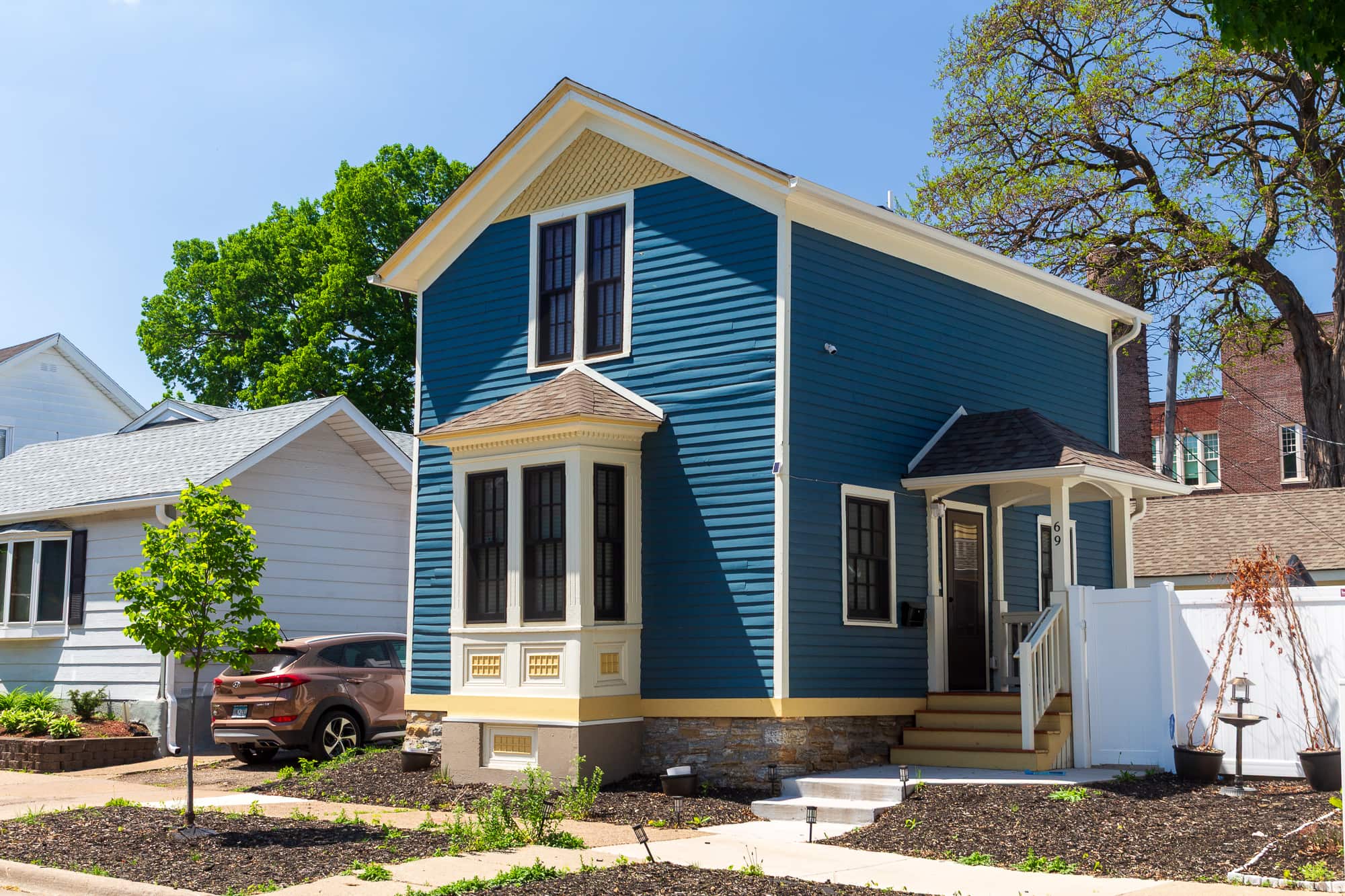
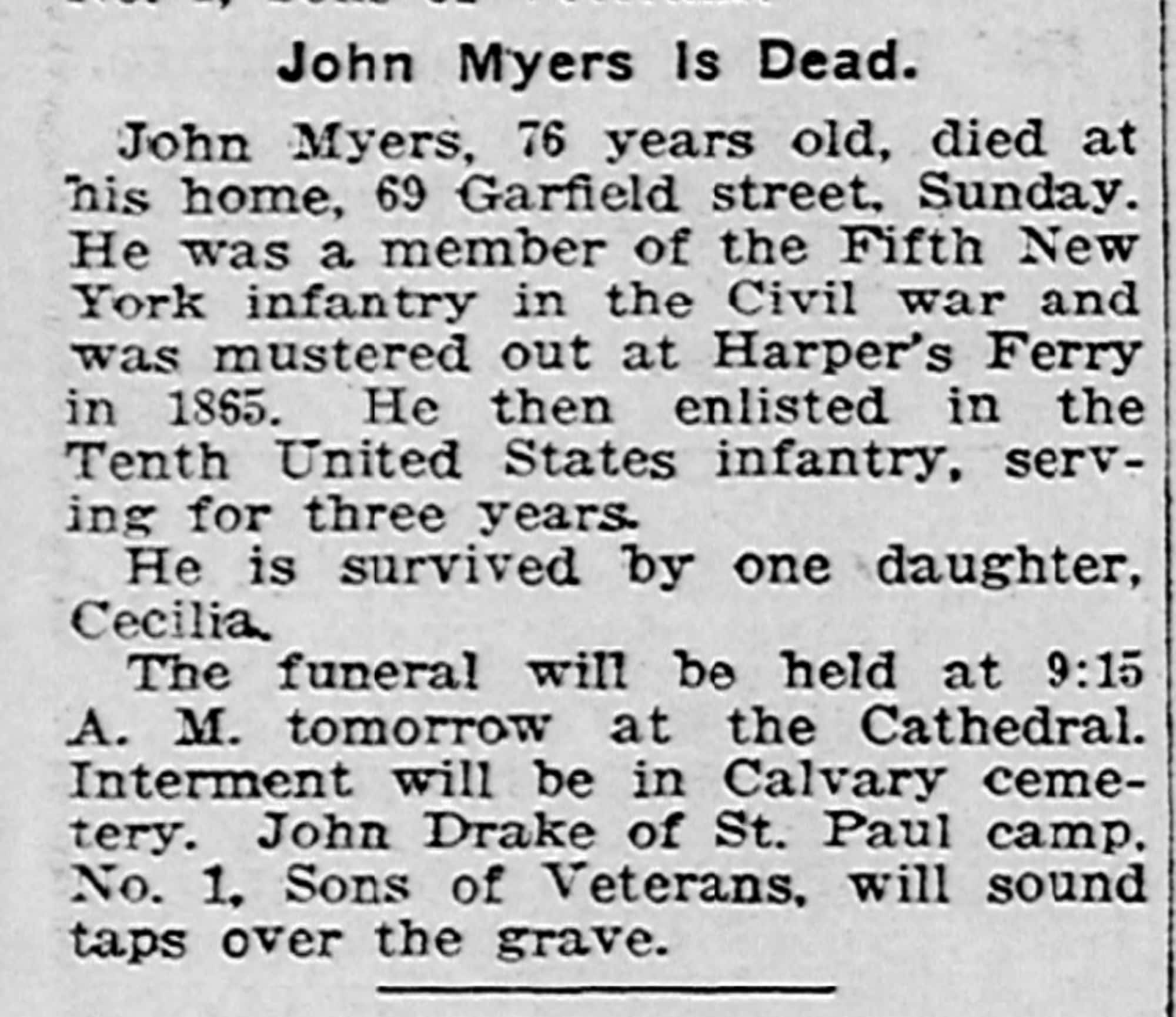
I ambled through Little Bohemia again on the route home. On Garfield Street I stopped at number 69 to gaze at the meticulous restoration of the John & Mary Myers House, built in 1864. Originally christened Green Street, it was renamed Garfield in October 1881 to honor President James A. Garfield, who was assassinated the month before, according to Don Empson and his book, “The Street Where You Live.”
Crocus Hill
From Garfield, I wound around to Goodrich Avenue and Richmond Street before landing back on St. Clair Avenue for the climb west. St. Clair’s formidable hill runs about a mile from Osceola to Lexington Parkway, but I turned at Avon Street, rode one block and swung west on Linwood Avenue. My mission was to learn the story of 825 St. Clair, especially the backyard, with its amalgamation of picturesque landscaping, offbeat signs and other imaginative ornamentation.
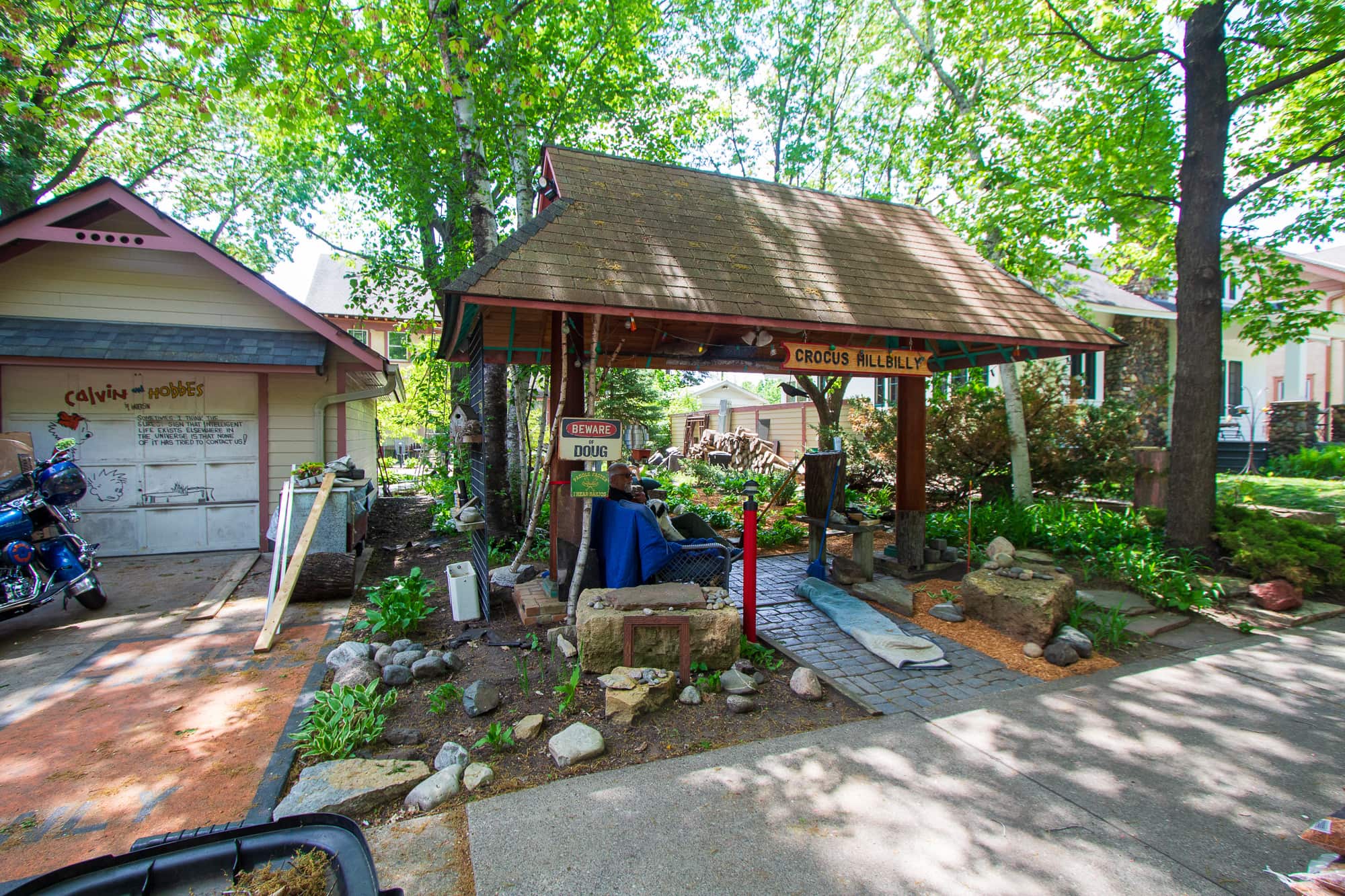
I met Doug Rzesztek ( pronounced Rez-ih-tek) as he touched up the landscaping in his tree-lined backyard. Doug and his wife, Carole, have lived at 825 St. Clair, where they raised three children, for more than 40 years.

The Crocus Hillbilly sign in the back was what most intrigued me. Turns out it’s a title that Doug, somewhat proudly, took on thanks to a conversation that didn’t even involve him.
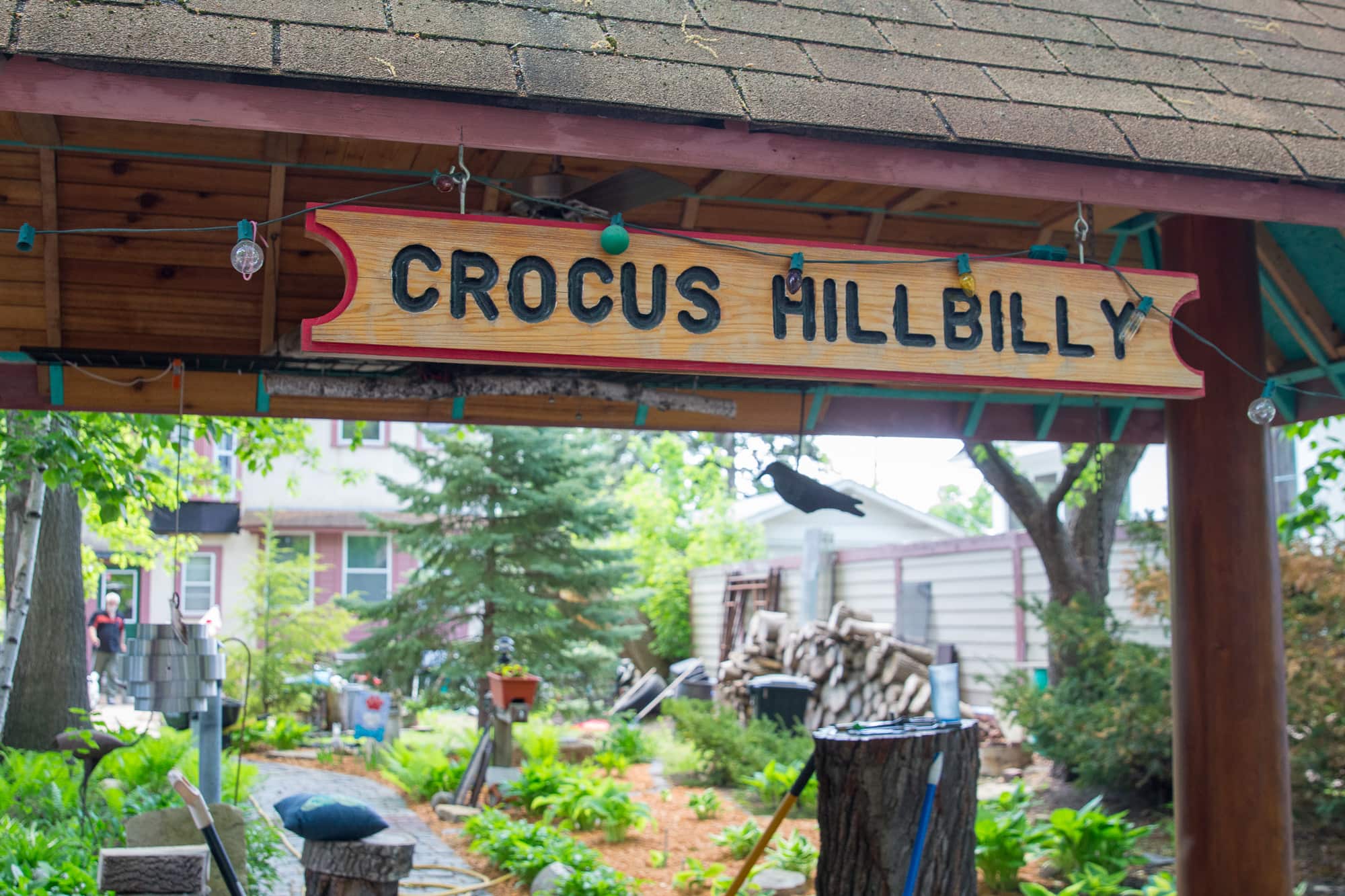
Two neighborhood women, out for a walk some years ago, spotted a third neighbor working in his yard a couple doors from Doug’s. According to Doug’s retelling of that chat, one of the women told this neighbor he should get the obviously crumbling retaining wall in his yard replaced. The neighbor was taken aback, and ended the conversation by telling the women, “’I’ve gotta go in and make some business calls.’
“‘That’s okay,’ they stated. ‘We’re gonna go down the middle of the block and see what the hillbilly’s up to,’ pertaining to me and whatever I do around here. So, that’s where the Crocus Hillbilly sign comes from.”
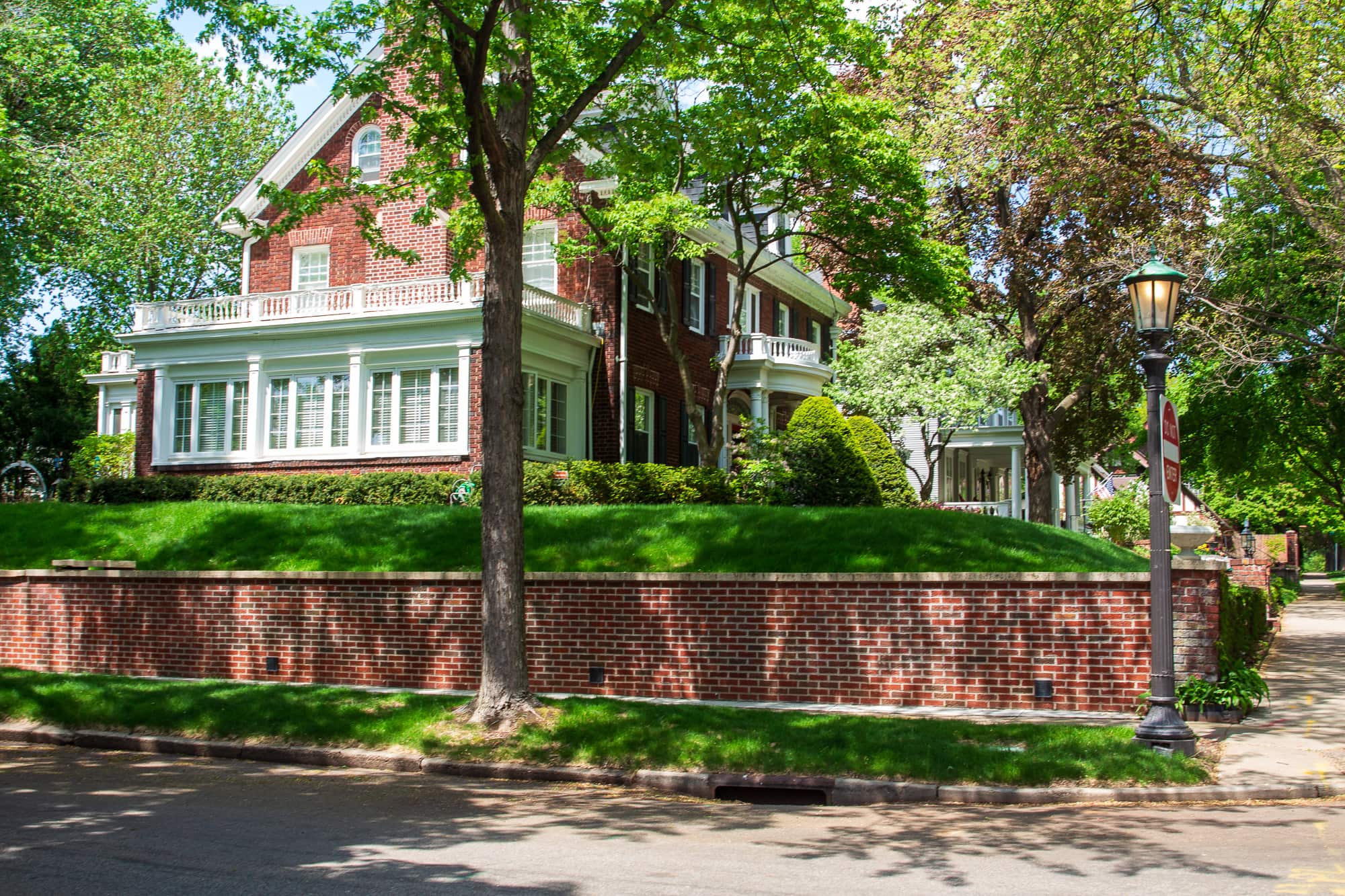
Landscaping, reusing or recycling found objects are among Doug’s hobbies. “ The oak tree, the birches, a couple of the maples, that pine tree, were all planted by me. There’s a red oak that’s about, probably almost 30 years old, about 65 inches in circumference.” Many of the hostas growing in the shadiest sections of the back were given to him.
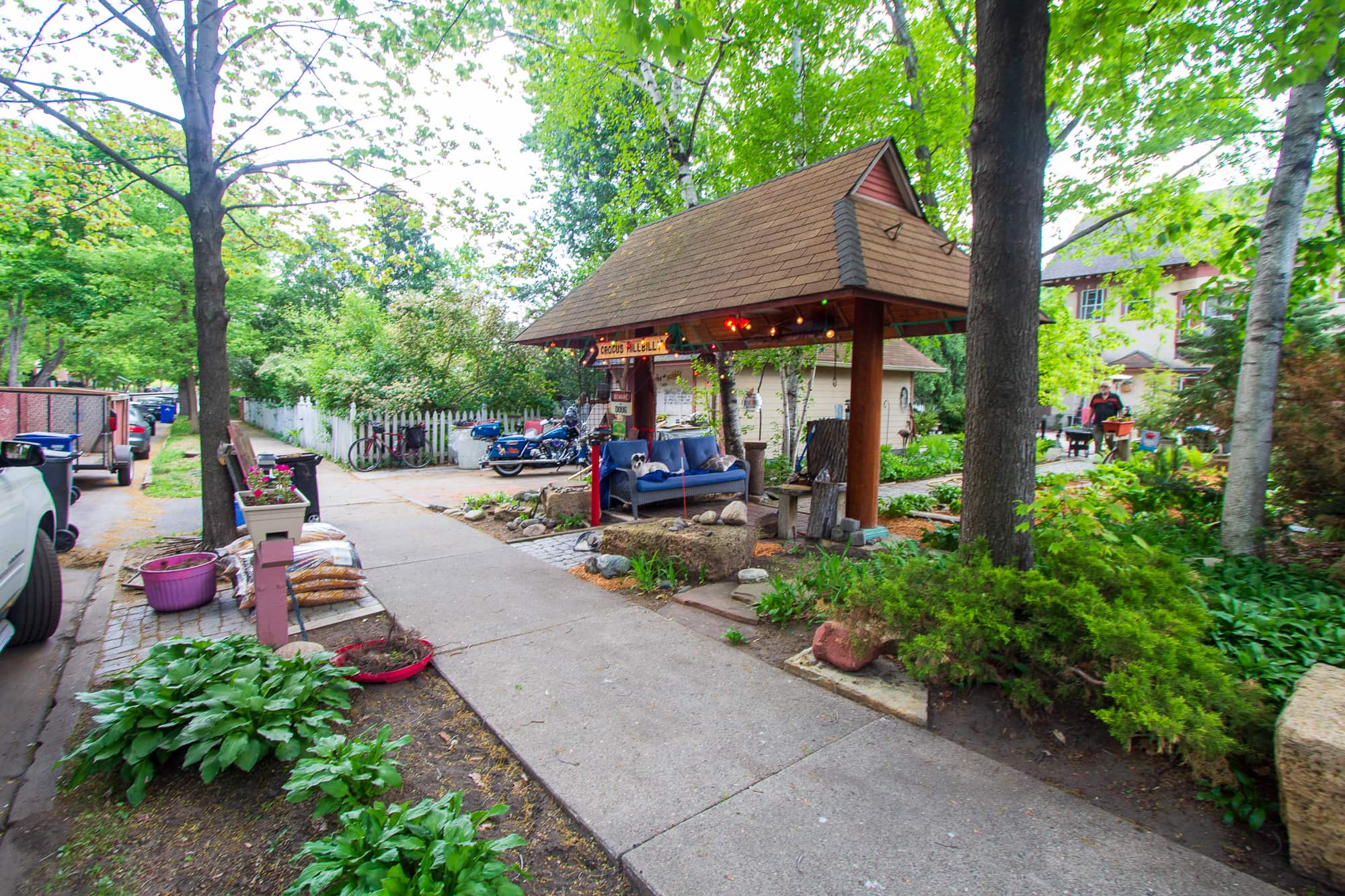
The sidewalk from Linwood Avenue (which serves as the alley for the block) to the patio combined Doug’s love of landscaping and reuse. It’s also his favorite part of the yard. “ I love the cobblestone sidewalk. It’s not easy to shovel in the winter. You gotta kind of keep the blade up a little higher than normal, but it adds a lot of character to the yard.”
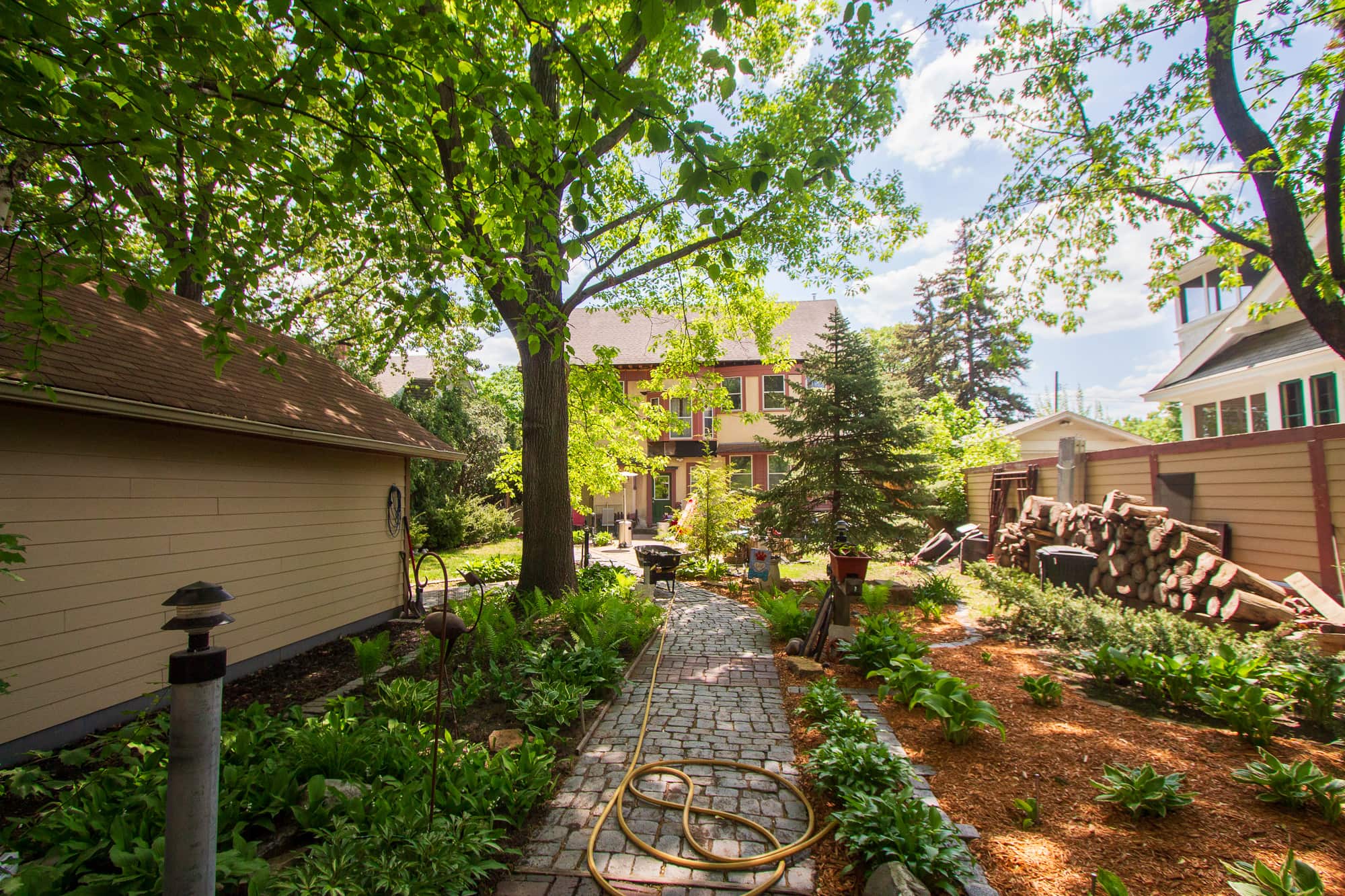
Doug continued, “ This is all hand-laid cobblestone; I figure 20-plus tons of cobblestone, (and) barrel after barrel after barrel of sand,” The cobblestone, he stated, at one time lined the surface of a Minneapolis street or streets. As for the sand base, “ There’s probably eight inches of sand underneath there all the way.” I got tired thinking of all that work!
“I actually grew up in Minneapolis, Brooklyn Center, where my parents lived. When I was a kid, I swore I wouldn’t live in St. Paul ’cause all my crazy relatives lived there and now I’m a good fit.”
— Doug Rzesztek
Several very large — and heavy — limestone blocks in his back and front yards were footings from the previous Smith Avenue High Bridge. “I had a pickup truck, so I used a big six-by-six timber behind the cab with an eye bolt on it and a couple of come-alongs and moved them by hand.”
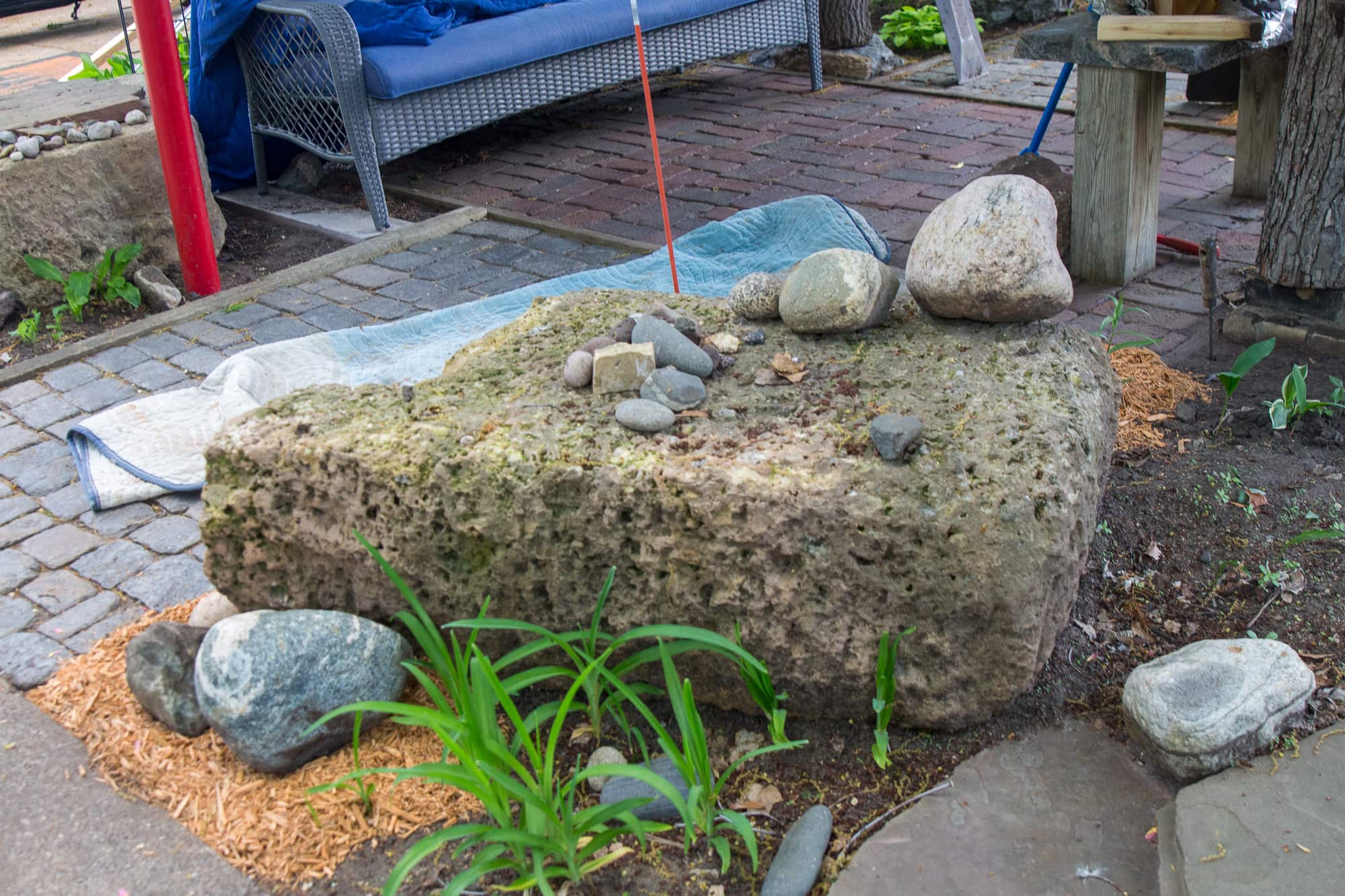
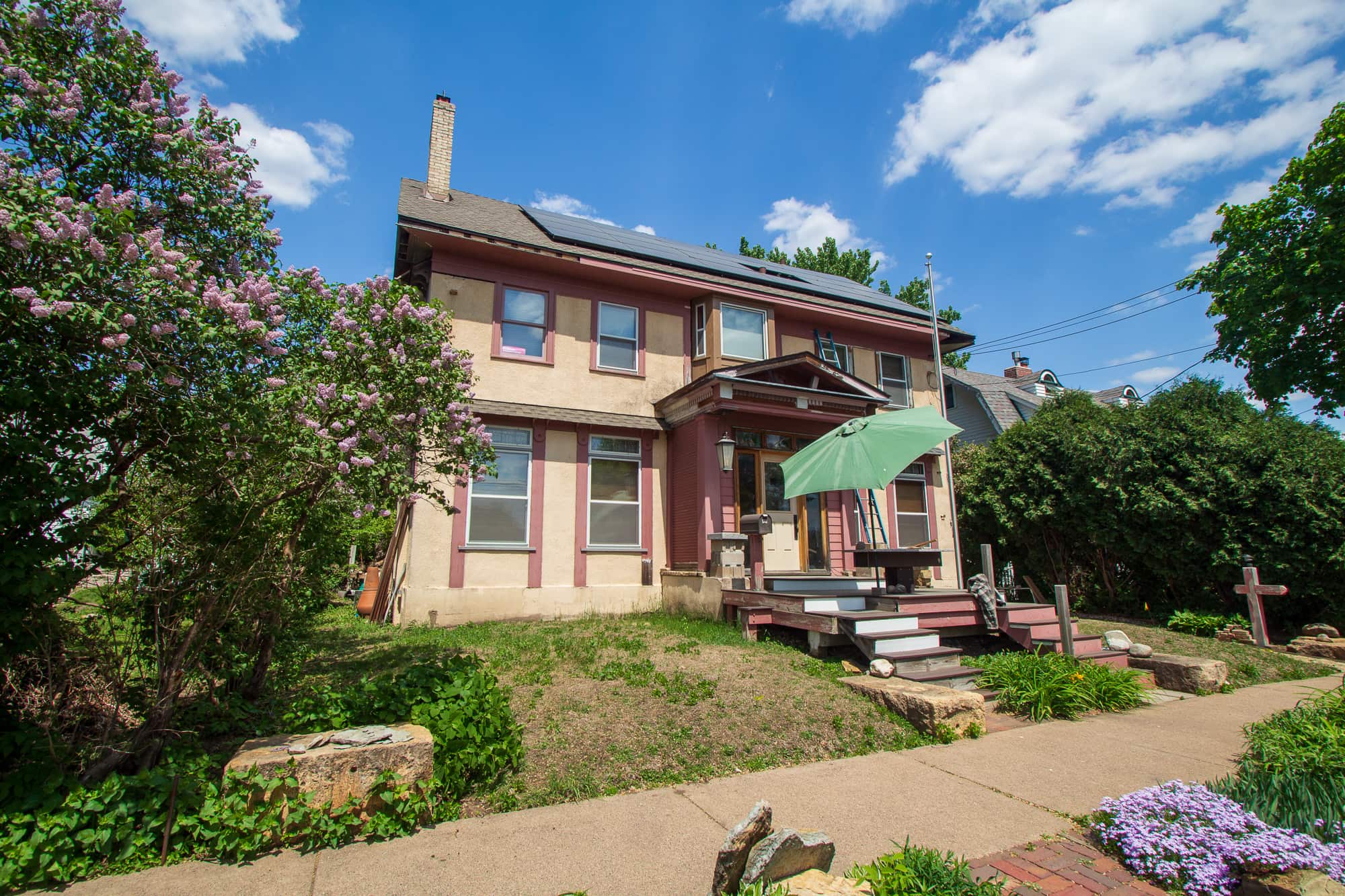
Doug clearly stated he took great efforts to get permission to take the blocks. “I made probably 20 different phone calls to the city. Nobody could give me any information as to, you know, whether I could have ’em or not. And I said, ‘Well, this is my address. This is where they’ll be. If you want ’em, come and get ‘em.’”
The pillars on the hillbilly pagoda were originally in the front of the house, and many of the random medley of belongings showcased around the yard Doug collected.
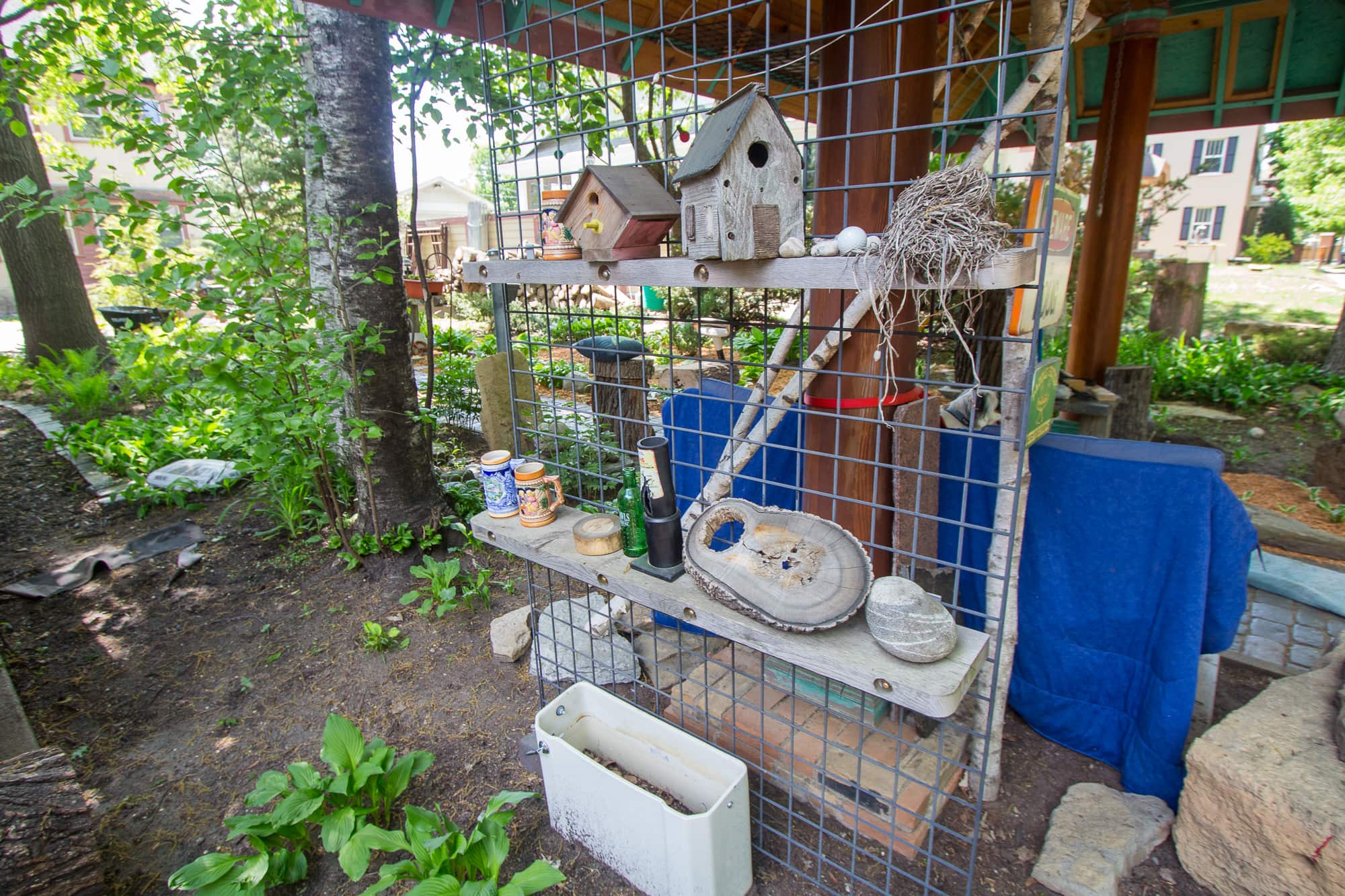
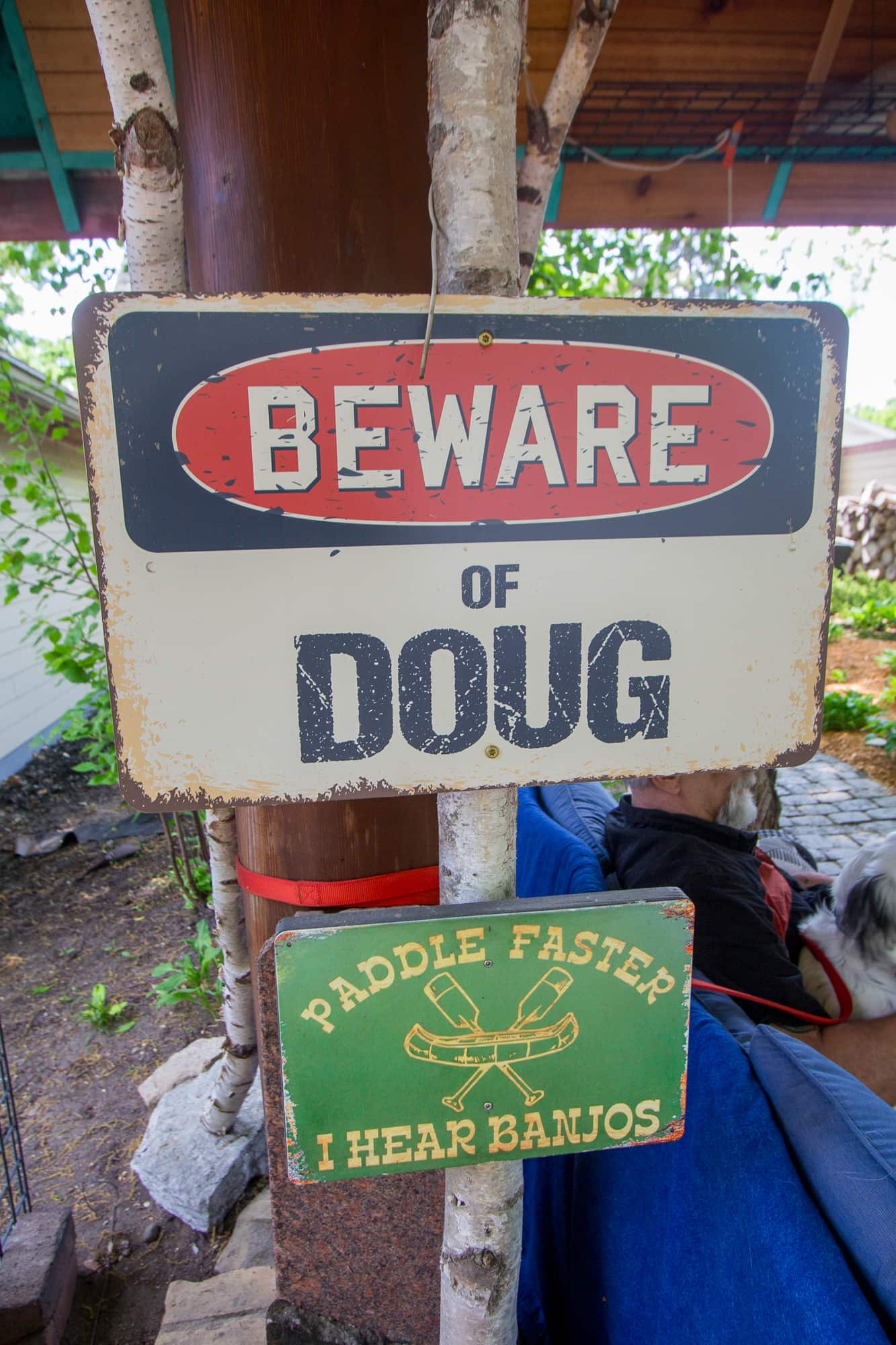
Whether working or relaxing, Doug spends a great deal of time in his serene back yard. “ I like to sit out here with, with my dog in the evening and just kind of forego watching TV and the news.”