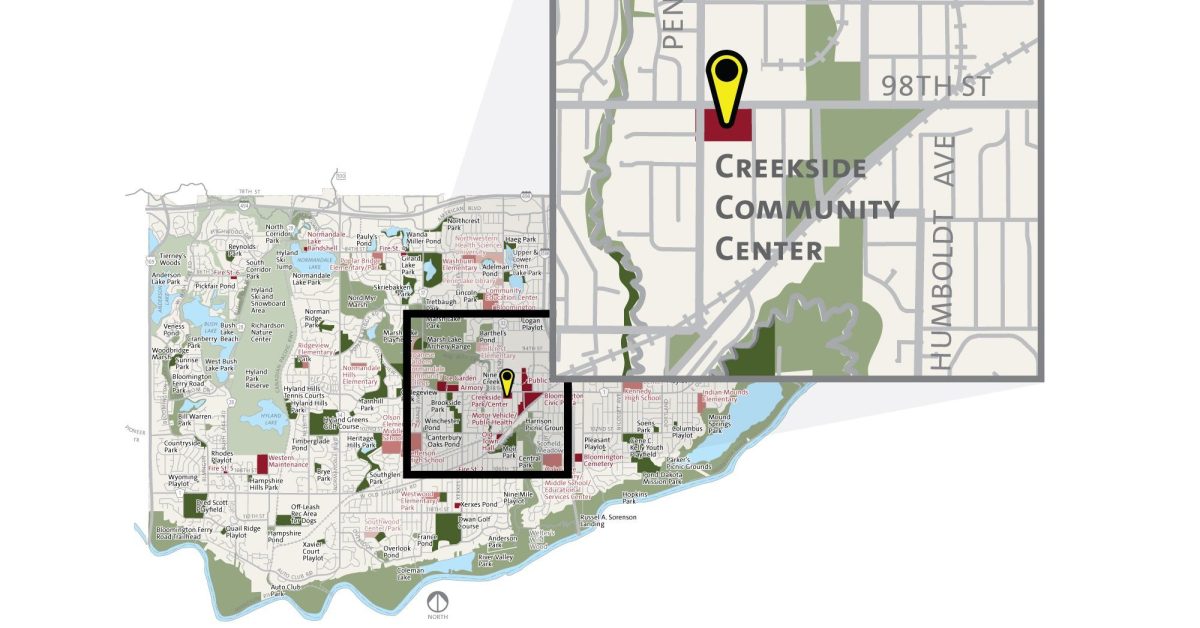
As a 1960s inner ring suburb, Bloomington has had to deal with plenty of aging infrastructure dating back to the days of rapid development. The city hall and police department moved to a beautiful new building in 2003, and Public Works was heavily renovated around the same time. But quite a few issues remained:
- The “community center”, Creekside, in a small decommissioned elementary school, was restricted to seniors only instead of welcoming all of Bloomington. It also was not compliant to the Americans with Disabilities Act (ADA), was way too small for an all-ages center, and an engineering study indicated the building, while structurally sound, was not a good candidate for renovation.
- Several sections were far too small and dilapidated for the areas they served in addition to Bloomington, most notably Public Health (serving Richfield and Edina) and Animal Control (serving Richfield, Eden Prairie, and the airport).
- The Bloomington Ice Garden’s mechanical systems were old, using freon-based refrigerant that is now impossible to produce; its interior was small, dingy, and utilitarian to a fault.
- Five of the six fire stations were built in the 1970s (the sole exception being Fire Station 1, built in 1993 to modern standards), and had the dilapidated style to match (along with living quarters best described as jury-rigged). As one of the largest cities to extensively use paid-on-call firefighters, Bloomington was trying to move to a more full-time staffed model which required “bigger and better” stations with complete on-site living quarters.
- The only indoor aquatic facilities for the public were the standard competition pools at the three middle schools; only open to the public during limited hours, they weren’t very family-friendly.
- There were two outdoor options: Bush Lake Beach and the outdoor Bloomington Aquatic Center. Those both had their own problems; they’re only open in the summer, and while the bathhouse is new, the pool is original to the 1960s and the liner at the aquatic center would soon need an extremely expensive replacement.
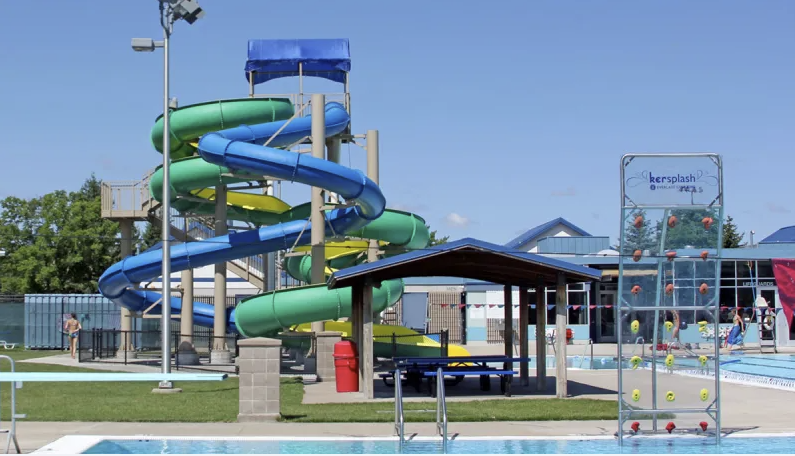
Here’s two city-produced videos about Bush Lake beach and the aquatic center, made shortly after the new bathhouse opened in 2012.
Here are two videos highlighting the deficiencies with Creekside and Public Health.
The Community Center Project
Following the opening of City Hall under mayor Gene Winsted, attention turned to building an all-ages Community Center with the expected amenities you’d find in one: meeting rooms, a zero depth entry pool with slides, a lap pool, a running track, gymnasiums, and meeting rooms, as well as a new home for Public Health. At the time, even City Hall was cramped for office space, so Parks and Rec would have moved their offices to the new facility too.
There were some (idiotic) suggestions on Facebook groups that maybe they could just fix Creekside or build a second story. Engineers quickly determined, though, that despite being structurally sound the building was a tear-down due to low ceiling heights, ADA noncompliant restrooms that couldn’t easily be renovated, and aging window and mechanical systems. Focus moved quickly to a completely new building.
Unfortunately, replacement didn’t happen as smoothy as with City Hall. A proposed partnership with the YMCA fell apart, with some councilors and workgroup members leery of private involvement with a city facility. And in a fully developed city, they couldn’t find a perfect site, just sites with various pros and cons (as related by a task force member on Bloomington Facebook groups):
- Vacant or underutilized land that the city owned or could acquire was in the Penn-American or South Loop districts, not anywhere close to centrally located. The city didn’t want to permanently remove prime land, guided for high density development, from the tax rolls.
- The existing Creekside site would require structured parking due to its small size, and disrupt existing programming while the existing center was razed and rebuilt.
- Adding onto City Hall would require a higher quality of exterior finishes to match as well as structured parking, and I suspect some councilors and workgroup members may have been uncomfortable with the idea of Public Health and the Community Center being at the other end of a building that also housed the police station and jail. On the plus side, there would be obvious synergies with the performing Arts Center attached to City Hall, and parking could be shared.
- A few other sites in city parks were either not centrally located and/or too small, even with structured parking.
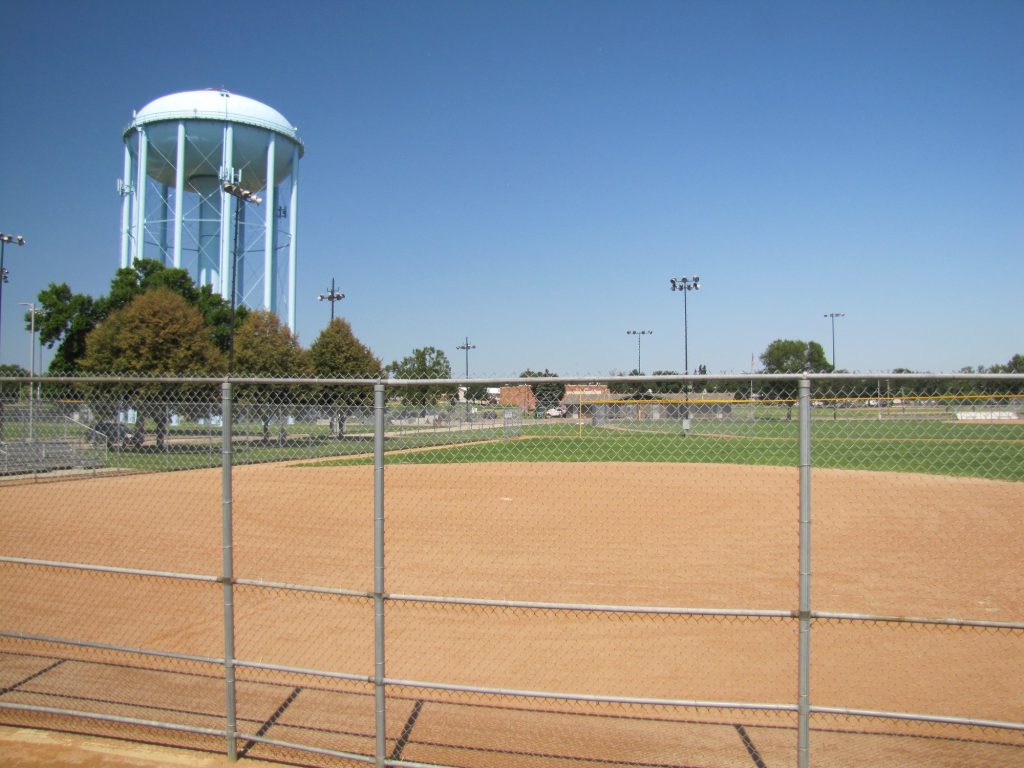
- A site in Valley View Park would would eliminate several softball fields (and require relocation of several other park amenities) but had the advantages of not needing structured parking, replacing the existing aquatic center reducing the ongoing operation cost as well as zeroing out the upcoming need for replacing the pool shell, and being located in the lower income, more diverse east side.
The city moved forward with Valley View as the preferred site, but the “Not in My Backyard” people (NIMBYs) came out in force with “Save Valley View Park” posting on community Facebook groups, packing city council meetings, putting out yard signs. Near as I can tell, there were four main, non-mutually exclusive kinds of people who opposed it:
- Grumpy old people that opposed the community center anywhere, thinking we shouldn’t be allowed to have nice things in our city. Every city has this group and has always had them, I imagine back in the day in Bloomington they were complaining about the city paving the streets and installing municipal water service since gravel streets and wells were “good enough for them.”
- People that objected to the loss of three softball fields (a sport in decline due to changing demographics) in a park that would still have eight of them right in the same park, and over 40 of them elsewhere in the city.
- People all offended at the idea of having to look at a public recreational building in a public park that they visit or is near their houses.
- People objecting to the loss of the outdoor aquatic center.
There was some overlap between these groups, but what I perceived is that the “grumps” stirred up and inflamed the other three a lot more than would have happened otherwise – you in fact saw “Save Valley View” signs miles away from the park. But as a community member that would have loved to have something like this as a kid and still would as an adult, I was dismayed by the controversy.
Regarding the last argument: As someone with a season pass to Valleyfair, who will drive out there sometimes multiple times a week to swim and lounge in the sun at their water park, it’s one I’m at least somewhat sympathetic to.
Bloomington obviously needs a public pool usable more than a couple of months out of the year, but there’s something special about being kissed by the sun while swimming in the cool water on a nice hot summer day. The new aquatic center would have had a sliding glass wall to open up, space outside for loungers, and a seasonal splash pad, but it would still not be the same.
As it turned out, though, last summer the pool was closed for leaks twice, closing for the season on the 15th, and we had a dearth of days that weren’t cold, raining, or choking with wildfire pollution, so perhaps replacing it with a new indoor facility would have been wise.
As the opposition delayed the community center, several other things happened. First, the pandemic caused the city to vastly rethink its immediate priorities. Then, longtime mayor Gene Winsted did not seek reelection after 20 years of service and several councilors turned over. The new mayor, Tim Busse, and the new city council initially seemed a lot less excited about the idea of large community projects. In the face of these strikes, the project went dormant even with the needs and desires of the overall community (as confirmed by multiple outreach events and surveys) remaining clear. A 2022 survey confirmed that 76% of residents wanted a new community center.
Meanwhile, planning for what to do about Public Health continued. Originally there was discussion about the merits of leasing space in some office building (one thing we have a lot of here is office space) versus rebuilding a dedicated building on the same site versus incorporating it into a community center. When the community center stalled, the plan shifted to rebuilding on-site, and Bloomington applied for state bonding funding in 2022. However, this did not happen either.
The Local Option Sales Tax (LOST)
After we exited the pandemic, the local government started to pay attention to infrastructure again. Creekside, Public Health and the Ice Garden weren’t getting any newer. We still didn’t have a family-friendly, all ages, all weather community and aquatic center. The city switched gears, and rather than design a community center and then try to get it approved in a referendum, took advantage of a 2022 law allowing up to a .5% local sales tax for funding. Put before the city in the November 2023 election were three separate ballot questions:
- $100 million for construction of a community health and wellness center
- $35 million for infrastructure repairs and renovation at Bloomington Ice Garden
- $20 million for improvements to the Nine Mile Creek corridor and Moir/Central parks
Voters approved all three of these projects (the community center by 56.2%. the Ice Garden renovations by 53% and the park renovations by 52.3%), paid for by a .5% LOST. The tax will sunset in 20 years or when the buildings are all paid for.
My take is the sales tax was more politically palatable to the city than a property tax levy would have been. It could be truthfully sold as affecting mainly out-of-town visitors shopping at the Mall of America and the big-box retail along 494, while the burden of property taxes on city residents (including low income empty nest seniors aging in place in the long-paid off family home) has become a perennial complaint and only affects Bloomington residents. I’m not a hockey player or figure skater so I can’t benefit from the ice garden, but I’m looking forward to becoming a charter member of the community center.
The new “Health And Wellness” center (as it’s officially called) will be on the Creekside site, and is somewhat scaled down from the original proposal to fit available funding. It will no longer house offices for Parks and Rec due to the site constraints and the money required for structured parking. But it will still incorporate Public Health and key elements of a community center, similar to other cities and what city surveys have indicated the needs are. Provisions have been made for a third gymnasium and the city is considering the idea of acquiring nine houses to allow for future expansion.
As for the existing Creekside senior programming, most will be carried over into the new center and of course seniors will now have the pool, running track, gymnasiums, and all the other facilities too. The exceptions are some of the programming requiring dedicated specialized rooms like the wood shop and lapidary that were merged into programs in surrounding communities.
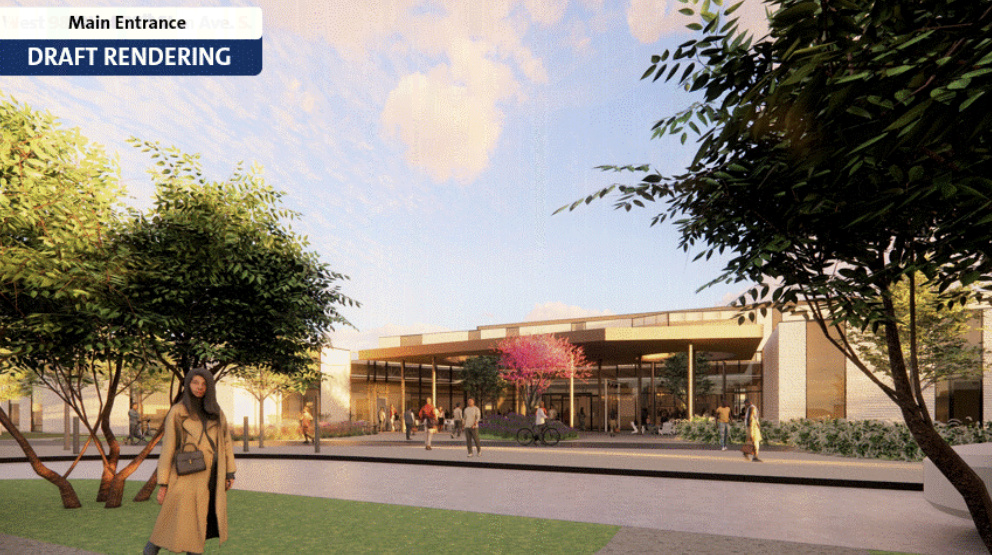
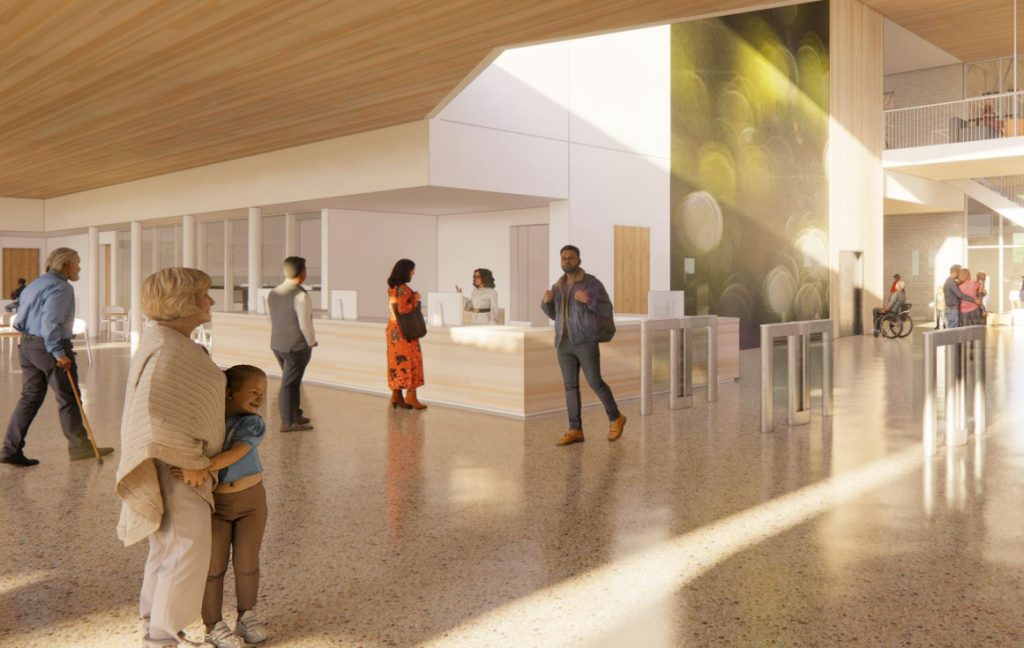
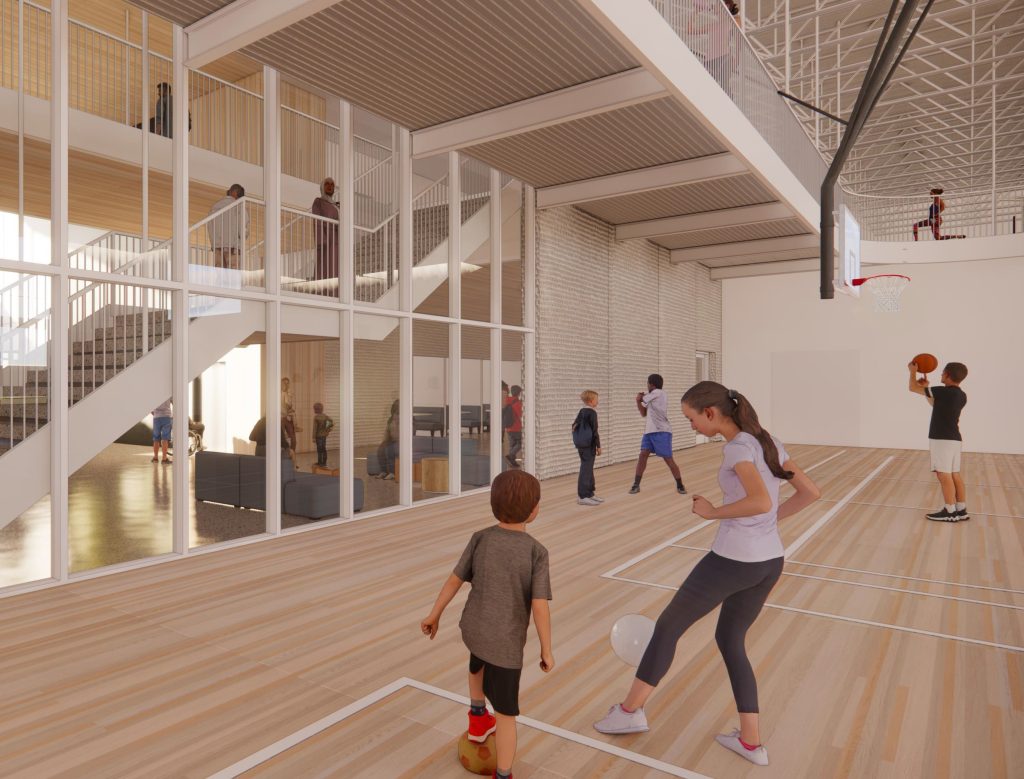
As the project developed, yet more opposition came out: this time the immediate neighbors citing impacts of traffic on the neighborhood. They were angry that the city had initially moved to condemn a row of houses to build parking, then changed their mind after leaving the homeowners in limbo. They also questioned if the slightly downsized community center – now missing an outdoor splash area, and with one of the planned gyms deleted to fit site and budget complaints – should be revoted on again by the community.
This time, though, the city had no inclination to pause or stop the project. Creekside was closed and razed, and the new community center is going up.
The Fire Stations
Separate from the community center project, replacing most of the city’s fire stations is also ongoing. As mentioned before, the “main” fire station #1 was rebuilt in the 1990s and is still serviceable, but the neighborhood stations 2, 3, 4, 5, and 6 were all built between 1968 and 1975. In particular, fire station 3 did not have enough apparatus bays to adequately service the rapidly growing South Loop area; all of the stations were aging and had only improvised training and living quarters, in a time where Bloomington is trying to switch to a model of more full time firefighters working extended shifts at the station (as opposed to paid on-call staff that are only there long enough to jump out of their car, put on their gear, and run into the truck).
In the mid 2010s, Bloomington commissioned a standard design to replace stations as funding became available through grants and regular city budgeting, and produced a video highlighting the decrepit state of the current stations in support of the effort.
Station 3 was the first to be replaced: on a new location in 2020, space available for equipment increased from three pull-through and one non-pull-through bay to six pull-throughs as well as new training rooms and living quarters. Stations 2 through 6 will be replaced at their existing locations one at a time as funding becomes available and to not take more than one station at a time offline for razing and rebuilding.
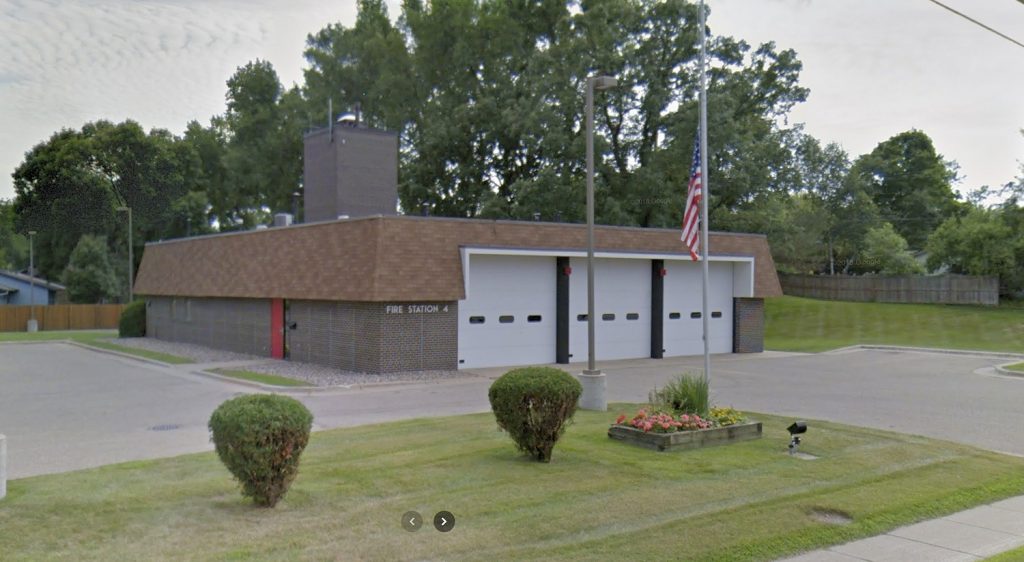
Station 4 was next, reopening in 2023 with two pull-through and one non-pull-through bay replaced with three pull-through bays as well as training rooms and living quarters. Station 2 is next on the list.
Animal Control
The final need is a new Animal Control building. To this end Bloomington has funded $100,000 of improvements to the existing building to
make the space safer and more functional while a long-term solution is developed. These include adding storage for supplies and donated items; creating a space for rescue partners and adopters to interact with animals; deep cleaning and a fresh coat of paint; improving lighting in kennel rooms; installing fenced outdoor dog run/relief area; remodeling front desk and food prep areas; and replacing the front front door.
Discussions are ongoing about a new permanent fix. There was a presentation to the city council noting the difficulties that using private facilities for boarding would entail, highlighting deficiencies.
I’ve lived in Bloomington all my life, choosing to stay and purchase the family home with my sister after my parents moved out. It’s exciting to see all the changes and improvements coming to my city since my childhood in the 1980s.
Feature image from the Bloomington Community Health and Wellness Center page.