Every weekday morning, I get in my car in Union Park, St. Paul and drive to Stillwater using I-94. Door to desk in about 30 minutes. I’ve tried the alternatives — I’m a former year-round bike commuter, and I’ve done the math on the 294 bus. Biking runs about an hour and fifteen minutes on a good day with an e-bike. The bus, with a transfer, runs about an hour and twenty-five. The car-and-highway mode takes less than half the time. I drive because it’s rational. I drive because our built infrastructure makes it the obvious choice for my commute, every single time. You might conclude that I am, by every measure, exactly the car-dependent person who needs I-94.
In fact, I’m the reason you should tear it out.
I hope my personal illustration provides at least one concrete example that is very real, and can help shape transportation infrastructure and policy decisions for generational projects like Rethinking I-94.
I Represent Induced Demand
Transportation planners talk about induced demand — the phenomenon where adding road capacity generates new car trips that wouldn’t otherwise exist. It’s well-documented, and its inverse, traffic evaporation, follows logically and is equally real: Reduce capacity, and some car trips don’t simply relocate into gridlock. They “disappear.”
It’s natural for people to be skeptical at first about disappearing car trips. MnDOT is skeptical, too.
MnDOT’s preliminary modeling suggests that converting I-94’s urban trench would produce catastrophic gridlock throughout St. Paul’s surface street grid. But static traffic models assume that human behavior is fixed — that every car trip taken today would still be taken tomorrow, just on different roads. That’s not how people work.
I know, because I’m one of them.
For example, when I-94 has an unplanned closure or crash, I check my traffic app, reroute via Ayd Mill Road and I-35E, and lose a handful of minutes. But if the traffic patterns look worse than that, I might simply work remotely for the day. Similarly, my wife, who typically commutes by car to downtown Minneapolis, decided on many occasions last year during a long lane reduction on I-94 that it simply wasn’t worth the trip to the office unless there was some specific need. The free-flowing urban I-94 highway isn’t truly essential even today. But that’s not the most interesting part.
My Trips Respond to Incentives, and So Do My Destinations
As an intellectual property attorney, my work is almost entirely virtual — calls with clients, drafting documents, exchanges with patent examiners, email. Going to the office is about focus, collaboration, and an escape from the house. Stillwater, where I office, is a fine spot for a lunchtime walk, but so is my own neighborhood in St. Paul — and the difference is that one of them is 30 minutes away by car and the other is outside my front door. For me, and I suspect many others, the daily “office” location is negotiable in a way it simply wasn’t a generation ago.
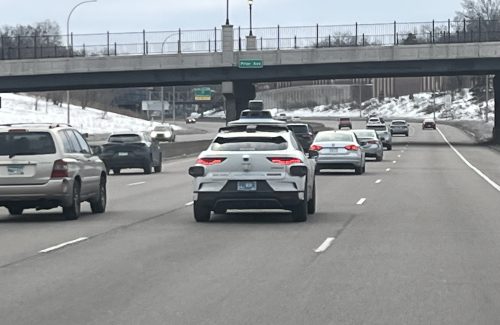
As it happens, I’ve been part of conversations about where my law firm may choose to locate in the future. We’re East Metro-based. Downtown St. Paul is too far for our Hudson-area employees. So where does my mind go next? How about Oakdale? Accessible by car, yes, but also directly on the Gold Line, the arterial BRT line that will soon extend to absorb the existing 94 bus route. A route that stops, as it happens, very close to my front door.
Put an office on that line, and my 30-minute car commute becomes a single-seat, dignified transit ride I’d actually take. Not because I’m virtuous. Because it would be convenient. Two long, daily car trips — evaporated.
Commuting trips are only part of the picture. Transportation researchers talk about trip chaining — the way a car commute pulls other errands and activities into its orbit. Today, being already out in the suburbs daily, I do some of my shopping, dining, and errand-running out there, too. It’s just easier. My kids’ school is local, but plenty of other daily life has drifted outward simply because the highway makes it frictionless.
In a boulevard future, even on days when I do drive, the calculus changes: There would be more motivation to chain car trips for errands, and perhaps the destinations would move closer to home rather than be absorbed into a long suburban run. And many days, those trips might not involve a car at all — a cargo e-bike handles more than people expect, and my neighborhood has plenty worth patronizing. I surmise that this phenomenon would directly lead to more local vitality and more community involvement. It would also mean more time being productive instead of sitting in the car.
The Community-Centric Vision of the Twin Cities Boulevard
Now imagine that instead of an SUV-filled trench, I-94 through St. Paul is a slower, tree-lined grand boulevard. A neighborhood street. A mini Champs-Élysées. The kind of place people actually want to be, without the moat and pollution that I-94 brings today.
In this vision, my commute options don’t disappear. The road network still exists. Even Stillwater is still accessible. But the infrastructure no longer puts its thumb so heavily on the scale. The highway no longer predestines my decision before I’ve even thought about it. And for a lot of trips, for a lot of people, the rational calculation shifts.
I’m not going to pretend the transition would be painless, or that every commuter has the flexibility I do. Not everyone can choose where their office goes. But the argument that removing I-94’s capacity will simply flood surrounding streets assumes that human behavior is static — that we optimize once and never again. We don’t. We respond to incentives and conditions.
Fewer of “me” out there means less traffic for those who do need or want to drive each day.
A Request to MnDOT
I am one data point. But I suspect I’m not entirely unusual — a car-dependent commuter whose behavior would measurably change if the conditions changed, in ways that static traffic models are simply not designed to capture. The question of how many people like me exist along this corridor, and how our decisions would shift under different infrastructure scenarios, is precisely the kind of question that dynamic modeling and direct community research could answer.
MnDOT should not close that door before it has at least looked through it. The “At-Grade” boulevard option should remain on the table for full, dynamic model and study. Survey the commuters. Ask questions. Use sophisticated modeling. The answers might be surprising.
Going Home
Every weekday afternoon, I get back in my car in Stillwater and drive back home to Union Park. Thirty minutes, nearly frictionless, the highway doing exactly what it was designed to do.
In a different vision for our community — one where the I-94 trench is a boulevard, with efficient, reliable transit, and an office a mere single-seat ride from my door—I don’t make that drive. I walk to transit. I grab dinner or pick up groceries near home or the transit stop instead of tacking a big-box run onto a suburban commute. My daily life re-centers around where I actually live.
Not because anyone stopped me from driving. Because the conditions that made it inevitable shifted.
I am, it turns out, exactly the person who doesn’t need I-94.
Author’s note: The MnDOT Rethinking I-94 public comment period has been extended to March 23, 2026. Please provide a public comment if you haven’t already.
All photos by the author.