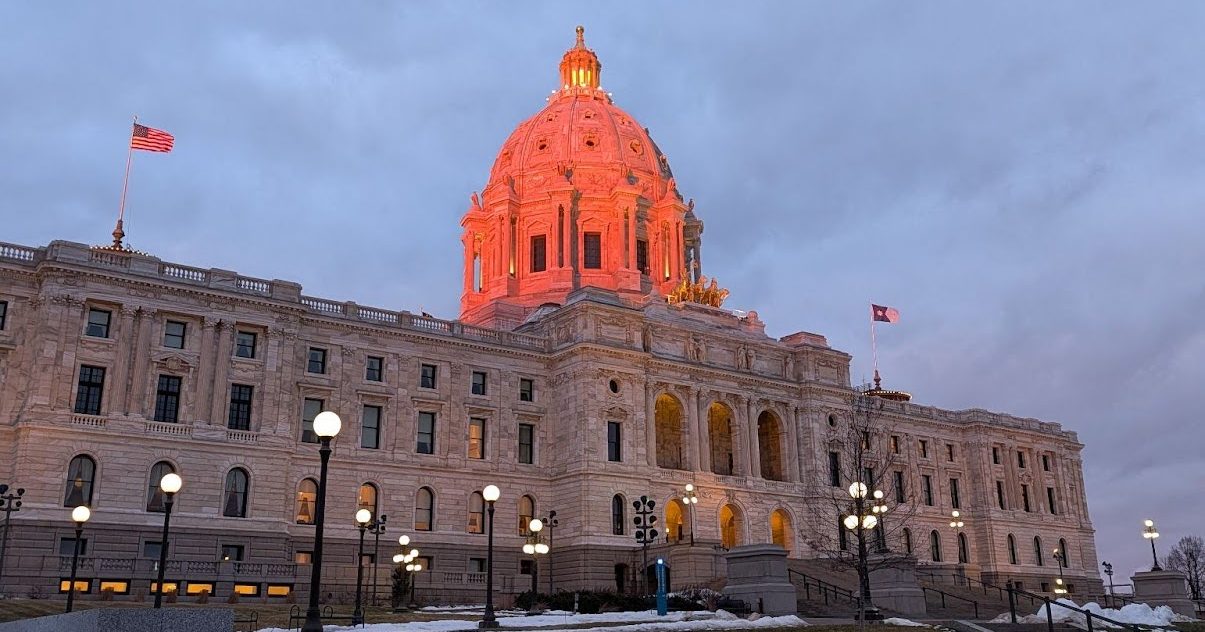
Back in February, Ian R Buck sat down with advocates from All Aboard Minnesota, Our Streets, BikeMN and the Sustain St. Paul/Yes to Homes housing coalition to preview what they hoped to accomplish during the 2026 legislative session. Go listen to that episode if you haven’t already. I’ll wait…
Now that you’re caught up: this short session is moving fast. The first committee deadline is on March 27, and the Legislature will be entering its Easter recess soon.
One thing the podcast couldn’t fully capture — what no preview really can — is how much of the legislative story is defensive. A lot of the enormous effort our urbanist organizations put in every session goes toward bills that never make it to a hearing, or barely do, precisely because people showed up and pushed back. That invisible labor is the other half of the story. Keep it in mind throughout.
Passenger Rail: Playing Defense While Dreaming Bigger
Brian Nelson framed the session around two tracks: defending the Northern Lights Express (NLX) against further raids on its appropriation, and pushing HF 3176 |SF 2887, which directs the Minnesota Department of Transportation (MnDOT) to apply for federal Corridor Identification and Development Program grants for two new routes — St. Paul to Fargo and Twin Cities to Kansas City.
On the NLX: last year, the Legislature reallocated $77 million in NLX funding to cover unemployment insurance for hourly school employees, leaving about $108 million in state funding. The project is still advancing through the Federal Railroad Administration Corridor ID process, with state matching funds for Phase I planning secured — but several House Republican bills filed this session would prohibit NLX expenditures entirely, cancel prior appropriations, or impose a moratorium on light rail spending more broadly. None have moved decisively, but they’re a steady reminder of the political weather.
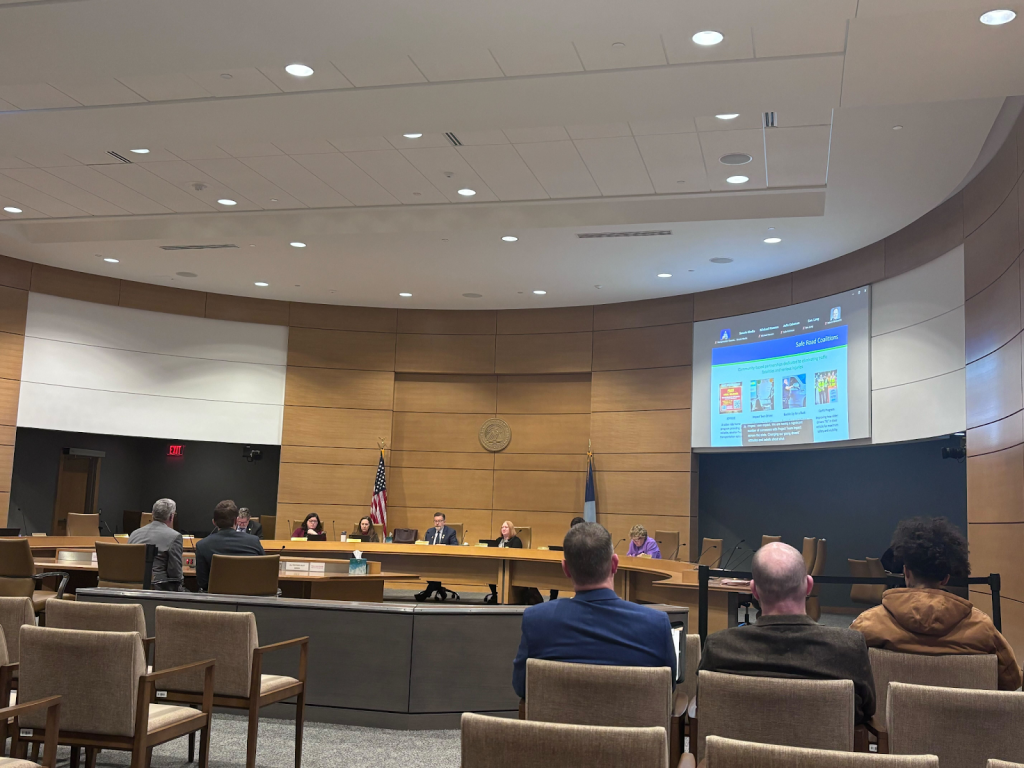
The more encouraging news is on the corridors bill. HF 3176, carried by Rep. Erin Koegel (DFL, 39A), made it onto the House Transportation Finance and Policy Committee agenda — the hearing All Aboard Minnesota said they were pushing for. Chambers of commerce and city councils in 11 cities along the two corridors have passed resolutions of support. Brian’s point in the podcast is worth repeating: MnDOT could apply for these federal grants without legislative direction. The bill is the Legislature nudging an understaffed agency toward applications that would bring in $500,000 per corridor for initial scoping. Given the uncertainty around federal transportation funding right now, getting in the queue matters.
Transportation Policy: Our Streets Plays the Long Game
Joe Harrington’s interview was the clearest read of the session dynamic. In a split House focused on bipartisan bills, sweeping transportation reform isn’t on offer. The question is what you can move — and what you’re setting up for 2027.
Our Streets’ flagship bill, HF 3728 (Fix It First, Fix It Right), sponsored by Rep. Koegel, is Our Streets’ most bipartisan-adjacent item. Our Streets’ testimony in support lays out the numbers: MnDOT faces a $15 billion to $20 billion maintenance shortfall over the next 20 years, Minnesota has the fourth-largest road system in the country by lane miles despite ranking 22nd in population, and poorly maintained roads cost drivers roughly $480 per year in extra vehicle repairs. The bill would require MnDOT to meet maintenance standards before adding new highway capacity. It’s hard to argue you’re being fiscally responsible while building new lane miles on a system you already can’t maintain.
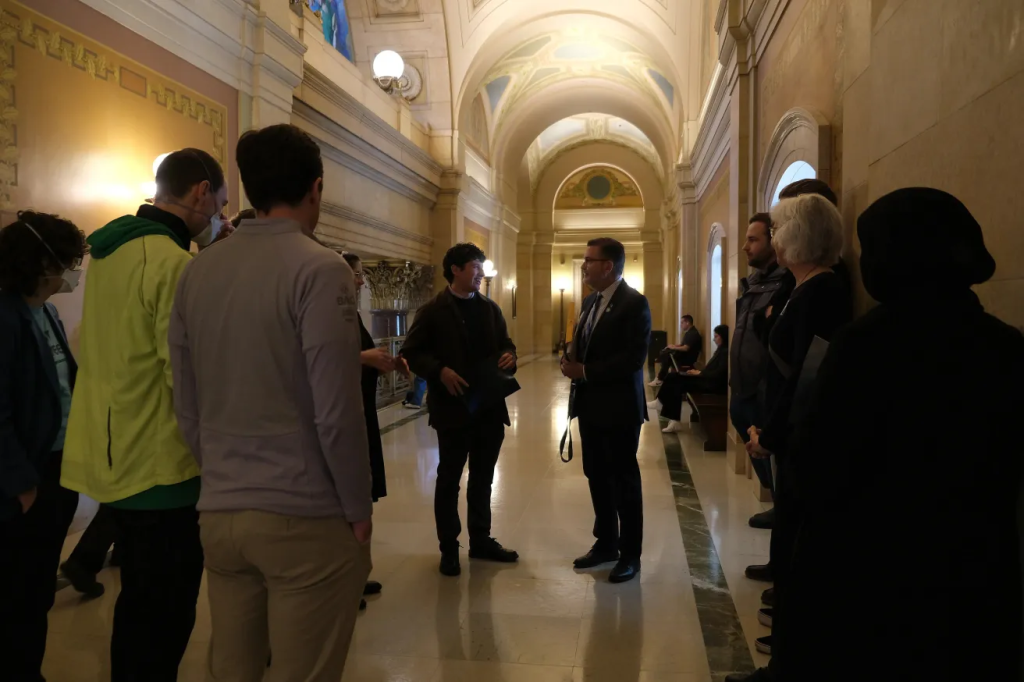
Our Streets is also pushing to clarify the definition of “highway purposes” so that highway dollars can fund transit and active transportation within a corridor — the Central Avenue F Line BRT situation, where misaligned funding streams nearly added years of delays and $18 million in costs, is the clearest local example of why this matters.
On the transit governance front, Rep. Jon Koznick (GOP, 57A) introduced HF 4111, which would consolidate the Twin Cities’ four “opt-out” suburban providers — Mn Valley Transit Authority, SouthWest Transit, Plymouth MetroLink and Maple Grove Transit — under Metro Transit and the Metropolitan Council. A mandated report found these agencies costly and duplicative; the Met Council estimates $24 million in annual savings. The bill cleared committee over near-unanimous testifier opposition — its unusual topology being that it was authored by a Republican and fiercely opposed by suburban communities that tend to lean Republican.
Finally, Our Streets is pressing legislators to push MnDOT to use the Minnesota Environmental Policy Act to uphold environmental justice standards in major project reviews, after the Trump administration stripped those requirements from federal documents. MnDOT has largely capitulated. Given that both the Highway 252 expansion and the Rethinking I-94 process are in active environmental review, that matters a lot right now. Our Streets has a full policy position on commercial autonomous vehicles (CAVs) worth reading alongside this.
CAVs: Pump the Brakes on Waymo
The issue the podcast didn’t preview — but that has eaten significant committee time — is connected and autonomous vehicles. Waymo began testing in the Twin Cities last fall and wants a legislative framework to operate commercially here.
Two bills emerged. HF 3513, backed by Waymo, would establish an AV framework and preempt cities from setting their own rules. A competing DFL-authored proposal, backed by the Teamsters and AFL-CIO, called for a safety and labor impact study before authorizing commercial operation — relevant given that more than 100,000 Minnesotans hold professional driving jobs. The Koznick bill failed to advance out of committee 7-8, with DFL members holding out for amendments on wheelchair accessibility, an operational study period and labor protections. The debate isn’t over, but for now the brakes are on. Our Streets’ concern, laid out clearly in their CAV policy position, is not the technology per se — it’s that autonomous vehicles arriving decades after we stopped adequately funding transit would entrench car dependency while delivering profits primarily to a Bay Area corporation rather than Minnesota communities.
Move Minnesota: Eyes on 2027
Move Minnesota couldn’t make the February podcast, so they’re getting their due here. Their Policy and Community Specialist Abdinasir ‘Nas’ Nourkadi was straightforward about where things stand: none of their proactive bills are expected to clear the first committee deadline. That’s not a surprise given the session dynamics — but it doesn’t mean the bills go away. Move Minnesota is pushing to get hearings on at least a couple of them before the deadline specifically to build the legislative record heading into 2027. The priorities include their Transit for a Resilient Metro proposal, free fares legislation building on the pilot Metro Transit has been running on select routes since 2023, and a commuter benefits bill that would make it easier for employers to offer transit incentives to workers. Like a lot of the work in this article, it’s less about this session and more about setting up the next one.
Worth remembering what Move Minnesota is working against: last year’s transit cuts took $86.3 million from Metro Transit over four years. Those cuts were a lot smaller than the $130 million the governor originally proposed and the $105 million the House passed in May — because advocates showed up and kept showing up. That’s the job. This session is more of the same.
BikeMN: Doing the Most with a Constrained Session
Full disclosure: I work at BikeMN. Take my perspective for what it is. The 2026 BikeMN legislative priorities hold up well on their merits, and the organization has been as strategic as I’ve seen it in a constrained session.
The big call this session was canceling the Transportation Equity Day on the Hill — a real loss, but the right call given how many of our community members aren’t safe traveling to St. Paul right now. BikeMN pivoted to virtual engagement tools instead.
Now, a bill that didn’t make the preview podcast: Rep. Mary Frances Clardy (DFL, 53A) introduced HF 3774, which would have required bicyclists in bike lanes to come to a complete stop at yellow lights. BikeMN Executive Director Michael Wojcik testified against it: “One of our goals is to clear bicyclists from intersection stops as quickly as possible, which is a point of danger.” He’s right — a yellow light is a signal for drivers to slow down, not a cue to hold people on bikes stationary in a conflict zone longer than necessary. The bill was introduced with genuine good intentions following a crash involving the bill author’s family, and BikeMN took pains to say so at the hearing. But good intentions and good policy aren’t the same thing. The bill was laid over for possible omnibus inclusion. Urbanist organizations spend enormous energy on bills like this. That work is largely invisible. It’s why we donate to them.
On the proactive side: BikeMN worked with Families for Safe Streets in support of Rep. Larry Kraft’s (DFL, 46A) HF 3429, which would create a mandatory Intelligent Speed Assistance program for drivers who lose their licenses due to serious speeding violations. The logic mirrors last session’s ignition interlock expansion for repeat DWI offenders. Kraft put it simply: “About 30% of deaths on our roads are primarily caused by speed. For every 10 miles per hour increase in speed, the risk of dying in a crash doubles.” The bill cleared the House Transportation Finance and Policy Committee and moved to House Judiciary.
The e-moto definition bills — HF 3785 |SF 4186 — are BikeMN’s clearest bipartisan win. The e-bike “crisis” in the news is mostly an e-moto crisis: devices exceeding federal thresholds that are being marketed as e-bikes. Minnesota’s own 2026 Electric-Assisted Bicycle Youth Operation Study confirmed that stakeholders consistently pointed to e-moto use — not e-bike use — as the safety problem, and specifically warned against over-regulating legal e-bikes in response. I wrote about this in the Star Tribune earlier this month.
BikeMN is also pushing jaywalking decriminalization (SF 1836 |HF 1509). Only about 435 citations were issued statewide over the past five years, and the proposal simply removes crossing mid-block as a primary offense while preserving citations when someone actually creates a hazard. The Senate bill passed in 2025 and is now on the table for Conference Committee inclusion; the House companion stalled after the Minnesota Police Chiefs Association came out in opposition. The politics are messier than the policy. This matters most for people with disabilities who can’t always reach a crosswalk and for people of color who have historically faced disproportionate pedestrian stops — and it’s a reform that BikeMN has the receipts to back up.
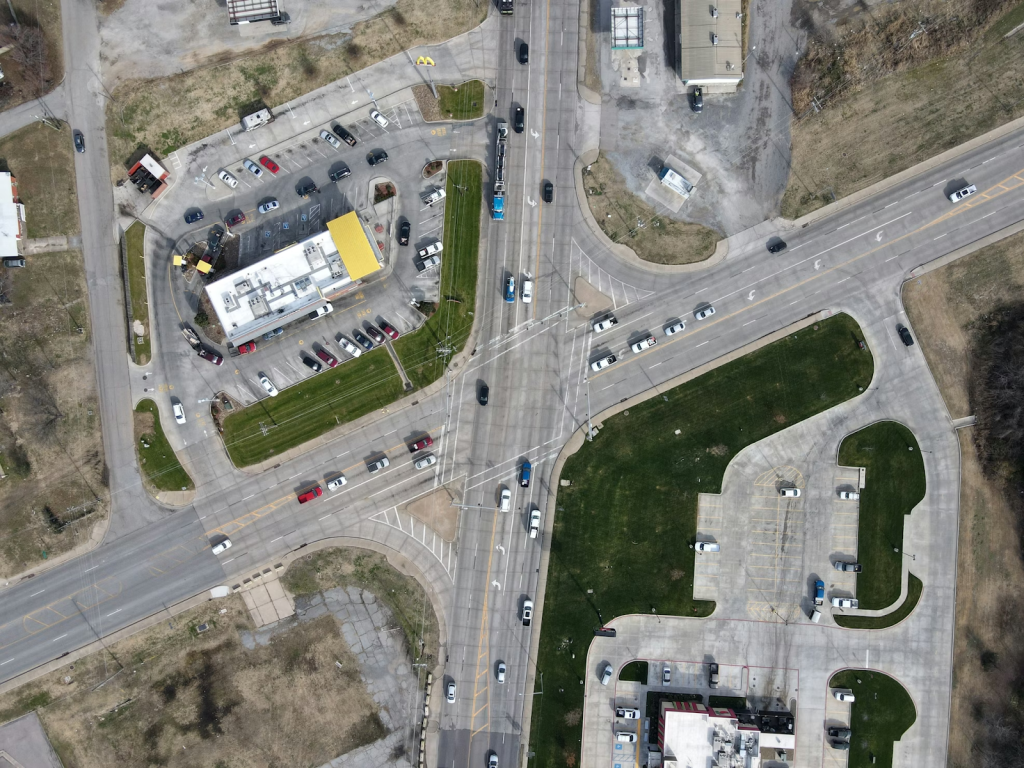
SF 2162, carried by Sen. Scott Dibble (DFL, 61), is the most consequential bill in the BikeMN package that almost nobody outside the advocacy community has heard of. A huge swath of the roads that run through our neighborhoods — Central, Snelling, Lyndale, Portland, Pelham, hundreds of others around the state — are designated Municipal/County State Aid roads, receiving state funding in exchange for being built to Minnesota State Aid design standards originally written in 1957. Those standards still frequently force roads to be overbuilt for car speeds, leaving cities unable to build safe bike infrastructure without going through a variance process that advocates describe as routinely ineffective. SF 2162 would let cities use any nationally recognized design standard approved by the Federal Highway Administration instead. BikeMN has a plain-language explainer on what MSA standards are and why they matter. The Pelham Avenue bikeway in St. Paul — built to substandard widths because MSA lane standards left no room for a safe facility — is the local example that came up in the podcast.
Housing: Third Time’s the Charm?
Jacob Hooper and Cody Fischer from Sustain St. Paul were cautiously optimistic in February. The picture is messier now.
The Yes to Homes zoning reform package (HF 3895), backed by Neighbors for More Neighbors and a broad bipartisan coalition, had cleared housing committees in both chambers and had even gotten the League of Minnesota Cities to stop actively lobbying against it. Gov. Walz has said he’ll sign it. Then on Monday the House Elections, Finance and Government Operations Committee voted 5-7 against advancing the bill to the floor.
Yes to Homes Coalition Coordinator Linnea Goderstad put it plainly to the coalition: “The outcome was not what we’d hoped for.” The bill isn’t dead — a compromise is still being sought — but with the first deadline this week, any path forward now runs through Rules and Legislative Administration first. A Senate hearing this week is also off the table.
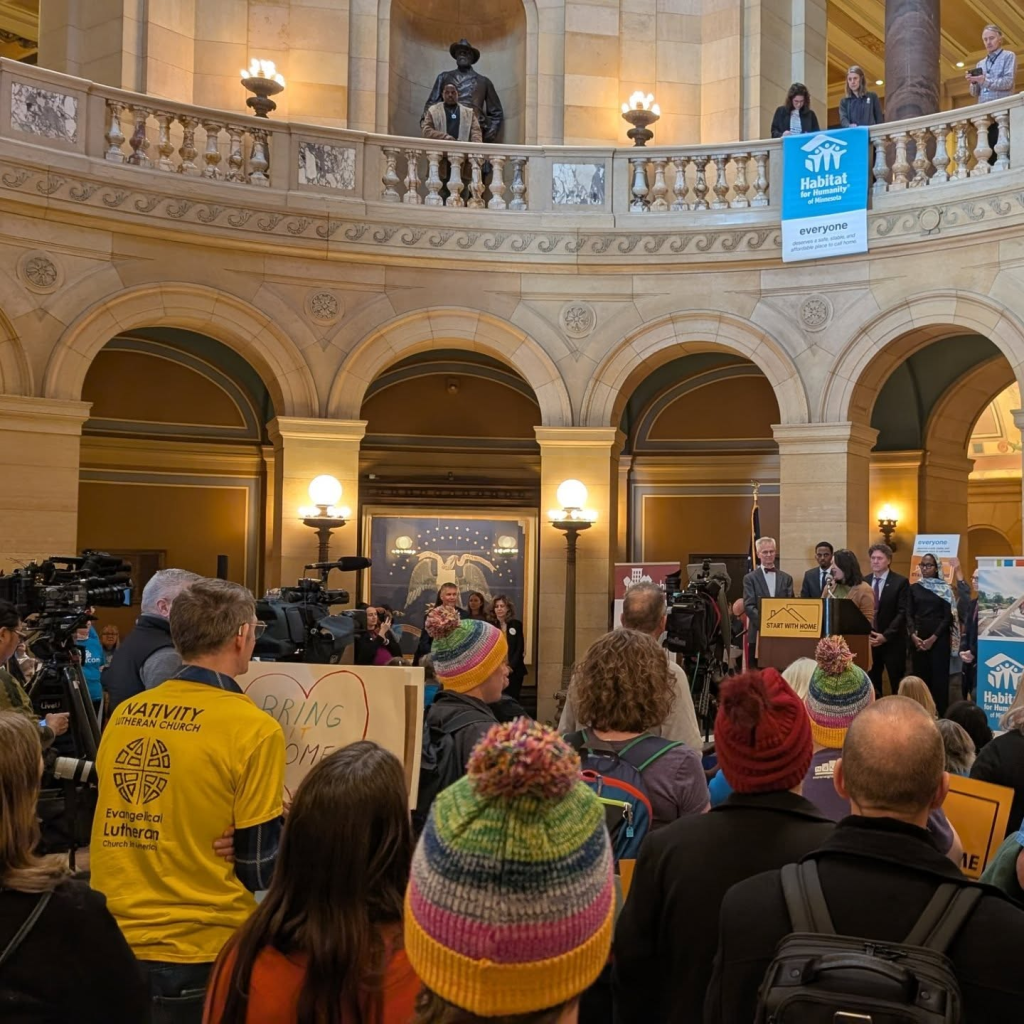
The coalition is right that the progress made this session doesn’t disappear. Three years of work, a League of Cities that blinked, a bipartisan committee chair pairing that moved the bill further than it’s ever gone — tangible progress is being made. Whether a compromise materializes in the remaining window is the question. We’ll find out shortly.
On land value tax and single stair reform: both are still building. The Construction Codes Advisory Council unanimously approved a single-stair proposal for buildings up to six stories last November, finding the design safe with enhanced sprinkler inspections. The Department of Labor and Industry wants to shelve it until 2030. Four years is a long time to wait on a unanimous recommendation. If you want the deep dive on land value tax, we did an episode on it in 2022.
What to Watch
The committee deadline is March 27. In the coming days we’ll know which bills cleared and which are being reworked for 2027 — which, if the political winds shift, could be a far more productive session for all of these issues.
Stay engaged by signing up for newsletters from the five organizations that joined us on the podcast. And if you’ve made it this far, please consider backing their work directly:
- Donate to All Aboard Minnesota
- Donate to BikeMN
- Donate to Neighbors for More Neighbors
- Donate to Our Streets
- Donate to Sustain St. Paul
- Donate to Move Minnesota
- Donate to Sierra Club North Star Chapter
Citizen advocacy works. Now let’s get to work.