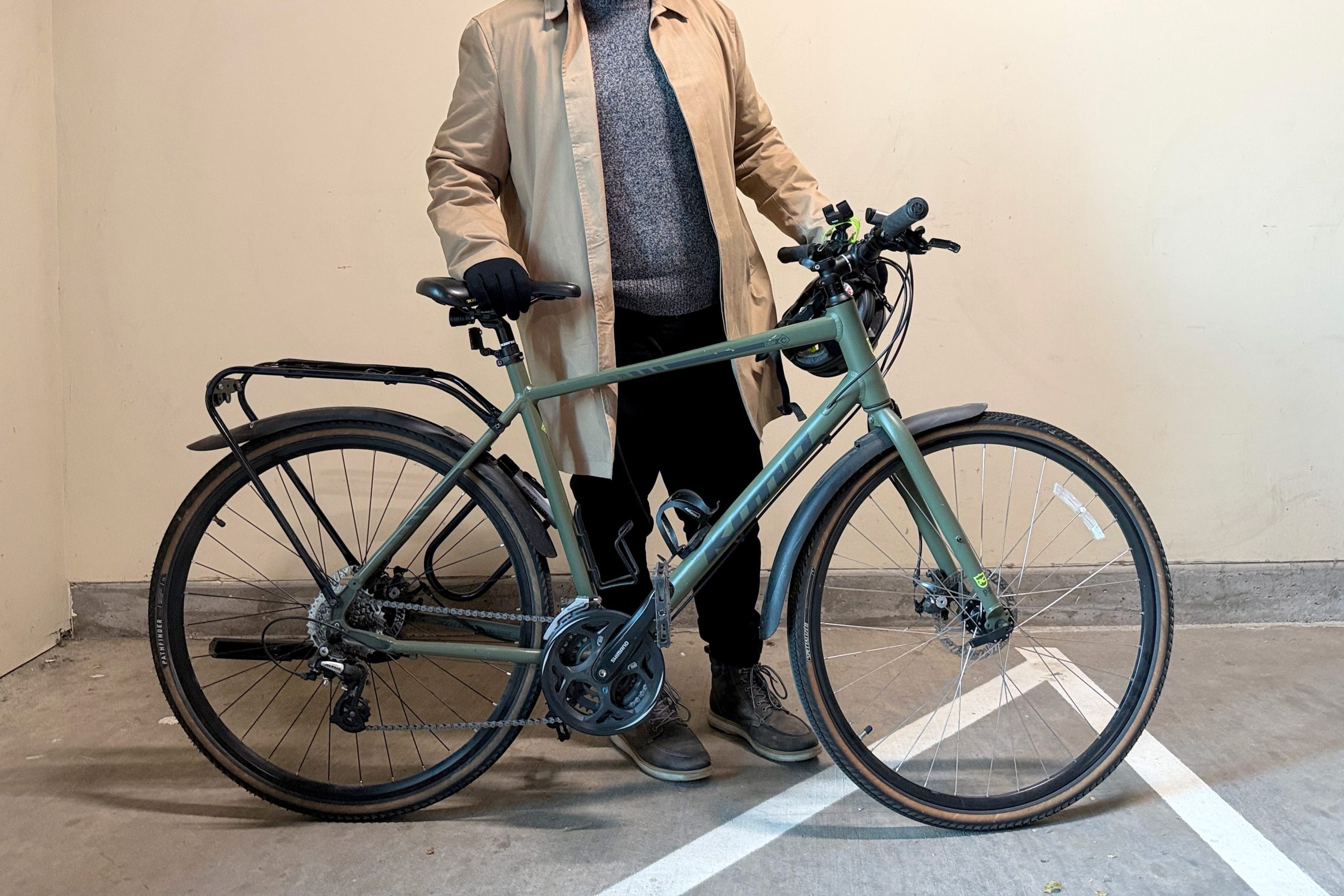
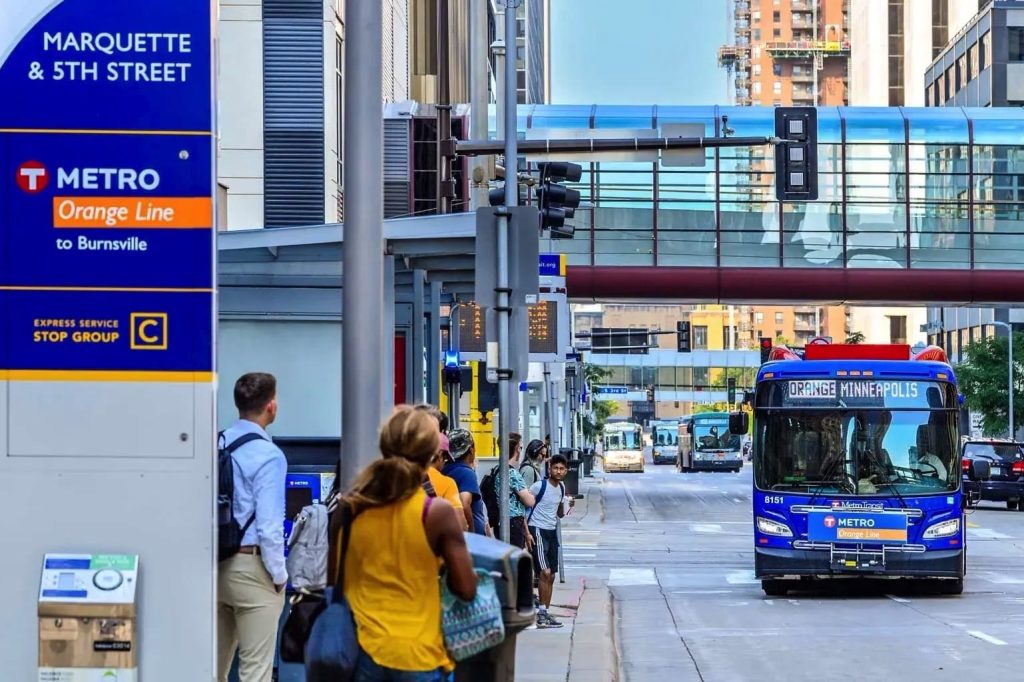
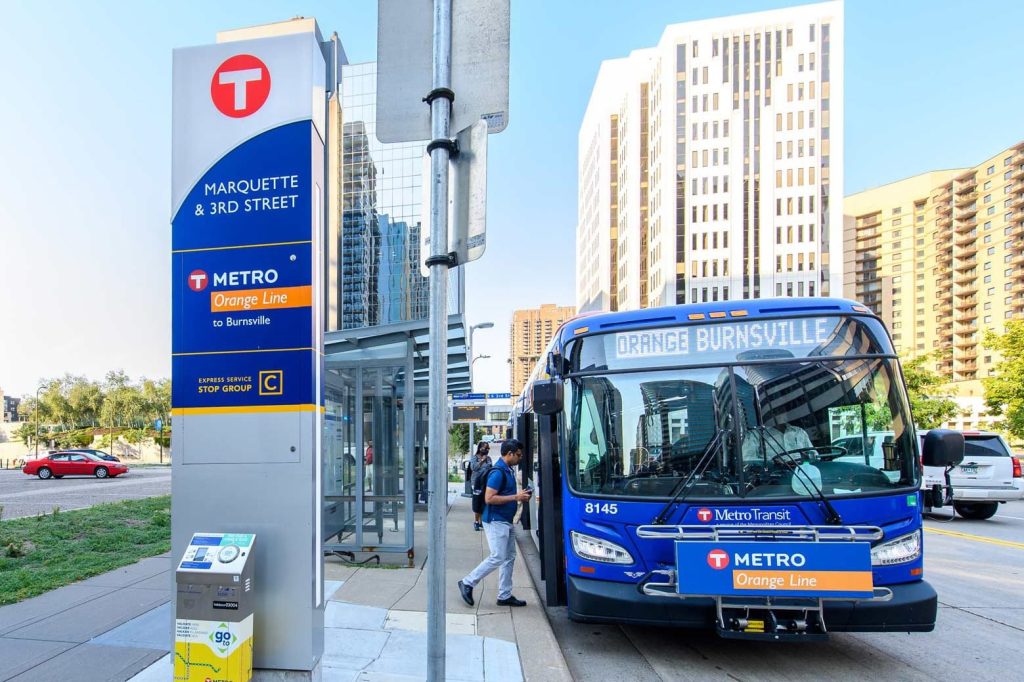
Connor Carroll lives in the Kingfield neighborhood and works in Downtown Minneapolis. He takes the METRO Orange Line bus rapid transit northbound on Interstate 35W to Downtown. On a typical Monday, the commute takes 20 minutes by bus to arrive for work in the morning, then 20 minutes again to return to Kingfield, leaving work in the early evening. This relatively quick commute is the result of local and state transit investment in dedicated transit lanes on I-35W and in Downtown on Marquette Avenue and 2nd Avenue South.
“Improved frequencies for the Orange Line were part of Metro Transit’s Network Now Plan, a direct result of dedicated transit funding,” said Carroll. “It’s really easy to commute by bus. During my rush hour commutes, the Orange Line runs every 10 minutes, which means I don’t have to think about the bus schedule anymore. I can just walk to the bus stop and there will always be a bus coming.”
Carroll also owns a 2012 Toyota Corolla, which drives 30 miles per gallon (MPG). Driving to Downtown from Kingfield could take about 8 minutes less on the combined trips without waiting for the next bus and walking to the station, but the best deal on parking near his office is $11.99, and gas for the trip is about $1.19 with today’s gas prices ($4.511 a gallon).
Effectively, Carroll would need to make $69 an hour, and be paid for that extra 8 minutes a day, for driving to make financial sense. Even if gasoline was free, and Carroll just paid for parking alone, he would need to be paid over $59 an hour for the math to square.
Car dependency is expensive. The price of a new car, excluding financing costs, has risen nearly 22% since the onset of the COVID-19 pandemic in March 2020. The average price of a new car now is over $50,000, according to Kelley Blue Book.
Derek Eicholz lives in the Marcy-Holmes neighborhood of Minneapolis and typically cycles to work in Near North, across the Mississippi River. The commute by his car (which gets 26 MPG) is less than 3 miles and takes typically up to 12 minutes on a Monday rush hour. By bike, he takes the Stone Arch Bridge and West River Parkway separated bikeway, which can take about 15 minutes.
Since Eicholz does not pay for parking at work, the total direct marginal cost of driving for a workday is about $0.96 for gas. The cost of an all-day Metro Transit bus fare is $4.00. Since driving is both the quicker and more costly option than biking, Eicholz would need to be paid $19 an hour for biking to be competitive on direct monetary costs. But biking also has many harder-to-measure physical and mental health benefits, and the externality benefit of reducing carbon emissions.
“Bike rides to and from work are some of the best parts of my day. I love seeing all the folks out on Stone Arch Bridge and West River Parkway on my way to work, as well as getting to see the city lit up at night,” Eicholz said. “It helps me feel a lot more connected to my city and neighbors than when I drive.”
Eicholz loves to bike nearly all of his commutes and his trips to local music concert venues like First Avenue and Target Center. Part of the cost savings is not needing to park Downtown for events. “First Avenue venues make it easy by allowing you to check a bag for free,” he said. “Last year I went to 94 concerts, so parking costs would add up fast, and I definitely couldn’t afford to go to that many if I was paying for parking every time.” Eicholz said he puts the savings into going to more concerts and buying artist merchandise.
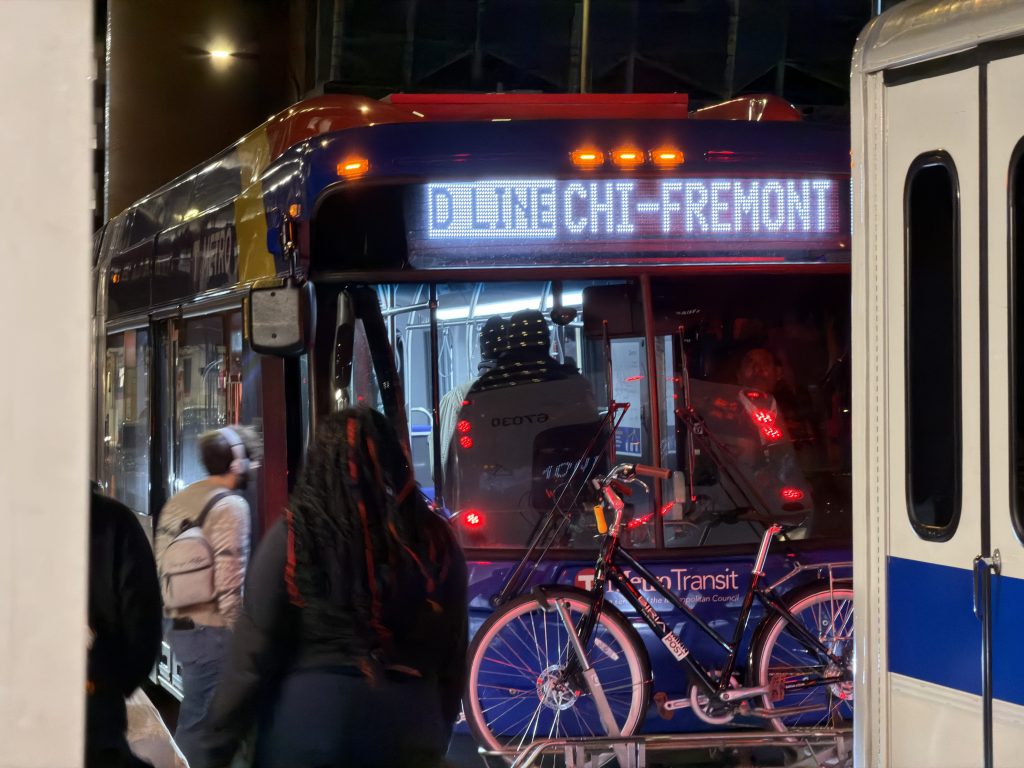
The feeling of passing lines of ride-hail drivers at midnight during the humid heat of summer is priceless. Eicholz said that he is getting more used to biking in less-than-ideal weather for the inevitable day when his car is no longer serviceable.
“I don’t plan to buy another car, so I want to be ready and experienced to make that transition of not having a car to fall back on,” he said. “If I have a concert in St. Paul, I’ll usually drive since biking would be too far and take too long, and unfortunately the light rail is too slow. I’ve been meaning to try Bus Route 94, and the Gold Line Extension should help.”
Nearing the middle of May, the Minneapolis-St. Paul average gas price for regular grade was $4.167 per gallon, while the national average was $4.511. One year ago, the Minneapolis-St. Paul average was $2.909. The average fuel economy of cars on the road (not including light trucks and vans) in the U.S. is 24.40 miles per gallon.
Metro Transit has two light rail lines servicing Minneapolis and St. Paul, with extensions both under construction and in final planning. The transit agency has eight bus rapid transit lines in service, with four in development. Service on bus rapid transit lines like the Orange Line is up to 25% faster than local buses, thanks to signal priority, wider stop spacing, off-board fare payments, all-door boarding, and bus lanes, like those on I-35W and Marq2 streets in Downtown Minneapolis. Bus rapid transit ridership more than doubled between 2022 and 2024.
The upcoming METRO H Line bus rapid transit project will be in service by the end of 2029. This exciting project for Downtown Minneapolis adds an arterial bus rapid transit from North Loop through to the University of Minnesota and Dinkytown along the Washington Avenue corridor. More students in Marcy-Holmes will be able to easily bar-hop in Downtown safety with a transit driver. More North Loop and Downtown residents will have easy access to events in the University district without worrying about parking or driving home.
The cost of any commute to classes or work is a combination of both monetary costs like ticket fares, parking, driving costs, insurance, and financing a car, as well as the opportunity cost of taking time to commute. Many workers would rather have more flexibility or a fully-remote schedule than ask for higher raises. According to economic research in 2022, 52% of companies agreed that they made remote work more available to offset potential wage growth. In a 2025 Harvard paper, 40% of workers surveyed would take a 5-10% pay cut to keep their existing fully-remote job. But this dropped to 21% keeping their fully-remote job if the pay cut was 10-20%. The paper framed the choice in pay cuts instead of incentives to accept a job offer, suggesting levels that executives can cut pay and benefits.
How does your commute compute? What Metro Transit new lines are you most excited for? Share this article on social media and share your transportation story. If you work remote, share how you are saving on commutes and other expenses of in-person work. Thanks for sharing, and happy commuting!