Note: In Duluth, avenues run north to south, while the streets run east to west.
My name is James Buchanan, a graduate of the University of Minnesota Duluth, with a major in Communication and a minor in Journalism. I know that if we are to fight obesity, as well as promote human-powered mobility and transit use, usable sidewalks are a must for any community.
In this column, I took up the challenge of writing on “disability & mobility” by covering the sidewalks on Duluth’s West 1st Street, between Mesaba Avenue to the east and Piedmont Avenue to the west. Writing this column would end up being an experience in growing my practice for my shoe-leather journalism.
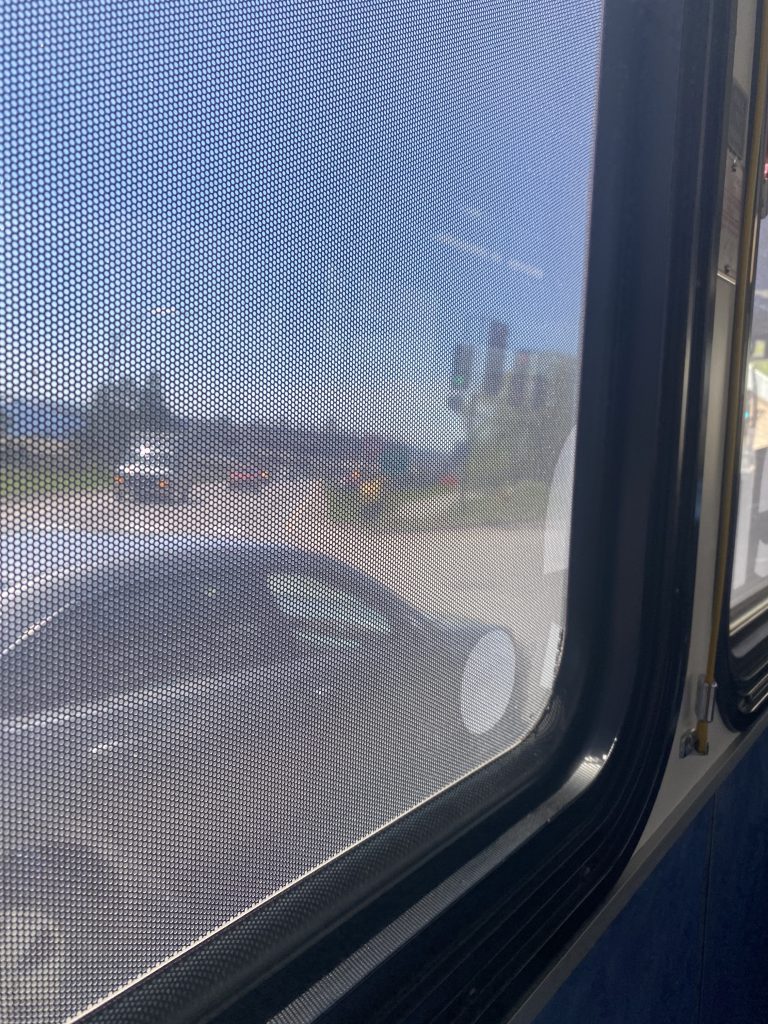
Instead of attempting to cross very busy Mesaba Avenue, I took a westbound city bus. Today, my bus is running on West 1st Street to avoid construction on Superior Street. As Minnesota residents know, Minnesota has 2 seasons — winter and road construction.
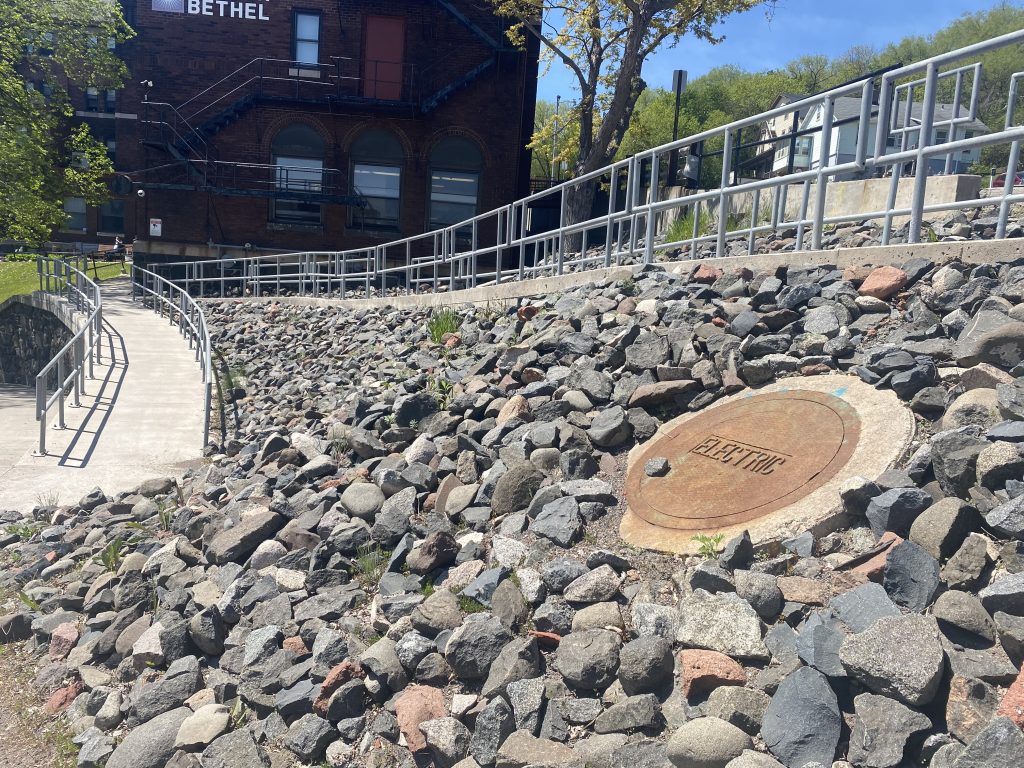
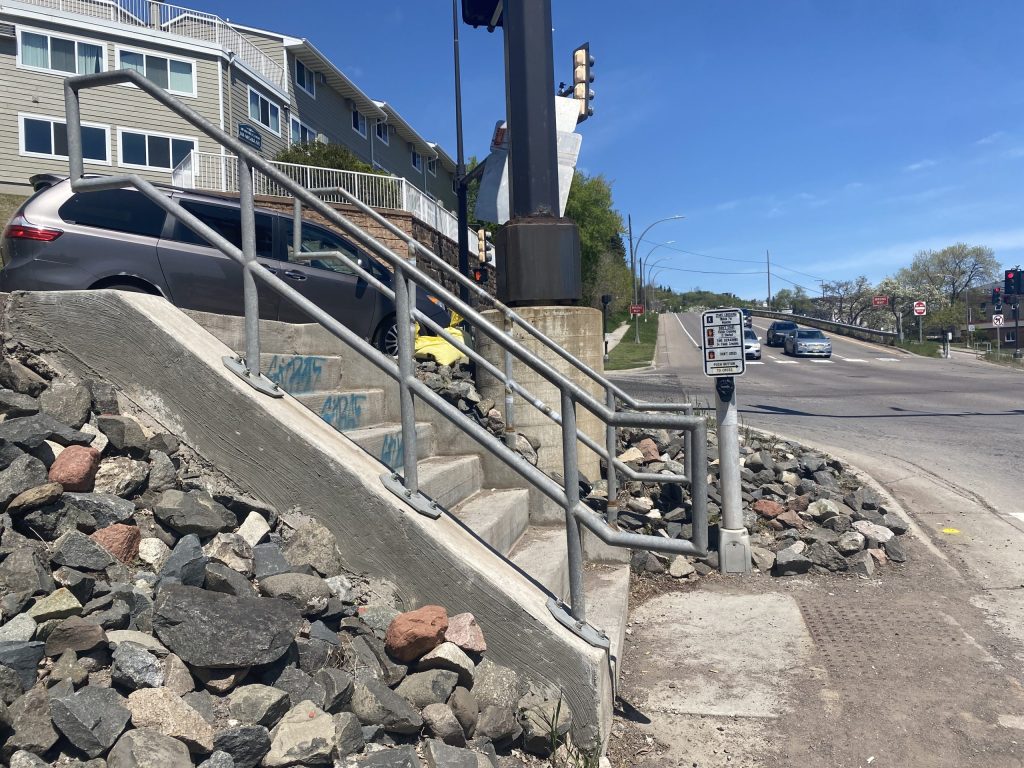
For human-powered mobility, you have two options to get from Mesaba Avenue to 1st Street via the south side: a 150-foot concrete ramp or a steep set of stairs. On the north side, there is a low-slope sidewalk that soon ends in a private parking lot. Therefore, I took the sidewalk on the south side of the street.
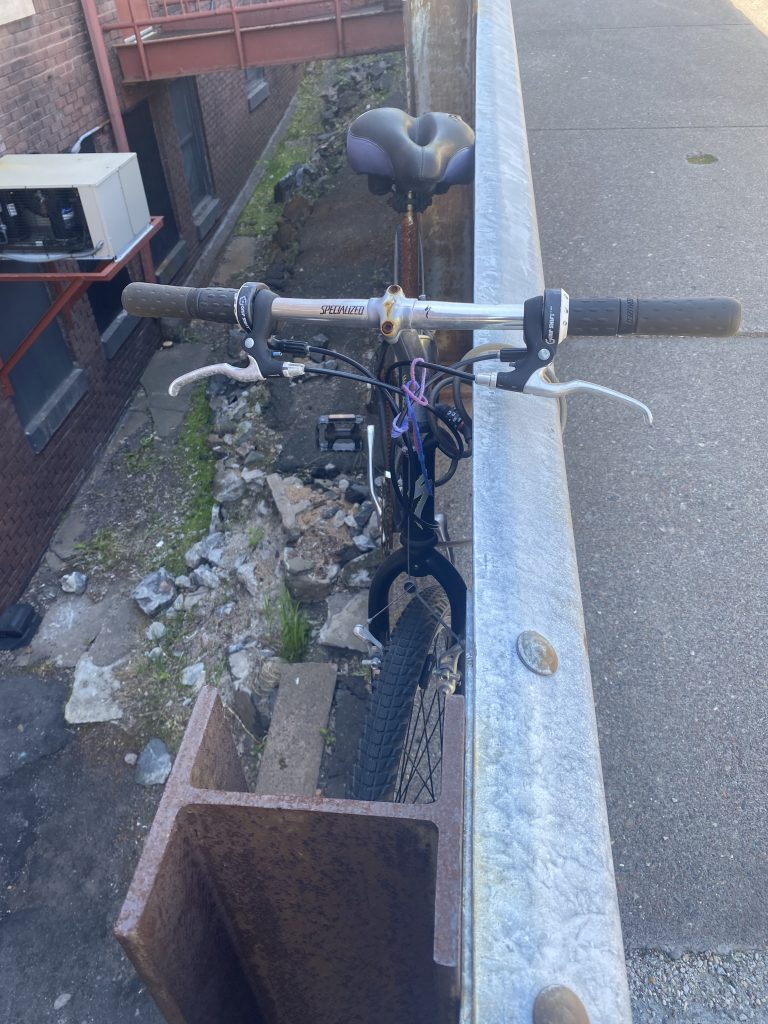
Near the Bethel Work Release building, I found someone’s bicycle locked on a fence. The bicycle is on a narrow ledge, next to a long drop to the ground.
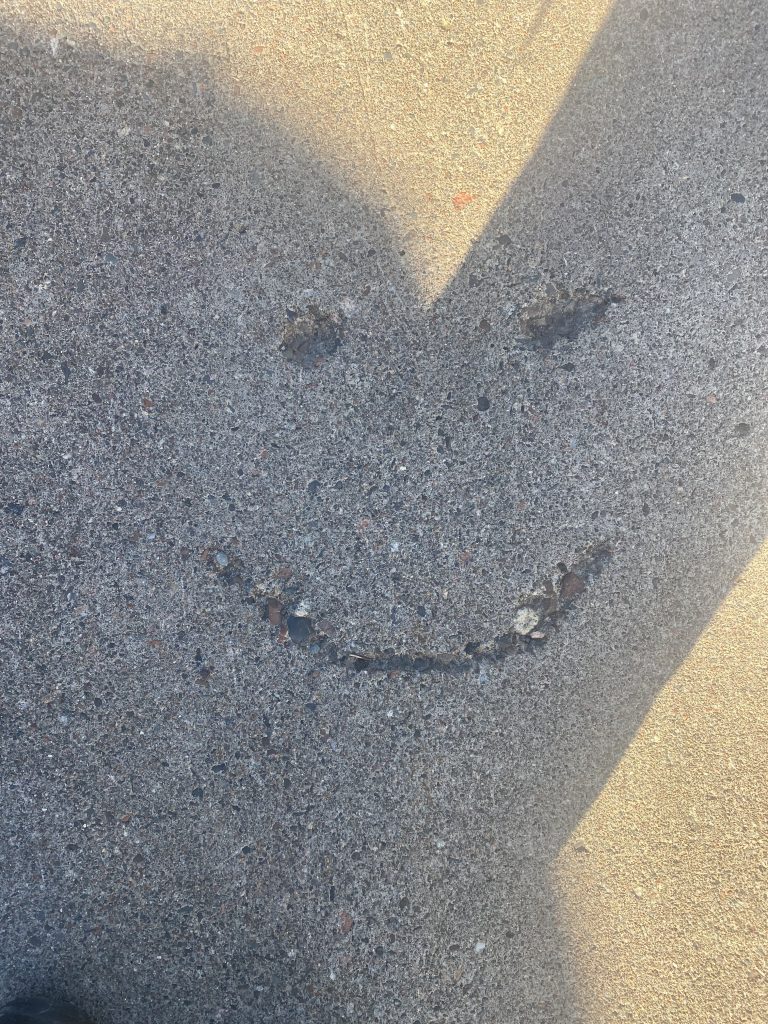
On the north side of the street, I found a smiley face in the sidewalk. This was the only bit of humor in an otherwise dangerous walk.
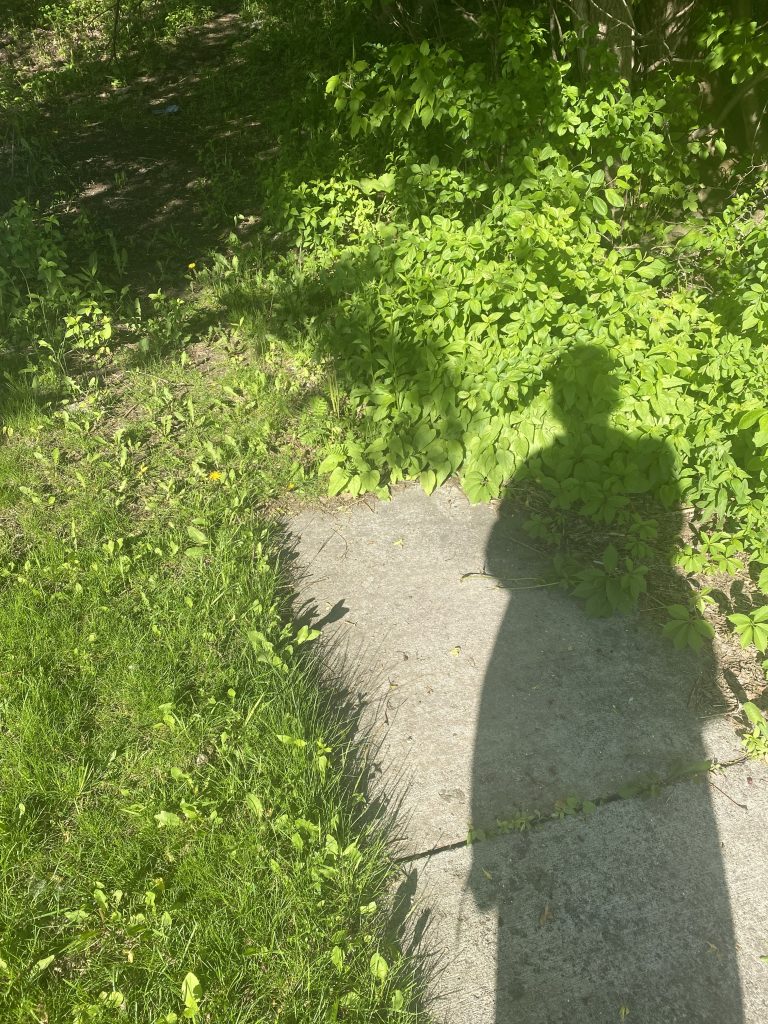
The northern sidewalk ends without any warning to those transporting themselves using human-powered mobility.
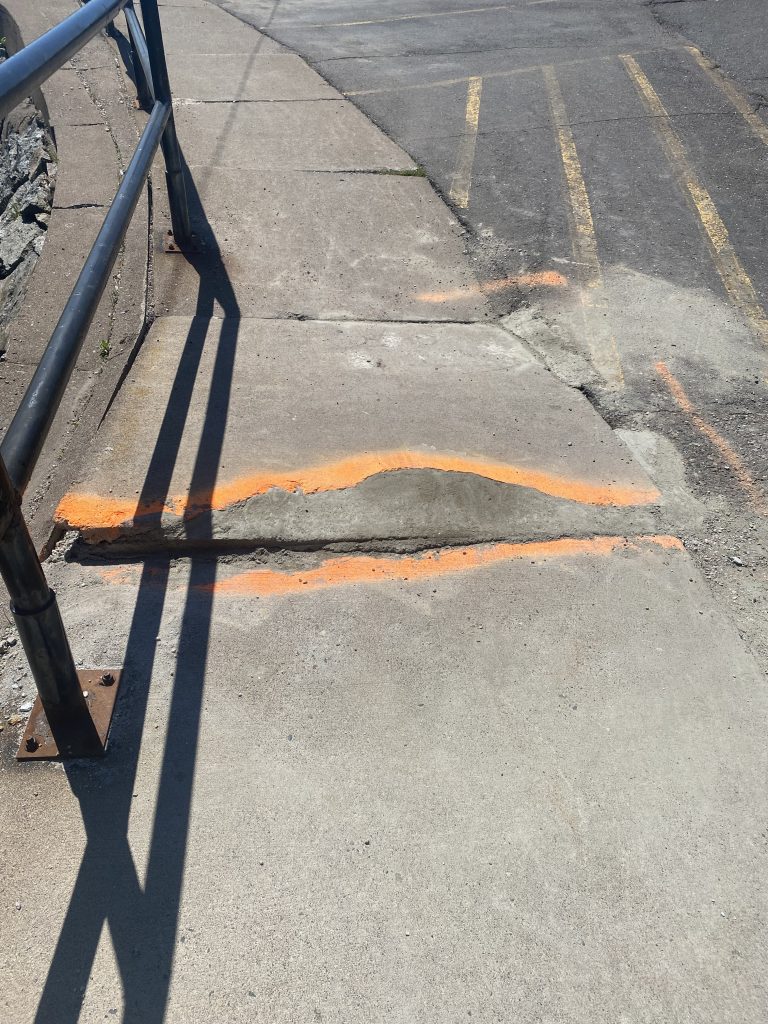
Moving on the south side of the street, I found that the side winds in a curve around the Bethel Work Release parking lot. There is a sidewalk panel that’s pushed up, creating a dangerous trip hazard. The only thing that city crews did was to paint orange lines on the sidewalk. Those orange lines do nothing to warn those people with impaired vision.
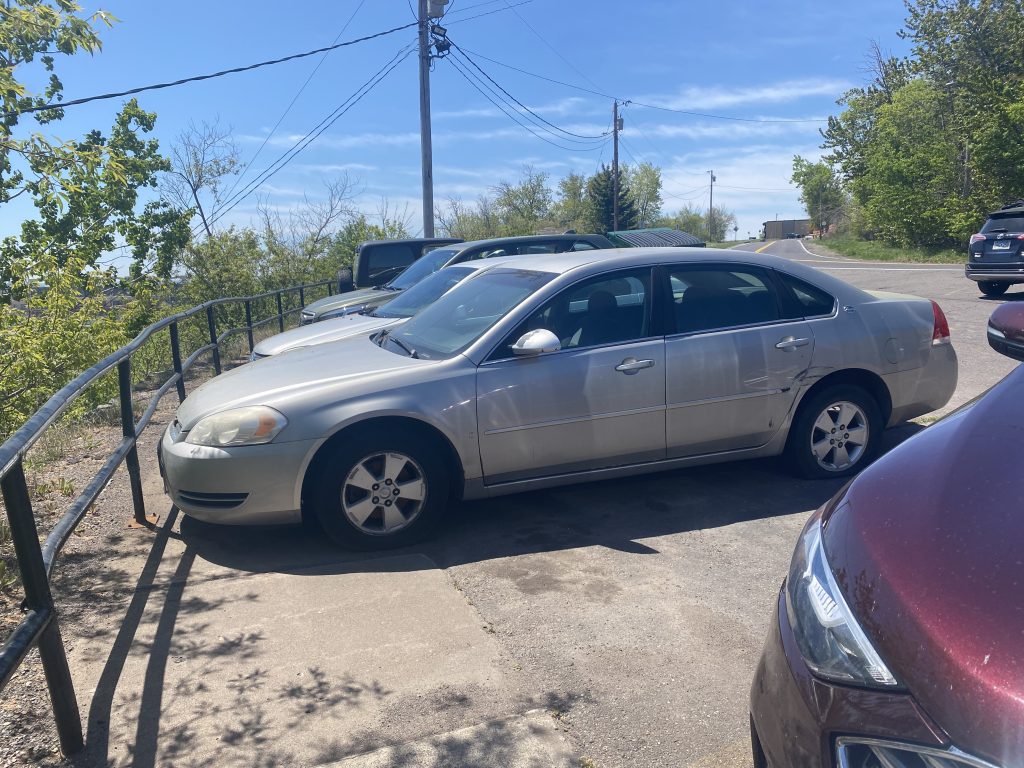
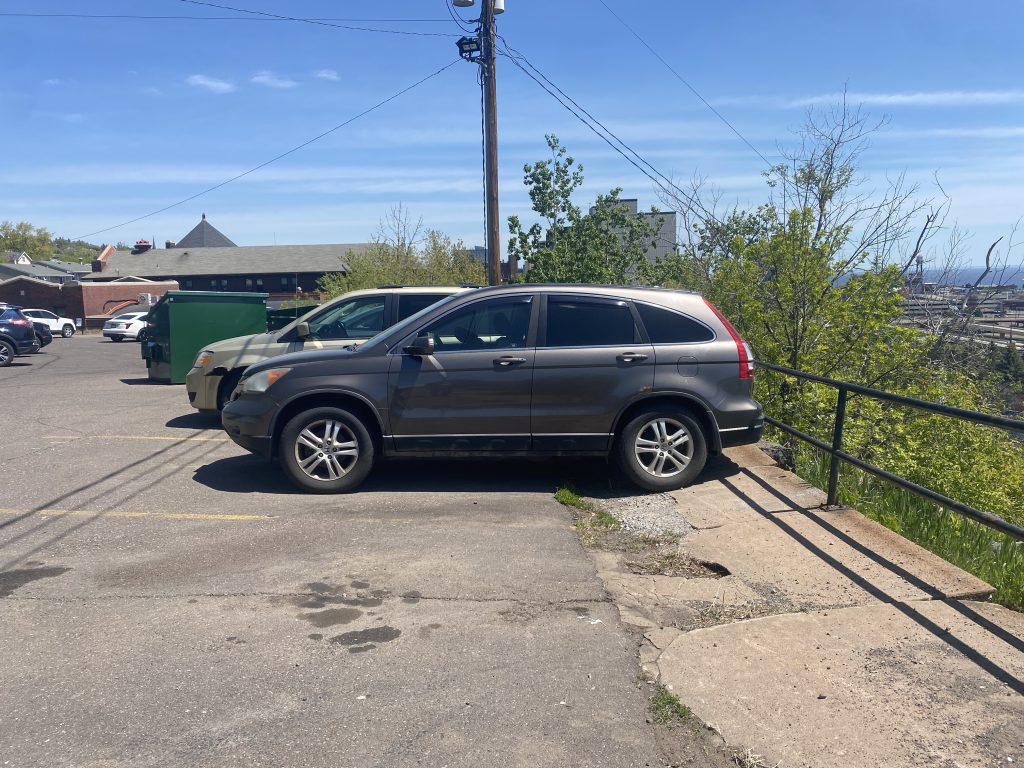
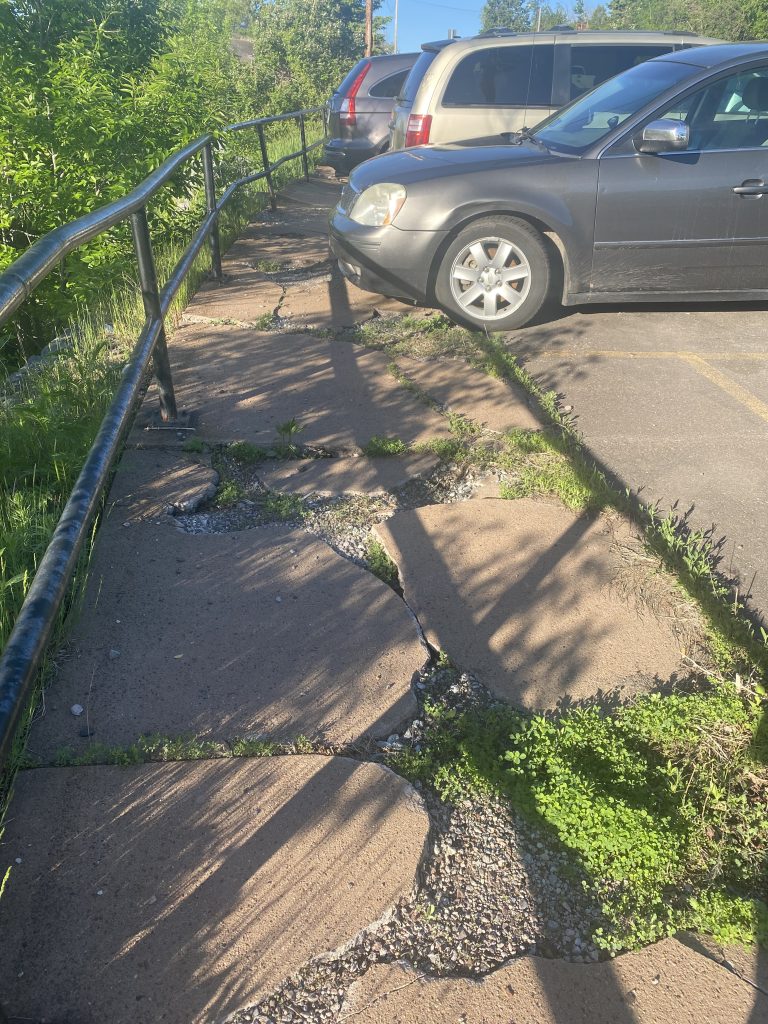
Because the sidewalk lacks sidewalk curbs, I found many cars parked on the sidewalk, their bumpers inches from the steel railing, forcing people to walk around these vehicles. In the past, I have seen cars parked on Duluth bicycle lanes, but never parked on the sidewalks until now.
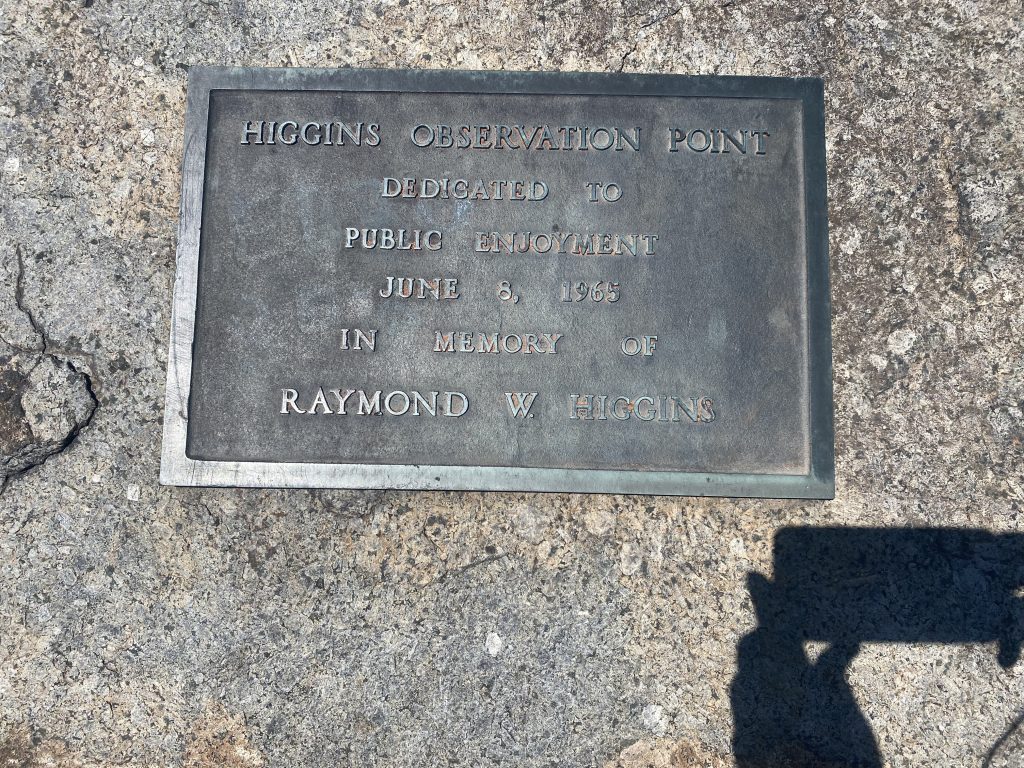
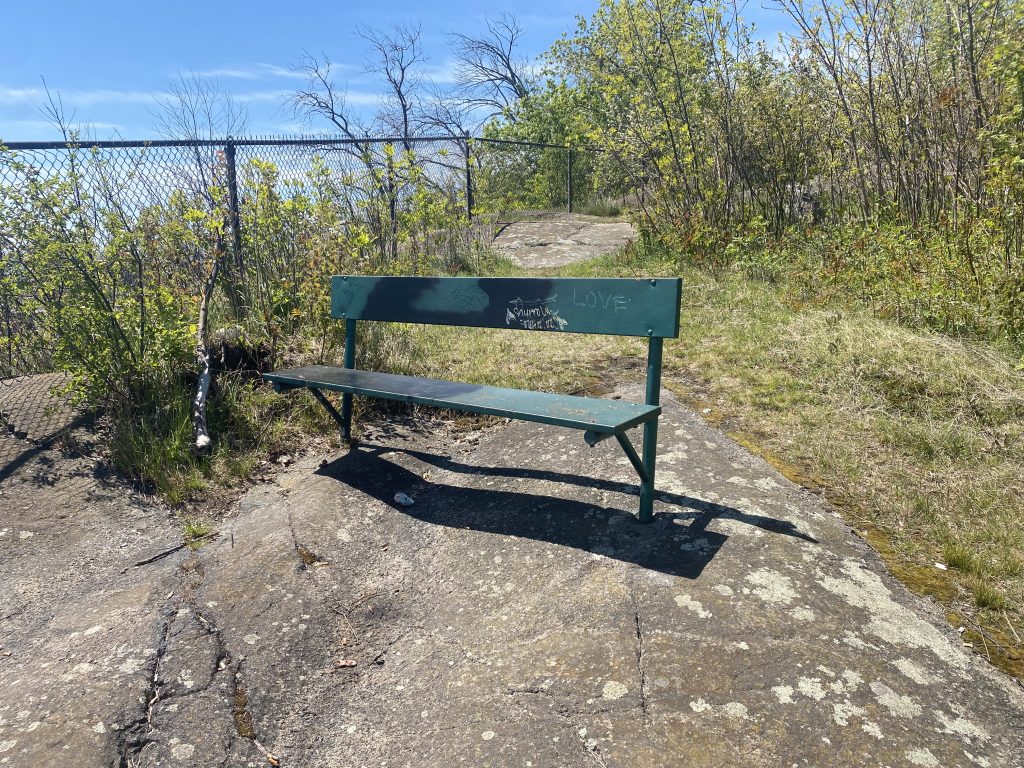
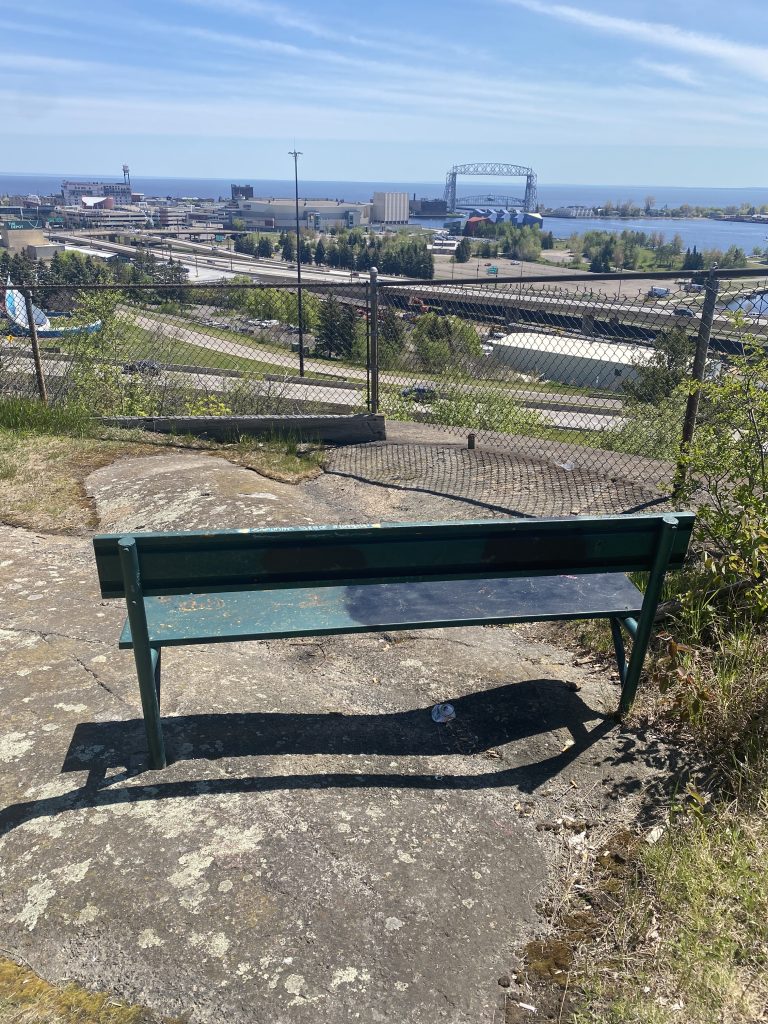
On my left is Higgins Overlook, a small park that overlooks downtown and the harbor. There is a small informational plaque and 2 park benches. To get to these 2 benches, I had to walk up steep and smooth bedrock. That climb is difficult for people in wheelchairs or have mobility impairments.
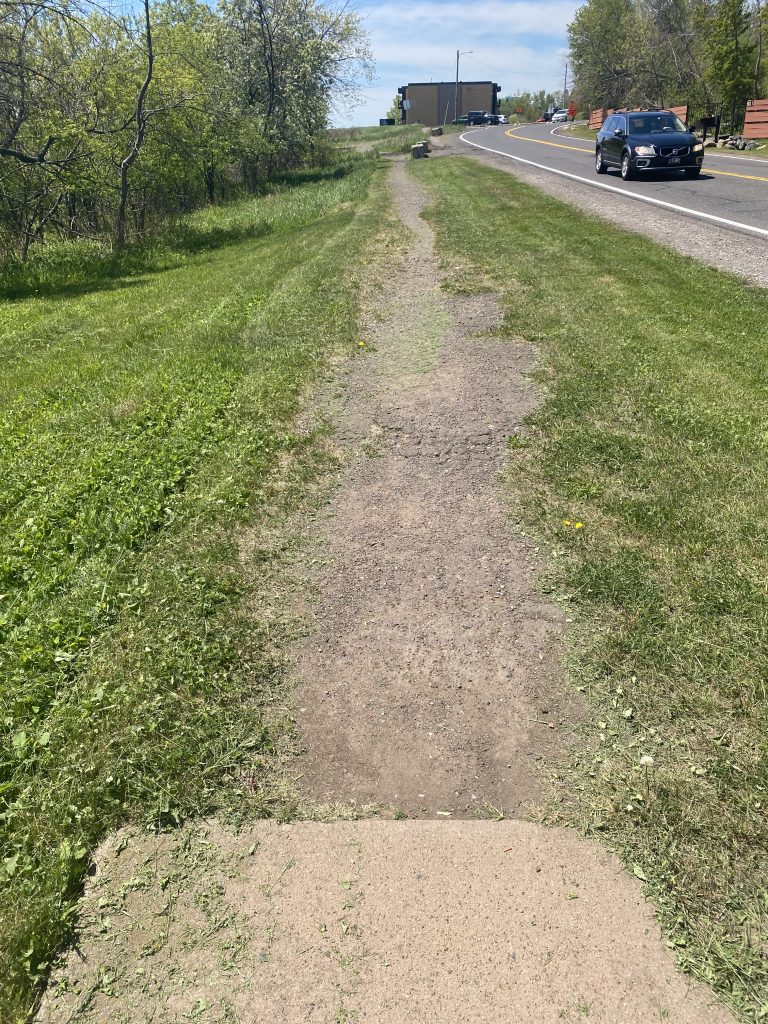
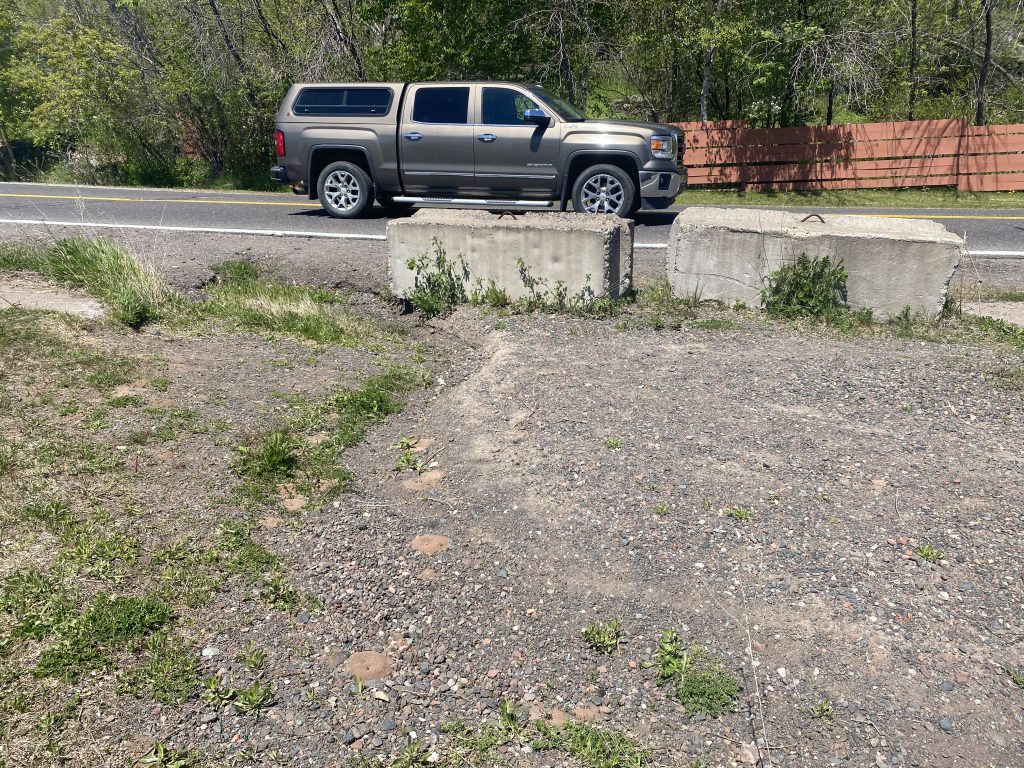
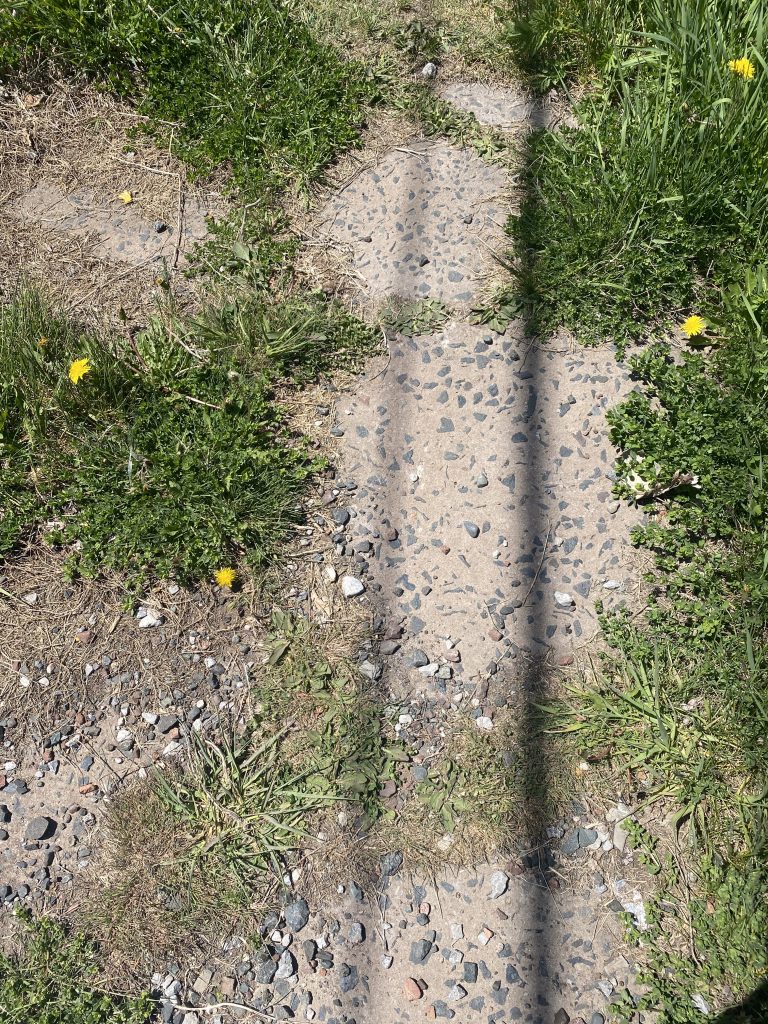
Continuing west, the sidewalk is overgrown and disintegrating. There are no sidewalk curbs here. Therefore, there is nothing between me and an inattentive driver. The sidewalk becomes a gravel hiking trail. Just before the sidewalk resumes, people must cross a shallow drainage gully cut by water draining off the street. Crossing over this gully during a heavy rainstorm is tough and tricky.
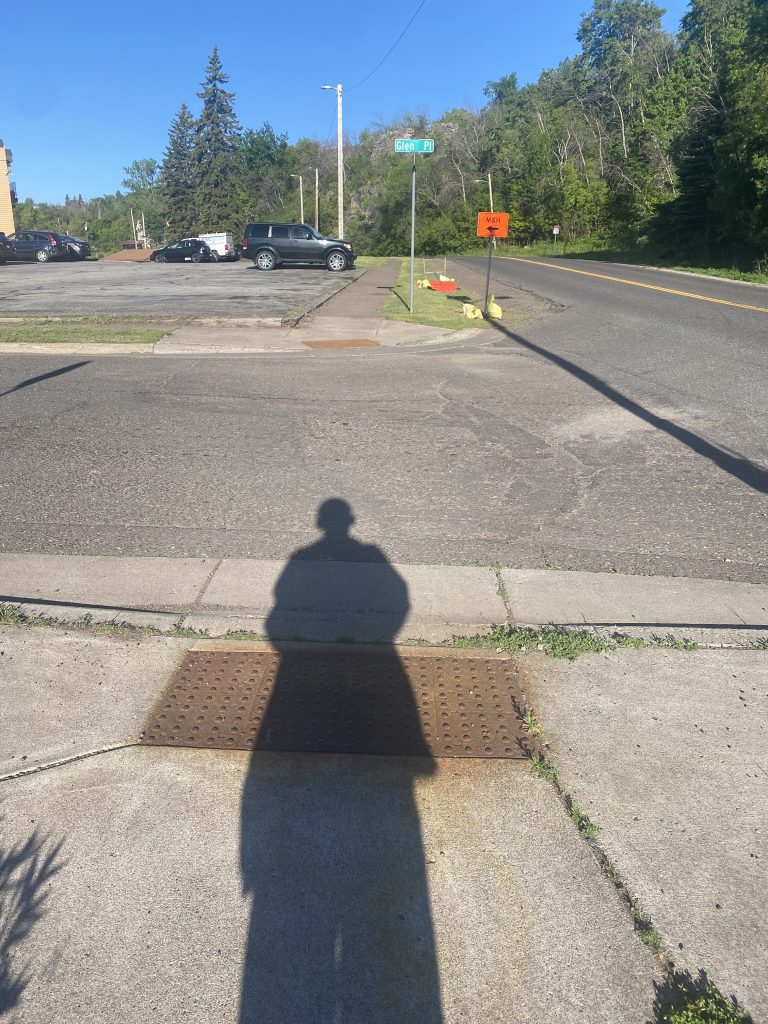
Thankfully, with a smile on my face, I crossed Glen Place Drive with safe sidewalks and curb cuts.
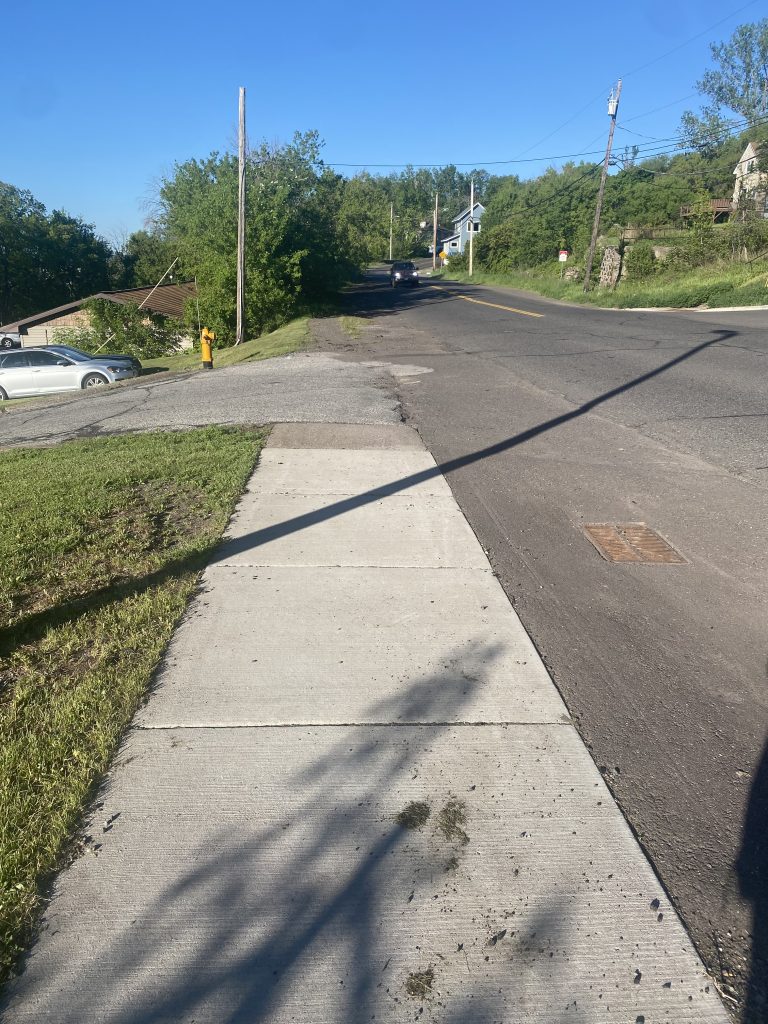
This short section of modern sidewalk gave me some relief from walking on the rustic trail sections. Notice that there is no sidewalk curb to protect sidewalk users.
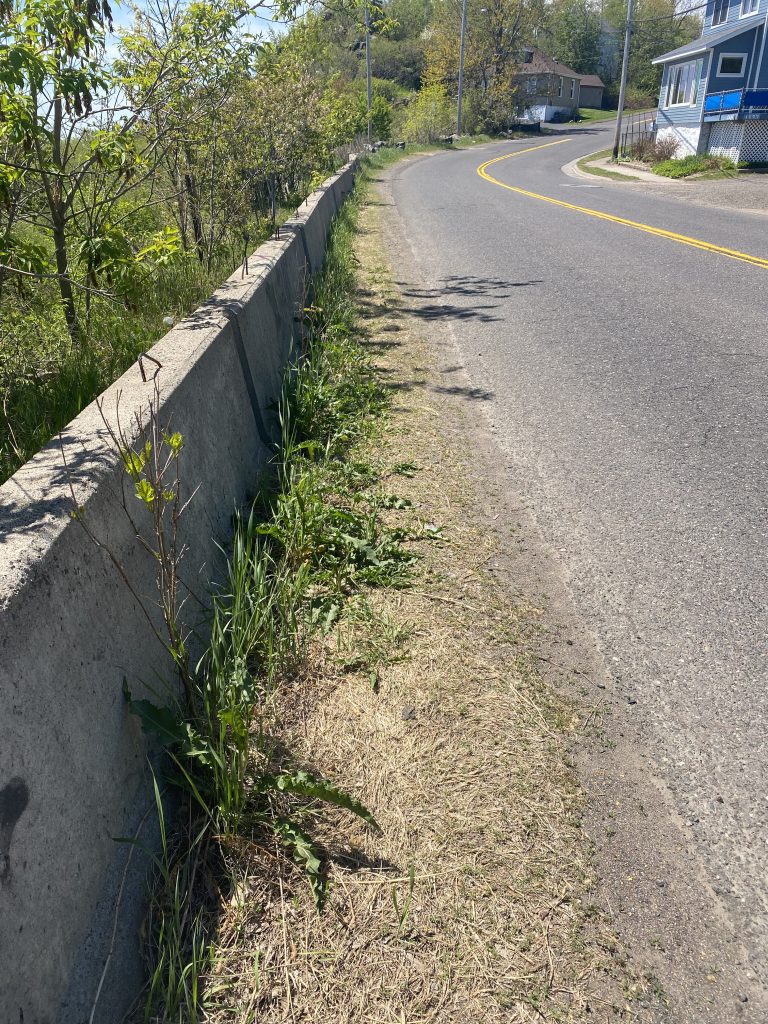
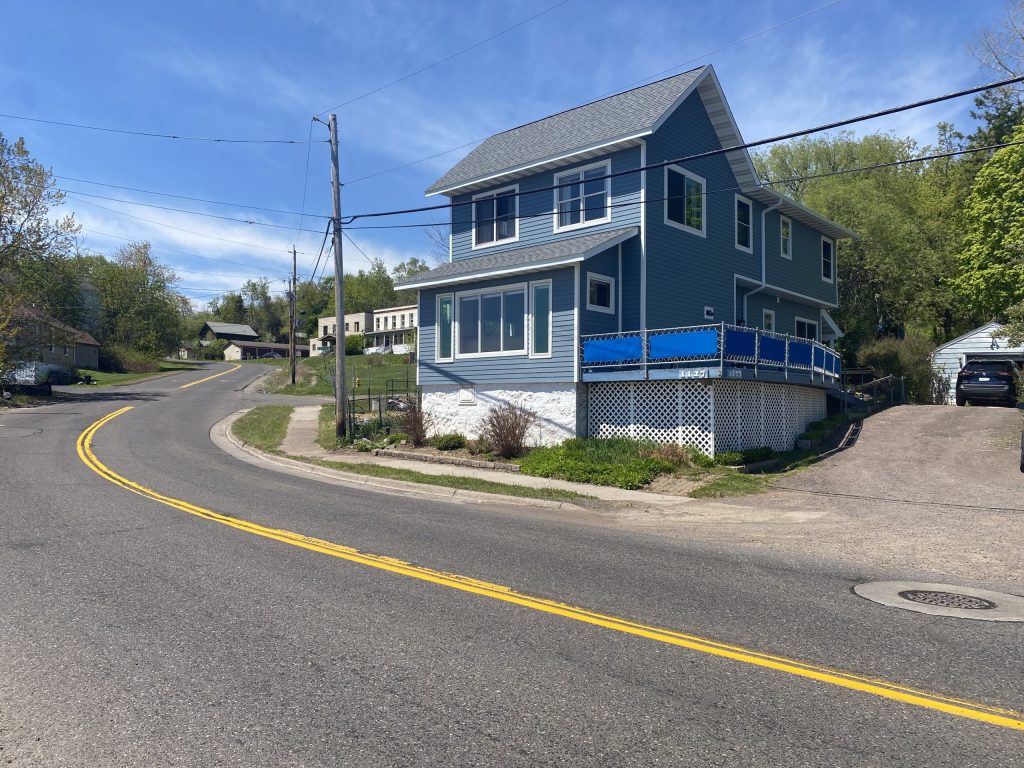
My smile soon disappeared, as west of North 11th Avenue West, I found that the sidewalk disappears on both sides of the street. For about 300 feet, people are forced to use a dangerous gravel shoulder. When the sidewalk begins again, it is on the north side of the street, near a blue house. There is no crosswalk or any sign at all to alert motorists of the change in sidewalk sides. From the blue house to the intersection of North 14th Avenue West, the sidewalk is overgrown, broken up or missing sections.
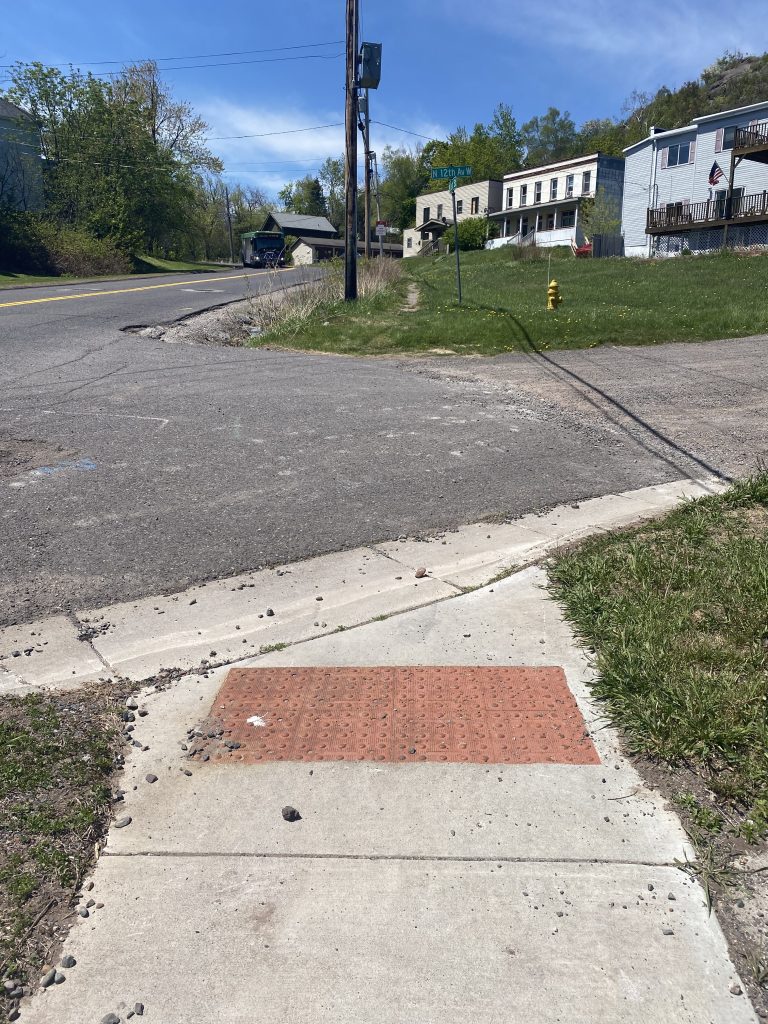
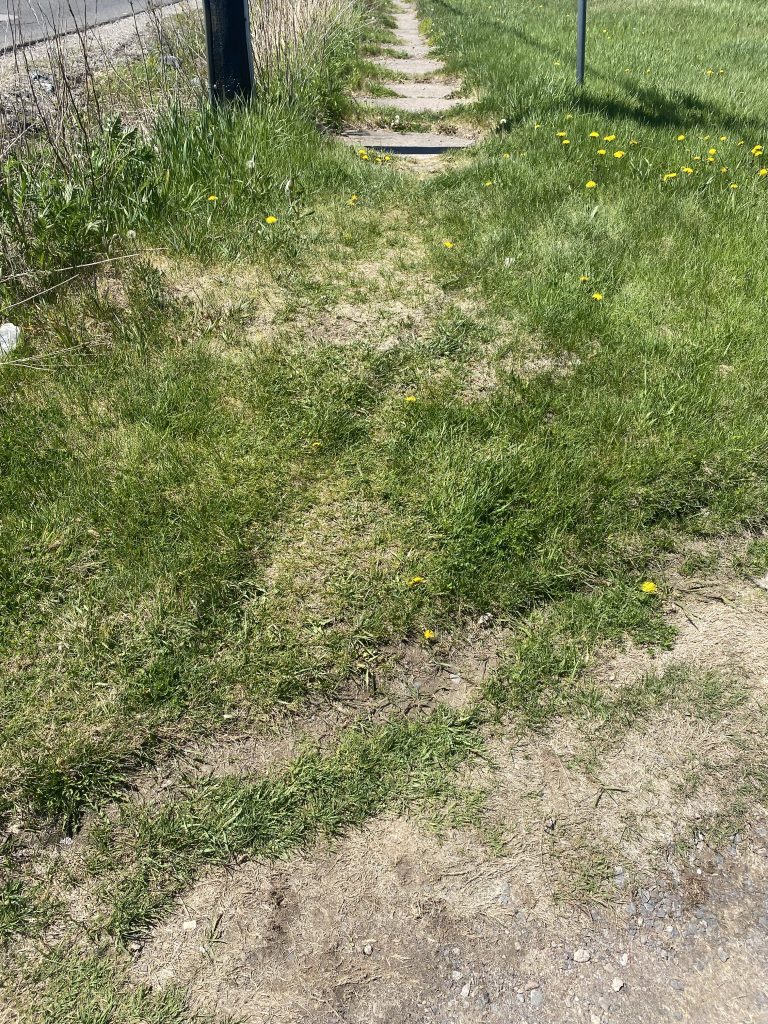
On the near side of my photo is an intact sidewalk with a sidewalk tactile plate. On the other side of the intersection is nothing but grass.
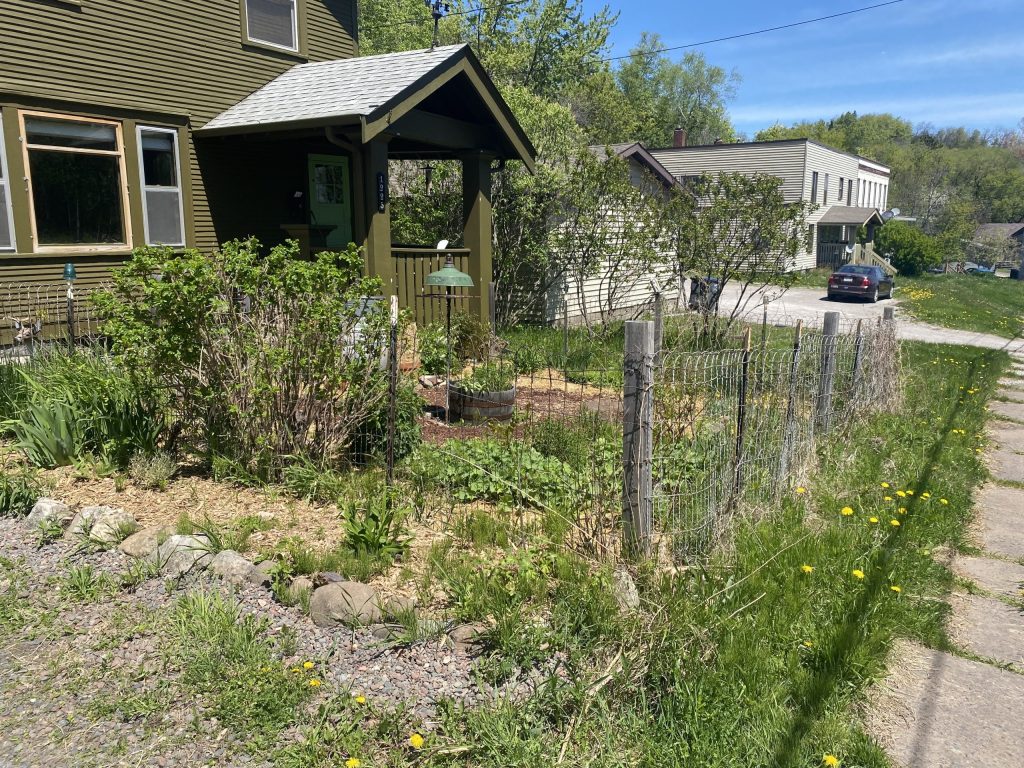
I have walked on parts of the Kekekabic Trail in the Superior National Forest that are better maintained than this city sidewalk. I did find a beautiful front yard garden on the north side of the street.
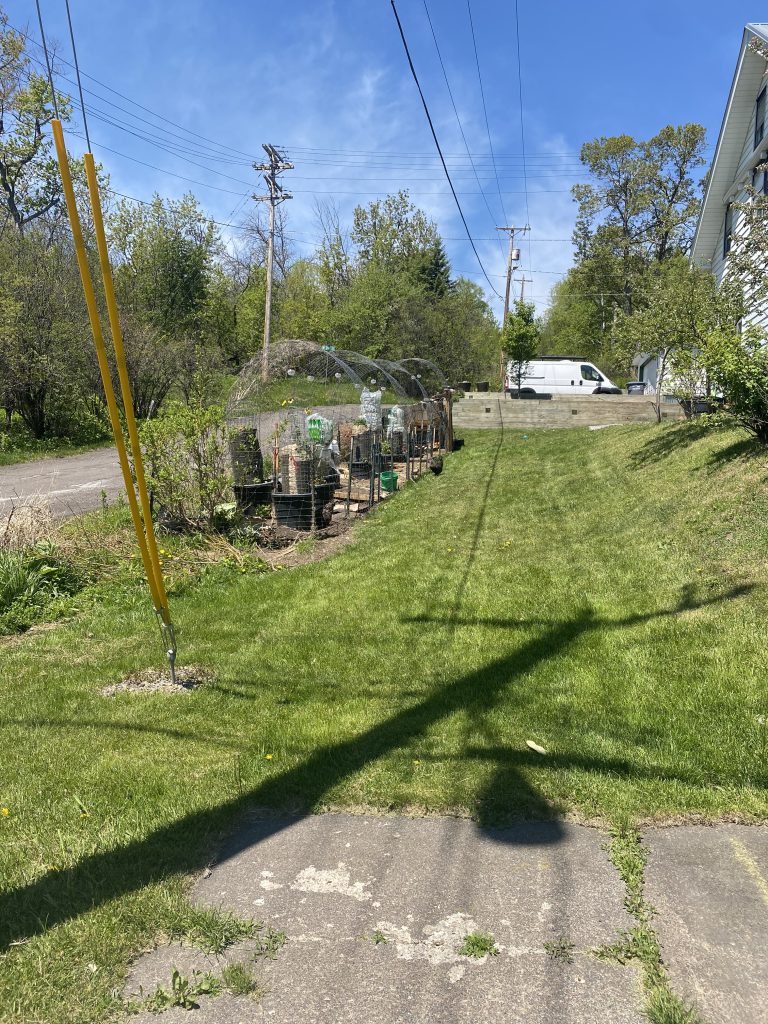
Also on the north side is another garden, with an urban chicken to the right of it. This is the second time I have seen urban chickens in Duluth.
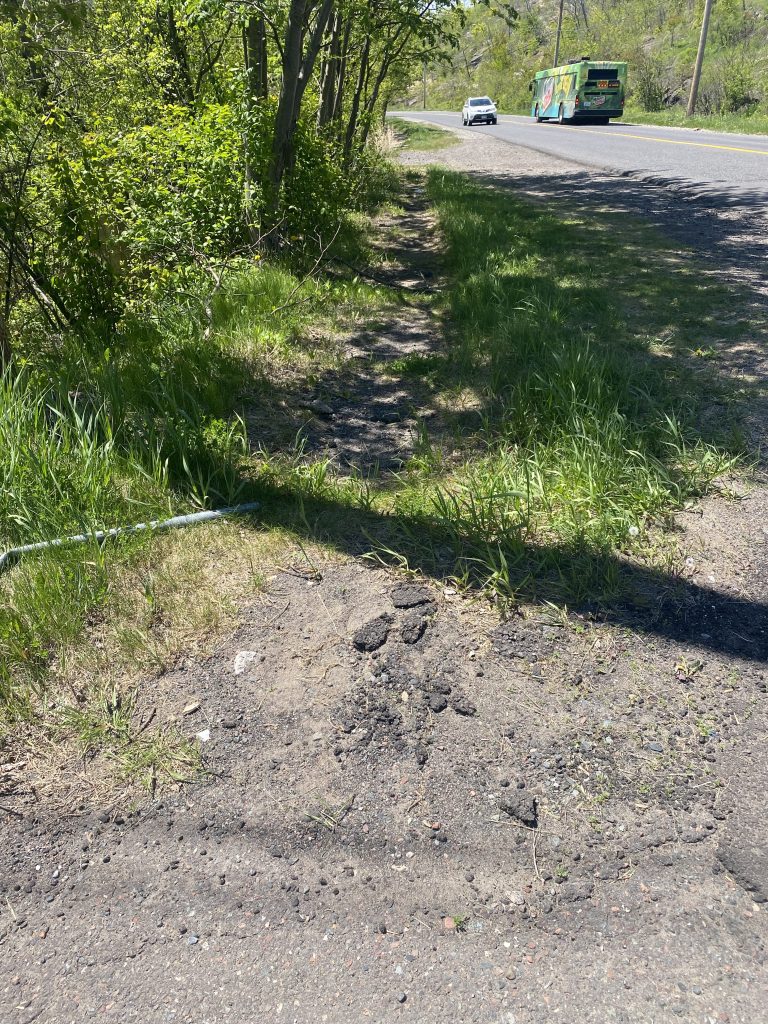
I cross the street to the south side at the intersection of North 14th Avenue West. Yes, there are traces of a sidewalk under all the grass and dirt.
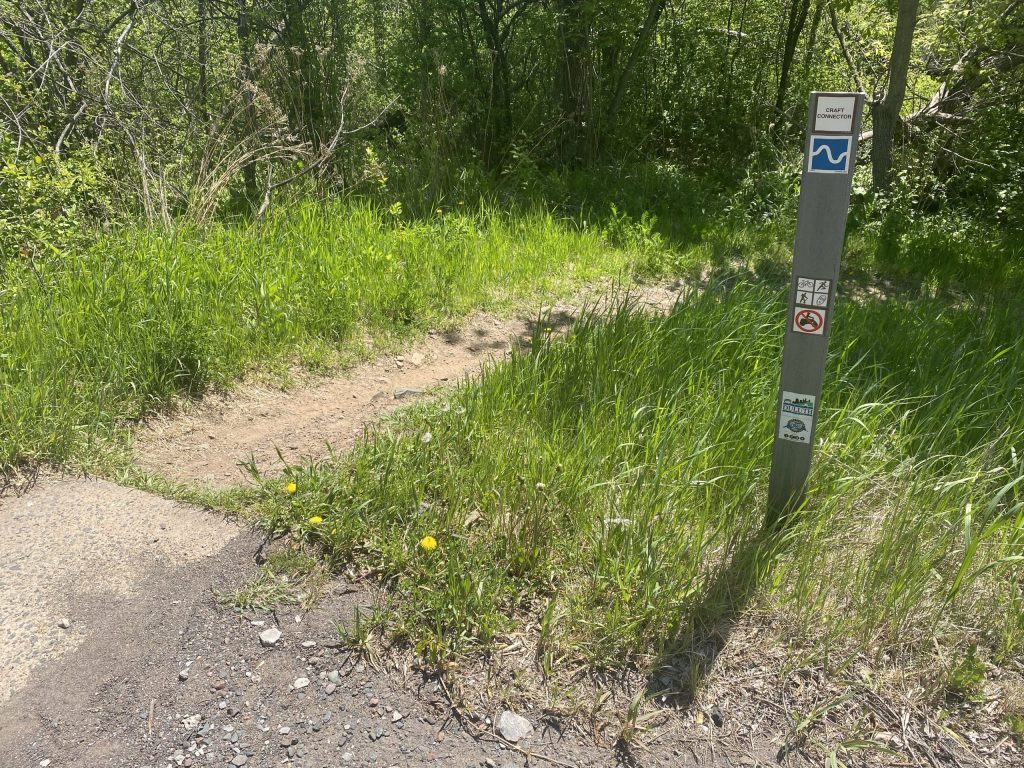
After a few steps, I found the cheapest hiking trail sign for the Craft Connector mountain bike trail.
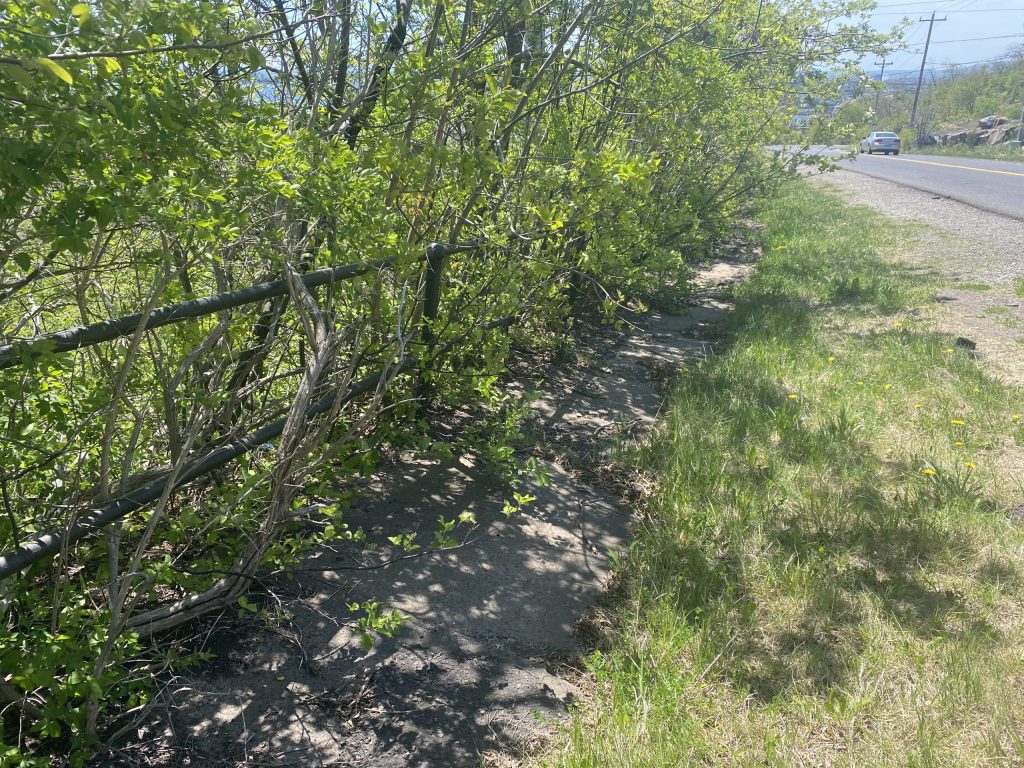
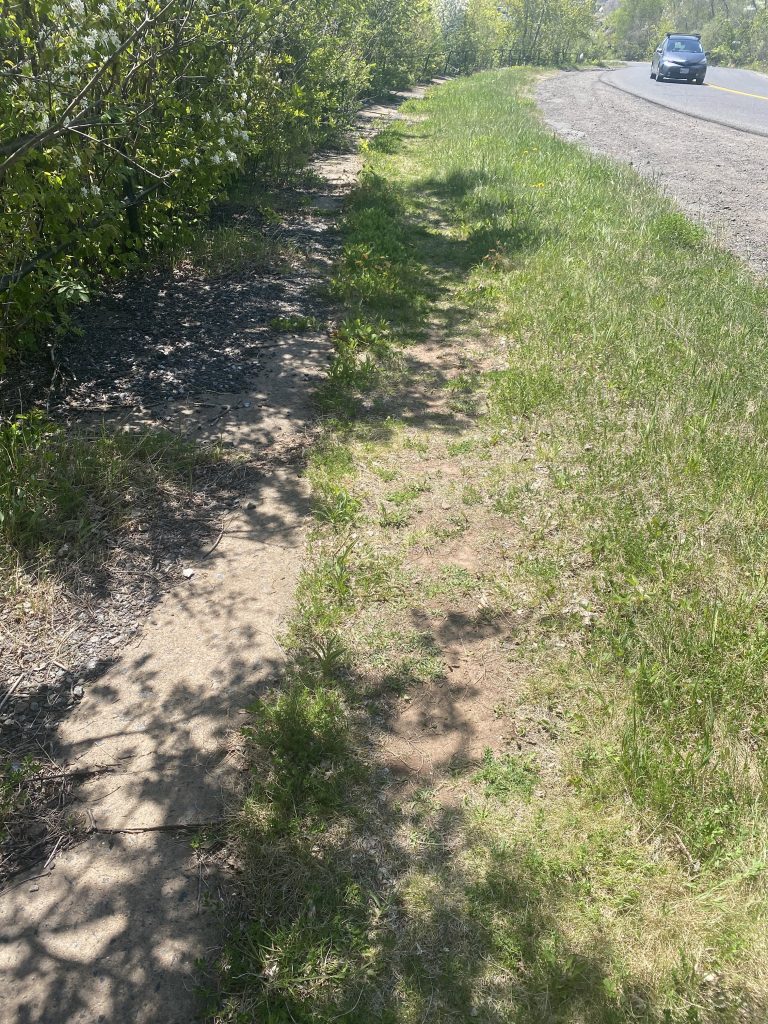
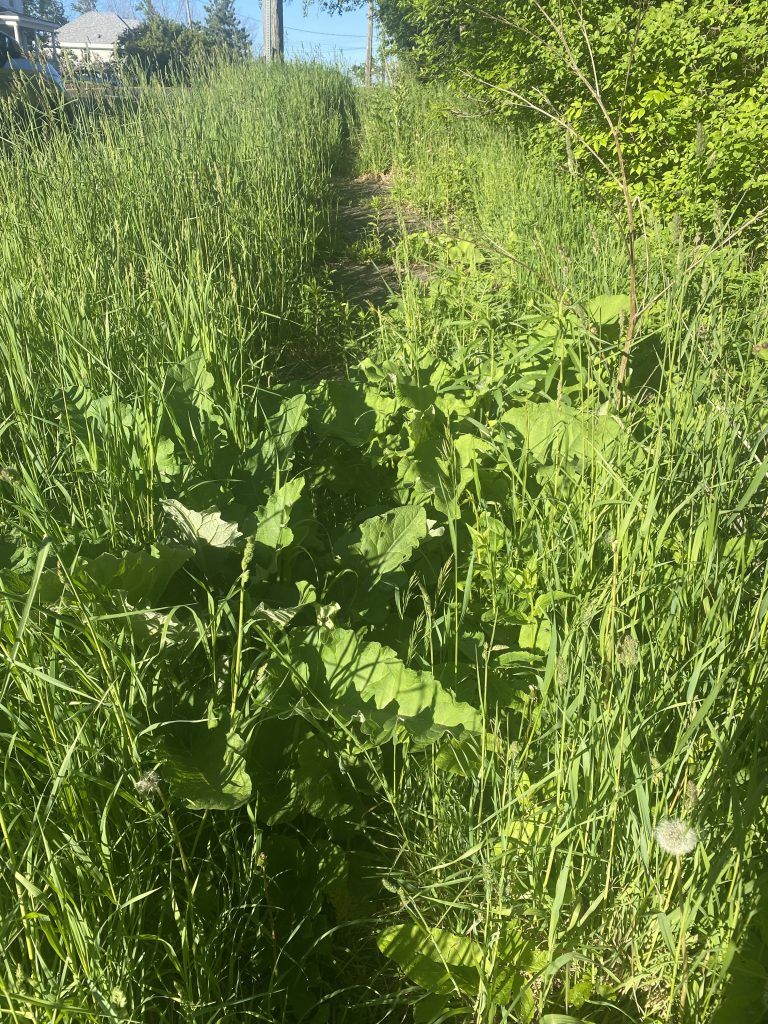
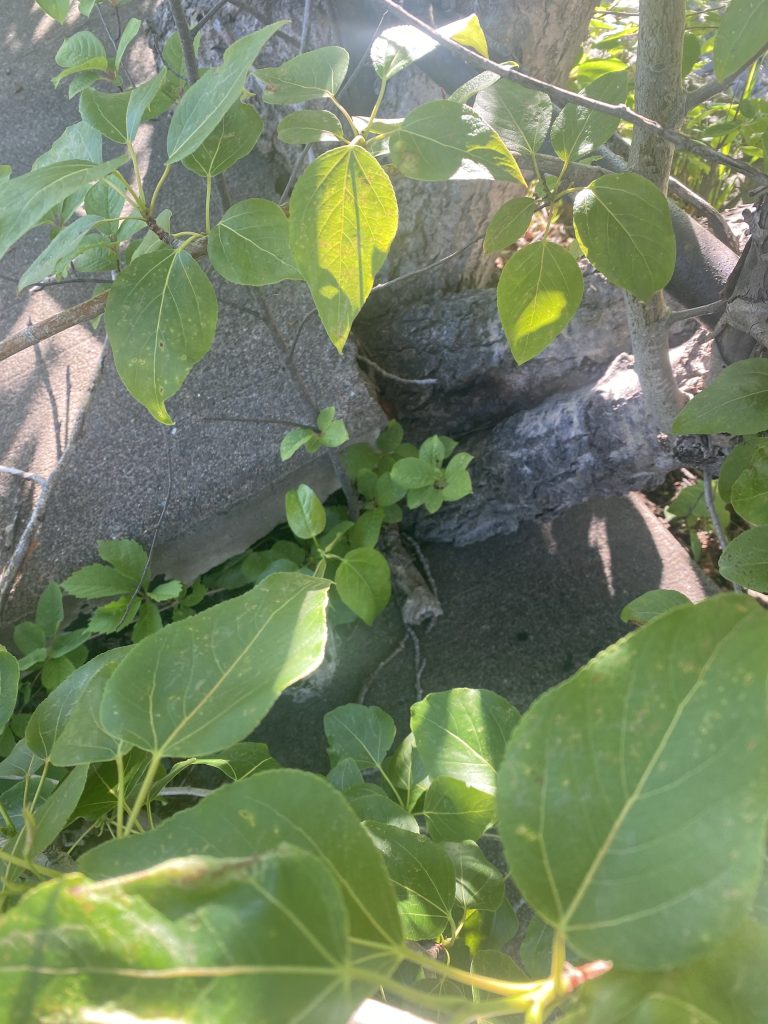
Moving on, the sidewalk is overgrown to the point of being completely blocked by bushes and trees. City maintenance crews have not cleared this sidewalk in years, forcing people to use the street shoulders. Thus, these overgrown sidewalks block their use, forcing people to walk dangerously close to traffic.
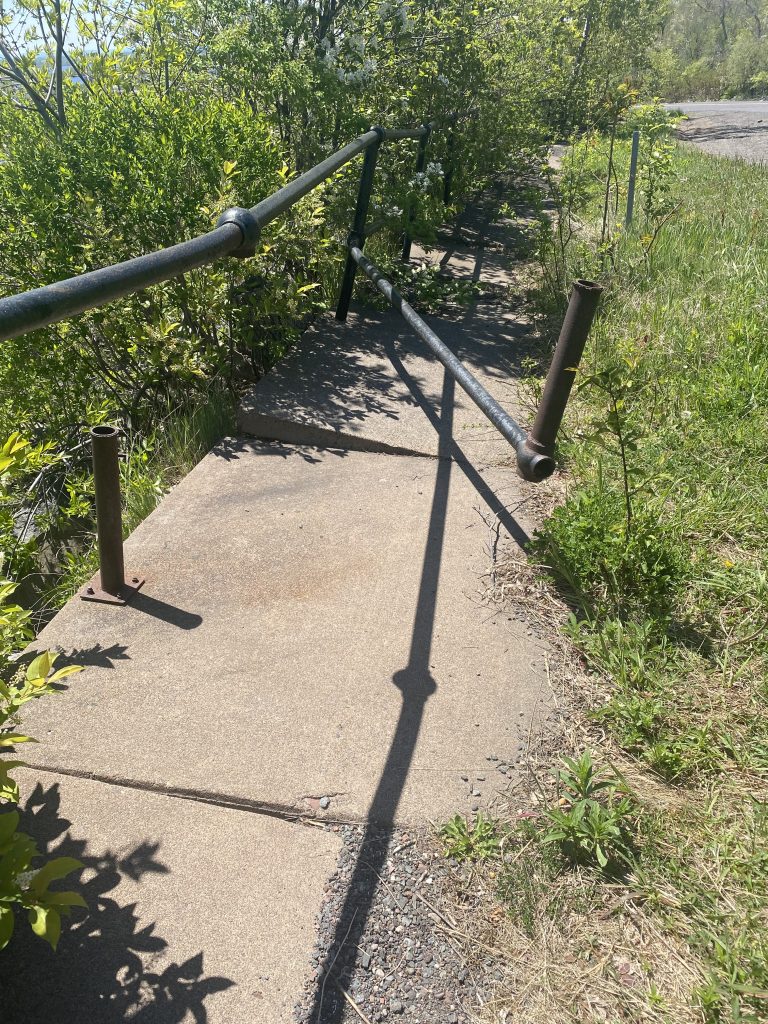
Some sections of sidewalk have sunk to the point of being dangerous.
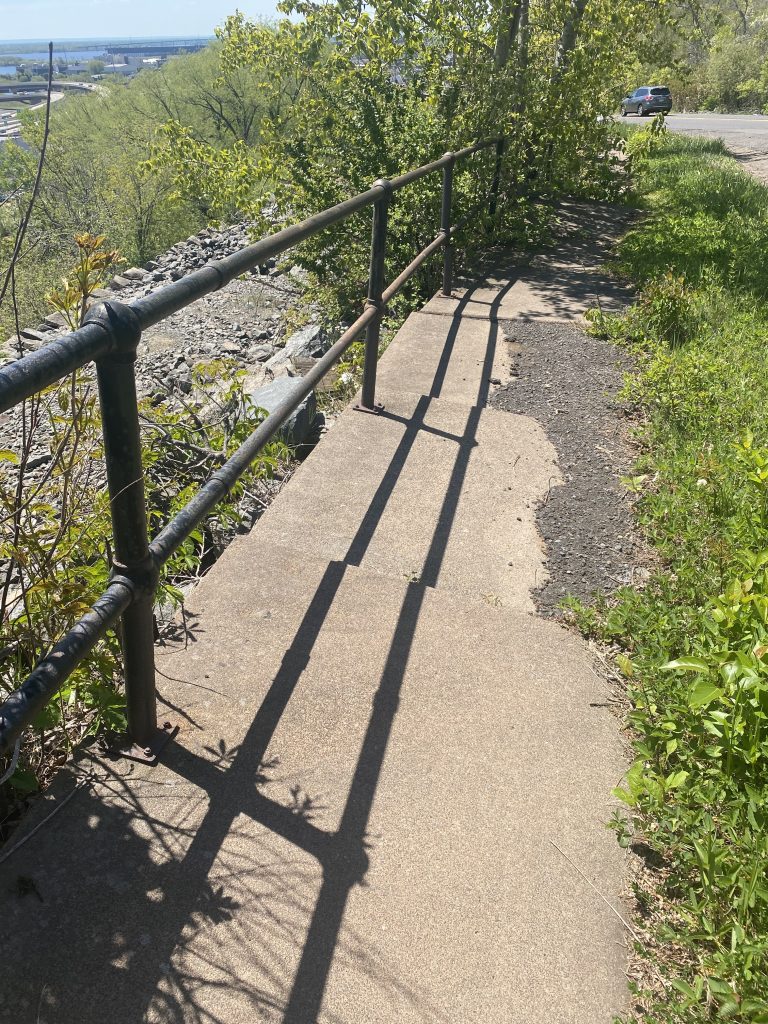
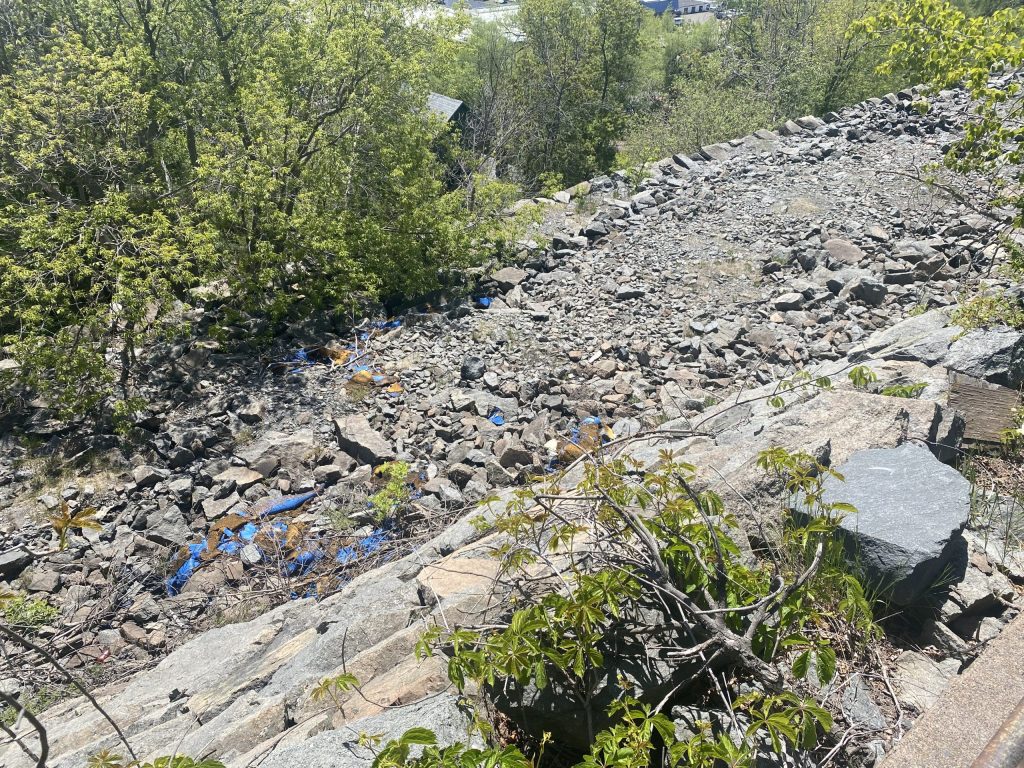
The street is beside a rock retaining wall and a step-like flat platform filled with rocks. It was once filled with abandoned home appliances. But I saw that this junk was removed years ago.
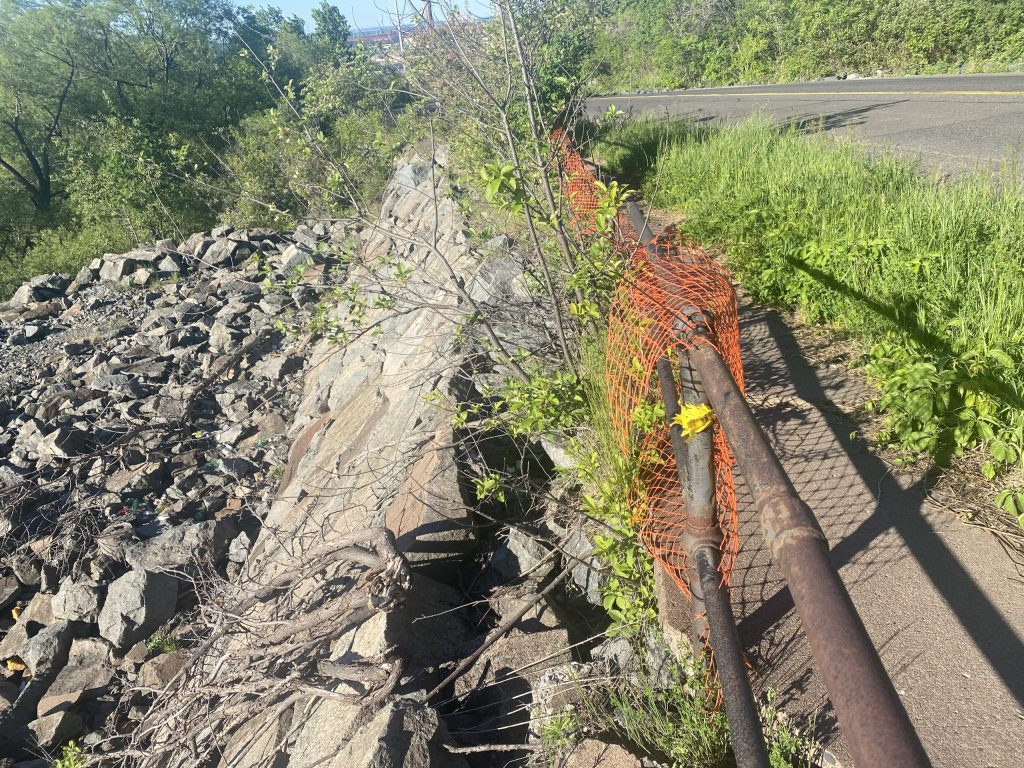
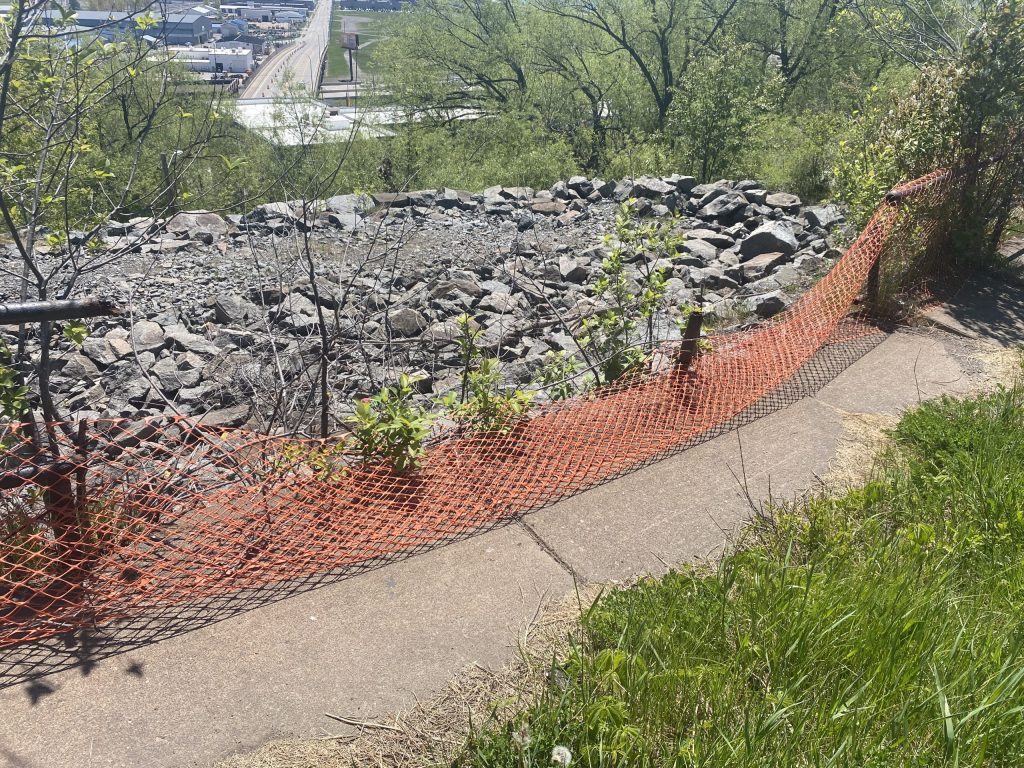
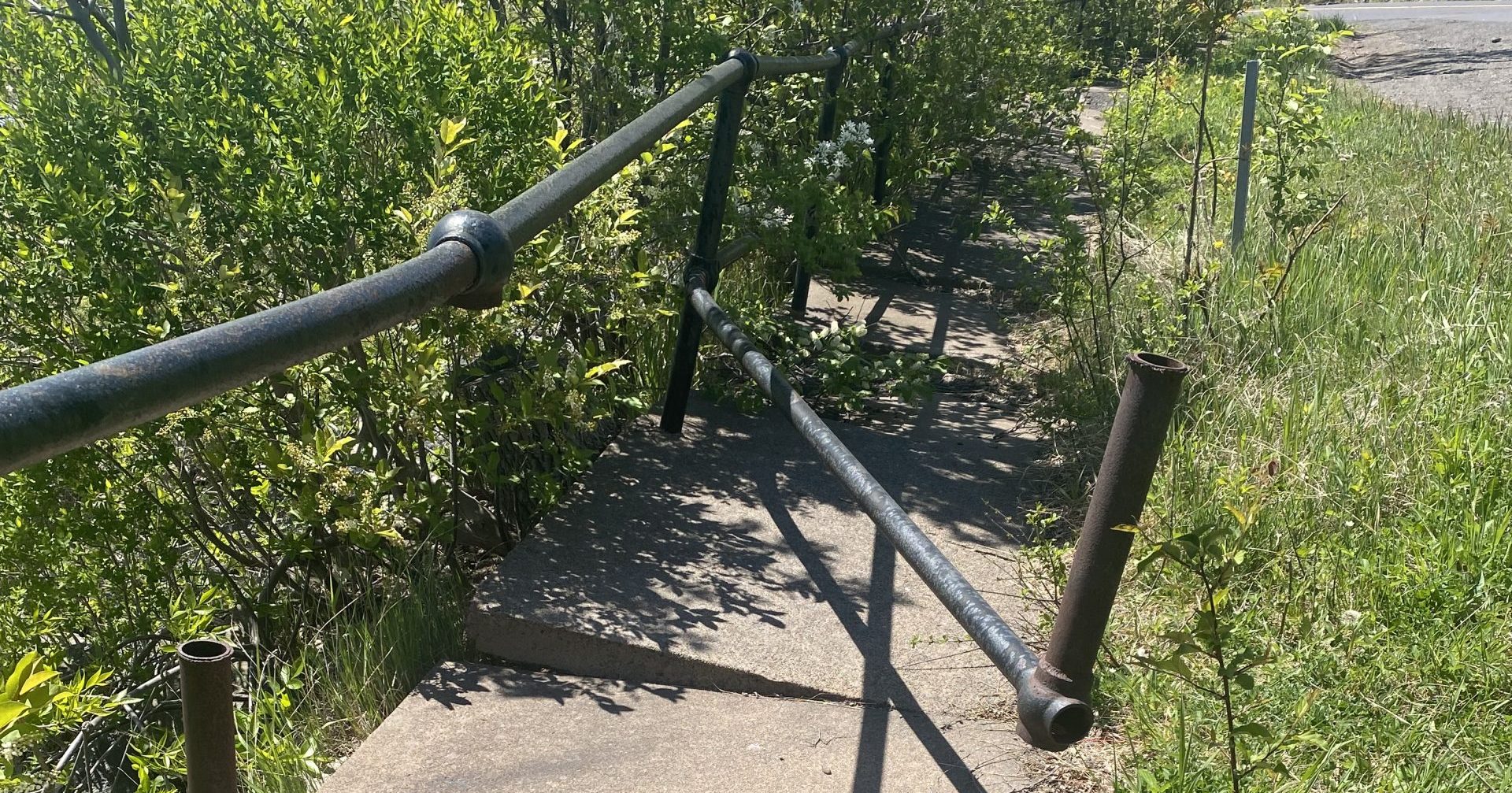
There are old metal railings protecting people from falling off the sidewalk. Yet, in some places, the railings are broken or missing, patched by an orange plastic fence that has sagged so much that it’s only a few inches tall. I see that city maintenance crews can’t put up fence posts to support the plastic fence. That would at least give sidewalk users a tiny bit of protection from falling off the retaining wall.
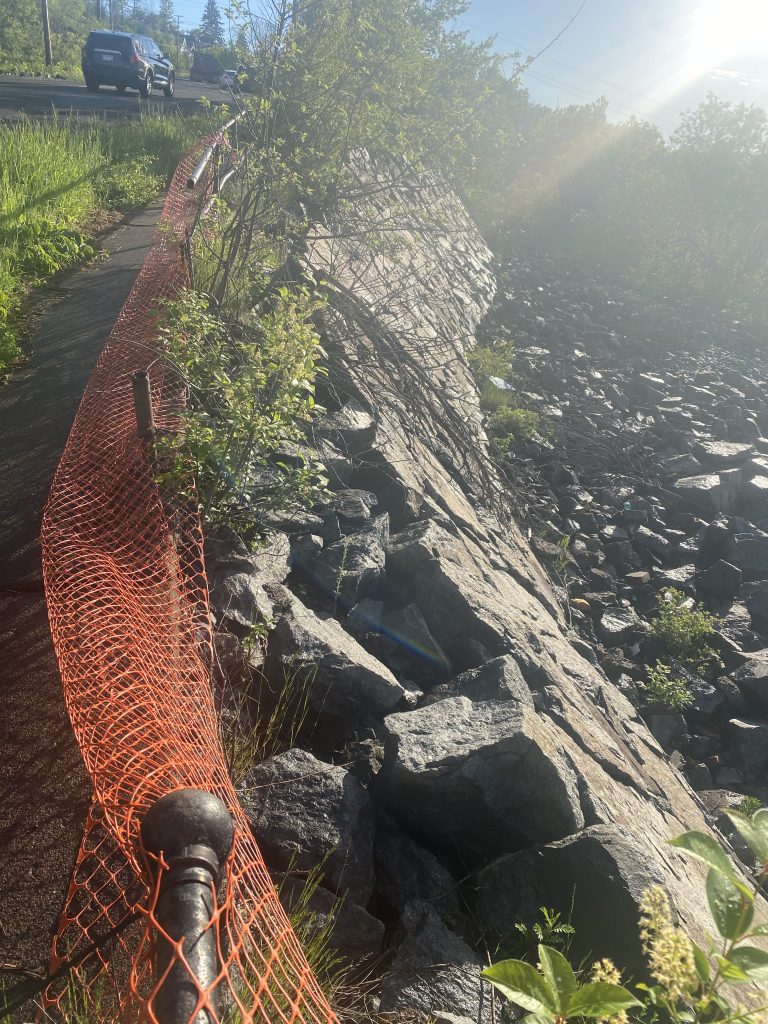
There are sections of the fence that have no visible means of support. I suspect that any heavy pressure put on this section of the fence will break the fence pipes.
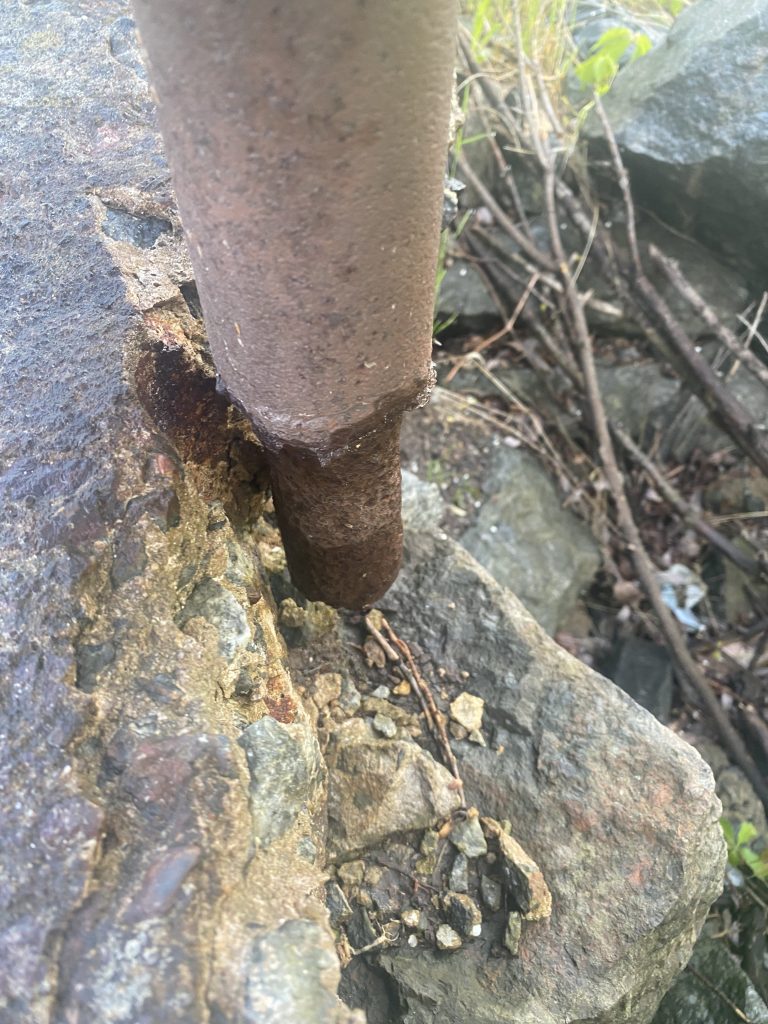
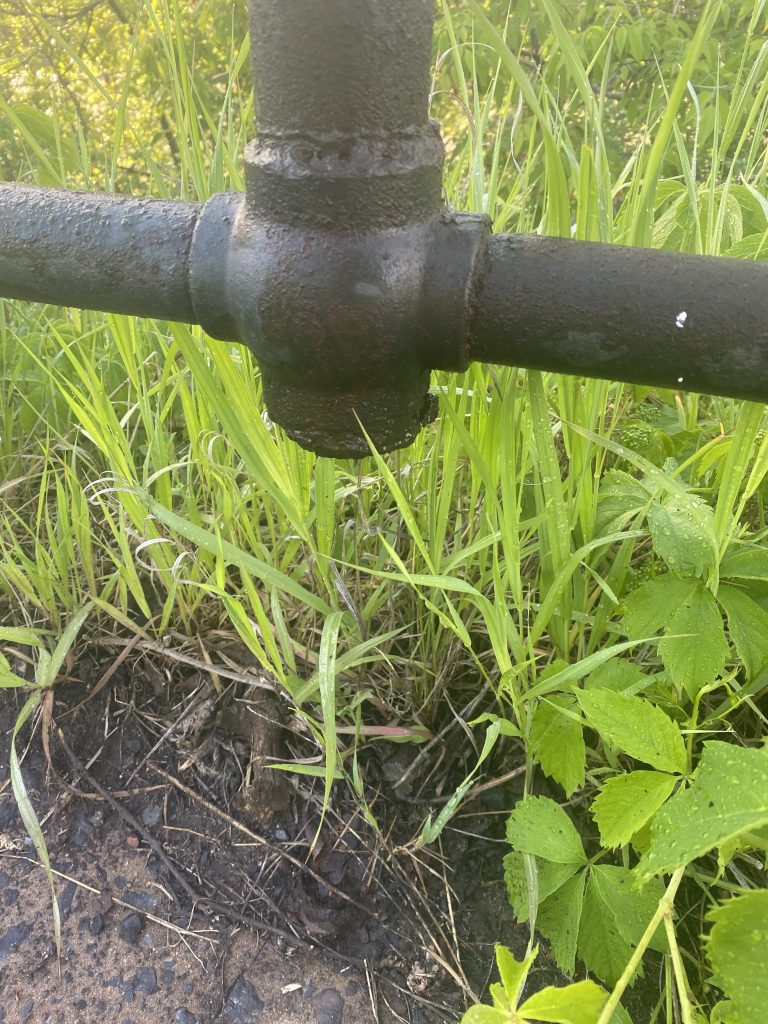
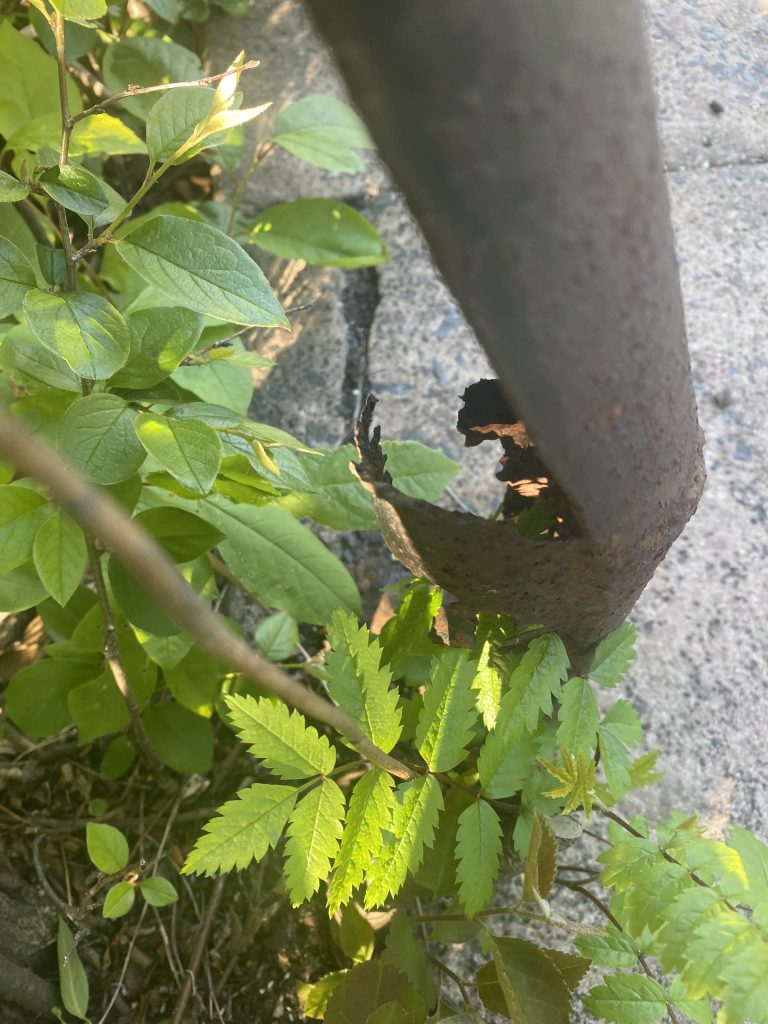
West of the break in the fence, the sidewalk becomes clearer, with less overgrown vegetation. Some of the flowering trees are beautiful, even if they intrude onto the sidewalk.
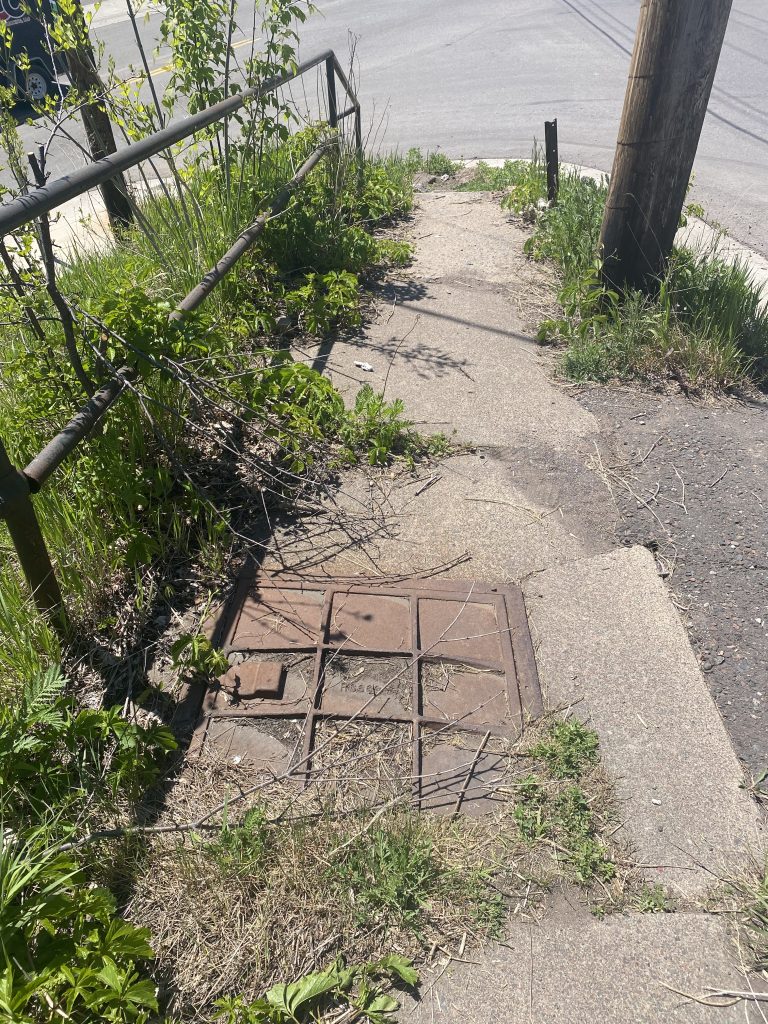
I walk past some kind of ancient access door on the sidewalk. I have no idea what this door gives access to. I know that raised ridges on the steel door must be a dangerous trip hazard.
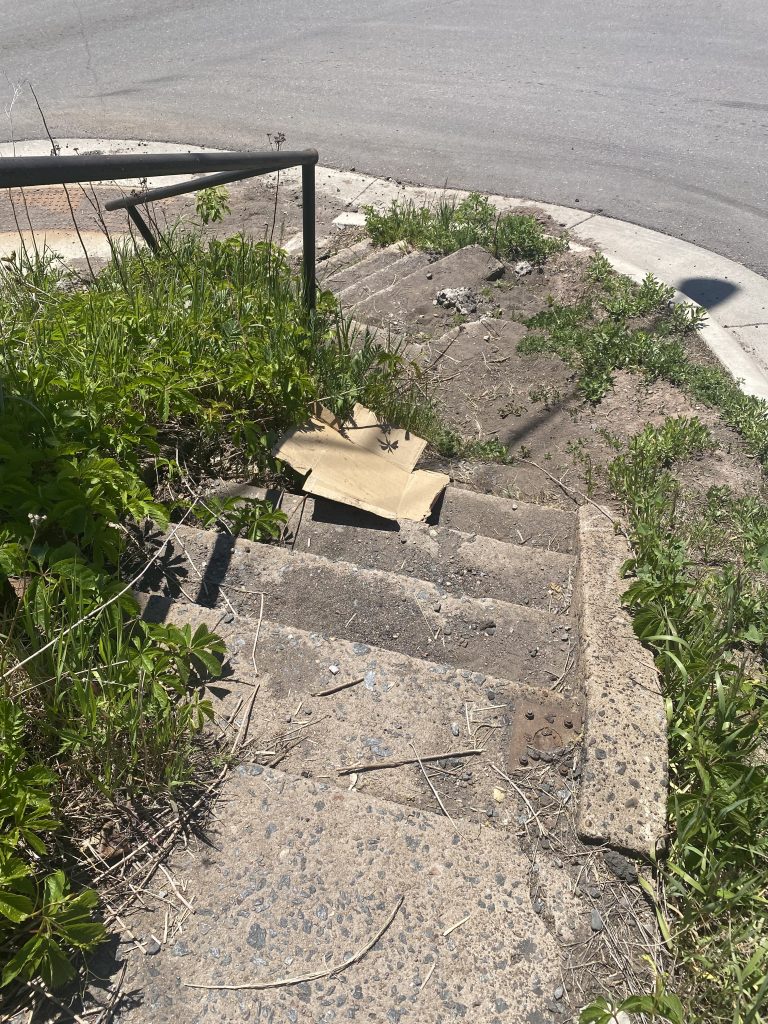
At the intersection of Piedmont Avenue, there are overgrown stairs covered with vegetation and carelessly discarded garbage. There is no pedestrian ramp here, leaving mobility-challenged sidewalk users to risk using the street. The sidewalk on the north side of the street turns north, being labeled as “Park Avenue” even if this “avenue” is just a sidewalk.
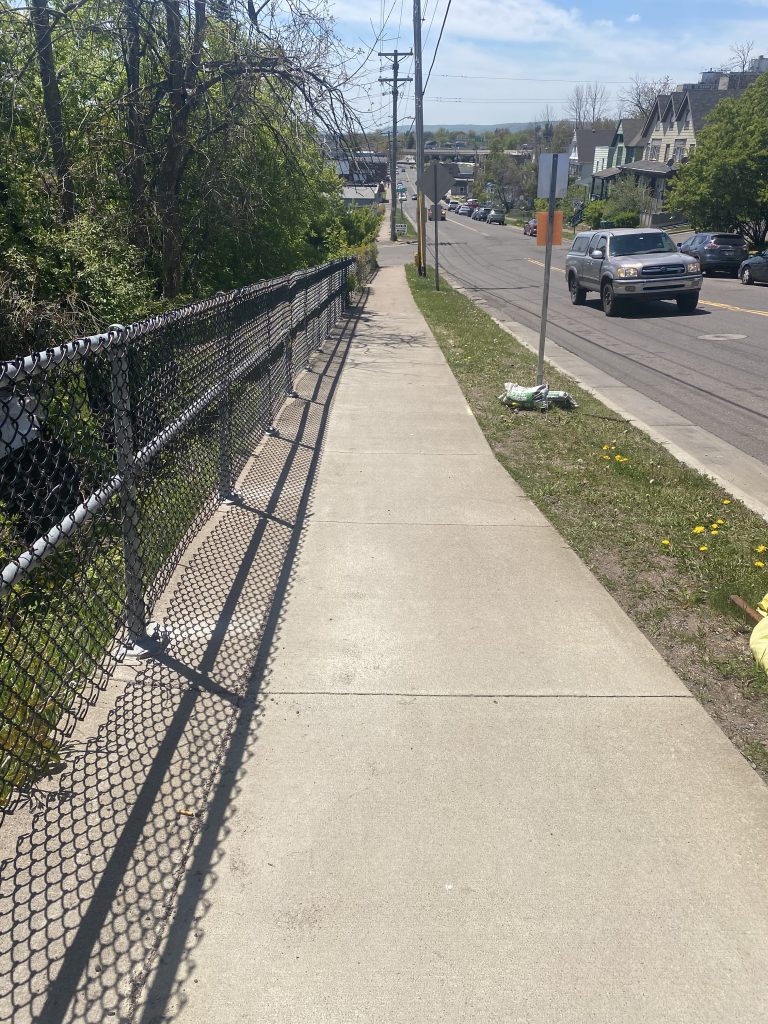
On the west side of Piedmont Avenue, a new safe sidewalk brings my dangerous journey to an end. After walking a few more blocks, I catch the eastbound city bus back to my apartment.
Before my east-to-west walk on West 1st Street, I knew Duluth had sections of dangerous sidewalks. Yet I never realized just how dangerous this section is to sidewalk users.
If 1st Street sidewalks were reconstructed, these would be a more scenic and safer alternative to Superior Street sidewalks. Located to the south of 1st Street and at a lower elevation, Superior Street has tight-to-the-curb sidewalks, more traffic and more air and noise pollution. It also has worse views of the Duluth Harbor.
In conclusion, I have no idea how much time and money it would take to reconstruct these sidewalks to be usable for all. But the City of Duluth needs to spend that money to bring these sidewalks up to a usable condition as soon as possible. Failure to do so puts all those who use these sidewalks at risk for falls to life-endangering vehicle collisions.
All photos by author unless otherwise noted