The Summit Regional Trail begins its implementation phase
Survey work on the Summit Avenue Regional Trail project (SART) has begun! A two-part survey began on July 20, first with a land survey, assessing physical features and markers. A second survey to assess its tree canopy began on August 17. Each survey will be completed over a period of weeks, and will cover the entire length of Summit between Mississippi River Boulevard and Kellogg Boulevard, according to the project website. The surveys, and the project itself, will follow St. Paul’s newly enacted Tree Preservation Ordinance (TPO). The Ordinance, which passed on July 15, promises to put the interests of natural “green” resources on par with needed “grey” infrastructure improvements and construction in St. Paul.
Conflicts between the need to preserve natural resources and to build or rebuild civic infrastructure are hardly new, either with the Summit Regional Trail Plan (SART) or with projects of national significance in recent news. New York Times columnist Ezra Klein notably wrote a book about the topic, which lays out the pitfalls of setting regulatory hurdles which impede worthwhile goals of building affordable housing, high-speed rail, or renewable energy facilities. He notes that the benefits of preserving natural, “green” resources are frequently pitted against human-made “grey” initiatives, with a more-than 50 year old legal framework to make that possible. The slate of laws that came about in the early 1970s to protect clean air, land and water have been used to empower citizens wishing to halt activities that threaten those natural resources. In 1970, Minnesota passed the Minnesota Environmental Rights Act, or MERA. MERA was famously used to challenge the Minneapolis 2040 plan, on the argument that the decennial planning framework emphasized new zoning laws to favor high-density housing units at the expense of wildlife habitat. Across the river, MERA has been used to protect St. Paul’s tree canopy from harm through the construction of roads and sidewalks. Those efforts have had mixed success.
A group of neighbors concerned about the imminent destruction of trees in their Como neighborhood sued the City in March of 2025 based on the MERA law. A street reconstruction in the Wheelock-Grotto area planned to add sidewalks on both sides of streets which previously had none. The litigants claimed the City had promised them a “meandering sidewalk” that would avoid their boulevard trees, but instead they found the telltale red “X” marks on their trees, slating them for removal. The judge in the case, Edward Sheu, ruled in the City’s favor, saying that “no strict promises were made for tree preservation.” He noted further that, while the loss of mature trees may be devastating, they would still be replaced, and the mature canopy would one day return.
Tree preservationists find a surprising ally
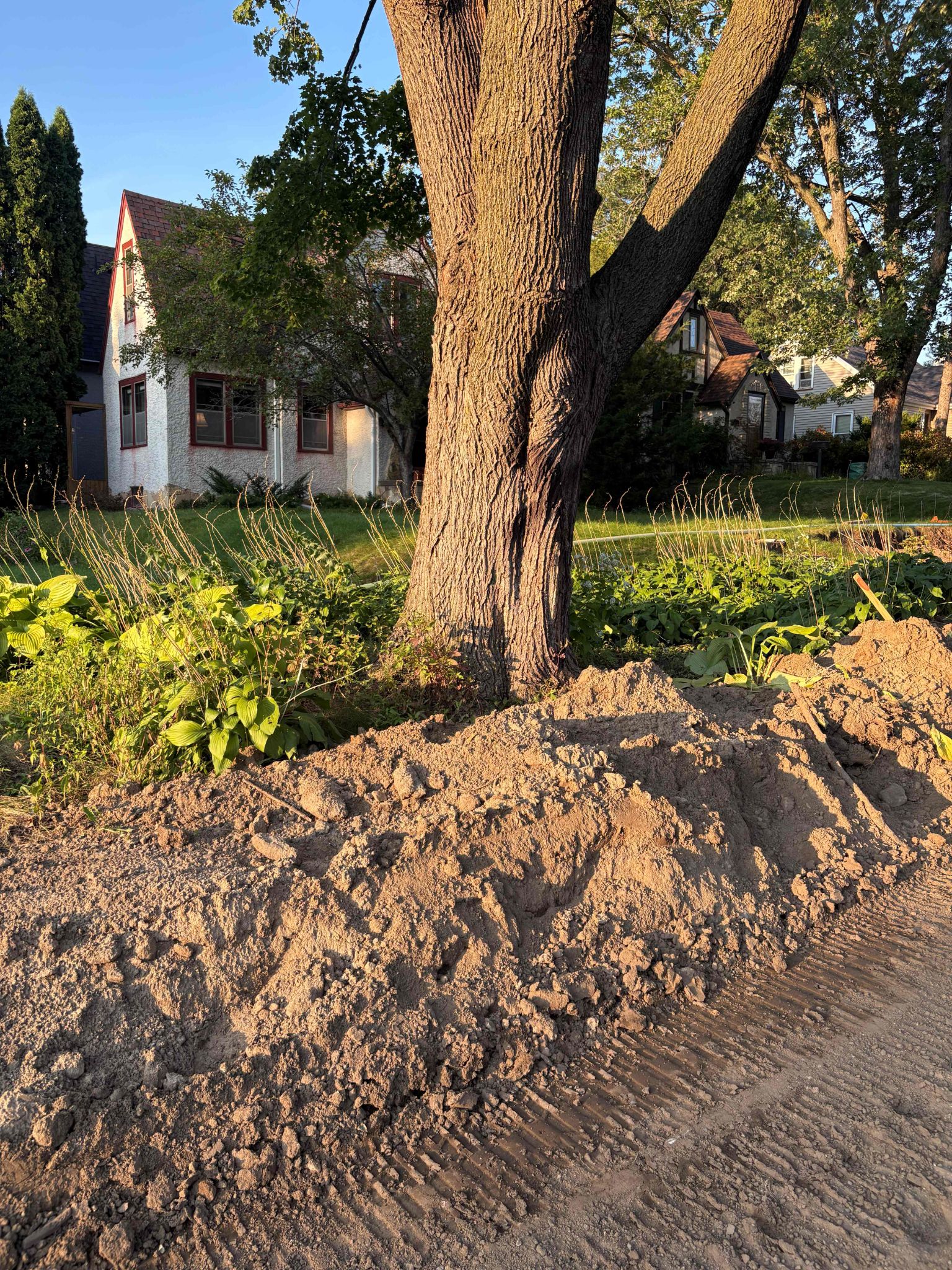
Judge Sheu’s ruling in the Wheelock-Grotto reconstruction pointed to the limits of accountability for a city that “makes no promises” to preserve “replaceable” resources. As St. Paul’s Comprehensive Bike Plan continues to unfold along with reconstruction of adjoining streets, an untold number of residents stand to experience similar surprises to their neighbors in the Como Lake neighborhood. Unless the City were to codify any commitment to take all necessary steps to preserve mature trees, St. Paulites would be likely to find trees in their own neighborhoods marked with the telltale red “X.”
During the construction of Wabasha Street’s separated bike lane in 2022, City Council President Rebecca Noecker noticed that after Wabasha Street’s portion of the Capitol City Bikeway (CCB) was completed, there were trees that had been removed between 5th and 6th Streets. “When I inquired with Public Works and learned that the trees would not be replaced,” Noecker stated via email, “I was concerned that this hadn’t been thought about earlier and that there was no replacement plan. This led me to look further into our tree preservation requirements and to find that they were inadequate.” In a subsequent meeting with Noecker and legislative aide Megan Jekot, the two described a lack of simple precautions to protect trees slated for preservation from the effects of construction vehicles. During the extensive remodeling of Hidden River Middle School last year, Jekot observed, no effort was made to install protective fencing around trees on its property, keeping the treads of excavators and Bobcats away from critical root zones. And she noted that during street repair work at Shadow Falls Park at the western edge of Summit, Public Works trucks routinely bumped up against the lower branches of trees, damaging the branches. Noecker set about to establish measures to protect those trees that merited preservation from city projects.
A “Both/And” approach to civic Infrastructure and tree preservation
Work began on a Tree Preservation Ordinance in early 2025. It sets out to elevate the interests of tree preservation with that of road, sidewalk, and bike path construction, as well as other city sponsored construction projects. It identifies environmental benefits of a healthy tree canopy such as heat reduction, erosion control and stormwater management, and reducing energy costs and the “heat island effect.” The ordinance also identifies the need to balance historic disinvestment in neighborhoods with historically lower amounts of shade cover. There are references to St. Paul’s 2040 Climate Action and Resilience Plan, which emphasizes sustainable transportation options, including expanded bike infrastructure, among other goals. Interestingly, the Ordinance “recognize[s] that conflicts between trees and gray infrastructure are inherent in urban settings where space is limited.” It sets out to “develop management practices that best preserve trees while ensuring the City can maintain safe sidewalks that meet ADA requirements.” (TPO, Section 92.1.d Statement of Legislative Intent.) Noecker’s office established a working group, the Tree Preservation Ordinance Public Interest Group, or TPO PIG, which included City staffers from Public Works and Parks and Recreation, District Councils, the Friends of the Mississippi River, and several community members, including representatives of Save Our Streets (SOS) and the Summit Avenue Residential Preservation Association (SARPA). The group met over 18 months to produce the Ordinance which passed in mid-July.
The Tree Preservation Ordinance establishes that:
- Two surveys will be conducted prior to city sponsored projects. The first establishes site conditions, including any trees in or adjacent to the construction zone. The second, to be completed by a certified arborist, identifies the species, size, and condition of all the trees in the project’s scope.
- The City will develop a construction plan that identifies design elements that will preserve trees based on their maturity or other markers. It will include a table showing which trees should be removed and the reason why. The Arborist will be involved in these decisions.
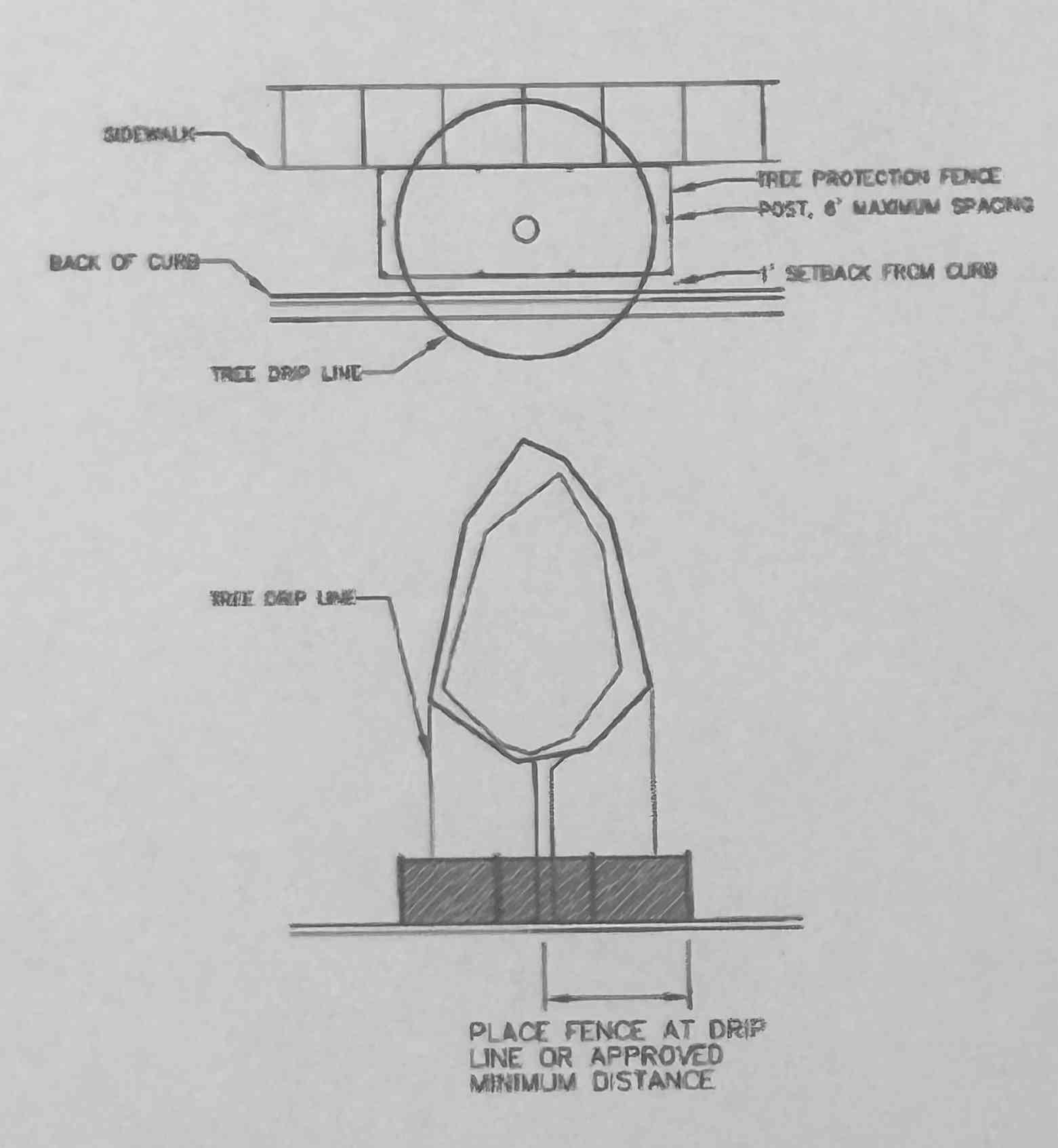
- Standard Operating Procedures (SOP’s) for construction practices will be established, based on nationally recognized tree care (ANSI A-300) standards. Those include construction fencing, root cutting, staging and cleaning equipment, etc., in consultation with the Arborist, who continuously monitors construction practices.
- Restitution will be paid by the holder of the work permit to the Parks and Recreation Department for damage to any trees designated for preservation in the construction plan.
- When preserving a tree is not feasible, replanting trees will happen on a 1:1 basis at the discretion of the Forestry unit, based on how sunny or shady the location may be for a replacement tree, and will choose the most ideal spot for planting.
Trail opponents have long expressed concern about the costs of building bike infrastructure, and having to pay for them in their resident assessment fees. I asked Noecker about the cost of adding staff (consulting arborist) to construction projects, in addition to the added costs and delay of construction in meeting the statutory requirements of the Ordinance. “We have heard many people say that they want stronger protections for their tree canopy,” she responded, “and they are willing to pay extra to make sure it happens.” Noecker insisted “we won’t be raising taxes” to pay for additional protections, insisting there are outside sources, such as municipal and state aid. But primarily, she said, “individual assessments [residential taxes charged to adjacent property owners] will go up.”
A shifting narrative of a TPO at SOS
When the neighborhood group formed in opposition to the planned reconstruction of Summit Avenue, its first concern was tree preservation. Rumors of a planned separated bike path raised alarm bells for the group. In particular, there were fears that Summit Avenue would see a repeat of the extraordinary removal of trees along Cleveland Avenue around that same time. Early in the City’s drafting process, SOS hired two independent arborists, Chad Giblin and Manuel Jordán, to analyze portions of Summit Avenue and determine what the effects of such a plan might be. The pair determined that over 60% of the 199 trees they surveyed would experience severe damage from a full street reconstruction (the report never mentions a bike path), and would be unlikely to survive. SOS extrapolated that percentage to the rest of Summit Avenue, leading to the 950 number frequently used to predict tree loss. The report also advocates for tree preservation measures, such as those outlined above. When those are implemented, the authors state, “outcomes [of road construction] are typically less negative.” The arborists offered a caveat to their report: that they had scant information about the City’s plans, such that “changes to the scope of proposed construction activities and/or tree preservation measures that occur…will result in a need to perform a new analysis to update results” (Summit Avenue Tree Survey, p. 2). SOS echoed the arborists’ recommendation, and incorporated their demand that St. Paul issue a TPO “BEFORE any more plans are made for a regional trail or street reconstruction,” according to a press release dated February 23, 2023.
Once the group learned that the City Council was indeed working on a tree preservation ordinance, it responded with skepticism. A press release from January of 2025 reads: “A Tree Preservation policy for St. Paul [is] good only if it’s enforceable,” the headline states, centered and in bold, “Otherwise it’s coffee table material.” In an interview with the Pioneer press following passage of the TPO, SOS Communications Manager Carolyn Will expressed cautious optimism about the Ordinance, but concern with its use of the word “feasibility” (see point #5 above). If that language is “applied to suggest it would allow the destruction of, for example, the majority of trees on Summit Avenue, the ordinance isn’t worth the paper it’s written on.” She goes on to say “There is no way (SART) can be built without destroying at least half of the trees along Summit, so if the ordinance means anything, it means that SART can’t be conducted as currently designed.”
A litigious history suggests next steps
Save Our Street has benefited from the legal expertise of Bob Cattenach, a retired partner at Dorsey and Whitney, who has offered pro bono services to stop the Summit Avenue Trail Plan. In a $30,000 ruling, he successfully sued the city in March of 2023 over its data practices on his own behalf. Cattanach sued again on behalf of SOS in 2024 to compel the City to conduct an Environmental Assessment Worksheet. And SOS sued the office of former Mayor Melvin Carter just before the mayoral election of 2025 to disclose documents it believed advanced the SART plan in its list of initiatives for funding through the Common Cent sales tax. What will SOS’ next steps entail? When asked about her comments in the Pioneer Press article, Carolyn Will brought up the MERA law, reiterating that “natural resources will be destroyed-there cannot be any good faith disagreement over that: MERA contains no exception (her emphasis): SART cannot be constructed.” In a subsequent email blast from August 23, 2026, SOS Committee Chair Gary Todd stated “…the City simply can’t afford to waste over $100,000,000 to fully reconstruct Summit Avenue just so it can build a bike trail that is being demanded by less than 1% of Saint Paul residents, and that legally SART cannot be constructed without violating MERA.” Both Will and Todd hint at an impending MERA lawsuit.
Will such a lawsuit succeed? Will’s interpretation of MERA focuses on the “green” and ignores the “gray.” Will points to the inevitable disruption of tree roots that come from the reinstallation of curbs, storm sewers, and catch basins, which are all facets of a newly reconstructed street. As Judge Sheu pointed out in the Wheelock-Grotto case, the destruction of trees is not irrevocable. Assuming construction follows the Ordinance’s statutes, trees will either be preserved or they will be replaced and well-cared for. But there is another clause to MERA: public welfare. If litigants make the case that the SART plan will put natural resources in irreversible harm, the City would have to demonstrate that the reconstruction of Summit, and improvement of its bike path, serves the public’s health, safety, or welfare.
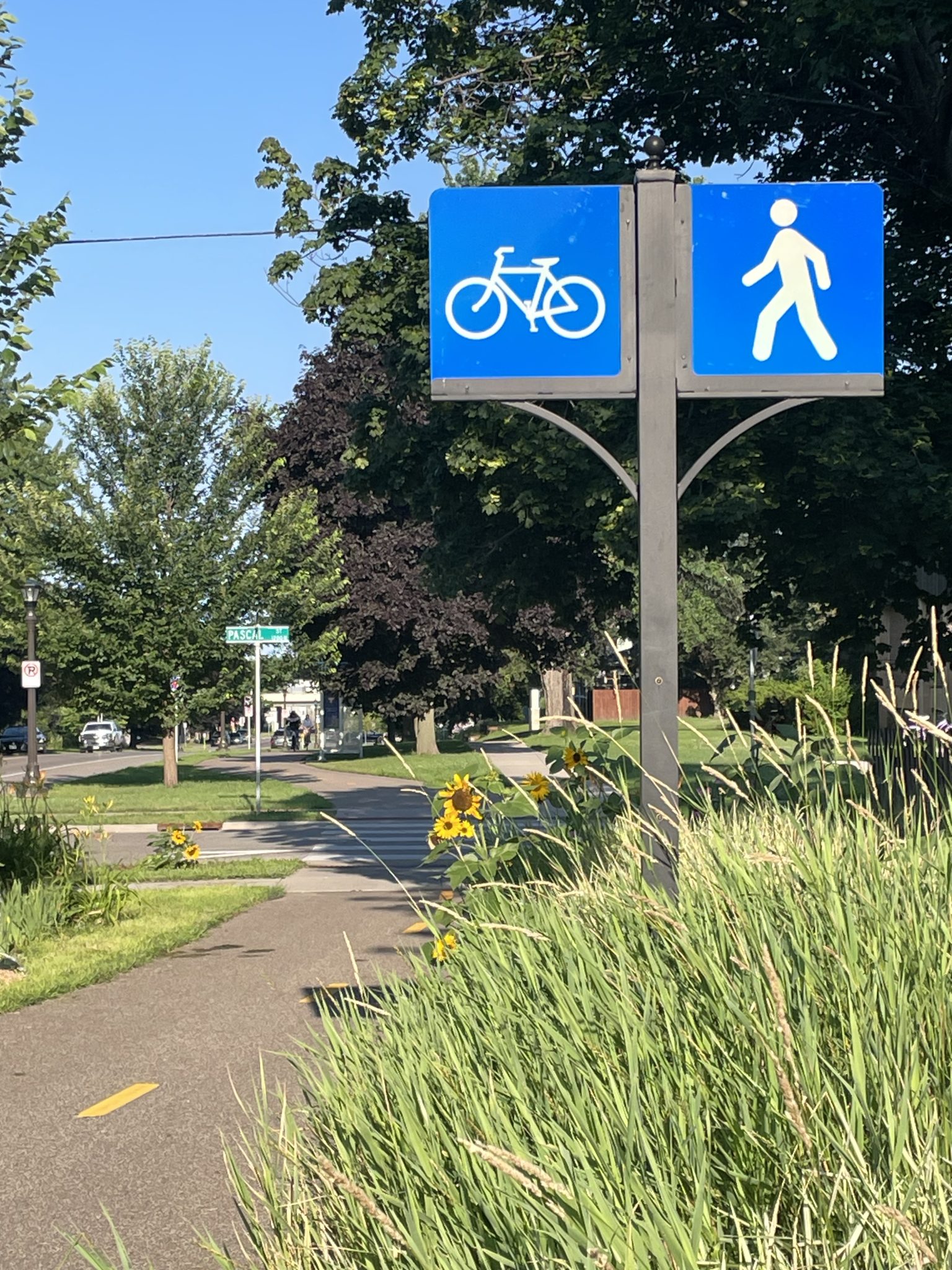
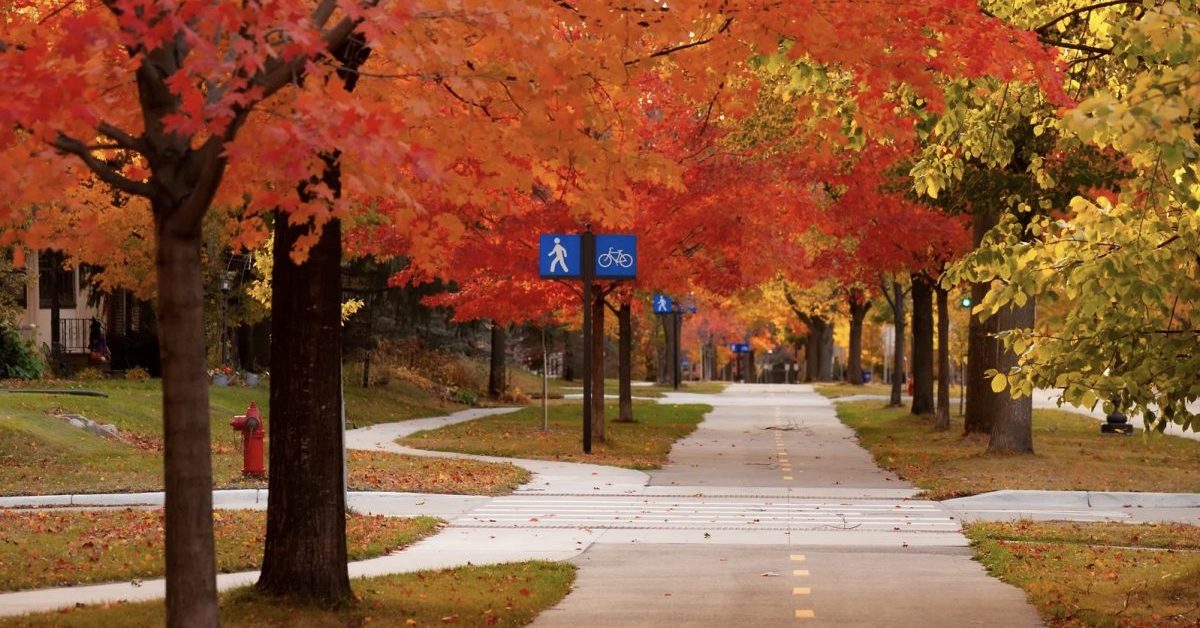
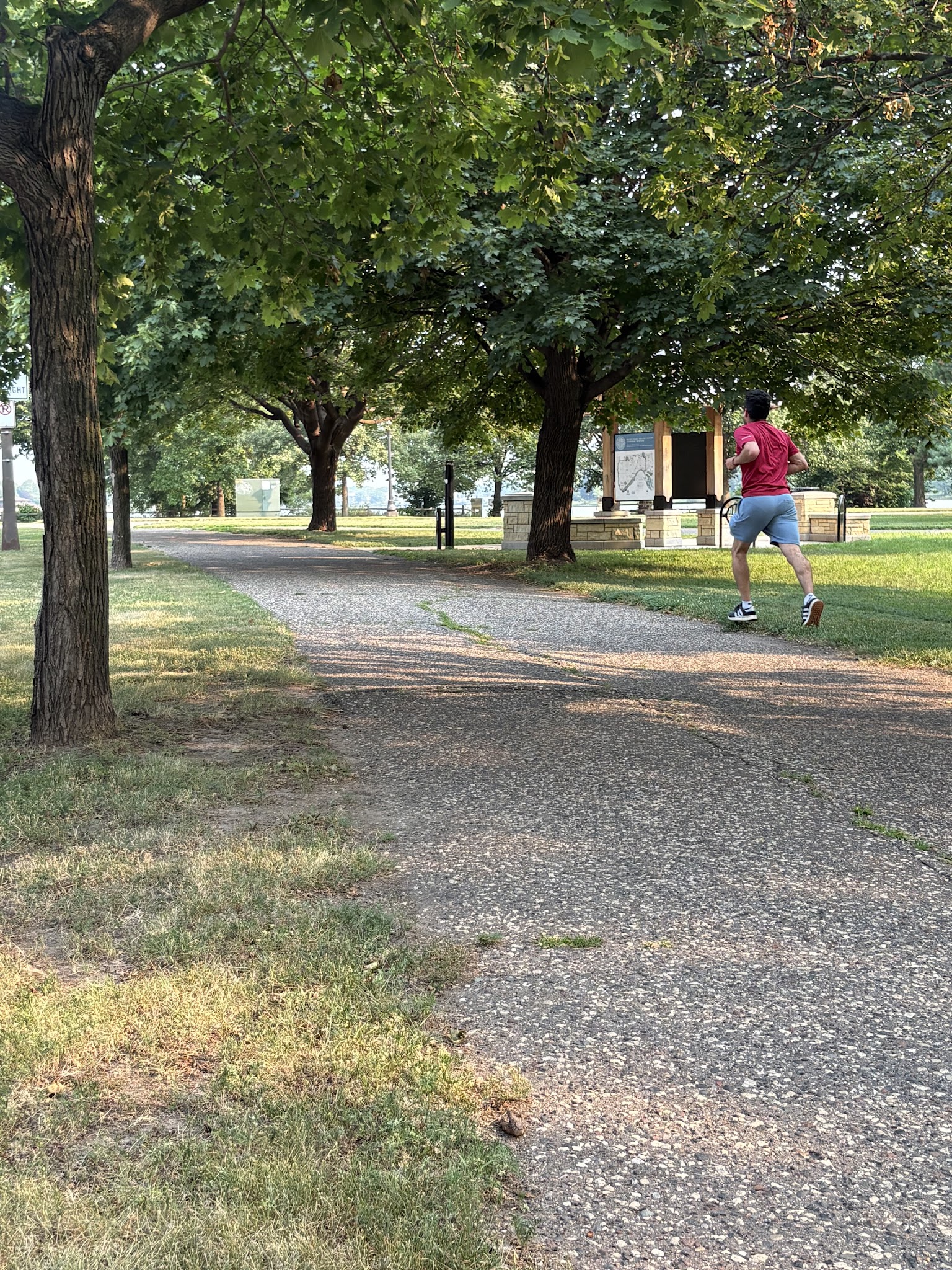
A useful comparison may be found on Wheelock and Johnson Parkway. These sections of St. Paul’s Grand Round share many of the same features as the Summit Trail plan: separated bike trails, wide boulevards, a mature canopy of trees, historic homes between Como and Phalen Lakes, as well as Mounds Park. Along with Como Boulevard and its bikeway, these separated trails feature repositioned curbs and gutters, with ADA friendly tabled intersections that join bike path and sidewalks. They have all been completed within the past ten years, and the cyclist and jogger will be hard-pressed to notice signs of the kind of “destruction” that Will finds inevitable for Summit. With the implementation of a Tree Preservation Ordinance, St. Paul hopes to both update its road, sewer, pedestrian, and bike infrastructure and preserve and cultivate its tree canopy.