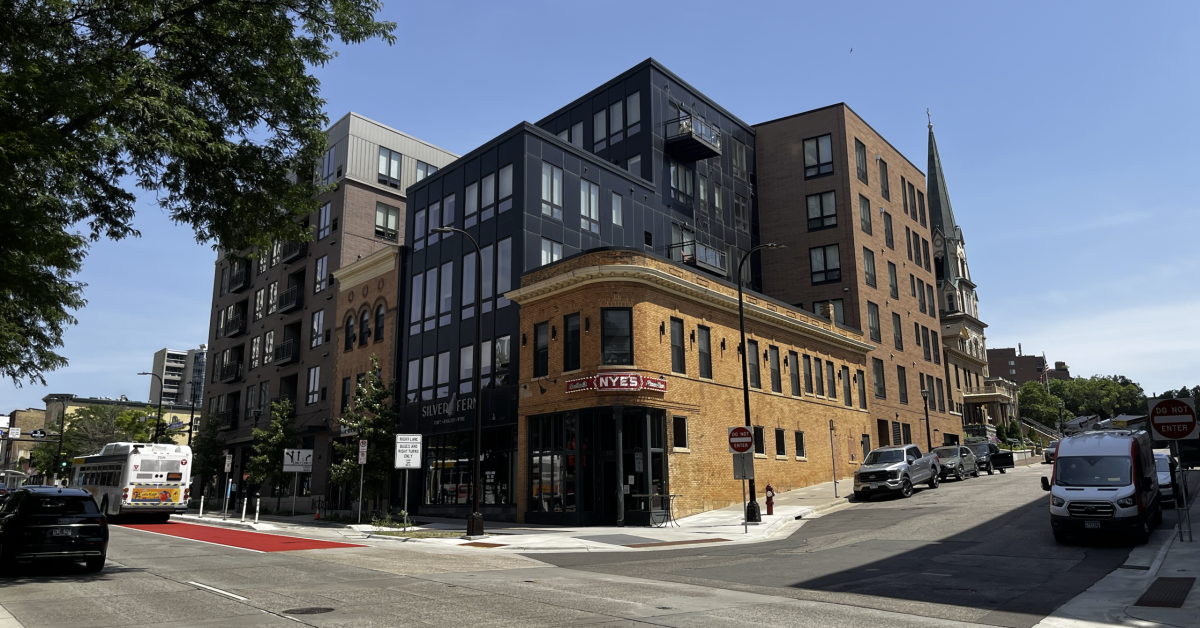
I’ve long held the opinion that Northeast Minneapolis’ street design is terrible, often wide one-way designs or worse — four-lane death roads — that date back to the neighborhood’s industrial past. Note: That past is now largely missing and/or replaced by artists’ studios, wood-fire pizza restaurants and high-rise apartment buildings, mostly good changes. Yet even though the neighborhood has changed dramatically, the streets have long remained terribly dangerous, chaotic, confusing and borderline unbikeable (despite the city’s bike-friendly reputation).
That is finally starting to change. I made it over to Northeast Central/Hennepin the other day and saw the brand new designs for NE Hennepin and First Avenue NE for myself.
Keep in mind that the project was not a complete street reconstruction of the type underway on Hennepin Avenue South. Instead, this was a partial reconstruction of some curbs, corners, traffic signals and a few other minor bits of concrete. It was funded largely by federal regional solicitation money, though both Hennepin County and the City of Minneapolis had to throw in quite a bit of matching funding to ensure the project was done well.
(Regional solicitation refers to $250 million of bi-annual regional transportation money doled out by the Metropolitan Council’s Transportation Advisory Board, of which I am a member.)
Anyway, the changes are a huge improvement. Huzzah! If you want to see it for yourself, an event on Wednesday, July 30, will celebrate the new infrastructure.
Here are five highlights.
No. 1: Curb-Separated Bike Lanes
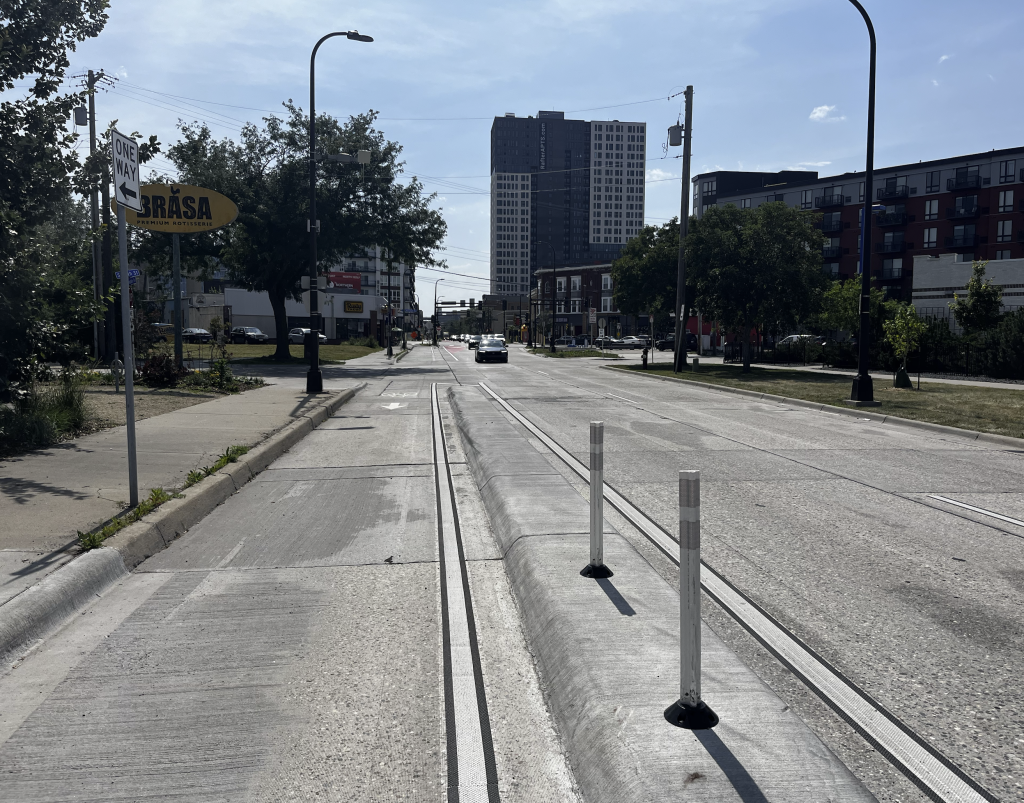
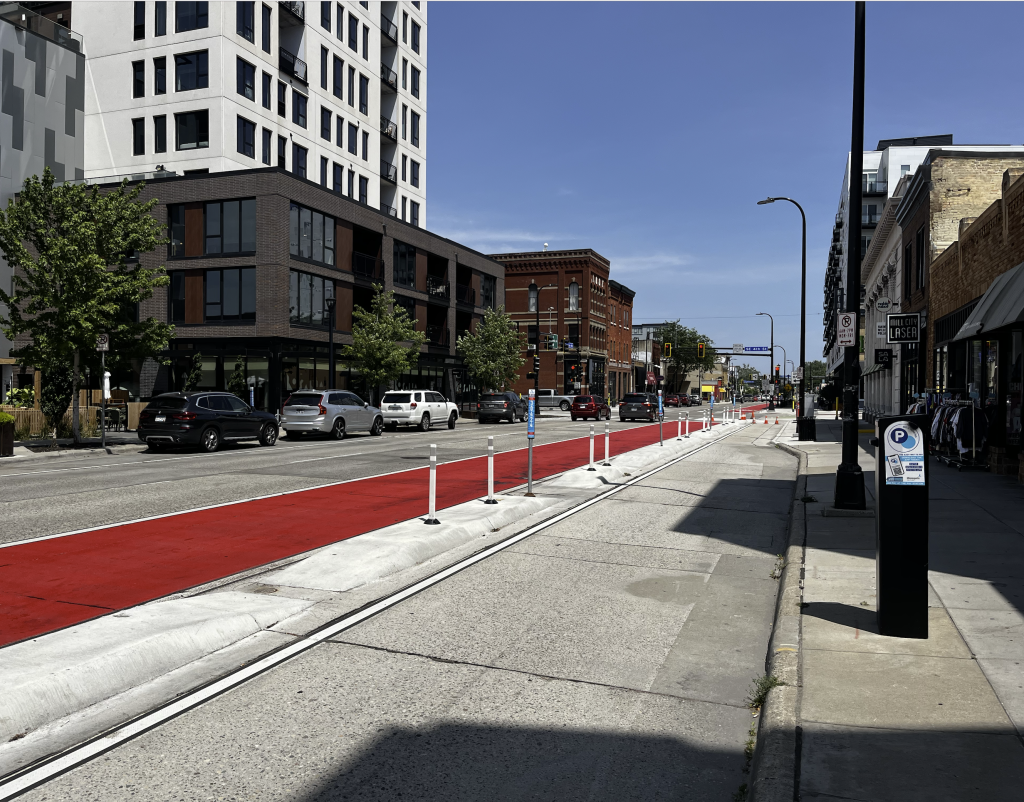
For a while it was up in the air whether the bike infrastructure would be a protected on-street lane, but the county and city both found extra money to make it a concrete-protected bike lane.
On-street parking was added at the last second due to a request from Council Member Michael Rainville, but unlike the Hennepin Avenue South faux bus lanes, the one here will be an on-street bus lane from 6 a.m. to 7 p.m., which seems far better than the Hennepin Avenue South plan.
The only caveat is that the lanes sometimes go up onto the curb for an intersection, and then back down to street level between the concrete dividers. It is a compromise that comes with the quasi-reconstruction territory and hopefully will not deter or confuse too many people.
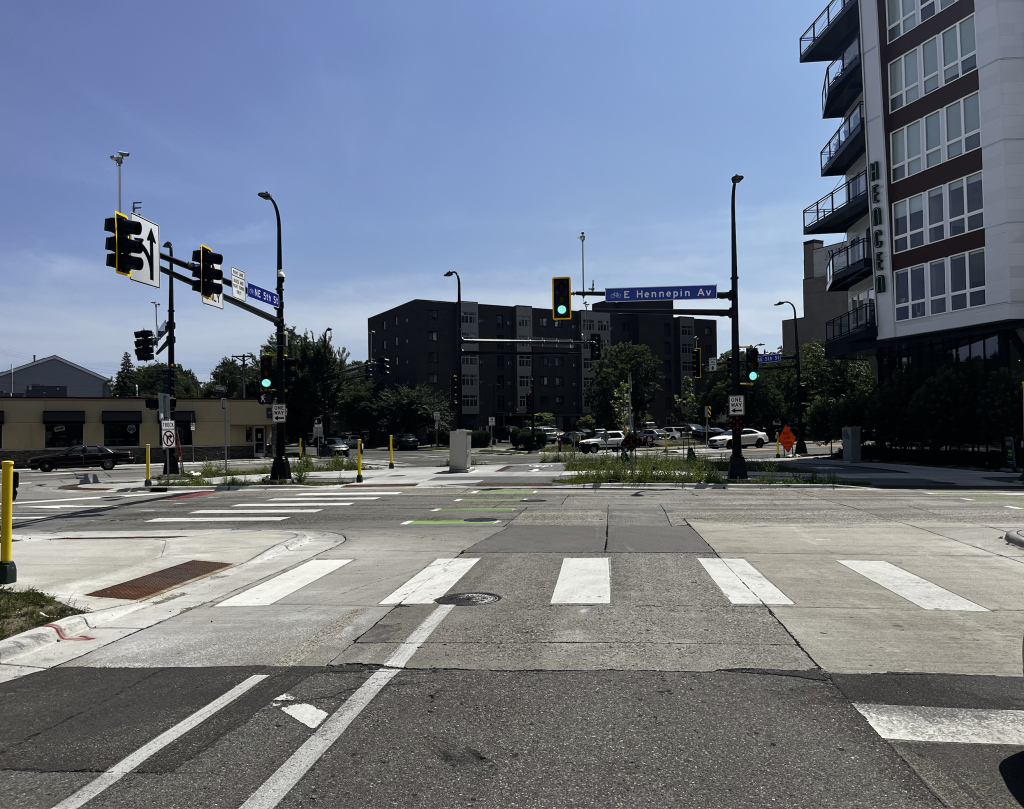
No. 2: Safer Fifth Street Bicycle Interchange
Sure, the convergence of off-street one-way lanes looks a bit weird, but this is far superior to its predecessor.
I used to spend a lot of time in Northeast, often biking from the University of Minnesota and/or St. Paul. Fifth Street was my favorite route through the neighborhood because it elegantly crosses I-35-W, has a wonderful contra-flow design through Marcy-Holmes and then becomes a calm bike boulevard through Northeast proper. The worst part was always trying to cross through Hennepin and Central avenues, but now the most chaotic interchange has been “closed off” with some new public space at the apex of the triangle (next to a new bookstore).
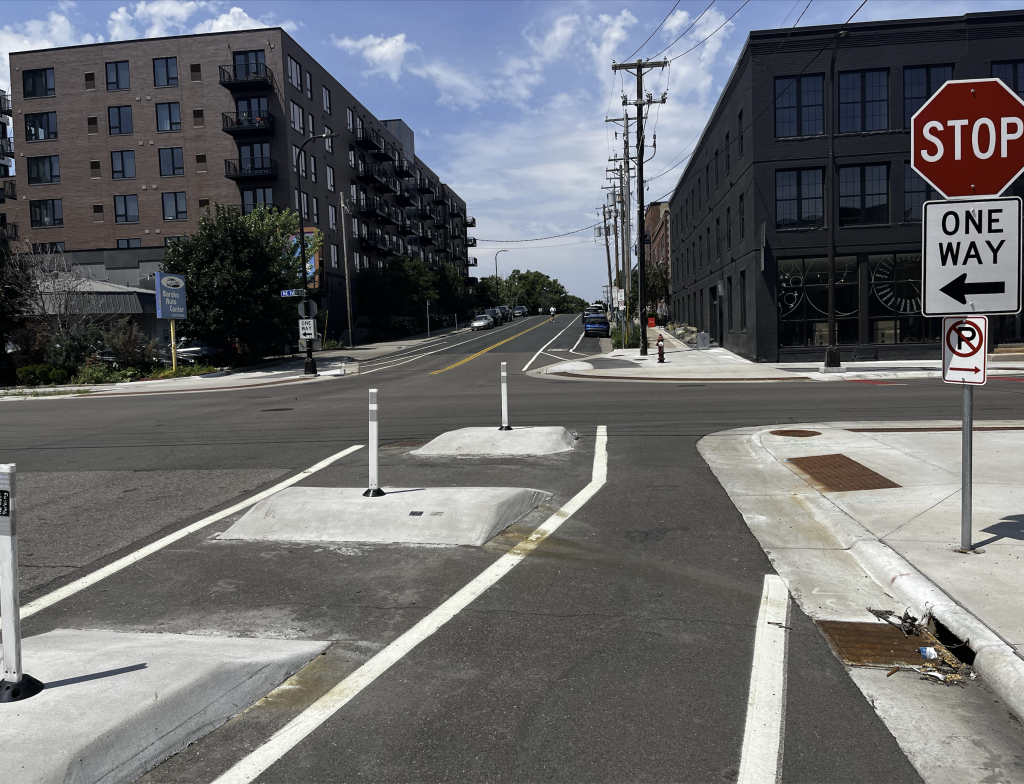
No. 3: Traffic Calming
Bikes aside, the main benefit here is reduction in car speeds, fewer lanes and improved safety for people walking and biking in this congested, dynamic area of Minneapolis. I have a lot of confidence that the new designs will bring speeds down 5 to 10 miles per hour through this “second downtown” and dramatically improve the quality of public space here. That is sorely needed in this long-neglected, fast-changing part of Minneapolis.
No. 4: Bus Lanes
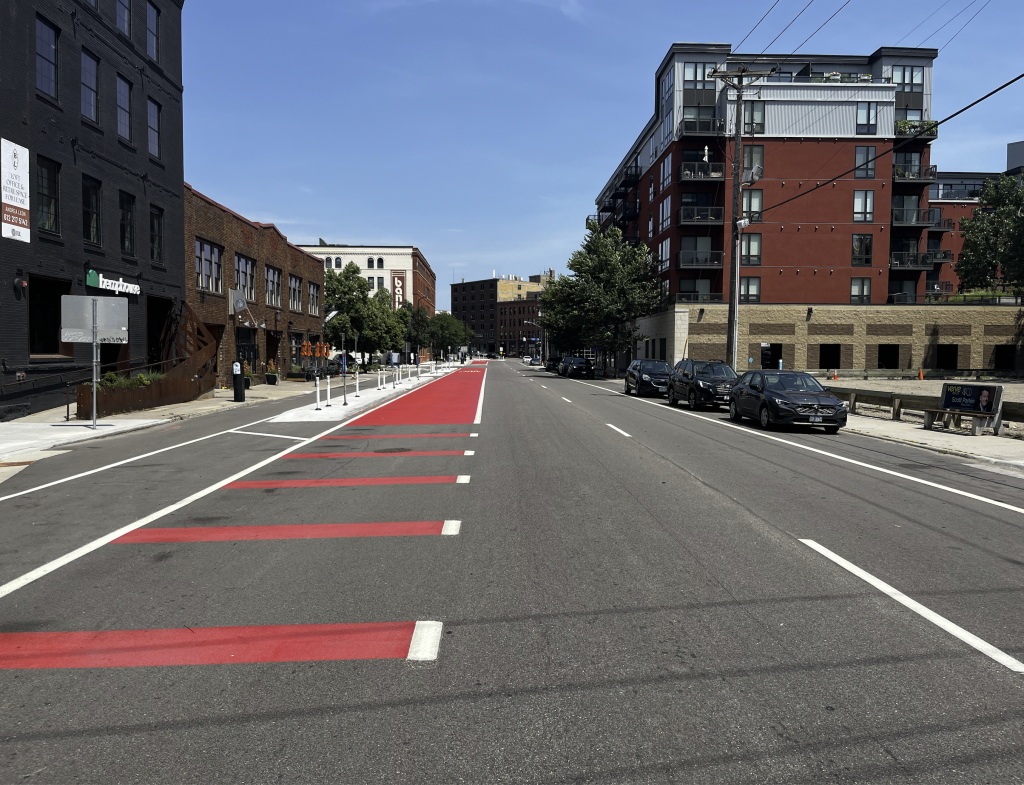
The new E Line BRT will have dedicated bus-only lanes on both Hennepin and First avenues. That is the good news. The bad news is that, at the last minute, Council Member Rainville managed to have on-street part-time parking put into the plans, making these bus lanes only part of the day. The good bad news is that they will be “enforced” from 6 a.m. to 7 p.m. (we will see; I am skeptical), which is vastly superior to what is happening on the Hennepin Avenue South bus lanes.
Anyway, the red paint almost looks too good to be true, like a rendering come to life.
No. 5: Sidewalks
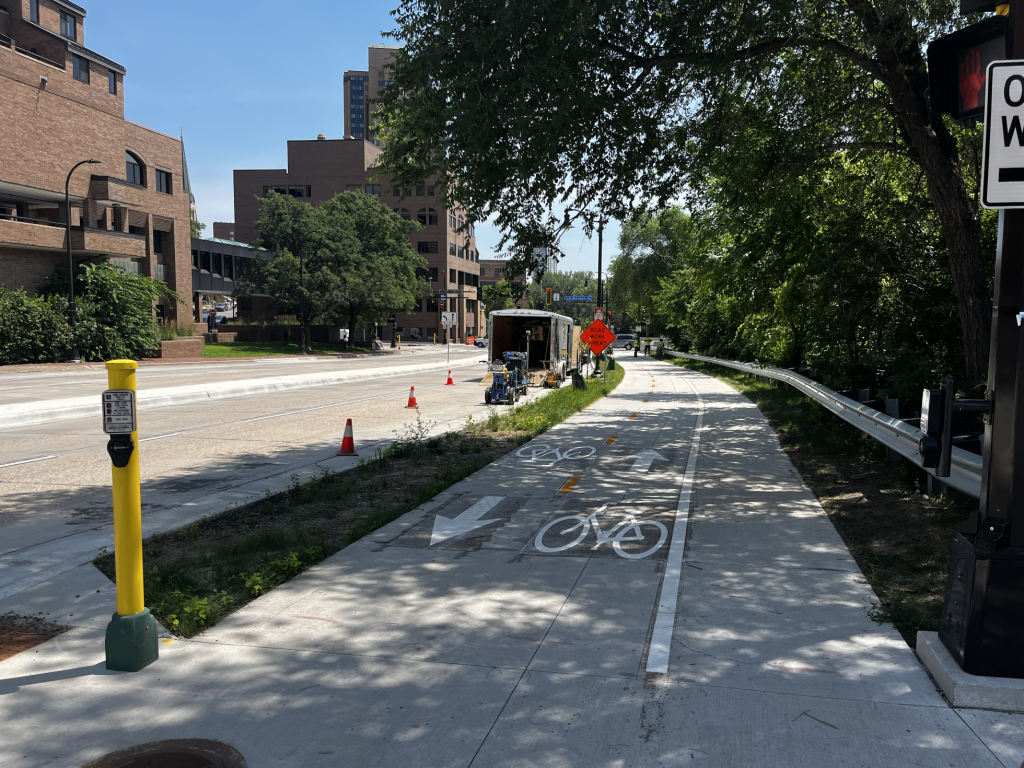
Most people might not even notice another key part of the project: County engineers managed to find money to fill in some key sidewalk gaps. If you had told me there had been no sidewalks on one side of Northeast Hennepin for 50 years, I would not have believed you. But that was true until this month; for some reason the right-of-way surrounding the 1980s-era Riverplace complex was never built with sidewalks. (I blame the obsolete skyway connection.)
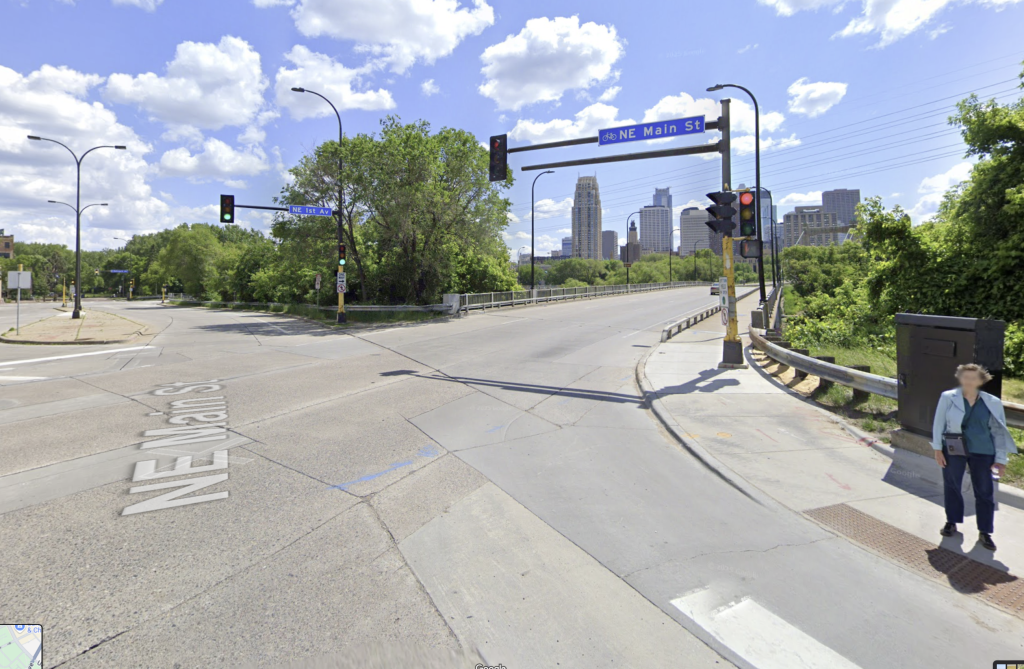
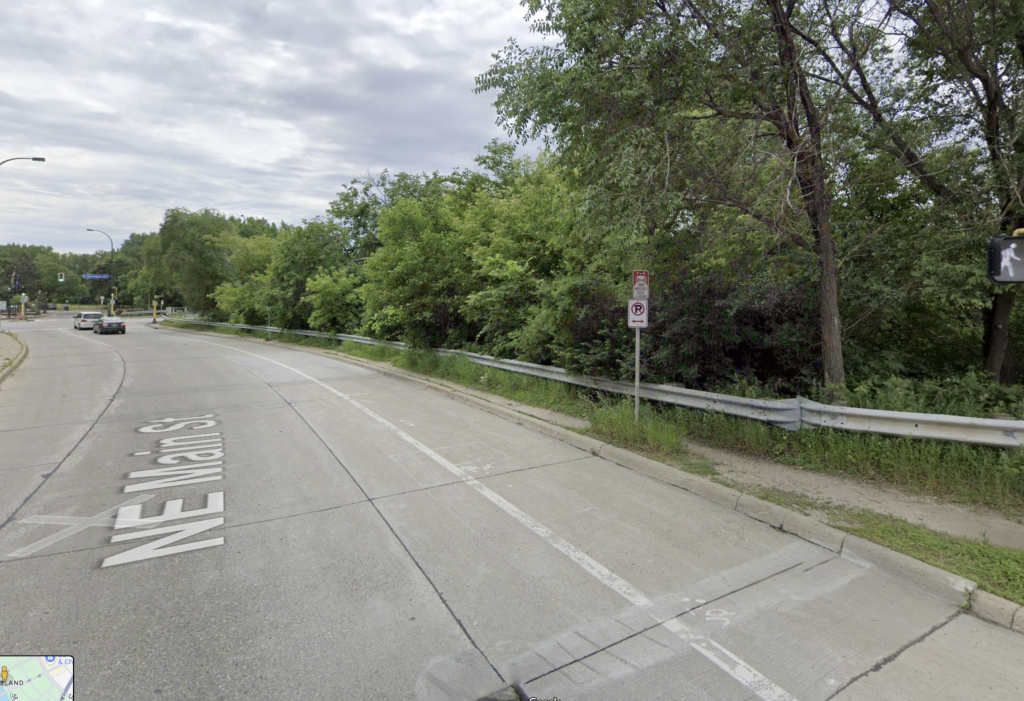
There were also no sidewalks along the river-side of Main Street, a beautiful (and theoretically) key pedestrian connection. Anyone walking would have to trudge carefully along a desire path between the roadway and a low metal guardrail.
That is all changed now. Beautiful sidewalks are everywhere, and a two-way curb-separated bike path runs along Main Street where once there were only grungy weeds.
All photos by Bill Lindeke