The views expressed in this article are those of the author alone and do not represent the official position of the Streets.mn Board of Directors.
Here is a letter from a reader we received earlier this week at Streets.mn:
“Hey all,
My apologies if you wrote something and I just didn’t see it. I am a daily streets reader, and haven’t really seen anything from you all regarding the ICE occupation of the city.
I feel like you should at least issue a statement, or write an article about this disruption. Especially since they are grabbing people from transit stops. Again, my apologies if you did, and I missed it.”
While we addressed the crisis in our most recent newsletter, it’s true that we have not yet addressed the violent ICE crime wave that the Twin Cities metro area is currently experiencing. Several other amazing local journalism outlets have been reporting on this as it unfolds. In my neighborhood of Uptown Minneapolis, the community has been stepping up. People have been keeping their eyes on ICE and showing up in numbers whenever agents are spotted. It’s nice knowing we’ve become organized and are able to make their (incredibly unethical) jobs significantly more difficult without breaking the law. Unfortunately, there is only so much we can do; significant damage has already been done.
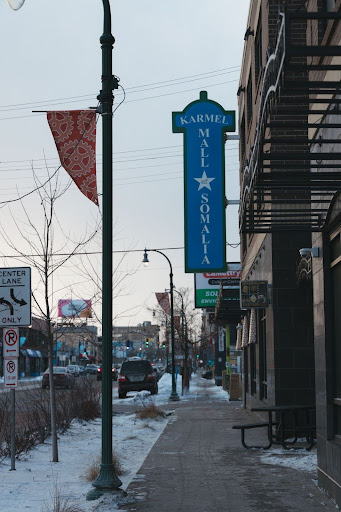
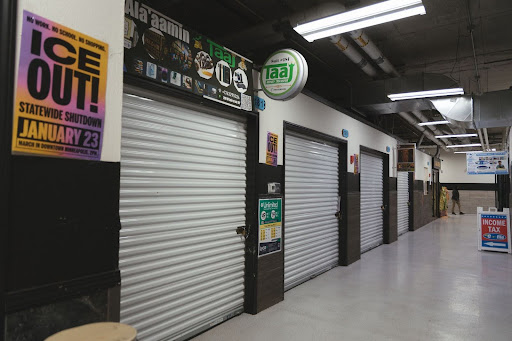
I walked down Lake Street one morning this week to check out Karmel Mall, long the premier retail location for the Somali community of South Minneapolis. What I saw inside was disheartening – the mall, usually filled with bustling foot traffic and a plethora of shops, was all but dead. Chairs were stacked on top of nearby tables. Almost every shop was closed. As I walked in, a kindly Somali man thanked me for supporting local businesses. I purchased two delicious Sambusas from one of the few shops open, hoping that this is just a phase, that this won’t last too much longer.
The next day, I revisited Karmel Mall with my wonderful friend Priscilla, who took all but one of the photos for this article (please follow her on Unsplash here!). We were relieved to find that my previous visit had simply been too early. This time, visiting around 4:30 PM, the majority of shops were open… but things still weren’t quite what they used to be. By our estimation, about a third of the storefronts in Karmel Mall were closed. The foot traffic was much better than it had been the previous day, but it clearly was not quite at the level it had been at before. That is, before the Somali community was insulted and targeted by the federal government.
We here at Streets.mn are dedicated to local perspectives on transportation and land use. We like to talk about lively streetscapes and dense urban environments. I know many people who believe that if we fight hard for improvements like better bus service, bikeways, and zoning laws, we can sculpt our cities into places where people walk around and live better lives.
All that vitality is there in the Karmel mall, even now, in diminished form. Located on a major thoroughfare, it is well integrated into the South Minneapolis urban fabric. It faces right onto the most lively and diverse corridor Southside has to offer, Lake Street. It doesn’t have a giant surface parking lot. It is a mall, sure, and it is not the closest to Lake Street’s BRT service, the B Line (the nearest stop, at Nicollet Ave, is two blocks to the east). Yet it offers small storefronts at low rents, something hard to find outside of urban malls. Multiple stores in the mall face Pillsbury Ave directly, with outdoor seating on Lake Street as well (all excellent for activating the streetscape!). It offers the business security of knowing that your target audience will always be right nearby. It gives Somali people living on Lake Street a place to walk around and feel comfortable, maybe run into some friends, even when the weather is Minnesota levels of cold. Isn’t this kind of vitality the exact thing we urbanists strive to achieve?
It’s certainly not something to be taken for granted. This can all come crashing down in a heartbeat, and it has.
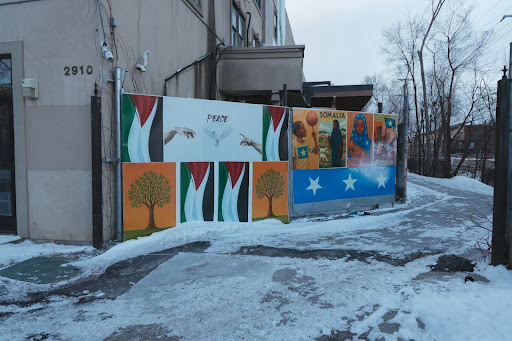
ICE’s presence in the Twin Cities weighs heavily on us all. They run amok, kidnapping random, innocent people. Anyone nonwhite is a potential target, thanks to the Kavanaugh stop. Being black or brown or asian in public is a safety risk. Legal observers are falsely accused of impeding officers and tear gassed indiscriminately. ICE have been going into restaurants, ordering food, and then abducting the cooks who just made their meal.
Complying will not save you. I saw a video of a mother and son, citizens, who complied when ICE stopped their car and began to pull out their ID’s. Before they could finish, ICE pulled the son out of the car and started beating him. The agents in question had zero reason to do this. They will likely face no consequences.
Networks of food delivery have sprung up because minorities have become afraid of leaving their homes, for fear of being abducted, beaten, and shipped far away. One man was kidnapped in his own home, forced outside in subfreezing temperatures with next to no clothes on. One teenage boy was kidnapped and had his phone stolen and sold by ICE. In North Minneapolis, a man was (allegedly) shot in the leg after entering his own home.
The federal government disputes this and says he attacked ICE agents with a shovel, but they have already changed their version of the story several times. Sowing doubt is their specialty. Anyone in the area knows that they lie about what is happening here. They spread a false narrative about Renee Good’s death as soon as she was murdered. The narrative of “ICE enforcing laws against criminal illegal aliens” must be adhered to at all costs. Anti-immigrant sentiment is far too useful for them politically to give up, even in the face of their own atrocities. Owning the libs is always worth it, even if it means a bit of torture and murder here or there. It certainly means accountability is out of the question.
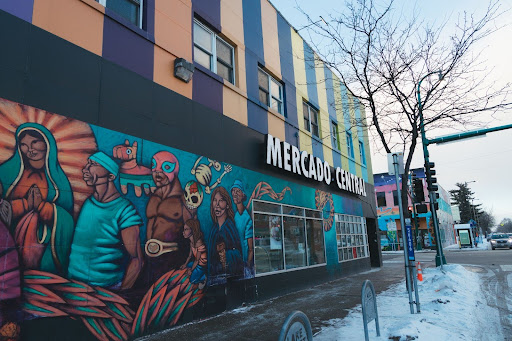
Shortly after visiting Karmel Mall, Priscilla and I headed to Mercado Central, further east along Lake Street. Normally packed with restaurants and various shops, the place felt more like a dead mall. Unlike most dead malls, Karmel Mall was killed – killed by the state-sponsored atmosphere of terror inflicted upon the community it represents. The photos speak for themselves – over half the storefronts were not in business. Perhaps killed is the wrong word – Mercado Central is on life support; its heart was still beating. A panaderia and two restaurants continued to hold down the fort. We got some excellent pupusas from Pupuseria El Rincón Salvadoreño… food at Mercado Central continues to be excellent, even in the face of adversity.
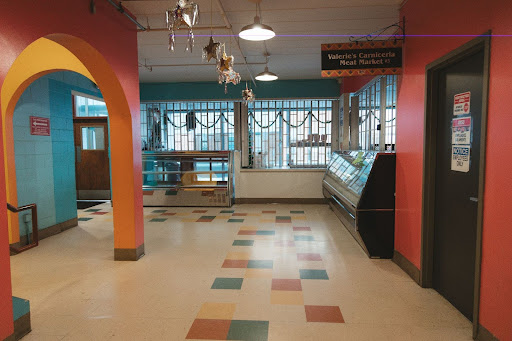
I couldn’t help but wonder what all the folks who would normally be hanging out or running a shop there are doing right now. Some business owners have said they will be out of business within a month or two if the occupation continues. The impact on immigrant communities will be dire.
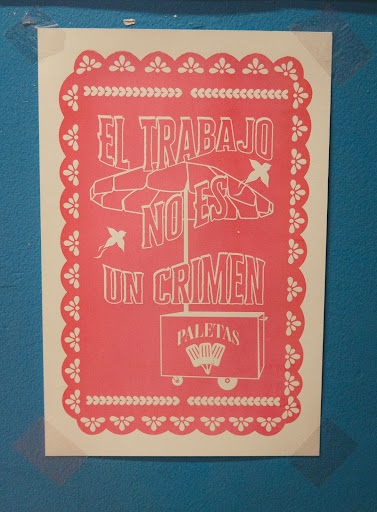
What will happen if the occupation stretches on for months? No one can say for sure, but here are my predictions. I believe the racial wealth gap in the Twin Cities metro area will skyrocket, as minorities struggle to make a living. Many will likely flee the area. Others who need money will likely continue to be abducted as they go to their jobs. Those unwilling to risk abduction will suffer invisibly from their homes, that is, if they are not evicted. The Minneapolis City Council, afraid of this, have issued a resolution asking Governor Walz for an eviction moratorium so that people can stay safe.
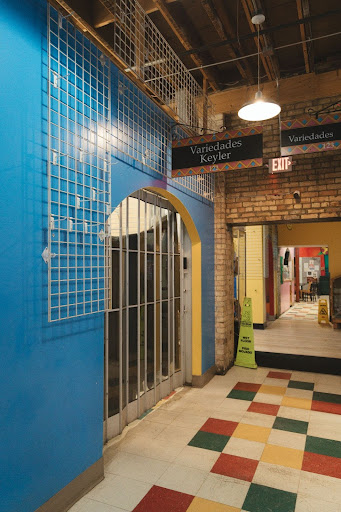
In the short term, the effects on the street are plain as day to see. Formerly bustling commercial nodes along Lake Street are borderline deserted (the cold is admittedly a huge factor on this front too). The lack of eyes on the street compounds with the sense of dread that locals are already feeling. The other day, I saw a woman roll her window down to ask how the car next to her gets away without a front plate. Implicit in her question was “Why don’t you have a front plate? Are you ICE?”
Sometimes it’s not implicit. Walking down Lake Street with my friend, a lady approached us and said “I thought you were ICE at first!” The only reason she was able to tell that we weren’t was the whistle around my friend’s neck. People joke about a low-trust society, but it’s become extremely real around these parts.
Part of the problem is that ICE agents, rumor has it, tend to roll around in pickup trucks and large SUVs. In 2026, due to the vehicular arms race, such vehicles are increasingly common among normal residents as well. Given the frigid weather around here, face coverings are also omnipresent for anyone travelling outdoors. Is that man down the street wearing a face covering because he’s ICE, or because it’s 20 below freezing out? Probably the latter, but it’s easy for your brain to jump to conclusions. There is no peace of mind on the streets of Minneapolis right now – and there isn’t any in Saint Paul or the suburbs either.
The fear is felt by just about everyone living in the metro area – not just Minneapolitans, and not just people walking down Lake Street. Anyone trying to get anywhere is at risk.
ICE shot Renee Good in her automobile. Since then, countless videos have emerged of ICE agents pulling people over, breaking car windows, kidnapping innocent residents, and leaving their cars on the street for the city to deal with. I believe that this has struck incredible fear into the populace. Cars, especially larger cars, have been heavily marketed in recent years with a focus on, among other things, safety and security. This has been an especially salient marketing tactic against women, who have legitimate reason to fear for their safety when walking down the street or riding public transit. A car is one’s private space, a bubble of home that comes with you wherever you go. It is not a bubble that ICE respects.
A friend of mine was driving with her sister about two weeks ago when her car was T-Boned at a suburban intersection. Luckily, she and her sister were unharmed, and they got out of the car to talk to the person who hit them. They never had a chance to do so, for the man and the woman in the other car were already being held at gunpoint by ICE agents. Only a single agent came to check on my friend and her sister; the rest did not appear to care at all about the destruction they had just caused.
It turns out that ICE had been engaging in a high speed chase with the driver. Under Minnesota law, such chases are only allowed by state and local law enforcement under very strict circumstances. Note, however, that this is state law, and of course does not affect federal agents. It shouldn’t need to!
ICE agents don’t have jurisdiction over traffic violations and shouldn’t be able to pull people over randomly. The emphasis here, sadly, is on the word “shouldn’t”.
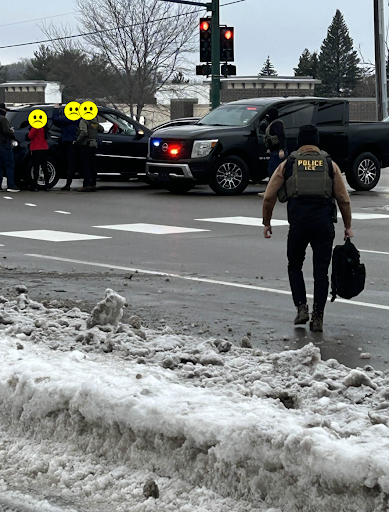
I and other urbanists I know like to point out that statistically, riding the bus is, contrary to popular belief, the safest way to get around. This makes sense when you consider that the vast majority of deaths that occur as people get around happen via car crashes. Only in a bus are you seriously protected from automobile impact (by virtue of the sheer mass of a bus dampening the impact, not to mention the professionalism of the bus driver). It’s true that buses contain the incredibly frightening phenomenon known as other people – some of whom are, admittedly, mentally ill. In reality, however, one is far less likely to be killed or seriously hurt by someone on the bus than they are to be killed in a car crash. In 2023, the most recent year that the USA Bureau of Transportation Statistics have published data, over 11,000 people died in cars, and over 12,000 people died in “light trucks” (this includes SUVs and pickups). Deaths on transit? A grand total of 330!
Yet in recent weeks, this dynamic has stopped being the case for residents of color. I heard a story of ICE agents getting onto the bus, selecting a couple of dark-skinned people, kidnapping them, and then leaving. I saw a picture of agents waiting at the bus stop at Lake Street and Bloomington Avenue, right near Mercado Central, presumably because they know that’s where they have the best odds of finding immigrants to abduct. I wouldn’t be surprised if bus ridership along the routes that intersect with immigrant neighborhoods – the 11, 14, 22, and B Line come to mind – is in stark decline. In an atmosphere of constant human right violations, this is yet another unfortunate side effect.
All things considered, though, the people on Lake Street might not have it the worst. People in Minneapolis and Saint Paul have been organizing neighborhood Rapid Response groups to spot ICE and alert residents nearby when abductions occur. Greg Bovino, the US Border Patrol Chief, has said that this tactic has made it difficult for ICE agents to conduct their work. In dense neighborhoods like South Minneapolis, it’s possible to constantly have volunteers engaging in de facto community policing, making sure that any illegal abduction doesn’t happen undetected.
The suburbs have been less fortunate. In the past week, reports from the suburbs of ICE abductions have increased, while urban abductions have declined. What I’ve heard is that the suburban neighborhoods, lacking the organizational structure of the cities proper, have become more vulnerable targets for ICE. In the Twin Cities, some suburbs skew even less white than Minneapolis – Brooklyn Center, for instance. I have to imagine that the low-density makeup of the suburbs makes it harder to keep enough eyes on the street. There’s a bitter irony here – I can imagine a hypothetical Hispanic family who moves to the suburbs to escape perceived inner-city urban crime, only to find themselves targeted by racist criminals hired by the government itself.
I want to believe, more than anything, that my fellow Minnesotans understand how messed up this all is. I want to imagine that the sheer horror of the crimes inflicted upon our citizens will unite us in opposition. ICE cannot be allowed to function with impunity, with “absolute immunity” – that much should be indisputable. Even those who don’t believe the agency should be abolished must at least agree that any form of state violence needs serious accountability. Our government needs to curb ICE’s abuse of power, admit its own wrongdoing, and explicitly ban the practice of racial profiling. With any luck, after this year’s midterm elections, we’ll have a congress that is ready to do just that.
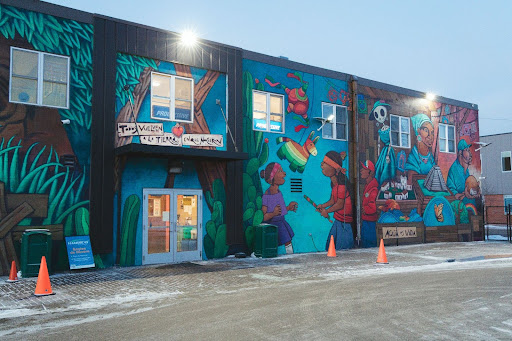
With all that said, stay engaged! Keep your community safe! Go for a winter group bike ride! Ride the bus somewhere! Exist in public! Buy a pupusa at Mercado Central! Go to your precinct caucus on Feb 3! Have a fun cozy day in your home with the people you care about!
Times are tough, but we must stick together and fight. These streets are ours, and they will stay that way!
Photo credits to Priscilla G. You can find more of her work here, on her Unsplash.