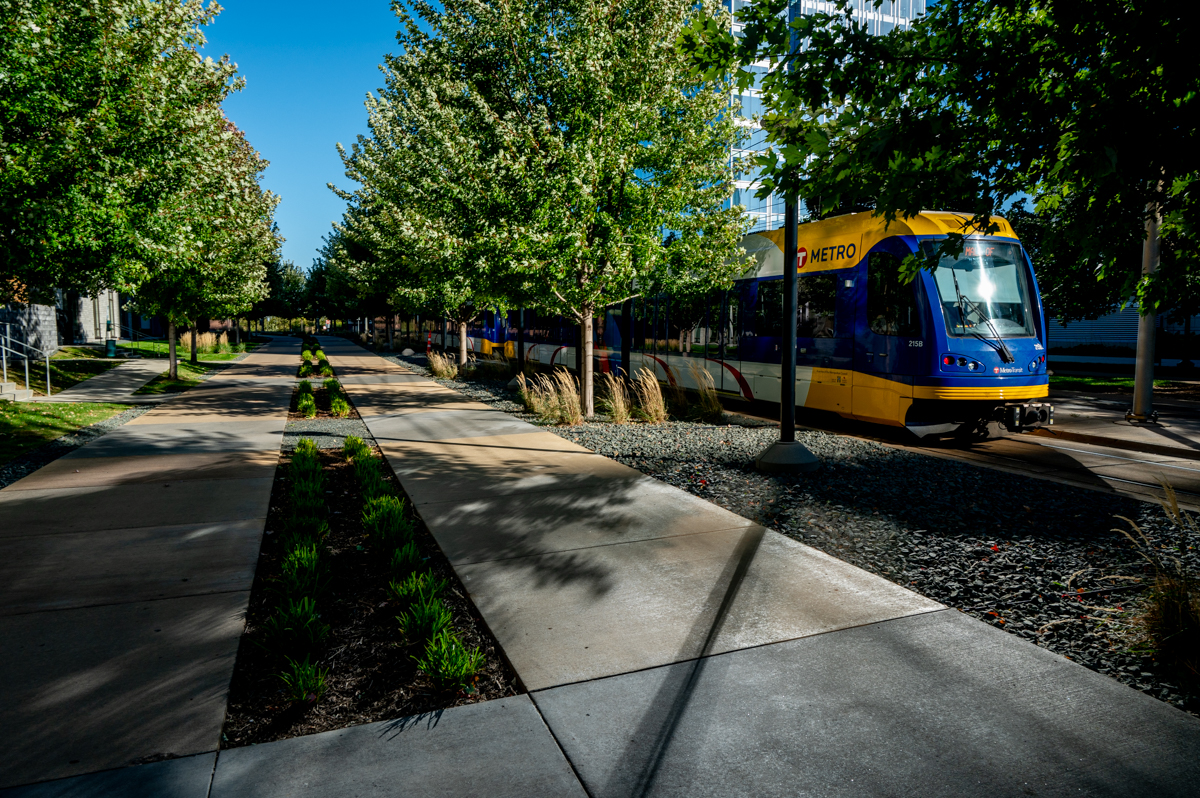
Governor Walz’s 2026 supplemental budget recommendations landed in March, and if you were hoping for good news on transit, biking, or walking infrastructure, you’re going to need to look pretty hard. There’s 42 pages of budget items in that list of supplemental budget recommendations: education, human services, fraud prevention, inspector generals, AI taxes, you name it.
Transportation gets less than two pages—and the one major move on transit is a funding reduction.
The Transit Cut
The headline item:
“The Governor recommends reducing the general fund appropriation for transit system operations at the Metropolitan Council. The Council would instead rely on other sources of funding for transit operations, such as the regional transportation sales tax or reserves.”
The numbers: -$1.751 million in FY 2026-27, and -$40.028 million in FY 2028-29.
The $1.75 million sounds almost modest. The $40 million is the story. And there’s context that makes it significantly more concerning than the dollar figures alone suggest.
At the end of the 2025 session, a bipartisan working group struck what looked like a compromise—general fund cuts offset by reallocating county sales tax dollars toward BRT capital investment. Then the deal collapsed at the last minute under pressure from county commissioners and legislative Republicans, and the cuts fell disproportionately on transit with no restoration mechanism in place.
This supplemental budget doubles down on that. The $40 million reduction penciled in for FY 2028-29 suggests the intent is to eliminate general fund support for transit operations altogether—shifting that responsibility permanently onto the regional sales tax and whatever reserves the Met Council has left. That’s not a temporary accommodation. It’s a structural change, proposed through a supplemental budget, with relatively little fanfare.
We’ve Been Here Before. A Lot.
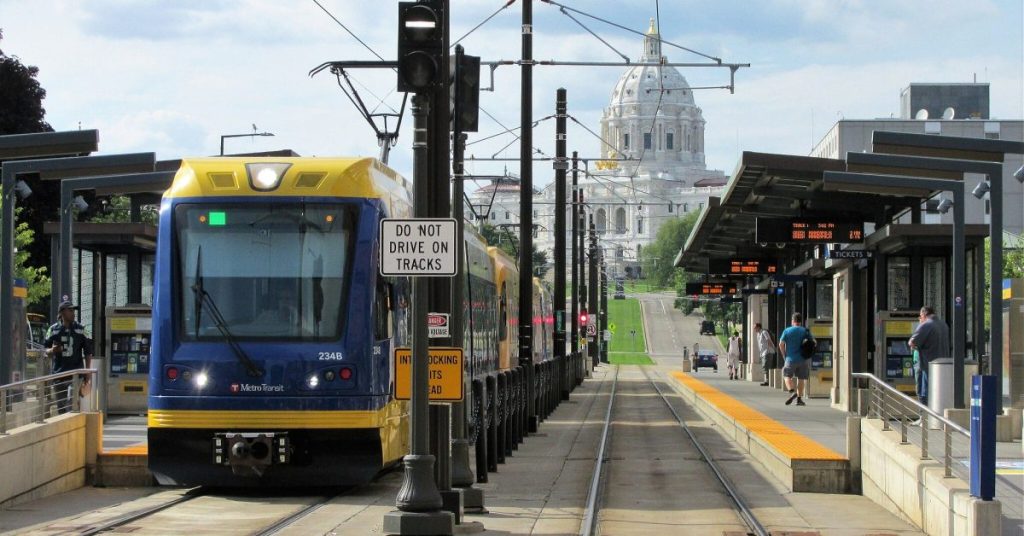
Minnesota has a long, frustrating history of treating transit funding as a budget dial to turn down whenever things get tight. Every few years the conversation resets: transit gets cut, advocates fight back, some portion gets restored, and then the cycle starts again.
The 2023 Transportation Omnibus Bill was supposed to break that cycle. The legislature made real investments—arterial BRT, Metro Mobility expansions, dedicated funding streams—and advocates called it the most significant transportation legislation in a generation. There was genuine optimism that the state was turning a corner on its chronic underinvestment in non-car mobility.
Then 2025 happened. The biennial bill ended up cutting Metro Transit funding by $86.3 million total from 2026 to 2029, with Greater Minnesota transit taking a $22 million hit in 2026-27. The Governor’s original proposal had been nearly $130 million in cuts, so the final number was a defensive win—bad, but not as bad as it could have been.
Now the 2026 supplemental signals that even that outcome is a ceiling, not a floor. The Met Council is being told to lean on the regional sales tax and its reserves rather than general fund dollars. The framing is always the same: transit has other funding sources, it’ll be fine. The problem is those sources are already spoken for and were intended to supplement the baseline, not replace it. The regional sales tax is funding BRT expansion and capital needs that have been in the pipeline for years. Tapping reserves to cover operations is a short-term patch, not a plan. And it puts the Met Council in the position of either cutting service or cannibalizing future investment to keep buses running today. The BRT network Minnesota was supposed to build out—the H Line, future J, K, and L lines—stays on the drawing board and the money goes to keeping existing service alive.
What’s Not Here: Biking and Walking
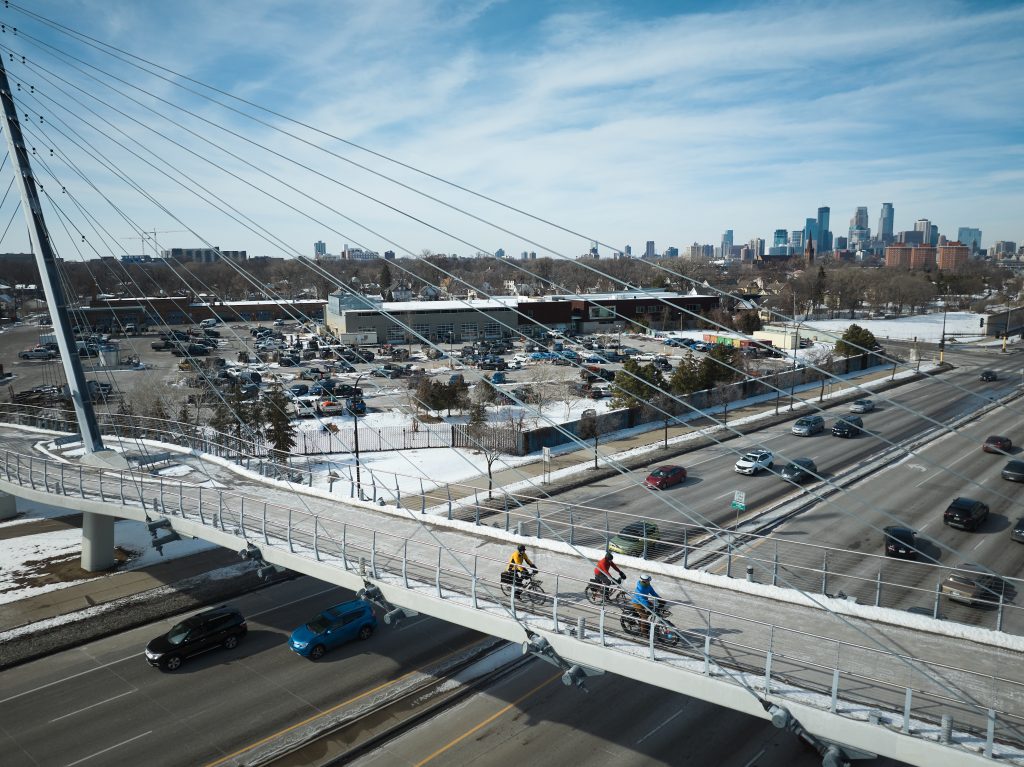
On active transportation—biking, walking, protected infrastructure—the supplemental budget has essentially nothing. No new investments, no line items, no mention.
That absence is notable because the existing baseline is already thin. The 2025 debate included proposals to cut active transportation funding by $4 million in 2026-27 and $8 million in 2028-29. Advocates worked hard to limit the damage, but the floor keeps moving and every cut to transit eventually rolls down to being a cut to bike and pedestrian infrastructure.
The safety picture makes the silence harder to justify. Even as overall traffic fatalities dropped 22 percent in 2025 to a post-pandemic low, bicycle fatalities doubled—14 deaths statewide, up from 7 in 2024. Progress for people in cars is not translating to safety for people on bikes and on foot, and infrastructure investment is a meaningful part of why. A supplemental budget that ignores active transportation entirely is not helping close that gap.
Federal dollars aren’t filling it either. Spending increases from the Bipartisan Infrastructure Law, passed in 2021, have been concentrated heavily among highway projects, with transit and active transportation largely left behind. With federal funding uncertain and the state budget heading in the wrong direction, that gap is likely to widen.
The Car-Shaped Elephant in the Room
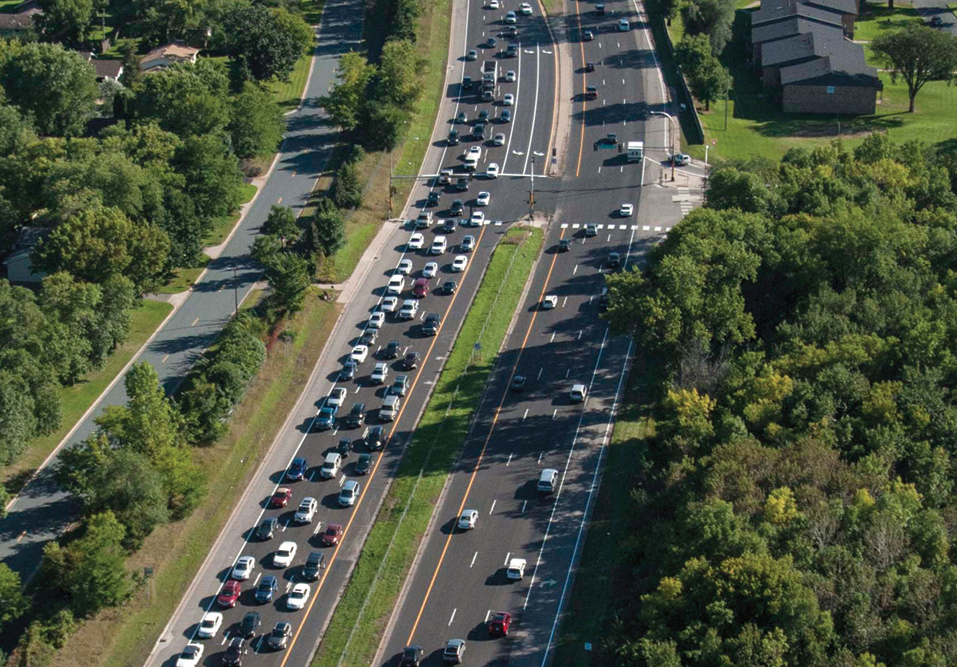
Here’s the thing: transportation spending in Minnesota probably does need to come down. That premise leads somewhere important.
Minnesota has the fourth-largest road network in the country by lane miles—behind only Texas, California, and Illinois, all of which have significantly larger populations and economies. You’ve probably heard a lawmaker cite that ranking as a point of pride. What they leave out: Minnesota ranks 12th in geographic area and 22nd in population. We are maintaining a road system wildly disproportionate to the number of people using it.
The state’s own numbers make this plain. MnDOT projects $36.7 billion in available highway revenue over 20 years against $52–57 billion in identified needs—a $15–20 billion shortfall. That’s just the trunk highway system. Minnesota’s bridges carry a separate $4.2 billion funding gap, with 874 currently rated in poor condition. Poorly maintained roads already cost Minnesota drivers an estimated $480 per year in extra vehicle repairs. And at the local level, counties, cities, and townships carry deferred maintenance backlogs ranging from $250,000 to $22 million per locality—funded roughly 65 percent through property taxes, because the state builds roads and leaves communities holding the maintenance bill for decades.
This is what’s being obscured by the “shared sacrifice” framing—the idea that everyone takes cuts equally. The system being sacrificed for is structurally overbuilt, chronically underfunded for obligations it’s already created, and still expanding. The cuts to transit and active transportation are not happening alongside equivalent scrutiny of highway spending. They’re happening instead of it.
The ROI evidence doesn’t support that approach. In dense metro areas, a dollar invested in transit yields $2.20 of economic value versus $1.78 for highway investment. In another study, public transit returns approximately $5 for every dollar spent. For bike and pedestrian infrastructure the cost comparison is almost embarrassing: active transportation projects cost over 75% less per mile to build than car-focused infrastructure and create 11.4 jobs per million dollars invested versus 7.75 for road-only projects. Portland’s entire 300-mile bike network could be rebuilt for the cost of one mile of urban freeway. A Portland State University study across six cities—including Minneapolis—found bike and pedestrian infrastructure had positive or non-significant economic impacts on local businesses in every corridor studied. States that have applied this data rigorously—Virginia’s SMART SCALE program being the clearest example—ended up spending substantially more on transit, BRT, and active transportation, because that’s where the returns are.
We need better Minnesota-specific data on all of this, and there’s real work to be done building that local case. But the directional evidence is clear: The ROI on transit and active transportation investment, particularly in urban corridors, is strong. The ROI on continuing to expand and maintain a car-centric road network we already can’t afford to maintain is not.
So yes—cut transportation spending. But use an open process and objective data to identify what gets cut. As Our Streets and allies have argued, fix what we have before building anything new. Don’t treat transit and biking as discretionary line items while the highway budget is a fixed cost. The conversation has to start with the network we’ve already built and can’t afford to keep.
The Bigger Picture
The $1.75 million cut this biennium quietly establishes a new baseline. The $40 million reduction in FY 2028-29 locks in a trajectory moving further from the transit investments Minnesota committed to in 2023. And the explicit instruction to use reserves tells you how the administration views the Met Council’s financial cushion—as something to spend down, not protect.
Advocates are already building the legislative record for 2027, knowing this session is largely defensive. The political bandwidth at the Capitol is consumed by other fights, the federal picture is grim, and the supplemental budget is exactly the kind of document that escapes public scrutiny—a targeted package of adjustments most people won’t read, nudging the baseline in the wrong direction while the larger conversation happens elsewhere.
For people who ride buses, who bike to work, who walk in neighborhoods that still don’t have sidewalks: this is the moment to be paying attention. It’s worth being clear about who those people are. Roughly 30% of Minnesotans don’t drive—because they’re too young, too old, have a disability, or can’t afford a car. Transit cuts don’t land equally. They land hardest on people with no alternative, for whom a reduced bus route isn’t an inconvenience but a barrier to work, medical care, or school. Pedestrian and cyclist deaths in Minneapolis fall disproportionately on Black and Native American residents, communities that also tend to be most dependent on transit and most exposed to the consequences of underinvestment in walking and biking infrastructure. The “shared sacrifice” framing obscures all of this. Cutting a highway resurfacing timeline and cutting a bus route are not the same kind of sacrifice—and the people absorbing the bus route cut are also the least likely to have the political voice to fight back. Which is, of course, part of why it keeps happening.
The supplemental budget doesn’t make big dramatic moves. It just counts on most people not noticing.
We’re noticing. And we should be pushing legislators to look honestly at the full picture of what Minnesota spends on transportation, what we get back, and which cuts would actually make sense—rather than defaulting to the path of least political resistance, which is always to make life harder for people who don’t drive.
Editor’s Note: Erik Noonan is the Communications Manager for the Bicycle Alliance of Minnesota (BikeMN). This article represents his views and not the views of Streets.mn where he serves as Board Chair or BikeMN where he is employed.