There’s a specific kind of anger that lives in the space between almost getting hit and not getting hit. I know it well. I’ve felt it on Marshall Avenue climbing into Saint Paul, Summit Ave over and over, the bad part of Bryant Ave that is north of Lake Street. In Rochester where the bike lane just stops, mid-block, for no apparent reason (2nd Street headed east, Center Street headed west — I hate you both), and you’re suddenly just a person on a bicycle in a traffic lane hoping everyone behind you is paying attention. I’ve felt it on the narrow shouldered highways in the aptly named Dodge County, where the corn is too high to see around the curves and trucks blow past close enough that you feel the air move. In Duluth, where the hills are steep, the sight lines are short and punish-passes on a descent are a different kind of terrifying than a punish-pass on a flat road.
The anger is fast and bright and for a moment, the idea of yelling feels like cathartic justice.
And then you scream at the driver.
Maybe you catch them at the next light. Maybe you don’t and you yell into their exhaust anyway, because what else are you going to do with it? I’ve done both. Most of us have. I bike year-round — to work, to meetings, through February when the bike lanes are packed with tire-rut ice and the drivers are already irritable before anyone has done anything — and I’ve had more of these moments than I can count. I also spend a lot of time, as the communications manager for the Bicycle Alliance of Minnesota, thinking about how we talk to people who don’t already agree with us. And I keep coming back to the same problem with the screaming.
It feels good to yell at bad drivers. But it doesn’t do anything.
The story they’ll tell
You’ve given them a story. They only know their side, and we’re all our own protagonist. They’ll tell it at dinner. They’ll tell it at work. They’ll pull it out every time someone brings up bike lanes and they need a reason to fold their arms. I had a cyclist scream at me once. That story will outlive the incident by years, building in self-righteousness, and somewhere downstream it becomes the anecdote a city council member hears when they’re already on the fence about a new bikeway.
Shame and aggression make people dig in. The driver who punish-passed you probably isn’t calculating malice — they’re running on a startle response, the same adrenaline you’re running on, they’re just behind two tons of steel. They’re scared or angry too. They are still behind the wheel of something that, in the wrong and sudden moment, becomes a weapon. Power asymmetry matters. Approaching a driver mid-adrenaline, at their window, is not always safe. But a large body of research shows that even a short interaction based in kindness can have effect dramatic changes in behavior.
Most car operators genuinely don’t know what they don’t know. The driver who brushed past you on the county road shoulder probably has no idea that Minnesota law required them to leave at least three feet of clearance, and that they’re actually allowed to cross a double yellow to pass a cyclist when it’s safe to do so. The law gave them an out. They just never learned it existed, because driver education hasn’t kept up or they haven’t had to retest in decades.
Not an excuse. Merely a diagnosis.
Greater Minnesota mostly doesn’t care that Minneapolis has decent bike lanes
The Twin Cities cycling conversation can get insular. We fight over Hennepin Avenue and Marshall and Summit like those are the only streets in the state. They’re not.
I lived in Rochester for three years — all of which were intentionally car-lite or ‘mostly car free’. Rochester earned a Bronze-level Bicycle Friendly Community designation in 2010 and has held it since — the same Bronze, re-designated, for going on fifteen years. Which sounds reassuring until you try to bike to work across town on a Tuesday in November and discover that “bicycle friendly” and “safe” are doing completely different amounts of work in that sentence. The trail system is genuinely great — but it was built mostly for recreation, and it shows. Getting from the trail to your job, your grocery store, your kid’s school, still requires the kind of improvisation and geographic know-how that shouldn’t be necessary in a city that’s been designating itself bike-friendly since 2010 without really moving the needle.
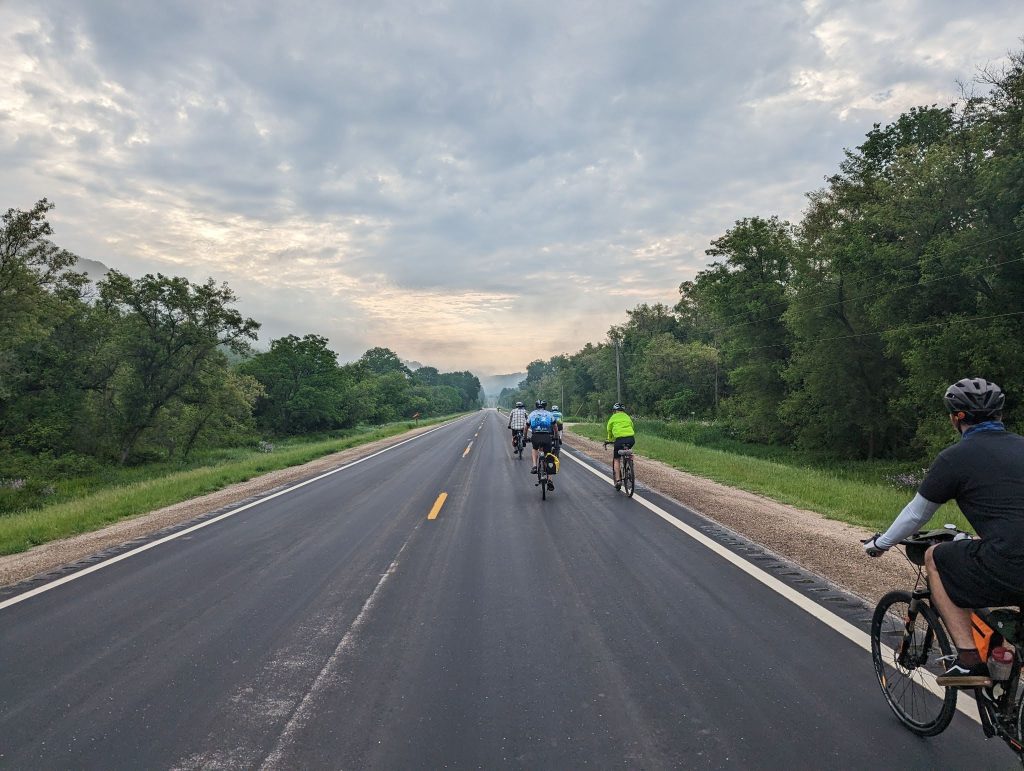
And then there’s everywhere else. Through my day job, I learn about it constantly — riders in Mankato, Duluth, the river towns, the Heart of the Lakes region, the farming communities, people describing what it’s like getting passed on a roadway shoulder with no margin. Leave most downtowns behind and the bike infrastructure just stops — if there was any to begin with. The drivers out there aren’t worse people. They’ve just never been asked to think about this, and nothing in the built environment has asked it of them either.
The anger is the same everywhere. So is the futility of aiming it at individuals.
Reading the room before you ask to roll down the window
Not every post-incident conversation is a bad idea. Some are worth having.
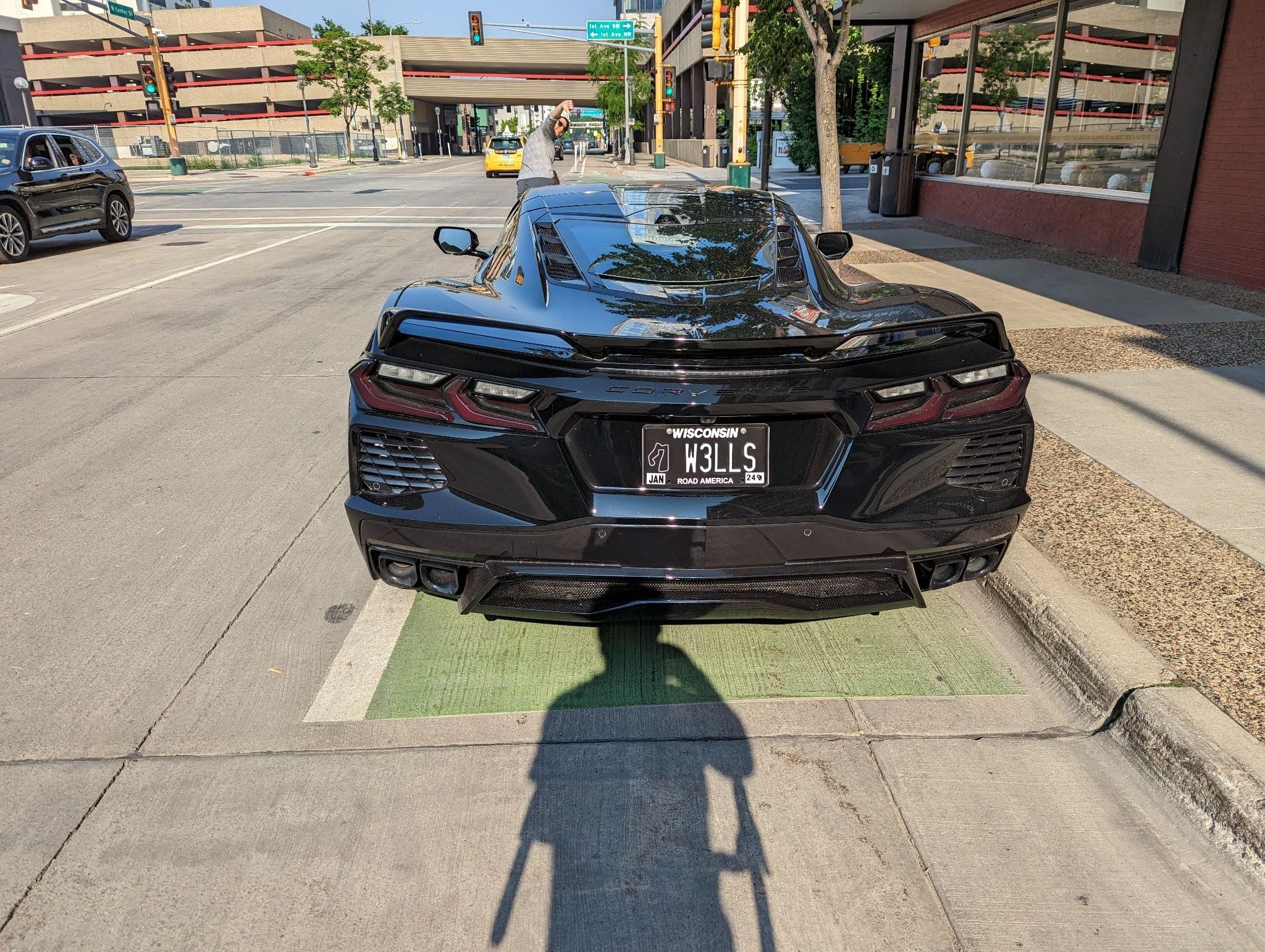
I’ve started doing something I think of as virtue-signal triage. A Prius. A small EV. A bumper sticker that suggests shared values. Specialty plates — the kind that tell you something about who this person wants to be. None of it is a guarantee, but it shifts the odds. The person behind the State Parks and Trails plate is more likely to be reachable in the thirty seconds you have at a red light than the person behind the blacked-out windows who just had both hands on the horn.
I had an interaction once that I still think about. An SUV with a Pollinator plate had just close-passed me after honking repeatedly. We ended up at a red light. I rolled up, knocked on the window, and instead of leading with what they’d done wrong I asked a question: did they know that in Minnesota, drivers are actually allowed to cross the center line — even a double yellow — to give a cyclist adequate space when it’s safe to do so? They didn’t. We talked for the length of that red light. They apologized, said they’d do better, and seemed to mean it.
That’s not the template for every encounter. Most can’t end that way, and the first question is always whether approaching is safe at all. A driver who is still furious, not looking at you — that is not a door you knock on. But a lot of what reads as hostility is actually ignorance in a hurry, and when both groups treat each other as adversaries, the chances of anything productive drop to nearly zero. The calm version of that conversation — “hey, that was pretty uncomfortable back there, huh? Just wanted to let you know that you can actually legally cross the center line to give us both enough safety” — doesn’t confirm the stereotype or accuse anyone of anything. It disrupts what they were probably expecting. Sometimes that’s enough.
Where things actually change
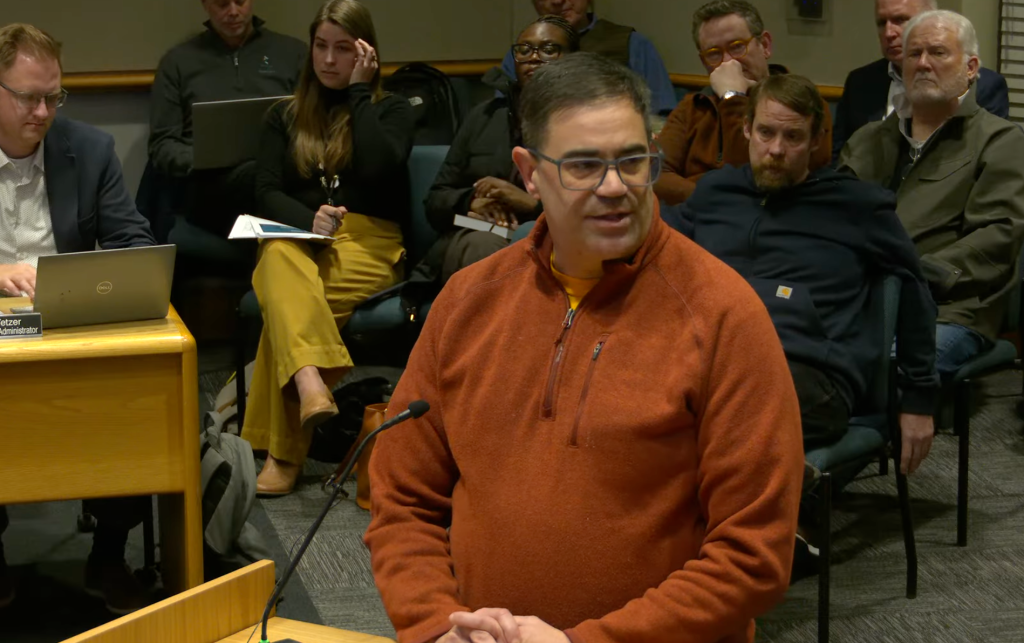
Minneapolis passed its Complete Streets Policy, Vision Zero Action Plan, 2040 Plan, and Transportation Action Plan because people showed up to meetings and public comment periods and kept showing up. None of it happened because a cyclist yelled at a driver.
In Saint Paul, the updated Bicycle Plan that passed in April 2024 is a genuine win, especially paired with the sales tax for infrastructure. The Saint Paul Bicycle Coalition was in the room for years of drafts and public hearings, getting people to show up and speak at the moments that mattered. The plan exists because of that. And it will only be as good as the advocacy that follows it, because recent street reconstructions on Fairview and Prior came and went without meaningful protected infrastructure. That’s why we need to be building this movement and that is always aided by kindness.
BikeMN works this statewide — tracking legislation, hosting the annual Transportation Equity Day on the Hill, pushing for mandatory bike and pedestrian safety education in schools and infrastructure investment in the rural communities where the gap is worst. Their chapter network is pretty much unprecedented when compared to the rest of the transportation landscape. The Greater Mankato Bike & Walk Advocates down south, Vibrant Streets Duluth up north, chapters in smaller communities — these are the people changing what actually gets built. One email from someone a Greater Minnesota legislator has never heard from carries real weight. I say this not because I work at BikeMN now. I wouldn’t be working there if I didn’t start out organizing with their Rochester chapter.
As Streets.mn has pointed out before, even good plans get watered down when advocates stop watching. It’s just the nature of it. Grow it all with kindness so that the resulting movement is the kind of place you and people like you will want to spend time. There’s a term for that: Prefigurative Politics.
Some things that actually help

Document dangerous intersections and use 311 – even when we know how many of the reports aren’t acted on. Patterns in service request data justify investment, and the spot that almost certainly got you almost got someone else last week.
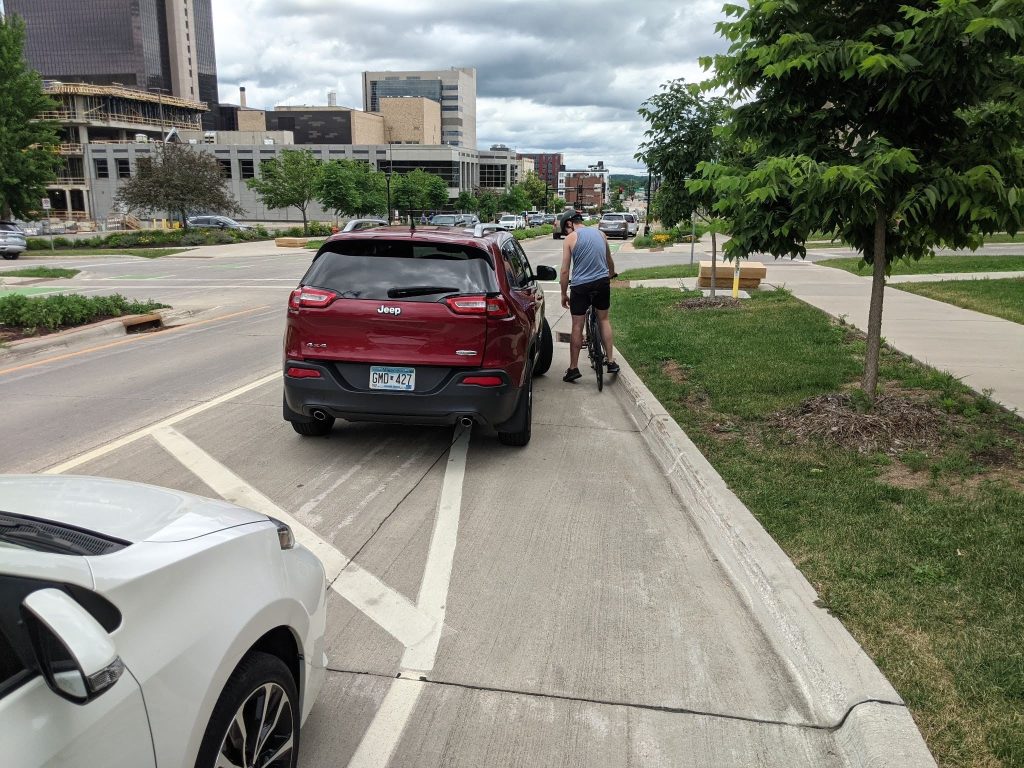
On the subject of documentation: Bike Lane Uprising is worth knowing about and worth using. Their data has been used to directly reach out to companies who block bike lanes, has been used in court cases where bicyclists have been injured or killed, has gotten laws passed, and has pressured cities to build safe bike infrastructure. The mechanics of it are particularly clever: they systematically send legal notices to companies reported to their database, informing them they’ve been added to a national registry of bike lane obstructers — which means that if that company is later involved in a crash with a cyclist, they can be shown to have had prior knowledge that their drivers were breaking the law. Negligence becomes a lot harder to deny. Report what you see.
Go to the neighborhood meeting about the street reconstruction when you can. Write to your council member when a project goes sideways. Show up to the public hearing in person, because three people in a room still outweigh thirty emailed comments in the political math of a small city council.
The Minnesota bike law FAQ at BikeMN.org is a great resource — not just for your own safety but because knowing it opens up those red-light conversations when the moment is right. (I am working on a pedestrian companion too!)
Rage is excellent fuel. The question is what engine you put it in.

I describe myself as a climate-anxiety enthusiast. The deep-set rage I feel watching a city stall on a protected lane, or a state legislature quietly defunding active transportation, or another driver treating a bike lane like a parking spot — that fury is connected to something larger and older in me: dread. Low-frequency, helplessly watching the world make preventable choices in slow motion. That feeling doesn’t go away. I’ve stopped trying to make it go away. Instead I’ve learned to run it through something useful.
Community organizing runs on this. The people I’ve met through the BikeMN chapter network, through Transportation Equity Day on the Hill, through We Bike Rochester and the Saint Paul Bicycle Coalition’s monthly meetings — almost none of them showed up because things were going well. They showed up angry. They stayed because anger, aimed at systems instead of individuals, turns out to be surprisingly durable. It doesn’t burn out the way confrontation does. Confrontation spikes and crashes. Advocacy accumulates.
The driver who punish-passed you and sped off already forgot it happened. You’re still thinking about it a week later. That gap — between their indifference and your rage — is the energy source. The only question is whether you spend it yelling into a rearview mirror or spend it somewhere the system actually feels it.
Crash rates for cyclists have dropped even as commuting numbers tripled — because of infrastructure, and because more people came to understand that cyclists belong on the road just as much as they belong on the trail. That progress came from people who took the slow, boring work of changing the environment seriously, and didn’t waste their best energy on someone who was already gone. It is shocking, compared to somewhere like Rochester, to do bike advocacy work in Minneapolis and find that essentially no major local candidates openly oppose the idea of bike infrastructure investments as being worthwhile. That is the work of concerted advocacy within institutions.
The screaming is understandable. It just isn’t moving us forward.