Arlington, VA
At the not-so-wise age of twenty-one, I graduated college and moved to Arlington, VA for my first big girl job. There, I was introduced to recreational biking. Northern Virginia boasted an extensive trails system that connected where I lived to Washington D.C. and Maryland. A common past-time was to ride the trails for exercise. Having lived in car-dependency hell (Orlando, FL) for most of my life, I was so excited to live where I could ride a bike regularly.
However, my frame of reference was that a bicycle was a toy to ride aimlessly through meadows and canopies, the zoomies equivalent of frolicking in the fields for fun. Biking for transportation wasn’t a known or accepted reality to me. In fact, I remember telling a new friend that I was never going to bike on the streets; bikes were for the trails. That friend also happened to be Dutch, so I quickly learned that, actually, my bike served utilitarian purposes.
My most cherished bicycle memories from my time in the D.C. area involved biking for transportation with my friend. Neither of us had a car, and the places that we wanted to go were underserved by public transit, so we biked. We braved the unfriendly streets of Fairfax, VA to visit Eden Center; we got bánh mì and boba then biked to the Bon Air rose garden to eat and hang out. We biked all the way north to a bakery in Maryland to buy crepe cakes; they weren’t very good, but to this day, I still remember the feeling of pure joy sitting on the sidewalks eating cake and catching up with my friend. Looking back, my memories of bike rides for exercise paled in comparison to riding for a purpose.
At the time, I wasn’t familiar with concepts like “safe bike routes” or “bike infrastructure” or “bicycle advocacy.” I just thought that even though I felt unsafe when speeding cars came a little too close to me as I pedaled home on a gutter bike lane in a 35 MPH speed limit zone, it was worth it because what other alternative did I have?
The plethora of bike trails that meandered through the woods did not lead to the practical places where I wanted to go. I didn’t know that the experience of biking through streets could be better. In hindsight, I rode some risky routes that the me of today would never ride; then again, I no longer possess the ignorant bravery that marked my youth.
Denver, CO
When I moved to Denver, I considered purchasing a car. The public transportation system wasn’t frequent, reliable, or plentiful as the one in the D.C. area, and I needed a reliable mode of transportation. However, catalytic converter thefts were at an all-time high, and my frugal self refused to take on the risk of spending so much money on purchasing, maintaining, insuring, and parking a personal vehicle and then deal with a key component getting stolen.
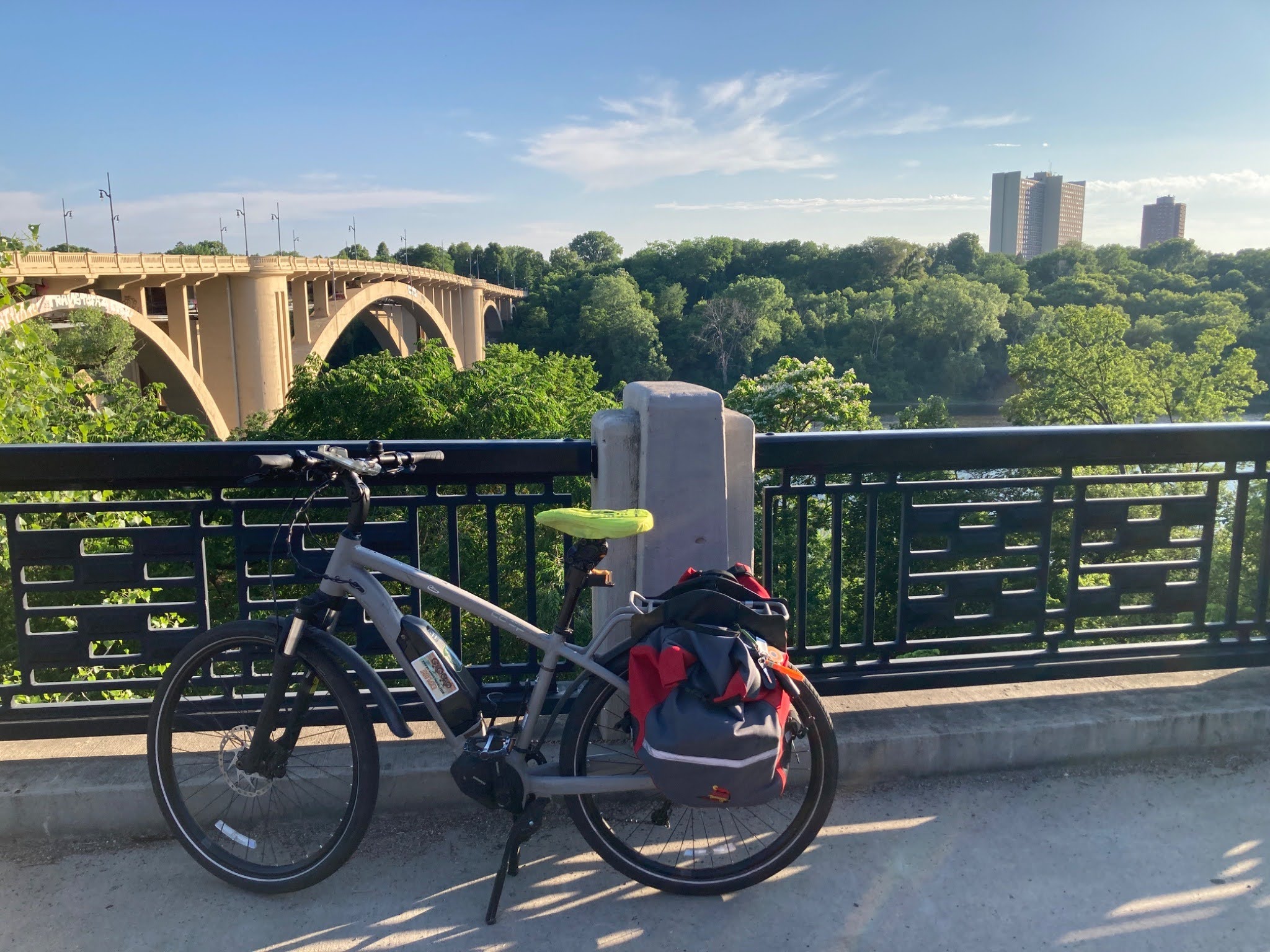
My trusty acoustic bike came to the rescue. I rode it to grocery stores, yoga studios, restaurants, art galleries, and so many more places. After a few dozen times of breathlessly biking up the massive hill on Tejon St to get home, I bought an e-bike and officially transformed to a bike commuter.
My transformation wasn’t without challenges. At the start, I relied heavily on turn-by-turn directions from Google Maps to take me to new places. I quickly learned that the app was prone to routing me on speedy arterial roads with painted bike lanes that, in theory, would deliver me to places I needed to go efficiently but did not guarantee that I’d get there in one piece. I began to pull back from biking to new places. I would stick to the destinations where I was familiar and that I knew the route to get there was safe. I’d take a rideshare for the rest.
Entered Bike Streets.
Avi Stopper, the founder of Bike Streets, was a force of nature. His north star was that anyone should be able to ride their bike to any destination in their city today. Rather than waiting endlessly for the right elected leaders to be in power and many more years for the traffic studies, research, designs, and fights to resolve themselves into protected bike infrastructure, he galvanized a community of volunteers to create a map of Denver’s low-stress routes. The map was composed of over five hundred miles of available safe bike infrastructure and low-trafficked residential streets to create a connected network.
Avi then went the distance; along with two software engineers, Jason and Matt, the three of them built a technology platform that over 2500 bikers nationwide use today. They released an app that provided turn-by-turn directions using the crowdsourced routes.
All of a sudden, my bike radius expanded. I used the app to route to new places and track my bike trips. My favorite part of the app was its emphasis on community and building a recognizable group of bike riders who would be invested in the construction of more safe and direct bike infrastructure. Counterparts like Strava and Ride with GPS were targeted toward recreational cyclists who favored riding for exercise; Bike Streets was geared toward people of all ages and abilities being able to navigate their city by bike.
Toward the end of my fourth year in Denver, it was time for me to go. The high cost of living was financially unsustainable. I paid $2,000 in rent and utilities for very few amenities in a walkable part of town; in fact, the amenity was the walkability. It felt like the biggest sign when the property management company Greystar bought my apartment complex and a month later, the building manager tried to gaslight me into believing that my A/C was functional despite the sweltering 85 degree Fahrenheit in my 631 square feet unit. I had to reach out to the area manager to get the situation resolved, and the solution was that my A/C needed to be replaced. Interestingly, nine other units in the building also had to have new A/Cs installed.
In addition, the municipal government’s shift away from supporting safe infrastructure for active transportation was the blaring sirens chasing me away. I attended many community meetings and spoke at public hearings and so did my peers, but none of it made a difference to the electeds. I was hearing the message loud and clear: Denver was not for me.
Minneapolis, MN
My soul was searching for a walkable and bikeable city with a reasonable cost of living, and of course, I was always going to end up in Minneapolis. I now pay $600 less in rent and utilities, and I have greater access to high-frequency buses, walkable areas, and bikeable destinations. Some of those cost savings became donations to active transportation advocacy organizations. By the time I made it to Minneapolis, I was too grown not to understand that it took the labor of countless advocates, activists, and community organizers to push for sane political policies like the Minneapolis 2040 plan and the 2023 legislative wins to fund Metro Transit.

Avi and I kept in contact while my life was in transition. His team had rolled out a new capability for any city to build their own crowdsourced map of low-stress routes, and Avi encouraged me to build one for the Twin Cities. At first, I resisted. Who was I to put together a map by galvanizing people I didn’t know to use a platform they’ve never heard of? That’s absurd!
Thankfully, my belief in the purpose of the app combined with my shamelessness in sending cold emails came through. Seasoned Twin Cities bike riders began to learn of the app and gave it a try. I learned how the Bike Streets’ OSM worked, and every day, I obsessively checked the Twin Cities bike map for new route suggestions from the community to add to the map. We wouldn’t have been able to add 400 miles of low-stress routes if not for the lived experiences of longtime bike commuters and their willingness to share their routes. I love that we’ve started to leave each other notes about reaching out to elected officials to advocate for better infrastructure in areas where there are gaps.

Through the exercise of putting together this map, I’ve gotten to know the Twin Cities metro more intimately. Thanh Luong Vegetarian in Minnetonka is my favorite restaurant; it is my place of solace whenever I need to eat a meal that reminds me of home. I used to brave biking Cedar Lake Rd S just so I could visit; for those unfamiliar, that is a stroad with a 40 MPH speed limit and narrow sidewalks.

Nowadays, I get there via a less direct route but a far safer one via trails and the backroads. I learned of the route through Bike Streets. I’ve been tapping into the cyclist persona from my youth by going on extended bike rides to scout new routes. I have faith that another 400 miles are possible; they just need to be found and ridden.
As I reflect on my journey to get to Minneapolis, I’m glad for the leaps of faith I took along the way. If I had stuck to my thinking that bikes were toys and not transportation, or that I should stay where I didn’t belong, or that I couldn’t possibly make an impact in the cause that I cared about, my life would be radically worse. I would’ve stayed the person I was in Orlando. I would be banging my head against the wheel of my car while stuck in bumper-to-bumper highway traffic and complaining about all the people who had moved to Central Florida to make traffic worse for me. Growing pains are real, but they’re also vital in my story of how I landed in a place that’s just right for me.