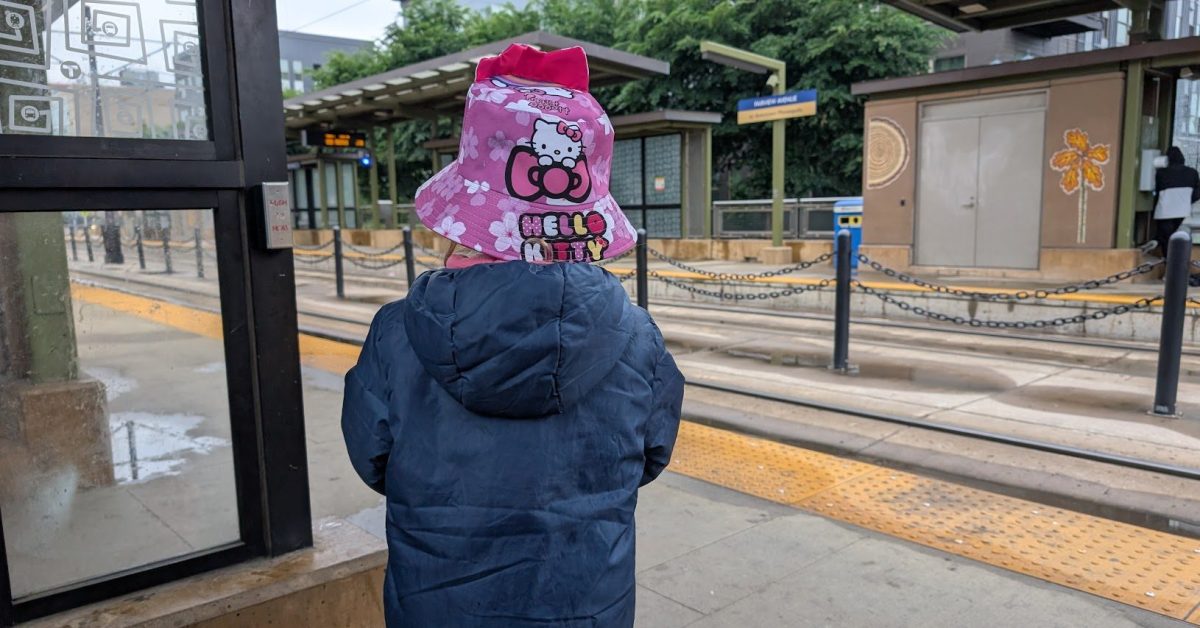
Here’s a story from my last concert outing to downtown St. Paul. Let’s see if it sounds familiar to those of you who regularly ride the METRO Green Line between our Twin Cities’ downtowns or who’ve been scared on light rail and now avoid it altogether.
My friend and I took the Green Line from the Fairview Avenue station to downtown because parking anywhere downtown is a drag. However, unlike my trip to the event around 7:30 p.m. — which was pleasant enough and uneventful — the ride home around 11:30 p.m. was downright treacherous. My friend and I were harassed by a large number of people at the Robert Street platform, which was littered with foils (a sign of fentanyl use familiar to those heroes who Adopt a Stop). Metro Transit police, their squad parked nearby, were nowhere to be found.
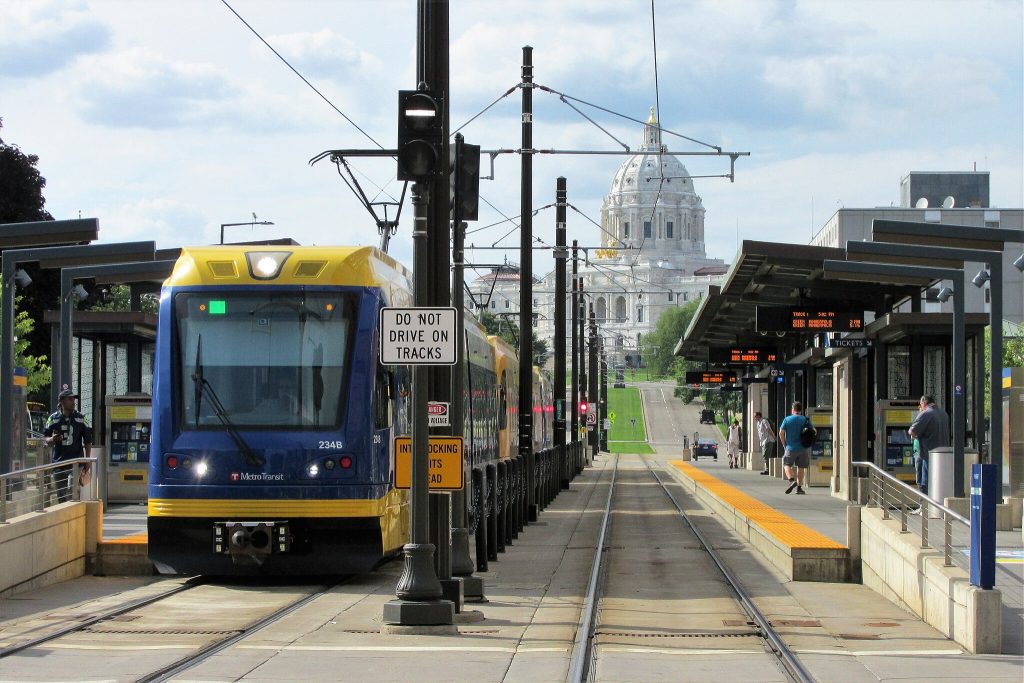
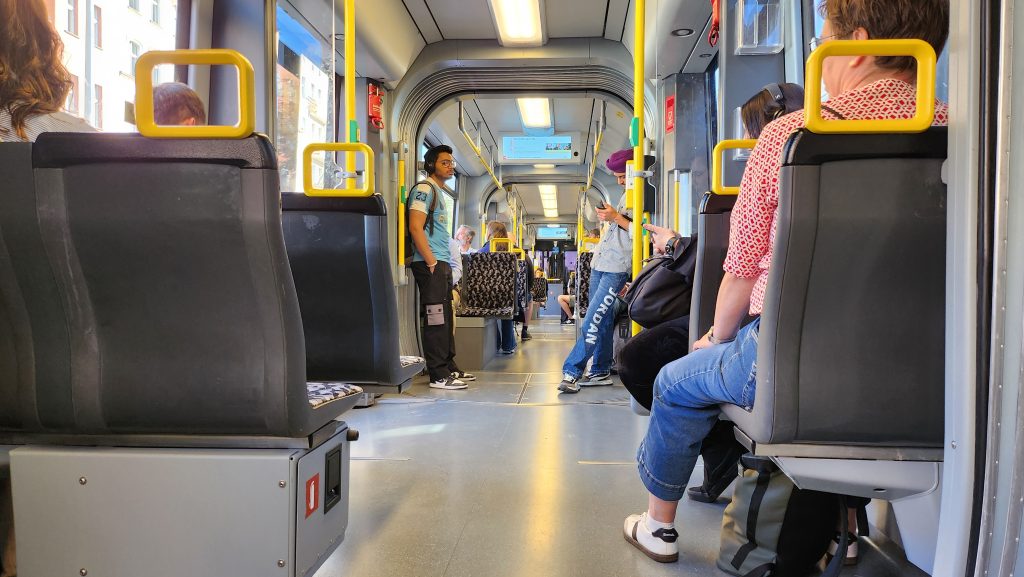
When the train did arrive, we took the front car — near the train operator — and kept to ourselves, aside from the occasional threat or smell of smoke (cannabis and fentanyl) in the air. My friend said she would never ride the train again because she was more afraid than on any other metro system on which she’s traveled, whether at 2 a.m. in Berlin or 2 p.m. in Chicago.
And what am I to tell her? To take the train because it’s the right thing to do for our planet, or that it’s simply better than taking a car? If transit is a shared space, then what are we sharing these days but our fears that we will be the next to be harassed, choked with smoke or worse? For seniors and neighbors with disabilities, how can we ensure that the train is safe for them when pushing and aggressive behavior become the norm?
I want our light rail system to be safe, reliable and full, not half empty and littered with cups or drug paraphernalia.
— Cole Hanson
And yet we should know that feeling uncomfortable is not the same as feeling unsafe. If someone is homeless and bought their ticket to ride, they have the same rights that you and I do, even if asleep.
But what can we do when the line between hospitality and criminality is crossed, again and again, resulting in a lack of safety for all riders? I’m a dad, a commuter who uses the new B Line dedicated lane for my two-wheeled travel and a longtime local concerned about how transit policy affects our communities. I ride the Green Line a couple times a week — mostly during the day, sometimes with my daughter, who loves watching the train rattle alongside our apartment along University Avenue. I want our light rail system to be safe, reliable and full, not half empty and littered with cups or drug paraphernalia.
Ridership Still Low, Despite Growth
In 2024, Metro Transit delivered 47.5 million rides overall, growing 6% over the previous year. Light rail — the Green and Blue lines — accounted for roughly 15.5 million rides, recovering some ground but still below 2019 levels: 44,000 weekday boardings pre-pandemic vs. about 27,000 in 2024; Green Line daily average 27,025, Blue Line daily average 17,467.
A perceived lack of security, however, will undermine confidence we might otherwise take away from this ridership data. For example, Group A crimes — including drug offenses — rose nearly 62% between early 2022 and mid-2023, from 595 to 961 incidents. Although reported crime in following years dipped (-17.5% in Q2 2024 compared to Q2 2023), ridership gains of about 9% weren’t enough to fully restore rider confidence. And it would be no surprise to riders that drug offenses have risen another 16% in 2025 from 2024.
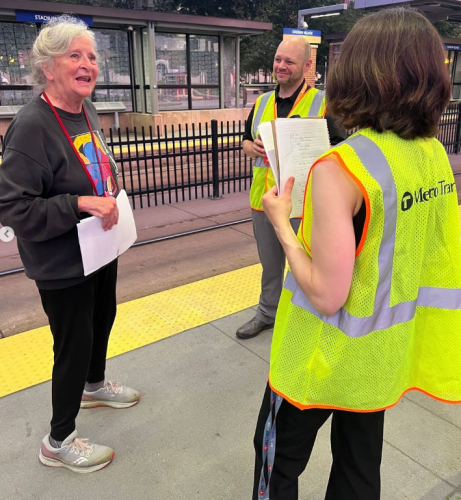
Some of this recent increase in reported crimes may be due to the presence of unarmed TRIP Agents who check fares and often serve as security on the train, meaning they may be more likely to call for police than your average rider. I’ll personally attest to the impact these TRIP Agents have made, as they consistently offer fare enforcement to evaders and help folks who need assistance with their fare cards or tokens (essential until we enjoy free transit for all). Though I would expect to see this program brought in-house by Metro Transit rather than relying on contractors, it appears to be doing its job.
We’ve also seen increasing levels of security at the platforms themselves, both on the Green Line / A Line at Snelling and University and on the Blue Line at the 46th Street and Lake Street stations in Minneapolis. These stations are all, in one way or another, connected to the Uprising in 2020 while existing at high-frequency transit nodes where multiple routes cross. It’s easy to see why petty crime would be higher in these stations because it’s simply easier to get around (more people means more crime, even if per-capita the rate does not change). We may be finding more crime because we are looking for it. But statistics are, as always, part of a broader narrative.
Passenger surveys and Streets.mn coverage for years (especially since COVID) have described homelessness, ongoing fear around open substance use, secondhand smoke and interactions with disruptive or dangerous riders. That creates a vicious cycle: Fewer riders leads to more perceived unsafe behavior, which leads to even fewer riders. We can’t ask riders to be martyrs for the sake of transit, but we can tackle the root causes of disruptions head on and keep everyone safe at the same time.
An Unfolding Polycrisis
I have used the term polycrisis with friends to discuss how homelessness and opioid use on transit are interconnected. No single point of entry in this set of challenges will be entirely effective on its own. A public health approach to this problem is systematically inclusive, taking into consideration that policing, healthcare, housing and infrastructure all must be considered and engaged to chip away at the greater polycrisis we are facing.
Unhoused Minnesotans — sometimes avoiding shelters or encampments — use the train as default shelter. This occurs elsewhere, too, even when turnstiles are present. In our Minnesota winters the train is usually the safest option, when compared to an encampment, with mutual aid groups often providing meals along the way. Many unhoused riders are struggling with addiction, though it is important to note that addiction and homelessness are not always present for any single person.
In either case, without care-centered support for people disrupting others’ rides or using the train as shelter, trust in light rail lessens among employers, families and transit users overall. Transit was built to serve everyone — but it can’t if people in crisis don’t get the dignity and help they need. It certainly can’t if the people who have the choice to drive choose to do so, rather than making the most of our transit system.
If someone is homeless and bought their ticket to ride, they have the same rights that you and I do, even if asleep.
— Cole Hanson
To take a proper public health approach rather than lean on carceral control, here’s what must change:
- Increased presence of peer recovery teams and non-police crisis responders on trains and at stations. Work like mine in Hennepin County during the pandemic showed that a focus on housing and stabilization for homeless adults works.
- Education on how to call for help so riders trust disruptive passengers will be handled with dignity in a timely fashion, whether they call or text, and that those reporting riders will be protected from retaliation for doing the right thing.
- Persistent outreach hubs at key stops offering naloxone, drug testing kits, hygiene kits and referrals to services. This will prevent overdoses in the field, giving individuals another chance at finding sobriety.
- Ridership events with neighborhood District Councils show riders how to use the system if they haven’t ever tried or haven’t tried in a long time. Local councils and neighborhood groups have a stake in transit, too, with many adopting stops in their area.
- Jobs programs like Listening House’s Work Now, paying unhoused residents to clean Green Line stations and serve as a welcoming presence, are not only confidence-boosters but assist with the heavy lifting of sanitation and cleanliness for this large system.
- Built dignity into fare reform, including flat $2 fares in 2025 and $1 fares for seniors and low-income families, are expected to yield 900,000 new trips — but only if paired with people-centered safety initiatives.
- More riders provide natural surveillance and social norms that deter disruptive behavior. Metro Transit data shows that higher ridership correlates with lower crime rates, and so partnerships with businesses and apartment buildings to encourage transit passes over parking passes is a must. It’s worth giving the train a try every once in a while if you haven’t.
- Always address the issue as the regional concern it is. It’s not just a St. Paul question, or just a Metro Transit responsibility, but a Ramsey County, Hennepin County and State of Minnesota question as well. We faced an unprecedented pandemic and civil unrest five years ago, and the scars still show with every ride on an empty train. Without regional coordination and application of region-level resources, we will fail.
Public Transit for All
As someone who depends on transit — I ride it and bike beside it, I’m teaching my child to love it — I know how fragile ridership is. If the system feels unsafe, people opt for cars or don’t ride at all. That undercuts transit’s environmental, social and equity goals. Transit can’t recover unless people feel safe and seen.
Let’s center public health over policing, restore dignity on the rails and return to full ridership. That’s how we rescue our public transit investment and make transit work for everyone here.
Let’s ride together again — full cars, safe rides and a connected Twin Cities for all of us.