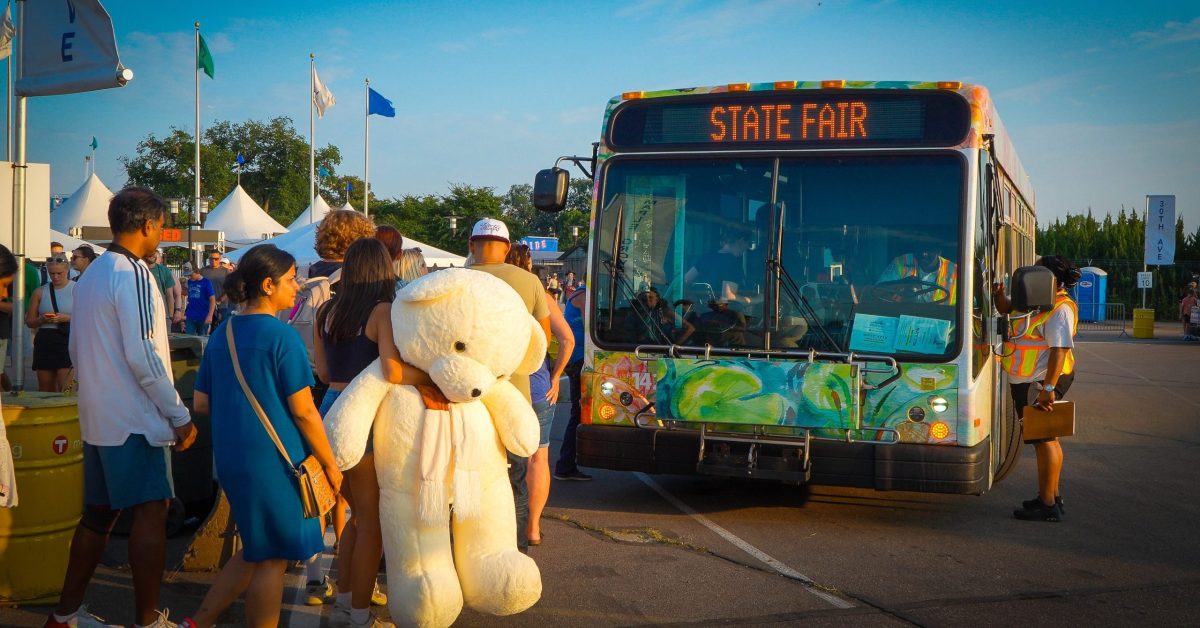
Few events draw as much excitement as the Minnesota State Fair. Given that I — and many of my friends — are transplants to Minnesota, the fair, and in particular, its mainstay foods is certainly a quintessential “summer in Minnesota experience.” Along with nearly 2 million other fairgoers, we look forward to it each summer.
But is the Great Minnesota Get-Together also the great Minnesota multi-modal event of the year? Perhaps it is.

Ahead of last year’s fair, where attendance rebounded significantly after the pandemic, mobility at and around the fairgrounds garnered significant attention from media outlets, with the Minnesota Star Tribune even putting on a race: comparing travel times by driving, using the park & ride shuttle service, taking transit and biking — biking and the bus were the fastest travel times.
Mega events like the fair create temporary (and often dramatically increased) travel demand that necessitates additional services to get people around the Twin Cities. Multi-modal systems provide the best options to reduce congestion and parking issues where these infrastructures can’t (and should not be) expanded.
In response to these mobility needs each year, the Twin Cities undergoes one of the largest — albeit temporary — multi-modal transportation transformations, with significantly improved transit connectivity from the suburbs into the urban core, a whole new “mini-transit service” through the shuttle and park-&-ride network, and expansive, staffed bike parking sites at the fairgrounds.
Multi-modal Practices at the Fair
Getting to the State Fair — for many fairgoers — is a mixed-mode experience. Buses (from a variety of operators), bikes and walking all connect visitors to the fair.
In 2024, in response to frustration from fairgoers around getting to the fair the previous year, State Fair officials announced a multi-modal transportation plan to manage visitor traffic, including park-&-rides, transit, bike parking, rideshares and traditional parking options.
This planning effort grew from a legislative mandate in 2024 that required the fair to plan for a variety of modes and improve access to the fairgrounds for all attendees. Rep. Rick Hansen (DFL-South St. Paul) authored the bill that originally aimed to create a multi-modal vision for getting to the fair, including:
- Targeting a 100% increase in transit trips to the fair from 2023 levels.
- Increased bike parking (including at park-&-rides).
- Increased access for rideshares.
The version that ultimately passed walked back some of these targets — mainly because we need to prioritize funding transit that connects people to where they need to go the rest of the year — but still forced the fair and the Metropolitan Council to collaborate in establishing plans.
Transit
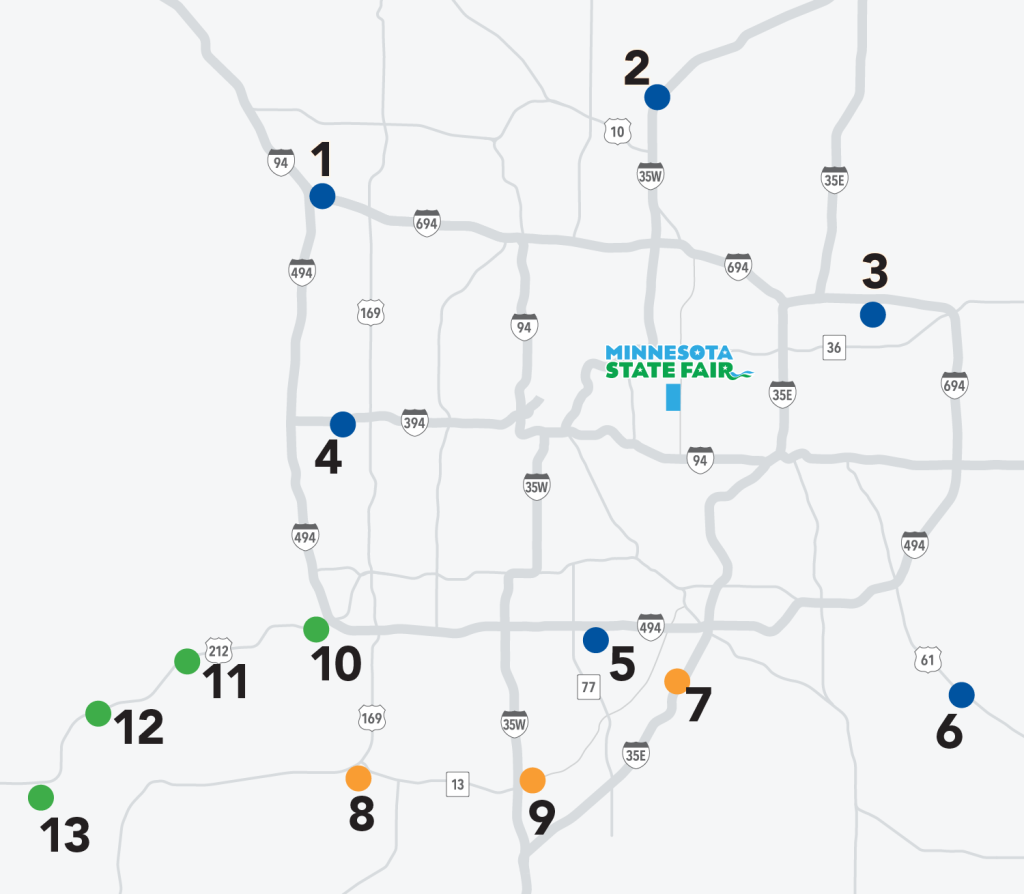
Metro Transit expanded 2024 State Fair Express bus service to six of its own park-&-rides, up from four in 2023, with round-trip fares between $5 and $6. These services operate under the same basic principles that drive suburban commuter services to job centers like Downtown Minneapolis: connecting suburban riders to and from high-demand destinations faster and easier than driving and without the hassles of traffic and parking.
In 2023, the majority of trips to the fair were on these temporary express services, comprising 83% of trips compared to only 17% using existing services. In 2024, this trend is likely to continue with over 100 more buses in service than non-fair times. Many suburban riders use these express buses solely for the fair. Unfortunately, they rarely engage with other transit options — whether for work, recreation or shopping — beyond their annual visit due to lack of transit service and options in the suburbs.
Other service providers like MVTA (Minnesota Valley Transit Authority) ran service from three stops in the south metro, serving 110,000 suburban riders in Burnsville, Eagan and Shakopee in 2023. SouthWest Transit offered express bus service as well, with new service in Carver this year. SouthWest also saw about a 12% ridership increase from 2022 to 2023, from 68,500 to 77,000, respectively.
This growth has been slow to rebound compared with pre-COVID ridership, just like the rest of Metro Transit’s network. Metro Transit provided 595,000 trips on local and express buses to the fair in 2019, with 2023’s combined total at only about 290,000, just under half the pre-COVID ridership numbers. In 2024, this number continued to climb to 376,000 rides but still fell over 200,000 rides short compared to before the pandemic.
Ironically, Metro Transit’s fair express buses even serve some communities — such as Maple Grove — where the municipalities “opt out” of their services the rest of the year. In these cases, a separate transit operator, such as Maple Grove Transit, will serve the suburbs in place of Metro Transit’s services.
Park & Rides
The State Fair has its own quasi-transit agency through park & rides. Though laudable and an improvement over driving all the way to the fair, a park-&-ride still encourages driving. Strictly speaking, then, it is not multi-modal, which, in an urbanist context, means using at least two forms of transportation other than a car, such as walking to a bus stop or biking to a train.
But for some folks who live in the suburbs or in Greater Minnesota, it is at least a start!
Lorenz Bus Service, a Blaine-based bus charter company, has held the lucrative State Fair park-&-ride contract since 2009. CEO Benjamin Canine was quoted in a 2024 press release stating that his company had evolved from being just a shuttle service to becoming the fair’s own independent transit agency. “We are proud to have partnered with the State Fair to build the service into what it is today — a nationally lauded, independent transportation network servicing over 30 locations,” said Canine.
Despite moves to encourage more biking and busing to the fair, park-&-ride usage has jumped back to pre-pandemic levels, making it clearly the mode of choice for fairgoers.
- In 2019, over 1.1 million or 53.12% of attendees used the park-&-ride system, a record to that point.
- In 2021, park-&-ride usage dropped to 37.16% due to COVID-19 (the State Fair was canceled in 2020), with 483,200 attendees using the service. But by 2022, numbers rose above pre-pandemic levels.
I live in the city, where it is relatively easy (though not always convenient) to get around by bike or bus. Although not perfect or substituting an entire car-trip, perhaps a park-&-ride is the best colloquially multi-modal option that Greater Minnesota or suburban residents have to reach the fair. At least these drivers are using more sustainable public transportation for some part of the journey.
Biking
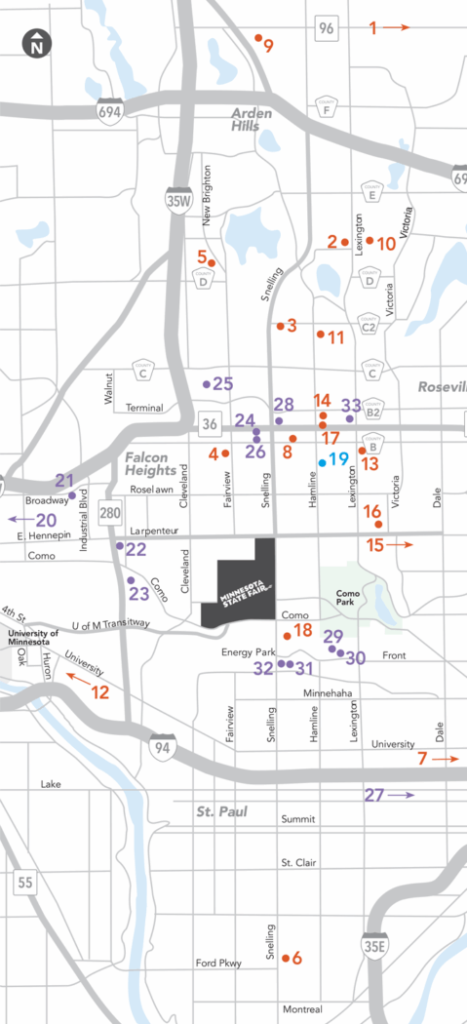
Biking to the fair is having a moment, catching the attention of Streets.mn writers who provided reader-sourced guides to reach the fair by bike. This year, the State Fair is offering several free, staffed bike parking areas, securely accommodating over 900 bikes. Additional racks were added in 2024 for more efficient parking.
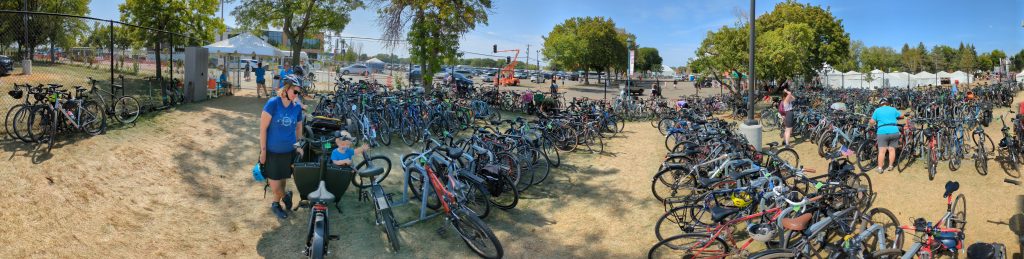
Ian Young’s updated article this year provides detailed biking route recommendations to the 2025 Minnesota State Fair from six directions, advocating for cycling over driving while acknowledging that heavy traffic and road closures make the “last mile” challenging.
Driving? Forget About It
A large part of the fair’s multi-modal success relies on the principle that drivers — through time spent in traffic, cost and availability of parking, along with general frustrations related to driving to a fairgrounds in one of the state’s major cities — internalize the costs of driving and choose to travel by more convenient modes (like transit or biking).
Parking at the fairgrounds is limited and, once full, pushes people to pay upwards of $50 per day in nearby neighborhoods or find on-street parking which this year will cost drivers a fee in Falcon Heights. Add that to significant traffic delays that can add hours to the journey, roadwork complications, the cost of gas and other woes.
What Can the Fair Teach Us?
The fair proves that suburban Minnesotans will ride transit when it’s designed to be their best option, even if, as in this case, it connects them to a mega event and not daily needs and opportunities. The challenge isn’t necessarily changing suburban attitudes toward transit — it’s replicating the conditions that make fair transit successful and building transit-oriented communities around them.


This transportation transformation doesn’t happen by accident. The fair creates specific conditions that make transit and other non-driving options the logical choice, and political support for making mobility (for more than just cars) to and from the fair motivates numerous multi-modal services.
High Cost of Driving: As mentioned above, it’s time-consuming, inconvenient and expensive to drive to the fair.
These costs — both financial and temporal — make drivers experience the negatives of car travel in ways they experience in their daily lives across the Twin Cities, where our overbuilt car-oriented communities are structured around getting as many cars as possible from point A to point B.
Frequent, Direct Transit Service: Express buses run all day at roughly 30-minute intervals, directly from suburban park-&-rides to the fair entrance. No transfers, no waiting, no complex route planning and you get reasonably priced fares compared to the costs of driving. Regular route transit services also increase frequency and capacity, including along the METRO Green Line, the A Line BRT along Snelling Avenue and local bus services.
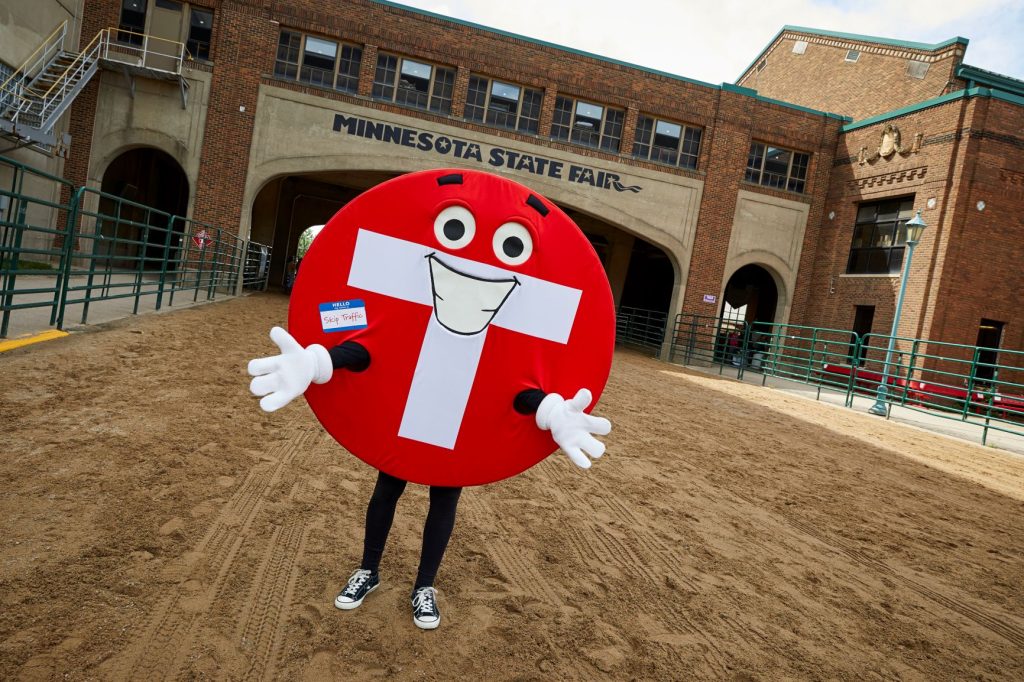
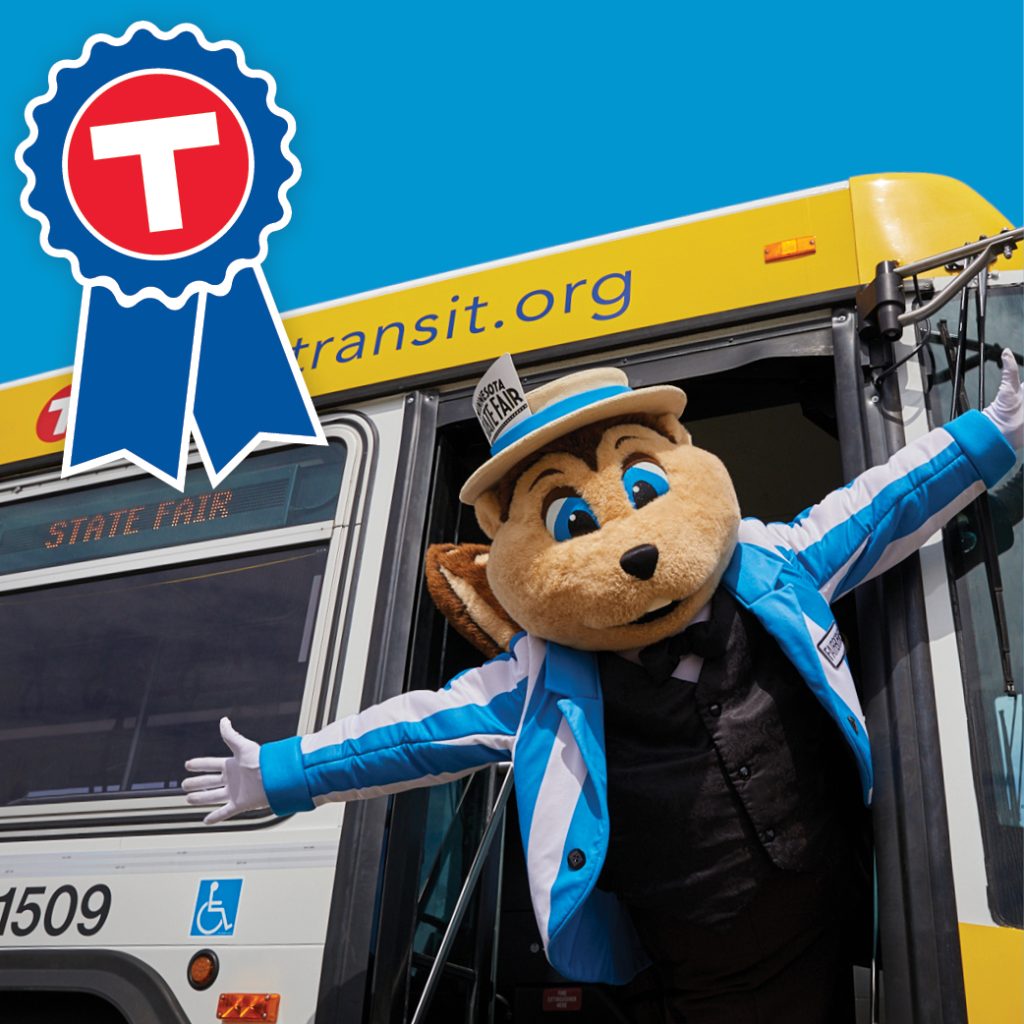
Marketing Transit as Convenient: The fair actively promotes transit as the smart choice, with Metro Transit’s annual ad campaign promoting transit not just as an alternative for people who can’t afford cars. By this advertising, transit becomes aspirational rather than stigmatized. While transportation management organizations (TMOs) try similar strategies year-round, the increased services around fair time actually back ad campaigns, touting convenience with services to match.
Walkable Destinations: Once at the fair, everything is accessible by foot. The entire experience is designed around pedestrian movement and access that is comfortable and appealing (although often crowded, especially if you’re waiting in line at Sweet Martha’s Cookies or another beloved vendor).
Under these conditions, taking a multi-modal trip to the fair is not only possible, but preferred. We just need the systems — and political will — to make these changes outlast the fair’s 12-day run, connecting people by transit, biking and walking with places they need to and want to go.
Editor’s note: “Street Views” is a regular feature in Streets.mn. Respond to columnist and board member Joe Harrington directly at [email protected]. We encourage you to add comments at our Streets.mn pages on Bluesky and Facebook.