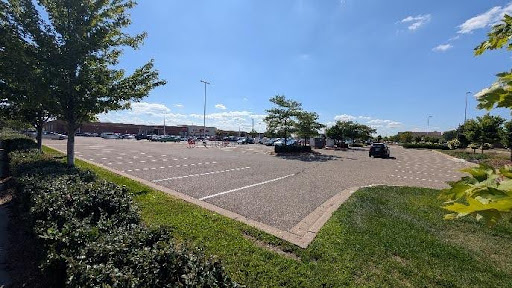
In my previous piece on the Midway’s suburban design problem, I focused on the area south of University Avenue: the big-box graveyards, the empty At Home (former Wal-Mart) building, the struggling Midway Marketplace. That stretch between University and I-94 represents everything wrong with trying to force suburban retail patterns onto urban, transit-rich land. But walk north across University Avenue on Snelling, and you’ll find something entirely different happening. It’s scrappier, messier and far more successful than anything south of University. And it’s working precisely because it never tried to be a suburban shopping destination in the first place.
The Tale of Two Midways
The contrast hits you the moment you cross University Avenue heading north on Snelling. South of University, you’re surrounded by parking lots the size of football fields, buildings set back from the street behind asphalt moats and “For Lease” signs on structures too big and too car-oriented for anyone to know what to do with them. Cross to the north side, and suddenly you’re in an actual neighborhood: smaller buildings hugging the sidewalk, storefronts you can walk into directly from the street, businesses that look like they’re trying to serve people who live nearby rather than suburbanites making a special trip.
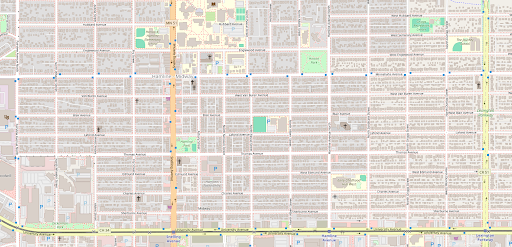
This isn’t a coincidence. This part of the Midway neighborhood most recently dubbed “Little Africa” — a designation established in 2013 with support from African Economic Development Solutions that runs roughly from University up to Minnehaha along Snelling — hosts Snelling Cafe (serving Ethiopian and Eritrean food since 2003), the newly expanded Udo’s African Restaurant and Groceries, Sabrina’s Cafe & Deli, Mama’s Market & Deli (a cooperative run by nine Ethiopian immigrant women), Dilla Sports Bar, Pho Pasteur, Gingko Coffee and dozens of other small immigrant-owned or locally-owned businesses. Walk down to Hamline and Thomas, and you’ll find another cluster of businesses. Head over to Minnehaha and Fairview, and there’s the Minnehaha Grocery and Deli, a classic corner store stocking everything the neighborhood needs.
These aren’t accidental successes. They’re the direct result of a built environment that actually works for urban retail: small buildings affordable enough for immigrant entrepreneurs, storefronts facing the street instead of parking lots, a walkable scale that encourages foot traffic. One might dare call it “traditional” urban design.
There’s a reason immigrant-owned businesses dominate successful retail north of University while corporate chains struggle south of the avenue: immigrant entrepreneurs are working with reality instead of fighting it. Corporate retail as we know it is still stuck in suburban thinking. Developers across the city demand massive parking lots, assuming customers will drive from miles away. African, Vietnamese and other immigrant business owners are building for the neighborhood that exists: dense, transit-oriented, increasingly diverse, with customers who walk or take the bus. They’re opening restaurants where you can grab takeout on your way home from the light rail. They’re running groceries that stock the specific items their neighbors need. They’re creating the kind of small-scale, street-facing retail that makes urban corridors successful.
Mozambique to Midway: Little Africa Plaza
The Little Africa Business & Cultural District exemplifies this approach. Established in 2013, it’s become one of the most significant examples of immigrant-led neighborhood revitalization in the Twin Cities — and it’s happened largely without St. Paul’s formal Cultural STAR program, which reserves 80% of its funds for the downtown Cultural District. While downtown gets designated cultural support, Little Africa has built its own cultural economy from the ground up.
The Little Africa Plaza, in particular, shows what’s possible when you invest in historic buildings rather than tearing them down for parking lots. AEDS purchased the long-vacant 1926 building at 678 N. Snelling — which had been vacant for years— and spent $4.5 million transforming it into a multi-tenant cultural and commercial hub. The building opened in January 2025 and now houses Mama’s Market & Deli on the ground floor, retail spaces for micro-entrepreneurs, a pan-African museum and AEDS headquarters upstairs. This is exactly the model that works for urban retail: adaptive reuse, multiple small tenants instead of one big box, street-facing spaces, integration of commercial and community uses.
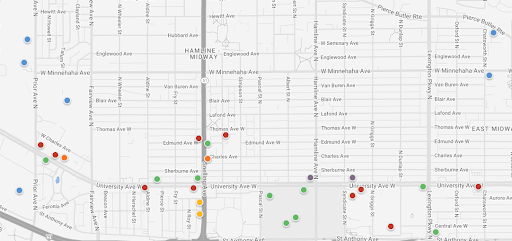
But here’s the key difference from south of University: This happened because the building stock and lot sizes made it possible. Try to replicate this with the massive suburban-format buildings south of University, and you’d spend far more money for far worse results. The corner clusters tell this story perfectly. At Hamline and Thomas, small businesses have created an organic commercial node. At Minnehaha and Fairview, a classic corner store proves you don’t need a 50,000-square-foot supermarket to serve a community. If we treat the available leases as a reverse heat map, we can see the vast majority of long-term vacancies lie in large commercial spaces, as opposed to the smaller spaces that predominate the area to the north.
For our African immigrant neighbors, AEDS has been central to this transformation, providing business loans, training, and technical assistance specifically designed for African immigrant entrepreneurs. Since 2008, they’ve helped launch dozens of businesses that are now the backbone of the corridor’s success. Before moving to their new Little Africa Plaza headquarters in 2025, AEDS operated from the Griggs Midway Building at Fairview and University (another example of how existing buildings can serve as incubators for neighborhood transformation when you work at the right scale). This is economic development at its most fundamental level: not tax increment financing for developments that require decades to generate municipal revenue, but small loans that help actual people start actual businesses serving their actual neighbors.
The Green Line Survives the Skeptics
Before the Green Line promised to revitalize everything, some businesses were already doing the hard work of serving their neighborhood. Midway Used and Rare Books, established in 1965 and owned by Tom and Kathy Stransky since 1980, occupies three floors at University and Snelling with over 100,000 books — the kind of place that gives a neighborhood legitimacy. Lloyd’s Pharmacy, Ginkgo Coffee, Urban Lights Music (one of only 32 Black-owned record stores in the U.S.), Tuan’s Auto Repair where everyone knows owner Raks by name — these are the businesses that survived transit construction and development booms because they’re genuinely serving neighbors rather than chasing trends.
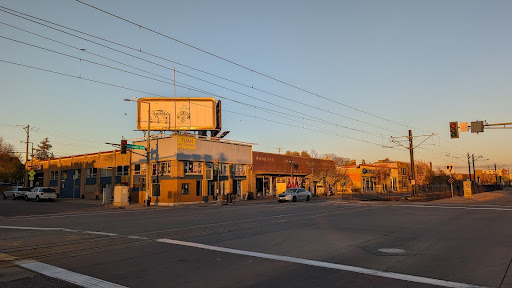
The success north of University isn’t limited to restaurants and groceries. The Turf Club at 1601 University has been a neighborhood rock since the 1940s, morphing from country bar through folk and grunge to become one of the Twin Cities’ most respected small music venues — 350-person shows that feel intimate, with a basement Clown Lounge for jazz. Four blocks down sits the Black Hart of St. Paul, which owner Wes Burdine transformed from the former Town House Bar (St. Paul’s oldest gay bar, dating to the 1960s) with $100,000 in Neighborhood STAR funds into a queer soccer bar serving three overlapping communities: LGBTQ+ folks, soccer fans, and neighbors who just want a drink.
These venues succeed because they’re building for actual communities at a human scale, in buildings small enough to make the economics work, with identities specific enough to create genuine destinations rather than trying to be all things to all people. The greatest challenge these businesses face isn’t competition or changing tastes — it’s rapacious landlords or real-estate squatters, many of them out-of-state investors, who would rather leave buildings as nuisances and vacant lots barren than accept reasonable offers or rents.
Landlords, Landlords, Everywhere
In a neighborhood dominated by rental properties, a bad landlord is more than just a bad neighbor; they’re a threat to public safety and public health. The former BP gas station at Hamline and University — the subject of license revocation hearings in 2019 after city officials and police labeled it a “crime magnet” — sat for years before finally losing its licenses following shootings and a fatal incident. Now it’s just another vacant lot. The CVS at University and Snelling has been boarded up since April 2022 and is finally heading toward demolition. In September 2025, dozens of residents attended city hearings demanding the building be torn down, with the city hearing officer most recently recommending it be razed. Following the City Council vote this week, demolition is on its way. Once it’s demolished, it’ll surely be planted with grass until some distant corporate owner decides what to do with it, adding another hole to the neighborhood.
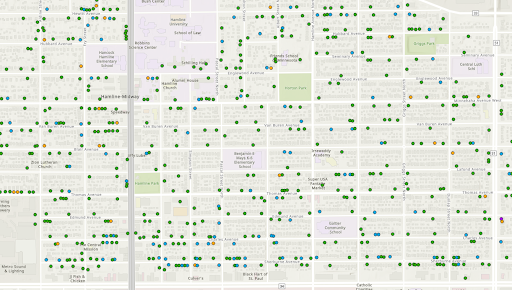
However, as Wes Burdine at the Black Hart discovered when trying to buy the vacant lot next door, property owners are hanging onto vacant parcels waiting for prices to hit half a million dollars rather than letting neighborhood businesses expand. Henry George had some thoughts about this kind of speculative land hoarding, and while I won’t advocate for full Georgism here, let’s just say a healthy land value tax might do wonders for encouraging these absentee owners to either develop or sell to people who actually will do something more than build a big parking lot.
Speaking of large parking lots: most of these successful businesses don’t have them. Midway Books has a small lot in back accessible off Sherburne. Most businesses have street parking or small lots, yet somehow they survive — even thrive. The neighborhood’s bike lanes and bike routes along University and Snelling aren’t hindrances to economic development; they’re assets, bringing customers who actually stop and shop rather than just driving through. Turns out you can build a successful urban commercial corridor without dedicating half your land to car storage.
Transit That Almost Lives Up to Its Promise
The Midway has something most neighborhoods would kill for: two major transit lines intersecting at its busiest corner. The Green Line opened in 2014 along University Avenue, connecting the neighborhood to both downtowns. The A Line bus rapid transit replaced the legacy Route 84 in 2016, running along Snelling with enhanced frequency and dedicated infrastructure.
Here’s what didn’t happen: the promised wave of new transit-oriented development. No towers rose along the corridors. No mixed-use buildings materialized. The small businesses succeeding north of University: Midway Books (established 1965), Tuan’s Auto, Snelling Cafe (since 2003), Sabrina’s… most were already there before the first train rolled through. What changed wasn’t the buildings. It was how people were using them.
As I’ve written before, the Green Line represents an enormous opportunity for every neighborhood along its length, so long as those communities are supported in facing its challenges. The difference between north and south of University becomes clearest when you think about how transit changed expectations. North of University, existing small buildings and street-facing businesses were already positioned to serve transit riders — even if some owners don’t appreciate those riders. South of University, the massive parking lots and car-oriented big boxes actively discourage transit riders from shopping there, no matter how many trains stop nearby, because you’re blocks of parking lot away from where you’re headed.
Transit didn’t create the Midway’s success north of University. It just revealed which side of the street was designed for urban life and which side was still waiting for suburban customers who were never coming.
The Path Forward
The Midway’s future depends on whether developers and city officials learn the lessons immigrant entrepreneurs have already taught. Those massive vacant buildings south of University need to be subdivided or replaced with smaller structures. Street frontage needs to be prioritized over parking lots. The Neighborhood STAR and Cultural STAR programs expand their scope dramatically to include corridors like Little Africa as cultural assets worthy of investment just like the downtown district.
The businesses north of University didn’t wait for permission. They saw opportunities in underutilized buildings and took them. They built for their neighbors rather than theoretical suburban customers. They proved the Midway works when you design for the neighborhood you have, not the one you wish you had. South of University keeps waiting for massive developments that never come. North of University, immigrant entrepreneurs are building the Midway’s future one small storefront at a time. They’re filling in vacant buildings when they can, working around them when they must, creating the kind of vibrant commercial corridor that proves urban retail succeeds when you do it right.
Just another Midway tradition.